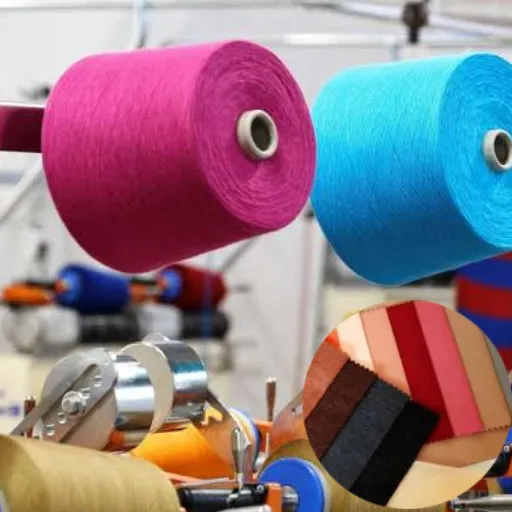



The most reliable organic cotton yarn suppliers are vertically integrated mills that hold GOTS certification and issue a transaction certificate (TC) with every order. A supplier who cannot produce a TC is not selling you certified organic yarn, no matter what the certificate on their website says. Find suppliers by their certification scope and TC practice first, then compare price, MOQ, and lead time.
If you’ve sourced organic cotton yarn before, you already know the frustration. Every listing, every profile, every trade-show brochure claims GOTS certification. Almost none of them explain how you’re supposed to prove it.
This guide fixes that. You’ll learn how to tell an integrated mill from a trader, which certifications actually matter and what each one proves, how to verify a claim step by step, and what to compare before you place an order. Hebei Lida Textile has supplied yarn to buyers across more than 50 countries, and the qualification process below is the same one our own customers use on us.
Key Takeaways
- GOTS is the only standard that covers the entire chain, from organic farming through processing and social criteria. OCS verifies content only, and OEKO-TEX tests chemistry, not organic origin.
- Request the transaction certificate (TC), not the certificate of compliance. The TC is the document that transfers an organic claim to your specific order. Without it, your product cannot legally be sold as organic.
- A trader cannot issue a TC for spinning. If your supplier does not control spinning, they depend on a third party for the document that proves your yarn’s status.
- India, Turkey, and China offer materially different trade-offs in certification maturity, dyeing capacity, and cost. Match the origin to your order profile rather than defaulting to the cheapest quote.
- Verify the certificate on the certifier’s own database before you sample. An expired scope or a certificate number that does not resolve is the most common red flag in organic yarn sourcing.
What “Organic Cotton Yarn Supplier” Actually Means
The phrase hides three very different businesses. When you search for organic cotton yarn suppliers, you will see mills, spinners, and traders presented identically. They aren’t interchangeable, and the difference shows up in your price, your lead time, and whether your organic claim holds up.
Integrated Mills vs Spinners vs Traders and Exporters
An integrated mill controls multiple stages, typically ginning, spinning, and sometimes dyeing or finishing. Because they own the spinning step, they can issue a transaction certificate covering your yarn directly.
A spinner converts fiber into yarn. They hold GOTS certification for spinning and can issue a TC for the yarn they produce. Many spinners buy fiber from a gin or a trader, so traceability depends on the fiber supplier upstream.
A trader or exporter buys and resells yarn. They may hold a GOTS scope for trading, but they don’t produce the yarn. This is a legitimate business model, and some traders offer excellent service. The difficulty is that their traceability depends entirely on the mill behind them.
Why the Distinction Changes Your Price, Lead Time, and Traceability
Each layer in the chain adds a margin and a handover. A trader quoting you organic cotton yarn is quoting a mill’s price plus their spread. That’s fair for the service they provide, but you should know which one you are buying from.
Traceability is the bigger issue. Every handover is a point where documentation can be lost, delayed, or mismatched. When your buyer asks for the TC covering your order, an integrated mill can produce it in days. A four-layer chain can take weeks, and sometimes it never arrives in the form your buyer needs.
Sourcing note: Ask one question early in every conversation: “Do you control spinning, or do you buy greige yarn?” The answer tells you more about a supplier’s documentation capability than any brochure.
Mini-story. A European home-textile brand placed a first order with a competitive trader in early 2025. The price was 9% below the mill’s direct quote, which made the decision easy. Six weeks before delivery, their retail customer requested the transaction certificate for the finished towels.
The trader didn’t have it. The mill that spun the yarn had issued a TC to the trader, but it covered a different yarn count than the order. Sorting it out took eleven weeks, two of them after the delivery date. The 9% saving cost the brand a season.
The Certifications Your Organic Cotton Yarn Supplier Must Hold
Certification is where organic yarn sourcing is won or lost. The problem is that four different standards get used interchangeably in marketing, and they prove very different things.
GOTS: The Only Standard That Covers the Whole Chain
The Global Organic Textile Standard is the benchmark. It covers organic farming, processing, chemical restrictions, wastewater treatment, and social criteria. GOTS certified organic cotton yarn has been verified at every stage, and the standard requires a transaction certificate to move the claim down the supply chain.
If your buyer asks for “organic cotton,” GOTS is almost always what they mean. Learn what organic cotton yarn is and how it is made before you start comparing suppliers, because you need to know which processing stages your own product requires.
OCS: Content Verification Only, What It Does Not Prove
The Organic Content Standard verifies that a stated percentage of organic material is present. It doesn’t cover processing chemistry, wastewater, or social conditions. OCS is legitimate and useful, particularly for blended products, but it is a narrower claim than GOTS.
A supplier describing an OCS product as “GOTS equivalent” is either confused or hoping you are.
GRS and RCS for Recycled Content
The Global Recycled Standard and Recycled Claim Standard do for recycled material what GOTS and OCS do for organic material. If your program includes recycled cotton yarn alongside organic, you will need suppliers who hold both scopes. Many mills do, because the same buyers tend to want both.
OEKO-TEX Standard 100: Chemistry, Not Organic Status
OEKO-TEX Standard 100 tests for harmful substances. It says nothing about whether the cotton is organic. Suppliers frequently list it beside GOTS to imply a stronger claim than they hold. It’s a useful chemistry assurance and a poor organic one.
Certification Comparison
| Standard | Organic claim | Covers processing | Covers social criteria | Recycled content |
|---|---|---|---|---|
| GOTS | Yes, full chain | Yes | Yes | No |
| OCS | Content only | No | No | No |
| GRS | No | Yes | Yes | Yes |
| RCS | No | No | No | Yes |
| OEKO-TEX 100 | No | Chemistry only | No | No |
Always confirm current scope details with the certifying body. Standards are revised, and a supplier’s certificate may cover only part of their product range.
Want to see how certification documentation works in practice? Explore our certified sustainable yarn programs →
How to Verify an Organic Cotton Claim Step by Step
This is the part almost nobody explains, and it’s the part that protects your order. Four steps, in order.
Step 1: Check the Certificate’s Scope and Expiry on the Certifier’s Own Database
Every accredited certifier, including Control Union, Ecocert, and OneCert, maintains a public database of certified operations. Ask for the supplier’s certificate number, then look it up yourself. Don’t accept a PDF as proof.
Check three things: that the certificate is current, that the scope covers the product you are buying, and that the processing stages in the scope match the supplier’s claims. A spinner certified for spinning isn’t certified for dyeing.
Step 2: Request the Transaction Certificate for Your Order
The TC is issued per shipment. It states the product, the quantity, the buyer, and the seller, and it’s what allows your product to carry an organic claim. Ask for the TC before delivery, and confirm it will be issued in your company’s name.
Step 3: Match the TC to Your Order Quantity, Count, and Delivery Date
A TC that doesn’t match your order is a problem even when it is genuine. Common mismatches include a different yarn count, a lower quantity than you purchased, or a delivery date outside your order window. Read it against your purchase order line by line.
Step 4: Confirm the Certificate Covers Your Specific Yarn Count and Finish
Certification scopes list product categories. If your yarn is dyed and the scope covers greige only, you’ve got a gap. If your yarn is a blend and the scope covers 100% cotton, you’ve got a gap. Confirm this before production, not after.
Red Flags to Watch For
- A certificate number that doesn’t resolve on the certifier’s database
- An expired certificate presented as current
- A scope that excludes the processing stage your product uses
- Reluctance to provide a TC, or a promise to “send it later”
- OEKO-TEX presented as evidence of organic content
- A price for GOTS yarn that sits at conventional market levels
Mini-story. A procurement lead at a knitwear brand ran this check on a new supplier in 2025 and found the certificate number returned nothing on the certifier’s site. The supplier explained it as a database delay. Two weeks later, the same number appeared on a different supplier’s marketing page, with a different company name.
It had been copied. The check costs fifteen minutes and saved the brand a full container of unusable yarn.
What to Compare Across Organic Cotton Yarn Suppliers
Once certification checks out, compare capability. Price alone will mislead you here.
Yarn Count Range and Spinning Method
Ask for the count range in Ne and the spinning methods available: ring spun, combed, compact, open-end. A supplier who only runs open-end can’t serve a premium apparel program, and a supplier who only runs ring spun may not be cost-competitive on coarser counts. Understanding how yarn is manufactured helps you read these specifications correctly.
Minimum Order Quantity and Sampling
MOQs for organic cotton yarn commonly start around 300 kg for stock counts and rise for custom specifications. Ask what the MOQ is for your specific count and color, not the general figure. Confirm whether sample quantities are available and whether they are charged.
Certification Coverage and Traceability Depth
Two suppliers can both hold GOTS and differ enormously in how deep their traceability runs. Ask whether they buy organic fiber directly from a certified gin or through an intermediary. The shorter the chain, the easier your documentation.
Lead Times and Export Documentation
Confirm lead time from order confirmation, not from inquiry. Ask which export documents they provide as standard and which cost extra. For buyers shipping to the EU or US, documentation completeness often matters more than a week of lead time.
Quality Testing and Batch Consistency
Ask for test reports for tensile strength, evenness, and count deviation. Request reports from more than one batch if you can. Single-batch perfection and multi-batch drift is a common pattern. Our guide to yarn quality control explains what those reports should contain.
Supplier Type Comparison
| Integrated mill | Spinner | Trader / exporter | |
|---|---|---|---|
| Controls spinning | Yes | Yes | No |
| Can issue TC directly | Yes | Yes | Via upstream mill |
| Typical MOQ | 300–1,000 kg | 500–2,000 kg | Varies, often lower |
| Lead time | Standard | Standard | Longer |
| Price position | Baseline | Baseline | Baseline + spread |
| Traceability depth | Deepest | Medium | Depends on mill |
Sourcing Regions Compared: India, Turkey, and China
Origin choice shapes cost, documentation, and lead time. Each region has a genuine strength.
India: Scale, Certification Maturity, and Count Range
India is one of the largest organic cotton producers and has deep certification infrastructure. Count ranges are broad, from fine combed counts through coarser open-end, and the organic cotton yarn exporter base is mature. Cotton yarn sourcing in India is well established, which means a deep bench of organic cotton yarn manufacturers and heavy competition on price.
Best for: fine counts, large volumes, buyers who want a deep bench of certified suppliers.
Turkey: Proximity to EU Buyers and Dyeing Capacity
Turkey’s strength is dyeing and finishing capacity combined with short shipping times into the EU. Several Turkish mills have held GOTS certification for well over a decade and run substantial cone and hank dyeing operations. If your program depends on a specific shade, read how custom yarn dyeing affects certification scope before you commit.
Best for: dyed yarn programs, EU buyers, shorter replenishment cycles.
China: Vertical Integration and Blended Organic Programs
China offers vertically integrated production and strong capability in blended and functional organic programs, including organic blended with recycled fiber. Documentation quality varies widely, so the verification steps above matter more here, not less.
Best for: blended and functional programs, buyers who need a single partner across several yarn types.
Which Origin Fits Which Order Profile
| Order profile | Recommended origin |
|---|---|
| Fine counts, high volume, cost-led | India |
| Dyed yarn, EU delivery, quick replenishment | Turkey |
| Blended or functional organic programs | China |
| Small pilot runs with tight documentation | Integrated mill, any origin |
Ready to test a supplier against these criteria? See how buyers find sustainable yarn suppliers →
Price, MOQ, and Lead Times for Organic Cotton Yarn
What Drives the Price
Organic cotton yarn carries a premium over conventional, driven by fiber cost, the cost of maintaining certification, and smaller production runs. The premium varies with count, color, spinning method, and volume. It narrows considerably at wholesale volumes. Fiber price moves with the cotton market, so any quote has a validity window. Ask how long the quote holds. See our breakdown of the cost of sustainable yarns for current drivers.
Three factors shift the price more than buyers expect: dyeing (which can exceed the yarn cost on small lots), count fineness, and order size. A 500 kg order of a fine dyed count can cost more per kilogram than a 5,000 kg greige order of the same fiber.
Realistic MOQs for First Orders and Pilot Runs
Expect 300 kg as a common floor for stock specifications, and higher for custom counts or colors. If your program needs less than that to validate, ask about pilot batches. Many integrated mills will run a smaller trial lot at a premium, and it’s usually worth the cost. A pilot run that reveals a consistency problem is far cheaper than a container that does.
Questions to Ask Any Organic Cotton Yarn Supplier
Bring this list to your next supplier conversation. The answers tell you whether to continue.
- Do you control spinning, or do you buy greige yarn?
- What is your GOTS certificate number, and which processing stages does your scope cover?
- Will you issue a transaction certificate in our company name for this order?
- What is the MOQ for our specific count and color, not your general minimum?
- What is the lead time from order confirmation?
- Can you provide test reports from more than one production batch?
- Do you buy organic fiber directly from a certified gin?
- What is your quote validity window, and what drives repricing?
- What export documentation do you provide as standard?
- Have you supplied buyers in our destination market before?
Frequently Asked Questions
What is the difference between GOTS and OCS?
GOTS covers the entire organic textile chain, including farming, processing, chemical restrictions, wastewater, and social criteria. OCS verifies only that a stated percentage of organic content is present. GOTS is the stronger claim and the one most buyers mean when they ask for organic cotton.
How do I verify an organic cotton yarn certificate?
Look up the supplier’s certificate number on the certifying body’s public database. Confirm the certificate is current, that the scope covers your product, and that it includes every processing stage your yarn goes through. A PDF alone isn’t verification.
What is a transaction certificate and do I need one?
A transaction certificate is issued per shipment. It transfers the organic claim from the supplier to your order, and it is what allows your finished product to carry an organic label. If you intend to sell your product as organic, you need one.
What is a typical MOQ for organic cotton yarn?
Many suppliers set a floor around 300 kg for stock specifications, with higher minimums for custom counts and colors. Ask for the MOQ attached to your exact specification rather than the general figure, and ask whether pilot batches are available.
Which countries supply the most organic cotton yarn?
India, Turkey, and China are among the most active exporters, alongside growing production in other regions. Each offers different trade-offs in count range, dyeing capacity, cost, and documentation depth. Match the origin to your order profile.
How do I find organic cotton yarn suppliers in India?
India has the deepest concentration of GOTS-certified spinning capacity, so most buyers start there. Work from the certifier’s public database, not a search engine. Filter certified operations by country and by the spinning and dyeing scopes you need. Expect quotes to range widely, from large integrated exporters to smaller organic yarn suppliers. Verify the certificate scope on each before you sample. For organic cotton yarn wholesale programs, ask for a quote at your target annual volume. Indian pricing is volume-sensitive, so a single-order quote will mislead you.
Do I need a different supplier for blended or recycled programs?
Often, yes. Organic, recycled, and blended programs sit under different standards, so check whether a supplier holds GOTS, GRS, and RCS scopes together before assuming one mill can cover your full range. Many integrated suppliers do, which shortens your vendor list.
Is organic cotton yarn more expensive than conventional?
Yes. The premium comes from higher fiber cost, certification maintenance, and smaller production runs. The size of the premium moves with the cotton market, so treat any quote as time-limited and confirm the validity window.
Can organic cotton yarn be dyed and still be GOTS certified?
Yes, provided the dyeing operation is within the supplier’s GOTS scope and uses approved inputs. Confirm that the dyeing stage appears in the certificate scope before you order. A scope limited to greige does not cover a dyed product.
Conclusion
Finding organic cotton yarn suppliers is easy. Qualifying them is the work, and it comes down to four things.
- GOTS is the standard that matters for a full-chain organic claim. OCS, GRS, and OEKO-TEX each prove something narrower.
- The transaction certificate is the document that protects your order. Ask for it before delivery and read it against your purchase order.
- Verify certificates on the certifier’s own database, not on the supplier’s website. It takes fifteen minutes.
- Origin shapes your outcome. India for scale, Turkey for dyed programs close to the EU, China for integrated and blended production.
- Compare capability, not just price. Count range, spinning method, batch consistency, and documentation depth all decide whether an order runs smoothly.
Our team at Hebei Lida Textile works with buyers who need certified yarn they can document end to end, from first sample through repeat production. Send us your specification and destination market, and we’ll tell you what we can produce, what documentation comes with it, and what it costs.