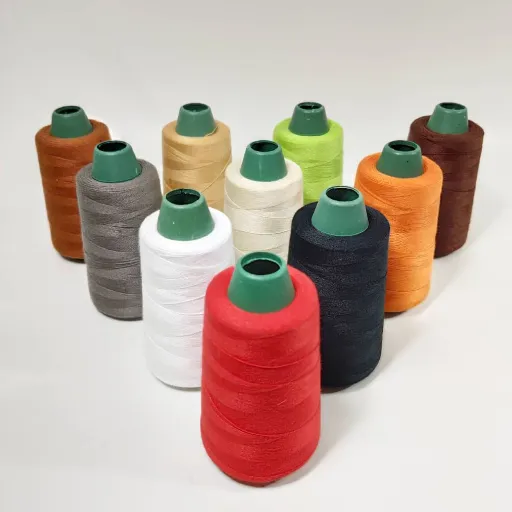


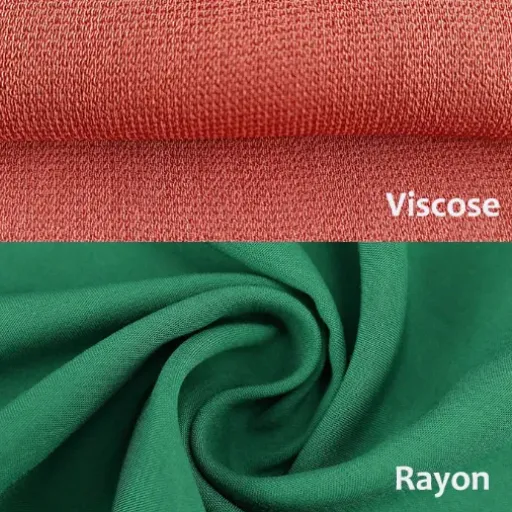


Yarn for medical textiles is used in four device categories: healthcare and hygiene, non-implantable, implantable, and extracorporeal. Most of the market is nonwoven, so yarn matters mainly in woven and knitted products such as reusable gowns, drapes, gauze, bandages, bedding, and sutures.
Nonwoven fabrics account for 45.91% of the global medical textiles market, according to Grand View Research. In many medical products, there is no yarn to specify.
Buyers are often told to ask for “medical-grade” yarn. The phrase sounds precise. It is not. There is no universal medical yarn standard, and no single certificate that makes a yarn suitable for every device.
This guide maps where yarn is actually used, the specifications that decide acceptance, and the evidence a supplier must provide. It also draws a line that most articles avoid: what a general yarn mill can supply, and what requires a medical device manufacturer.
We will cover the categories, specifications, and evidence. Specifying yarn for medical textiles starts with the device, not the fiber.
Key Takeaways
- Nonwoven fabrics are 45.91% of the medical textiles market, so yarn matters only in woven and knitted devices.
- There is no legal “medical-grade” yarn. Qualification is specific to the device, the process, and the evidence file.
- A general mill can supply gowns, drapes, gauze, bandages, bedding, and uniforms. Implantable sutures and grafts require a device-grade supply chain.
- Yarn properties such as linear density, tenacity, elongation, twist, finish, and bioburden decide whether a lot survives conversion.
- Barrier performance, biocompatibility, and sterilization are tested on the device, not on the yarn alone.
The scenarios in this guide are composite examples of common qualification problems, not named customer accounts.
What Counts as Yarn for Medical Textiles?
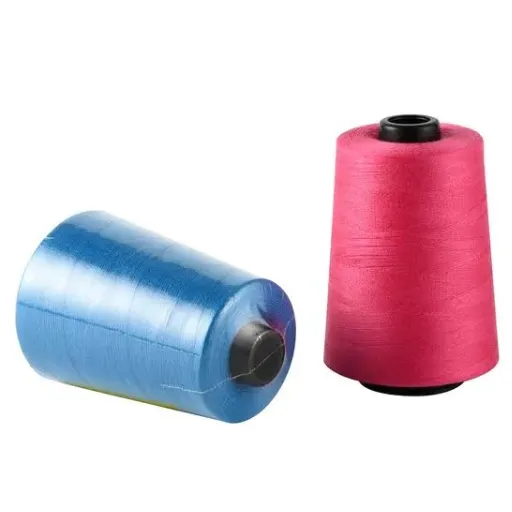
Yarn for medical textiles is a spun, filament, or braided yarn used as a component of a healthcare or medical device. Its suitability is defined by the device specification and the evidence behind it, not by a universal grade.
The global medical textiles market was valued at USD 35.87 billion in 2023 and is forecast to reach USD 48.04 billion by 2030, a 4.3% compound annual growth rate. Healthcare and hygiene was the largest application segment at 43.15% of 2022 revenue.
Four categories cover most of the market:
| Category | Examples | Yarn used? | Who can supply |
|---|---|---|---|
| Healthcare and hygiene | Bedding, uniforms, curtains | Yes | General mill with controls |
| Non-implantable | Reusable gowns, drapes, gauze, bandages | Yes | General mill with controls |
| Implantable | Sutures, mesh, grafts, scaffolds | Yes | Device-grade supply chain |
| Extracorporeal | Dialysis membranes, filters | Yes | Specialized membrane maker |
The table is the first filter: single-use masks and wipes are usually nonwoven, while reusable gowns and gauze are yarn products.
“Medical-grade” is a trade phrase, not a regulatory grade. A yarn does not become medical-grade because a supplier says so. It becomes qualified because the device manufacturer approves the specification, tests the finished device, and controls the process.
Not sure which category your product sits in? Our guide to yarn applications by fiber and end use maps the full set, including industrial and technical categories.
Non-Implantable Textiles: Gowns, Drapes, Dressings, and Bandages
Non-implantable products are the most accessible category of yarn for medical textiles. They sit on or against the body and include reusable surgical gowns, drapes, gauze, bandages, and wound dressings. A general mill can supply them, provided the quality system and traceability are in place.
Reusable surgical gowns
Surgical gown fabric is usually a woven polyester/cotton blend, often 50/50. The fabric carries a durable repellent finish and must hold its barrier performance after repeated laundering.
The yarn provides strength, dimensional stability, and a consistent finishing surface. Barrier performance is tested on the fabric and the garment, not on the yarn. EN 13795 defines standard and high-performance levels. AAMI PB70 defines four barrier levels for the US market.
Single-use gowns and drapes
Single-use gowns and drapes are typically SMS, polypropylene, or polyethylene laminates. These are nonwoven structures. There is no yarn in the barrier layer.
A buyer asking for “gown yarn” may actually need a nonwoven supplier.
Gauze and bandages
Gauze yarn is usually cotton, woven in a leno structure. Low twist helps absorbency, while bleaching and lint control determine how the fabric performs in a clinical setting. Elastic bandages use a core-spun yarn around an elastane core. The cotton or viscose sheath provides skin contact, and the core provides recovery.
| Product | Typical yarn | Fiber | Property that decides | Test |
|---|---|---|---|---|
| Reusable gown | Spun or filament, often 50/50 blend | Polyester/cotton | Barrier after laundering, tensile, lint | EN 13795, AAMI PB70 |
| Gauze | Low-twist spun | Cotton | Absorbency, lint, whiteness | Absorbency, ISO 9073-10 |
| Elastic bandage | Core-spun | Cotton or viscose over elastane | Stretch, recovery, compression | Customer specification |
| Drape | Spun or filament | Polyester/cotton | Barrier, drape, lint | EN 13795 |
Lin, a product manager at a gauze converter in Jiangsu, switched to a shorter-staple cotton to protect margin. The fabric passed weight and strength checks, but lint shedding rose, and the hospital laundry rejected the first shipment. The yarn was not defective. It was specified for the wrong job.
Need a gauze, gown, or bandage yarn reviewed against your device spec? Send the specification to our technical team and we will tell you what we can test and what we cannot.
Implantable Textiles: Sutures, Meshes, and Grafts
Implantable textiles are where the line between a yarn mill and a medical device manufacturer becomes clear.
Sutures
A suture is a braided or monofilament yarn attached to a needle and used to close tissue. Absorbable sutures are made from polymers such as PGA, polyglactin 910, polydioxanone, and polyglecaprone 25. Non-absorbable sutures use silk, nylon, polyester, polypropylene, or stainless steel.
Monofilament sutures reduce tissue drag but offer poorer knot security. Braided sutures handle better but can wick fluid, so they are often coated. Sizes run from USP 5 to 11-0.
The FDA regulates sutures as Class II devices with special controls, and most require 510(k) clearance. In the EU, implantable sutures are typically Class IIb or III under the MDR. The device manufacturer owns that classification.
Why this supply chain is different
Implantable yarns require more than a good data sheet. They require ISO 13485 quality systems, controlled cleanroom spinning, ISO 10993 biocompatibility data, sterilization validation, lot traceability, and device registration.
A general cotton or polyester mill doesn’t have that chain. Hebei Lida does not supply implantable yarns; we describe them because the boundary matters when you write a specification.
Our guides to industrial yarn manufacturing and lot testing and traceability explain the quality controls that a device-grade supply chain builds on.
Healthcare and Hygiene Textiles: Bedding, Uniforms, Masks, and Wipes
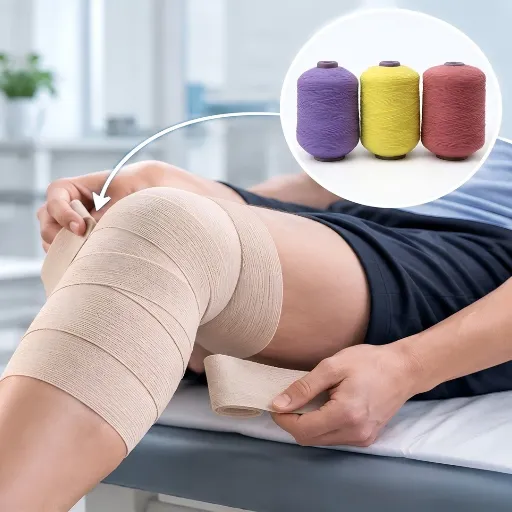
Healthcare and hygiene is the largest application segment, at 43.15% of 2022 revenue. It is also the most mixed: some products use yarn, and many do not.
Hospital bedding is usually cotton or a poly-cotton blend, commonly in the 30s to 40s count range. It must survive industrial laundering, resist shrinkage, and hold color. Uniforms and scrubs use similar blends, often with a soil-release or antimicrobial finish. Silver and quaternary ammonium finishes need qualification because they can change skin compatibility and laundering performance.
Privacy curtains are woven, often polyester or poly-cotton. Flame retardancy, launderability, and colorfastness matter more than strength. Surgical masks and wipes are nonwoven products, not yarn products.
Organic cotton and recycled polyester are viable in bedding and uniforms when the certification chain is intact. GOTS and OCS cover organic content. GRS covers recycled content.
A certificate is not a specification, so the yarn still has to meet the laundry requirement. Our guides to certified organic cotton yarn and recycled polyester yarn grades explain the documentation.
What “Medical-Grade” Yarn Actually Requires
For yarn for medical textiles, there is no such thing as medical-grade. There is only a yarn qualified for a specific device, in a specific process, with a specific evidence file.
The supplier provides a data sheet, a certificate of analysis, and a test report. The device manufacturer provides the regulatory file. The yarn is a component. The device is the regulated object.
| Requirement | Standard | What to ask the supplier |
|---|---|---|
| Quality system | ISO 9001, ISO 13485 | Certificate, scope, last audit date |
| Biocompatibility | ISO 10993-1, -5, -23, -10 | Test reports on the final device |
| Barrier | EN 13795, AAMI PB70, ASTM F1670/F1671 | Fabric and garment test reports |
| Sterilization | ISO 11135, ISO 11137, ISO 17665 | Method, validation, residuals |
| Bioburden | ISO 11737-1 | Limits, monitoring, storage conditions |
| Traceability | Customer quality system | Lot records, change notification |
| China standards | YY/T 0506, GB/T 16886, GB 19082 | Current standard, test report |
Quality system
ISO 9001 is the baseline. ISO 13485 is the medical device standard and is usually required when the yarn is a critical component. Ask for the certificate, its scope, and the last audit date. A certificate covering trading, not spinning, is not enough.
Biocompatibility
ISO 10993-1 frames the evaluation. Cytotoxicity is tested under ISO 10993-5, irritation under ISO 10993-23, and sensitization under ISO 10993-10. These tests run on the final device, not the yarn. A spin finish, dye, or optical brightener can still cause a failure, so the supplier should declare every chemical added.
Barrier performance
EN 13795 covers gowns, drapes, and clean air suits. AAMI PB70 defines four levels: Levels 1 to 3 use impact penetration and hydrostatic pressure tests, and Level 4 requires ASTM F1671 viral penetration. ASTM F1670 covers synthetic blood.
These are fabric and garment tests. A yarn supplier can’t certify a barrier on the yarn alone.
Sterilization
Ethylene oxide follows ISO 11135, radiation follows ISO 11137, and moist heat follows ISO 17665. Polypropylene and polyester tolerate EO well, while radiation and moist heat can degrade or shrink other polymers. EO residuals are covered by ISO 10993-7.
Bioburden and traceability
Bioburden is measured under ISO 11737-1. There’s no universal limit; the device, sterilization method, and customer validation set it. Traceability is the quiet requirement. A recall can require lot-level records back to the bale or polymer batch.
Aisha, a quality manager at a reusable gown converter in Morocco, approved a new spin finish because it reduced weaving breaks by 18%. The finished gowns passed tensile and seam strength. They failed the hydrostatic test after five laundering cycles.
The finish had changed the fabric’s wetting behavior and the repellent’s adhesion. The yarn met its data sheet. The device did not meet EN 13795.
Building a qualification file for a gown, drape, or bandage program? Send your device specification and we will review the yarn requirements, the tests, and the documentation you should request.
Medical Textile Yarn Specifications and Tests
Specifying yarn for medical textiles means writing down properties that are easy to leave vague. The data sheet says “high tenacity.” The device needs a number. The certificate says “passed.” The customer needs a method.
Yarn-level specifications
These are the properties a spinner controls and a buyer should specify:
| Property | Unit | Why it matters |
|---|---|---|
| Linear density | tex, dtex, or Ne | Fabric weight, cover, and count |
| Tenacity | cN/tex | Strength and seam performance |
| Elongation at break | % | Processability and dimensional stability |
| Twist | TPM or TPI | Absorbency, hand, and strength |
| Evenness | CV% | Streaks, thin places, and weaving breaks |
| Shrinkage | % | Stability after washing or sterilization |
| Spin finish | % | Processing versus extractables |
Fabric and device tests
These are the tests that decide whether the device passes:
| Test | Standard | What it catches |
|---|---|---|
| Tensile strength | ISO 13934-1, ASTM D5034 | Weak fabric or seam |
| Tear strength | ISO 13937-2, ASTM D5587 | Tear propagation |
| Hydrostatic resistance | AATCC 127, ISO 811 | Liquid barrier failure |
| Impact penetration | AATCC 42 | Splash penetration |
| Synthetic blood | ASTM F1670 | Blood-borne pathogen risk |
| Viral penetration | ASTM F1671 | Viral barrier failure |
| Linting | ISO 9073-10 | Particle shedding |
| Bioburden | ISO 11737-1 | Microbial load |
| Cytotoxicity | ISO 10993-5 | Biocompatibility failure |
A yarn can meet every spinning specification and still fail a barrier test because the fabric construction, finish, or sterilization changed. A fabric can also pass a bench test and fail in the field because the yarn lot drifted. For high-tenacity polyester in technical textiles, our guide to polyester industrial yarn applications covers the property trade-offs.
Our guide to yarn quality control and lot testing explains sampling plans, AQL, and defect classification behind these numbers.
Marco, a sourcing manager at a bandage maker in Italy, qualified one lot and placed a production order. Lot two arrived with 6% higher elongation and a different finish level. Knitting tension had to change, and the first 2,000 meters were rejected. Three consecutive lots would have caught the drift.
Sourcing Medical Textile Yarn: A Buyer’s Checklist
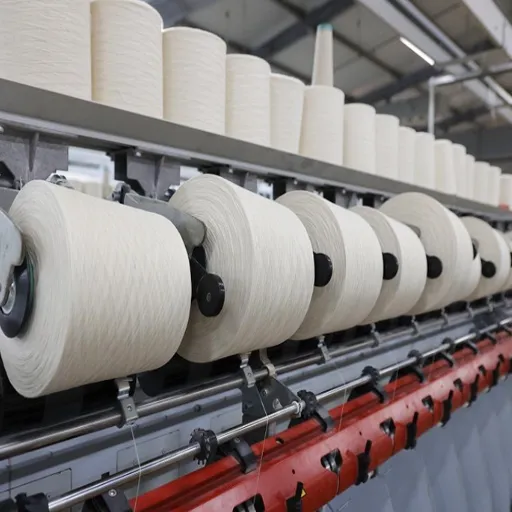
Sourcing yarn for medical textiles starts before you approve a supplier. Ask a medical yarn supplier for the specification, not the phrase. This checklist applies to gowns, drapes, gauze, bandages, bedding, and uniforms. It doesn’t qualify a supplier for implantables.
- Define the device and its class first. The device determines the evidence, not the other way around.
- Ask for the yarn specification, not “medical-grade.” Request numbers for count, tenacity, elongation, twist, finish, and shrinkage.
- Request a certificate of analysis per lot. Check the test method, the lab, the date, and the sample condition.
- Ask how bioburden is controlled. Storage, packing, and monitoring matter as much as the spinning process.
- Ask for the change-control procedure. Any fiber, finish, or process change should trigger notification and re-qualification.
- Confirm sterilization compatibility. A fiber that survives EO may not survive gamma or steam.
- Audit the quality system. ISO 9001 is the minimum. ISO 13485 is required when the device demands it.
- Qualify three consecutive lots. One lot proves the supplier can make a sample. Three lots prove the process is stable.
- Confirm export documentation and lead time. Certificate of origin, packing list, safety data sheets, test reports, lot traceability, and a delivery schedule that matches your line.
Four red flags:
- “Medical-grade” with no test data.
- No bioburden or storage information.
- No written change-notification process.
- A certificate that covers trading but not manufacturing.
Ready to review a specification? Send your device type, target standard, and yarn requirements to our team. We will confirm what we can supply, what we can test, and what you should qualify elsewhere. Start a specification review.
Frequently Asked Questions
What yarn is used in medical textiles?
Medical textiles use cotton, viscose, polyester, polypropylene, nylon, and specialty fibers such as alginate and chitosan. The yarn depends on the device: spun cotton for gauze, polyester/cotton for reusable gowns, polypropylene for nonwoven masks, and PGA or polypropylene for sutures.
Is there such a thing as medical-grade yarn?
No. “Medical-grade” is a trade phrase, not a legal or universal standard. A yarn is qualified against a specific device specification, quality system, and test file. Ask for the specification and the test report, not the phrase.
Are medical textiles woven or nonwoven?
Both. Nonwoven fabrics are 45.91% of the market and dominate single-use gowns, drapes, masks, and wipes. Woven and knitted textiles dominate reusable gowns, gauze, bandages, bedding, and uniforms.
What fiber is best for surgical gowns?
Reusable gowns usually use a woven polyester/cotton blend with a durable repellent finish. Single-use gowns use SMS or polypropylene nonwoven. The choice depends on the barrier level, the laundering cycle, and the hospital’s waste policy.
Can recycled polyester be used in medical textiles?
Yes, in non-implantable and hygiene products, provided it is qualified. Recycled content can change tenacity, shrinkage, color, odor, and extractables. A GRS certificate confirms the recycled content, not the performance.
Do I need an ISO 13485 supplier?
It depends on the device. ISO 13485 is usually required when the yarn is a critical component of a medical device. For bedding, uniforms, and some non-implantable products, ISO 9001 plus the customer’s specification may be enough. Confirm the requirement before you quote.
What drives the cost of medical textile yarn?
Fiber type, certification, lot size, testing, and documentation. A certified organic or GRS recycled yarn costs more than a conventional yarn. A small lot with full biocompatibility support costs more per kilogram than a bulk order.
The Medical Part Is the Evidence File
Yarn for medical textiles is not a fiber category. It is a qualification status. The fiber tells you what the yarn is made of. The evidence file tells you what the device can claim.
Five points to carry into your next program:
- Most medical textiles are nonwoven, so confirm that yarn is the right input before you specify it.
- There is no medical-grade yarn, only a yarn qualified for a device.
- A general mill can serve gowns, drapes, gauze, bandages, bedding, and uniforms.
- Implantables require a device-grade supply chain, including ISO 13485 and cleanroom spinning.
- Test the device, document the lot, and control every change.
If you are sourcing yarn for medical textiles, send your device specification and target standard to our team. We will review the construction, confirm what we can test, and tell you honestly whether it fits our capability. Start with a specification review.
The suppliers who win medical programs are not the ones with the longest fiber list. They are the ones who can document performance lot after lot, and tell you what will fail before it does.