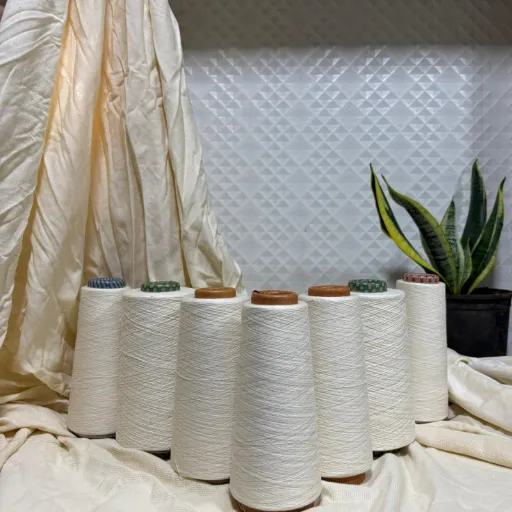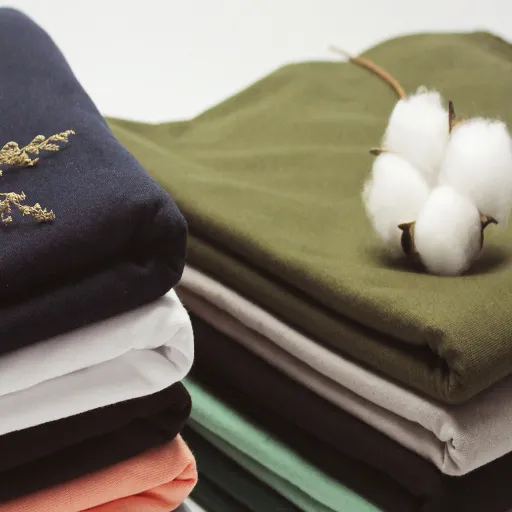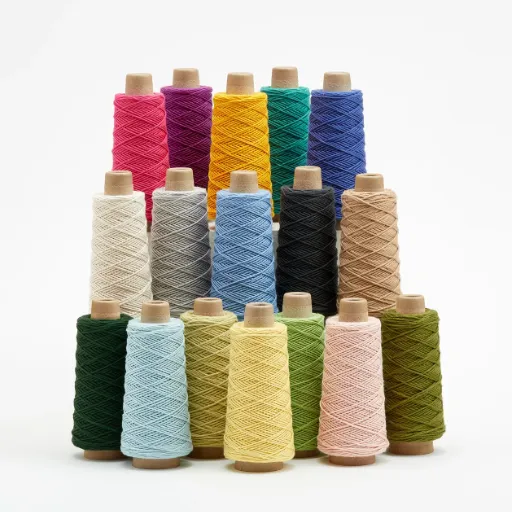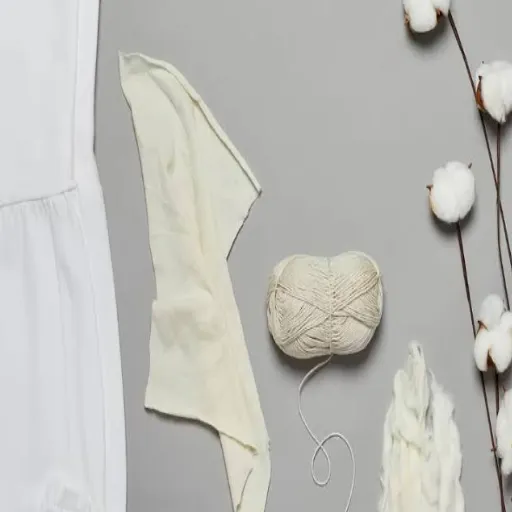
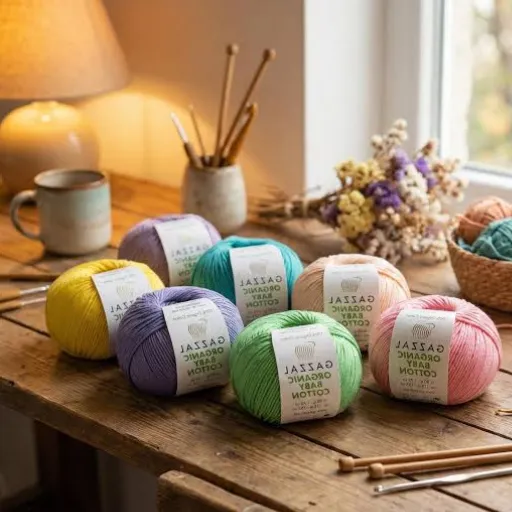
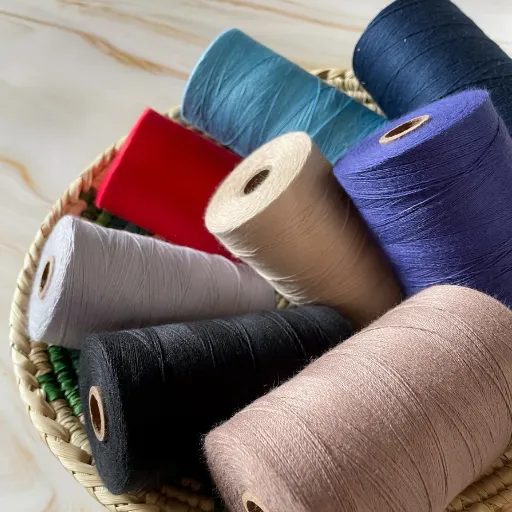


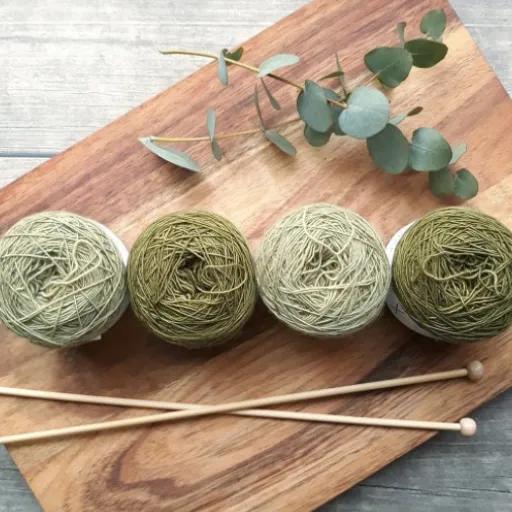


Yes, organic cotton yarn is a safe choice for babies, and it is one of the gentlest fibres you can put next to their skin. But here is the part most guides skip. The word “organic” on a label promises nothing on its own. What actually protects a baby is certification plus careful construction, and those two things are easy to specify once you know what to look for.
If you have ever stood in a craft shop or scrolled a yarn listing, wondering whether the soft skein in your basket is genuinely safe for a newborn, you are not alone. Parents and makers ask us this every week. Organic cotton yarn for babies is genuinely softer, more breathable, and lower in the residues that can irritate delicate skin. Yet the differences between a certified organic yarn and an uncertified one are real, measurable, and worth understanding before you knit or buy.
This guide gives you the honest answer. You will learn what makes organic cotton different for a baby’s skin, the actual residue limits that certified organic textiles must meet, how organic cotton compares with polyester, acrylic, bamboo, and wool, what to specify when you buy, and how to care for baby clothes and blankets so they stay safe for years. No scare tactics, no vague promises. Just the facts a careful parent or maker needs.
Key Takeaways
- Organic cotton yarn is safe for babies, but certification (GOTS or OEKO-TEX Standard 100 Class I) is what protects a baby’s skin, not the word “organic” alone.
- GOTS sets stricter residue limits for baby textiles than for other goods: formaldehyde under 16 mg/kg, azo-dye amines under 20 mg/kg, extractable cadmium under 0.1 mg/kg, and pesticides under 0.1 mg/kg.
- For baby projects, choose finer combed counts of roughly Ne 30/1 to 40/1, avoid mercerised cotton, and skip shedding, single-ply, or novelty yarns.
- Cotton has little stretch and shrinks over time, so pre-wash your yarn or add length, and always wash new baby items before first use.
- Polyester and acrylic cost less and are easier to care for, but they trap heat. Organic cotton breathes, which matters for a baby who cannot regulate temperature yet.
What Makes Organic Cotton Different for a Baby’s Skin
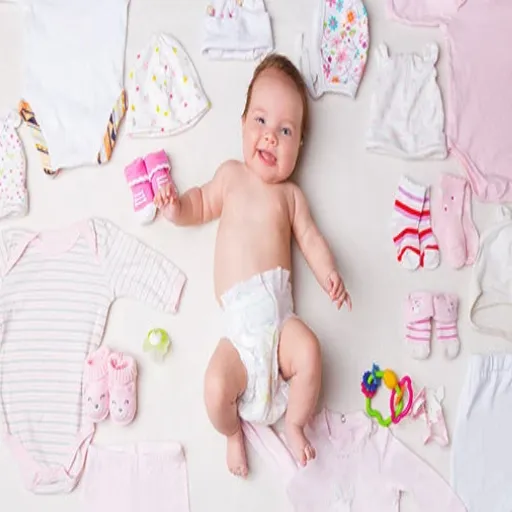
A Baby’s Skin Is Thinner and More Absorbent
A newborn’s skin is roughly 30 percent thinner than an adult’s, and its barrier function is still developing. That combination means a baby absorbs more from whatever sits against their skin, and clears it more slowly.
This is why fibre choice matters more for babies than for anyone else. It is also why the same fabric that feels fine on an adult arm can leave a red patch on a baby’s cheek after an afternoon.
What “Organic” Actually Changes, Growing, Not Finishing
Organic cotton is grown without synthetic pesticides or fertilisers. The fibre is farmed under rules that protect soil, water, and the people in the field. Industry bodies such as Textile Exchange track that production and run the content standards behind many organic claims. That is a real difference, and it is worth paying for.
But the fibre does not reach you as a fibre. It passes through spinning, dyeing, and finishing first, and those steps are where a yarn either stays clean or picks up chemistry. Organic farming is only half the story.
The Honest Caveat: Pesticides Mostly Wash Out, Finishing Chemistry Does Not
Here is the part that separates a trustworthy guide from a sales page. Research and consumer bodies widely note that most cultivation and processing chemicals are removed during textile manufacturing. So the “pesticides sitting against your baby’s skin” framing that some brands use is, frankly, overstated.
The durable risk is different. It is the finishing chemistry applied to the finished textile, and the fact that a yarn sold as “organic” without certification may have received dyes and finishes no one has checked. Certification is what closes that gap. This is the honest reason to choose certified organic cotton, and it is more compelling than the myths.
Want to see what certified organic cotton actually looks and feels like? Explore our GOTS organic cotton yarn range and request a sample for your next baby project.
Does Organic Cotton Yarn Contain Harmful Residues?
Organic cotton yarn is safe for babies when it is certified. The protection comes from two things working together: a recognised standard that limits what residues are allowed, and low-residue finishing during manufacturing. The word “organic” on its own is a marketing claim. A certificate is a verifiable one.
The GOTS Limits for Baby and Personal-Care Textiles
The Global Organic Textile Standard (GOTS) is the leading certification for organic fibre, and it sets stricter limits for baby and personal-care products than for any other textile. Here are the headline figures. The full table runs to dozens of parameters.
| Parameter | Limit for baby and personal-care goods | Test method |
|---|---|---|
| Carcinogenic arylamines from azo dyes | Less than 20 mg/kg | EN 14362-1/-3 |
| Formaldehyde | Less than 16 mg/kg | ISO 14184-1 |
| Extractable cadmium (heavy metal) | Less than 0.1 mg/kg | EN 16711-2 / ISO 17294-2 |
| Pesticides, sum parameter (organic fibre) | Less than 0.1 mg/kg | LFGB L 00.00-34 / -114 |
| pH | 4.0 to 7.5 | Not applicable |
Two details matter. First, note that formaldehyde is capped at 16 mg/kg for baby goods, while the limit for other skin-contact textiles is 75 mg/kg. The standard tightens as the wearer gets smaller. Second, GOTS regulates pesticides as a sum parameter, not as a list of individual chemicals, which is a stronger safeguard than checking one compound at a time.
For a full breakdown of how organic and conventional cotton differ at the fibre level, see our guide to organic versus conventional cotton fibre.
OEKO-TEX Standard 100, Product Class I (Baby)
GOTS certifies the organic supply chain. OEKO-TEX Standard 100 certifies chemistry, and it is worth understanding as a companion standard. It sorts products into four classes, and Class I is reserved for baby items.
At Class I, formaldehyde must be not detectable, and the permitted pH range is 4.0 to 7.5. A yarn can carry both certifications, and many of the best baby yarns do. When you see OEKO-TEX Class I on a label, you are looking at a product tested for the most sensitive users.
EN 71-3, Why Toy Yarn Is Tested Differently
If you knit or crochet amigurumi, rattles, or soft toys, a third standard applies. EN 71-3 is the European toy-safety standard, and it limits how much heavy metal can be extracted from a material a child might mouth.
This is why some yarn brands advertise EN 71-3 as well as GOTS. It tells you the yarn has been tested for the way babies actually use soft things, which is rarely the way adults intend.
“Organic” Without Certification Means Nothing
A skein can say “organic” and hold no certificate at all. There is no legal definition behind the word in most markets. That gap is where greenwashing lives. To check a genuine claim, learn what GOTS and OCS actually certify, and ask for the Scope Certificate and a Transaction Certificate for your order.
Priya learned this the hard way. In early 2025, she ordered a baby blanket kit labelled “organic cotton” from a marketplace seller because the photos looked beautiful and the price was low. The yarn arrived soft and the colour was lovely, so she knitted a full blanket for her sister’s shower.
Two weeks after the baby came home, the mother noticed a persistent rash on the baby’s chest that cleared whenever the blanket was swapped out. Priya checked the listing again and found no certification number, no Scope Certificate, and no way to trace the fibre. The “organic” label had cost the seller nothing to print. She now buys only yarn with a visible GOTS or OEKO-TEX Class I claim.
Ready to specify a certified baby yarn with confidence? See our GOTS-certified organic cotton options or ask us for the certificate behind any count you need.
Organic Cotton vs Polyester and Acrylic for Baby Items
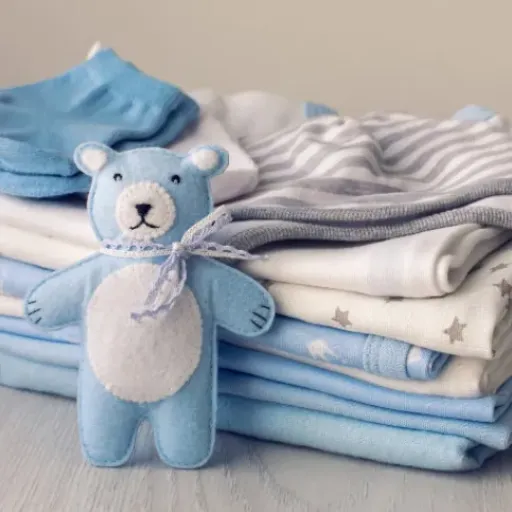
This is the comparison that matters most for a new parent, because polyester and acrylic are the yarns most often handed to you as the affordable, easy-care option. They are not wrong. They are just different.
Breathability and Heat
Synthetic fibres trap heat and moisture against the skin. Cotton lets air move through it. For a baby who cannot yet regulate their own temperature, that difference shows up in how settled they sleep and how often a hat turns into a sweaty mess.
Skin Irritation and Static
Synthetics build up static and can aggravate eczema-prone skin. Roughly 20 percent of children develop eczema, and clothing and bedding irritants frequently make it worse. Organic cotton is naturally hypoallergenic and produces none of that static cling.
For a baby whose skin flares easily, it is often the safer daily choice. If you want the full case on synthetics, read whether polyester is safe for babies and our breakdown of acrylic yarn and babies.
Where Synthetics Still Win
Honesty cuts both ways. Polyester and acrylic cost less, survive heavy washing without shrinking, and resist abrasion better than cotton. If you are making a stroller blanket that will be washed weekly and left in the car, acrylic might genuinely suit you.
Organic cotton wins on skin comfort and breathability. Synthetics win on price and care. Choose for the item in front of you.
Organic Cotton vs Bamboo and Wool for Baby Projects
Bamboo, Silky Drape, Poor Recovery
Bamboo yarn feels cool and silky, and it drapes beautifully. It is also technically a regenerated cellulose fibre, not a plant fibre in the round, which is why some people treat it as only semi-organic. Its weakness is recovery. Bamboo stretches and loses shape faster than cotton, so it usually works best blended with cotton or washable wool to give it structure.
Merino, Thermoregulation, but a Wool-Sensitivity Risk
Merino wool regulates temperature better than any plant fibre, which makes it excellent for cold weather. The catch is that wool is a common irritant for sensitive skin. Some babies wear merino happily. Others react within minutes. If you are unsure, cotton is the safer first choice.
Which Fibre for Which Baby Item
| Baby item | Best fibre | Why |
|---|---|---|
| Blanket or swaddle | Organic cotton, or cotton-bamboo blend | Breathable, washable, holds shape better than pure bamboo |
| Clothing, bodysuits | Organic cotton, combed | Soft, hypoallergenic, and least likely to irritate |
| Amigurumi and toys | Organic cotton, no shedding | Durable, holds stitch definition, EN 71-3 friendly |
| Cold-weather hat or booties | Merino, if skin tolerates it | Superior warmth and thermoregulation |
Choosing the Right Organic Cotton Yarn for Babies
Count and Weight for Baby Projects
Finer yarns feel gentler against thin skin. For baby garments, look for combed counts of roughly Ne 30/1 to 40/1. For blankets, DK weight (CYC 3) is the classic baby choice: warm enough to matter, light enough not to overheat. If you are new to count numbers, our explainer on yarn count in Ne, Nm, and tex walks through what they mean.
Combed vs Carded, Why Combing Matters More for Babies
Combing removes short fibres and neps during spinning. The result is a smoother, less hairy yarn that is gentler next to skin and less likely to shed. Carded yarns keep those short fibres, which makes them rougher and cheaper. For a newborn, combed is worth the extra cost.
Avoid Mercerised Cotton (and Why)
Mercerised cotton is treated with caustic soda to boost sheen and strength. It looks premium, and for adult garments it is excellent. For babies, most makers advise against it, because the treatment changes the fibre’s feel and removes some of the natural softness a baby benefits from. Choose unmercerised cotton for baby projects.
What to Check on the Label
A quick label check covers most of the risk. Look for:
- Fibre content: 100 percent organic cotton, or a named blend with organic cotton as the base
- Certification: a GOTS or OEKO-TEX Class I claim, shown with its certificate number
- Dye type: fibre-reactive or low-impact dyes rather than unknown chemistry
- Construction: flat or tagless seams and nickel-free fastenings on garments
If a seller cannot point you to a certificate, treat the word “organic” as unverified. Suppliers worth trusting make this easy, which is why we publish how to vet an organic cotton yarn supplier.
Is Organic Cotton Yarn for Babies Safe for Knitting and Crochet?
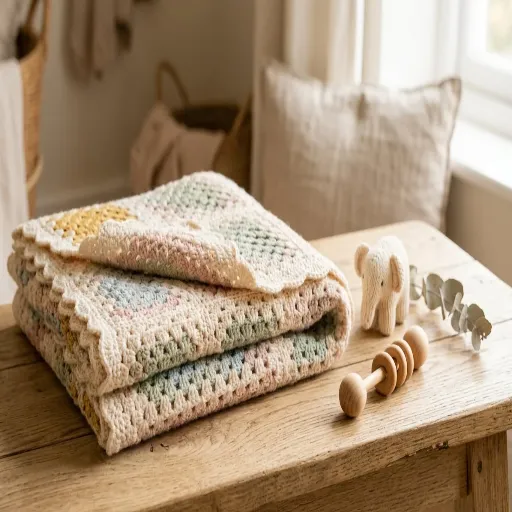
Fibre Shedding and Choking Risk
Loosely twisted and single-ply yarns shed fibre, and loose fibre near a baby’s face is a risk. Avoid mohair, angora, alpaca, eyelash, and glitter yarns for anything a baby will hold or snuggle. A well-twisted combed cotton sheds very little.
Amigurumi, Toys, and EN 71-3
For toys, a tight twist and a dense gauge keep the filling in and the shape intact. Choose a yarn tested to EN 71-3 so the heavy-metal extraction limits have been checked, and sew features on securely rather than gluing them.
Pre-Wash and Shrinkage
Cotton has little memory. It stretches with wear and shrinks in the first wash. Hannah, a buyer for a small baby-brand, learned this the expensive way. She ordered 200 kilograms of organic cotton for a layette range and dyed it to a soft sage green, budgeting fabric to the centimetre.
After the first production wash, the finished garments came in roughly four percent smaller, and two sizes no longer met the brand’s own measurement chart. The re-cut cost her a full week and a rush order. Since then, she specifies a pre-shrunk yarn and always washes a test swatch before committing to yardage. You can do the same simply by knitting a swatch and washing it before you start the real project.
Caring for Organic Cotton Baby Clothes and Blankets
Wash Before First Use
Always wash new baby items before they touch the baby. Manufacturing, packing, and shipping all leave residues on a finished textile, even a certified one. A single wash removes most of it.
Detergent, Softener, and Fragrance
Use a fragrance-free, dye-free, hypoallergenic detergent. Skip fabric softener entirely, because it coats the fibre and reduces absorbency. If you use a regular detergent, run an extra rinse. These simple habits remove the most common causes of post-wash irritation.
Shrinkage, Stretching, and Drying
Dry cotton on low heat or lay it flat. High heat is what drives shrinkage, and cotton left hanging wet will stretch and lose its shape. A little care here keeps a baby blanket looking new through hundreds of washes.
Frequently Asked Questions
Is organic cotton yarn safe for babies?
Yes. Certified organic cotton yarn is one of the safest fibres for babies because it is breathable, hypoallergenic, and held to strict residue limits. Look for a GOTS or OEKO-TEX Standard 100 Class I certificate to confirm the claim.
Is organic cotton better than regular cotton for babies?
For sensitive skin, certified organic cotton is the better choice. The farming avoids synthetic pesticides, and the certification limits the finishing chemistry. Regular cotton can be perfectly safe too, but it carries no verified limits on residues.
Does organic cotton yarn need to be GOTS certified?
No law requires it, but certification is the only way to verify an organic claim. GOTS covers the whole supply chain, while OEKO-TEX Standard 100 Class I verifies the chemistry. At least one of the two is worth insisting on.
What is the best organic cotton yarn for a baby blanket?
A DK weight (CYC 3) combed organic cotton works best for most blankets. It is warm but breathable, holds shape well, and washes clean. Avoid mercerised cotton and any shedding or novelty yarn.
Can babies be allergic to cotton?
A true cotton allergy is very rare. Most reactions blamed on cotton are actually irritation from dyes, finishes, or detergent residue. Choosing certified organic cotton and washing with a fragrance-free detergent removes the usual culprits.
Is mercerised cotton safe for babies?
Mercerised cotton is not toxic, but it is widely advised against for baby projects. The treatment reduces the natural softness that makes cotton comfortable for a baby’s skin, so unmercerised combed cotton is the better pick.
Does organic cotton yarn shrink?
Yes. Cotton shrinks in the first wash, often by around three to five percent. Pre-wash your yarn or add extra length to your pattern, and dry finished items flat or on low heat.
Can I use organic cotton yarn for amigurumi and baby toys?
Yes, and it is a good choice. Use a tightly twisted, combed yarn that does not shed, test to EN 71-3 where possible, and attach any small features securely so they cannot come loose.
Source GOTS Organic Cotton Yarn for Baby Textiles
If you make baby clothes, blankets, or toys, the yarn underneath your brand carries your reputation. We supply GOTS-certified organic cotton yarn for babies across a range of counts suitable for baby work, with the documentation to back every claim: Scope Certificates, Transaction Certificates, and testing to the standards above.
We hold organic cotton to the limits that matter for the smallest wearers, and we are happy to walk you through count, spinning method, and certification before you commit to an order. You can read more about what sustainable yarn actually costs and how to compare options, or go straight to the source.
Choosing a yarn for a baby is a decision you only get to make once per project. Request an organic cotton yarn sample for your next baby collection, and see the certificate behind it before you buy. Our team will help you match the right count, finish, and certification to the item you are making.