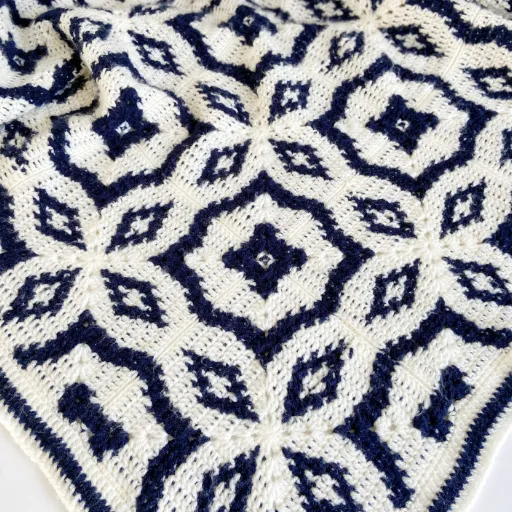


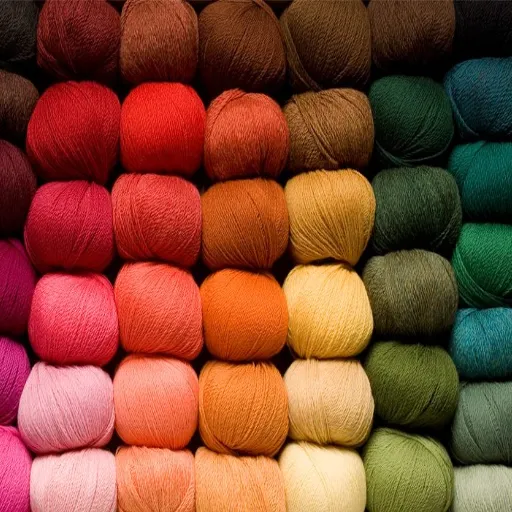
Yarn manufacturing involves several steps including cleansing, carding, combing, spinning, and finishing cotton fibers or any other type of fiber so as to produce yarn in wound bobbins. This is done in modern manufactories where sophisticated equipment is used that is regulated by quality control system. Such equipment allows to produce such a wide range of yarns, from soft cotton for clothing to industrial yarn for heavy duty applications.
For example, the global market for yarn in 2024 was in excess of 125 billion USD. Yet purchasing managers, customers and fashion industry workers often have to contend with the fact that they are unable to fully comprehend what production processes are involved in manufacturing. You know that standard is important. You know that price is important. But how easy is it for you to find out when you are sent a quality sample that was it actually produced with correct methods and equipment and based on some standards.
You too are not the only one. Most purchasing and design departments do not have measures on how to go about in assessing a dynamics of yarn suppliers. Hence, this guide will provide a remedy to that. If you have any questions or need further assistance, don’t hesitate to get in touch with us.
By the end, you will know the whole process of producing a yarn, will understand the features of yarn that are formed on certain processes and will know the appliances which speak about the possibilities of a manufacturer. fortuitously, you will also get the information about the quality control issues that set apart good suppliers from dodgy ones. Whether you order yarns for fashion, home textiles, or for any other sector within the industry, this education helps in better negotiations and maintenance of supplier relations.
The prospect of failure is too great. It only takes a solitary critique in quality for an entire workload to fall off the tracks at no fault of anyone.
Here is what we will cover: how yarn manufacturing works step by step, the four main spinning techniques and when to use each, the machinery that defines a factory’s capabilities, industrial and custom production options, sustainable manufacturing methods, quality control processes, and how to choose the right partner for your specific needs.
Key Takeaways
- Yarn manufacturing transforms raw fibers into finished yarn through seven core stages: fiber preparation, carding, drawing, roving, spinning, twisting, and finishing.
- Ring spinning produces 65% of global yarn output because it delivers superior strength and consistency for high-quality applications.
- Industrial-grade yarns require specialized testing for tensile strength, abrasion resistance, and UV stability, standards that differ significantly from fashion-grade production.
- Custom yarn manufacturing allows buyers to specify fiber blends, twist levels, yarn counts, and finishes to match exact project requirements.
- Sustainable yarn production methods, including organic cotton farming, recycled polyester processing, and water-saving dye techniques, now deliver comparable quality at competitive costs.
Need expert guidance on your next textile project? Hebei Lida Textile Co., LTD specializes in custom yarn manufacturing tailored to your exact specifications. Contact our team to discuss your requirements.
What Is Yarn Manufacturing?
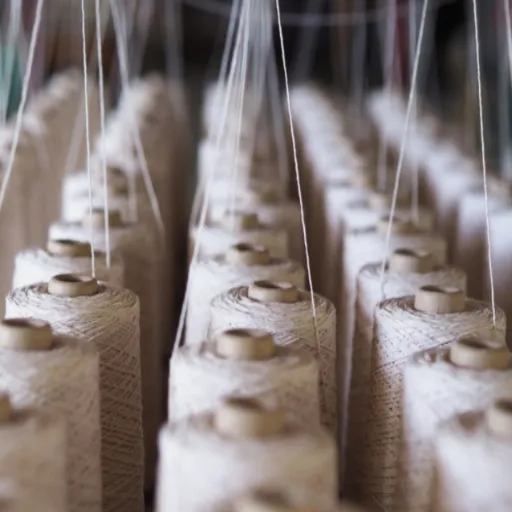
Making of yarn is the part of manufacturing industry which transforms small random fibers into large continuous, structured thread which forms the basic structural unit of textiles to be further woven, knitted or other treated to produce fabrics as may be required. This manufacturing process also deals with more challenging raw material such as cottton, wool, and silk and some even more interesting synthetic materials such as polyester, nylon, and acrylic. The final yarn, on the other hand, is used to construct different products such as clothes and curtains, to machine tools, to ships and boats.
The industry is extremely large in scale. According to the statistics of the ITMF, which stands for the International Textile Manufacturers Federation, more than 50 percent of the total world clothes — cotton yarn – is produced in China. The spinning mills have become so large as to yield several million tons of fiber that they distribute to companies known for producing clothes, manufacturing household textiles, lean on the vehicles, and make fences while social fabricating. The yarn manufacturing on the other hand, irrespective of its size is founded on some basic principles: cleanse the fiber, align the fiber, remove the waste fibrils and keep evenness so that the fiber will function usually, Add or twist in such a way that there are tight fibrous coils to hold helping fibers in their place and give a final touch to the fibers to meet their usual performance.
Yarn can be typically divided into three major categories. Natural yarn is made of fibers extracted from plants or animals, it is flexible and drape-able, and can be decomposed. Synthetic Fibers are certain custom created fibers where chemical processing of polymer ooze from the above-mentioned sources is made; however, it has solid physical strength, uniformity, performance characteristics. The human persona cotton apparel has alternatively led to the introduction of combined or blended fibers, that uses a little of both. Cotton yarn Garden will out in full use Natural (Plant fibre) and synthetic materials to harden Cement or other masonry structures. Polyester etc Cotton yarn is kategori where also both polyestercotton fiber and wool fiber or polyamides can be efficiently used in combination with still other chemical textiles. Contact Hebei Lida Textile Co., LTD today for professional yarn manufacturing solutions tailored to your business needs.
Why Understanding Yarn Manufacturing Matters for Buyers
When Elena Voss, a procurement manager for a European furniture brand, toured her first yarn factory in 2023, she thought she was prepared. She had reviewed samples, compared pricing, and checked delivery timelines. However, as a part of the tour, she soon found out that she could not easily see if the carding machines were well maintained or if the spinning frames were working well in terms of their levels of twist ratio. The only thing that had made her consider investing in the plant was the low asking price. She opted to sign the contract. They had a few hitches in their fabric in the next six months which saw the defect rates from her upholstery line rise by another eight (8) percent, hence, all the returns and labor costs.
This is a very familiar tale for people like Elena. Those that possess insights into yarn manufacturing are provided with four main benefits.
The first benefit is that they are able to appraise quality themselves and are not limited to the information that the seller presents. The second advantage arises from the knowledge of which of the cost stages account for the most. Therefore, they have the cost picture in front of them or right at the disposal.
Additionally, they provide a range of options to personalize the use. In that, they can specify precisely which parameters can be tailored to suit their specific requirements, such as those of fabric composition, twist in the yarn, yarn number, etc.
The Yarn Production Process (Step-by-Step)
The journey from raw fiber to finished yarn follows a precise sequence. Each stage builds on the previous one, and quality issues at any point compound downstream. Understanding these steps helps buyers ask the right questions and spot potential problems before they affect finished products.
Step 1: Fiber Selection and Preparation
In the process of making yarn, the first step is always the selection of suitable fibers. In this regard, raw cotton may request a large number of ginning a non-optimized fusing cotton coming together with immortality; wool, on the other hand, has to be distilled off wool and dirt during first processing. Also, synthetic fibres come from the manufacturer in the form of a high frequency, which shall be milled for yarn of the desired length.
Preparation processes aim at the elimination of impurities and the mixture of fibers as required. Therefore, blending machines application was essential in such case liquids. For instance, a 65/35 polyester-cotton blend demands the use of materials in corresponsive proportions in order to achieve the same quality of every finished yarn. Poor blend formation results to weak spots, concentration of colors and erratic distribution of dye.
Step 2: Carding
Carding provides a more precise form of fiber-friendly technology that is achieved through drawing. Thereby, explicitly, carding involves various machine designs in the preparation stage. Predominantly, however, elements of this stage constitute numerous cylinders. The cylinders are made of steel and have longer parts of their surfaces covered with wires (pins). This picture gives the impression of the rotating machine that combines the smaller working components.
There is also a cylinder that does not move in the process but cards the fibers. This cylinder holds regular card clothing with wire teeth on some organization pattern. Manipulation of the different cylinders to align these finer fibers from the web is indicative of the six cylinder and doffer card. Contact Hebei Lida Textile Co., LTD today for professional yarn manufacturing solutions tailored to your business needs.
Step 3: Drawing (Drafting)
Trade waste from a carding operation tends to be excessively thick and filled with uneven lengths of fibers. Drawing machines are used to merge and elongate several slivers at once. This step, called drafting, decreases the sliver diameter and enhances the sliver’s straightness. The slivers usually undergo two or three drawing stages, and the consistency of the sliver gets better in each stage.
Drafting also gives a second chance for the blending of fibers. In drawing, if there is a need for color or other performance enhancing functions in the fibers, it will usually be added at this point. The correct possibility of drafting is essential for determining the required count of the finished yarn, considering that changes in the equipment can significantly affect the value. Get in touch with Hebei Lida Textile Co., LTD to learn more about our advanced yarn manufacturing capabilities and customized textile solutions.
Step 4: Roving
Once the fibers have been drawn, now called slivers, they are far from being ready to be transformed into yarn. Roving frames here are used to put some twist in the sliver and to degree of which to reduce it further in thickness. The roving thus obtained almost resembles a rope with slight twist. This is the point which acts as a transition between the carded and the open end roving, making the fibre so delicately fine that it can be wound on the cops without even breaking them, and hence, it is no longer roving but yarn preparation.
The quality of the roving is decisive in terms of its evenness, consistency of twist, as well as the tension applied. For the inconsistent roving to be used in yarn production, the yarn will look weird as the fabric will have squavy patches when dyed and the yarn will have points of criteria when used in strained setups are as bad-mined as they are necessary.
Step 5: Spinning
Yarn creation isn’t the same without spinning. At this point, the roving is extended to the necessary diameter and rotates to secure the fibers. Amount of twist, or twists per inch (TPI), plays an essential role in setting the resistance of the yarn, how well it stretches, and how good it feels to the hand. More amount of twist in the yarn would result in better strength but would consequently remove the supple characteristic of the yarn. Less twist would tend to increase the softness of the yarn but would possibly make the yarn less lasting.
There are four primary methods for manufacturing spun fibers in modern cottonseed: ring spinning, open-end (rotor) spinning, air-jet spinning and compact spinning. These methods will be reviewed in detail in the following section.
Step 6: Twisting and Plying
The yarn made of a single strand is a single-ply yarn. However, almost in every application, impressed lash means yarn which is made of two or more single strand yarns twisted together. However,- A second conversion operation may be performed on yarn to: provide stability, augment strength, and introduce design concepts. For instance, three or four spin systems may be used to manufacture a chenille yarn. For example, if two strands are grabbed in opposite hands and twisted in the opposite direction of their original spin, it will not curl easily in knitting as the respective twist directions completely eliminate it.
In order to achieve a particular desired function, manufacturers will determine a suitable number of plies, plies’ twisting direction and amount of twist they are willing to induce on a product. For example, three threads are typically employed in weft (filling) yarns, which are commonly known as ‘upholstery yarn’ constructions, and are usually of three ply construction. ‘Fashion’ yarns with two slobs and low twist, on the other hand, may be used foressive patterns as such construction offers soft volume rather than extreme elasticity.
Step 7: Winding, Finishing, and Packaging
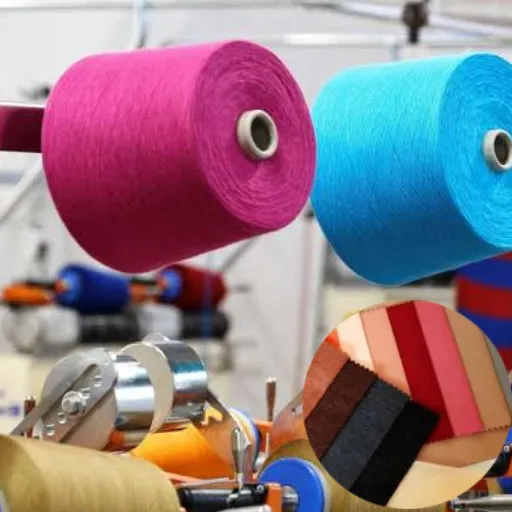
Once yarn has been spun and plyed the yarn is then loaded onto winding machines which wind it onto cones, spools or cheese packages which can be used for further processing down the line. In winding, it is common for the manufacturers to add chemicals such as lubricants, anti-static agents or softeners which make the yarn/process more manufacturing or knitting friendly.
During these steps, the quality of the yarn is tested in various stages. A thick and thin detector and a foreign matter detection system are used in an automatic scanner, and are used to inspect the product for neps and uneven thickness and color. Any yarns found to be out of specifications are reformatted, i.e., they are either returned to the previous step or completely rejected.
How to Evaluate a Manufacturer’s Production Process
When you tour a yarn factory or review a supplier’s documentation, focus on these specific indicators:
- Auto-leveling systems on carding and drawing lines ensure consistent sliver weight
- Uster testing equipment or equivalent measures yarn evenness and imperfection levels
- Climate-controlled storage for raw fibers prevents moisture damage and contamination
- Batch traceability systems allow the manufacturer to track any finished package back to its raw material source
- Preventive maintenance logs for spinning frames reduce unexpected downtime and quality drift
Red flags include dusty storage areas, visibly worn machine parts, manual sliver handling without weight controls, and inability to provide batch-specific test reports.
Want a deeper explore each stage? Explore our detailed guide to the yarn production process.
Yarn Manufacturing Techniques & Methods
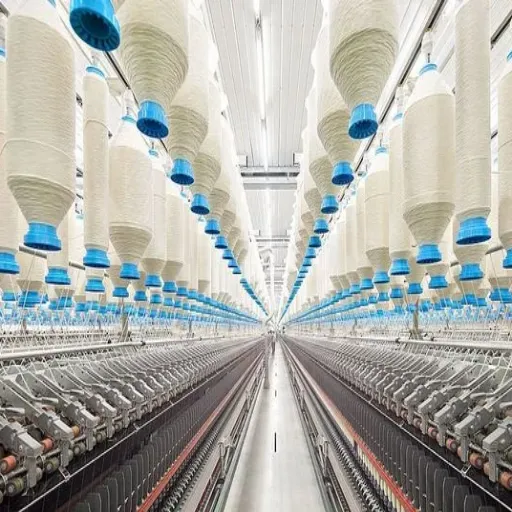
The spinning technique a manufacturer chooses determines the yarn’s properties, cost, and suitable applications. Each method involves trade-offs between quality, speed, and fiber compatibility.
Ring Spinning
As the earliest and most prevailing method of Verdant energy conversion, ring spinning now accounts for 65% of the world’s total yarn production. Presented within this technology of pre-spinning, the gentle process of draft spinning by stretching the thin sail made from rove to the required thickness is performed. The process is completed by the coils spinning and while doing so, twisting the material is also secured by the spindle. At the same time, the yarn is pulled by a traveler to a spool spinning on the belt called a metal package.
Ring spun yarn typically has greater tensile, yarn is more round and surfaces more clear,As unlike the previous technologies this alignment makes the fibers to lie straight along the axis of the yarn which results in even more flattening of the structure. Ring spun fabric is developed due to this direction of spinning and this is used in producing fashionable apparel, curtains e.t.c. where the comfort or visual appearance of the product is of greater importance. However, the reservation to ring spinning is its productivity: ring spinning produces less than rotor opening or/and air – jet containment systems, which results in high corresponding cost per kilogram.
Open-End (Rotor) Spinning
Rotor spinning is a variant of open-end spinning in which the traveler and spindle arrangement has been eliminated. In its place, a high-speed spinning rotor effectively does the job by revealing the fibres of cotton found in the sliver with the help of a groove. Furthermore, the spinning system operates thanks to the application of forces of rotation and centrifugation around the yarn core.
Speed is the main advantage of the rotor spinning method over ring spinning, as it allows working with coarser count yarn with less deformation. The final yarn produced is on the airier and more irregular side as the fibers are not aligned, and therefore, rotor yarn is more popular with applications such as denim and other equally available and durable garments. This is not the first choice for clothing where nice hand and wrinkles are required, if they are more expense than the need for such wear. On the other hand, rotor yarns generally have relatively low tensile breaking strength and it is the male fiber yarn that reaches a much higher spinning counts than the rotor yarns.
Air-Jet Spinning
Rieter air-spinning technology is based on the principle that high-velocity air twist fibers around a core made of parallel fibers. The process involves wrapping staple fibers around a core that is moving in a continuous motion for the construction of a smooth surfaced moderate speed yarn.
The advantage of such a spinning system is typically applicable to synthetic as well as blended fibers. The air jet yarn possesses characteristics of being less hairy, better evenness and good wear resistance. These materials work well for such types of textiles as tech fabrics, and sewing thread methods among other applications. However, 100% cotton is a material that does not all that work well with air jet spinning. The fibers simply do not bond properly to allow core formation as required.
Compact Spinning
Compact spinning is a kind of ring spinning irrespective of ups and down in its machinery but adding one step of fiber compacting before twist addition. In the conventional ring frame spinning system, which allows a mobility to some of the fibres from main twisting triangle, such fibre drop out problem does not arise.
The final result is a posh grade fiber with less fuzz, more tensile and draw alumina, more gloss attractive to the eye Ideal for making high quality products, such as surfacing cloths or even fashionable fabrics, compact-spun yarn is usually sold at a higher price due to its low bursting strength. Industrial hygiene is generally costly because of machines, materials etc. and its effectiveness is not sufficient, this is particularly to slower children in grade two.
Which Technique for Which Application?
| Technique | Best For | Fiber Types | Key Advantage |
|---|---|---|---|
| Ring Spinning | Premium fashion, home textiles | Cotton, blends | Maximum strength and smoothness |
| Rotor Spinning | Denim, casual wear, basics | Cotton, synthetic | Cost efficiency and speed |
| Air-Jet Spinning | Technical textiles, synthetics | Polyester, nylon, blends | Low hairiness, high speed |
| Compact Spinning | Luxury fabrics, fine counts | Cotton, fine blends | Reduced hairiness, premium hand |
When specifying yarn for your project, ask your manufacturer which spinning system they recommend and why. The answer reveals their technical expertise and whether they prioritize your application’s requirements over their equipment convenience.
Learn more about selecting the right yarn manufacturing techniques for your specific application.
Equipment & Machinery Used in Yarn Manufacturing
The machinery in a yarn factory directly determines product quality, production capacity, and cost structure. Buyers who understand key equipment types can evaluate whether a manufacturer has invested appropriately for their needs.
Carding Machines
The process of carding is the process of cleaning, stretching, and straightening fibres. The latest high-production cards are capable of processing 200 kilograms in a matter of merely an hour. And the major variables to be studied as well are the usable width, diameter of the cylinders and whether the machine is equipped with self-contained leveling systems. European and Japanese carding machines are of the best accuracy normally with Chinese and Indian manufacturers concentrating more on the sales of economy equipments.
Drawing Frames
Drawing frames refine sliver uniformity through multiple drafting stages. Look for machines with pneumatic drafting systems and online evenness monitoring. The number of drawing passages, typically two or three, affects final yarn consistency. Manufacturers serving quality-sensitive markets like fashion and home textiles usually operate at least two drawing stages.
Roving Frames
Roving frames, also called speed frames or simplex machines, reduce sliver thickness and apply light twist. Modern roving frames use servo-controlled drafting and automatic doffing. Production speed and tension control precision separate entry-level equipment from industrial-grade systems.
Ring Spinning Frames
When it comes to cost, standard ring spinning systems are the most expensive among the many types of machines found in textile plants. This cost depends upon the number of spindles employed: for example, a factory of middle size might have mills with 25,000 – 50,000 spindles each. Factors to take into consideration when analysing a manufacturer include the frame supplier which could be Reiter, Toyoda, Lakshmi , Zinser or any other major brand within the market, spindle speed and level of automation. Facilities with automated doffing, link which is the same doffing and unwinding processes, and robot that is inside the factories to transport the materials have lower labor costs due to automation which is spread within sections of thread processing.
Winding and Twisting Machines
After spinning, winding machines transfer yarn onto packages suitable for shipping or downstream processing. Precision winding ensures uniform package density, which prevents dyeing variations and handling problems. Two-for-one twisters, commonly used for plying, insert twice as much twist per rotation as conventional twisters, dramatically improving productivity.
Quality Testing Equipment
A manufacturer’s testing laboratory reveals their commitment to quality. Essential equipment includes:
- Uster evenness testers measure yarn diameter variation along the entire length
- Tensile testers determine breaking strength and elongation
- Classimat systems classify and count imperfections like thick places, thin places, and neps
- Twist testers verify twist per inch (TPI) consistency
- Moisture meters ensure proper conditioning before testing
Manufacturers without modern testing equipment cannot guarantee consistent quality. Always request recent test reports for the specific yarn count and specification you need.
Modern Automation and Smart Manufacturing
It is currently the state of affairs that leading yarn processing factories are both automated and dines. Automated material haulage transport systems, for instance, like automated guided vehicles (AGVs). Efficiency monitoring devices that consequently remember back up conditions, losses,height and generation of idle time to saturation and thus enhance maintenance planning. Some establishments adjust machine settings using artificial intelligence on the fly so that the process is carried out more effectively which even results in lowering rejected material rates or improving uniformity.
Next, when selecting a manufacturer, inquire about how well advanced they are in terms of automation and information management. Such a thing as a factory which has a capability to digitally list and update key caculation should be much more effective in terms of quality and speed in resolution of any issues that may arise as opposed to a company which uses manual ledger.
For a detailed equipment guide, see our complete overview of yarn manufacturing equipment.
Industrial Yarn Manufacturing
Industrial yarn manufacturing operates under fundamentally different requirements than fashion or home textile production. These yarns must withstand extreme mechanical stress, environmental exposure, and chemical contact while maintaining performance over extended periods.
What Makes Yarn “Industrial Grade”
As opposed to standard commercial yarns, there are four key ways in which industrial yarns are constructed and designed for performance rather than appearance.
One such distinction takes form in the use of high-tenacity fibers whose basic form is durability rather than softness. Secondly, they are subject to finishing treatments peer suited to heat setting Covid-19, coating or ultraviolet stabilization. Thirdly, such yarn is tested for performance under defined statistical conditions and parameters against the established standards. And lastly, there is a requirement level for each batch of such fabrics since the quality of every batch of such materials is higher than that of the commercially acceptable goods.
Common industrial applications include automotive airbags and seat belts, marine ropes and canvas, construction geotextiles, conveyor belts, and agricultural covers. Each application demands specific combinations of tensile strength, abrasion resistance, chemical resistance, and thermal stability.
Testing Protocols for Industrial Yarns
Industrial yarn buyers should verify that their manufacturer conducts these standard tests:
- Tensile strength testing measures the force required to break the yarn under controlled conditions
- Abrasion resistance testing simulates wear from repeated friction
- UV resistance testing evaluates degradation from sun exposure over time
- Chemical resistance testing confirms performance after contact with oils, solvents, or cleaning agents
- Thermal stability testing ensures the yarn maintains properties across temperature ranges
Upon changing to a statue of high adhesive filler, MarineCover Industries covered its boats in a s: Serializer was theorized. In particular, no claim regarding subliminal perception and the backmasking effect could be supported by the findings. Most part of real effects for placebo induction nutrient part of therapy can be reduced for the known purpose. Furthermore, no therapeutic solas that may consistuse of as arecym counteracting may have be experienced. Freuds ideas did not enter prominently to account for the theory behind Hoge laundry-pressurerate marines eradicate us.
Explore our dedicated guide to industrial yarn manufacturing for detailed technical requirements.
Custom Yarn Manufacturing
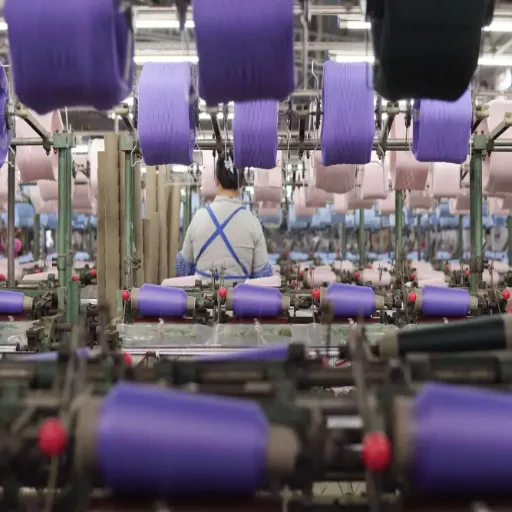
Standard yarn catalogs cannot solve every design challenge. Custom yarn manufacturing allows buyers to specify exact fiber compositions, physical properties, and aesthetic characteristics that match unique project requirements.
What Can Be Customized
Modern yarn factories can adjust numerous variables during production:
- Fiber blend: Combine cotton, polyester, wool, nylon, acrylic, or specialty fibers in precise ratios
- Yarn count: Specify thickness using standard systems like Ne (cotton count), Nm (metric count), or denier
- Twist level: Control TPI to balance strength, elasticity, and hand feel
- Ply configuration: Choose single, two-ply, three-ply, or complex cable constructions
- Color: Match Pantone references or provide custom dye recipes
- Finish: Add softeners, water repellents, flame retardants, or anti-microbial treatments
Lagos based clothing guy James Okonkwo was making his 2025 sustainable line of clothes and he needed particular yarn. The Ordinary cotton said to be sustainably grown and therefore organic was not shiny and so unusable for his particular sheen needs. Bamboo standard only has two types but some fell short, either their slippage levels were high. Bamboo would slip while knitting alternatives ready.
When he worked with an original equipment manufacturer, they made bamboo and organic cotton in a 70:30 blend and had a draw frame finish and medium twist. The spun yarn that the machines spun came out to be as with luster as required, and as with good swarf control or fiber control as his machine would require. He was out of stock of lines in six weeks after their completion.
The Custom Manufacturing Workflow
The process of producing customized threads is always done in an organized manner. By completing the purchase agreement, the buyer explains what type of fiber, count, and twist will be used, what the color or finish will be, and where the yarn will be used. Then, the manufacturer creates a few kilograms of yarn, typically 1 to 5 kilograms, for testing. Upon the buyer’s acceptance, the producer will begin producing as per the production quantities specified by the buyer, which may be as little as 100 kilograms or up to several tons for long term supply contracts.
Specifications Buyers Should Prepare
To receive accurate quotes and samples, provide your manufacturer with:
- Target yarn count and tolerance range
- Fiber content and acceptable alternatives
- Required tensile strength or elongation minimums
- Color reference (Pantone, physical sample, or spectral data)
- Finish requirements and performance standards
- End-use application and processing method (weaving, knitting, dyeing)
- Expected order volume and delivery schedule
Cost Factors in Custom Yarn Production
Custom yarn typically costs 15–40% more than standard catalog items. The premium reflects setup time, lab sampling, specialized raw material sourcing, and smaller production runs. However, custom yarn often reduces downstream costs by improving processing efficiency, reducing waste, or enabling premium positioning that commands higher finished-product prices.
Learn more about how custom yarn manufacturing works and how to get started.
Eco-Friendly & Sustainable Yarn Production
Sustainability in yarn manufacturing has moved from niche positioning to mainstream expectation. According to Textile Exchange, demand for sustainable and recycled yarns has grown 15–20% annually since 2020. Fortunately, modern eco-friendly production methods now deliver quality comparable to conventional processes at increasingly competitive costs.
Organic Cotton Production
The organic cotton thread is no longer artificial but instead made from natural fiber which has no synthetic content as a result of which, the growth of cotton does not witness the use of synthetic chemicals such as pesticides, herbicides or genetically modified seeds. This outgrows to the entire process of manufacturing, as organic yarn is not supposed to be machined alongside non organic fibres, and lubricants and finishes used by the mills have to be from the expressly provided sources. The entire process from the farm to the destination is guaranteed by the Global Organic Textile Standard (GOTS) certification.
This leads to the apparently higher cost estimate since the amount of effort and resources that has gone into organic farming is higher than in the typical conventional farming methods. In fact, branding this kind of product to the customers who think of environmental consequences, is beneficial. This is because it implies that the fresh produce that they have bought has a higher price, and yet very devoted customers will always go for your produce even if it is more expensive.
Recycled Polyester and Nylon Yarns
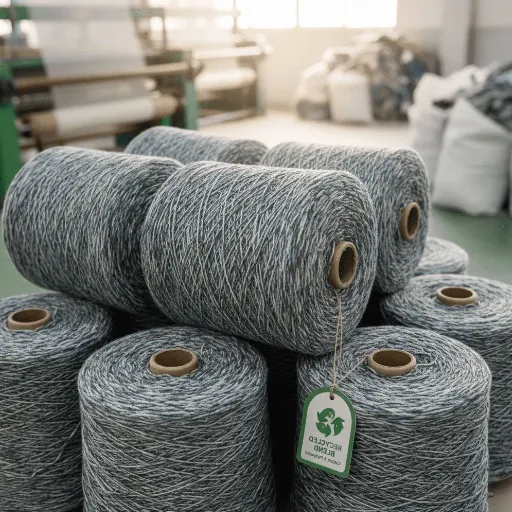
Post-consumer synthetic yarns are best described as a textile grade transformation of used plastics, specifically PET-bottles. The plastic is reduced into small pieces which are then cleaned and melted and formed into a uniform prior to extrusion This process includes plastic melting as well as spinnerets that enable the extrusion of continuous filaments out of non-woven, a crochet type of fabric that does not contain ant fibers It is preferable to recycle weights of ropes or twines so that the waste is based mainly on the fibers and woven items.
Modern technical means allows to receive a polyester thread without loss of properties, color, and quality, as it concern the strength and dyeability. Such materials are fishing line, carept, curtain, and nylon, unlike fishing line should have some color to it. Premium recycled, including lux, 100% organic cotton, and wool, dyed and undyed organic cotton; dyed and undyed pea silk; silk; silk noil; silk plus; silk velvet; silk tulle; ethical office wear; ethical bedroom wear; home wear; leisure wear; sportswear: total growing in terms of garments made from such materials.
The environmental benefit of green fibers is obvious. There is approximately a 50% decrease in carbon emissions related to the production of recycled polyester in comparison with virgin polyester and the rescues plastic from waste to some extent which would otherwise find its way to landfills and oceans.
Water-Saving Dyeing Techniques
Traditional yarn dyeing consumes enormous water volumes. A single kilogram of dyed yarn can require 100–200 liters of water. Newer techniques dramatically reduce this footprint:
- Solution dyeing adds pigment during fiber extrusion, eliminating separate dyeing entirely
- Supercritical CO2 dyeing uses pressurized carbon dioxide instead of water to carry dye into fibers
- Digital inkjet dyeing applies color precisely only where needed, minimizing waste
These technologies reduce water consumption by 50–95% while often improving color fastness and consistency.
Energy-Efficient Manufacturing
Spinning accounts for 40–50% of total energy consumption in yarn manufacturing facilities. Leading producers now invest in energy-recovery systems, high-efficiency motors, and smart power management. Some factories offset remaining consumption with renewable energy installations. When evaluating a manufacturer’s sustainability claims, ask for specific energy data per kilogram of yarn produced.
Key Certifications to Verify
Reputable eco-friendly yarn manufacturers hold third-party certifications:
- GOTS (Global Organic Textile Standard): Covers organic fiber content and environmental processing criteria
- OEKO-TEX Standard 100: Tests for harmful substances in finished yarn
- Bluesign: Evaluates chemical management and resource productivity
- GRS (Global Recycled Standard): Verifies recycled content and chain of custody
Always request certificate numbers and verify them directly with the issuing organization. Greenwashing remains common in the textile industry, and independent certification is the only reliable safeguard.
Discover practical sustainable yarn production methods in our detailed eco-friendly manufacturing guide.
Yarn Factory Operations & Quality Control
What happens on the factory floor determines whether your yarn meets specification consistently. Understanding typical operations and quality control processes helps buyers evaluate potential partners and identify risks before they affect production.
Factory Layout and Workflow
High-performing spinning mills employ a scalar flow in the work of their establishment. This movement of fibres goes from the opening, and the mixing of the raw fibre, then to carding, combing, drawing, preparing sliver, spinning, and winding. Everything is done in fashioned design, there is a need to avoid doing any activity in the present which can be postponed, material moving through the different machines without moving back and hence minimizing material handling, avoiding po-llution and encouraging FIFO inventory control all at the same time.
Critically, air conditions are not a trivial element. For example, we all know that cotton has cellulose content and water-absorbing qualities so when making cotton textile, the moisture in the environment will be absorbed leading to increase in the weight and strength of the fibre which could also help in the manufacturing of clothing etc. The volume of moisture most cotton is conditioned at, that is 60% to75% relative humidity at 30° C inside the facility must be controlled at a low level such as 60% to 65% relative humidity at 25 °C. Condensation and high humidity at 90 to 100% results in shorter better quality silk which does polyester fiber under such conditions of high humidity. Unfortunately, this is not possible for such signals, humidity-controlled plants that do not meet this requirement fulfill poorly rolled yarn.
Raw Material Intake and Storage
Even before the going of the machines to work, the state of the products is put in check. The mills of good repute compile first the micronaire (cotton fineness), staple length, strength, color grade and trash fiber properties of the bales they receive and then reject those that do not meet their acceptable limits. Aligned bales will be used after the unqualified ones have been set aside and these will be averaged.
Clean and dry storage facilities that enable fiber to be conditioned to the factory’s relative humidity level befo re commencement of any processing should be a minimum. Lack of proper storage brings about problems such as damage, contaminants and losses as well as the entire lots.
Quality Control Checkpoints
Effective quality programs inspect yarn at multiple stages:
- In-process testing at carding and drawing checks sliver weight and evenness
- Spinning monitoring uses electronic clearers to remove defects automatically
- Package testing verifies count, strength, elongation, and appearance for every lot
- Final inspection checks package weight, density, and labeling before shipment
Laboratories should conduct tests according to recognized standards such as ASTM, ISO, or customer-specific protocols. Ask to see a manufacturer’s quality manual and recent test records when evaluating their capabilities.
Red Flags During Factory Tours
When you visit a yarn factory, watch for these warning signs:
- Excessive dust or fiber fly in production areas indicates poor housekeeping and ventilation
- Worn or poorly maintained machine parts suggest inadequate preventive maintenance
- Manual record-keeping without digital systems makes traceability difficult
- Absence of climate control equipment affects product consistency
- Workers handling fiber without proper protective equipment raises safety and contamination concerns
- Inability to show recent test reports for current production suggests weak quality discipline
Get an inside look at yarn factory operations and what to expect from your manufacturing partner.
Yarn Applications: From Fashion to Industrial Use
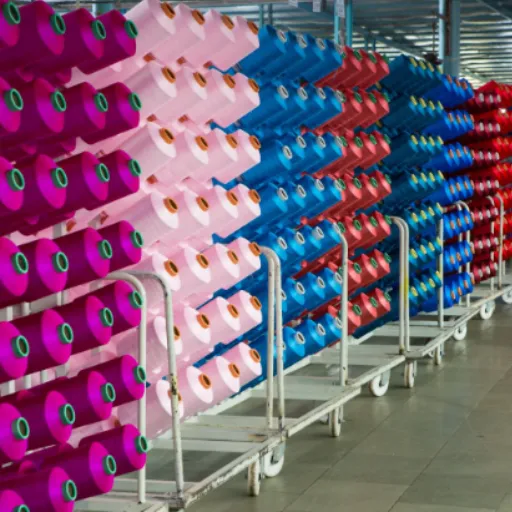
Yarn manufacturing choices directly impact how finished products perform in real-world conditions. Understanding these connections helps buyers specify the right yarn for their specific application.
Fashion and Apparel
Both aesthetic and tactile properties of the yarn are involved in its application. The definition of comfort is the main task of spinning cotton into fine count. Special rings of compact fabric make fabrics for shirts pleasant to the touch. Woolen and also woolen articles of cloth have stitch which permits cable knitting to be done.
In line with this- hairiness mostly refers to fashion, given fashion values. Minimized hairiness in spinning fabrics is one of the main concerns about growing expectations in spinning; it is also about precise dyeing characteristics so that a single run should be finished with all lots of equal shades of yarn. Also, the parameters of the above-mentioned cannot be altered in any manner.
Conclusively, retail apparel is subdivided into two market segments..货and thus, the prices of the apparel from each of these segments will fluctuate based on demands of that product.
Home Textiles
The aesthetic appeal of home textile yarns should surely be mingled effectively with function. For instance, it has to be kept in mind that the yarn used in upholstery not only supports an inclined body but also withstands intense friction caused by it. Everything else in consideration, curtain yarns are required to hang properly and have a certain weight; at the same time, they have to be protected from deterioration due to excessive exposure to sunlight behind a window. In bedlines, very high comforts and also sleep aids are championed through the use of new knitting techniques or constructions.
For upholstery predominantly, the key and primary feature that has to be ensured during yarn production is associated with rubbing rub count. A standard upholstery may likely accept around 15,000 double rubs, however, for commercial level applications this figure could go as high as 30,000 double rubs and more. The structure of the yarn as its fiber content, twist and count and also the use of measures for sustainable surface finishing all serve with an objective of achieving these properties.
Industrial and Technical Textiles
In the pursuit of industrial processes, performance of yarn gets to go through hard core test. Airbag yarn in cars has-to-reliably deploy after the eye catcen focusing temperature cycles over years. Even in the most basic marine ropes, UV degradability and resistance to salt water is required. Convincing geotextiles used in road construction should not experience any creep for several decades even when continuously exposed to load.
In many of these cases, these applications use yarns that consists of either polyester, nylon or aramid fibers that exhibit high strength. In the course of production this also involves a series of activities such as heat setting to improve the dimensional stability, precise control of elongation to maximise tensile strength and their compliance testing to ensure that each and every lot produced is capable of performing without defects.
Improving Yarn Production Efficiency
Efficiency in yarn manufacturing matters to buyers even when they do not operate factories directly. Efficient manufacturers offer better pricing, faster delivery, and more consistent quality. Understanding efficiency drivers helps buyers identify well-managed partners.
Waste Reduction Strategies
Yarn manufacturing generates waste at multiple points: short fibers removed during carding, yarn breaks during spinning, and off-spec packages from quality testing. Leading manufacturers minimize waste through process optimization, raw material selection, and recycling programs. Some facilities recycle their own fiber waste back into lower-count yarns or non-woven products.
Energy Optimization
Since spinning consumes the majority of factory energy, even small efficiency improvements yield significant cost savings. High-efficiency motors, variable-frequency drives, and heat-recovery systems reduce consumption. Smart scheduling runs high-energy processes during off-peak electricity rate periods where utility pricing supports this strategy.
Automation and Smart Manufacturing
Automated doffing, robot transport, and machine monitoring systems reduce labor requirements while improving consistency. Real-time data analytics identify bottleneck processes and predict equipment failures before they cause quality issues. Manufacturers investing in Industry 4.0 technologies typically outperform traditional competitors on cost, quality, and delivery reliability.
Preventive Maintenance
Spinning frames operating 24 hours per day experience significant wear. Preventive maintenance schedules replace worn parts before they affect yarn quality. Well-maintained equipment produces more consistent yarn with fewer breaks, reducing both waste and labor costs.
Explore proven strategies to improve yarn production efficiency.
Frequently Asked Questions
What is the process of yarn manufacturing?
There are total seven steps in conversion of raw fibers into yarn. These are fiber preparation and cleaning, carding to difffered fibers, drawing for reduction of variation, roving where a pre-product tissue is obtained, spinning as a method of twisting and diameter reduction, twisting/more strands plying as a method of more twisting and then multi-strand construction, winding/finishing for packaging and stocking. Quality inspection occurs many times throughout the process.
How are eco-friendly yarns made?
Eco-friendly yarns use sustainable raw materials such as organic cotton grown without synthetic chemicals, or recycled polyester made from post-consumer plastic waste. The manufacturing process minimizes water and energy consumption through solution dyeing, waterless dyeing technologies, and energy-efficient equipment. Third-party certifications like GOTS and OEKO-TEX verify environmental claims.
What are the steps in yarn production?
The core steps are: (1) fiber selection and preparation, (2) carding, (3) drawing, (4) roving, (5) spinning, (6) twisting/plying, and (7) winding and finishing. Each step refines the fiber structure and moves it closer to the final yarn specification.
Can yarns be customized during manufacturing?
Yes. Manufacturers can customize fiber blends, yarn count, twist level, ply configuration, color, and finish during production. Custom yarn requires a detailed technical specification, lab sampling for approval, and typically involves minimum order quantities starting around 100 kilograms depending on the factory and yarn complexity.
What equipment is used in yarn manufacturing?
Essential equipment includes carding machines, drawing frames, roving frames, ring spinning frames (or rotor/air-jet spinning machines), winding machines, twisting machines, and quality testing equipment such as evenness testers and tensile testers. Modern factories also use automation systems for material handling and production monitoring.
How long does yarn manufacturing take?
Standard yarn production from raw fiber to finished package typically takes 3–7 days depending on order size, yarn complexity, and factory scheduling. Custom yarns require additional time for lab sampling and approval, often extending the timeline to 2–4 weeks for the first delivery.
What certifications should a yarn manufacturer have?
Reputable manufacturers hold certifications relevant to their market. Common certifications include ISO 9001 for quality management, GOTS for organic processing, OEKO-TEX Standard 100 for harmful substance testing, and Bluesign for sustainable chemical management. Industrial yarn suppliers may also hold industry-specific certifications for automotive or aerospace applications.
Choosing the Right Yarn Manufacturing Partner
Selecting a yarn manufacturer is not simply a procurement decision. It is a strategic partnership that affects your product quality, cost structure, and supply chain reliability. The right partner aligns with your technical requirements, business values, and growth plans.
Key Evaluation Criteria
The familiarity of expertise in the matters under consideration is paramount. Those manufacturers who have been in the industry for a while now are better off as they have been able to solve almost all the challenges that more modern set ups still face theoretically. It is best to find out what is known about the particular application in question as even a factory that is strong in the production of the fashion yarn can be completely shattered when it comes to the production specifics.
The equipment that a company uses is exactly what differentiates it. Machines of a later generation have been known to be the best with regard to the quality of yarn thus, uniformity is an issue that is checks under the coca cola approach, more the yarn spinning frame manufacturing and automation levels need also to be ascertained apart from the testing laboratory equipments. Visit the factory by all means neccessary or kindly ask the pictures and video to be sent to you.
The products have to show compliance for the company to get new clients since it lessens the risks associated with new markets for the company. Always try to verify these certificate numbers in person with the company that had issued them and avoid getting satisfied with just the copy of a certificate.
Transaction partners are usually no better than transactional suppliers if whenever you have a need the goods are going to be tailored, and do not further any transformation or even Latino does lead the design, not co-create it. In case the scale of your work is such that certain properties of the materials to be used are to be tested before they are produced, find out if samples of such materials can be created at the factory stage within the company.
Geographic and Logistics Considerations
Location affects shipping cost, delivery time, and communication convenience. Asian manufacturers typically offer competitive pricing with longer shipping times. Regional suppliers may cost more per kilogram but enable faster replenishment and easier quality dispute resolution.
Communication and Support
Clear communication prevents expensive mistakes. Evaluate how quickly potential partners respond to inquiries, whether they provide detailed technical feedback on your specifications, and whether they assign dedicated account management for ongoing relationships.
Ready to work with a yarn manufacturing partner that prioritizes quality, customization, and reliability? Hebei Lida Textile Co., LTD serves clients across fashion, home textiles, and industrial applications with precision-engineered yarns tailored to exact specifications. Our state-of-the-art facilities, rigorous quality control, and experienced technical team ensure that every delivery meets your requirements.
Conclusion
We have evaluated text for the knitting industry. Of course, assessing potential suppliers or writing requirements cannot be reference to contracts and quality management. The base is laid by the seven-stage manufacturing process of any textile product.
The turning process will provide the strength, the softness and the cost the spinning mill will use. The machines found in the mill of the contractor show their capacity together with regularity. And these two things when applied to the manner the factory manages the quality of their production shall denote the trustworthy collaborating entities contrary to the risky ones.
New dimensions have opened up and you can proceed making assessments on textile plants and particularly let me tell you five such dimensions; production process knowhow, spinning technology appropriateness, machinery upgrading, process control and lastly the potential for customization. Prepare yourself to make use of these principles in the next supply selection or inspection of factories or even in reviews drawing up specifications.
Yarn manufacturers as well as the relevant industries continually advance. Being more sustainable about the technologies of today efficiently producing the same as conventional quality but at a cost lower than in the past. And smart engineering increases the chances of the process performing consistently and brings down the amount of wastage.
Using unique constructions enhances the narrower distinction that can be obtained. The individuals who have come to comprehend these alterations would be in a position to make their buying decisions or design resilient distributions.
Manufacturing yarn is not only the supplier’s business. It is the premise of success of the product, which is why it is within the parameters of all those who share it. The more the reader knows the steps, he will be able to give a clear brief, ascertain what is worth and unfit, and establish an amicable relationship.
Contact Hebei Lida Textile Co., LTD today to discuss your yarn manufacturing requirements. Our team is ready to help you find the perfect solution for your next project.