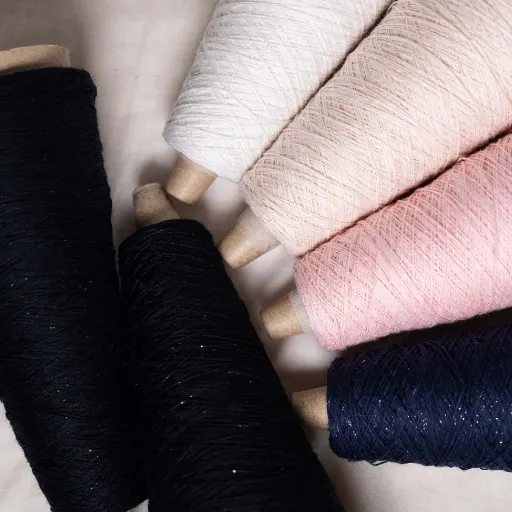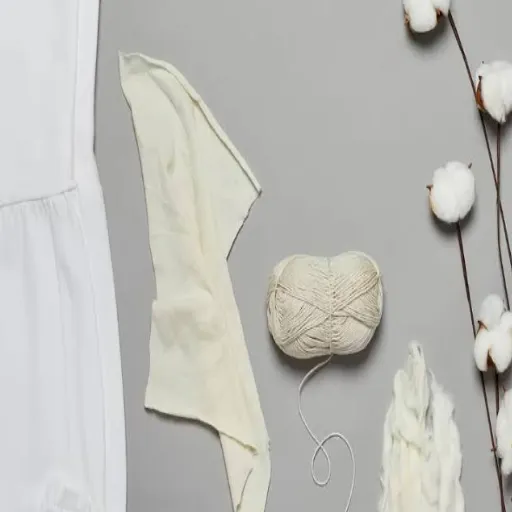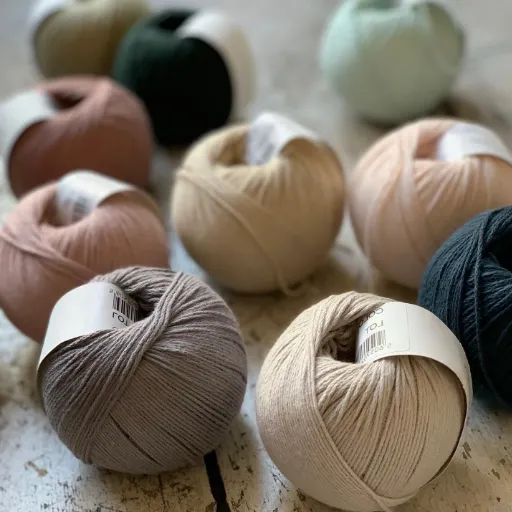
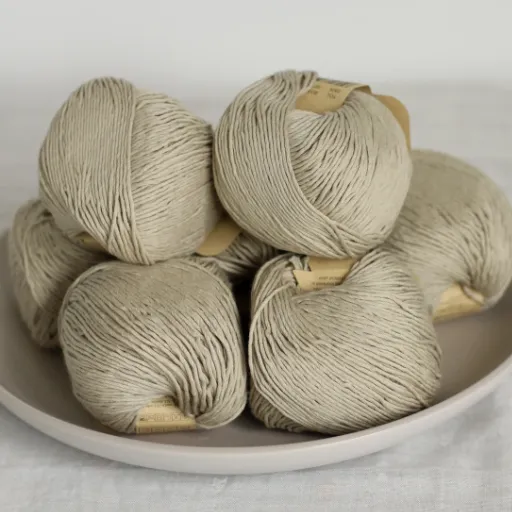
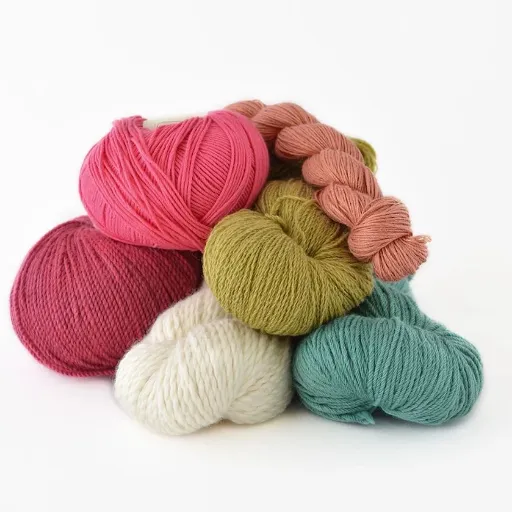



Recycled cotton yarn is yarn spun from reclaimed cotton fiber, usually a blend of pre-consumer cutting waste and virgin fiber, that cuts water use by up to 90% compared to conventional cotton yarn. For brands weighing sustainable sourcing options, it offers the fastest path to verified recycled content without giving up cotton’s natural hand feel.
The textile industry generates roughly 92 million tonnes of waste every year, according to CottonWorks. A large share of that waste is clean cotton scrap that never leaves the factory floor. Recycled cotton yarn captures that value and spins it back into usable fiber.
You already know your customers want sustainable products. The harder question is whether recycled cotton yarn can meet your quality specs, and at what price. This guide gives you a practical framework: how the yarn is made, which blend ratios work for which applications, how to verify certifications, and what to ask before you place your first order.
Key Takeaways
- Recycled cotton yarn cuts water use by up to 90% versus virgin cotton and diverts textile waste from landfill.
- Most commercial recycled cotton yarn blends 20-50% recycled fiber with virgin cotton or polyester to protect strength and evenness.
- A 50/50 virgin-to-recycled ratio is the practical ceiling for quality-critical applications, per a 2023 systematic review in the TLR Journal.
- GRS certification requires at least 20% recycled content. Always request a transaction certificate for each shipment.
- Industrial and upholstery applications tolerate up to 100% recycled content, while premium fashion performs best at 20-30%.
What Is Recycled Cotton Yarn?
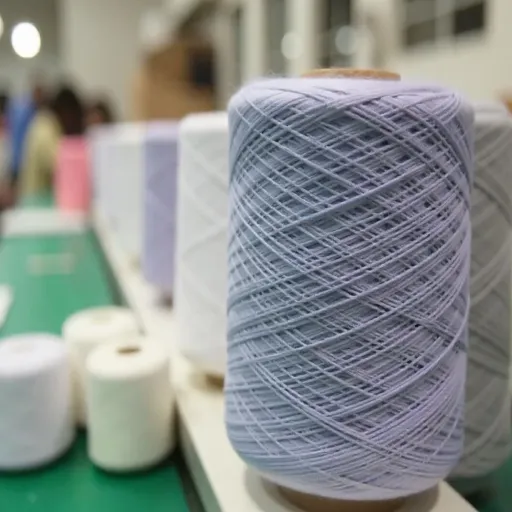
Recycled cotton yarn is yarn produced from reclaimed cotton fiber rather than newly harvested cotton. Manufacturers recover cotton waste, shred it back into fiber, blend it with a carrier fiber, and spin it into new yarn. The result keeps cotton’s breathability and softness while skipping the farming stage entirely.
The fiber comes from two sources:
- Pre-consumer waste: Cutting table scraps, spinning waste, and rejected fabric from factories. This is the cleanest and most common source, because the composition is known and contamination is low.
- Post-consumer waste: Used garments and household textiles collected after use. This stream is growing, but it requires more aggressive sorting and sanitization.
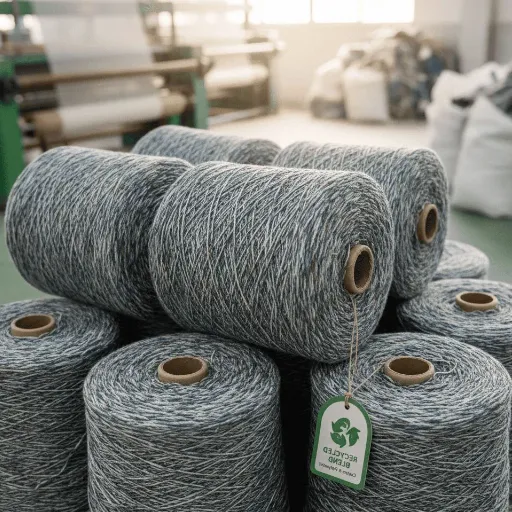
One detail many buyers miss: because scraps are sorted by color before shredding, much recycled cotton yarn needs no re-dyeing. That saves water, chemicals, and cost, and it produces the heathered look many sustainable brands now use as a design feature.
Recycled cotton yarn sits inside a broader family of sustainable yarns, alongside organic cotton, recycled polyester, and regenerated cellulosics. Within that family, it fills a specific niche: the lowest-impact cotton option with the shortest supply chain.
Exploring sustainable options for your next collection? Browse our eco-friendly yarn range →
How Is Recycled Cotton Yarn Made?
The dominant method is mechanical recycling, a six-step process:
- Collection: Cotton waste is gathered from cutting rooms, spinning mills, or garment collection programs.
- Sorting: Waste is sorted by color and fiber composition, removing zippers, buttons, and synthetic trims.
- Shredding (garnetting): Machines tear the fabric back into loose fiber. This step is what shortens the staple length.
- Cleaning: The fiber is opened, dedusted, and cleaned of residual contaminants.
- Blending: Recycled fiber is mixed with virgin cotton or polyester to restore spinnability and strength.
- Spinning: The blend is spun into yarn, most often on open-end (rotor) spinning machines.
Mechanical vs. Chemical Recycling
Mechanical recycling physically shreds fabric. Chemical recycling dissolves cotton into a cellulosic pulp and extrudes new fiber. Chemical recycling preserves fiber length and quality, but it remains expensive and represents a small share of commercial output. Nearly every recycled cotton yarn you will source in 2026 is mechanically recycled.
Open-End vs. Ring Spinning for Recycled Cotton
Open-end (rotor) spinning tolerates shorter fibers and higher recycled content, which is why most recycled cotton yarn is OE-spun. Ring spinning produces finer, stronger yarn but demands better fiber, so it is usually reserved for blends with 30% or less recycled content. Some mills now comb recycled blends to remove short fibers and neps, which improves quality but reduces the final recycled percentage. Rieter’s recycling research documents this trade-off in detail.
For a broader look at how mills integrate recycled inputs into production, see our guide to the eco-friendly yarn production process.
Recycled Cotton Yarn vs. Organic Cotton vs. Virgin Cotton
Buyers often ask which cotton option is most sustainable. The honest answer: each wins on different metrics.
| Factor | Virgin Cotton | Organic Cotton | Recycled Cotton |
|---|---|---|---|
| Water use | High | Moderate | Very low (no farming) |
| Land use | High | High | None |
| Pesticides/fertilizers | Conventional use | None | None (already grown) |
| Waste diverted | None | None | High |
| Fiber quality | Full staple length | Full staple length | Shorter, weaker |
| Softness | High | High | Moderate (blend-dependent) |
| Certifications | BCI | GOTS, OCS | GRS, RCS |
| Typical cost | Baseline | +20-40% premium | +10-30% premium |
| Best for | Fine counts, maximum strength | Skin contact, baby, premium | Circular collections, home textiles, industrial |
Choose recycled cotton yarn when waste reduction and circularity are your primary story, and when the application tolerates a shorter staple. Choose organic when softness and skin contact matter most, as covered in our organic cotton yarns guide. Choose virgin when you need fine counts above Ne 40 or maximum tensile strength.
Increasingly, brands combine the two: a 30% recycled / 70% organic virgin blend delivers verified recycled content with near-virgin hand feel.
Benefits of Recycled Cotton Yarn for Brands and Manufacturers
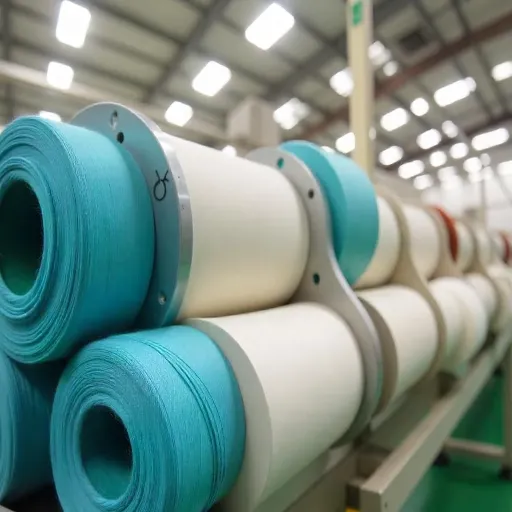
The environmental case is well documented. Recycled cotton requires no irrigation, no pesticides, and no new farmland, and it diverts waste that would otherwise be landfilled or incinerated. Color-sorted recycled cotton also skips dyeing, one of the most water- and chemical-intensive stages of textile production.
The business case is just as strong:
- Regulatory readiness: The EU’s Ecodesign for Sustainable Products Regulation (ESPR) and extended producer responsibility schemes reward verified recycled content.
- Consumer demand: Verified sustainability claims continue to command price premiums in fashion and home textiles.
- Cost stability: Recycled fiber prices are less exposed to cotton harvest volatility than virgin fiber.
When Elena, a sourcing manager at a Portuguese streetwear brand, switched her core fleece line to a 30% recycled cotton yarn blend in early 2025, her team expected pushback on quality. Instead, the heathered, undyed look became a selling point. Her per-kilogram yarn cost rose 12%, but the dyeing step she eliminated saved nearly as much, and the “made with recycled cotton” hangtag lifted sell-through on the line by 9% in one season.
For a fuller breakdown of the business case, read our analysis of the benefits of sustainable yarns.
Limitations of Recycled Cotton Yarn (and How to Work Around Them)
Honest guidance matters here, because recycled cotton yarn has real constraints.
Shorter, Weaker Fiber
Shredding cuts cotton staple length by 30-50%. The practical consequence: a yarn with 30% pre-consumer recycled content can show a 15-25% drop in tensile strength compared to 100% virgin cotton, according to a 2023 study in the journal Cellulose. The same research found over 6x more thick spots and 4x more neps at that blend level.
Workaround: Cap recycled content at 30-50% for quality-critical products, and use open-end spinning for coarser counts where the effect is minimal.
The Blending Requirement
A systematic review of recycled cotton blending in the TLR Journal (Alcantara et al., 2023) concluded that 50% virgin / 50% recycled is the most suitable ratio for meeting standard quality benchmarks. Pushing beyond that risks failing commercial specs.
Workaround: Match blend ratio to application (see the matrix below) rather than chasing the highest possible recycled percentage.
Color and Contamination Limits
Post-consumer recycled fiber can carry dye residues and traces of elastane or polyester stitching, which affects color consistency and dye uptake.
Workaround: For consistent shades, specify pre-consumer waste and color-sorted feedstock. Request contamination test data with your sample.
It Cannot Be Recycled Forever
Each mechanical cycle shortens the fiber further. Cotton can typically be mechanically recycled two to three times before the fiber becomes too short to spin.
Workaround: Treat recycled cotton yarn as one loop in a longer circular strategy, not an infinite one.
Choosing the Right Recycled Cotton Yarn Blend for Your Application
Blend ratio is the single most important specification decision you will make. Use this matrix as a starting point:
| Application | Recycled Content | Blend Partner | Typical Count | Notes |
|---|---|---|---|---|
| T-shirts and knitwear | 30-50% | Virgin cotton | Ne 20-30 | Balance softness and story |
| Denim and wovens | 20-40% | Virgin cotton | Ne 7-16 | Denim hides nep variation well |
| Upholstery and home textiles | 50-70% | Cotton or poly | Ne 6-20 | Durability comes from weave, not just fiber |
| Towels | 20-30% | Virgin cotton | Ne 12-20 | Keep absorbency high |
| Premium fashion | 20-30% | Organic virgin cotton | Ne 30-40 | Ring-spun for hand feel |
| Industrial wiping cloths, mops | Up to 100% | None or poly | Ne 2-10 | Performance over appearance |
A Turkish home textiles brand came to us asking for 100% recycled cotton yarn for a cushion cover line. After reviewing the abrasion requirements together, they moved to a 60% recycled / 40% virgin blend at Ne 10. The covers passed 25,000 Martindale rubs, the recycled content claim stayed strong, and the cost per cover dropped 8% versus their original virgin-cotton spec. Matching the blend to the application, rather than maximizing the percentage, made the project work.
Need help matching a blend to your product? Request a sample set with two or three blend ratios → and test them side by side before committing.
Recycled Cotton Yarn Certifications: GRS, RCS, and OEKO-TEX Explained
Certification is how you prove recycled content claims to customers, regulators, and your own compliance team.
GRS (Global Recycled Standard)
The GRS, administered by Textile Exchange, is the leading certification for recycled textiles. It requires a minimum of 20% recycled content, plus chain-of-custody tracking and social and chemical requirements. Products with 50% or more certified content can carry the GRS logo on-product.
RCS (Recycled Claim Standard)
The RCS verifies recycled content from 5% upward, without the social and chemical modules. It suits products below the GRS threshold.
OEKO-TEX Standard 100
OEKO-TEX does not certify recycled content. It certifies that the yarn is free from harmful substances. Many buyers pair GRS with OEKO-TEX for a complete claim: verified recycled content plus verified chemical safety.
How to Verify a Supplier’s Certification
- Ask for the scope certificate, which proves the factory is certified, and confirm it in Textile Exchange’s public database.
- Require a transaction certificate (TC) for every shipment. The TC is the only document that proves your specific batch contains certified recycled content.
- Treat any supplier who cannot produce a TC within a reasonable window as a red flag.
A Scandinavian bedding brand learned this the hard way in 2024. During a routine retail audit, their supplier could not produce transaction certificates for two seasons of “GRS-certified” yarn. The brand had to pull the recycled-content claim from 40,000 units of packaging and quietly renegotiate every affected contract. Verification takes one email; skipping it can cost a season.
For a deeper walkthrough of every major textile certification, see our guide to sustainable yarn certifications.
How to Evaluate a Recycled Cotton Yarn Supplier
Quality varies more between suppliers than between blend ratios. Before committing, request a sample and ask for:
- Staple length data: Look for mean fiber length of 25mm or above in the blend.
- Tensile strength: 20 cN/tex or higher for weaving; knitting tolerates slightly less.
- Evenness (CVm%) and nep count: Ask for Uster statistics or equivalent lab reports.
- Contamination testing: Especially for post-consumer feedstock.
- MOQ and lead time: Typical minimums run 500 kg to 10 tonnes; lead times of 7-30 days are standard.
Then ask the questions that reveal reliability. Where does the feedstock come from? Is waste pre-sorted by color? Can they hold a shade standard across repeat orders?
A supplier who answers these specifically is worth more than one who quotes a lower price. Our sustainable yarn supplier evaluation guide includes a full vetting checklist and RFQ template.
What Drives Recycled Cotton Yarn Pricing
Recycled cotton yarn typically carries a 10-30% premium over conventional cotton yarn, though pre-consumer, color-sorted feedstock can occasionally undercut virgin prices. The main cost drivers:
- Recycled content percentage: Higher ratios need more careful processing, which can raise cost even as the fiber itself gets cheaper.
- Sorting method: Color-sorted, dye-free yarn costs more to prepare but saves dyeing expense downstream.
- Certification: GRS chain-of-custody adds cost at every step.
- Order volume: Per-kg pricing drops meaningfully at 5+ tonne orders.
Remember to price the system, not just the yarn. Eliminating dyeing, as Elena’s fleece line showed, can recover most of the material premium. For detailed budgeting benchmarks, see our cost of sustainable yarns guide.
Frequently Asked Questions
Is recycled cotton yarn good quality?
Yes, when the blend ratio matches the application. At 20-50% recycled content from pre-consumer waste, modern recycled cotton yarn meets commercial specs for knitwear, denim, and home textiles. Quality problems usually trace back to over-aggressive recycled percentages or poor feedstock sorting, not the fiber itself.
Can cotton yarn be 100% recycled?
It can, but with trade-offs. 100% recycled cotton yarn is limited to coarse counts and applications where appearance and strength matter less, such as mops, wiping cloths, and upholstery backings. Most brands get better total value from a 30-70% recycled blend.
Is recycled cotton better than organic cotton?
They solve different problems. Recycled cotton has the lower water and land footprint because it skips farming. Organic cotton delivers longer, softer fiber and supports better farming practices. Many brands blend both.
Is recycled cotton yarn soft?
Blends up to about 50% recycled content retain most of cotton’s natural softness, especially when ring-spun with a quality virgin partner. At very high recycled percentages, the hand becomes slightly drier and more rustic, which some brands use as an aesthetic feature.
Is recycled cotton yarn expensive?
Expect a 10-30% premium over conventional cotton yarn, varying with recycled content, certification, and order size. The premium often shrinks at the garment level once you account for skipped dyeing and marketing value.
How strong is recycled cotton yarn?
A 70/30 virgin/recycled blend typically retains 75-85% of virgin yarn tensile strength, per the Cellulose research cited above. For most apparel and home textile uses, that is comfortably within spec.
Searching for a dependable supplier of eco-friendly yarns with consistent quality and global export experience? Get in touch with Hebei Lida Textile Co., LTD today.
Conclusion: Making Recycled Cotton Yarn Work for Your Brand
Recycled cotton yarn has moved from niche experiment to commercial reality. The brands succeeding with it share a pattern: they match blend ratios to applications instead of chasing maximum percentages, they verify GRS claims with transaction certificates, and they price the full production system rather than the fiber alone.
Here is your action plan:
- Shortlist two or three candidate applications from the blend matrix above.
- Request samples at two blend ratios each and run them through your standard testing.
- Verify every supplier’s scope certificate and demand transaction certificates per shipment.
- Calculate total system cost, including dyeing savings and marketing value.
At Hebei Lida Textile, we manufacture recycled cotton yarn blends for fashion, home textiles, and industrial applications, with certified sourcing and custom blend development for orders of all sizes. Whether you need a 30% recycled knit yarn or a 70% recycled upholstery blend, our team can help you spec, sample, and scale.
Ready to test recycled cotton yarn in your next collection? Contact us for samples and a custom quote →