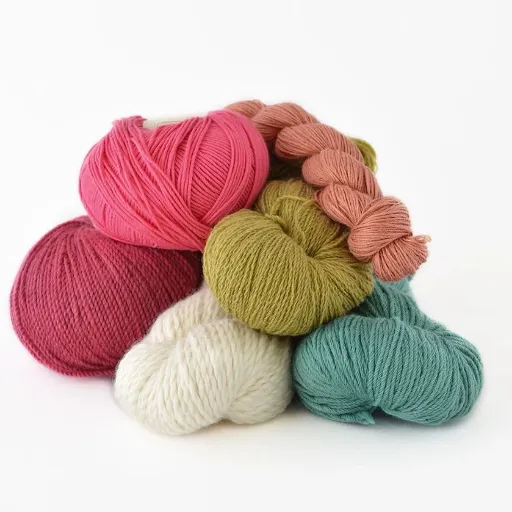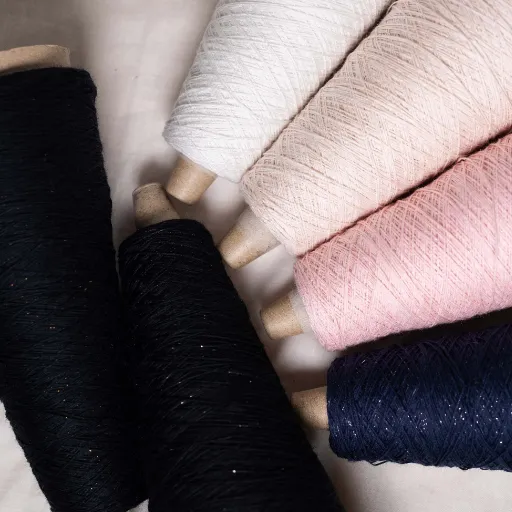
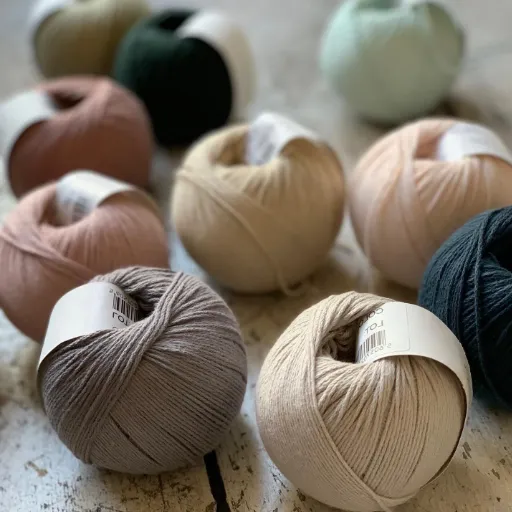
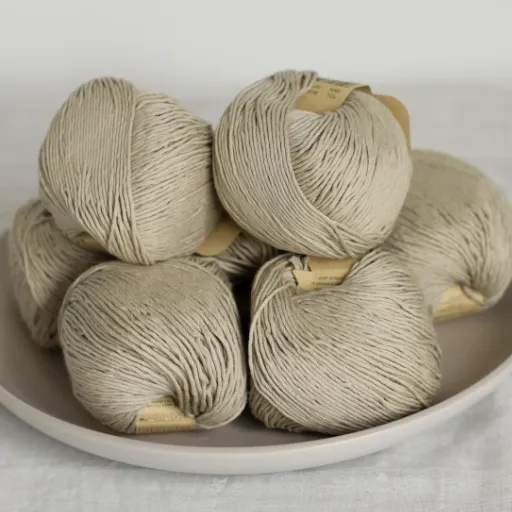




Regenerative organic cotton yarn is cotton yarn spun from fiber grown under an organic baseline plus additional regenerative requirements, verified through standards such as ROC or Regenagri. The yarn itself is physically the same as organic cotton. What differs is the certified management system, the chain of custody, and the documents a buyer can check.
Consider Elena, a sourcing manager for a European knitwear brand. In March 2026, two suppliers sent her sample cones labeled “regenerative organic cotton.” The yarns looked identical because, in fiber terms, they were identical.
One supplier’s transaction certificate matched the lot number on the cone. The other certificate covered a different batch and could not be explained. Elena placed a 6-tonne order with the first supplier. The second lost the business over paperwork, not fiber quality.
This guide covers how ROC, Regenagri, and the U.S. Cotton Trust Protocol differ, what changes at the yarn stage, which documents prove a claim, and what the premium buys.
Key Takeaways
- Regenerative organic cotton yarn is physically identical to organic cotton yarn. The claim is about farming systems and chain of custody, not fiber performance.
- ROC requires an organic baseline. Regenagri does not and permits synthetic inputs under a reduction plan. The U.S. Cotton Trust Protocol is a separate field-level program.
- ROC cotton is under 0.1% of global supply, while Regenagri is about 8%, so lead times and minimums differ sharply.
- Verify claims with scope certificates, transaction certificates, matched lot IDs, and a mass-balance or segregation statement. A directory listing is not proof.
- EU EmpCo rules have applied since 27 September 2026, so unsubstantiated “regenerative” claims now carry regulatory risk.
Sourcing now? Tell us which certification route your buyer requires and request a sample.
What Is Regenerative Organic Cotton Yarn?
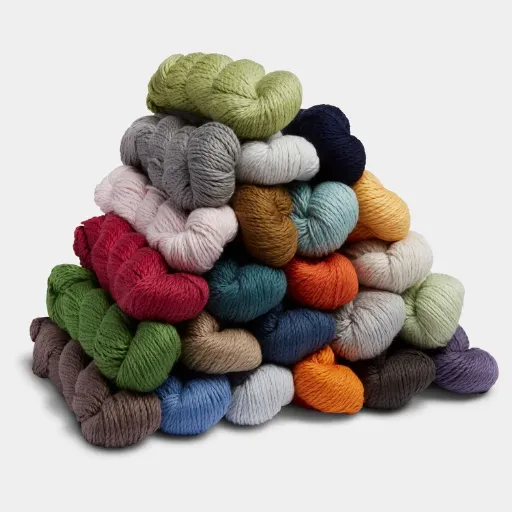
Regenerative organic cotton yarn is yarn made from cotton grown under a certified organic baseline with additional regenerative requirements covering soil health, biodiversity, animal welfare, and social fairness. The fiber is spun, usually through ring or open-end spinning, under a chain of custody that keeps it separate from non-certified cotton.
Three different ideas get mixed together in supplier marketing.
Organic is mainly about inputs. It prohibits synthetic pesticides, synthetic fertilizers, and genetically modified seed, with relatively consistent rules across USDA Organic, EU Organic, and GOTS.
Regenerative is about management and outcomes: soil health, biodiversity, water, and farm resilience. On its own, the word has no single legal definition, and some regenerative programs still allow synthetic inputs.
Regenerative organic combines the two. It starts with organic certification and adds regenerative requirements. That is why the word order matters. Regenerative organic is not a synonym for regenerative.
Here is what most marketing pages leave out: none of these labels changes the cotton fiber. Count, strength, elongation, uniformity, and hand are set by cotton variety, staple length, micronaire, and spinning. A regenerative label does not make a yarn stronger, softer, or more durable. It changes how the cotton was grown and how the claim is documented.
That is not a reason to dismiss the category. It is a reason to buy it for the right reason.
If your customer asks for a regenerative story, the label and its paperwork are the product. If your customer asks for performance, buy on fiber and spinning specifications. For the base product, see our organic cotton yarn guide, and for a deeper comparison, see organic cotton versus conventional cotton.
ROC vs Regenagri vs the U.S. Cotton Trust Protocol
Three certification routes dominate the conversation, and they are not interchangeable. The table summarizes what matters to a yarn buyer.
| Standard | Organic baseline | Synthetic inputs | Verification | Scale (latest) | Best fit |
|---|---|---|---|---|---|
| ROC (Regenerative Organic Certified) | Yes, USDA/NOP organic or approved equivalent | Prohibited | Annual third-party audit; ROC certificate and chain of custody | About 7,392 t, under 0.1% of global cotton | Premium programs that need organic and regenerative proof in one claim |
| Regenagri | No | Permitted, with a documented reduction over three consecutive years | Third-party verification; continuous improvement model | About 1.9 Mt, roughly 8% of global cotton | Volume programs, usually paired with GOTS for an organic guarantee |
| U.S. Cotton Trust Protocol | No, separate program | Allowed under 4R nutrient management | Field-level data, verification, and traceability; regenerative certification from the 2027 crop | 2.34 million acres enrolled for the 2026 crop | U.S.-origin supply chains with field-level data needs |
Regenerative Organic Certified (ROC)
ROC is the strictest route and the smallest by volume. It builds on USDA Organic or an approved equivalent, then adds requirements across three pillars: soil health and land management, animal welfare, and social fairness. Certification is annual, through accredited bodies under the Regenerative Organic Alliance.
ROC has three levels: Bronze, Silver, and Gold, each requiring a different number and scope of practices. The level must appear in the claim. “ROC Silver Cotton” is a complete claim. “Regenerative cotton” is not.
The standard sets clear textile claim thresholds:
- 100% ROC material: may use “100% Regenerative Organic Certified [level] [material]” and the seal.
- At least 95%: may use the ROC claim and seal, with up to 5% non-ROC content.
- 50% to under 95%: may use “Contains Regenerative Organic Certified [material]” but cannot present the product as a ROC product.
- Under 50%: may not use the seal or a consumer-facing ROC claim except as a content claim.
The full rules are in the ROC Textile Guidelines.
Supply is the constraint. Textile Exchange puts ROC cotton at about 7,392 tonnes, under 0.1% of global cotton. That scarcity explains why ROC orders often carry longer lead times, higher minimums, and less flexibility.
Regenagri
Regenagri is the scalable route. It does not require organic certification as a baseline. It permits synthetic inputs, including synthetic nitrogen, but requires producers to document a baseline and show a reduction over three consecutive years, unless an approved exception applies. It also requires diverse crop rotations on at least 75% of agricultural land, with scores improving over time.
That is why “Regenagri + GOTS” is a common double certification. Regenagri verifies regenerative practice; GOTS provides the organic processing guarantee. Nudie Jeans uses both across its supply chain.
Scale favors Regenagri. Textile Exchange reports about 1.9 million tonnes, roughly 8% of global cotton, up from about 0.9 million tonnes a year earlier. About 40% of that volume is also certified to another program, so do not assume every Regenagri bale is organic.
U.S. Cotton Trust Protocol
The U.S. Cotton Trust Protocol is a different model. It is a field-level data and verification program for U.S. cotton, not a global organic standard. Its regenerative program piloted for the 2025 crop and scaled for 2026. By July 2026, 2.34 million planted acres were providing field-level data, nearly one in four U.S. cotton acres.
The Trust Protocol is building field-level regenerative certification from the 2027 crop. If your supply chain is U.S.-origin and your customer wants verified field data, this route can be useful. It is not a substitute for ROC or an organic processing standard. Learn more about the Field Partner Program.
What Changes at the Yarn Stage, and What Doesn’t
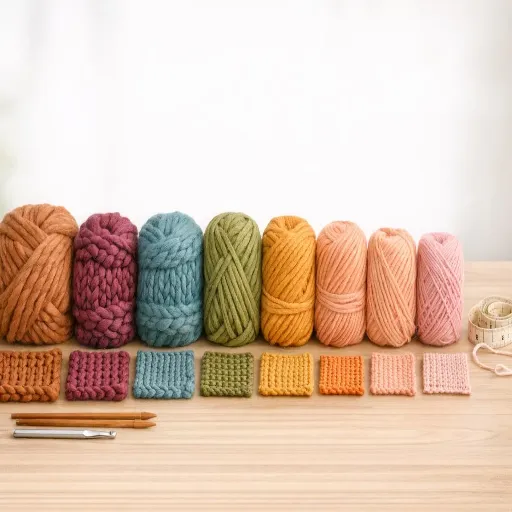
Almost nothing changes physically. A Ne 30 combed ring-spun yarn made from ROC cotton and one made from conventional cotton can have the same count, twist, strength, and appearance. Cotton variety and spinning still determine performance.
What changes is the burden of proof. Certified cotton must be segregated or accounted for through a mass-balance system, and every handoff needs a transaction certificate linking the material to the previous stage. If any link breaks, the final claim weakens or fails.
This surprises many buyers. A ROC farm certificate does not automatically make the yarn ROC. Processing must also demonstrate organic handling and segregation, usually through GOTS or an equivalent standard.
A yarn count does not become “regenerative” because the fiber is certified either. Count is a separate engineering decision based on fabric, machine, and end use. If you need help matching count to application, see our guide to organic cotton yarn counts.
Buy the regenerative claim for the story and the compliance file. Buy the yarn for its specifications. A supplier that understands both will tell you which parts of your request are certification issues and which are spinning issues.
How to Verify a Regenerative Organic Cotton Yarn Claim
Ask for six documents before you approve a bulk order. If a supplier cannot provide them, treat the claim as unverified.
- Scope certificate from the farm or producer group, showing the standard, certification body, certificate number, and validity dates.
- Transaction certificates for each stage from gin to yarn, with quantities that reconcile.
- Lot or bale IDs that match the transaction certificates to the yarn you are buying.
- Certifying-body confirmation that the certificate is active and covers the claimed scope.
- Chain-of-custody declaration naming the segregation or mass-balance method used.
- Processing certificate, such as GOTS, for the spinner and dyer if an organic claim is carried through to the finished product.
What Each Document Proves
A scope certificate confirms the operation, not your lot. A transaction certificate confirms a quantity moved, not that your yarn matches it. Verify the final link yourself.
This is the same discipline covered in our guide to verifying organic cotton yarn, applied here to regenerative claims.
Red Flags
Watch for these signals:
- “Regenerative” with no standard, level, or certifying body named.
- Certificate screenshots with no certificate number or validity dates.
- Transaction certificate quantities that do not reconcile with the order.
- A supplier who will not name the certifying body or allow verification.
- Mass-balance claims presented as physically segregated material.
- A directory listing offered as proof of certification.
Directory listings are a starting point, not evidence. The Regenerative Organic Alliance’s fiber directory includes one U.S. spinner listed as pre-operational until Spring 2028. A listing does not tell you the certificate is active or the yarn is available.
Paperwork fraud is not theoretical. In October 2020, GOTS found forged raw cotton transaction certificates in India covering about 20,000 tonnes, using fake QR codes and cloned government websites. GOTS cancelled upstream certificates, banned 11 companies, and terminated one certification body. The lesson: verify at the source, not from a PDF attachment.
Consider Priya, a sourcing lead at a home-textile brand. She received a transaction certificate that looked correct, but it covered 40 tonnes while her order was 12. The supplier called it a “shared batch.” Priya asked for the lot-level allocation.
None existed. She delayed the order by three weeks and moved to a supplier that could match certificates to lots. The second cost more per kilogram, but the first supplier’s “saving” would have put a false claim on 12 tonnes of finished product.
The Regulatory Clock
The EU’s Empowering Consumers for the Green Transition Directive, or EmpCo, has applied since 27 September 2026. It bans generic environmental claims such as “sustainable,” “eco-friendly,” and “climate neutral” unless backed by recognized certification or demonstrated outstanding performance. It also restricts offset-based neutrality claims and self-created sustainability labels.
The Green Claims Directive was withdrawn in June 2025, so do not cite it as current law. EmpCo is the binding rule now.
The EU Digital Product Passport is next. The textile delegated act is expected in 2027, with mandatory compliance likely in late 2028 or 2029. The data fields are not final, but product-level material and origin data will need to be available.
For a buyer, a regenerative claim is no longer just a marketing choice. It is a record-keeping requirement. Without the certificate and chain of custody, you may not be able to use the claim. The full text is in Directive (EU) 2024/825.
Traceability Technology, Cost, and Who Should Buy
What the Technology Proves
Two traceability tools come up often in regenerative cotton yarn sourcing. They solve different problems.
Fibercoin by TextileGenesis creates a digital token per kilogram and records transfers through the supply chain. It is strong on chain of custody, but it does not prove a farm used regenerative practices.
FibreTrace embeds a luminescent pigment into raw fiber, usually at ginning. A handheld scanner verifies it at each stage and uploads location and timestamp to a blockchain-backed platform. It is strong on identity and origin, but it does not replace certification of farming practices.
Organic cotton traceability proves identity and movement; certification proves the farming and processing system. You need both.
What It Costs
There is no reliable public price list for regenerative organic cotton yarn. Premiums are negotiated and vary by standard, origin, volume, and certification level. Be skeptical of any single global premium.
Use these benchmarks carefully:
- Organic cotton lint averaged about US2.19perkilogramin2018/19,comparedwithaboutUS2.19perkilogramin2018/19,comparedwithaboutUS1.85 for conventional, a premium of roughly 18%. The data is dated but shows the order of magnitude.
- One U.S. regenerative program, Integrity Grown, cites a premium of up to 30% for its top tier. That is program-specific, not a market average.
- ROC scarcity drives cost more than farming practice. With under 0.1% of global cotton certified, small orders may face minimums that make the per-kilogram price look worse than the fiber premium.
Ask suppliers to quote the yarn and the certification separately, as explained in our organic cotton yarn price guide. A transparent quote shows the fiber premium, processing premium, documentation cost, and minimum order quantity. If those lines are blended into one number, you cannot compare offers.
Video: Patagonia’s “Unbroken Ground” explains the regenerative agriculture principles behind the cotton programs discussed here.
Who Should Buy It
Buy if your brand has a public regenerative commitment, a retailer asking for proof, and staff to manage certificates and lot data. The premium buys a defensible story and a compliance file.
Buy Regenagri plus GOTS if you need organic assurance at volume. It is the pragmatic route for most commercial programs, provided your supplier documents both certificates and the processing chain.
Do not buy it for performance. If you want a stronger, more durable, or softer yarn, the regenerative label will not deliver that. Specify count, staple, strength, and spinning instead.
Wait if you cannot trace lots through your own supply chain. Start with GOTS or organic cotton, build the documentation habit, and move to regenerative when your systems can support it.
For brands comparing fiber routes, our analysis of recycled cotton versus organic cotton covers the trade-offs in recycled content and verification.
Ready to compare routes? Send us your target count, volume, and certification requirement and we will confirm what can be documented before you place an order.
Frequently Asked Questions
What is regenerative organic cotton yarn?
It is cotton yarn made from fiber grown under a certified organic baseline plus additional regenerative requirements, then spun and handled through a certified chain of custody. The fiber is physically the same as organic cotton. The difference is the farming system and the documentation.
Is regenerative organic cotton better than organic cotton?
Not automatically. It prioritizes soil health, biodiversity, and farm resilience, but evidence for yield or carbon benefits is mixed and depends on region, soil, and management. Choose it when you need the claim and can verify it, not for better fiber.
Is regenerative organic the same as regenerative?
No. Regenerative organic requires an organic baseline. Regenerative alone may allow synthetic inputs and has no single legal definition. Always ask which standard and level a supplier means.
What are the three ROC levels?
Bronze, Silver, and Gold. Each requires a different number and scope of practices, and the level must appear in the claim, such as “ROC Silver Cotton.” Certification is annual.
How much does regenerative organic cotton yarn cost?
There is no public per-kilogram price. Premiums are negotiated and vary by standard, origin, volume, and certification level. Organic lint has historically carried a premium in the high teens to low twenties percent, and some programs cite up to 30%. ROC scarcity can add minimum-order pressure.
Can yarn be certified regenerative if the spinner is not?
No. Chain of custody must be certified through processing. A farm certificate alone does not make the yarn certified. The spinner and dyer need to demonstrate organic handling and segregation, usually through GOTS or equivalent.
Conclusion: The Honest Verdict
Regenerative organic cotton yarn is a real category, but it is not a fiber upgrade. It is a farming and documentation claim. The yarn you receive is governed by the same count, staple, strength, and spinning specifications as any other cotton yarn.
Three questions decide whether the premium is worth it:
- Which standard and level? ROC, Regenagri, or the U.S. Cotton Trust Protocol. Each has different rules, scale, and claim language.
- Which documents? Scope certificate, transaction certificates, matched lot IDs, chain-of-custody declaration, and processing certification.
- Which supply route can deliver your volume? ROC’s scarcity and Regenagri’s scale lead to very different lead times and minimums.
Consider Sofia, head of sourcing at a 40,000-piece knitwear label. She wanted ROC for a spring collection, but available certified volume could not cover her 12-tonne requirement in time. She switched to Regenagri plus GOTS, kept lots segregated, and launched on schedule with a claim her retailer accepted. She did not get the ROC seal, but she got a defensible product and a supply chain that could deliver.
At Hebei Lida, we spin organic cotton yarn and work with buyers on the certification and documentation their orders require. We confirm the scope of any certification in writing before production. If you are comparing regenerative routes, send us your specifications and target volume. We will tell you what can be verified, what it costs, and where supply limits are.