



The best sustainable yarn suppliers combine verified certifications, transparent supply chains, consistent quality, and scalable production. To find the right partner, start by matching the supplier’s certifications to your product claims, then verify those credentials in official databases, request documented quality data, and evaluate their environmental and social practices before placing a sample order.
Sustainability is no longer a niche preference in the textile industry. The sustainable yarn market is projected to grow from USD 5.2 billion in 2026 to USD 10.1 billion by 2033, at a compound annual growth rate of 7.6%.
Fashion brands, home textile manufacturers, and industrial buyers are all under pressure to source materials that meet both consumer expectations and tightening environmental regulations.
But more demand has also brought more confusion. Not every supplier that labels itself “eco-friendly” or “green” can back up those claims. The number of companies advertising recycled yarn, organic cotton, and eco-friendly blends has grown faster than the number of suppliers that can verify those claims. If you have ever received a certificate that looked legitimate only to discover the license number could not be verified, you already know how expensive greenwashing can become.
This guide will help you evaluate sustainable yarn suppliers with confidence, avoid common traps, and build partnerships that last. Whether you are comparing recycled yarn manufacturers, reviewing GRS certified yarn suppliers, or searching for the right eco-friendly yarn supplier for your product line, the principles below will save you time, money, and risk.
Ready to source high-performance eco-friendly yarns from an experienced manufacturer? Hebei Lida Textile Co., LTD welcomes your inquiry and looks forward to supporting your sustainable textile business.
Key Takeaways
- Match certifications to your marketing claims: GOTS for organic, GRS for recycled, OEKO-TEX for chemical safety, and BCI for more sustainable conventional cotton.
- Always verify certificates in official databases, not just by looking at supplier PDFs.
- Request documented quality data, supply-chain maps, and environmental practices before committing to bulk production.
- Compare regional supplier strengths: China and India offer scale, Turkey and Europe offer compliance proximity, and the Americas offer shorter lead times.
- Build long-term partnerships with clear KPIs, regular audits, and collaborative product development.
Why Sustainable Yarn Sourcing Matters in 2026
Sustainable yarn sourcing is now a business imperative. Consumer research shows that over 60% of shoppers prioritize eco-friendly materials when making purchasing decisions. At the same time, regulations in the European Union, the United States, and major Asian markets are requiring brands to disclose environmental impact, recycled content, and supply-chain due diligence.
For textile buyers, this creates both opportunity and risk. Brands that source verified sustainable yarns can differentiate their products, meet retailer requirements, and build trust with end customers. But buyers who work with unverified sustainable yarn suppliers face compliance failures, rejected shipments, and damaged reputations.
The most effective buyers develop a repeatable vetting process. They know which certifications matter, which questions to ask, and which sustainable yarn suppliers have the capabilities to support their product lines.
The growth data supports this shift. The broader sustainable fabrics sector is expected to reach USD 41.28 billion in 2026 and more than double to USD 115.72 billion by 2035. Recycled cotton yarn alone is projected to grow from USD 1.5 billion in 2024 to USD 3.2 billion by 2033. For businesses that get ahead of this curve, the competitive advantage is real.
Mini-story: When James, a procurement manager for a mid-sized fashion brand in London, started receiving requests for recycled content from his retail clients, he assumed any GRS certified yarn supplier would work. He placed a bulk order based on a certificate sent by email. Six weeks later, an independent audit found that the recycled polyester content was 15% lower than claimed. The retailer canceled the collection. James now verifies every certificate through Textile Exchange before approving a supplier.
Looking for premium eco-friendly yarns for your next textile project? Contact Hebei Lida Textile Co., LTD to explore sustainable yarn solutions tailored to your needs.
What Makes a Yarn Supplier Truly Sustainable?
A genuinely sustainable yarn supplier does far more than stock organic or recycled products. Sustainability runs through how the company sources raw materials, manages energy and water, treats workers, and documents every step for customers. The most reliable sustainable yarn suppliers treat transparency as a standard part of doing business, not a special request.
When you first contact sustainable yarn suppliers, listen to what they offer voluntarily. Do they share certifications, environmental data, and quality reports before you ask? Do they explain where their fibers come from and how their mills operate? Suppliers that lead with documentation are usually easier to work with over the long term.
Traceability and Transparency
Traceability means the supplier can tell you where the fiber originated, which facilities processed it, and how it moved from farm or recycling plant to finished yarn. Ask for a supply-chain map that names tier-two and tier-three suppliers. If a manufacturer cannot identify the source of its recycled polyester or organic cotton, its sustainability claims are unverifiable.
For recycled yarns, traceability is especially important. A GRS certified yarn supplier should provide transaction certificates for every stage, from the recycler to the spinner to the final seller. Without these documents, you cannot prove recycled content to your own customers or regulators.
Environmental Practices
Look beyond certifications to operational practices. The best sustainable yarn suppliers manage water, energy, and waste with the same care they apply to product quality.
Does the mill recycle dye water? Does it use renewable energy? Does it track waste per kilogram of yarn produced? The best suppliers will share environmental reports or third-party audit results without hesitation. For example, a supplier running a closed-loop water system can dramatically reduce the water footprint of dyed yarns.
You can also ask about carbon emissions per kilogram of yarn, chemical management policies, and waste diversion rates. Some leading suppliers now measure and disclose scope 1, 2, and 3 emissions. While not every mill will have this data, the willingness to measure and share progress is a strong indicator of a serious sustainability program.
Social Compliance
Sustainable sourcing also means ethical labor. The leading sustainable yarn suppliers maintain working conditions that meet or exceed International Labour Organization standards. Certifications like GOTS include social criteria aligned with these standards. You can also request BSCI or SMETA audit reports to confirm fair wages, safe working conditions, and no child or forced labor.
Social compliance is especially relevant when sourcing from regions with weaker labor enforcement. A responsible sustainable yarn supplier will welcome social audits and will already have systems in place to monitor subcontracting and overtime practices.
Certifications as Evidence
Certifications are not decorations. They are third-party evidence that a supplier meets specific standards. We will cover the most important ones in detail below, but the key principle is this: the certification must match the claim. A GOTS certificate does not prove recycled content, and a GRS certificate does not prove organic farming.
Want to understand where the market is heading before you select a partner? Read our overview of sustainable yarn trends in 2026.
Essential Certifications for Sustainable Yarn Suppliers
Certifications are the fastest way to separate credible sustainable yarn suppliers from marketing-only claims. They provide an independent, auditable record that a supplier meets specific environmental, social, or safety standards. Here are the standards buyers should understand before contacting any eco-friendly yarn supplier.
No single certification covers every type of sustainability. The right certification depends on the fiber, the supply chain, and the claim you want to make. The best sustainable yarn suppliers will hold multiple certifications and will explain which standard applies to each product.
GOTS: Global Organic Textile Standard
GOTS is the leading certification for organic fibers, including organic cotton yarn. It covers the entire supply chain, from harvesting raw materials to environmentally and socially responsible manufacturing. A GOTS-certified yarn must contain at least 70% certified organic fibers and meet strict chemical and wastewater criteria.
Best for: organic cotton, organic wool, and organic fiber blends.
GRS: Global Recycled Standard
GRS verifies recycled content, chain of custody, and environmental and social criteria. It is essential for any product marketed as “recycled,” whether the feedstock is post-consumer PET bottles or pre-consumer textile waste. GRS also requires transaction certificates at each step of the supply chain.
For buyers evaluating recycled yarn manufacturers, GRS is the most important certification to request. It applies to recycled polyester, recycled cotton, recycled nylon, and recycled wool. A GRS certified yarn supplier must disclose the percentage of recycled content and maintain chain-of-custody records that buyers can verify through Textile Exchange.
Best for: recycled polyester yarn, recycled cotton yarn, and recycled nylon.
OEKO-TEX Standard 100
OEKO-TEX Standard 100 tests finished textiles for harmful substances. It does not certify organic farming or recycled content, but it does assure buyers that the yarn is safe for skin contact. This certification is especially valuable for baby textiles, bedding, and apparel.
Best for: chemical safety and skin-friendly products.
RCS: Recycled Claim Standard
RCS is a lighter standard than GRS. It verifies recycled content and chain of custody but does not include social or environmental criteria. It is suitable for basic recycled claims where full GRS certification is not required.
Best for: entry-level recycled content claims.
BCI: Better Cotton Initiative
BCI promotes more sustainable cotton farming practices, such as reduced water and pesticide use. It is less stringent than GOTS and does not guarantee organic production, but it is widely used by large brands seeking to improve conventional cotton sourcing.
Best for: brands transitioning toward more sustainable cotton at scale.
Bluesign
Bluesign focuses on chemical management, resource productivity, and worker safety at the manufacturing level. It is common among performance and industrial yarn suppliers.
Best for: technical textiles, outdoor yarns, and industrial applications.
How to Verify Certifications
Never accept a certificate at face value. Even well-meaning sustainable yarn suppliers can accidentally send outdated or incorrect documents. Use these official verification steps to confirm every claim.
- GOTS: Search the supplier’s license number at global-standard.org.
- GRS and RCS: Request transaction certificates and confirm them through Textile Exchange at textileexchange.org.
- OEKO-TEX: Use the label check tool at oeko-tex.com with the certificate number.
- BCI: Check the supplier’s membership and licensing status through Better Cotton.
Re-verify certifications at initial qualification, annually, and before making any sustainability claim in your own marketing. Keep a record of verified certificates for each supplier and each product line. This documentation protects your brand if a certification body, retailer, or regulator asks for proof.
How to Evaluate a Sustainable Yarn Supplier: Step-by-Step
Finding a sustainable yarn supplier is a process, not a single decision. Use this framework to move from initial research to a reliable production partnership. Each step builds on the previous one, so skipping any step increases risk.
The goal is not simply to find the cheapest option. The best sustainable yarn suppliers offer the right combination of certification, quality, capacity, communication, and geographic fit for your specific product. Have questions about recycled, organic, or environmentally responsible yarns? The experts at Hebei Lida Textile Co., LTD are ready to help you choose the right option.
Step 1: Confirm Certifications Match Your Claims
Start by deciding what sustainability story your product will tell. Are you marketing organic cotton? Recycled polyester? Chemical-free baby textiles?
Then choose suppliers whose certifications directly support that claim. A mismatch between certification and marketing is one of the most common causes of compliance problems.
For example, if your brand markets a product as “recycled,” you need a GRS certified yarn supplier. If you market it as “organic,” you need GOTS. Using a general OEKO-TEX certificate to support a “recycled” claim would be misleading and could violate advertising regulations.
Step 2: Review Supply-Chain Transparency
Ask the supplier to provide a supply-chain map. Can it name the gin, spinner, recycler, or dye house? Does it provide transaction certificates for each stage? Sustainable yarn suppliers that refuse to share this information are usually not worth the risk.
Transparency also means honesty about limitations. A supplier that admits it sources some conventional cotton for blending is more trustworthy than one that claims every product is 100% sustainable without proof.
Step 3: Assess Production Capabilities and MOQs
Understand minimum order quantities, lead times, and scaling capacity. Standard sustainable yarns often require 500 to 5,000 kg. Custom colors, blends, or counts may require 1,000 kg or more. Make sure the sustainable yarn supplier’s capacity fits both your current needs and your growth plans.
Ask about equipment, shift capacity, and typical turnaround times. A supplier that is already running at full capacity may struggle to meet your deadlines during peak season.
Step 4: Request Documented Quality Assurance
Quality data should include yarn count, tensile strength, colorfastness, shrinkage, and, where relevant, abrasion resistance. Ask for test reports from recognized labs and confirm the supplier’s defect rates and return policies.
Step 5: Evaluate Environmental and Social Compliance
Beyond certifications, ask about water recycling, renewable energy use, waste reduction programs, and chemical management. Request social audit reports such as BSCI or SMETA to confirm ethical labor practices.
Step 6: Compare Lead Times, Logistics, and Geographic Fit
A supplier in China may offer scale and competitive pricing, while a supplier in Turkey may deliver to Europe faster. Match geographic fit to your delivery requirements, inventory strategy, and customs complexity.
Step 7: Validate Reputation Through References and Audits
Request references from current customers, especially buyers in your industry. If possible, conduct a factory audit or hire a third-party inspection service. A site visit, even virtual, can reveal far more than a polished website.
The most reliable sustainable yarn suppliers will have long-standing customer relationships and will be willing to connect you with references. Be cautious of suppliers that avoid reference checks or provide only vague testimonials.
Sustainable Yarn Materials and Their Best Applications
Different sustainable yarns serve different markets. Choosing the right material helps you meet performance requirements while supporting your sustainability story. The most successful buyers match the material to the end use, rather than choosing a fiber based only on its environmental label.
Sustainable yarn suppliers typically specialize in certain fiber categories. Some focus on recycled polyester and nylon, while others focus on organic cotton or cellulosic fibers. Understanding each material’s strengths helps you ask the right questions and select the right partner.
Recycled Polyester (rPET)
Recycled polyester yarn is made from post-consumer PET bottles or post-industrial polyester waste. It is strong, versatile, and widely used in activewear, outdoor textiles, and industrial applications.
The recycled polyester filament yarn market alone is projected to grow from USD 2.63 billion in 2026 to USD 4.41 billion by 2035.
When sourcing recycled polyester, ask about feedstock origin and whether the supplier can provide GRS transaction certificates. Some suppliers also offer recycled nylon as an alternative for applications requiring higher elasticity or abrasion resistance.
Recycled Cotton
Recycled cotton yarn is produced from pre-consumer or post-consumer cotton waste. It is popular for denim, home textiles, and casual apparel.
The recycled cotton yarn market is expected to grow from USD 1.5 billion in 2024 to USD 3.2 billion by 2033.
Recycled cotton yarn often has shorter fibers than virgin cotton, which affects strength and softness. Experienced recycled yarn manufacturers will help you choose the right blend ratio or spinning method to compensate.
Organic Cotton
Organic cotton yarn is grown without synthetic pesticides or fertilizers. It is soft, breathable, and ideal for fashion, baby textiles, and premium basics. Although organic cotton still represents only about 1.4% of global cotton production, demand is rising rapidly.
For organic cotton claims, GOTS or OCS (Organic Content Standard) certification is essential. Many organic cotton yarn suppliers are based in India, Turkey, and China. Verify the organic status at every stage, because conventional cotton can be mixed with organic cotton during ginning or spinning if controls are weak.
TENCEL™ and Lyocell
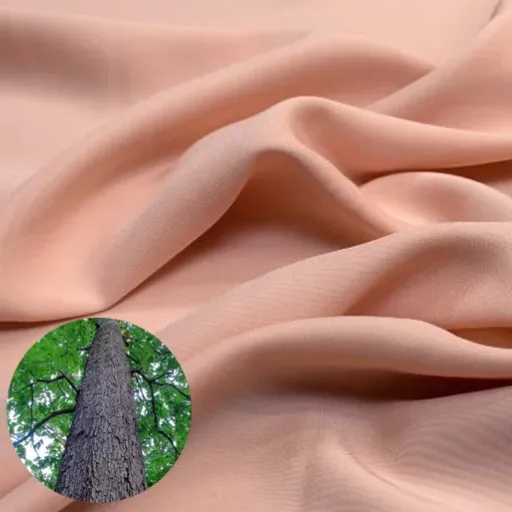
TENCEL™ lyocell is a regenerated cellulosic fiber made from sustainably sourced wood pulp in a closed-loop process that recycles around 99% of solvents. It is valued for its softness, breathability, and drape, making it popular in fashion and home textiles.
TENCEL™ is a branded fiber from Lenzing, but the term “lyocell” can also apply to generic versions. If your marketing relies on the TENCEL™ brand, confirm that your supplier sources the fiber directly from Lenzing or an authorized distributor.
Hemp, Linen, and Bamboo
These plant-based fibers grow with minimal water and pesticides. Hemp and linen are durable and biodegradable, while bamboo rayon offers softness but requires careful processing to maintain eco-credentials. Not all bamboo yarn is equally sustainable; look for closed-loop processing or certifications that verify chemical management.
Recycled Wool and Ethical Wool
Recycled wool reduces textile waste, while ethical wool certifications such as Responsible Wool Standard (RWS) ensure animal welfare and land management practices. Both are common in knitwear and outerwear. Recycled wool is often blended with virgin wool or other fibers to improve strength and consistency.
If you need a material engineered specifically for your product, learn more about our custom sustainable yarn manufacturing capabilities.
Regional Supplier Considerations
Where a sustainable yarn supplier is based affects cost, lead time, compliance, and communication. Here is how the major regions compare for buyers sourcing eco-friendly yarns in 2026.
There is no single best region. The right choice depends on your product, volume, quality requirements, and target market. Many experienced buyers use a mixed sourcing strategy, combining scale from one region with compliance proximity from another.
China
China offers unmatched scale, variety, and competitive pricing. Many Chinese mills now produce GRS-certified recycled polyester and GOTS-certified organic cotton. The country also has strong capabilities in custom fiber blending and large-volume production.
The key challenge is certification verification. Because the market is large and fragmented, some brokers and smaller mills may present certificates that do not apply to their specific facility. Work with established sustainable yarn suppliers and confirm every certificate independently.
India
India has a strong tradition in cotton, organic farming, and handloom production. It is an excellent source for organic cotton yarns, recycled cotton, and artisan-quality products. Many Indian suppliers also offer flexible MOQs for smaller brands.
Indian suppliers often excel at natural fibers and traditional techniques. However, lead times can be longer than in China, and buyers should confirm that dyeing and finishing facilities meet the required chemical and environmental standards.
Turkey
Turkey is known for premium sustainable cotton and proximity to European markets. Turkish sustainable yarn suppliers often combine strong compliance standards with shorter shipping times to Europe, though costs are typically higher than in Asia.
Turkey is particularly strong in organic cotton and high-quality ring-spun yarns. For European brands focused on speed-to-market and regulatory compliance, Turkey can be a strong alternative to Asian sourcing.
Europe
European suppliers lead in regulatory compliance, traceability, and low-carbon production. They are well suited to brands serving EU markets with strict sustainability requirements. Scale is generally smaller, and prices are higher.
European recycled yarn manufacturers and organic cotton spinners often focus on premium, transparent supply chains. They may also offer textile-to-textile recycling options that appeal to circular-economy strategies.
Americas
Regional sourcing in the Americas reduces shipping distances and lead times. The United States and Latin America are developing more recycled fiber capacity, especially for recycled cotton and recycled polyester.
For North American brands, sourcing from the Americas can simplify logistics and reduce carbon emissions from shipping. The supplier base is smaller than in Asia, but it is growing as demand for local and regional supply chains increases.
How to Spot Greenwashing in Yarn Suppliers
Greenwashing is a real risk when sourcing from sustainable yarn suppliers. Some suppliers use environmental language without certification. Others present outdated or unrelated certificates. Here are the warning signs every buyer should watch for.
Learning to spot greenwashing protects your brand and your budget. It also helps you identify the suppliers that are genuinely invested in sustainability.
Vague Terms Without Data
Words like “eco-friendly,” “green,” or “natural” mean little without certification or data. A credible supplier will tell you exactly what makes its yarn sustainable and provide evidence.
Missing, Expired, or Unverifiable Certificates
If a supplier cannot provide a current certificate number, or if the number does not check out in the official database, treat the claim as unverified. Expired certificates are another common red flag.
Prices Too Low for Certified Products
Certified sustainable yarns usually cost more than conventional alternatives because of raw material premiums, audit costs, and compliance investments. If a price seems too good to be true, the certification may not be genuine.
Refusal to Provide Documentation
A legitimate supplier will share certificates, test reports, supply-chain maps, and audit results. Reluctance to provide documentation is a serious warning sign.
Inconsistent Claims
Compare the supplier’s website, catalog, sales pitch, and certificates. Inconsistencies between these sources often indicate weak internal controls or misleading marketing.
Mini-story: When Maria, a home textile buyer in Barcelona, switched to a new “eco-friendly” yarn supplier last year, the price was 20% below her previous source. The supplier sent a GOTS certificate that looked correct, but Maria did not verify it immediately. Three months later, her retail client asked for proof of certification, and Maria discovered the license had expired. The marketing campaign was already printed. Replacing the yarn and re-certifying the product line cost her company over €40,000.
Sampling, MOQs, and Scaling Production
Before committing to bulk production, establish a clear sampling and scaling process. Even the most reputable sustainable yarn suppliers need precise specifications to deliver consistent results.
A well-defined sampling process also protects both parties. When expectations are documented, disputes about color, strength, or composition are easier to resolve.
Typical MOQs for Sustainable Yarns
- Standard certified yarns: 500 to 5,000 kg
- Custom colors or blends: 1,000 kg or more
- Small-brand or startup programs: some suppliers offer 200 to 500 kg for selected materials
MOQs vary by fiber, certification, and processing complexity. Recycled yarns with strict color matching or custom blends usually require higher minimums than standard organic cotton yarns. Always ask about startup programs if you are a smaller brand. Some GRS certified yarn suppliers and organic cotton yarn suppliers now offer lower entry points to attract emerging brands.
Sampling Best Practices
Always request yarn cones or lab dips before bulk production. Test for color accuracy, hand feel, strength, and compatibility with your manufacturing equipment. Approve samples in writing and keep a retained sample for comparison when bulk goods arrive.
For custom sustainable yarns, expect an iterative sampling process. The first lab dip may not match perfectly, and adjustments to dye recipes or fiber blends may be needed. Build this timeline into your product development schedule.
Scaling From Test Batch to Production
Start with a small trial run to confirm quality and consistency. Once approved, scale gradually. Monitor the first full production batch closely, comparing it against the approved sample and specification sheet.
Document every approval step. If quality issues appear at scale, written records of approved samples and specifications make it much easier to resolve disputes with your supplier.
Understanding the Sustainability Premium
Certified sustainable yarns typically carry a price premium over conventional yarns because of higher raw material costs, certification fees, and compliance investments. Build this into your pricing model from the start.
The premium varies by fiber. Organic cotton may cost 20% to 40% more than conventional cotton. Recycled polyester is often closer in price to virgin polyester as recycling technology scales. Be cautious of sustainable yarn suppliers whose prices are far below market rates for certified materials.
Building a Long-Term Partnership With Your Supplier
The best sustainable yarn suppliers become strategic partners, not just vendors. A strong relationship improves quality, reduces lead times, and makes it easier to develop new products. Here is how to build a relationship that lasts.
Partnership starts with alignment. When your supplier understands your brand, your market, and your quality standards, it can anticipate problems and suggest improvements. This level of collaboration is one of the main differences between average and excellent sustainable yarn suppliers.
Set Clear Sustainability and Quality KPIs
Define measurable targets for certification maintenance, defect rates, on-time delivery, and environmental performance. Review these KPIs quarterly.
Examples of useful KPIs include:
- On-time delivery rate above 95%
- Defect rate below an agreed threshold
- Current certifications for all product lines
- Annual reduction in water or energy use per kilogram of yarn
Conduct Regular Audits and Certification Renewals
Schedule annual re-verification of certifications and periodic factory audits. This protects your brand and keeps the supplier accountable. Audits do not always need to be in-person; virtual audits and third-party inspections can be effective and cost-efficient.
Collaborate on Product Development
Involve your supplier early when developing new products. A good supplier can recommend fiber blends, yarn counts, and finishes that improve both sustainability and performance. This is especially valuable when working with recycled yarn manufacturers, where fiber quality can vary by feedstock.
Plan for Communication and Contingencies
Establish clear communication channels and contingency plans for supply disruptions. Diversifying across two suppliers for critical materials can reduce risk. Many experienced buyers keep a primary sustainable yarn supplier and a secondary backup for key products.
Frequently Asked Questions
What certifications should I look for in a sustainable yarn supplier?
Look for GOTS for organic fibers, GRS for recycled content, OEKO-TEX Standard 100 for chemical safety, and BCI for more sustainable conventional cotton. Match the certification to your product’s sustainability claim. If you are specifically looking for recycled yarn manufacturers, GRS should be non-negotiable.
How can I tell if a yarn supplier is greenwashing?
Watch for vague language, unverifiable certificates, prices that seem too low, refusal to share documentation, and inconsistent claims between the website and sales team. The strongest sustainable yarn suppliers welcome detailed questions and provide proof.
What are typical MOQs for sustainable yarns?
Standard certified yarns often require 500 to 5,000 kg. Custom colors or blends usually require 1,000 kg or more. Some eco-friendly yarn suppliers offer lower MOQs for startups or selected materials. When comparing sustainable yarn suppliers, ask whether they have programs specifically designed for smaller brands.
Can sustainable yarns be customized?
Yes. Many sustainable yarn suppliers offer custom fiber blends, yarn counts, twists, colors, and finishes. Custom orders typically require higher MOQs and longer lead times. If customization is important, look for suppliers with in-house research and development teams.
What sustainable yarn material is best for fashion?
Organic cotton, TENCEL™ lyocell, and recycled cotton are popular for fashion. Recycled polyester works well for activewear and outerwear. The best choice depends on the garment’s performance, feel, and end-of-life goals. Many sustainable yarn suppliers for fashion offer sample cards that let designers compare hand feel and drape before ordering.
What is the best region for sourcing sustainable cotton yarn?
India and Turkey are strong for organic and premium cotton. China offers scale and variety. Europe offers high compliance, while the Americas provide shorter lead times for North American buyers. The best sustainable yarn suppliers in each region will match your quality, volume, and certification requirements.
How do I verify a GRS certified yarn supplier?
Request the supplier’s GRS license number and transaction certificates. Verify the license through Textile Exchange at textileexchange.org. Confirm that the transaction certificate matches the specific product and shipment you are buying.
What is the price range for sustainable yarns?
Prices vary by fiber, certification, and order volume. Organic cotton typically carries a 20% to 40% premium over conventional cotton. Recycled polyester is often closer in price to virgin polyester. Always compare prices from sustainable yarn suppliers against certified market benchmarks, not against uncertified alternatives.
Conclusion
Choosing the right sustainable yarn supplier is one of the most important decisions a textile buyer can make. The market is growing fast, but so is the risk of greenwashing and inconsistent quality. By matching certifications to your claims, verifying credentials in official databases, evaluating supply-chain transparency, and building long-term partnerships, you can source sustainable yarns with confidence.
The sustainable yarn suppliers that deserve your business will welcome your questions. They will provide current certificates, documented quality data, and clear evidence of their environmental and social practices. They will also work with you to develop custom solutions that meet your exact specifications.
For a broader overview of sustainable materials, read our guide to sustainable yarns. It covers fiber types, benefits, and how to choose the right material for your project.
At Hebei Lida Textile Co., LTD, we manufacture high-quality sustainable yarns for fashion, home textiles, and industrial applications. Whether you need GRS-certified recycled polyester, GOTS organic cotton, or a custom eco-friendly blend, our team can guide you from sample to full production.
Contact our team today to discuss your sustainable yarn requirements or request a sample quote.