




The top sustainable yarn trends in 2026 are recycled and regenerated fibers reaching performance parity with virgin materials, bio-based polymers scaling beyond niche markets, certification and traceability becoming non-negotiable sourcing requirements, and functional sustainable yarns merging eco-credentials with technical performance.
For fashion designers and home textile brands, these trends aren’t abstract concepts. They’re reshaping procurement strategies, supplier relationships, and product roadmaps right now.
Most coverage of sustainable yarn trends targets hobbyist crafters. It skips the details that matter to professional buyers. What certifications actually protect your brand? Which innovations are ready for large-scale production? How do you verify claims without becoming a supply chain auditor?
This guide answers those questions. We’ll break down the four trends defining the yarn industry in 2026 and show you exactly how to act on them. Hebei Lida Textile Co., LTD offers innovative sustainable yarn solutions that help businesses achieve both quality standards and environmental goals. Contact us today for more details.
Key Takeaways
- The sustainable yarn market is projected to grow from 5.2billionin2026to5.2billionin2026to10.1 billion by 2033, nearly double the growth rate of conventional yarns.
- Chemical recycling has matured in 2026, allowing recycled polyester and nylon to match virgin fiber strength, color consistency, and wear resistance.
- Bio-based yarns are on track to exceed 30% market share by 2030, with organic cotton growing at a 14.7% CAGR.
- Certifications like GRS, GOTS 8.0, and OEKO-TEX are no longer premium add-ons. They are baseline requirements for retail partnerships.
- A simple 5-step sourcing framework can protect your brand from greenwashing and inconsistent supply.
What Is Driving the Shift Toward Sustainable Yarns?
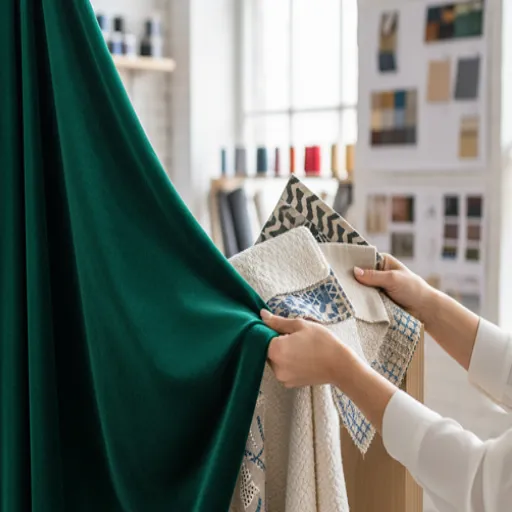
Three forces are converging to push sustainable yarns from niche preference to standard expectation. Understanding them helps you anticipate where buyer pressure will come from next.
Regulatory Pressure Is Tightening
The European Union’s Ecodesign for Sustainable Products Regulation now mandates circularity and durability requirements for textiles sold in EU markets. Extended Producer Responsibility (EPR) schemes are expanding across North America and Asia.
These rules don’t just affect European brands. If you sell into global markets, your supply chain must meet the strictest standard in your distribution network.
Additionally, the EU Green Claims Directive now requires substantiation for every sustainability marketing claim. Vague labels like “eco-friendly” without third-party verification can result in fines and retail delisting. This shifts the burden of proof to manufacturers and their brand partners.
Want to understand how sustainable yarn production actually works behind the scenes? Read our complete guide to eco-friendly yarn production to see the manufacturing standards that keep your brand compliant.
Brand Supply Chain Mandates Have Changed
Five years ago, sustainable materials were a premium option for select collections. In 2026, they’re a mandatory selection standard for most mid-to-high-end brands. Major fashion houses and home textile retailers now require preferred materials in their supplier codes of conduct.
If your yarns can’t meet these standards, you’re disqualified before the design conversation even begins.
Yarn Expo Spring 2026 in Shanghai reflected this shift clearly. The event drew over 24,000 visitors from 123 countries, with sustainable recycling and functional technical innovation generating the strongest buyer interest. Regenerated fibers and yarns topped sourcing requests, with 57% of buyers actively seeking recycled or bio-based options.
Consumer Expectations Have Hardened
Over 65% of global consumers now prioritize sustainable attributes when purchasing textiles. That number climbs higher among millennial and Gen Z buyers, who also happen to be the most vocal on social media. A single viral post questioning a brand’s environmental credentials can erase months of marketing spend.
For B2B buyers, this consumer pressure flows upstream. Retailers pass their sustainability targets to suppliers. Suppliers pass them to yarn manufacturers. The yarn choices you make today determine which retail partnerships you can pursue tomorrow. Contact Hebei Lida Textile Co., LTD to explore our wide range of sustainable yarn solutions designed for modern textile production.
Trend 1: Recycled and Regenerated Fibers Go Mainstream
Recycled yarn is no longer a compromise. In 2026, it is a competitive advantage.
Recycled Polyester (rPET)
Recycled polyester remains the most widely used sustainable yarn globally. Production generates 63% less CO₂ than virgin polyester. The raw material cost is lower, and fossil fuel dependence drops significantly.
The real breakthrough in 2026 is chemical recycling. Mechanical recycling historically produced yarn with inconsistent strength, color variation, and poor wear resistance. Chemical recycling has solved those problems.
Recycled polyester and recycled nylon yarns now achieve performance parity with virgin petroleum-based fibers. This isn’t a marginal improvement. It’s an inflection point that makes recycled content viable for premium applications.
However, the Textile Exchange Materials Market Report 2024 reveals a sobering reality. Recycled polyester’s share of the total polyester market declined from 13.6% in 2022 to 12.5% in 2023. Virgin fossil-based synthetic fiber production actually increased from 67 million to 75 million tonnes during the same period. The demand for recycled options is growing, but cheap virgin synthetics still dominate.
What does this mean for buyers? GRS (Global Recycled Standard) certification is now the baseline expectation, not a differentiator. If your supplier cannot produce a valid Transaction Certificate (TC) for recycled content, assume the claim is unverified.
Recycled Cotton and Wool
Textile-to-textile recycling is the next frontier. Less than 1% of global fiber production currently comes from pre- and post-consumer recycled textiles. Nearly all recycled polyester originates from plastic bottles, not old garments.
That is about to change. Search data shows recycled yarn queries surged 91% in late 2025. Investment in fiber regeneration facilities is accelerating across Europe and Asia. For fashion designers, this matters because closed-loop cotton and wool offer a compelling narrative: your old collection becomes the raw material for your new one.
Home textile brands should pay attention too. Recycled cotton yarns are increasingly available for upholstery and curtain applications, where durability requirements once excluded recycled options. The performance gap is closing fast.
Trend 2: Bio-Based and Plant-Based Innovations
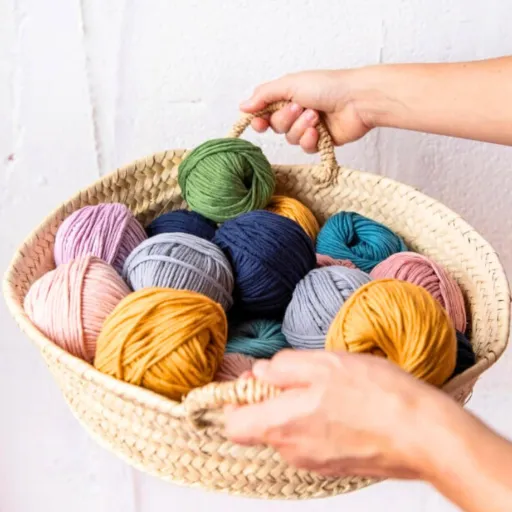
If recycled fibers solve the waste problem, bio-based fibers solve the origin problem.
Established Players Are Scaling
Organic cotton leads this category with a projected 14.7% CAGR through 2033. Lyocell and Tencel continue to gain traction due to their biodegradable properties and closed-loop production processes, which recycle 99% of solvents. Hemp and linen remain staples for brands seeking low-water, pesticide-free crops.
The Asia-Pacific region dominates production, holding nearly 70% of the organic cotton yarn market. For global buyers, this concentration means lead times and geopolitical stability matter as much as fiber quality.
Emerging Innovations Are Maturing
Bio-polyethylene, PLA (polylactic acid) yarns, and even algae-infused fibers are moving from laboratory curiosity to commercial availability. Bio-based yarns are projected to constitute over 30% of the sustainable yarn market by 2030.
Many buyers still dismiss bio-based synthetics as niche or inferior to petroleum-based performance. That assumption is outdated. In 2026, bio-based polymers match traditional synthetics in tensile strength, dye uptake, and wash durability. The difference is the carbon footprint, not the hand-feel.
When Elena Martinez, a Barcelona-based home textile designer, switched to bio-based upholstery yarns for her spring collection, she expected pushback from her manufacturing partner. Instead, her partner reported smoother dyeing and less static during weaving. Elena’s collection launched on schedule, and her largest retail account cited the bio-based credentials as a deciding factor in their reorder.
Looking for custom sustainable yarns tailored to your design specifications? Explore how Hebei Lida Textile Co., LTD delivers customizable eco-friendly solutions for fashion, home textiles, and industrial applications.
Trend 3: Certification and Traceability as Competitive Requirements
In 2026, certifications are not marketing decorations. They are supply chain passports.
Essential Certifications to Verify
The landscape is crowded, but four certifications cover the majority of sourcing decisions:
| Certification | What It Verifies | Why It Matters in 2026 |
|---|---|---|
| GRS | Recycled content, chain of custody, environmental and social criteria | Mandatory baseline for any recycled yarn claim |
| GOTS 8.0 | Organic fiber content, ecological and social criteria | Gold standard for organic cotton and natural fibers |
| OEKO-TEX STANDARD 100 | Harmful substance testing | Required for EU market access and most retail partnerships |
| RWS | Animal welfare and land management for wool | Increasingly required for premium wool and cashmere lines |
BCI (Better Cotton Initiative) remains relevant, but note that physical traceability requirements changed in May 2026. Labeled products must now demonstrate physical chain of custody, not just mass balance allocation.
Traceability Demands Are Intensifying
Certification is only half the battle. Traceability is the other half.
According to Textile Exchange, 80% of cotton and 75% of polyester used by major brands are sourced from unknown countries of origin. That opacity is becoming unacceptable.
Digital Product Passports are being phased in for EU textile sales. Blockchain-based supply chain tracking is moving from pilot project to procurement requirement.
Request Transaction Certificates for every certified yarn order. Verify certificate numbers on official databases, not supplier spreadsheets. If a manufacturer hesitates to provide this documentation, treat it as a red flag.
Trend 4: Functional and Technical Sustainable Yarns
Sustainability and performance are no longer mutually exclusive. In 2026, they are converging.
Moisture-wicking, UV-resistant, anti-bacterial, and temperature-regulating yarns are now available with sustainable credentials. This matters for outdoor textiles, automotive interiors, activewear, and marine applications, where technical specifications once dictated synthetic-only sourcing.
For home textile brands, functional sustainable yarns open new product categories. Upholstery that resists staining without PFAS coatings. Curtains that block UV rays without virgin polyester. These products command premium pricing and attract eco-conscious consumers who refuse to compromise on performance.
The innovation to watch is solvent-free UHMWPE (ultra-high molecular weight polyethylene) yarn production. New manufacturing methods eliminate 100 kilograms of harmful solvents per kilogram of yarn. For industrial buyers, this means high-performance textiles with dramatically reduced environmental impact.
How to Source Sustainable Yarns: A 5-Step Framework
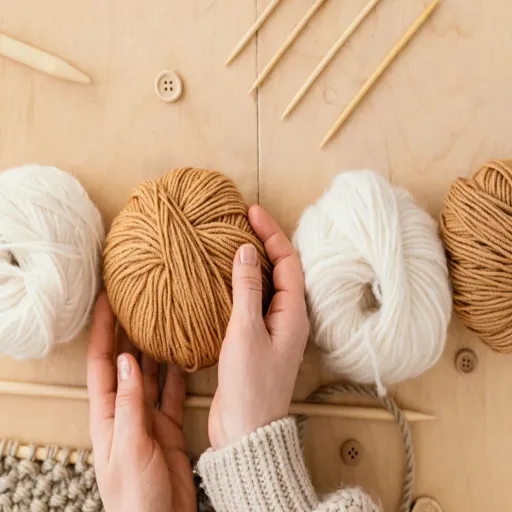
Trends are interesting. Action is profitable. Use this framework to turn market intelligence into procurement decisions.
Step 1: Define Your Technical Requirements
Before contacting suppliers, document your specifications. Include yarn count, fiber composition percentages, twist direction, finish requirements, and weight specifications. Vague requests produce vague quotes. Detailed tech packs filter out suppliers who lack the capability to meet your standards.
Step 2: Verify Certifications Independently
Don’t accept supplier claims at face value. Request copies of current certificates. Check validity dates. Verify certificate numbers on the issuing body’s database. For GRS and GOTS, request Transaction Certificates specific to your order. A valid factory certificate means nothing if the specific yarn batch is not covered.
Step 3: Request Physical Samples and Run Your Own Tests
Digital swatches lie. Hand-feel, stretch recovery, drape, and pilling tendency can only be evaluated in person. Conduct wash-and-wear tests under conditions that match your end-use environment. A yarn that performs beautifully in a climate-controlled showroom may behave differently in humid or high-UV markets.
Step 4: Evaluate MOQs and Lead Times Realistically
| Supplier Type | Typical MOQ | Best For |
|---|---|---|
| Large integrated mills | 500–1,000+ kg | Established brands with predictable volume |
| Flexible manufacturers | 100–300 kg | Startups, seasonal testing, capsule collections |
| Specialty sustainable producers | Variable | Niche fibers, custom blends, certified small batches |
Build relationships with 2–3 qualified suppliers for risk mitigation. Single-source dependencies become expensive problems when a factory faces capacity constraints or certification lapses.
Step 5: Start Small and Scale Responsibly
Place trial orders between 100 and 500 kg. Test the full supplier relationship, not just the product. Evaluate communication responsiveness, quality consistency across batches, and on-time delivery. Only negotiate long-term contracts after validation.
When James Okonkwo launched his sustainable fashion label in Lagos, he committed to a 2,000 kg order from a single Turkish supplier. The samples were impressive. The pricing was competitive. What could go wrong?
Plenty. The first production run arrived three weeks late. The dye lots varied enough to make color matching impossible across his collection. James lost his premiere retail slot and spent six months rebuilding supplier relationships. A 200 kg trial order would’ve exposed the inconsistency for a fraction of the cost.
Need help evaluating sustainable yarn suppliers for your next project? Contact our team at Hebei Lida Textile Co., LTD to request samples, review certifications, or discuss custom sustainable yarn development.
Conclusion
Sustainable yarn trends in 2026 revolve around four clear themes. Recycled fibers have matured to performance parity. Bio-based innovations are scaling beyond niche status. Certifications and traceability are now baseline requirements, not premium options. Functional sustainable yarns are merging environmental credentials with technical excellence.
For fashion designers and home textile brands, the opportunity is straightforward. Buyers who adapt their sourcing frameworks now will lock in reliable supplier relationships before capacity constraints and regulatory deadlines create bottlenecks. Buyers who wait will face higher costs, longer lead times, and restricted market access.
The sustainable yarn market is on track to double by 2033. The brands that thrive won’t treat sustainability as a marketing angle. They’ll treat it as a procurement discipline.
At Hebei Lida Textile Co., LTD, we engineer high-quality yarns that meet the demands of modern businesses. From organic cotton and recycled polyester to custom-developed sustainable blends, our textiles combine durability, style, and environmental responsibility. Reach out today to learn how we can support your next sustainable collection.