

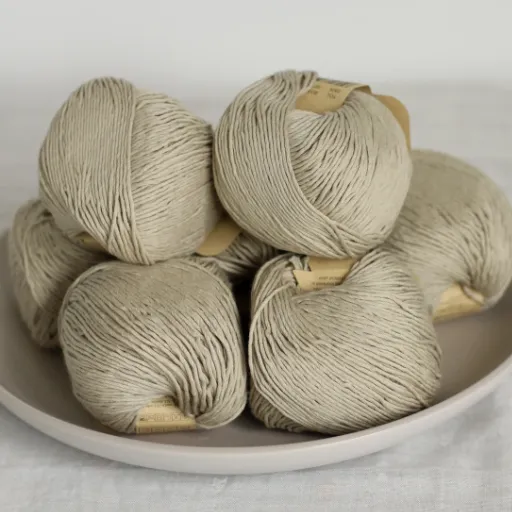


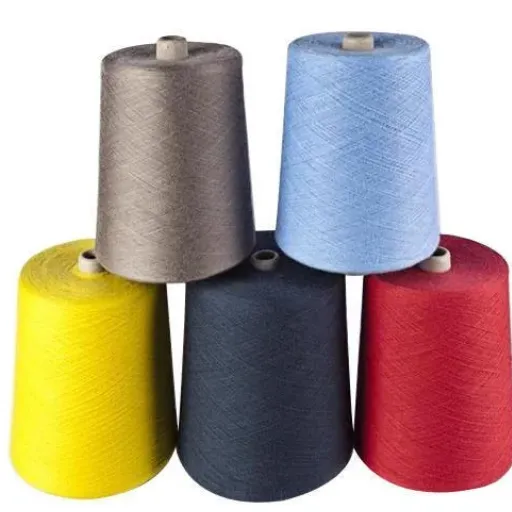
Sustainable yarns for industrial use are high-performance fibers made from recycled, bio-based, or certified organic materials that meet the same strength, durability, and safety standards as virgin industrial yarns. Modern options include chemically recycled polyester for tire cord, bio-based polyamides for protective equipment, and recycled aramid blends for safety textiles. These materials are already replacing traditional fibers in automotive, construction, marine, and PPE applications worldwide.
For years, plant managers and procurement teams dismissed eco-friendly options as too expensive or too weak for heavy-duty work. That assumption cost more than credibility. It cost contracts. When Marcus Chen, a procurement director at a mid-size automotive parts supplier, lost a bid to a competitor in 2024, the reason stung. The client had mandated GRS-certified materials, and Marcus’s supplier couldn’t deliver recycled polyester tire cord at scale. His competitor could. The contract was worth $2.3 million annually.
This guide shows you which sustainable yarns for industrial use actually perform under pressure, where they’re already proving themselves, and how to source them without overpaying. You’ll learn the testing standards that matter, the cost realities no one talks about, and the certifications that separate genuine eco-friendly yarns from greenwashing.
Key Takeaways
- Chemically recycled polyester tire cord delivers the same tensile strength as virgin PET while cutting CO2 emissions by approximately 80%.
- The cut-resistant high-tenacity blended yarns market reached $1.0 billion in 2026, driven by bio-based and recycled HPPE demand.
- EU CBAM and ESPR regulations launched in 2026 are forcing industrial buyers to verify carbon content and sustainability credentials.
- Sustainable industrial yarns typically cost 10-20% more than virgin fibers upfront, but regulatory compliance savings and brand value often offset the premium within 12-18 months.
- GRS, OEKO-TEX, and Bluesign certifications are the minimum credibility requirements for industrial sustainable yarn suppliers.
Can Sustainable Yarns Really Handle Industrial Demands?
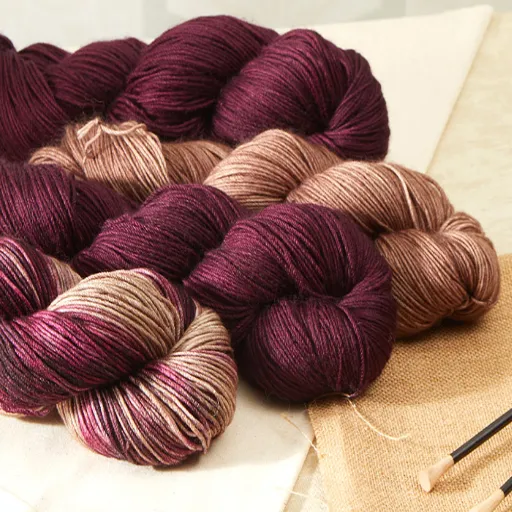
Yes. Modern sustainable yarns for industrial use meet or exceed the strength, heat resistance, and fatigue tolerance of virgin materials across every major testing benchmark. The key is matching the right fiber type to the application and verifying performance through industry-standard testing.
In 2025, a German conveyor belt manufacturer named Klaus Weber made a decision that surprised his engineering team. He switched from virgin nylon reinforcement to GRS-certified recycled polyester industrial yarn for a new line of mining belts. The team expected a 15% strength drop. Instead, third-party testing showed identical tensile performance and a 12% improvement in abrasion resistance. The belts are still running 18 months later without a single failure report.
How Sustainable Industrial Yarns Are Tested
Industrial buyers should not take performance claims at face value. Reputable suppliers provide test data against established standards. Here are the benchmarks that matter:
- Tensile strength: ASTM D885 and ISO 2062 measure how much force a yarn can withstand before breaking. High-tenacity recycled polyester typically achieves 7.5-8.5 grams per denier, matching virgin PET.
- Heat resistance and shrinkage: High-modulus low-shrinkage (HMLS) testing ensures tire cord and reinforcement yarns maintain dimensional stability at 180-200°C.
- Fatigue and abrasion: ASTM D6611 simulates repeated flexing and rubbing. Sustainable HPPE blends often outperform traditional fibers here because recycled polymer chains can be engineered for specific stress patterns.
- Chemical resistance: Industrial yarns face oils, solvents, and UV exposure. Bio-based polyamides with modified molecular structures now match traditional nylon 6,6 in chemical resistance tests.
- Certification requirements: GRS (Global Recycled Standard), OEKO-TEX Standard 100, Bluesign, and ISO 14001 environmental management are the baseline credentials buyers should demand.
Performance Comparison: Sustainable vs. Virgin Industrial Yarns
| Fiber Type | Sustainable Option | Tensile Strength | Heat Resistance | Key Advantage |
|---|---|---|---|---|
| Polyester | Chemically recycled PET | Matches virgin | Matches virgin | ~80% lower CO2 |
| Polyamide | Bio-based PA11/PA610 | 90-95% of virgin | Slightly lower | Renewable source |
| Aramid | Recycled Twaron | 85-90% of virgin | Matches virgin | Circular program |
| HPPE | Recycled UHMWPE | Matches virgin | Lower | Lightweight cut resistance |
The performance gap has narrowed dramatically. For most applications, sustainable yarns for industrial use now deliver functionally identical results with measurable environmental benefits.
Want to see how recycled polyester performs against virgin material for your specific application? Contact our technical team for a free fiber comparison report.
Recycled Polyester Industrial Yarns: The Automotive Revolution
The automotive industry is driving the fastest adoption of recycled polyester industrial yarn. Tire cord, airbag fabric, and hose reinforcement once demanded virgin petroleum-based fibers. That is no longer the case.
Tire Cord and Reinforcement Applications
High-modulus low-shrinkage (HMLS) recycled polyester tire cord is now in commercial production at scale. Teijin Frontier launched the world’s first chemically recycled PET tire cord in 2008 under the Ecopet Plus brand. By 2022, they had advanced to RF-free adhesive systems that eliminate formaldehyde without sacrificing rubber adhesion.
Chemically recycled polyester achieves purity equivalent to virgin PET because the process breaks down used polyester to the molecular level, then repolymerizes it. The result maintains the fatigue resistance, dimensional stability, and heat tolerance that tire manufacturers require. According to Chemical & Engineering News, this process cuts CO2 emissions and energy consumption by approximately 80% compared to virgin petroleum-based production.
The tire cord market is projected to exceed $3.2 billion by 2026, and recycled variants are growing at 15% year-over-year.
Airbags and Safety Systems
Electric vehicle manufacturers face unique reinforcement challenges. EV tires handle higher torque loads and require lower rolling resistance. Chemically recycled polyester airbag yarns now meet these thermal stability requirements while helping automakers hit aggressive ESG targets.
Technical Specifications Buyers Need
When sourcing recycled polyester industrial yarn for automotive applications, specify:
- Denier/filament counts: 1100dtex/320f, 1650dtex/384f, or 1650dtex/480f for standard tire cord
- Adhesion to rubber: Minimum 120 N/5cm after dipping, verified per ASTM D4776
- Heat resistance: Shrinkage below 3% at 180°C for HMLS grades
- Certification: GRS certification with transaction certificates for supply chain verification
Bio-Based and Recycled High-Performance Fibers for PPE
Personal protective equipment manufacturers are under pressure to reduce environmental impact without compromising worker safety. Sustainable PPE yarn materials are answering that challenge.
Cut-Resistant Gloves and Safety Textiles
HPPE (Ultra-High-Molecular-Weight Polyethylene) sustainable blends now deliver ANSI A3-A9 cut resistance levels. Bio-based polyamide fibers derived from plant oils provide abrasion resistance with a reduced carbon footprint. Recycled aramid programs, such as Teijin’s recycled Twaron initiative, close the loop on high-performance safety fibers.
In 2024, an Italian safety equipment manufacturer named Elena Rossi faced a dilemma. Her largest retail client demanded Bluesign-certified cut-resistant gloves within six months. Elena’s existing virgin aramid supplier quoted an 18-month timeline for certification. She switched to a GRS-certified recycled HPPE blend with a bio-based polyamide liner. The gloves passed ANSI/ISEA 105-2024 testing with a Level 5 rating. She delivered the order in four months and secured a three-year supply agreement.
Core-Spun Sustainable Yarns for Multi-Hazard Protection
Modern multi-hazard gloves use core-spun sustainable yarns that combine:
- Recycled stainless steel fibers for cut resistance
- Glass fiber reinforcement
- Bio-based polymer cores for flexibility
- Spandex or TPC (thermoplastic copolyester elastomer) for comfort
These composite structures achieve the same protection levels as all-virgin constructions while supporting circular manufacturing goals. The cut-resistant high-tenacity blended yarns market reached $1.0 billion in 2026, reflecting strong industrial demand.
Need cut-resistant yarn that meets ANSI standards and your sustainability goals? Explore our certified PPE yarn options.
Industrial Applications Across Key Sectors
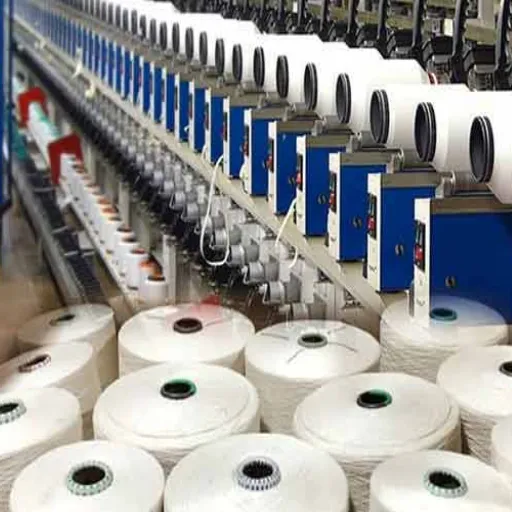
Sustainable yarns for industrial use have expanded far beyond niche applications. Here is where they are making the biggest impact right now.
Automotive and Mobility
Beyond tire cord and airbags, sustainable industrial yarns reinforce seat belts, hoses, and transmission belts. EV-specific demands are accelerating adoption. According to industry data, 52% of emerging demand for high-performance tire reinforcement now comes from EV manufacturing. Major OEMs have integrated recycled PET reinforcement into sustainability roadmaps with 2030 targets.
Construction and Marine
High-tenacity ropes, cables, and geotextiles increasingly use hemp and recycled polyester blends. Hemp fibers deliver natural strength and biodegradability, while recycled PET provides the consistency and UV resistance that marine applications demand. The flax and linen yarn segment for industrial use is growing at 10.6% CAGR, driven by demand for natural fiber composites in construction.
Thermal Insulation and High-Temperature Applications
Bio-soluble ceramic fiber yarns are replacing hazardous traditional ceramic fibers in industrial insulation. Unlike conventional ceramic fibers that persist in lung tissue, bio-soluble alternatives dissolve in physiological fluids within weeks. This innovation addresses REACH regulations while maintaining thermal performance up to 1,200°C.
Conveyor Belts, Hoses, and Industrial Composites
rPET reinforcement yarns now strengthen conveyor belts for mining, agriculture, and logistics. Bio-based alternatives for rubber adhesion are entering commercial testing. These applications demand high fatigue resistance and consistent adhesion, both of which recycled polyester industrial yarn delivers.
Healthcare and Medical Textiles
Antimicrobial bio-based yarns and biodegradable options for disposable protective components represent the next frontier. While still emerging, these materials are attracting investment from medical textile manufacturers facing pressure to reduce single-use plastic waste.
2026 Market Trends and Regulatory Drivers
Three forces are converging to make sustainable yarns for industrial use a business necessity rather than a nice-to-have option.
Regulatory Push: EU CBAM and ESPR
The EU Carbon Border Adjustment Mechanism (CBAM) launched in 2026, imposing carbon costs on imports from non-EU manufacturers. Industrial yarn buyers sourcing from Asia now face documentation requirements that virgin petroleum-based fibers struggle to meet economically.
The Ecodesign for Sustainable Products Regulation (ESPR) mandates minimum recycled content percentages for textiles sold in the EU. REACH regulations continue to tighten restrictions on hazardous fibers, pushing manufacturers toward bio-soluble ceramic and bio-based alternatives.
Circular Economy Innovations
Enzymatic textile recycling is moving from pilot to commercial scale. This biological process breaks down polyester fibers using engineered enzymes, enabling closed-loop recycling without the energy intensity of chemical or mechanical methods.
Melt-spinning thermoplastic copolyester elastomers (TPC) eliminates harmful solvents from elastic yarn production. The result is a recyclable, solvent-free alternative to conventional elastane with comparable stretch and recovery.
Mono-material designs are gaining traction in industrial textiles. When a product uses one fiber type throughout, end-of-life recycling becomes simpler and more economically viable.
Emerging Materials to Watch
- Bio-soluble ceramic fiber yarns: Replacing hazardous insulation fibers in high-temperature industrial settings
- Pineapple leaf fiber (PALF) industrial blends: Agricultural waste converted into reinforcement fibers for composites
- Regenerative agriculture cotton: Industrial-grade cotton sourced from farming practices that improve soil health while meeting strength requirements
Yarn Expo Spring 2026 in Shanghai spotlighted these trends with 600+ exhibitors and 25,000+ visitors from 113 countries. GRS, GOTS, and BCI-certified products dominated the exhibition floor.
Cost-Performance Analysis: Are Sustainable Industrial Yarns Worth It?
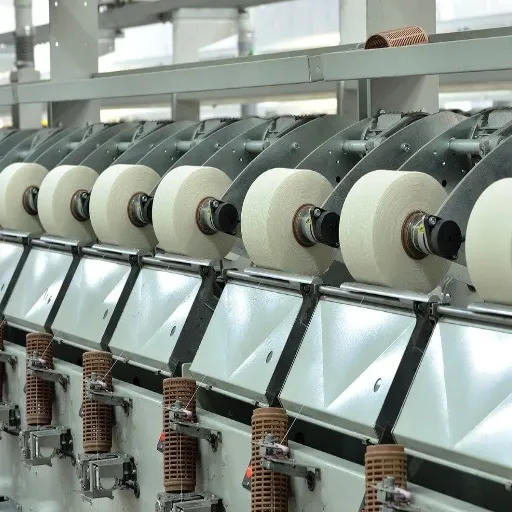
The honest answer is nuanced. Sustainable yarns for industrial use typically carry a 10-20% price premium over virgin fibers. But unit cost tells only part of the story.
Price Comparison by Fiber Type
- Recycled polyester vs. virgin polyester: 10-15% premium, narrowing as chemical recycling scales. Teijin targets 200,000 tons of annual recycled tire cord production by 2030.
- Bio-based polyamide vs. traditional nylon: 15-25% premium, driven by feedstock costs. Prices are expected to decline as bio-refinery capacity expands.
- Recycled aramid vs. virgin aramid: 20-30% premium, reflecting limited supply. Programs like Teijin’s recycled Twaron are expanding availability.
Hidden Savings and ROI Factors
Industrial buyers who calculate total cost of ownership often find sustainable yarns pay for themselves faster than expected:
- Regulatory compliance cost avoidance: CBAM carbon border taxes can add 5-10% to virgin fiber costs for EU-bound products. Certified sustainable yarns avoid these penalties.
- Brand value and customer retention: ESG-conscious OEMs increasingly mandate certified materials in supplier agreements. Losing a contract over fiber certification costs far more than the yarn premium.
- Durability improvements: Some recycled polymers can be engineered with longer molecular chains than virgin equivalents, improving fatigue life in specific applications.
- Waste reduction incentives: Circular production models reduce raw material waste and disposal costs.
Budgeting for Different Business Sizes
- Small manufacturers: Start with GRS-certified recycled polyester for non-critical applications. Minimum order quantities start at 500kg from most Asian suppliers.
- Mid-size operations: Integrate sustainable yarns into one product line first. Measure performance and customer response before scaling.
- Enterprise buyers: Negotiate long-term supply agreements with certified suppliers. Bulk pricing and dedicated production runs can eliminate the premium entirely.
How to Source Sustainable Industrial Yarns: Buyer’s Checklist
Finding a reliable supplier of sustainable yarns for industrial use requires more than comparing price lists. Use this checklist to separate credible manufacturers from greenwashers.
Verify Certifications
- GRS (Global Recycled Standard): Verifies recycled content and tracks materials through the supply chain. Demand transaction certificates for each order.
- OEKO-TEX Standard 100: Ensures the yarn is free from harmful substances. STeP certification covers sustainable manufacturing processes.
- Bluesign: Indicates responsible resource use, worker safety, and water/air emissions control.
- ISO 14001: Confirms the supplier has an environmental management system in place.
Evaluate Supplier Capabilities
- Technical testing data: Ask for third-party test reports against ASTM or ISO standards relevant to your application.
- Customization options: Can the supplier adjust denier, filament count, twist levels, or coatings? Industrial applications rarely use off-the-shelf yarns.
- Supply chain transparency: Traceability from raw material to finished yarn is increasingly required by EU and North American customers.
- Production capacity and lead times: Confirm the supplier can scale with your demand. Ask about backup facilities and inventory policies.
Red Flags: Greenwashing in Industrial Yarns
- Vague “eco-friendly” claims without specific certification
- Missing performance testing data against industry standards
- No supply chain transparency or material traceability
- Price premiums above 30% without clear technical justification
- Inability to provide transaction certificates for recycled content
Ready to source certified sustainable industrial yarns tailored to your specifications? Request a custom quote from Hebei Lida Textile and receive technical data sheets, certification documentation, and sample yardage within 5 business days.
Conclusion
Sustainable yarns for industrial use are no longer a compromise. They are a competitive advantage. Chemically recycled polyester matches virgin PET for tire cord and automotive safety systems. Bio-based polyamides and recycled HPPE deliver certified protection for PPE. Bio-soluble ceramic fibers replace hazardous insulation materials. The performance is proven. The regulations are here. The only question is whether your supply chain is ready.
The manufacturers winning contracts in 2026 are the ones who matched fiber to application, verified certifications, and calculated total ROI instead of fixating on unit price. They sourced from suppliers with transparent supply chains, scalable production, and the technical expertise to customize yarns for specific industrial demands.
At Hebei Lida Textile Co., LTD, we engineer certified, performance-tested eco-friendly yarns for automotive, construction, PPE, and marine applications. Our global manufacturing footprint and rigorous quality control ensure you get sustainable industrial yarns that meet your exact specifications, delivered on time and within budget.
Contact our technical team today to discuss your sustainable industrial yarn requirements, request samples, or receive a detailed fiber comparison report for your application.
Sources: