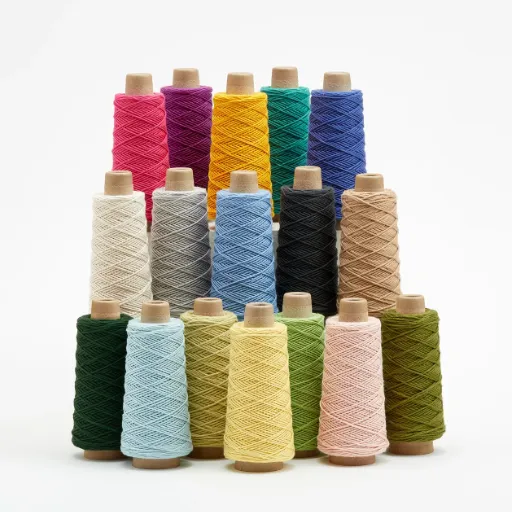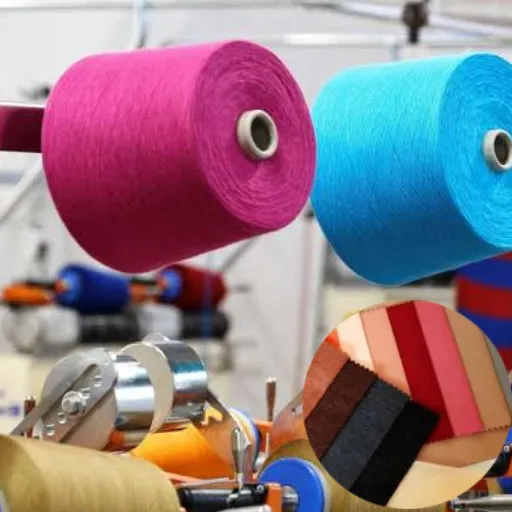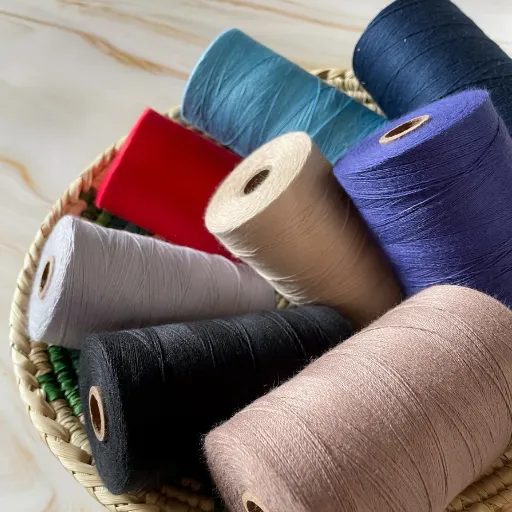
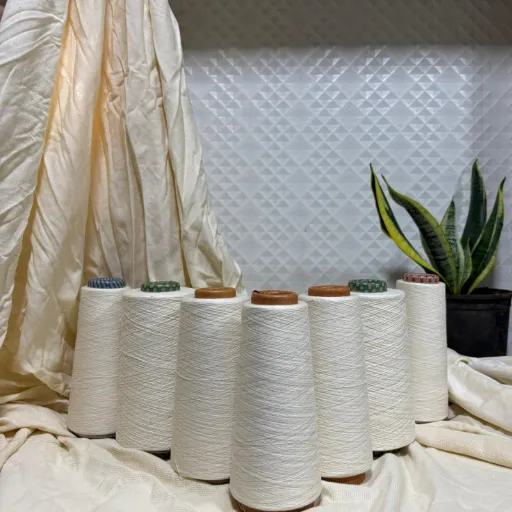

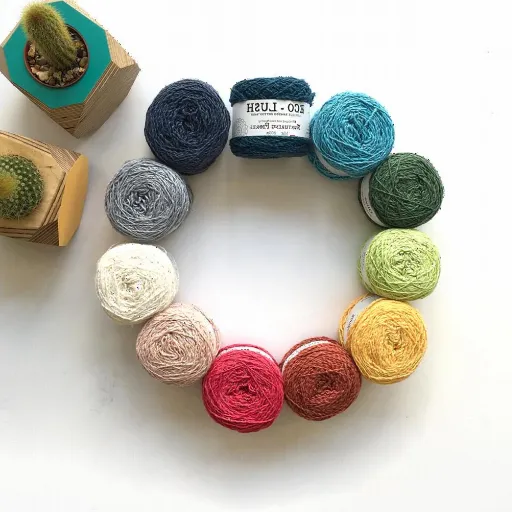
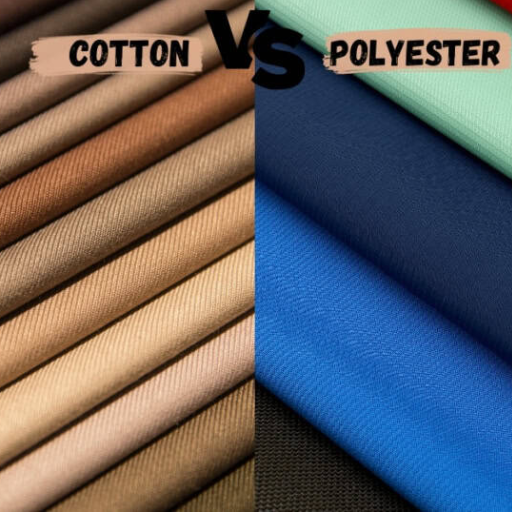


Eco-friendly yarn production refers to the creation of yarn with environmentally friendly materials that are easily sustainable, eco-friendly processing technology and resource-saving methods that take into consideration the prevention or minimization of environmental and health economic damage within the production process and the quality of the manufactured product. Unlike the conventional technology of yarn production, which is based on new raw materials, the use of toxic substances and highly water-consuming processes, the eco-friendly technology of yarn production integrates the use of secondary raw materials, organic agriculture, closed systems, and energy-efficient equipment to produce high-quality fabrics with much less impact on the environment.
Up to 10% of worldwide greenhouse gas emissions and more than 93 billion cubic meters of the world’s fresh water are attributed to the textile industry. The environmental impact of textile and plastic production normally create a substantial portion of such gases. The chief starting point is the spinning of fibers. This is why for vendors, sellers and purchasers, present-day methodologies of creating eco-friendly fiber are more important than ever. Irrespective of that they require precise answer vis-à-vis quantity of green measures, but none like what is usually required as ‘how’ shall only deal with its talks in general manner. What are the fibres that make that textile? How does it take care of water? Also, which monitor the procedure?
In the next few chapters we will take a systematic approach a complete know-how of eco-friendly yarn making process. Which raw materials perform which applications best, what are the expected industry changes by 2026 and how to find and assess environmental yarn manufacturing are thoroughly discussed. After reading this chapter, you will be able to understand the technical intricacies to make informed decisions while sourcing yarn for fashion, home textiles and other such end uses. For premium yarn manufacturing and dependable supply support, contact Hebei Lida Textile Co., LTD today.
Key Takeaways
- Eco-friendly yarn production combines sustainable fiber sourcing, low-impact processing, and closed-loop systems to reduce environmental impact by up to 70% compared to conventional methods.
- The most viable sustainable fibers in 2026 are organic cotton, recycled polyester (rPET), lyocell/TENCEL, and recycled cotton blends — each suited to different applications.
- Quality benchmarks from Uster Statistics prove that recycled cotton blends at 60:40 ratios can achieve top-tier yarn quality for commercial production.
- 2026 breakthroughs include solvent-free gel spinning with supercritical CO2, biodegradable cellulose threads, and microwave-assisted pretreatment that cuts processing time by 95%.
- Certifications like GOTS 8.0, OEKO-TEX 2026, and GRS provide verifiable standards for evaluating sustainable yarn suppliers.
What Is Eco-Friendly Yarn Production?
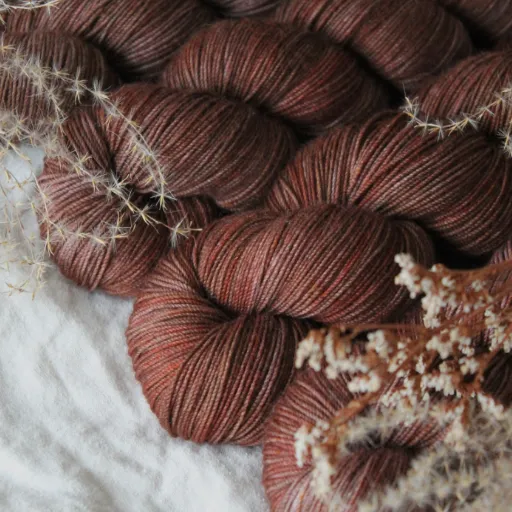
Defining Sustainable Yarn Manufacturing
Environmentally friendly textile production concerns the implication of textile production that concentrates towards protecting the environment; including mandatory steps aimed at obtaining the fabric – from the choice of pre-material and the problem quite early in the chain to the completion of textiles as a subsequent product. It involves sustainable purchase of raw materials, including minimisation of water and energy use, elimination or reduction of hazardous substances, adherence to better workplace practices, as well as addressing the important end-of-life issues such as biodegradable materials or recyclable materials.
An environment-friendly yarn producer is not someone who will switch from conventional cotton to organic cotton only, and declare oneself as sustainable. It will be the whole production process that will make a difference. This means the use of spinning machinery which consumes less energy, the use of circular economy of water during the process of dyeing, reutilization of waste cleaning not thrown outside the barrier, and the use of clean energy in the plant. In a big picture, it helps build a profitable business.
How Eco-Friendly Production Differs From Conventional Methods
| Factor | Conventional Production | Eco-Friendly Production |
|---|---|---|
| Raw materials | Virgin cotton, synthetic polymers from petroleum | Organic cotton, recycled polyester, lyocell, hemp |
| Water usage | Up to 200 tons per ton of fabric | Closed-loop systems reuse up to 70% of water |
| Chemicals | Synthetic pesticides, heavy-metal dyes, toxic solvents | Natural dyes, enzymatic treatments, non-toxic solvents |
| Energy source | Grid electricity (often fossil-fuel based) | Renewable energy, energy-efficient machinery |
| Waste handling | Landfill disposal of textile scraps | In-house recycling of process waste into new yarn |
| Carbon footprint | High — 70% of textile emissions come from upstream | Reduced by 40-70% depending on methods |
As a procurement manager for a European home textile brand – Maria Chen – went on the visiting spree to the factory of her supplier in 2023 and of course, she had all the intentions of finding the standard setup of ring-spinning frames; chemically dyed baths, regular un-processed cotton stacked on bales up to the distorted structure as she has seen countless times in the past. However up on arrival, she found solar panels, waste water recycling plant that uses 65% of process water and carding machines for feeding the short fiber waste back in to the yarn making machine. That visit as a result completely affected her sourcing strategy. Very soon two thirds of her company’s yarn orders were in accordance with CSR and supported initiatives promoting responsible water use; majorly because she reduced supply chain water usage to 50%. Hebei Lida Textile Co., LTD is committed to delivering quality yarn manufacturing services for customers worldwide — contact us now for more details.
Eco-Friendly Fiber Sources: The Foundation of Sustainable Yarn
The fiber choice determines roughly 70% of a yarn’s environmental impact. Selecting the right sustainable fiber for your application requires understanding not just the material’s properties, but how it is produced and what trade-offs it involves.
Organic Cotton
Organic cotton is produced devoid of any synthetic chemicals which include pesticides, herbicides and also is not planted using genetically improved seeds. However, the method follows activities like crop rotation, sterilization of pests’ habitats and use of manures for the purposes of maintaining soil health. The outcome is a very comfortable fabric that is pleasant to the body and does not fall short of the standard qualities that are offered by conventional cotton in most indicating practices.
The benefit to the environment is very encouraging. Conventional cotton farming uses 16% of all insecticides worldwide. Just with organic farming methods have no insecticide use. Water use is also lower in rain-fed organic farming systems, although organic cotton cultivation can be water demanding if it is irrigated.
For purchasers, the major discouragement is credibility. Gaze for GOTS authorization, this demands that 95% of the fiber content must be organic for it to be “organic” and 70% for “made with organic.” The last amendment dated 2026 for GOTS 8.0 has very strict rules and also provisions for audits without prior notice addition to false claim prevention – something Suppliers should start getting used.
Recycled Polyester (rPET)
Recycled polyester yarn turns old stuff into new threads – it is normally used to make high-performance fibers from old plastics, such as polyester bottles. This process allows people to take potentially harmful polymers (in this case, polypet,) that are otherwise thrown away, turn them into fibers or other materials, and utilise them for something beneficial instead of just increasing a pile of waste.
The majority of the current waste recycling efforts are aimed at mechanical recycling of bottles and such wastes. The practice includes collecting used bottles, crushing them into small pieces, melting them and extending the hot polymer in the form of filaments through a spinneret to make a new product. The process of chemical recycling of plastics, albeit effective, cannot be fully realized in the fabric manufacturing industry as it is extremely expensive. It includes the decomposition of polyester into its reactive constituents, dimethyl terephthalate or terephthalic acid and ethylene glycol, as well as the removal of impurities and its repolymerization to make prime quality.
The indications are truly positive. Roughly 59% less energy is needed in the manufacture of recycled polyester compared to producing virgin polyester and 32% less CO2 is released. Still, upcycled polyester is one of the potential sources of contamination in the Great Lakes as it produces microplastics during clothes washing. The buyers should consider this when they say any product is “green”.
Lyocell and TENCEL
One of the leading Tencel brands manufactured by Lenzing. Lyocell’s main raw material: eucalyptus, pofita pine, beech, and oak wood are the main natural resources that are wood pulp. Especially significant is the closed-loop system for the production of Lyocell as compared to other forms of cellulosic fibers such as Viscose (or Rayon).
The most advanced technology is in use – the dissolution of wood pulp in this particular solvent, N-Methylmorpholine N-Oxide (NMMO), is done in such a way that the same solvent is used repeatedly for 99.5% of the hydrous operation. Hence, the discharge of any material is negligible from any angle as nearly every part of that useful material is a resource. In addition, lyocell consumes less water compared to growing cotton and is not treated with agricultural chemicals that are harmful to health.
Lyocell fiber delivers superior strength and smoothness and is still allow to breathe. It has a good drape for different types of clothing, regulates the moisture, and is more appropriate for mixing with other high-performance fibers such as cotton, wool or other synthetic fibers. For those customer’s, whom the sustainable characteristics of the lyocell are the most important, while not violating the performance of the substrate, lyocell, in most cases, is superior to the organic cotton equal usage in terms of a life cycle.
Recycled Cotton from Textile Waste
Cotton waste is recycled into yarn by incorporating pre-consumer waste or post-consumer textile waste in the form of raw materials. This involves color sorting, fiber brushing, and mixing each fiber with raw cotton before being spinned.
New studies have brought the best rates together. Especially in the publication ‘Processes’, issued by MDPI in 2025, it is noted that a 50/50 ratio of post-production waste and virgin cotton would enable the production of yarn appropriate for denim fabric while adhering to the 12th objective of sustainable development. A study in the Heliyon journal available in Science Direct further elaborates that elastic core-spun denim yarns made using the recycled cotton containing up to 60% has attained quality which is within top half of 5% – 50% of Uster Statistics 2023 while demonstrating commercial potential.
It comes down to the length of the fibers. The fibers of cotton from recycled materials are shorter compared to newly produced fibers which makes them low in strength and more inclined to loop formation. Consequently, blending percentages and the state of the art plant management becomes very important. What is more, every manufacturer who has control over the processes knows how to regulate these factors so that the best result can be achieved.
Want to see how recycled cotton performs in real-world applications? Explore our sustainable yarn options tailored for denim, upholstery, and fashion projects.
Emerging Fiber Options
Several newer materials are gaining traction in 2026:
- Hemp: Naturally pest-resistant, requires minimal water, and grows rapidly. Hemp fibers are strong and durable, making them ideal for industrial applications.
- Mechanically processed bamboo: Unlike chemically processed bamboo rayon (which uses toxic solvents), mechanical processing crushes bamboo stalks and uses natural enzymes to extract cellulose. The result is a truly eco-friendly fiber.
- Biodegradable cellulose threads: Amann’s AeoniQ Fil, winner of the Texprocess Innovation Award 2026, is the world’s first sewing and embroidery thread made from wood-pulp-based cellulose that is fully biodegradable and microplastic-free.
The Eco-Friendly Yarn Production Process: Step by Step
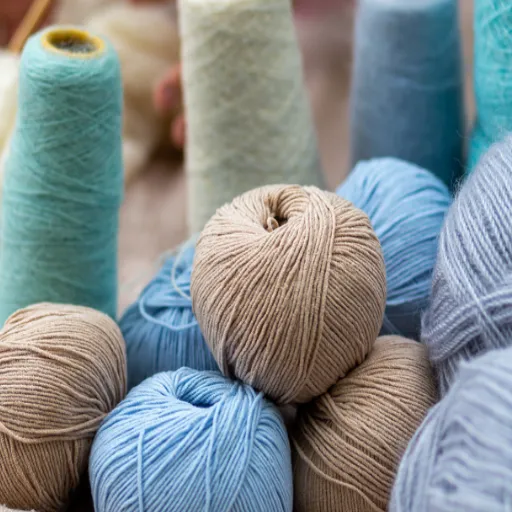
Understanding the step-by-step process helps buyers evaluate suppliers, spot greenwashing, and specify requirements accurately. Here is how eco-friendly yarn moves from raw material to finished product.
Step 1: Sustainable Raw Material Sourcing
The process begins with certified sustainable fibers. Organic cotton arrives with GOTS or OCS (Organic Content Standard) documentation. Recycled polyester comes with GRS (Global Recycled Standard) certification verifying the recycled content percentage. Lyocell shipments include FSC certification confirming responsible forestry.
A reputable manufacturer verifies every batch. Without proper chain-of-custody documentation, sustainability claims cannot be trusted.
Step 2: Pre-Treatment and Cleaning
Raw fibers undergo gentle cleaning without harsh chemicals. For organic cotton, ginning separates fibers from seeds mechanically. For recycled materials, sorting and washing remove contaminants, labels, and adhesives.
Eco-friendly facilities use enzymatic treatments instead of caustic soda for scouring. Enzymes break down natural waxes and impurities at lower temperatures, cutting energy use by up to 30%.
Step 3: Blow Room and Blending
Bale openers loosen compacted fibers into tufts. Air currents and beaters remove dust and short fibers. At this stage, recycled fibers are blended with virgin fibers in precise ratios — for example, 60% recycled cotton to 40% virgin cotton for denim applications.
The blending stage determines the final yarn’s consistency, strength, and appearance. Inconsistent blending leads to uneven dye uptake and weak spots in the finished fabric.
Step 4: Carding
Fibers pass between wire-covered cylinders that align them parallel into a continuous web. Carding removes remaining impurities and neps (tangled fiber clusters). The output is a soft, rope-like strand called sliver.
Modern carding machines use automated leveling systems to maintain uniform sliver weight. This precision reduces waste and improves downstream yarn quality.
Step 5: Combing (Optional — for Premium Yarns)
For high-count, fine yarns, combing removes short fibers (noils) and produces smoother, stronger, more uniform slivers. Combed yarn has fewer imperfections, better luster, and superior dye absorption.
The noils removed during combing are not wasted. In eco-friendly facilities, they are collected and fed back into lower-grade yarn production or sold for non-woven applications.
Step 6: Drawing and Roving
Multiple slivers are combined and stretched by rollers in a process called drawing. This improves fiber parallelism and evens out thickness variations. The sliver then passes through a simplex frame, where it is drafted and lightly twisted into roving — a thinner, twisted strand ready for final spinning.
Step 7: Eco-Friendly Spinning
The roving enters the spinning frame, where it is drafted to final thickness and twisted into yarn. Three primary methods dominate eco-friendly production:
| Method | Best For | Eco-Advantage |
|---|---|---|
| Ring spinning | High-quality, fine-count yarns | Energy-efficient motors reduce power consumption by 15-20% |
| Open-end (rotor) spinning | Coarser yarns, short-staple fibers | Higher productivity per unit of energy; ideal for recycled fibers |
| Compact spinning | Premium applications requiring low hairiness | Reduces fly waste and improves fiber utilization |
Advanced spinning frames equipped with variable-frequency drives and automated doffing systems further reduce energy consumption.
Step 8: Sustainable Dyeing and Finishing
Dyeing is traditionally the most polluting stage of textile production. Conventional dyeing consumes up to 200 tons of water per ton of fabric and releases heavy metals, salts, and unfixed dyes into wastewater.
Eco-friendly alternatives include:
- Natural and plant-based dyes: Indigo, madder root, turmeric, and walnut shells provide color without synthetic chemicals. These work best for earthy tones and fashion-forward applications where slight color variation is acceptable.
- Low-impact synthetic dyes: Modern reactive dyes formulated to bond more efficiently with fibers, reducing water consumption and chemical load by 50% or more.
- Waterless dyeing: Supercritical CO2 dyeing and air dyeing eliminate water entirely. Dye is applied as a gas or sprayed directly onto fabric.
- Closed-loop water systems: Water is treated, filtered, and reused within the facility. Leading manufacturers achieve reuse rates of 70% or higher.
Step 9: Quality Control and Certification
Finished yarn undergoes rigorous testing: tensile strength, elongation, evenness (measured via Uster testing), hairiness, and colorfastness. Results are compared against Uster Statistics benchmarks to confirm the yarn meets international quality standards.
The final certification package — GOTS, OEKO-TEX, GRS, or Bluesign — provides buyers with independently verified proof of the yarn’s sustainability credentials.
2026 Innovations in Sustainable Yarn Manufacturing
The pace of innovation in sustainable yarn production accelerated significantly in 2026. Three breakthroughs in particular deserve attention from buyers evaluating suppliers.
Award-Winning Technologies
During the Techtextil Frankfurt 2026 event, Fibre Extrusion Technology (FET), a prominent company in Great Britain, actually got a trophy for its bold and brilliant idea of creating Ultra-High Molecular Weight Polyethylene (UHMWPE) yarns with gel-milling in a solvent-free environment. In contrast to the application of hexane and dichloromethane, which are used in the industry standard technique in a proportion of 100 kilograms per one kilogram of yarn spun, the scCO2 provided by FET emerges from various other industrial operations as a harmless solvent. In the process, many chemicals, which would otherwise become a dangerous pollutant in the environment, are now converted into functional fibres for high performance technical textile applications.
Amann, a thread manufacturing company from Germany, managed to win the Texprocess Innovation Award under the category of Ecological Quality for AeoniQ Fil. AeoniQ Fiber made out of Wood Pulp and Cellulose is the first of its kind to be used as a sewing and embroidery thread since it is made biodegradable and all the micro-plastics In contrast to most other clothing articles will disappear in one way or another. When it comes to tear strength, it approaches and gets to the level of effectiveness of synthetic fibers which is a huge achievement which can change the replacement of the threads by oil-based threads in this age.
Water and Energy Conservation Breakthroughs
Microwave thermal pretreatment has been tried in many researches, claiming to reduce treatment time costs by 95% relative to traditional methodologies while maintaining the characteristics of the fibers under processing. Plasma treatment at low pressures is capable of achieving up to 90% energy efficiency and also eliminates the need for water at some industrial finishing technologies. Both developments have begun to shift from being research lab products to industrial applications, hence existing commercial plants and infrastructures are rapidly integrating these technologies into their operations.
The process of digital printing on fabric more commonly known as digital textile printing continues to expand, offering significant cost effectiveness: water usage is 95% lower than in rotary screen printing, and the ones that are digitally enhanced have a 40 percent reduction in carbon. However, while digital printing takes on yarn production, it affects the way in which yarns are made to order, processed on goods, and how innovative oriented companies plans to conquer this opportunity.
Interested in sourcing yarn from a manufacturer that integrates the latest sustainable technologies? Contact our team to discuss how Hebei Lida’s advanced production capabilities can support your next project.
Maintaining Quality in Eco-Friendly Yarn Production
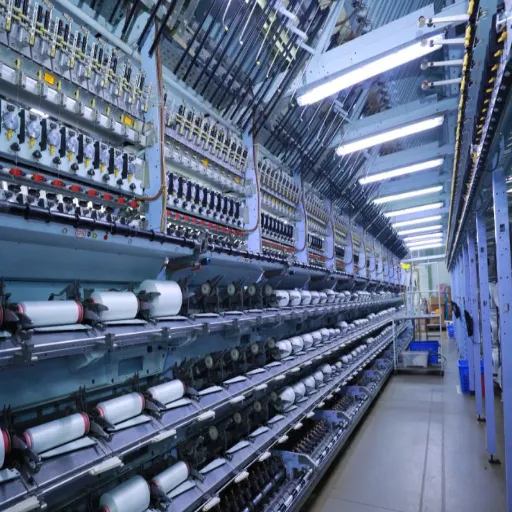
A persistent myth in the textile industry holds that sustainable yarns are inherently lower in quality than conventional alternatives. The data tells a different story.
Challenges with Recycled and Sustainable Fibers
Recycled cotton fibers are shorter than virgin fibers due to the shredding process. This can reduce yarn tenacity and increase hairiness. Recycled polyester, depending on the source material, may contain contaminants or color inconsistencies. Organic cotton can show more natural variation in fiber length and micronaire.
These are real challenges. But they are solvable challenges.
Quality Control Measures
Experienced manufacturers address fiber variability through:
- Optimized blend ratios: Research confirms that a 60% recycled cotton / 40% virgin cotton blend produces ring-spun yarn suitable for commercial denim production with quality parameters within acceptable Uster ranges.
- Advanced carding and combing settings: Adjusting cylinder speeds, flat configurations, and waste extraction rates compensates for shorter recycled fibers.
- Consistent testing protocols: Regular strength, evenness, and appearance testing catches deviations before large batches are affected.
- Certified processes: GOTS and Bluesign certification requirements enforce consistent quality management systems.
James Okonkwo had a hard time finding recycled cotton that could meet his stringent quality requirements when he started his eco-friendly brand in Lagos in 2024. His initial supplier sent for example then a yarn too full of neps and weak parts that broke on the knitting machines. Thanks took a decision of sourcing from a mill with compact spinning and mandating micro inspection of each arrival bale, the rejection rates plummeted to below 2% from 18%. In addition, nearly all the valid stocks of his previous collection, made entirely with certified recycled cotton blends were sold out within three weeks – clearly showing that, sustainability and quality can blend well under profit in the right businesses.
Testing and Certification Standards
| Certification | What It Covers | Best For |
|---|---|---|
| GOTS 8.0 | Organic fiber content, environmental criteria, social standards | Organic cotton and blended yarns |
| OEKO-TEX Standard 100 | Harmful substance testing (1,000+ chemicals) | Safety assurance for all yarn types |
| Bluesign | Chemical usage, resource efficiency, worker safety | Technical and performance yarns |
| GRS | Recycled content verification | rPET and recycled cotton yarns |
Environmental Impact: By the Numbers
The case for eco-friendly yarn production becomes undeniable when you examine the data.
Water Savings
Conventional cotton production requires approximately 2,700 liters of water to produce enough fiber for one T-shirt. Organic cotton grown in rain-fed systems can reduce that by 91%. Closed-loop dyeing operations recycle up to 70% of process water. Waterless dyeing technologies eliminate water use in coloration entirely.
Carbon Reduction
The textile industry emits an estimated 1.2 billion tonnes of CO2 equivalent annually. Polyester production alone accounts for 700 million tonnes of greenhouse gas emissions each year. Recycled polyester reduces those emissions by roughly 32% per kilogram produced. When renewable energy powers the manufacturing facility, reductions can reach 50% or more.
Waste Diversion
The world generates 92 million tonnes of textile waste annually. An estimated 85% ends up in landfills or is incinerated. Less than 1% is currently recycled into new clothing. Eco-friendly yarn production that incorporates pre-consumer and post-consumer waste directly addresses this gap. Every kilogram of recycled cotton yarn diverts roughly three kilograms of textile waste from disposal.
How to Choose an Eco-Friendly Yarn Manufacturer
Not every supplier claiming sustainability delivers on the promise. Here is how to evaluate manufacturers rigorously.
Key Questions to Ask
- What certifications do you hold, and can you provide current certificates? Look for GOTS, OEKO-TEX, GRS, or Bluesign. Verify certificate numbers independently.
- What percentage of your energy comes from renewable sources? The best manufacturers are transitioning to solar, wind, or hydro power.
- How do you handle water and chemical waste? Closed-loop systems and wastewater treatment are minimum requirements.
- What is your recycled fiber blend ratio, and what quality standards do you guarantee? Uster Statistics references provide objective benchmarks.
- Can you provide sample yardage for testing on our equipment? Always test before committing to bulk orders.
Red Flags to Avoid
- Vague claims without certification documentation
- Refusal to share factory audit reports
- Prices significantly below market for certified organic or recycled yarn (quality corners are being cut)
- Inability to explain their dyeing process or water management
Customization for Sustainable Projects
The best manufacturers are able to provide opportunity for customizing various yarn makes designed according to certain sustainability objectives. This might involve creating a unique recycled cotton mix fabric for jeans, designing yarn with low environmental impact for home textile and bedding industries, or the creation of a sewing thread which can be naturally decomposed in order to meet the demands of eco-responsible brands.
To create such solution reuires a good dose of skill, tools, and an open-mindremeber that other factors and considerations. It takes a business approach to work out these challenges instead at least most standardising solutions.
Ready to explore custom eco-friendly yarn solutions for your next collection? Our team at Hebei Lida Textile Co., LTD specializes in developing sustainable yarns tailored to your exact specifications. Contact us for a consultation and sample request.
Conclusion
Eco-friendly yarn production has evolved from a niche concern into a commercial necessity. The technology exists. The certifications exist. The quality benchmarks prove that sustainable yarns perform. What remains is the decision to act.
Here are the five takeaways to guide your next move:
- Fiber choice drives impact: Select organic cotton, recycled polyester, lyocell, or recycled cotton based on your application’s specific requirements.
- Process matters as much as material: A sustainable fiber processed with toxic dyes and wasteful water practices is not truly eco-friendly. Evaluate the full chain.
- Quality is achievable: Research from Uster Statistics and peer-reviewed journals confirms that recycled blends at optimized ratios meet commercial quality standards.
- 2026 innovations are real: Solvent-free spinning, biodegradable threads, and waterless dyeing are moving from research to production floors.
- Verify, don’t trust: Demand certifications, test samples, and visit facilities when possible. Greenwashing is common. Data is your defense.
It’s unthinkable that the textile industry would move towards regenerative practices in no time; however, the smallest of decisions to buy async yarn that is eco friendly verified and tested pushes the industry towards the right path. Hebei Lida Textile Co., LTD creates their own range of sustainable yarns that adhere to the current state of the indusry. Such of course includes, from organic cotton to polyester, and even to other new innovative supply chain solutions. We do not only deliver quality products which are quantified, but also sustainability that can be proven.
Contact us today to discuss your eco-friendly yarn requirements. Let’s build something better, together.