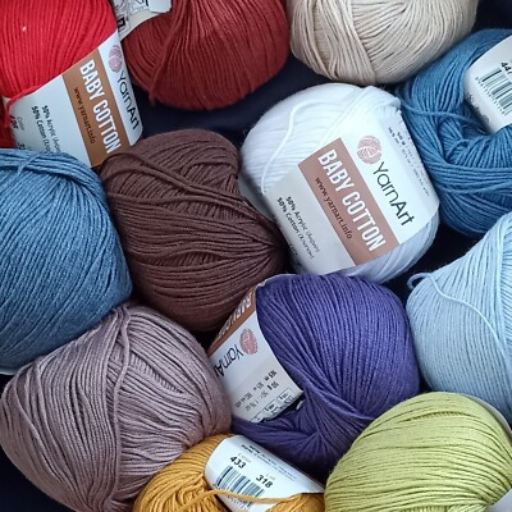
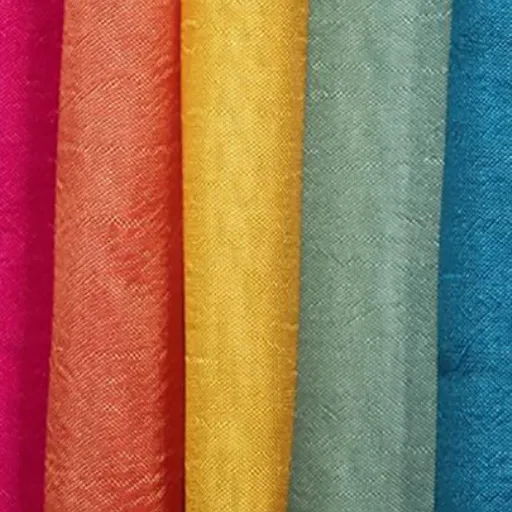


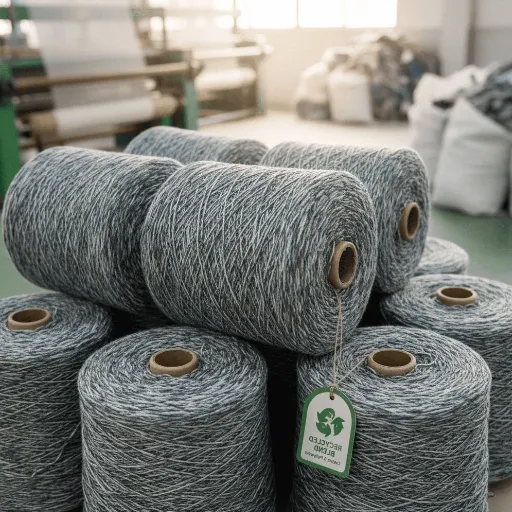
The most eco-friendly upholstery yarn is not automatically the one with the highest recycled content. It is the one that meets the durability, safety, and chemical requirements of your application while reducing environmental impact. Recycled polyester, hemp, and recycled wool lead for furniture use today, but the right choice depends on traffic class, certification needs, and whether your finish chemistry is PFAS-free.
That is the short answer. The longer answer is where most guides stop short.
A sustainability brief lands on your desk. It asks for recycled content, a lower carbon footprint, and a credible certificate. Then the spec sheet arrives, and the real question surfaces: will this yarn still survive 50,000 double rubs, a bleach spill, and a fire test? If you have watched a promising eco-friendly upholstery yarn fail an abrasion test three weeks before a launch, you know the tension is real.
Key Takeaways
- Recycled polyester, hemp, and recycled wool are the leading eco-friendly upholstery yarns in 2026, each with a different performance ceiling.
- More recycled content is not always better. Abrasion resistance peaks near a 50/50 recycled-to-virgin polyester blend and falls at 100% recycled, while bursting strength declines as recycled content rises.
- Martindale and Wyzenbeek are not interchangeable, so a “100,000 rub” claim means little without a named test method.
- GRS, GOTS, and OEKO-TEX certify three different things. OEKO-TEX tests for harmful substances and says nothing about fiber origin.
- PFAS-free chemistry is becoming a baseline requirement on premium upholstery ranges, and fiber choice is often the simplest route to it.
Ready to compare suppliers? Request eco-friendly upholstery yarn samples and test each candidate against your own abrasion, pilling, and colorfastness requirements before you commit to bulk.
What Is Eco-Friendly Upholstery Yarn?
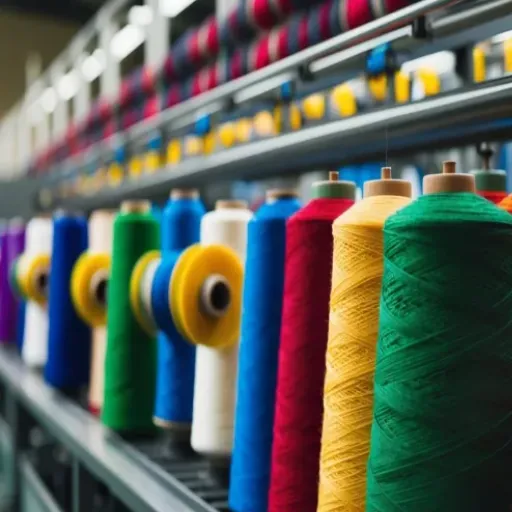
Eco-friendly upholstery yarn is yarn built to meet furniture-grade durability and safety requirements while lowering environmental impact. Three things earn it that label: recycled content, organic or renewable fibers, and PFAS-free chemistry. Recognized certificates such as GRS, GOTS, or OEKO-TEX verify the claim.
The definition has three moving parts, and buyers routinely conflate them. Fiber source is what the yarn is made from. Content is how much of it is genuinely recycled or organic, which is a percentage rather than a claim. Chemistry is what was added during spinning, dyeing, and finishing, and it is where most hidden problems live.
A yarn can score well on one lever and badly on another. Recycled polyester from post-consumer bottles is strong on fiber source and content, but if it carries a conventional stain-repellent finish it may fail a chemical-restricted specification. Hemp is excellent on fiber source and chemistry, yet its abrasion ceiling is lower than some contract buyers expect.
“Sustainable” also means different things at the fabric level and the yarn level. A fabric can be marketed as eco-friendly because of a recycled yarn while its backing, adhesive, and finish remain entirely conventional. If your brief is a yarn specification, keep the conversation at the yarn level.
That gap is why the phrase “eco-friendly yarns for upholstery” covers so much ground. For how those yarns are classified across fiber types, see our guide to eco-friendly yarns. For the wider selection framework this article sits inside, start with yarn for upholstery.
The Eco-Friendly Upholstery Yarn Options, Compared
Seven options carry most of the commercial weight in eco-friendly upholstery yarn today. The table below shortlists them; the sections that follow explain the trade-offs.
| Yarn | Content type | Typical abrasion range | Best-fit certificate | Main trade-off |
|---|---|---|---|---|
| Recycled polyester (rPET) | Recycled synthetic | Moderate to high, blend-dependent | GRS, OEKO-TEX | Abrasion drops at very high recycled content |
| Recycled polypropylene (rPP) | Recycled synthetic | Moderate to high | GRS, OEKO-TEX | Poor dyeability for deep shades |
| Hemp | Natural, renewable | Moderate | GOTS (if organic), OEKO-TEX | Hand feel starts crisp |
| Organic cotton | Natural, organic | Low to moderate | GOTS | Abrasion limits for heavy traffic |
| Linen | Natural, renewable | Low to moderate | GOTS (if organic), OEKO-TEX | Creasing and light fastness |
| Recycled wool and wool blends | Recycled natural | Moderate to high | RWS, GRS, OEKO-TEX | Moisture and moth management |
| Hemp/lyocell blends | Renewable blend | Moderate to high | GOTS, OEKO-TEX | Availability and lead time |
Recycled Polyester (rPET) Yarn
Recycled polyester is the workhorse of eco-friendly upholstery yarn. It comes from post-consumer bottles or textile waste, prints and dyes reliably, and competes on cost with virgin polyester. Its performance depends heavily on the blend, which we cover in the next section.
Recycled polyester yarn for upholstery is also the most widely available certified option, which is why it appears in most samples requests. Our guide to recycled polyester yarns covers the fiber in depth.
Recycled Polypropylene (rPP) Yarn
Recycled polypropylene absorbs almost no moisture, making it hydrophobic, stain-resistant, and bleach-cleanable. It is also a mono-material, so an rPP fabric recycles more cleanly than a blend. Research on sustainable polypropylene filament yarn for upholstery found that blending up to roughly 20% recycled polypropylene with virgin polymer produced durable weft yarns without significantly affecting breaking strength. Its limitation is color: deep, saturated shades are harder to achieve than on polyester.
Hemp Yarn
Hemp is among the strongest natural fibers used in upholstery, offering high tensile strength, dimensional stability, and natural resistance to UV and mildew, grown with minimal water and no pesticides. It suits heavy-use residential seating and cushions.
The honest caveat is hand feel: hemp yarn for upholstery starts crisp and softens with use, which is why it performs best in a blend such as hemp with TENCEL™ lyocell.
Organic Cotton and Linen Yarn
Organic cotton is soft, breathable, and dyeable to a wide color range, and GOTS certification gives it one of the clearest traceability stories available. Its weakness is abrasion, which limits it to accent furniture, cushions, and lighter-use residential pieces.
Linen brings a premium hand and a strong renewable-crop story. It creases naturally and has moderate light fastness, so it belongs in casual and premium residential collections rather than contract environments. Our guide to organic cotton yarns covers grading and sourcing.
Recycled Wool and Hemp/Lyocell Blends
Wool is resilient, naturally elastic, and biodegradable, and recycled wool keeps fiber in circulation rather than sending it to landfill. Its natural flame behavior is a real advantage where fire performance is non-negotiable. Lyocell production is closed-loop, recovering roughly 99% of the solvent, so blends of hemp and lyocell soften the hand while keeping the renewable-input story intact. Both suit premium residential and contract seating, with planning needed on color consistency across recycled batches.
Emerging Options
Bio-based fibers such as polylactic acid (PLA) from non-GMO corn are biodegradable, recyclable, and available as staple, spun, and filament yarn. Plant-based polymers such as PEF are also in development.
Both are promising. Both also carry open questions about availability, minimum order quantities, and cost at scale. A fully biodegradable upholstery yarn at contract volume is not yet a line item you can order.
Treat them as a watchlist item, not a commitment.
The Recycled-Content Trade-Off Nobody Mentions
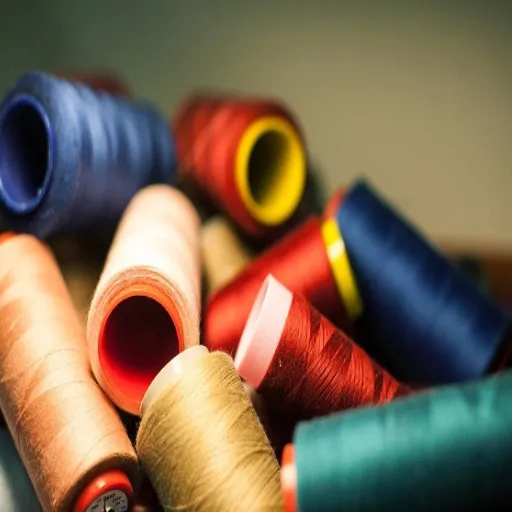
Most sustainability content treats recycled content as a dial that only goes one way. In eco-friendly upholstery yarn it is a curve, and the top of the curve is not at 100%.
Tomás, a product developer at a mid-size contract furniture brand, spent a full quarter specifying a 100% recycled polyester upholstery yarn for a hotel rollout. The marketing story was excellent. The abrasion report was not.
The construction peaked below the 40,000 Martindale cycles the client’s specification required, and the sampling round had to restart. A mid-range recycled blend passed on the first submission and shipped on schedule. The higher recycled number had been the problem, not the selling point.
Abrasion Resistance Peaks Before 100% Recycled
Research on recycled-polyester chenille upholstery fabric found that abrasion resistance was highest at a roughly 50/50 blend of recycled and virgin polyester, and lowest at 100% recycled content. Draw-frame passages in production mattered too, meaning the same fiber performs differently depending on how it is spun. If your abrasion requirement is the binding constraint, a mid-range recycled content can outperform a higher one.
Bursting Strength and Flame Retardancy
The same body of work found that bursting strength decreased as recycled content increased, which matters for cushioning and for seats that take repeated point loads. The good news is that recycled content had no important effect on flame retardancy in that research.
The lever for fire performance is chemistry, not recycled percentage. That distinction connects directly to the PFAS discussion below. Fire performance is also one of the few places where an eco-friendly upholstery yarn and a conventional one face the same standard.
How to Spec for the Traffic Class You Actually Need
Start with the requirement, not the marketing number. Identify the abrasion threshold your application demands on a named test method, then shortlist eco-friendly upholstery yarns with documented results that meet it.
Within that shortlist, choose the highest recycled content still passing. Then confirm chemistry, certifications, and color consistency for the same yarn. This sequence protects durability first and optimizes sustainability second, which is the order that keeps a launch on schedule.
Do Eco-Friendly Upholstery Yarns Pass the Durability Tests?
Yes, when fiber and blend are matched to the application. Bio-based and recycled yarns reach contract-grade performance today, but the claims only mean something when the test method is named.
Abrasion: Martindale and Wyzenbeek Are Not Interchangeable
Martindale (measured in cycles) and Wyzenbeek (measured in double rubs) use different machines and different motions, so their results are not directly comparable. A “100,000 rub” figure without a method is close to meaningless.
Reference points sit high. A recycled polyester and acrylic chenille jacquard is rated at 40,000 Martindale cycles and 100,000 Wyzenbeek double rubs. A bio-based yarn made from up to 85% sugarcane-derived content reaches 160,000 to 210,000 double rubs.
Upholstery woven from recycled marine plastic exceeds 63,000 double rubs and meets NFPA 260 and CAL 117-2013. Contract-grade eco-friendly upholstery yarn is a proven category, not an aspiration.
See the test in action before you read a single number on a spec sheet:
The FIRA International upholstery testing library is also worth bookmarking if you review test reports regularly.
Pilling: The Most Common Objection
Pilling depends less on recycled content than on fiber length, twist, and spinning quality. Short staple fibers with very high recycled content pill more readily. That is why draw-frame and spinning choices matter as much as recycled percentage when an eco-friendly upholstery yarn is spun.
Ask for pilling results on the specific yarn, not the fiber category. If a supplier cannot provide them, that is useful information too.
Tensile Strength, Seam Slippage, and Colorfastness
Tensile strength determines whether a yarn survives weaving and the loads a finished seat carries. Seam slippage determines whether the fabric holds at the seams under stress. Both decline in some high-recycled-content constructions, and both are testable before you commit to a bulk order. Colorfastness to light varies by fiber: wool and polyester hold color well, while linen and some cotton constructions fade faster in direct sunlight.
Flame Retardancy Without PFAS
Fire performance has historically leaned on chemical treatments, and those treatments are where PFAS most often appears. Inherent flame resistance in the fiber itself, as found in wool and some modified polyesters, offers a route to fire performance without a problematic finish. Where a finish is still required, PFAS-free options now exist and are widely available.
A usable test report names five things: the exact yarn or fabric reference, the test standard and method, the result, the laboratory or certification body, and the date. Reports missing any of these are marketing documents, not evidence. Ask for the report matching the yarn you are actually ordering, since results do not transfer freely between similar constructions.
Specifying a project and unsure which test results you need? Send us your traffic class and target market, and our team will confirm which eco-friendly upholstery yarn specifications apply. Request a specification review.
Certifications That Back an Eco-Friendly Claim
Certifications are the difference between a claim and a verifiable fact, and each one certifies something different. These are the certificates you will be asked to produce when you specify an eco-friendly upholstery yarn. For a full catalogue, see our guide to certified sustainable yarns.
GRS and RCS: Recycled Content
The Global Recycled Standard verifies recycled input and chain of custody, and adds social, environmental, and chemical requirements for processing. The Recycled Claim Standard verifies recycled content and chain of custody only. GRS is the more demanding of the two, and the usual default when a brand must substantiate a recycled narrative.
GOTS: Organic Fiber
The Global Organic Textile Standard applies to products containing at least 70% certified organic natural fiber, with a stricter tier at 95%. It is an organic-fiber standard, and it does not certify recycled polyester or any other recycled synthetic.
OEKO-TEX STANDARD 100: Chemical Safety
OEKO-TEX STANDARD 100 tests the finished product and its components for harmful substances. That is genuinely valuable, and it often satisfies a retailer’s chemical restrictions.
What it does not tell you is whether the fiber is organic or recycled. Treat it as a chemical-safety certificate, not a fiber-content one. The differences between GOTS, OEKO-TEX, RCS, and GRS trip up even experienced buyers.
Priya, a sourcing manager for a healthcare furniture supplier, learned this the expensive way. Her supplier’s certificate was genuine, but it covered chemical safety only. The hospital group running the tender had asked for verified recycled content, and GRS was what the contract actually required. She caught the gap in a pre-award review, three weeks before the submission deadline.
RWS, GREENGUARD Gold, and Cradle to Cradle
The Responsible Wool Standard and ZQ cover animal welfare, land management, and traceability in wool supply chains. GREENGUARD Gold certifies low chemical emissions, which matters for indoor air quality in homes, schools, and healthcare. Cradle to Cradle assesses material health, circularity, and renewable energy, and is common on premium contract upholstery.
How to Verify a Certificate
Claims are cheap; certificate numbers are not. Five steps separate the two:
- Ask your supplier for the certificate number and the issuing body.
- Look the certificate up in that body’s public database.
- Check that the scope covers your specific material and process.
- Confirm the certificate is current.
- Request the transaction certificate that ties your shipment to certified production.
If a supplier markets recycled or organic content but cannot produce a certificate number, treat the claim as unverified. It is the fastest greenwashing test available to a buyer, and it takes about ten minutes. Get durable upholstery yarn solutions from Hebei Lida Textile Co., LTD.
PFAS-Free: The 2026 Chemical-Compliance Shift
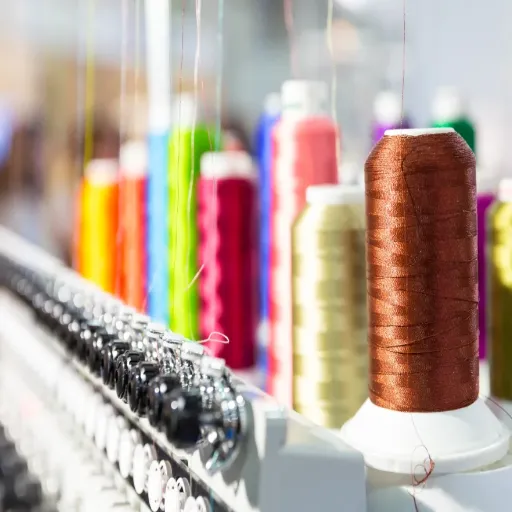
Per- and polyfluoroalkyl substances, known as PFAS, are a family of chemicals widely used in stain-repellent and water-repellent finishes on upholstery. They are also the subject of growing regulatory attention and increasing buyer scrutiny, particularly for interiors, education, and healthcare projects.
The market has moved quickly. Multiple premium upholstery ranges now publish explicit PFAS-free or PFC-free declarations alongside their certification set rather than treating it as a niche option. If your eco-friendly upholstery yarn specification is being written for a 2026 or 2027 collection, PFAS-free upholstery is becoming a baseline expectation.
The important distinction is scope. A PFAS-free claim can apply to the yarn, the finished fabric, or both.
So ask three questions before you accept one on an eco-friendly upholstery yarn. Is the yarn itself free of PFAS, or only the finished fabric? Have both the fiber and the finish chemistry been tested? And which test method and laboratory support the declaration?
The shortest route to PFAS-free performance is usually fiber selection. Fibers that resist staining inherently, such as polypropylene and wool, need less chemical help. For outdoor collections, where finishes are re-applied over time, see our guide to outdoor upholstery yarn.
Matching Eco-Friendly Upholstery Yarn to the Application
The same fiber can be excellent in one setting and wrong in another. Match the application first, then optimize for sustainability within it.
Residential Sofas and Armchairs
Recycled polyester and recycled wool blends dominate residential seating, balancing comfort, color range, and durability at a workable price. A mid-range recycled content often delivers better abrasion performance than a higher percentage. For residential eco-friendly upholstery yarn, specify the durability requirement first and let the recycled content follow.
Commercial and Contract Furniture
Contract seating demands documented abrasion performance, certified chemical safety, and increasingly a PFAS-free declaration. Recycled polyester and recycled polypropylene are the practical first choices for an eco-friendly upholstery yarn in this segment, with wool blends for premium settings. Expect to provide certificates and test reports as part of the specification package.
Outdoor, Cushions, and Window Treatments
Outdoor upholstery adds UV resistance, moisture management, and mildew resistance to the list, where solution-dyed recycled polyester and polypropylene are the usual answers because color is engineered into the fiber. For lighter-use pieces, organic cotton, linen, and hemp open up, since hand feel and natural texture matter more than abrasion resistance. For window treatments, our guide to eco-friendly yarns for curtains covers drape, weight, and light control.
Cost, MOQs, and Sourcing
Sustainability carries a price, and the honest version of that statement is more useful than a vague promise.
Where the Price Premium Sits
Recycled and certified yarns typically cost more than conventional equivalents, though the gap varies sharply by fiber. Recycled polyester sits closest to virgin polyester, so an eco-friendly upholstery yarn built on rPET carries the smallest premium.
Organic cotton, certified wool, and specialist blends carry larger premiums because the certified supply base is smaller. The premium buys three things: verified content, documented chemistry, and a traceable chain of custody. If a buyer needs none of those, paying for them is waste.
MOQs, Sampling, and Lead Times
Minimum order quantities for eco-friendly upholstery yarn vary by fiber and color. Recycled polyester is generally the most flexible, while certified organic and recycled wool require longer planning.
That difference matters most when you are switching a running program from a conventional to a sustainable upholstery yarn. Always sample before committing, and order the yarn in the actual color and construction you intend to use. Tension and handling differ from conventional yarns, so test it in your own process.
Questions to Ask a Sustainable Yarn Supplier
Bring this list to your first call:
- What recycled or organic content does this yarn carry, and what certificate number supports it?
- Which test method produced the abrasion result, and can I see the report?
- Is the yarn PFAS-free, and is that tested or declared?
- What is the MOQ, sampling cost, and lead time for this color?
- How consistent is color across batches?
A supplier who answers all five without hesitation is worth a trial order. For a fuller evaluation framework, see how to find sustainable yarn suppliers, and this buyer’s checklist of questions for recycled yarn.
Working from a fixed specification? We manufacture eco-friendly upholstery yarn to your required abrasion class, recycled content, and certification set. Discuss a custom yarn specification with our team.
Frequently Asked Questions
What is the most eco-friendly yarn for upholstery?
There is no single winner, because eco-friendly spans fiber source, recycled content, and chemistry. Hemp and organic cotton score highest on renewable, low-input sourcing. Recycled polyester and recycled wool score highest on keeping existing material in circulation. The most defensible choice is a certified eco-friendly upholstery yarn that also meets the abrasion requirement for the application.
Is recycled polyester good for upholstery?
Yes. Recycled polyester is one of the strongest eco-friendly upholstery yarn options: durable, printable, and cost-competitive with virgin polyester. A recycled polyester and acrylic chenille can reach 40,000 Martindale cycles and 100,000 Wyzenbeek double rubs, covering most residential and many contract applications. The one caution is that abrasion performance can fall as recycled content approaches 100%, so confirm test results for your specific yarn.
Does recycled polyester upholstery yarn pill?
It can, but pilling depends more on fiber length, twist, and spinning quality than on recycled content alone. Short staple fibers with very high recycled content are more prone to pilling. Ask for pilling test results on the exact yarn you intend to order, and treat the absence of those results as a signal to look further.
Are eco-friendly upholstery yarns as durable as conventional ones?
Certified options reach contract-grade performance today. A bio-based yarn made from up to 85% sugarcane-derived content achieves 160,000 to 210,000 double rubs, and recycled marine-plastic upholstery exceeds 63,000 double rubs. Durability depends on fiber, blend, and construction rather than on whether the yarn is marketed as sustainable.
Is hemp good for upholstery?
Hemp is one of the strongest natural fibers available, with high tensile strength, dimensional stability, and natural resistance to UV and mildew. It suits heavy-use residential seating and cushions. Its limitations are hand feel, which starts crisp and softens over time, and a lower abrasion ceiling than high-performance synthetics, so it is usually specified as a blend.
Can upholstery yarn be biodegradable and durable at the same time?
Partly. Wool, hemp, and lyocell are biodegradable and perform well in many upholstery applications. Biodegradability and maximum abrasion resistance still pull in opposite directions, and high-performance synthetics are not biodegradable. Pick the durability level your application requires, then choose the most biodegradable fiber that still meets it.
What certifications should eco-friendly upholstery yarn have?
It depends on the claim you need to make. GRS or RCS substantiate recycled content. GOTS substantiates organic fiber. OEKO-TEX STANDARD 100 substantiates chemical safety in the finished product.
RWS covers responsible wool, while GREENGUARD Gold and Cradle to Cradle support indoor air quality and circularity claims. Most eco-friendly upholstery yarn specifications need two of these, not all of them.
Is recycled polyester yarn PFAS-free?
Not automatically. PFAS appears most often in stain and water-repellent finishes rather than in the polyester fiber itself, so a recycled polyester yarn with a conventional finish may still contain PFAS. Ask whether the yarn and the finish are both PFAS-free, and ask for the tested method behind the declaration.
How much more does eco-friendly upholstery yarn cost?
The premium varies widely. Recycled polyester sits closest to virgin polyester, while certified organic cotton and recycled wool carry larger premiums because the certified supply base is smaller. Certification, recycled content, and PFAS-free finishing each add cost, so request a breakdown by element rather than a single bundled price.
Conclusion
Eco-friendly upholstery yarn works when you treat sustainability as a specification rather than a slogan. Four ideas carry most of the weight.
Recycled polyester, hemp, and recycled wool each hold a different position on the durability curve. More recycled content is not automatically better, since abrasion resistance peaks near a 50/50 recycled-to-virgin polyester blend and falls at 100% recycled. Test results only compare when the method is named, because Martindale and Wyzenbeek measure different things. And certificates verify specific claims, so GRS, GOTS, and OEKO-TEX answer different questions.
Start with the durability and chemistry your application requires. Then choose the highest recycled or organic content that still passes. Then verify the claim with a certificate number rather than a marketing line. That order protects the launch and the sustainability goal at the same time.
If you would like help matching eco-friendly upholstery yarn to a specific traffic class, certification set, or PFAS-free requirement, our team can review your specification and recommend yarns that meet it. Request eco-friendly upholstery yarn samples from Hebei Lida Textile and start your next collection on solid ground.