



The best outdoor upholstery yarn is solution-dyed acrylic for full sun, coastal, and desert seating, solution-dyed olefin where bleach cleaning and stain resistance matter most, and solution-dyed polyester for shaded patios and budget projects. The fiber matters, but the dye method matters more than most buyers realize.
Here is why. The yarn that makes a beautiful indoor sofa will fail on a patio within two seasons. It usually does not wear out. The sun bleaches the color out of it first, and water and mildew finish the job.
Priya learned that in the summer of 2023. She runs product for an outdoor furniture brand and launched a printed-polyester cushion line in a rich teal. The first season sold out. By the second July, the cushions on a hotel terrace had faded to a chalky grey, and the returns were piling up. The fabric had not torn. The color was simply gone.
Priya rebuilt the line on solution-dyed acrylic and has held the same teal for three seasons since. “We were buying the wrong yarn,” she said. “Not a cheaper one. Just the wrong one.”
This guide covers what makes outdoor upholstery yarn different, why dye method decides how long color lasts, how solution-dyed acrylic, olefin, and polyester compare, how to clean each one, and how to write a specification a supplier can build. If you are still choosing between fibers, start with our best yarn for upholstery decision guide, or step back to the full framework in our yarn for upholstery overview.
Key Takeaways
- Solution-dyed acrylic is the outdoor benchmark: it resists fading, mildew, and water, keeps a soft natural hand, and handles diluted-bleach cleaning without losing color.
- Olefin is the value and cleanability champion. It is inherently stain-resistant, hydrophobic, and quick-drying, but it fades faster than solution-dyed acrylic under intense, sustained sun.
- Solution-dyed polyester is the budget tier. It beats printed or piece-dyed polyester on fade resistance but still trails acrylic in full sun and should never be bleach-cleaned.
- Dye method decides outdoor lifespan. Solution dyeing puts pigment inside the fiber before it is extruded, so UV cannot bleach it away the way it attacks surface-dyed color.
- Outdoor fabric is water-resistant, not waterproof. Only marine-grade vinyl is fully waterproof, and it trades comfort for that protection.
What Makes Outdoor Upholstery Yarn Different?
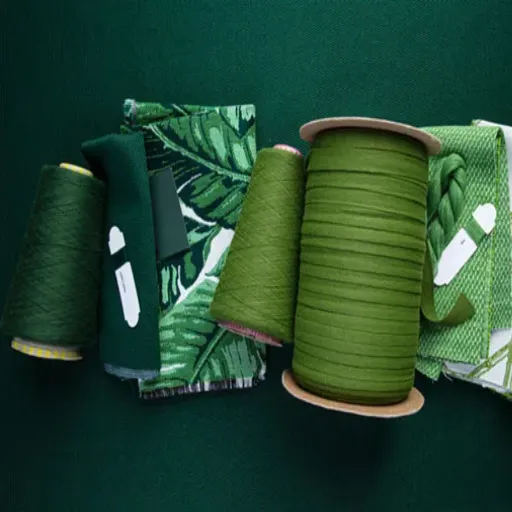
Outdoor upholstery yarn is engineered to hold its color and structure under UV light, moisture, and microbial exposure. That job is decided mainly by the fiber chemistry and the dye method inside it, not by how soft it feels on the cone.
Indoor yarn follows indoor rules. A cotton or rayon blend that looks luxurious in a living room will rot, stain, and mildew on a patio. Four forces do the damage:
- Ultraviolet light attacks both the fiber and the dye, breaking them down until color turns chalky.
- Water and moisture invite mildew and rot into fibers that absorb them.
- Mildew feeds on dirt and damp soil left on the surface.
- Cleaning chemicals, especially the diluted bleach that outdoor furniture often needs, can strip color that is sitting on the outside of a fiber.
Every one of those threats points back to the same two questions: which fiber, and how was it dyed? Get those right and an outdoor yarn can hold its color for years. Get them wrong and the best construction in the world will not save it.
The fabric is built from the yarn. That is why the yarn choice sets the ceiling on how long outdoor seating looks new.
Want to see how an outdoor-grade yarn is engineered to a specification? Explore our custom yarn solutions and match the fiber to your climate before you commit to a collection.
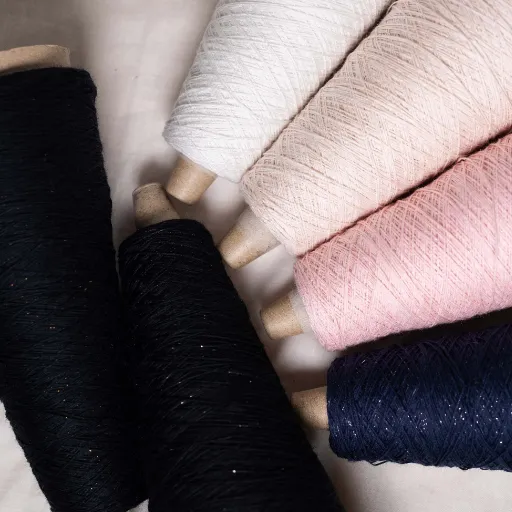
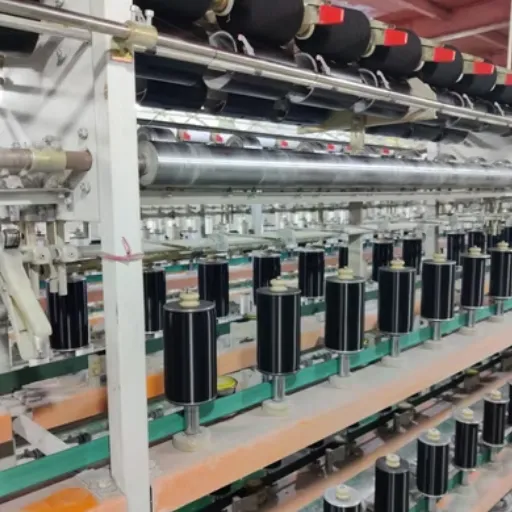
See how a yarn is spun and finished before it ever reaches a loom. The dye method and stabilizers added at this stage are what decide how an outdoor fabric holds its color, which is the theme running through this guide.
Why Dye Method Decides Everything Outdoors
Most buyers compare fibers. The bigger decision is how the color gets into the fiber in the first place.
What Solution Dyeing Is
Solution dyeing, also called dope dyeing or spun dyeing, mixes pigment into the liquid polymer before the fiber is extruded. The color becomes part of the fiber itself, running all the way through it rather than sitting on the surface. Think of a carrot: orange to the core, not painted orange on the skin.
That difference is the whole game outdoors. When UV light hits a surface-dyed fiber, it attacks the dye first, and the color fades long before the fiber fails. When UV hits a solution-dyed fiber, there is no separate dye layer to destroy. The color is the fiber. This is why two fabrics made from the same fiber can have wildly different outdoor lifespans: the dye method, not the polymer, drew the line between them.
Sunbrella popularized solution-dyed acrylic, and its explainer is a useful primer on why the method became the outdoor standard.
Solution-Dyed vs. Yarn-Dyed vs. Piece-Dyed
- Solution-dyed. Pigment added to the melt before extrusion. The most UV-stable option and the only sensible choice for full-sun outdoor seating. Best colorfastness, highest consistency across batches.
- Yarn-dyed. Yarn is dyed before weaving. Great for stripes, plaids, and patterns, and it can reach high lightfastness with UV-stabilized dyes, which is why some automotive interiors rely on it. Still a surface treatment, so it trails solution dyeing under sustained sun.
- Piece-dyed. Color added after the fabric is woven. The most economical and the fastest to fade outdoors, because UV reaches the dye directly on the exposed surface.
For outdoor upholstery yarn, solution dyeing is not a luxury upgrade. It is the baseline that makes the rest of the specification matter. For a deeper look at how dye methods affect color, see our guide to upholstery yarn colorfastness.
The Three Outdoor Upholstery Yarns, Compared
Three fibers do most of the work outdoors. Each wins on something different, and the right pick depends on where the furniture lives. The comparison below covers the trade-offs buyers weigh most, and Fabric Resource’s fiber breakdown confirms the same ranking from a retail perspective.
Solution-Dyed Acrylic: The Benchmark
Solution-dyed acrylic is the closest thing outdoor upholstery has to a gold standard. As an acrylic yarn for upholstery, it typically rates around Grade 7 to 8 on the blue wool lightfastness scale and holds color for thousands of light hours, often five to ten years of real-world exposure. Its fibers resist fading, mildew, rot, and water, and the hand is soft and breathable, closer to cotton or wool than to a synthetic. It also tolerates diluted-bleach cleaning without losing color.
The trade-offs are honest ones. Solution-dyed acrylic upholstery costs the most of the three, and its abrasion resistance is slightly below the best performance polyesters. For full sun and coastal exposure, that premium buys years of color that cheaper fibers cannot match.
Olefin (Polypropylene): The Value and Cleanability Pick
Olefin yarn for upholstery, also called polypropylene, is the value champion, and it wins on two things nobody else matches. First, it is inherently stain-resistant. Olefin has no dye sites for stains to bond to, so it shrugs off spills that would set into other fibers. Second, it is extremely hydrophobic, absorbing roughly 0.01% moisture, which means it dries fast, resists mildew, and suits poolside and humid settings. Solution-dyed olefin commonly rates 1,500 to 2,000 light hours and clears 50,000 double rubs, and it is the most bleach-tolerant outdoor fiber available.
Its weakness is sunlight under pressure. Solution-dyed olefin with UV stabilizers performs well in shaded or intermittent sun, but under intense, day-long exposure it fades faster than solution-dyed acrylic. It is also heat-sensitive, so it must never be ironed, and its hand feels a little stiffer and more waxy than acrylic. Limited texture variety and some pilling and snagging in loose constructions round out the picture.
Solution-Dyed Polyester: The Budget Tier, Done Right
Solution-dyed polyester is the affordable option, and it is a real step up from the printed and piece-dyed polyester that gives the fiber a bad name outdoors. Solution dyeing lifts polyester to roughly 500 to 1,000 light hours, versus about 200 to 300 hours for standard piece-dyed polyester and around 500 for printed goods. It is durable, holds vibrant prints, and resists stretching and shrinking.
It still trails acrylic. Solution-dyed polyester is less water-repellent, less mildew-resistant, and less fade-resistant than solution-dyed acrylic, and it must never be bleach-cleaned because bleach fades the color and any print. It suits covered and shaded patios, decorative cushions, and occasional-use pieces rather than full-sun, year-round seating.
The Comparison Table
| Property | Solution-Dyed Acrylic | Olefin (Polypropylene) | Solution-Dyed Polyester |
|---|---|---|---|
| Lightfastness | Excellent (Grade 7-8) | Good (Grade 5-6) | Fair to good |
| Approx. light hours | 1,500-2,000+ | 1,500-2,000 | 500-1,000 |
| Water and mildew | Excellent | Excellent (0.01% absorption) | Fair to good |
| Hand feel | Soft, natural, breathable | Stiffer, waxy | Stiff to moderate |
| Bleach-cleanable | Yes (diluted) | Yes (diluted) | No |
| Abrasion | Very good | Very good (50,000+ rubs) | Good |
| Cost | Highest | Low to moderate | Low |
| Best use | Full sun, coastal, unshaded | Shade, stain-heavy, poolside | Budget, shaded, occasional |
The verdict is simple. Solution-dyed acrylic for full sun and coastal work, olefin for shade, stain-heavy environments, and poolside, and solution-dyed polyester when the budget is tight and the exposure is limited. If you want the fiber that loses this comparison outright, nylon is the one: it is tough, but its UV weakness rules it out for outdoor seating, as we explain in our nylon yarn for upholstery guide. For polyester’s full story, including where it beats olefin, see our breakdown of polyester yarn for upholstery.
Choose Outdoor Upholstery Yarn by Exposure
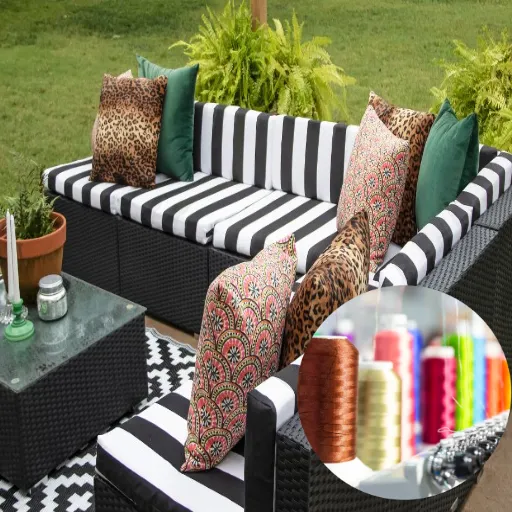
The fastest way to pick an outdoor upholstery yarn is to name the exposure, not the look.
Full Sun, Coastal, and Desert Seating
Go solution-dyed acrylic. For full-sun, coastal, and desert seating, it is the best yarn for outdoor furniture. Deep blues, reds, and greens hold their saturation where other fibers go chalky, and the fiber resists salt air as well as sun. Specify a UV-stabilized construction and confirm the light-hour rating before you scale a collection.
Shaded Patios and Covered Spaces
Olefin and solution-dyed polyester become smart, economical choices here. Under a pergola or an awning, the UV load drops, and olefin’s stain resistance and quick drying deliver more everyday value than acrylic’s premium fade protection.
Marine and Humid Environments
Prioritize hydrophobic, quick-drying fibers and an antimicrobial build. Solution-dyed acrylic is the workhorse marine upholstery yarn for most seating, but fully exposed boat upholstery often calls for marine-grade vinyl, the one truly waterproof option. Vinyl costs you comfort: it feels hotter and more plastic than a woven face, so many marine interiors use acrylic up top and vinyl where water is guaranteed.
Poolside and Quick-Dry Applications
Olefin and polypropylene sling fabrics win here. They shed water, dry in minutes, and take the chlorine and bleach that poolside cleaning demands.
Marcus manages facilities for a rooftop restaurant that seats 90 under a permanent pergola. His staff wipe the banquettes with diluted bleach every night. He specified solution-dyed olefin, and after two full seasons the seats still release red wine and ketchup without a mark, with color holding steady beneath the shade. Under exposed sky, he would have chosen acrylic. Under the pergola, olefin saved him a third of the cost with no visible penalty.
Water, Mildew, and the Truth About “Waterproof”
Almost every outdoor upholstery fabric is water-resistant, not waterproof, and the gap between those words causes real disappointment.
Water resistance comes from two things: a hydrophobic fiber and a surface finish. Fluorocarbon finishes make liquids bead up and roll off, so spills can be blotted before they soak in. But those finishes wear away with cleaning and time, which is why manufacturers recommend re-treating outdoor fabric periodically. Marine-grade vinyl is the exception that proves the rule. It is fully waterproof because it is not a woven face at all, and that is exactly why it feels hotter and less breathable.
Mildew is widely misunderstood. It does not feed on the fiber itself. It feeds on dirt, oils, and damp soil left on the surface. That is why a well-made solution-dyed fabric can still grow mildew if it is never cleaned, and why the fix is maintenance, not a different yarn. Fibers that do not absorb water, like olefin and acrylic, give mildew less to work with, and antimicrobial treatments add another layer of protection. Together they turn a fiber that resists damp into a genuinely mildew resistant outdoor fabric rather than one that simply claims the label.
One habit matters more than any fiber choice: never store cushions wrapped in plastic. Plastic traps moisture against the fabric and turns a clean cushion into a mildew farm. Store cushions dry, in breathable covers, or bring them inside. For the full picture of how outdoor fibers resist wear over time, see our guide to what makes upholstery yarn durable.
How to Clean Outdoor Upholstery Yarn and Fabric
Cleaning is where fiber choice turns into daily reality. Clean the wrong way and you can bleach out a color that survived ten summers of sun.
| Fiber | Routine care | Bleach | Drying | Never do |
|---|---|---|---|---|
| Solution-dyed acrylic | Soap and water | Diluted bleach OK | Air dry only | Dry clean or use dryer heat |
| Olefin | Soap and water | Diluted bleach OK | Air dry, dries fast | Iron or apply heat |
| Solution-dyed polyester | Soap and water | Not recommended | Air dry | Use bleach or harsh solvents |
Two rules protect almost every outdoor upholstery yarn. First, air dry only. Dryer heat permanently damages acrylic fibers, and olefin cannot take heat at all. Second, re-treat the water-repellent finish after a heavy cleaning, because washing strips the finish that made liquid bead up in the first place.
There is also a myth worth retiring. Solution dyeing improves colorfastness, but it does not automatically make a fabric stain-resistant. Only olefin is inherently stain-resistant, because it has no dye sites for stains to grab. Solution-dyed acrylic, polyester, and nylon often rely on stain-repellent finishes to resist oily and water-based stains, and those finishes wear off over time. One technical manufacturer, Brentwood and Revolution Textiles, argues this point directly and recommends planning for re-treatment rather than assuming the dye method does the work.
How to Specify and Source Outdoor Upholstery Yarn
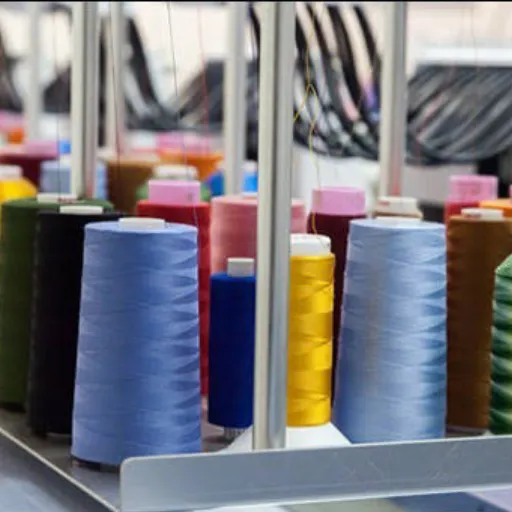
A strong outdoor specification covers more than the face yarn, because a great face on a failing seam still fails.
Start with the face yarn: fiber, dye method, lightfastness grade, denier, and twist. Then add the parts most buyers forget. Specify UV-stabilized or marine-grade sewing thread, because standard thread will fail in the sun even when the fabric holds. Choose open-cell or reticulated foam so water drains through a cushion instead of pooling inside it. Where mildew is a risk, add an antimicrobial build, and choose a fluorocarbon or a PFC-free finish for water repellency.
Then set your test targets in writing. Lightfastness should be tied to a standard such as AATCC 169, with a grade floor appropriate to the exposure, and abrasion should be stated as Martindale cycles or Wyzenbeek double rubs, since the two are not interchangeable. Our guide to upholstery yarn testing standards explains how to read those reports and set thresholds for heavy outdoor use.
Finally, verify before you scale. Request physical samples, test them in your own construction, ask for lightfastness and abrasion data on the exact yarn you will buy, and confirm color consistency across dye lots. When you are ready to build a collection around a specific outdoor specification, our guide to custom yarn for upholstery walks through sampling, color approval, and MOQs.
Frequently Asked Questions
What is the best yarn for outdoor upholstery?
Solution-dyed acrylic is the best all-round pick for full sun, coastal, and desert seating because it resists fading, mildew, and water and keeps a soft hand. Choose solution-dyed olefin for shaded, stain-heavy, or poolside use, and solution-dyed polyester for shaded patios and tighter budgets.
Is olefin good for outdoor furniture?
Yes, with one caveat. Olefin is inherently stain-resistant, hydrophobic, fast-drying, and bleach-cleanable, which makes it excellent for shaded and covered outdoor furniture. Under intense, all-day sun it fades faster than solution-dyed acrylic, so treat it as the value pick for shade rather than the choice for full exposure.
Is acrylic or olefin better for outdoor fabric?
Solution-dyed acrylic is better for full-sun and coastal exposure because it holds color longer. Olefin is better for stain resistance, bleach cleaning, and quick drying, and it costs less. If the furniture sits in direct sun, choose acrylic. If it sits in shade or takes heavy staining, olefin wins on value.
Are outdoor cushions waterproof? Can they stay out in the rain?
Most outdoor cushions are water-resistant, not waterproof, so they should be brought in or covered during heavy or prolonged rain. Marine-grade vinyl is the waterproof exception. Never store cushions in plastic, which traps moisture and encourages mildew.
How do I stop my outdoor fabric from fading?
Choose a solution-dyed fiber, because the pigment runs through the fiber and UV cannot bleach it away the way it destroys surface-dyed color. Then add UV stabilizers and, for full sun, specify solution-dyed acrylic. Printed and piece-dyed polyester fades fastest and should be kept out of direct exposure.
How do you clean outdoor upholstery fabric?
Use mild soap and water for routine cleaning. Solution-dyed acrylic and olefin tolerate diluted bleach on tough stains, but printed and piece-dyed polyester never should. Always air dry, never use dryer heat, and re-treat the water-repellent finish after a deep clean.
What yarn is used for marine upholstery?
Marine upholstery most often uses solution-dyed acrylic for its fade and mildew resistance, marine-grade vinyl where fully waterproof protection is required, and olefin or polypropylene for quick-drying slings. Many boats combine acrylic and vinyl to balance comfort with protection.
Build an Outdoor Collection That Keeps Its Color
Outdoor upholstery yarn lives or dies on two decisions: the fiber you choose and the dye method inside it. Pick solution-dyed acrylic for full sun, coastal, and desert seating, solution-dyed olefin for shade, stain-heavy spaces, and poolside, and solution-dyed polyester when the budget is tight and the exposure is limited. Then cover the details the spec sheets forget: UV-stabilized thread, drainage foam, antimicrobial and water-repellent finishes, and honest test targets.
Priya’s teal survived because she moved from a printed fiber to a solution-dyed one. Marcus’s banquettes survived nightly bleach because olefin was built for it. In both cases, the yarn was matched to the exposure instead of the price tag, and the furniture stopped coming back.
When you need outdoor upholstery yarn built to your climate, your color, and your test targets, not just a cone off the shelf, Hebei Lida Textile Co., LTD is here to help. We engineer solution-dyed and UV-stabilized yarns to your fiber, lightfastness grade, denier, and finish specifications, with the test data to prove performance. Request sa mples and a specification-matched quote today and give your outdoor furniture a color it can keep.