




Is nylon good for upholstery? Yes, and it is usually the toughest fiber in the room. Nylon resists abrasion better than polyester, wool, or cotton, springs back into shape after compression, and shrugs off pilling, mildew, and many chemicals.
That strength comes with honest trade-offs: nylon yellows and fades under sustained sunlight, builds up static, and costs more than polyester. That is exactly why you almost never see 100% nylon upholstery on a label. You see nylon blended in at 5% to 20% to make everything else tougher.
Sofia learned this the hard way. She specifies textiles for hotel and restaurant projects, and in 2022 she approved a pure wool upholstery for a boutique hotel lobby because it looked and felt premium. Eighteen months later, the seat decks on the busiest sofas were pilling and flat where guests slid in and out.
Sofia replaced the specification with an 85% wool, 15% nylon blend from a mill that rated it at 100,000 Martindale cycles. The comfort and look she wanted stayed. The wear problem disappeared. “The nylon wasn’t a downgrade,” she told her team. “It was the reason the wool could survive the lobby.”
This guide gives you the language Sofia used. You will learn what makes nylon yarn for upholstery so tough, how nylon 6 differs from nylon 6,6, how to set a blend ratio, how to plan around nylon’s UV weakness, and how to write a specification a supplier can actually build. If you are still choosing between fibers, start with our best yarn for upholstery decision guide, or step back to the full framework in our yarn for upholstery overview, and return here once nylon is on your shortlist.
Key Takeaways
- Nylon is the strongest, most abrasion-resistant common upholstery fiber, with excellent elasticity and shape recovery, which is why it is the industry’s performance booster rather than a standalone fabric.
- Nylon is rarely used at 100%. It earns its place in blends: wool-nylon at 85/15 to 95/5 is the premium contract benchmark (100,000+ Martindale), while 10% to 30% nylon lifts durability and shape in residential and poly-cotton faces.
- Nylon 6,6 melts at roughly 250 to 260°C versus 215 to 225°C for nylon 6, making 6,6 stronger and more heat-resistant, while nylon 6 is easier and cheaper to dye.
- Nylon’s signature weakness is UV light, which yellows and fades it. Plan for UV absorbers, copper stabilization, or solution dyeing, and avoid nylon for full-sun outdoor seating.
- Solution-dyed nylon improves colorfastness and can be bleach-cleaned, but it does not add stain resistance. That still requires a fluorochemical or soil-release finish.
Is Nylon Yarn Good for Upholstery?
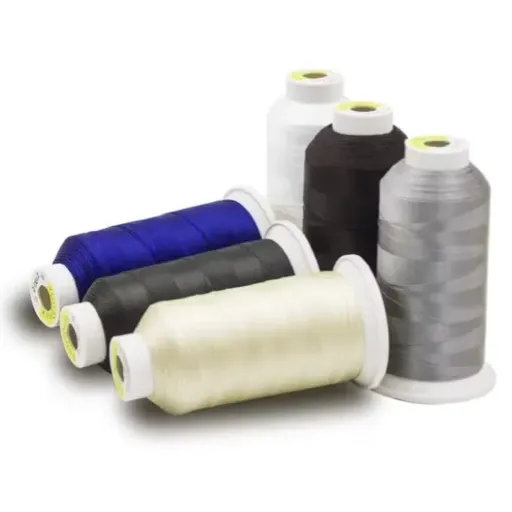
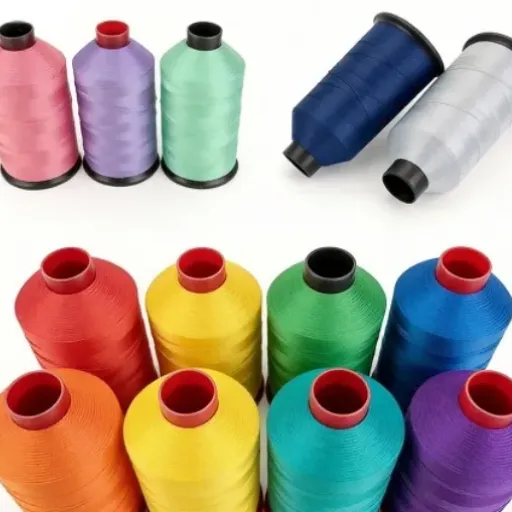
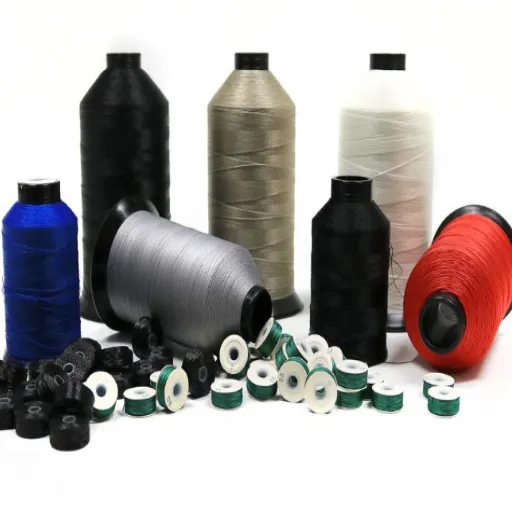
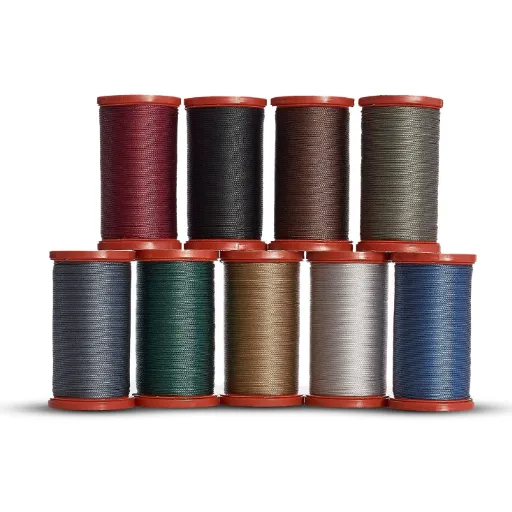
Nylon yarn, also called polyamide yarn, is melt-spun from PA 6 or PA 6,6 polymer into a thread engineered for maximum abrasion resistance, tensile strength, and elastic recovery. In upholstery it is woven or knitted into nylon upholstery fabric for sofas, chairs, and seating that has to survive constant friction, body-weight pressure, and cleaning. Its job is to keep the seat surface intact and the shape intact at the same time.
Here is the case for nylon as an upholstery yarn, and the limits you need to plan around.
Where Nylon Wins
- Abrasion resistance. Nylon sits at the top of the common upholstery fibers. It is repeatedly described as outperforming acrylic and polyester in scratch and wear tests, and it is measured at roughly four to five times the abrasion resistance of wool. When a fabric must survive a decade of sliding bodies, nylon is the fiber doing the heavy lifting.
- Elasticity and shape recovery. Nylon stretches and springs back. That elasticity keeps cushion edges from bagging, resists seam stress, and helps a woven face return to shape instead of staying crushed where people sit.
- Tensile strength and toughness. Nylon has a high strength-to-weight ratio, so it resists tearing and snagging. High-tenacity nylon yarns push that further for contract and technical seating.
- Low pilling in filament form, plus mildew and insect resistance. Smooth continuous-filament nylon has no loose fiber ends to pill, and nylon resists mildew, bacteria, insects, and many household chemicals.
- Dimensional stability and easy cleaning. Nylon holds its shape and cleans well, which is why it became the contract-furniture standard decades ago.
Where Nylon Needs Care
- UV and light sensitivity. This is nylon’s signature weakness. Prolonged light exposure yellows and fades it, and the effect worsens with heat. It is the reason automotive and outdoor specs go to great lengths to stabilize nylon.
- Static and lower breathability. Nylon builds up static electricity that attracts dust and lint, and it can feel warm because it holds heat and moisture poorly.
- Heat sensitivity. Nylon is thermoplastic. A hot iron or a radiator can shrink, glaze, or melt the fiber, so heat-care caution is essential.
- Moisture regain around 4% to 4.5%. Nylon absorbs more water than polyester, so water-based stains can wick in. It also means nylon washes and dries quickly, but a stain-resist finish is still the safer specification.
- Cost premium. Nylon costs more than polyester. That premium is worth paying only when you actually need the abrasion and recovery it delivers.
None of these limits makes nylon a bad choice. They make it a fiber that rewards planning. Specify the type, the blend, and the finish correctly, and nylon becomes the reason a demanding seat lasts.
Types of Nylon Yarn for Upholstery
When a supplier quotes “nylon yarn,” they could mean several different polymers and constructions. Choosing the right type matters as much as choosing the fiber.
Nylon 6 vs. Nylon 6,6
These are the two polyamides that dominate carpet and upholstery, and they are chemically close cousins with one practical difference: heat and strength.
| Property | Nylon 6,6 | Nylon 6 |
|---|---|---|
| Melting point | Roughly 250 to 260°C | Roughly 215 to 225°C |
| Strength and stiffness | Higher, tighter crystalline structure | Tough but softer |
| Heat resistance | Better under high temperature | Lower thermal stability |
| Dyeability | Harder to dye | Easier to dye, lower cost |
| Best fit | Heat-exposed and high-load seating, automotive | General woven and knit upholstery, cost-sensitive blends |
Choose nylon 6,6 when the seat runs hot or faces heavy structural load. Choose nylon 6 when you want balanced performance, easier color development, and a lower cost, which covers most residential and general contract upholstery.
Filament Nylon: FDY, Textured, and ATY
Filament yarn is a continuous strand extruded in one piece, and it is the form most upholstery nylon takes.
- FDY (fully drawn yarn). Smooth, strong, and low-stretch with a bright luster. FDY suits tightly woven upholstery that needs uniform strength, a clean surface, and no pilling. It also holds up in higher deniers for pile fabrics.
- Textured and air-textured (ATY) yarn. Texturing adds bulk and a softer, cotton-like, low-luster hand. It covers well and feels less slick, which is why textured nylon appears in softer woven and knit upholstery.
- BCF (bulk continuous filament). A high-bulk construction with its roots in carpet, BCF gives a dense, durable face where texture and cover matter.
Staple and Spun Nylon
Nylon can be cut into short staple fibers and spun like cotton or wool. Staple nylon has a matte, natural hand and blends easily with wool, cotton, or other fibers, which is where most upholstery nylon actually lives. The trade-off is pilling: cut fiber ends can fuzz under friction, so staple nylon needs a tight twist and a firm construction to perform.
High-Tenacity and Specialized Nylon
For contract, transport, and technical seating, mills specify high-tenacity nylon, often reaching around 10 cN/dtex and beyond, which resists breaking under load. Cross-section shape matters too: bright trilobal yarns add luster, while semi-dull and modified profiles control shine and hand feel.
The Spec Sheet: Denier, Tenacity, and Blend Ratio
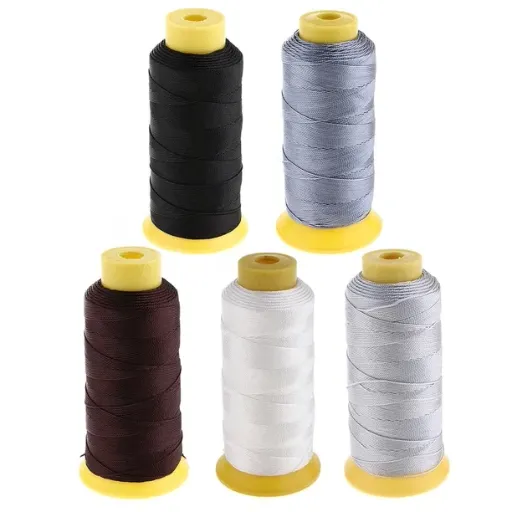
Numbers decide whether nylon helps or disappoints. Three of them matter most: denier, tenacity, and blend percentage.
Denier and Count
Denier measures yarn thickness. In woven upholstery, flat fabrics usually take finer nylon of 840 denier or less, while pile and velvet faces use heavier 840 to 1,050 denier yarns. When nylon is the dominant fiber in a heavy woven blend, expect the same bands that apply across upholstery: roughly 2,000 to 3,500 Dn for light seating, 3,500 to 5,000 Dn for residential sofas, and 5,000 to 9,000 Dn for heavy commercial and contract use.
Tenacity Explained
Tenacity measures how much load a yarn carries before it breaks, expressed in cN/dtex. A higher tenacity means a thinner yarn can do the same job, which lets you hit durability targets without adding bulk. Retail suppliers market high-tenacity nylon 6,6 FDY at around 10.5 cN/dtex. When a fabric fails at stress points like armrests and cushion edges, tenacity is often the number that was set too low.
How Much Nylon Belongs in a Blend?
This is the question the thin nylon-focused content online almost never answers, and it is the one buyers actually need. Nylon’s value is concentrated, so a small percentage buys a lot.
| Blend | Typical nylon share | What the nylon buys | Best use |
|---|---|---|---|
| Wool-nylon | 85/15 down to 95/5 | Abrasion resistance, resilience, shape retention, no pilling | Premium contract, hospitality, office seating |
| Polyester or poly-cotton with nylon | 10% to 30% nylon | Adds durability and recovery to a cheaper face | Residential sofas, high-traffic family seating |
| Natural face with nylon at stress points | 5% to 20% at arms, seats, edges | Reinforces wear zones without changing the whole feel | Decorator pieces, mixed-construction seating |
The rule is simple: match the nylon percentage to the traffic and the property you are buying. Arjun, who runs a residential furniture brand, proved it on a sofa line that kept wearing through at the arms and seat decks. Instead of switching the entire face to nylon, he wove 15% to 20% nylon into the pressure zones and left the rest of the fabric as it was.
Arm wear dropped sharply, the price barely moved, and the piece still read as a soft, natural sofa. Buying the right amount of nylon beat buying more of it.
Dyeing, Colorfastness, and UV Stabilization
Nylon’s color story is different from polyester’s, and understanding it prevents the fading complaints that follow cheap nylon upholstery.
Acid Dyes Give Nylon Its Color
Nylon is dyed with acid dyes, which bond strongly to the polyamide structure and produce deep, bright shades. That strong dye affinity is why nylon looks richer than polyester at the same color, and why it is easier to hit exact color targets on nylon 6.
Solution-Dyed Nylon: What It Does and Does Not Do
In solution-dyed, or dope-dyed, nylon, pigment is added to the polymer before the fiber is extruded, so the color runs all the way through it. The benefits are real: excellent colorfastness and strong resistance to fading and crocking. On 100% solution-dyed nylon, it also brings tolerance for aggressive cleaning with diluted bleach, commonly around four parts water to one part bleach.
Here is the myth worth correcting. Solution dyeing improves colorfastness, but it does nothing to stop staining. A solution-dyed nylon can still absorb coffee or wine, and one technical guide notes it can even be harder to clean because the fiber has more available dye sites.
Stain resistance is a separate feature that comes from a fluorochemical stain-resist finish or a moisture barrier. Always confirm both the dye method and the finish, because solution dyeing alone is not a stain warranty.
Fighting Nylon’s UV Weakness
Because light is nylon’s weak point, stabilization is where manufacturing expertise shows. Mills use UV absorbers, copper-complex stabilizers, and carefully selected dyes to slow yellowing and fading. They also meter how much color the fiber carries, since light shades fade faster than deep, heavily dyed ones. For seating that faces bright windows or full sun, ask specifically how the yarn is stabilized. If the piece lives outdoors, nylon is the wrong fiber entirely; see our outdoor upholstery yarn guide for the fibers that hold color under relentless sun.
Want nylon stabilized and color-matched to your own collection? Explore our custom yarn solutions, where our team builds dye method, finish, and lightfastness into the specification from the start.
Nylon vs. Polyester, Wool, and the Outdoor Fibers
Nylon rarely competes alone. Here is how it compares with the fibers buyers weigh against it.
| Property | Nylon | Polyester | Wool | Olefin / Acrylic |
|---|---|---|---|---|
| Abrasion resistance | Very high | High | Moderate | Moderate to high |
| UV / fade resistance | Poor to fair | Good | Fair | Excellent (solution-dyed acrylic) |
| Elasticity / recovery | Excellent | Good | Good | Fair |
| Water-based stain | Good with finish | Excellent | Poor | Excellent |
| Hand feel | Slick, smooth | Smooth, versatile | Warm, premium | Waxy or wool-like |
| Typical cost | Mid to high | Low to mid | High | Low to mid |
Nylon vs. Polyester
Nylon wins on abrasion resistance, tensile strength, and shape recovery. Polyester wins on fade resistance and cost. That splits the decision cleanly: choose nylon where wear is extreme and sunlight is limited, and choose polyester where the piece faces bright windows or the budget is tight. This is the single most common comparison buyers make, and our polyester yarn for upholstery guide covers polyester’s side of it in full.
Nylon vs. Wool: Why Wool-Nylon Wins Contract
Wool feels premium, resists flames naturally, and ages gracefully. Its weakness is wear, especially pilling and flattening in high-traffic seats. Add 5% to 15% nylon and the blend keeps wool’s character while gaining the abrasion resistance and recovery that make it contract-grade.
This is why the best-known commercial collections sit at 85/15 and 95/5 wool-nylon, with top performers exceeding 100,000 Martindale cycles. For the natural-fiber side of the story, see our guide to natural fiber upholstery yarn.
Nylon vs. Olefin and Acrylic Outdoors
Outdoors, nylon loses. Olefin and solution-dyed acrylic are built for water, mildew, and UV, while nylon is built for abrasion. Use nylon indoors where traffic is brutal and light is controlled, and reach for olefin or solution-dyed acrylic when the furniture lives outside.
Ready to stop guessing at blend ratios? Contact Hebei Lida for nylon and nylon-blend sample cones matched to your traffic level and color target.
Recycled and Regenerated Nylon for Upholstery
Recycled nylon yarn is the newest option on the shelf, and it is easier to justify than many buyers expect. Regenerated nylon, sold under names such as ECONYL, is made from waste streams like discarded fishing nets and carpet fluff, then re-polymerized into nylon 6. Chemically, it returns to the same polyamide, so it performs like its virgin counterpart rather than trading durability for the eco label.
That matters for furniture brands under sustainability pressure. A regenerated nylon lets a specifier keep contract durability while marketing recycled content credibly. The discipline is the same one that applies to any recycled claim: verify it. Ask for third-party certification such as GRS for the recycled content and OEKO-TEX for health safety, and confirm the current recycled percentage rather than accepting a marketing number.
Elena, who buys for an eco-focused furniture line, tested this directly. She wanted her wool-nylon contract seating to carry recycled content without dropping below her rub target. Her supplier blended certified regenerated nylon into the wool at the same ratio the standard product used, and the collection cleared its abrasion threshold with the certification paperwork to prove the claim.
Her team got the marketing story, and her customers got the same seat they had before. For the broader menu of sustainable fibers, our guide to eco-friendly upholstery yarn covers the certifications and options.
Flame Retardancy and Contract Requirements
Contract and hospitality seating usually has to clear both an abrasion threshold and a flame code, and nylon helps on both fronts. Nylon is thermoplastic, so it melts rather than burning readily, and wool-nylon blends are widely used where flame standards such as CAL 117, NFPA 260, and BS 5852 Crib 5 must be met.
Set your targets in writing before you order. On abrasion, many contract specs call for at least 30,000 Wyzenbeek double rubs or 40,000 Martindale cycles, and heavy-duty seating goes higher. Remember that Wyzenbeek and Martindale are different machines and their numbers cannot be compared directly. Testex explains the difference if you want the mechanics, and our guide to upholstery yarn testing standards covers how to read the lab report.
How to Specify and Source Nylon Yarn for Upholstery
You can now write the one-page specification a supplier needs. A complete nylon upholstery yarn spec covers:
- Fiber and polymer: nylon 6 or nylon 6,6
- Blend ratio: for example, 85% wool / 15% nylon, or 20% nylon in a polyester face
- Yarn form: filament (FDY or textured) or staple
- Denier and filament count: for example, 840 Dn, or 300D/144F
- Tenacity: minimum cN/dtex where strength is critical
- Twist: tight twist for abrasion and pilling resistance
- Dye method: solution-dyed for high lightfastness, or acid-dyed to match colors
- Stain and UV finish: fluorochemical stain-resist and UV stabilization where needed
- Performance targets: minimum double rubs or Martindale cycles, pilling rating, lightfastness rating
- Flame requirement: the specific code the collection must pass
Then verify before you commit. Request physical samples, test them in your own weave or knit, ask for the abrasion, pilling, and lightfastness lab results, and confirm color consistency across batches. A nylon yarn manufacturer who cannot show test data is a risk, no matter how good the price looks. If you are building nylon into a bespoke order, our guide to custom yarn for upholstery walks through the sampling and approval steps.
Frequently Asked Questions
Is nylon good for upholstery?
Yes, especially for high-traffic and commercial seating. Nylon is the strongest, most abrasion-resistant common upholstery fiber, with excellent elasticity and shape recovery. Its weaknesses are UV fading, static, heat sensitivity, and cost, which is why it is usually blended at 5% to 20% rather than used alone.
Is nylon or polyester better for a sofa?
It depends on what you are optimizing for. Nylon is more abrasion-resistant and better at holding its shape, so it excels in high-traffic seats and blends. Polyester resists fading better and costs less. Choose nylon where wear is extreme and sunlight is limited, and polyester for sunny rooms or tighter budgets.
Does nylon upholstery fade in sunlight?
Yes. Nylon is sensitive to light and yellows or fades under sustained exposure, especially when heat is also present. Solution-dyed nylon and UV-stabilized yarns slow the effect, but for full-sun outdoor furniture, olefin or solution-dyed acrylic is the better choice.
Why is nylon blended with wool for upholstery?
Wool feels premium and resists flames naturally but wears and pills in busy seats. Adding 5% to 15% nylon gives the blend abrasion resistance and shape recovery, which is why 85/15 and 95/5 wool-nylon are the standard for contract upholstery that must clear 100,000 Martindale cycles.
Is 100% nylon used for upholstery?
Rarely. Nylon performs best as a performance booster inside a blend, where a small percentage upgrades the whole fabric. A 100% nylon face is possible for technical applications, but it is expensive, static-prone, and vulnerable to UV, so you seldom see it in residential or contract seating.
Is solution-dyed nylon better? Can you bleach-clean it?
Solution-dyed nylon has excellent colorfastness because the pigment runs through the fiber, and 100% solution-dyed nylon tolerates cleaning with diluted bleach, typically around four parts water to one part bleach. But it does not resist stains, so you still need a stain-resist finish.
Is recycled nylon durable enough for upholstery?
Yes. Regenerated nylon is re-polymerized into the same polyamide, so it performs like virgin nylon rather than trading strength for sustainability. Ask for GRS and OEKO-TEX certification and confirm the current recycled percentage to back up the claim.
What denier nylon yarn is used for upholstery?
Flat woven upholstery usually uses nylon of 840 denier or less, and pile and velvet faces use 840 to 1,050 denier. When nylon dominates a heavy woven blend, expect roughly 2,000 to 5,000 Dn for residential seating and 5,000 to 9,000 Dn for heavy commercial use.
Choose a Nylon Yarn You Can Verify
Nylon is the strongest fiber you can put in a seat, and the one you almost never find there alone. Its abrasion resistance, tensile strength, and shape recovery make it the fiber the industry blends in to make everything else tougher, from an 85/15 wool-nylon contract sofa to a 20% nylon residential face that stops wearing through at the arms.
To get upholstery that lasts, choosing the right nylon yarn for upholstery comes down to four decisions: pick the polymer (nylon 6 or 6,6), choose the form (filament or staple), set the blend ratio to match your traffic, and plan for UV stabilization and stain resistance rather than assuming them. Verify every claim with lab results, and treat nylon as a targeted investment instead of a default.
When you need nylon yarn for upholstery that matches the specification to the piece, not just a cone off the shelf, Hebei Lida Textile Co., LTD is here to help. We build nylon and nylon-blend yarns to your polymer, blend ratio, denier, and color targets, with the test data to prove performance. Request samples and a specification-matched quote today and put nylon to work the right way.