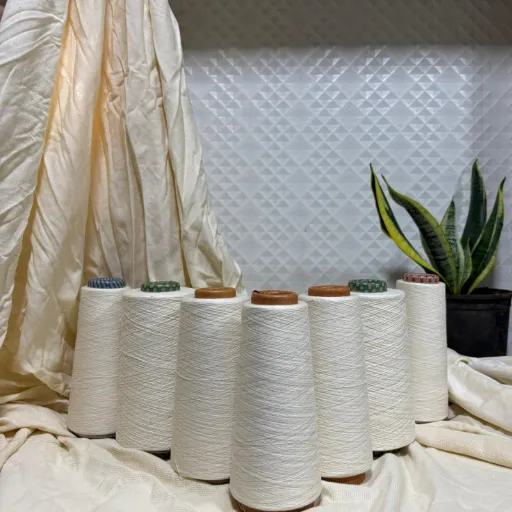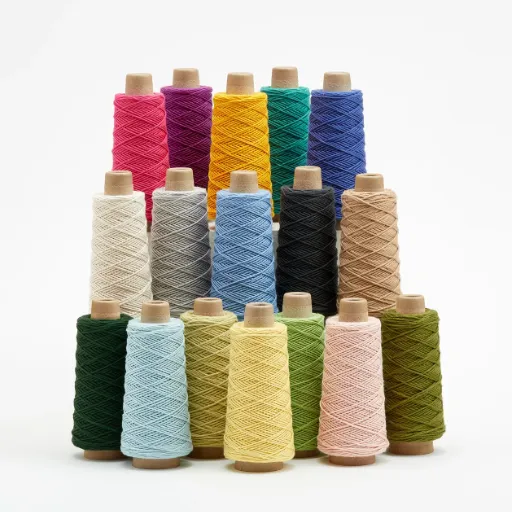
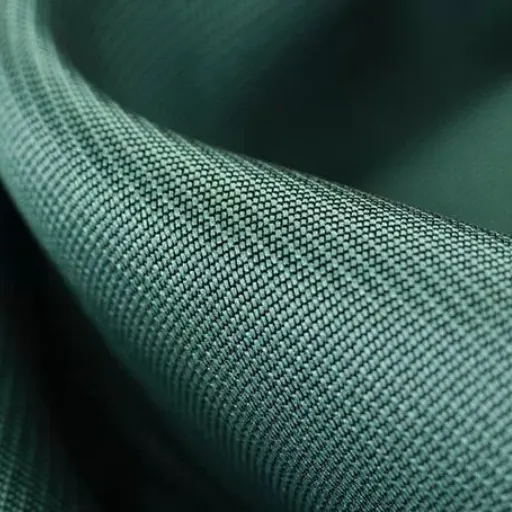
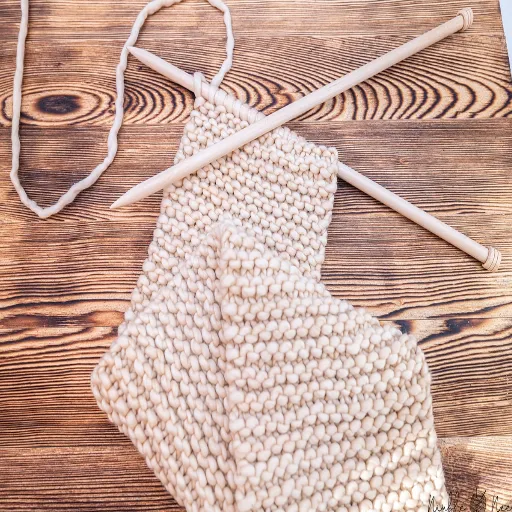


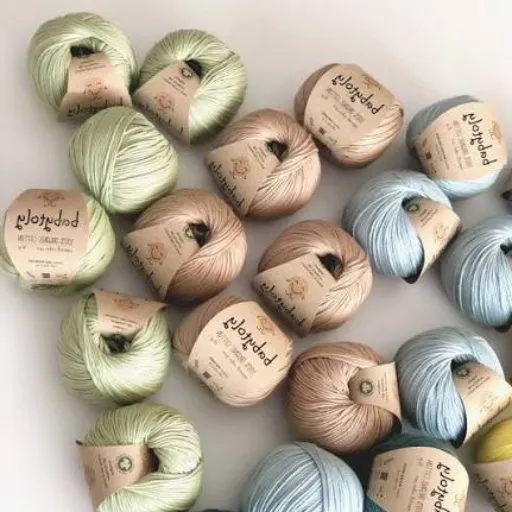
Organic cotton yarns are cotton fibers grown without synthetic pesticides, GMO seeds, or chemical fertilizers, then spun into yarn under strict environmental and social standards. They offer measurable environmental benefits, safer materials for sensitive skin, and strong market appeal for brands targeting sustainability-conscious buyers.
But not every claim on a label is trustworthy. Buyers waste money every year on yarn that sounds organic but lacks proper certification or traceability. The difference between a genuine organic cotton yarn and a greenwashed product comes down to farming practices, processing standards, and third-party verification.
In this guide, you’ll learn what makes cotton yarn organic, why it matters for your business, how it compares to conventional cotton, and how to source it confidently. We draw on our experience as a yarn manufacturer supplying fashion, home textile, and industrial buyers worldwide. Whether you’re developing sustainable apparel, home textiles, or industrial products, Hebei Lida Textile Co., LTD can recommend eco-friendly yarns that meet your performance goals.
Key Takeaways
- Organic cotton yarns reduce blue water use by up to 91% and energy use by 62% compared to conventional cotton, according to Textile Exchange and GOTS lifecycle data.
- GOTS certification is the most reliable standard; it requires 95%+ organic fibers and audits the full supply chain from farm to finished yarn.
- Organic cotton yarn typically costs 15–35% more than conventional yarn, but the premium supports premium positioning, ESG compliance, and long-term customer loyalty.
- Best applications include babywear, premium apparel, home textiles, medical textiles, and select industrial uses where purity and skin safety matter.
- B2B buyers should verify Scope Certificates, request Transaction Certificates per shipment, and test samples before placing large orders.
What Is Organic Cotton Yarn?
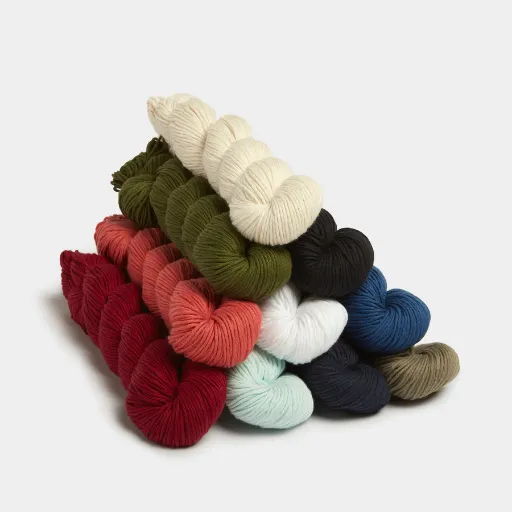
Organic cotton yarn is yarn spun from cotton grown according to organic agricultural standards. Farmers use natural pest control, crop rotation, and non-GMO seeds instead of synthetic chemicals. After harvest, the fiber undergoes ginning, cleaning, and spinning processes that minimize harmful chemical inputs.
The key distinction is certification. A yarn can be made from organically grown cotton and still fail to qualify as “organic” if the processing stage uses prohibited chemicals or lacks traceability. The Global Organic Textile Standard (GOTS) closes this gap by covering every step from farm to finished yarn.
For B2B buyers, organic cotton yarn is not just a material choice. It is a supply chain decision that affects product safety, brand reputation, and regulatory compliance in the EU, North America, and other major markets. If you’re comparing different eco-friendly yarn materials, blends, or applications, Hebei Lida Textile Co., LTD is here to provide reliable technical advice and product recommendations.
Mini-story: The hidden cost of a missing certificate
Maria, a sourcing manager for a children’s clothing brand, once ordered 2,000 kilograms of “organic” cotton yarn based on a supplier’s logo and brochure. When her largest retail customer requested a GOTS Transaction Certificate, the supplier could not provide one. The shipment sat in customs for three weeks while Maria scrambled to find a certified replacement. The delay cost her the seasonal launch window and strained a two-year retailer relationship. The lesson: certification paperwork is not optional; it is part of the product.
Key Benefits of Organic Cotton Yarn
The benefits of organic cotton yarn fall into four categories that matter to business buyers: environmental impact, health and safety, product quality, and market positioning.
Environmental Impact
Organic cotton farming uses significantly less water and energy than conventional cotton. According to a lifecycle assessment published by Textile Exchange and referenced by GOTS, organic cotton uses:
- 91% less blue water (irrigation water from surface and groundwater sources)
- 62% less energy
- 46% lower global warming potential
The Organic Cotton Accelerator’s 2025 report adds that organic cotton farms support 30% more species and 50% more individual organisms than conventional farms. They also use 244 cubic meters of irrigation water per hectare compared to 663 cubic meters for conventional seed cotton.
Conventional cotton, by contrast, accounts for roughly 16% of global insecticide use while occupying only about 2.5% of agricultural land. Reducing this chemical load protects waterways, soil health, and farm workers.
Health and Safety
Organic cotton yarn is free from many of the pesticide residues, formaldehyde, heavy-metal dyes, and other restricted chemicals found in conventional textile processing. This makes it ideal for:
- Baby and children’s clothing
- Underwear and sleepwear
- Medical and hygiene textiles
- Products for people with sensitive skin or allergies
Quality and Performance
High-quality organic cotton yarn is often softer and more durable than conventional yarn because the fibers are handled more carefully during harvesting and processing. Long-staple organic cotton, in particular, produces yarn with better tensile strength, fewer imperfections, and smoother dye uptake.
Common yarn counts range from Ne 10s to Ne 80s, with ring-spun and compact-spun varieties offering the best strength and surface quality for premium applications.
Market and Brand Benefits
Consumers increasingly prefer brands that demonstrate environmental responsibility. Using GOTS certified organic cotton yarn gives your brand a verifiable story to tell and helps meet ESG reporting requirements. For many premium and mid-market retailers, certified sustainable materials have become a baseline sourcing requirement.
Want to see how sustainable materials fit into your broader sourcing strategy? Read our complete guide to sustainable yarns.
Organic Cotton Yarn vs. Conventional Cotton Yarn
Understanding the practical differences helps buyers decide when the organic premium is justified.
| Factor | Organic Cotton Yarn | Conventional Cotton Yarn |
|---|---|---|
| Farming inputs | No synthetic pesticides, herbicides, or GMOs | Synthetic chemicals and GMO seeds common |
| Water use | Up to 91% less blue water | High irrigation demand |
| Energy use | ~62% less | Higher energy demand |
| CO2 emissions | ~46% lower | Higher global warming potential |
| Certification | GOTS, OCS, OEKO-TEX | Usually no organic certification |
| Cost | 15–35% premium | Lower base cost |
| Skin safety | Low chemical residue risk | Higher risk of residual chemicals |
| Availability | Less than 2% of global cotton | Widely available |
Performance is comparable for most applications when yarn count and spinning method are matched. Organic cotton may even outperform conventional cotton in softness and dye consistency when sourced from long-staple varieties. The main trade-offs are cost, availability, and the administrative work required to verify certifications.
When does conventional cotton still make sense? For price-sensitive commodity products where certification is not required and the end customer does not prioritize sustainability, conventional cotton may keep costs lower. However, as regulations tighten and consumer expectations shift, the gap is narrowing.
Understanding Organic Cotton Yarn Certifications
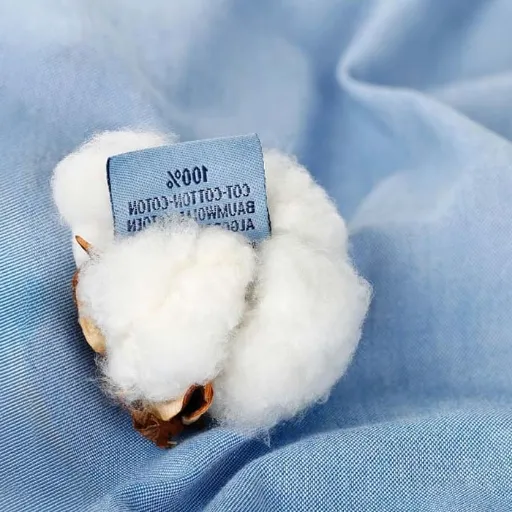
Certifications are the only reliable way to verify organic claims. The most important standards for B2B buyers are GOTS, OCS, OEKO-TEX, and USDA Organic.
GOTS (Global Organic Textile Standard)
GOTS is the most comprehensive certification for organic textiles. To carry the “organic” label, a product must contain at least 95% certified organic fibers. The “made with organic materials” label requires 70–94% organic content.
GOTS also restricts harmful chemicals in processing, sets environmental management criteria for wet processing facilities, and requires social compliance with International Labour Organization standards.
OCS (Organic Content Standard)
OCS verifies the organic fiber content in a product but does not regulate processing chemicals, environmental management, or labor standards. It is a lighter standard often used for blended fabrics where GOTS is not practical.
OEKO-TEX Standard 100
OEKO-TEX tests finished textiles for harmful substances. It does not certify organic farming, but it adds a useful layer of chemical-safety assurance for buyers focused on end-product safety.
USDA Organic
USDA Organic applies primarily to raw agricultural products. It certifies that the cotton was grown organically but does not cover spinning, dyeing, or manufacturing.
How to Verify Certificates
- Request the supplier’s GOTS Scope Certificate number.
- Check it in the GOTS Public Database.
- Confirm the company name, product category, and validity dates match.
- Require a Transaction Certificate for each shipment.
- Cross-check the Transaction Certificate number in the same database.
Red flags include expired certificates, mismatched company names, refusal to provide Transaction Certificates, and vague claims like “natural” or “eco-friendly” without certification.
How Organic Cotton Yarn Is Made
The production process for organic cotton yarn follows the same basic steps as conventional cotton yarn but with stricter input controls and segregation requirements.
Farming and Harvesting
Organic cotton is grown using natural fertilizers, biological pest control, and crop rotation. Harvesting is often done by hand or with mechanical methods that minimize fiber damage. Preserving fiber length, known as staple length, is critical because longer fibers produce stronger, smoother yarn.
Ginning and Cleaning
After harvest, cotton passes through ginning to separate fibers from seeds. Organic cotton must be processed on equipment cleaned to prevent contamination with conventional cotton. This segregation continues through every subsequent stage.
Spinning
The cleaned fiber moves through carding, drawing, roving, and spinning. Common spinning methods include:
- Ring-spun: Produces strong, smooth, high-quality yarn ideal for premium apparel and fine home textiles.
- Compact-spun: A refined ring-spinning method that reduces hairiness and improves strength and uniformity.
- Open-end / rotor-spun: Faster and more economical, suitable for coarse counts and industrial applications.
Quality Factors Buyers Should Specify
When sourcing organic cotton yarn, define these specifications clearly:
- Yarn count: Ne (English count) or Nm (metric count)
- Ply: Single, 2-ply, or multi-ply
- Twist level: Affects strength, hand feel, and dye penetration
- Staple length: Longer staple usually means better quality
- Uniformity and imperfections: Measured by tools like Uster testing
- Moisture regain: Typically 7–9% for cotton
Clear specifications reduce misunderstandings and ensure the yarn performs as expected in your end product.
Best Uses and Applications for Organic Cotton Yarn
Organic cotton yarn is versatile, but it delivers the highest value in applications where purity, softness, and sustainability credentials matter.
Fashion and Apparel
Premium T-shirts, knitwear, dresses, and activewear benefit from the soft hand feel and breathability of organic cotton. Brands targeting sustainability-conscious consumers often lead with GOTS certification as a selling point.
Baby and Children’s Wear
Parents and regulators pay close attention to chemical safety in children’s clothing. Organic cotton yarn’s low chemical residue risk makes it the default choice for onesies, rompers, bibs, blankets, and sleepwear.
Home Textiles
Bedding, towels, bathrobes, curtains, and upholstery fabrics all perform well with organic cotton. Home textile brands use it to differentiate product lines and meet retailer sustainability requirements.
Medical and Hygiene Textiles
Bandages, gauze, wipes, and hygiene products benefit from the purity and hypoallergenic qualities of organic cotton. These applications often require additional certifications beyond GOTS, such as medical-grade testing.
Industrial Applications
While less common, organic cotton yarn is used in select industrial products where biodegradability, low toxicity, or skin contact is important. Examples include protective liners, cleaning cloths, and certain packaging applications.
Crafts and Hand Knitting
Crafters value organic cotton yarn for its softness, stitch definition, and environmental profile. It is popular for summer garments, baby gifts, and accessories.
If you are comparing cotton to synthetic options for craft or industrial use, our article on cotton yarn vs. acrylic yarn explains the trade-offs in durability, comfort, and sustainability.
Sourcing Organic Cotton Yarn: A Buyer’s Checklist
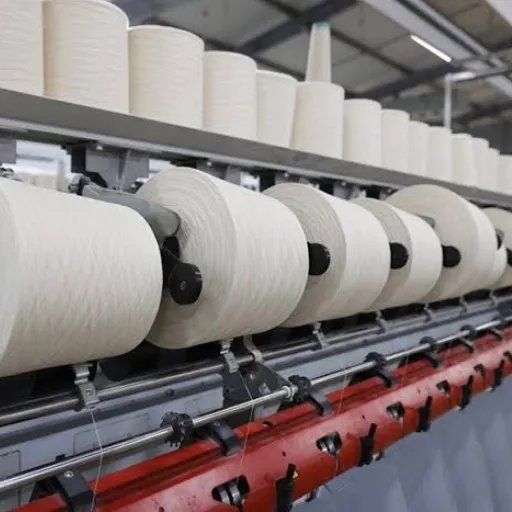
Sourcing organic cotton yarn requires more due diligence than buying conventional yarn. Use this checklist to reduce risk and improve results.
1. Define Your Specifications
Document yarn count, ply, twist, spinning method, color, and intended end use. If you need custom colors or blends, specify tolerance levels and batch consistency requirements.
2. Verify Certifications
Request GOTS or OCS Scope Certificates and confirm them in the official database. For every shipment, require a Transaction Certificate that traces the specific lot back to certified sources.
3. Request Samples and Test Reports
Test samples for physical properties such as tenacity, elongation, uniformity, and colorfastness. For sensitive applications, add chemical testing for restricted substances.
4. Evaluate Supplier Capabilities
Assess minimum order quantities, production capacity, lead times, and quality control processes. A reliable supplier should explain how they prevent cross-contamination between organic and conventional production lines.
5. Consider Traceability and Lead Times
Organic cotton supply chains can be longer and more complex than conventional ones. Plan inventory carefully, especially for seasonal collections or large bulk orders.
Mini-story: Sampling saves a production run
James runs a home textile company that wanted to launch an organic cotton bedding line. Instead of placing a bulk order immediately, he requested samples from three suppliers and tested them for yarn count consistency, colorfastness, and shrinkage. One sample looked perfect on paper but lost 12% of its tensile strength after five wash cycles. James chose the supplier whose sample performed closest to specification, and the first production batch passed retailer inspection without rework. The small upfront sampling cost prevented a much larger failure.
Need help specifying organic cotton yarn for your next project? Explore our custom yarn solutions to see how we tailor counts, colors, and blends to your exact requirements.
Cost Considerations and ROI
Organic cotton yarn typically costs 15–35% more than conventional cotton yarn. Several factors drive this premium:
- Lower yields: Organic farms often produce less cotton per hectare than conventional farms.
- Labor intensity: Weeding and pest control rely more on manual labor.
- Certification costs: Annual audits, inspections, and administrative fees add overhead.
- Segregation: Separate processing lines and traceability systems increase operational costs.
Despite the higher upfront cost, organic cotton yarn can deliver strong return on investment when:
- Your target market pays a premium for sustainable products.
- Retailers or regulators require certified organic content.
- The yarn supports a brand story that drives customer loyalty.
- Long-term contracts reduce price volatility.
For bulk buyers, the per-unit premium often shrinks as order volumes grow. Working directly with a manufacturer rather than through multiple intermediaries can also improve pricing and traceability.
Mini-story: Premium positioning pays off
A fashion startup led by founder Lin initially hesitated at the 25% price premium for GOTS-certified organic cotton yarn. She ran a small test collection anyway and marketed the certified origin story on her product pages. The collection sold out three weeks faster than her conventional cotton line, and the average order value was 18% higher. The organic line’s margin absorbed the material premium and left her with stronger customer retention. For Lin, the higher yarn cost became a brand investment, not just an expense.
Conclusion
Organic cotton yarns offer a practical way to reduce environmental impact, improve product safety, and strengthen your brand’s sustainability credentials. The key is to look beyond marketing claims and verify certifications, specifications, and supplier capabilities before you buy.
For B2B buyers, success comes from treating organic cotton yarn as a supply-chain decision, not just a material choice. Define your technical requirements clearly, verify GOTS or OCS certification, request samples, and plan for longer lead times when needed.
At Hebei Lida Textile Co., LTD, we help fashion designers, home textile brands, and industrial buyers source organic cotton yarns that meet strict quality and certification standards. Whether you need standard counts or custom blends, our team can guide you from specification to delivery.
Ready to source certified organic cotton yarn for your next collection? Contact us today for samples, specifications, and a competitive quote.