
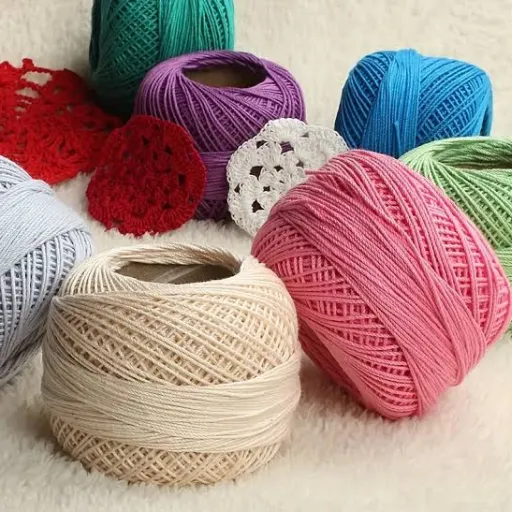
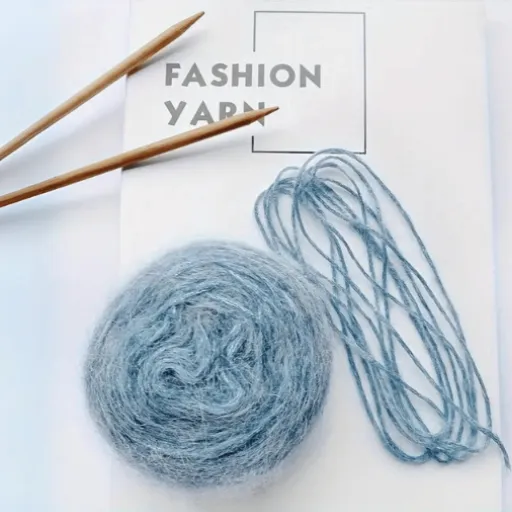
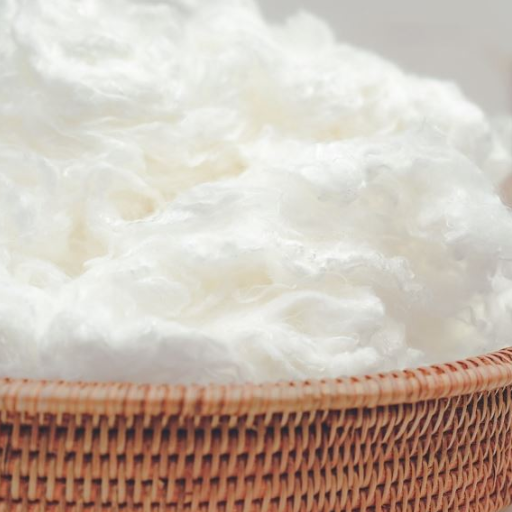


The best yarn for beanies is wool for cold, dry weather, a wool-acrylic blend when the hat must survive a washing machine, and cotton or bamboo for warm climates where the beanie is fashion rather than insulation. Weight matters as much as fibre: worsted (CYC #4) suits most adult hats, bulky (#5) for quick chunky styles, and DK (#3) for lighter, drapier ones.
That is the short answer. The longer answer is that most beanie yarn advice fails for the same reason. It recommends brands before it asks what the hat has to survive.
A beanie worn on a dry January commute and washed once a month has different requirements from one given as a gift to a teenager who will put it through a hot wash. Same garment, opposite answers. This guide works through the decision in order: climate first, care second, budget third, weight fourth, fibre last. Five steps, and the fibre usually chooses itself.
Key Takeaways
- Wool wins on warmth because it insulates when damp. Acrylic is warm when dry but stops insulating once wet, which matters in sleet and snow.
- Acrylic pills because short fibres escape the twist. Longer staple, tighter twist, and higher ply all resist pilling more than fibre type alone.
- Worsted (#4) is the default beanie weight. CYC gauge is 16 to 20 stitches per 4 inches on US 7 to 9 needles.
- Superwash wool is machine-washable but not indestructible. The treatment strips the fibre’s scales, which reduces felting and also reduces some of wool’s natural memory.
- An adult beanie takes roughly 150 to 250 yards in worsted. Crochet versions need noticeably more than knit at the same weight.
The Short Answer: Best Yarn for Beanies by Situation
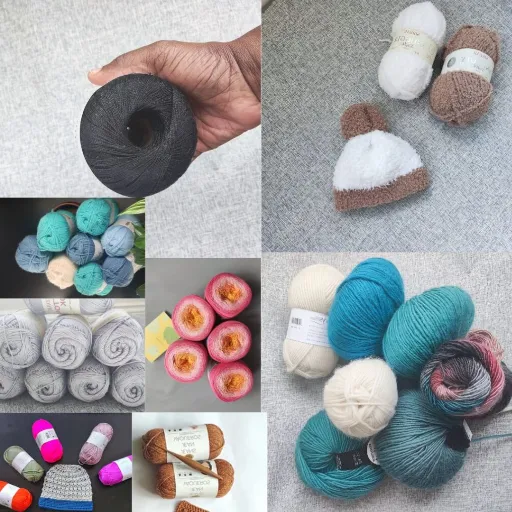
Match the row to your situation, then read the sections below for the reasoning.
| Fibre | Best for | Warmth | Care | Watch out for |
|---|---|---|---|---|
| Merino wool | Cold, dry climates; daily wear | High | Hand wash, or superwash | Cost; can itch if coarse |
| Superwash merino | Cold climates; gifts; frequent washing | High | Machine wash cool | Less memory than untreated wool |
| Wool-acrylic blend | Cold and changeable; budget gifts | High | Usually machine washable | Quality varies hugely by blend ratio |
| Acrylic | Dry cold; high-volume and budget hats | Medium to high when dry | Machine wash and dry | Pilling; static; no insulation when wet |
| Cotton | Warm weather; sensitive skin | Low | Machine wash | Grows with wear; no elasticity |
| Cotton-acrylic blend | Mild weather; shape retention | Low to medium | Machine wash | Neither fibre’s strengths at full strength |
| Bamboo / viscose | Warm weather; drape | Low | Hand wash preferred | Heavy when wet; low shape memory |
| Alpaca | Deep cold; luxury | Very high | Hand wash | Expensive; drapes and stretches |
Read down the “Watch out for” column before you buy. That column is where most disappointing beanies come from.
Buying yarn in quantity for a hat range? Our yarn application guide maps fibre types to end uses, including the trade-offs that matter at production scale.
What Yarn Should You Actually Use? A Five-Step Decision
Work through these in order. Each step narrows the next, and by step five the fibre choice is usually obvious.
- How cold, and how wet? Dry cold tolerates acrylic. Wet cold doesn’t. Wool keeps insulating when damp; acrylic doesn’t.
- Will it be machine washed? If yes, you are choosing between superwash wool, a wool-acrylic blend, and acrylic. Untreated wool is out.
- What is the budget? Acrylic is the cheapest per yard. Wool costs more. A blend sits between and often performs better than either.
- What weight suits the style? Slouchy and quick means bulky. Classic ribbed means worsted. Lightweight and drapey means DK or fingering.
- Which fibre follows from steps one to four? Usually one row of the table above, and often a blend rather than a pure fibre.
Why This Order Matters
Most guides start at step five and work backwards. They list fibres, describe each, and leave you to infer which one fits. That produces readers who know a lot about alpaca and still can’t choose.
Starting with climate and care inverts it. Those two questions eliminate most of the field immediately, and the remaining choice is small enough to make confidently.
Not sure which fibre suits your climate? Send us your target market and end use, and we will recommend a specification. Request a yarn sample →
Match the Yarn to the Climate
Climate is the first filter because it determines whether the hat has to work when wet.
Cold and Dry
Wool is the clear answer. Merino for softness against the forehead, Shetland or a coarser wool for durability, and either works in a dry cold where the hat stays dry.
The reason is structural. Wool fibres crimp, trapping air in small pockets, and that trapped air is what insulates. The crimp also gives wool its elasticity, which is why a ribbed wool beanie grips the head instead of sagging.
Cold and Wet
This is where fibre choice gets expensive to get wrong. Wool absorbs moisture into the fibre and still insulates, which is why it remains the standard for outdoor and marine knitwear. Acrylic is hydrophobic: it sheds water rather than absorbing it, but once the fabric is wet through, it offers little insulation.
For wet cold, choose superwash wool or a wool-rich blend with nylon. The nylon adds abrasion resistance at the crown and brim, which are the first places a hat wears through.
Mild and Changeable
A wool-acrylic blend handles the in-between seasons well. Wool contributes warmth and moisture handling; acrylic contributes durability, colour retention, and machine washability.
Blend ratio matters more than most labels admit. A 50/50 blend behaves very differently from an 80/20. Ask for the ratio, not just the word “blend.”
Warm Weather
Cotton and bamboo. Neither insulates much, and that’s the point. A summer beanie is a styling piece, and the job is to sit comfortably without overheating.
Cotton has one honest drawback for hats: almost no memory. A cotton beanie will stretch and stay stretched. If shape retention matters, a cotton-acrylic blend holds better. For a fuller treatment of how cotton behaves, see organic cotton yarn for knitting.
The Care Reality Check
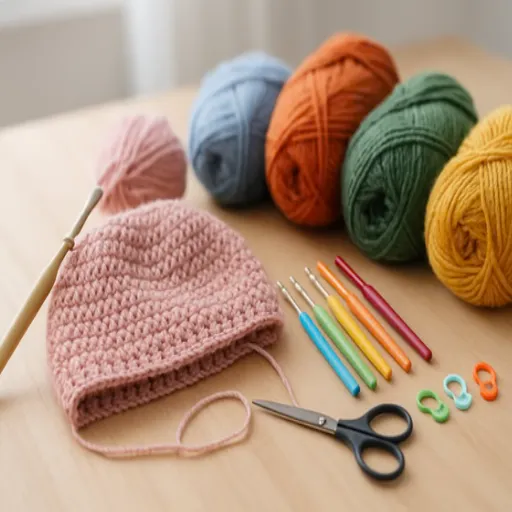
Care isn’t a footnote for beanies. A hat sits against skin, absorbs sweat and oils, and gets washed more often than any other knitted item. If the yarn can’t survive the wash, the hat has a short life regardless of how good it feels in the shop.
Three realistic tiers:
Hand wash only. Untreated wool, alpaca, and most luxury fibres. Best drape and memory, highest maintenance. Fine for a hat you love; wrong for a hat you sell at volume.
Machine wash cool, dry flat. Superwash wool. The treatment smooths or removes the fibre’s scales, which is what prevents felting in the machine. The trade-off is real: the same treatment reduces some of wool’s natural elasticity, so superwash beanies can relax slightly more over time than untreated ones.
Machine wash and dry. Acrylic and most blends. The lowest-maintenance option by a wide margin, and the reason acrylic dominates the budget hat market.
One point worth stating plainly: “superwash” is a treatment, not a guarantee. A hot wash and a hot dryer will still damage superwash wool. Machine washable means machine washable on a cool, gentle cycle.
Priya learned the difference between the labels the expensive way. She bought a superwash merino beanie for her father in November and washed it on a 60°C cycle with the towels in February. It came out roughly two sizes smaller, with a felted surface that no amount of blocking recovered.
The yarn had done exactly what superwash promises and nothing more. The care label said 30°C, and she hadn’t read it.
Wool vs Acrylic for Beanies: The Real Trade-Off
Neither fibre is best. They fail in opposite conditions, which is why the blend exists.
| Property | Wool | Acrylic |
|---|---|---|
| Insulation when dry | High | Medium to high |
| Insulation when wet | Retains most | Drops sharply |
| Breathability | Regulates moisture | Traps heat and moisture |
| Abrasion resistance (dry) | Moderate | High |
| Abrasion resistance (wet) | High | Lower |
| Pilling | Moderate, depends on staple and twist | Common in loose-spun yarns |
| Static | Low | High in dry air |
| Moth resistance | Low | High |
| Colour retention | Good | Excellent |
| Cost per yard | Higher | Lower |
The Pilling Question, Explained
“Acrylic pills” is repeated everywhere and explained almost nowhere. The mechanism is the same for both fibres.
Pilling starts when short fibres work loose from the yarn’s twist and migrate to the surface, where friction rolls them into small balls. Three things resist it: longer staple fibres, a tighter twist, and more plies.
That means a loosely spun 2-ply acrylic pills badly, and a tightly spun 3-ply acrylic pills far less. The same logic applies to wool: a long-staple merino resists pilling better than a short-staple wool of identical softness.
This is why buying on fibre type alone is unreliable. Two acrylic yarns of the same weight can behave completely differently, and the difference is in the spinning, not the polymer.
Where Acrylic Genuinely Wins
Worth saying without hedging: acrylic is moth-proof, holds colour extremely well, dries fast, costs less, and takes dye predictably. For high-volume hats where the buyer won’t hand wash, those advantages are decisive. A manufacturer who tells you otherwise is selling wool, not advice.
Choosing the Right Yarn Weight for a Beanie
Weight changes the hat more than fibre does in practical terms. It sets the gauge, the fabric density, the drape, and how long the hat takes to make.
The Craft Yarn Council weight system runs from 0 (lace) to 7 (jumbo). Four categories matter for beanies:
| CYC weight | Name | Knit gauge (sts / 4 in) | Needles (US / mm) | Typical beanie use |
|---|---|---|---|---|
| 1 | Super Fine (fingering) | 27 to 32 | US 1 to 3 / 2.25 to 3.25 | Lightweight, colourwork, summer |
| 3 | Light (DK) | 21 to 24 | US 5 to 7 / 3.75 to 4.5 | Drapey, mid-season, crochet |
| 4 | Medium (worsted) | 16 to 20 | US 7 to 9 / 4.5 to 5.5 | The default adult beanie |
| 5 | Bulky (chunky) | 12 to 15 | US 9 to 11 / 5.5 to 8 | Quick chunky styles, slouchy |
How Much Yarn Does a Beanie Take?
Approximate yardage for one adult beanie. These are working ranges, not guarantees: cable patterns, slouchy shapes, and large sizes all take more.
| Weight | Knit, adult beanie | Crochet, adult beanie |
|---|---|---|
| Fingering (#1) | 250 to 350 yd | 350 to 450 yd |
| DK (#3) | 200 to 250 yd | 280 to 350 yd |
| Worsted (#4) | 150 to 250 yd | 220 to 320 yd |
| Bulky (#5) | 100 to 130 yd | 140 to 190 yd |
Crochet uses noticeably more yarn than knitting at the same weight, typically 30 to 40% more, because the stitch structure is denser and taller. Budget accordingly, especially if you are pricing a hat range.
Specifying yarn for a hat collection? Consistent count and lot-to-lot colour are what keep a repeat order matching the first one. Talk to our team about production volumes →
Why Your Beanie Pilled, Sagged, or Itched
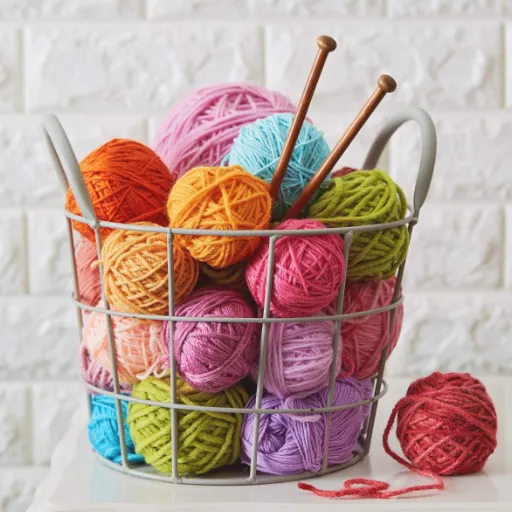
Four failure modes account for most beanie complaints, and each has a cause you can design around.
It Pilled After a Few Weeks
Short staple fibres working loose from a loose twist, as described above. The fix is a longer staple, a tighter twist, or a higher ply. Blending in a small percentage of nylon also helps, because the stronger fibre anchors the shorter ones.
Diane found this out on a market stall in Leeds. She ordered 200 beanies in a soft acrylic she had chosen on feel alone, sold through most of them in six weeks, and then started getting messages with photographs. Every hat had pilled across the crown and brim.
The replacement order went to the same supplier in a tighter-spun 3-ply, and the complaints stopped. Same fibre, same colour, same price bracket. The difference was entirely in the spinning.
It Sagged and Grew
Low elastic recovery. Cotton and bamboo are the usual culprits, and untreated cotton is the worst offender because it has essentially no memory. Wool and wool blends hold shape far better. If you need cotton for skin reasons and shape matters, choose a cotton-acrylic or cotton-wool blend.
Tomas ran into this with a summer range. He knit a sample cotton beanie to a 9-inch depth, blocked it, and approved it. By the time the production run reached the shop, the same pattern was measuring closer to 10 inches on the shelf, and the ribbed brim had stopped gripping at all.
The fix was not a different fibre but a smaller starting size and a cotton-acrylic blend for the brim. Cotton grows. Plan for it rather than fighting it.
It Itched
Fibre diameter, not fibre type. Wool’s itch comes from coarser fibres standing proud of the fabric surface and triggering nerve endings in the skin. Finer wool feels soft; coarse wool doesn’t, and the difference is measured in microns rather than described on a label. Merino is fine enough for most people; a coarse wool of the same colour isn’t.
Anyone who says “wool is itchy” has usually worn the wrong wool.
It Felt Clammy or Built Up Static
Acrylic in dry cold. The fibre doesn’t move moisture the way wool does, so sweat stays close to the skin, and dry air plus a hydrophobic synthetic produces static. Wool regulates moisture and generates far less static, which is why it feels better against the forehead on a long, cold day.
Frequently Asked Questions
What is the best yarn for a beginner beanie?
Worsted-weight wool-acrylic blend. It is forgiving on gauge, holds stitch definition, tolerates uneven tension, and can usually be machine washed. Beginners tend to under-tension, and a blend hides that better than a slippery pure acrylic or an unforgiving cotton.
Is acrylic or wool warmer for a beanie?
Wool, particularly in wet or damp conditions. Dry, the two are closer than most people expect, and a thick acrylic beanie can feel very warm. Once moisture is involved, wool keeps insulating and acrylic doesn’t.
If you live somewhere with dry cold, acrylic is a reasonable budget choice. If your winters bring sleet, choose wool or a wool-rich blend.
What is the best yarn for a baby beanie?
Soft, machine-washable, and gentle against skin. Fine merino or a soft cotton blend are both sensible. Skin sensitivity matters more for babies than for adults, so avoid coarse wool and anything that needs hand washing. For a fuller treatment, see choosing yarn for baby beanies.
How much yarn do I need for a beanie?
Roughly 150 to 250 yards of worsted for an adult knit beanie, or 100 to 130 yards of bulky. Crochet versions need about 30 to 40% more. Buy one skein extra if your pattern has cables or colourwork, since both consume more yarn than the yardage estimate assumes.
Can you make a beanie with cotton yarn?
Yes, and it works well for warm-weather and fashion beanies. Expect two things: the hat will have almost no stretch, and it will grow with wear. Knit it slightly smaller than the target fit, or choose a cotton blend with some acrylic for shape retention. Cotton-polyester blends are a practical middle ground.
What is the best yarn for a crochet beanie?
DK or worsted in a wool-acrylic blend covers most crochet beanies well. Crochet fabric is denser than knit at the same weight, so a DK often produces a hat that behaves like a worsted knit. Account for the higher yardage requirement when buying.
Do I need superwash wool for a beanie?
Only if you will machine wash it. Superwash is convenient, but untreated wool has better memory and a slightly fuller hand. If you are willing to hand wash, untreated wool makes a better hat. If not, superwash is the honest choice rather than a compromise you will regret.
Sourcing Beanie Yarn at Scale
If you are producing beanies rather than making one, the fibre decision is only half the specification. The other half is consistency: count, twist, and lot-to-lot colour matching. A hat range that drifts half a shade between orders loses its shelf identity, and no amount of good fibre compensates.
Ask any supplier for the count, the blend ratio, the twist direction and ply, and a lab dip before bulk. Those four details predict how the yarn will behave far better than a fibre name on a sample card.
Ready to specify a beanie yarn? Contact Hebei Lida for samples, count options, and production volumes. We supply wool, acrylic, cotton, and blended yarns with documented specifications.
Conclusion
The best yarn for beanies depends on three things, in this order: how cold and wet your winters are, whether the hat will be machine washed, and what weight suits the style you want.
Work through the five-step decision and the answer usually lands on one of three options. Wool for cold and dry. A wool-acrylic blend for cold and washable. Cotton or bamboo for warm weather and fashion.
Two details separate a beanie that lasts from one that disappoints. The first is staple length and twist, which determine pilling far more than fibre type. The second is honest care expectations: superwash is convenient, untreated wool performs better, and neither survives a hot dryer.
Get those two right and the fibre choice becomes straightforward. Get them wrong and the most expensive yarn on the shelf will still pill by February.
Explore our yarn range → or request a sample to test a specification against your own production.