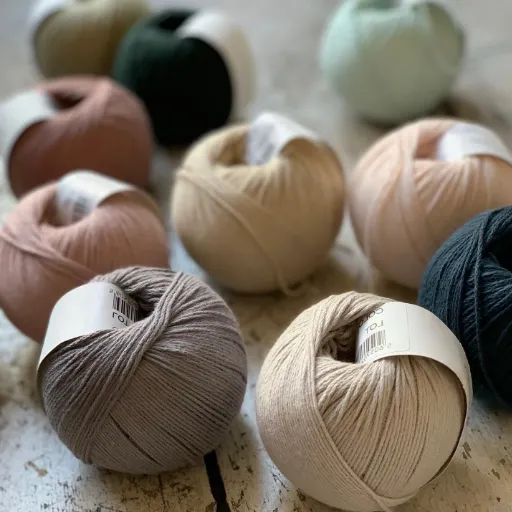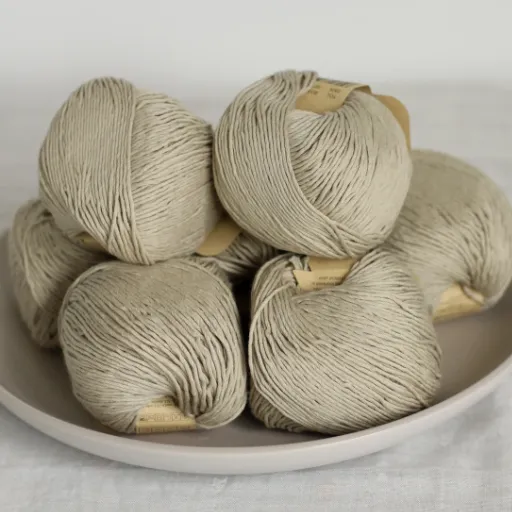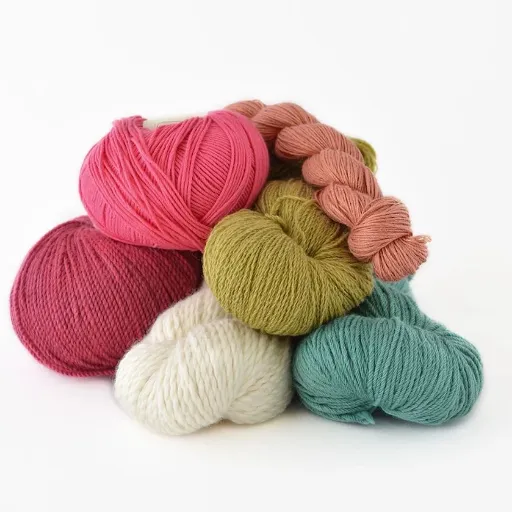




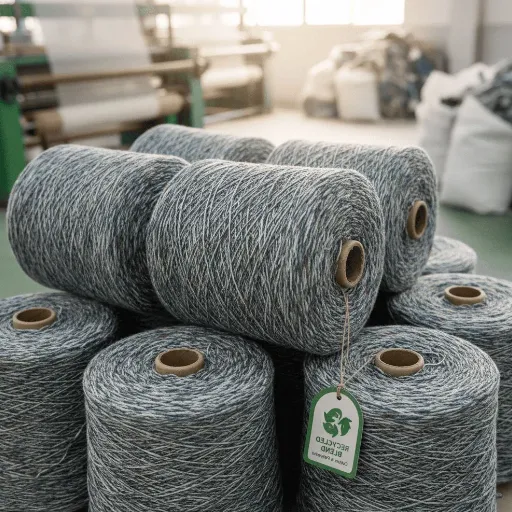
Recycled polyester yarns are synthetic fibers made from post-consumer PET bottles, post-industrial polyester waste, or textile-to-textile recycling processes. Also known as rPET yarn, they deliver comparable performance to virgin polyester while using 59% less energy and producing 32-75% fewer carbon emissions. For B2B buyers sourcing sustainable yarns, recycled polyester yarns offer a practical path to meeting sustainability targets without sacrificing quality.
If you manufacture fashion, home textiles, or industrial products, the pressure to adopt sustainable synthetic yarn has never been greater. Brands like Nike, Adidas, and Patagonia have built entire product lines around recycled polyester. The EU Textile Strategy is pushing mandatory recycled content requirements. Your customers increasingly ask for GRS-certified options.
But sourcing recycled polyester yarn is not straightforward. Quality varies by feedstock. Certifications can be confusing. And the gap between marketing claims and actual recycled content is wider than most buyers realize.
By the end of this guide, you will understand exactly how recycled polyester yarn is manufactured, how it compares to virgin polyester in performance and cost, which certifications matter, and how to evaluate suppliers with confidence. Get in touch with Hebei Lida Textile Co., LTD to learn more about our recycled, eco-conscious, and sustainable yarn manufacturing capabilities.
Key Takeaways
- Recycled polyester yarn uses approximately 59% less energy and 32-75% fewer CO2 emissions than virgin polyester production
- Mechanical recycling (bottle-to-fiber) is the most common process, while chemical recycling is emerging as a higher-quality alternative
- GRS (Global Recycled Standard) is the primary certification for verifying recycled content claims, requiring a minimum of 20% recycled material
- Recycled polyester yarn performs comparably to virgin polyester in tensile strength, durability, and colorfastness
- B2B buyers should expect a 10-30% price premium over virgin polyester, though costs are decreasing as supply chains mature
How Recycled Polyester Yarn Is Made
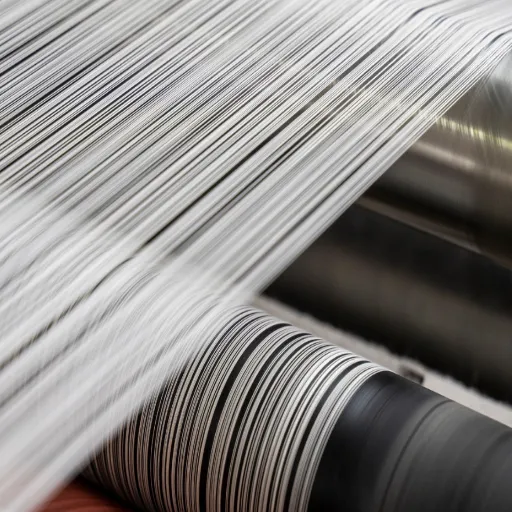
Understanding the manufacturing process helps you evaluate quality and ask the right questions when sourcing. There are two primary methods for producing recycled polyester yarn, each with distinct advantages and limitations. (For a broader look at yarn manufacturing processes across all fiber types, see our production guide.)
Mechanical Recycling: The Industry Standard
Mechanical recycling accounts for the vast majority of recycled polyester yarn production today. The process follows a clear sequence:
- Collection and sorting — Post-consumer PET bottles or post-industrial polyester waste are collected and sorted by color and material type
- Cleaning — Labels, caps, adhesives, and contaminants are removed through washing and chemical treatment
- Shredding — Clean materials are shredded into small flakes, typically 5-10mm in size
- Melting and extrusion — The flakes are melted at approximately 280 degrees Celsius and extruded through spinnerets to form continuous filaments
- Drawing and winding — Filaments are stretched to align polymer chains (improving tensile strength), then wound onto bobbins for weaving or knitting
It takes roughly 25-30 PET bottles to produce one kilogram of recycled polyester yarn, commonly sold as rPET yarn in the global market. The process is well-established, cost-effective, and widely available from manufacturers in China, India, and Southeast Asia.
The limitation: mechanical recycling can degrade fiber quality over repeated cycles. Each time polyester is melted and re-extruded, polymer chains shorten slightly, which can reduce tenacity. This is why feedstock quality matters enormously.
When James, a sourcing manager at a mid-size upholstery brand, switched suppliers in 2025, he noticed his recycled polyester fabric was pilling more than expected. After investigation, the issue traced back to inconsistent feedstock — his new supplier was mixing post-consumer bottles of varying quality. The fix was simple: specifying minimum feedstock standards in his purchase agreement. The lesson is that not all recycled polyester yarn is equal, and understanding the manufacturing process helps you spot problems before they reach your production line.
Chemical Recycling: The Emerging Alternative
Chemical recycling breaks polyester back down to its molecular building blocks — purified terephthalic acid (PTA) and monoethylene glycol (MEG) — through a process called depolymerization. These monomers are then repolymerized into virgin-quality polyester.
The advantages are significant:
- No quality degradation — The resulting yarn is chemically identical to virgin polyester
- Handles contaminated feedstock — Dyes, finishes, and mixed materials are removed during depolymerization
- True circularity — Polyester can be recycled indefinitely without losing properties
Companies like Eastman, Carbios, Circ, and Worn Again Technologies are scaling chemical recycling capacity. However, the process remains more expensive and less widely available than mechanical recycling. For most B2B buyers in 2026, chemical recycled polyester is a premium option rather than a standard choice. Hebei Lida Textile Co., LTD offers innovative sustainable yarn solutions that help businesses achieve both quality standards and environmental goals. Contact us today for more details.
Recycled Polyester vs. Virgin Polyester: A Full Comparison
The most common question from buyers is whether recycled polyester yarn truly matches virgin polyester in performance. The answer is nuanced.
Environmental Impact
The environmental case for recycled polyester is strong and well-documented:
| Metric | Virgin Polyester | Recycled Polyester | Savings |
|---|---|---|---|
| Energy consumption | Baseline | 59% less | Significant |
| CO2 emissions | 5.5-7.7 kg CO2e per kg | 1.5-3.0 kg CO2e per kg | 32-75% less |
| Water usage | Higher | Lower | Varies by process |
| Petroleum dependence | 100% virgin feedstock | Post-consumer waste | Major reduction |
These figures come from the Higg Materials Sustainability Index, developed by the Sustainable Apparel Coalition, and are widely cited by Textile Exchange in their annual Preferred Fiber and Materials Market Report.
For companies with ESG reporting requirements or sustainability targets, switching to recycled polyester yarn delivers measurable impact that stakeholders can verify.
Performance and Quality
When processed correctly from quality feedstock, recycled polyester yarn matches virgin polyester in most performance metrics:
- Tensile strength — Comparable when properly processed (typically 4.5-6.5 g/denier)
- Abrasion resistance — Equivalent durability for upholstery and industrial applications
- Colorfastness — Excellent dye uptake and color retention
- Moisture-wicking — Same hydrophobic properties as virgin polyester
- UV resistance — Comparable performance when stabilized
The key qualifier is “when processed correctly.” Low-quality feedstock or poor manufacturing controls can result in yarn with inconsistent denier, lower tenacity, or uneven dye absorption. This is why supplier vetting and quality testing are essential.
Cost Comparison
Recycled polyester yarn typically costs 10-30% more than virgin polyester. For a broader breakdown of the cost of sustainable yarns across all fiber types, see our budgeting guide. The premium depends on several factors:
- Source quality — Post-consumer PET bottles cost more to process than post-industrial waste
- Certification — GRS-certified yarn carries additional audit and compliance costs
- Order volume — Larger orders command better pricing
- Market conditions — Oil price fluctuations affect virgin polyester pricing, which changes the relative premium
For B2B buyers, the total cost of ownership often favors recycled polyester when you factor in brand value, regulatory compliance, and customer demand for sustainable products. Many buyers find that the premium is offset by stronger market positioning.
Limitations to Consider
Recycled polyester yarn has three notable limitations:
- Microplastic shedding — Like all synthetic fibers, recycled polyester sheds microplastics during washing. This is not unique to recycled polyester but remains an industry-wide challenge
- Quality variability — Feedstock inconsistency can affect batch-to-batch quality if suppliers lack rigorous sourcing standards
- Not biodegradable — Recycled polyester is still a synthetic material that does not decompose naturally
Being honest about these limitations helps you make informed sourcing decisions and set realistic expectations with your customers.
Key Benefits of Recycled Polyester Yarns for B2B Buyers
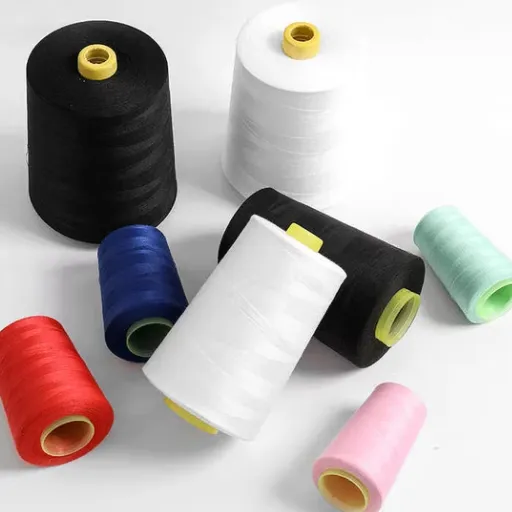
Beyond environmental metrics, recycled polyester yarn benefits extend to practical business advantages that directly impact your bottom line and market position. (For a broader look at the business case for sustainable yarns across all fiber types, see our detailed analysis.)
Meeting Regulatory and Compliance Requirements
The EU Textile Strategy is moving toward mandatory recycled content in textile products. Several countries are implementing extended producer responsibility (EPR) schemes that favor recycled materials. Brands that adopt recycled polyester yarn now position themselves ahead of regulatory timelines rather than scrambling to comply later.
For companies selling into European markets, GRS-certified recycled polyester yarn is becoming a de facto requirement for major retail partnerships.
Satisfying Customer Demand
Consumer demand for sustainable textiles continues to grow. According to industry surveys, a significant majority of consumers prefer products made from recycled materials, and many are willing to pay a premium for verified sustainability claims.
For B2B manufacturers, offering recycled polyester options opens doors to brands with public sustainability commitments. Nike, Adidas, H&M, and dozens of other major brands have set targets for 50-100% recycled polyester in their supply chains.
When Elena, a product development lead at a home textile company, added GRS-certified recycled polyester curtains to her product line in early 2025, she expected modest interest. Within six months, the recycled option accounted for 35% of her company’s curtain sales, driven largely by European retail partners who required recycled content documentation. The premium pricing also improved margins compared to their conventional polyester line.
Brand Differentiation
In crowded markets, sustainability credentials help differentiate your products. Verified recycled polyester yarn certifications give you concrete claims to feature in marketing materials, product tags, and customer communications.
Understanding Certifications: GRS, OEKO-TEX, and Bluesign
Certifications are your primary tool for verifying recycled content claims and ensuring chemical safety. Three certifications matter most for recycled polyester yarn. (For a comprehensive overview of all sustainable yarn certifications including GOTS and BCI, read our certification guide.)
GRS (Global Recycled Standard)
The GRS is the most important certification for recycled polyester yarn. Managed by Textile Exchange, it sets requirements for:
- Recycled content verification — Minimum 20% recycled material to be certified; 50% or more to carry the GRS logo
- Chain of custody — Complete traceability from recycled input to final product through Transaction Certificates
- Environmental practices — Chemical management aligned with ZDHC guidelines, wastewater treatment standards
- Social requirements — No forced or child labor, safe working conditions, fair wages
To verify GRS certification, request Transaction Certificates from your supplier and check the Textile Exchange database. A red flag is any supplier who cannot produce current Transaction Certificates for specific orders.
OEKO-TEX Standard 100
OEKO-TEX tests finished textile products for harmful substances including formaldehyde, heavy metals, azo dyes, and chlorinated phenols. It classifies products by proximity to skin:
- Class I — Baby products (strictest limits)
- Class II — Products with direct skin contact
- Class III — Products without direct skin contact
- Class IV — Decorative materials
OEKO-TEX complements GRS by ensuring chemical safety. A recycled polyester yarn can be GRS-certified for recycled content and OEKO-TEX-certified for safety simultaneously.
Bluesign
Bluesign focuses on manufacturing process safety, evaluating chemical inputs, emissions, and worker safety throughout the production chain. It is particularly valued in the outdoor and performance apparel sectors.
Which Certification Do You Need?
| Your Application | Recommended Certifications |
|---|---|
| Fashion apparel | GRS + OEKO-TEX Standard 100 |
| Home textiles (upholstery, curtains) | GRS + OEKO-TEX Standard 100 |
| Baby and children’s products | GRS + OEKO-TEX Class I |
| Outdoor and performance | GRS + Bluesign |
| Industrial applications | GRS (minimum) |
Applications Across Industries
Recycled polyester yarn is just one category of eco-friendly yarns available to textile manufacturers. As a sustainable synthetic yarn, its versatility across applications is one of its strongest selling points.
Fashion and Activewear
The fashion industry is the largest consumer of recycled polyester yarn. Performance apparel, sportswear, athleisure, and outerwear all benefit from recycled polyester’s moisture-wicking properties and durability. Major brands use recycled polyester in everything from running shoes to winter jackets.
Home Textiles and Upholstery
Recycled polyester yarn performs exceptionally well in home textile applications:
- Curtains and drapes — UV resistance prevents fading; easy maintenance
- Upholstery fabrics — Abrasion resistance meets commercial-grade requirements
- Carpets and rugs — Durability for high-traffic residential and commercial spaces
- Bedding — Soft hand-feel when processed with fine denier
For home textile manufacturers, recycled polyester offers the same design flexibility as virgin polyester with the added benefit of sustainability credentials that increasingly influence purchasing decisions.
Outdoor and Marine Textiles
UV-stabilized recycled polyester yarn is suitable for outdoor furniture, awnings, and marine applications. When properly treated, it resists sun degradation, moisture, and mildew.
Industrial and Technical Textiles
Automotive interiors, geotextiles, filtration fabrics, and construction materials increasingly incorporate recycled polyester. The automotive industry in particular is adopting recycled materials to meet fleet-wide sustainability targets. For more on sustainable yarns for industrial applications, including recycled nylon and bio-based options, see our industrial guide.
Technical Specifications: What B2B Buyers Need to Know
When specifying recycled polyester yarn for your production, several technical parameters determine suitability for your application.
Denier and Yarn Count
Denier (weight in grams per 9,000 meters of yarn) determines fabric weight and hand-feel:
- 50-75 denier — Lightweight fabrics, fashion apparel, linings
- 75-150 denier — Medium-weight fabrics, curtains, upholstery
- 150-300 denier — Heavy-duty applications, industrial textiles, outdoor fabrics
- 300+ denier — Specialty industrial and technical applications
Quality Testing Standards
Request test reports for the following parameters:
- Tenacity — Target 4.5-6.5 g/denier for standard applications
- Elongation at break — Typically 15-40% depending on application
- Uster evenness — Measures yarn uniformity; lower CV% indicates better quality
- Colorfastness — ISO 105 standards for wash, light, and rubbing fastness
Customization Options
Quality recycled polyester yarn suppliers offer:
- Custom denier — Match your exact specifications
- Color matching — Dope-dyed (solution-dyed) options for better colorfastness and reduced water usage in dyeing
- Blending — Recycled polyester combined with organic cotton, TENCEL, or other fibers
- Private labeling and custom packaging — For brand consistency
At Hebei Lida Textile, we produce recycled polyester yarn in denier ranges from 50 to 600, with custom color matching and blend options available for orders starting at 500 kg.
How to Source Recycled Polyester Yarn: A Buyer’s Checklist
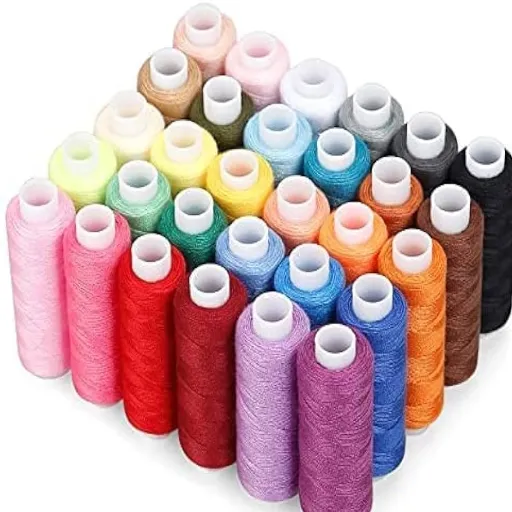
Sourcing recycled polyester yarn requires more diligence than sourcing virgin polyester. If you are evaluating multiple sustainable fiber types, our guide to choosing the right eco-friendly yarn provides a decision framework. Use this checklist to evaluate potential suppliers.
Supplier Evaluation Criteria
- GRS certification — Verify current scope certificates and request Transaction Certificates for your specific order
- Production capacity — Ensure the supplier can meet your volume requirements consistently
- Quality testing capabilities — Ask for Uster, tenacity, and colorfastness test reports
- Customization options — Confirm they can produce your required denier, color, and blend specifications
- Lead times — Standard production lead times are 30-45 days for custom orders
Verification Process
- Request GRS scope certificates and Transaction Certificates
- Verify certification status through the Textile Exchange database
- Order samples and conduct independent lab testing
- Evaluate batch-to-batch consistency across multiple sample orders
- Visit the production facility or request video audits if an in-person visit is not feasible
Red Flags to Avoid
- Prices significantly below market rate (may indicate poor quality feedstock or false recycled content claims)
- Inability to provide Transaction Certificates for specific orders
- Vague or unverifiable claims about recycled content percentage
- No third-party testing documentation
- Resistance to facility audits or transparency requests
Pricing and Contract Negotiation
- Understand the 10-30% premium over virgin polyester and factor it into your product pricing
- Calculate total landed cost including shipping, duties, and testing
- Negotiate volume discounts for orders above 1,000 kg
- Include quality specifications and testing requirements in your purchase agreement
The Future of Recycled Polyester Yarns
The recycled polyester market is evolving rapidly. Several trends will shape sourcing decisions over the next three to five years.
Chemical recycling scaling — As chemical recycling capacity increases and costs decrease, expect higher-quality recycled polyester to become more accessible. This will particularly benefit applications requiring virgin-equivalent performance.
Fiber-to-fiber recycling — Breaking down polyester textile waste into new yarn (rather than relying on PET bottles) is advancing. Companies are developing processes to separate polyester-cotton blends, which would unlock a massive new feedstock source.
Mandatory recycled content — The EU and other jurisdictions are moving toward requirements for minimum recycled content in textile products. Early adopters will have established supply chains while competitors scramble.
Digital product passports—Blockchain-based traceability and QR-code product tracking will make it easier to verify recycled-content claims throughout the supply chain.
Bio-based polyester — Research into bio-based PET (derived from plant sources rather than petroleum) offers another pathway to reducing the environmental impact of polyester yarn.
Start Your Recycled Polyester Yarn Journey
Recycled polyester yarns are among the most practical and impactful sustainability choices available to textile manufacturers today. The technology is proven, the certifications are robust, and market demand is growing.
The key is sourcing with care. Verify certifications, test quality, and work with suppliers who can demonstrate consistent production standards.
At Hebei Lida Textile Co., LTD, we produce GRS-certified recycled polyester yarn with custom denier, color, and blend options. Our quality control processes include Uster evenness testing, tenacity verification, and colorfastness certification for every batch.
Ready to explore recycled polyester yarn for your next project? Contact us for samples, specifications, and pricing. Our team will help you find the right recycled polyester solution for your application and budget.