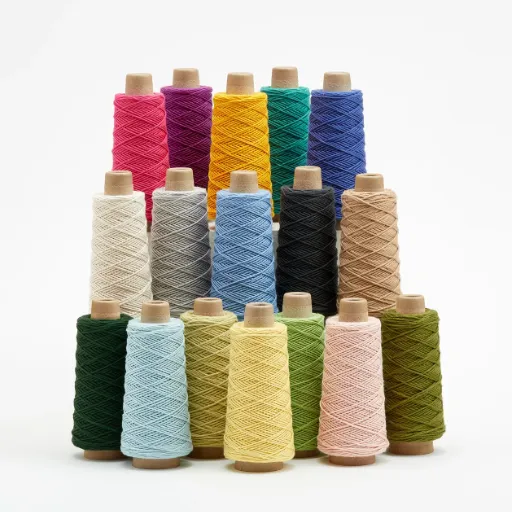
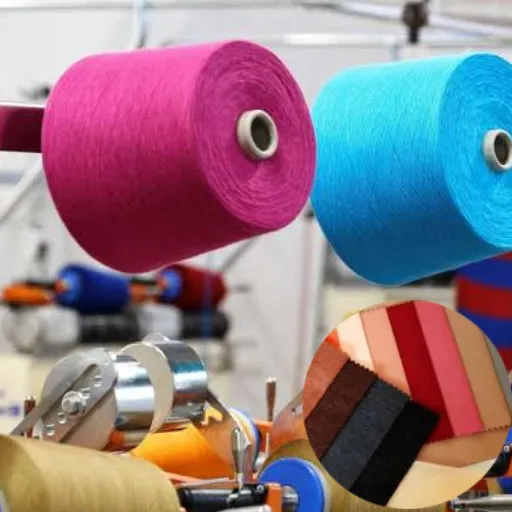
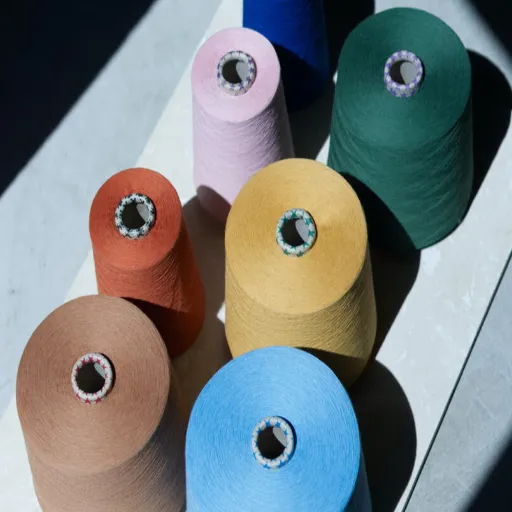
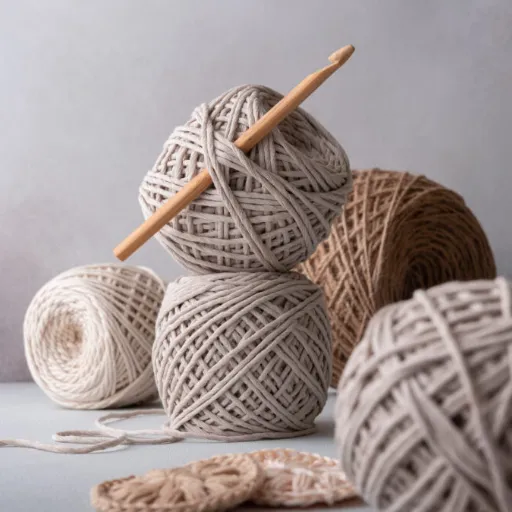


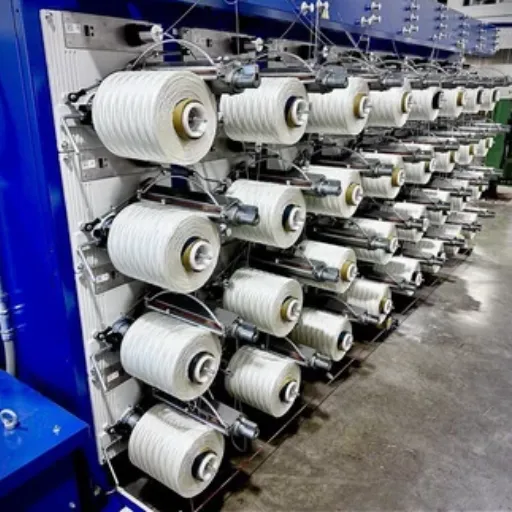
Yarn manufacturing equipment includes blow room machinery for fiber opening and cleaning, carding machines for fiber alignment, draw frames and roving frames for strand preparation, spinning machines for twist insertion, and winding systems for finished yarn packaging. Quality testing instruments round out the lineup, ensuring every batch meets specifications.
When you source yarn from a manufacturer, you are not just buying fiber and twist. You are buying the output of millions of dollars in equipment decisions.
The carding machines determine fiber alignment. The spinning frames determine strength and consistency. The winding systems determine how reliably that yarn performs on your production line.
Most buyers focus on price and sample quality when choosing a yarn supplier. That makes sense, but it misses a critical layer of evaluation. Understanding yarn manufacturing equipment gives you a window into a manufacturer’s true capabilities.
In this guide, we will walk through the complete equipment lineup from fiber to finished yarn. We will compare spinning systems, explore modern automation, and show you exactly what machinery reveals about a supplier’s quality standards. By the end, you will know which questions to ask and what answers actually matter.
Key Takeaways
- Yarn manufacturing equipment spans six stages: fiber preparation, carding, drawing, roving, spinning, and winding
- Ring spinning produces the highest quality yarn, while rotor spinning offers the best cost efficiency for coarse counts
- Modern automation through AI sensors and IoT integration can reduce energy use by 10-15% and downtime by 15%
- The equipment a manufacturer invests in directly signals their commitment to quality, capacity, and consistency
- Entry-level spinning machines start around 13,000, while industrial-scale setups can exceed 13,000, while industrial-scale setups can exceed 2 million
At Hebei Lida Textile Co., LTD, we maintain a diverse fleet of advanced yarn manufacturing equipment to serve clients across fashion, home textiles, and industrial applications. The sections below explain what each machine does and why it matters for your project.
What Is Yarn Manufacturing Equipment?
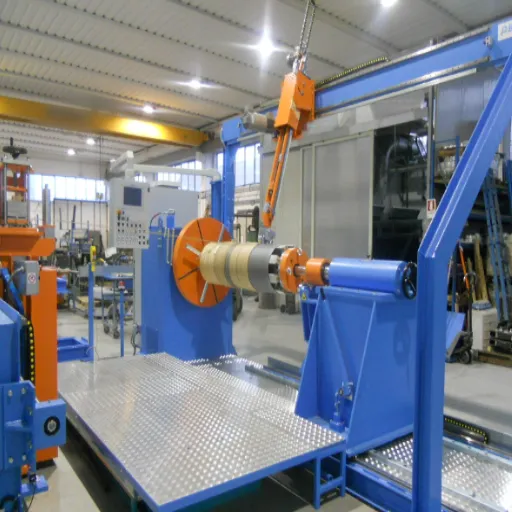
Yarn manufacturing equipment refers to the specialized machinery that transforms raw fibers into continuous, twisted yarn. This includes blow room machinery for fiber preparation, carding machines, drawing frames, spinning machines, winding systems, and quality testing instruments used throughout the production process.
The quality of your yarn depends heavily on the condition, technology level, and maintenance of this equipment. A manufacturer running well-maintained, modern machines can deliver consistent yarn counts, minimal defects, and reliable performance. A manufacturer relying on outdated or poorly maintained equipment may produce variable results that cause problems downstream in your production process.
According to the IMARC Group, the global yarn market reached 14.98 billion in 2025 and is projected to grow to 22.32 billion by 2034. That growth is driving rapid investment in new yarn manufacturing equipment, particularly automation and energy-efficient technologies. Manufacturers who upgrade their equipment gain a competitive edge in quality, speed, and sustainability.
The Complete Yarn Manufacturing Equipment Lineup
The journey from raw fiber to finished yarn follows a clear sequence through yarn manufacturing equipment. Each machine in the line performs a specific function, and the quality at each stage affects the final product.
Fiber Preparation Equipment
The blow room is where production begins. Bale openers break apart compressed bales of cotton, polyester, or blended fibers. Blending machines mix different fiber types in precise ratios. Cleaning machines remove dust, seeds, and other impurities.
Modern blow room lines from manufacturers like Trützschler use intelligent sensors to monitor fiber quality in real time. The Trützschler bale opener BO-P gently opens fibers while ensuring optimal blending from the start. This early-stage precision sets the foundation for everything that follows.
Carding machines come next. Carding aligns fibers into a continuous web called sliver. The carding process removes short fibers, neps, and remaining impurities.
Modern cards like the Rieter C 81 deliver outstanding productivity with self-optimizing performance. Carding is often called the heart of spinning because it has the greatest influence on final yarn quality.
Drawing and Roving Equipment
After carding, the sliver passes through draw frames. Draw frames combine multiple slivers and pull them through rollers to parallelize fibers and even out thickness. This process improves fiber alignment and reduces irregularities. Most mills use two stages of drawing: breaker draw frames and finisher draw frames.
For high-quality yarns, manufacturers add combing machines after the first drawing stage. Combing removes short fibers and further aligns the remaining long fibers. This produces smoother, stronger, and more uniform yarn. Combed yarns command premium prices in fashion and high-end home textiles.
The roving frame, also called the simplex, takes the drawn sliver and reduces it to a thinner strand called roving. Roving receives a light twist to hold fibers together before spinning. This intermediate step is essential for ring spinning systems, though some modern methods like air-jet spinning can skip it entirely.
Spinning Machines
Spinning is where fibers become yarn through twist insertion. Four main types of spinning machines dominate the industry today, and each represents a different approach within modern yarn manufacturing equipment.
Ring spinning frames are the most common and produce the highest quality yarn. A ring frame drafts the roving to the desired thickness, inserts twist through a rotating spindle and traveler, and winds the yarn onto a bobbin. Ring-spun yarn is strong, smooth, and ideal for premium applications.
Rotor spinning machines, also called open-end spinners, feed fibers directly into a rapidly spinning rotor. The rotor gathers fibers on its inner wall and twists them into yarn. This method is faster and more economical than ring spinning, making it popular for coarse-count yarns used in denim, towels, and industrial fabrics.
Air-jet spinning machines use high-speed air currents to twist fibers around a core. The resulting yarn is smooth and bulk-free, perfect for synthetic fibers and blended yarns. The Murata Vortex 870 EX spins at speeds up to 550 meters per minute, making it one of the fastest spinning machines available.
Compact spinning is a refinement of ring spinning that adds a compacting device to condense the fiber strand before twist insertion. This produces yarn with fewer hairs, higher strength, and better luster. Many premium fashion brands specifically request compact-spun yarn for its superior hand feel and appearance.
Finishing and Quality Testing Equipment
After spinning, the autoconer takes small bobbins from the spinning frame and winds them into larger, uniform cone packages. Modern autoconers can automatically splice broken ends, wax yarn for smoother handling, and inspect for defects during winding.
Twisting machines add additional twist to single yarns to create plied or multi-ply yarns. This increases strength and reduces elasticity, which is important for sewing threads, upholstery yarns, and industrial applications.
Quality testing equipment includes instruments that measure yarn count, tensile strength, elongation, uniformity, and hairiness. Uster Technologies and Loepfe produce industry-standard testing systems used by leading mills worldwide. A manufacturer with a well-equipped testing laboratory can catch quality issues before yarn leaves the facility.
Types of Spinning Systems and When to Use Each
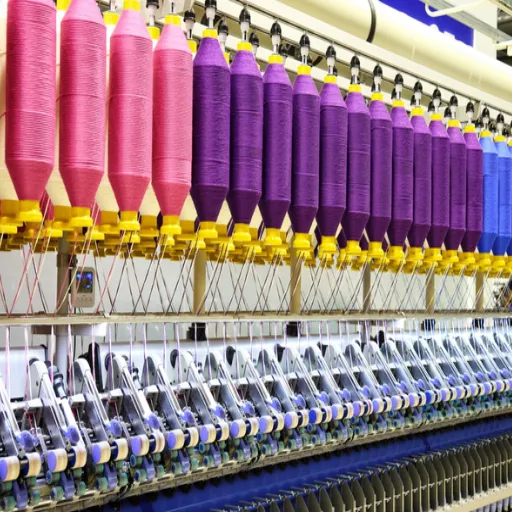
Choosing the right spinning system depends on your application, fiber type, and quality requirements. Each system produces yarn with distinct characteristics.
| Spinning System | Best For | Yarn Characteristics | Speed | Cost |
|---|---|---|---|---|
| Ring Spinning | Premium fashion, fine counts | Highest strength, smooth, durable | Moderate | Higher |
| Rotor (Open-End) | Denim, towels, coarse counts | Soft, bulky, economical | Fast | Lower |
| Air-Jet / Vortex | Synthetics, blended yarns | Smooth, hair-free, consistent | Very fast | Medium |
| Compact Spinning | Luxury textiles, exports | Fewer hairs, high strength, premium feel | Moderate | Highest |
Ring spinning remains the gold standard for applications requiring maximum strength and smoothness. Fashion designers and luxury home textile brands typically specify ring-spun or compact-spun yarn for their products. The trade-off is slower production speed and higher cost per kilogram.
Rotor spinning dominates the coarse-count market. If you need yarn for denim, heavy upholstery, or industrial fabrics where softness and bulk matter more than ultimate strength, rotor-spun yarn offers excellent value. Production speeds are two to three times faster than ring spinning, which keeps costs competitive.
Air-jet and vortex spinning excel with synthetic fibers like polyester and rayon. The yarn produced is smooth, even, and virtually hair-free, making it ideal for fabrics that require a clean surface. These systems also eliminate the need for separate winding, which streamlines production.
Maria Chen runs a furniture manufacturing company in Grand Rapids, Michigan. Last year, she switched upholstery suppliers after learning that her previous vendor used only rotor spinning for all yarn counts.
“I thought yarn was just yarn,” she admits. “But when I started asking about spinning systems, I realized the ring-spun yarn from my new supplier held up better in abrasion testing. My warranty claims dropped 30% in six months.”
Maria’s experience shows how understanding spinning equipment helps buyers match yarn properties to application requirements.
Modern Automation and Smart Manufacturing
The yarn manufacturing equipment of 2026 looks very different from the machines of a decade ago. Automation, artificial intelligence, and the Internet of Things are transforming how mills operate.
AI-Powered Quality Control
Modern spinning machines incorporate sensors that monitor yarn tension, vibration, and machine load in real time. AI algorithms analyze this data to detect irregularities before they become defects. Some systems can even adjust machine settings automatically to maintain consistent yarn quality.
Predictive maintenance takes this a step further. By analyzing historical performance data alongside live sensor feeds, AI systems can forecast when a machine component is likely to fail. This allows mills to schedule maintenance during planned downtime rather than dealing with unexpected breakdowns. Industry data shows predictive maintenance can reduce unplanned downtime by 15% and lower maintenance costs by 20%.
IoT and Digital Integration
Connected production lines enable seamless management of processes from bale handling through packaging. Rieter’s ESSENTIAL Digital Spinning Suite provides mill-wide data platforms that help managers make informed decisions. Per-spindle monitoring reduces manpower requirements by up to 10% while improving quality consistency.
Trützschler’s T-Data sensor technology includes waste sensors with automatic cleaning element adjustment. One Turkish mill reported saving approximately 320 cotton bales per year after installing T-Data systems, translating to roughly $210,900 in annual savings. The T-CON contact sensor automatically corrects card gaps to three-thousandths precision, ensuring consistent sliver quality.
Energy Efficiency and Sustainability
Modern yarn manufacturing equipment is designed with energy-saving components that lower operational costs and support sustainability goals. New drives and motors can reduce power consumption by 15-25% compared to older systems. Low-vacuum designs and optimized compressed air systems cut energy use further.
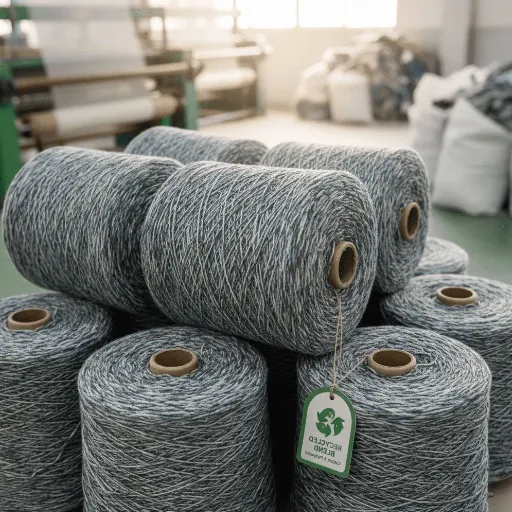
Recycled fiber processing is another growing area. Equipment designed to handle post-consumer and post-industrial waste fibers enables manufacturers to produce high-quality yarn from recycled inputs. This supports circular economy goals and meets increasing demand from eco-conscious brands.
Want to see how modern equipment translates to better yarn for your projects? At Hebei Lida Textile Co., LTD, we combine advanced automation with rigorous quality control to deliver consistent results. Explore our custom yarn solutions to find the perfect match for your specifications.
What Equipment Tells You About a Yarn Manufacturer
The machinery on a factory floor reveals more than you might expect. Equipment age, technology level, and maintenance practices all send signals about a manufacturer’s commitment to quality.
A mill with modern, well-maintained yarn manufacturing equipment can typically offer tighter tolerances, more consistent batches, and faster turnaround times. Look for manufacturers who invest in automated winding, digital monitoring, and regular equipment upgrades. These investments suggest a forward-thinking operation that prioritizes long-term quality over short-term cost cutting.
Equipment diversity also matters. A manufacturer with multiple spinning systems can produce a wider range of yarn types and counts. This flexibility is valuable if your needs change or if you require different yarn specifications for different product lines.
Testing capabilities are equally important. A manufacturer with a fully equipped quality laboratory can provide detailed certificates of analysis for every batch. Ask whether they test for tensile strength, elongation, yarn count, and uniformity. If they cannot provide test data, that is a red flag.
James Park owns a small textile trading company in Seoul, South Korea. He visits every supplier’s factory before placing his first order.
“I used to just look at samples and price lists,” he says. “Now I walk the production floor. I check the machine ages, ask about maintenance schedules, and look for testing equipment.”
Last year, he eliminated two potential suppliers because their ring frames were over 25 years old with no upgrade plans. The supplier he chose had invested in compact spinning attachments and an automated winding line. Their defect rate was half the industry average.
Curious about what our equipment means for your yarn quality? Contact Hebei Lida Textile Co., LTD to schedule a virtual factory tour and learn how our manufacturing capabilities support your production goals.
Key Equipment Manufacturers to Know
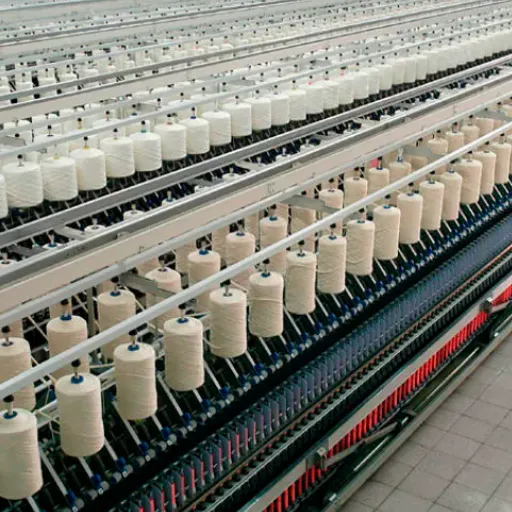
The yarn manufacturing equipment industry is dominated by a handful of European and Japanese manufacturers who have shaped spinning technology for decades.
Rieter, headquartered in Switzerland, offers one of the most comprehensive product portfolios in the industry. Founded in 1795, Rieter supplies systems for the entire spinning process, from fiber preparation to winding. Their ESSENTIAL digital platform integrates machine data across the mill for real-time optimization.
Trützschler, based in Germany, specializes in fiber preparation and carding equipment. Their intelligent card TC 19i features the automatic gap optimizer T-GO, which maintains precise carding gaps without manual intervention. Trützschler blow room solutions are widely regarded as the industry standard for gentle, efficient fiber opening and cleaning.
Murata Machinery of Japan leads in winding technology and automation. The Muratec FPRO EX Automatic Winder connects seamlessly through Coner Link for smooth yarn transfer and minimal contamination. Murata also produces advanced rotor spinning systems used worldwide.
Toyota Industries, another Japanese manufacturer, is particularly strong in roving frames and ring spinning machines. Many mills deliberately combine equipment from multiple manufacturers to get the best performance at each production stage.
Turkey’s Zirve Tekstil took exactly this approach. The mill chose Trützschler for fiber preparation, Toyota for roving and ring spinning, and Murata for winding.
General Manager Erhan Tenekeci explained their reasoning: “We knew a one-brand setup might be easier, but our goal was to stay competitive, which meant choosing the best in every category.” The mill now produces 18.5 tons of premium combed ring yarn daily.
This real-world example demonstrates that the best manufacturers think strategically about their equipment choices.
Investing in Yarn Manufacturing Equipment: Cost Considerations
Equipment investment ranges widely depending on scale, technology level, and automation. Understanding these costs helps buyers appreciate what goes into yarn pricing and why some manufacturers can offer lower rates than others.
Entry-level ring spinning machines suitable for small-scale production start around $13,000. Used equipment from platforms like Exapro ranges from €20,000 to €100,000 depending on age, brand, and condition. These options work for small mills, research facilities, or specialty producers.
Mid-scale operations require complete spinning lines with multiple machines. A full line including blow room, carding, drawing, roving, spinning, and winding equipment typically costs several hundred thousand to over $1 million. This level of investment supports medium-sized mills producing multiple yarn counts for diverse markets.
Large industrial mills operate at a different scale. High-capacity machines like the Autocoro 10 rotor spinner run 2to2to3 million for 500-position setups. A full facility with 150,000 spindles can require $120 million or more in total equipment investment. These facilities achieve economies of scale that smaller mills cannot match.
Return on investment typically falls in the 18-to-24-month range for high-volume open-end operations. Fine-count specialty mills may see longer payback periods due to lower throughput. The biggest cost drivers are raw materials, which account for 60-70% of production costs, followed by energy and labor.
David Okonkwo manages procurement for a West African textile distributor. When evaluating manufacturers, he weighs equipment investment against the yarn prices quoted.
“A manufacturer with new, efficient machines can offer competitive pricing while maintaining quality because their energy costs and waste levels are lower,” he explains. “I once switched from a low-cost supplier to a slightly higher-priced one with modern equipment. My total cost actually dropped 8% because their yarn had fewer defects and ran more efficiently on my knitting machines.”
Ready to partner with a manufacturer that invests in the right equipment? Browse our yarn manufacturing capabilities and request a quote tailored to your specifications.
Conclusion
Yarn manufacturing equipment is the invisible foundation of every textile product you create. From the blow room that opens raw fiber to the spinning frame that imparts strength and the testing lab that verifies quality, each machine plays a critical role in the final result.
The most important takeaway for buyers is this: equipment signals intent. A manufacturer who invests in modern, well-maintained, automated yarn manufacturing equipment is demonstrating a commitment to quality that goes beyond words. When you evaluate suppliers, ask about their machinery, their maintenance schedules, and their testing capabilities. The answers will tell you more than any brochure.
The industry is moving rapidly toward smarter, more efficient, and more sustainable production. Manufacturers who embrace automation, energy efficiency, and digital integration are positioning themselves to deliver better yarn at competitive prices for years to come.
Contact Hebei Lida Textile Co., LTD today to discuss your yarn requirements. Our advanced manufacturing equipment, rigorous quality control, and customer-focused approach ensure you receive yarn that performs reliably from the first meter to the last. Request your free sample and see the difference that the right equipment makes.