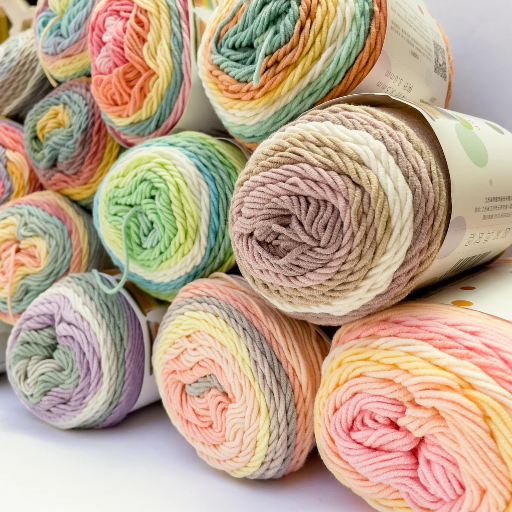


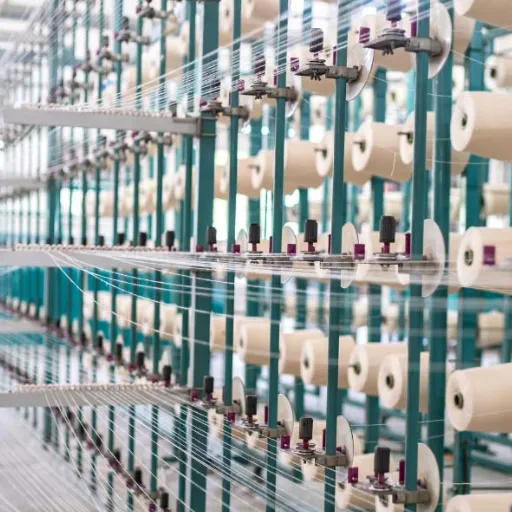
Custom yarn quality control is the system of checks a mill runs to make sure the bulk production matches the sample you approved, covering yarn count, twist, strength, evenness, and color. For buyers, it comes down to knowing what to test, how to read the test report, and which inspections and certifications to require before your order ships.
Your sample was perfect. The color, the hand, the twist, all of it exactly as you pictured. Then the question that decides whether a custom yarn order succeeds arrives: will the bulk match it? That gap between a beautiful sample and a reliable production run is where quality is won or lost. It’s also the part of the process most suppliers never explain.
You may have ordered custom yarn before and trusted the process to work out. Sometimes it does. But the failures buyers describe most often, shade differences between batches, cones that look perfect and knit up streaky, a third lot that’s slightly duller than the first two, all trace back to quality control that wasn’t documented well enough. This guide gives you the plain-English framework to protect your order: the QC workflow to expect, how to read a yarn test report, how to manage color consistency, and what to do when bulk does not match the approved sample.
Key Takeaways
- Custom yarn quality control runs through seven checkpoints: spec lock, raw material verification, sample and lab dip approval, first piece inspection, in-process sampling, final testing, and pre-shipment inspection.
- The approved sample and lab dip become your contract reference. Bulk is tested against them, not against a generic standard.
- A yarn test report comes down to five numbers: count, twist, strength, evenness (CVm%), and hairiness. USTER Statistics percentiles tell you where your yarn ranks globally, and lower is better.
- Dye lot variation is the most common quality complaint. Lab dip approval under multiple light sources, shade sorting, and keeping approved references on file protect repeat orders.
- Require an AQL pre-shipment inspection and verifiable certifications (ISO 9001, OEKO-TEX Standard 100, GRS). If a supplier will not share test data or allow third-party inspection, that is a red flag.
What Is Custom Yarn Quality Control?
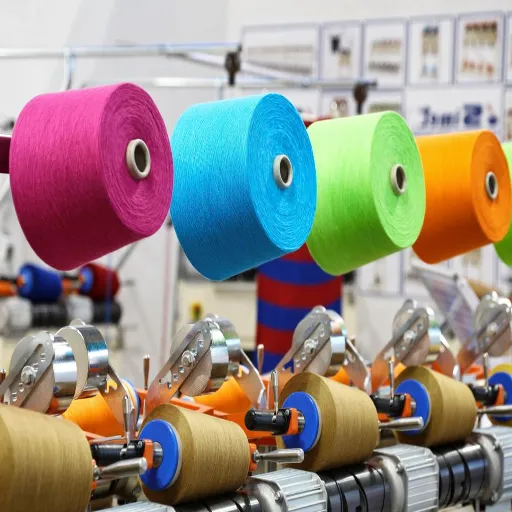
Custom yarn quality control is the process of verifying that a yarn produced to a buyer’s specification meets the approved sample and technical data sheet. It checks the yarn’s count, twist, strength, evenness, hairiness, and color, and it compares the finished production against the reference the buyer approved rather than against a factory’s standard product.
Quality control in a custom order differs from quality control on a stock product in one important way. A standard product is tested against a fixed specification that the factory owns. A custom product is tested against your specification, and the stakes are higher because the yarn has to match a sample you already approved. If the bulk drifts from the sample, you can’t fall back on a standard. The product is wrong for your project.
Every buyer of custom yarn, whether a fashion designer, a home textile brand, an upholstery producer, an industrial buyer, or a small business placing its first order, faces the same risk. The sample proves the concept. The bulk proves the manufacturer. That’s why the strongest differentiator you can evaluate in a custom yarn manufacturer is how it proves sample-to-bulk consistency before you commit to a full order. Our guide to the custom yarn manufacturing process walks through where quality control fits in the full production cycle.
The Sample-to-Bulk Gap
The single most important concept in custom yarn quality control is the sample-to-bulk gap. The approved sample and lab dip are the contract reference for every bulk lot. Between them, the mill changes fiber lots, dye batches, machine settings, and environmental conditions, and any one of those changes can shift the finished yarn.
A quality mill closes that gap deliberately. It locks the specification before production, verifies incoming raw materials, checks the first production pieces against the approved sample, samples during the run, and tests the finished lot before packaging. If you hear a supplier describe quality control as “we test everything at the end,” you’re hearing a process that reacts to problems instead of preventing them. The earlier a deviation is caught, the cheaper it is to fix, and the less likely it reaches your dock. Request a custom yarn solution designed around your product and production needs.
The Custom Yarn Quality Control Workflow: What a Buyer Should Expect
A reliable custom yarn order moves through seven checkpoints. Not every mill runs all of them, and the ones that do are the ones worth working with. Here is the workflow a buyer should expect, and the questions that go with each step.
Step 1: Lock the Specification
Quality control starts before any fiber is spun. The specification must be fully confirmed: material composition, yarn count, ply, twist, color reference, cone or ball weight, packing method, and the target application. For custom colors, the dyeing and color matching should be approved before bulk production begins, using Pantone references, yarn samples, fabric swatches, or approved physical samples.
This step decides everything downstream. A knitting brand may prioritize hand feel and color series. A textile factory may focus on count stability and winding condition. The same shade can look different on different yarn structures, so the color approval should be checked together with material, count, and application.
Step 2: Verify Raw Materials
Before production starts, the mill confirms the yarn identity, color consistency, and baseline material quality against the approved program. For custom blends, this includes verifying the fiber content and blend ratio. An industrial buyer who specs a high-performance custom blend should have the fiber composition confirmed, because blend authenticity sits behind strength, performance, and certification claims. Labs verify fiber content with microscopy, chemical solubility tests per ASTM D276, or FTIR analysis. Our guide to custom fiber blending explains how blend engineering sets the performance you will be verifying.
Step 3: Approve the Sample and Lab Dip
The sample confirms the build of the yarn. The lab dip confirms the color. Approve both under multiple light sources, typically D65 daylight, TL84 store lighting, and A home lighting, because a shade that matches in a showroom can shift under the light where your customer actually uses the product. This approval becomes the contract reference for the entire order. Top dyers achieve a Delta E under 1.0, an excellent color match, and produce lab dips in roughly 3 to 5 working days.
Step 4: First-Piece Inspection
When production starts, the first units are checked against the approved sample before the full run begins. This catches setup errors, dye recipe mistakes, and machine miscalibrations before they repeat across thousands of cones. A first-piece inspection report, sent before bulk starts, is the clearest sign that a manufacturer treats quality control as a process rather than a formality.
Step 5: In-Process Checkpoints
During the run, technicians sample the yarn for count accuracy, evenness, winding condition, and color drift. In-process control is where consistent yarn is actually made. Mills use autolevellers in carding and drawing to minimize variation, and they test sliver and yarn at each stage so a problem is corrected while the machine is still running rather than after the lot is finished.
Step 6: Final Testing Before Packaging
Before the finished cones are packaged, selected samples are tested for evenness, strength, twist accuracy, and colorfastness. Colorfastness testing matters more than most buyers realize. Wash, light, and crocking tests confirm that the color survives the product’s real life. A yarn that fades in sunlight or bleeds in the wash fails no matter how beautiful the original shade is.
Step 7: Pre-Shipment Inspection
The last checkpoint reviews cartons and product samples against the order specification, labeling requirements, and agreed acceptance criteria. For private label and OEM orders, paper bands, barcode labels, polybags, and carton labels must match the approved files. Packing format should have been confirmed before production, because changes after the fact alter carton size, shipping weight, and labeling. This pre-shipment inspection can be run internally or by a third-party agency, which we cover below.
How to Read a Yarn Test Report: The 5 Numbers That Matter
Yarn quality testing runs on instrument reports from systems like the USTER tester series. The page of data looks technical, but it comes down to five numbers. Learn these and you can evaluate any supplier’s quality claim, and you’ll know exactly which questions to ask. For a full walkthrough of the terminology, this practical guide to reading yarn tester reports from Testex is worth bookmarking.
Yarn Count (Linear Density)
Yarn count measures thickness. It appears as Tex (grams per 1,000 meters), Ne (imperial cotton count), Nm (metric count), or Denier (grams per 9,000 meters for filaments). Higher Tex and Denier mean thicker yarn; higher Ne and Nm mean finer yarn. Consistency matters as much as the target value. For polyester filament, a CV% of linear density below 1.0% is considered excellent, while values above 2.0% signal a real risk of streaks and breakage. The count spec you set in your custom yarn design specifications is the number the report must confirm.
Twist
Twist per inch and twist direction determine strength, hand, and how the yarn performs in weaving or knitting. Too much twist makes fabric stiff. Too little causes breakage and fuzzy surfaces. What matters most is consistency. A carpet manufacturer once traced visible streaks in a finished product back to twist varying by roughly 30% across a batch. If a supplier’s report shows high twist variation, the yarn will create uneven fabric no matter how strong the average looks.
Strength and Elongation
Yarn tensile strength and elongation at break, measured per yarn testing standards such as ASTM D2256, tell you whether the yarn will survive the production process and the product’s real life. For a 20/1 carded cotton yarn, the practical benchmark is roughly 18 to 22 cN/tex for premium quality, 14 to 17 for standard commercial quality, 10 to 13 for economy grades with frequent stops, and below 10 for poor quality that causes constant breakage. Also check the strength coefficient of variation. Low strength CV means the yarn breaks consistently, which protects weaving and knitting efficiency.
Evenness (CVm%) and Imperfections
Yarn evenness testing measures how consistent the yarn’s thickness is along its length, reported as the coefficient of mass variation, or CVm%. Poor evenness shows up as streaks, bars, and cloudy dyeing in finished fabric. The report also counts imperfections per kilometer: thin places, thick places, and neps. These numbers are the direct cause of the visible flaws that ruin fabric, so they deserve as much attention as strength.
Hairiness
Hairiness is the amount of loose fiber protruding from the yarn’s surface, reported as a hairiness index. High hairiness causes fuzz, pilling, lint, and printing problems. A smooth poplin shirt needs low hairiness; a fuzzy sweater yarn is designed to have more. The right level depends on your application, which is why the target belongs in your specification.
What USTER Percentiles Mean for Your Order
USTER Statistics from USTER ranks your yarn against a global population of mills producing the same count and fiber type. The percentile is a competitive position, not a pass or fail grade. Lower is better.
| Percentile | What It Means | Suitable For |
|---|---|---|
| 5% | Top-tier quality with tight tolerances | Premium knitwear |
| 25% | Strong commercial quality, meets most export specs | Most export orders |
| 50% | Statistical average, no buffer against complaints | General fabric |
| 75% | Below average, process issues likely | Coarse constructions |
| 95% | High rejection risk, signals a process fault | Avoid |
The key insight is drift. If a yarn that previously ran at the 50% percentile suddenly shows a parameter at the 95% percentile, that’s a process fault, not normal variation. Realistic targets depend on end use: premium knitwear may require 25% or better, general woven apparel works at 50%, and industrial or coarse-count yarns can run at 75%. For industrial yarn applications, strength and evenness matter more than surface appearance, so the target set shifts accordingly.
Protecting Color Consistency in Custom Yarn Orders
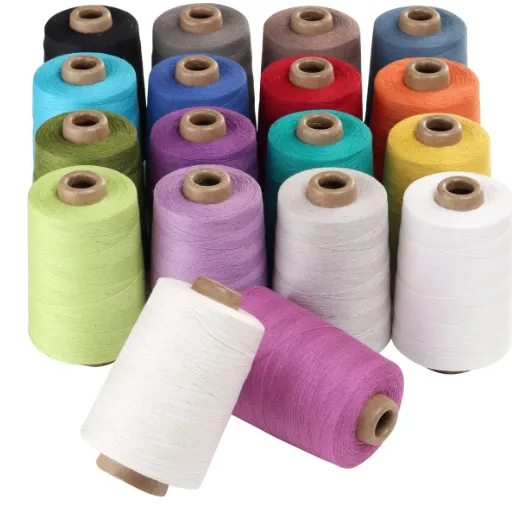
Color consistency is where custom yarn buyers report the most pain. Dye lot variation, different shades between batches or even between cones in the same shipment, is the single most common quality complaint in yarn purchasing. It ruins projects, forces returns, and erodes trust in suppliers. Protecting against it is a formal process, not a wish.
The Color Approval Chain
The chain runs from reference to re-order. You provide a reference, a Pantone code, a swatch, or an approved physical sample. The mill produces a lab dip for your approval under D65, TL84, and A light sources. Once approved, the lab dip becomes the color contract, and bulk dyeing is controlled to match it within an agreed tolerance. Because the same Pantone code can appear different on different fibers, counts, and yarn structures, the lab dip is the only reliable reference.
Dye Lot Management and Shade Sorting
Bulk dyeing happens in lots, and no dye process is perfectly identical twice. A quality mill manages this with shade sorting, grouping the dyed yarn into A, B, and C shade groups and documenting which group ships with which production run. This matters most for repeat orders. A brand that orders a signature color today and re-orders in six months needs the approved lab dip kept on file so the new lot matches the original. Our guide to custom yarn dyeing and color matching goes deeper into the dye process itself.
Consider what happened to a knitwear brand we worked with. The team ordered ten cones of a signature shade for a capsule collection, and the shipment arrived with three different dye lots. Each cone looked fine alone. Laid side by side, the difference was obvious, and the finished pieces did not match. The fix was not complicated. They approved the lab dip under multiple light sources, asked for A/B/C shade sorting, and kept the approved reference on file for every re-order. The next production run matched.
Re-Ordering to Match a Previous Batch
When you re-order a custom color, the approved lab dip is your guarantee, not the color name or Pantone code. Mills keep the approved reference and dye recipes on file so a new lot can be matched to the original within an agreed tolerance. Ask your supplier how it handles re-orders and whether it keeps shade references for repeat production. The answer tells you whether your color identity is safe with them. Get custom yarn developed for your required blend, count, color, and application.
Inspections and Certifications: What to Require and How to Verify
Beyond the mill’s own testing, you can require independent yarn quality inspection and verifiable certifications. Both turn a supplier’s quality promise into a checkable standard.
AQL and Pre-Shipment Inspection
AQL stands for Acceptable Quality Limit, a statistical standard used for final random inspection, typically per ANSI/ASQ Z1.4 or ISO 2859-1. Common acceptance levels for bulk orders are zero critical defects, 1.5 to 2.5 major defects, and 4.0 minor defects. An AQL 2.5 inspection is the most commonly cited pre-shipment level for wholesale orders.
The process is straightforward. A sample is drawn from the ready lot, cartons are opened, and the yarn is checked against the order specification: material, count, color, weight, winding appearance, labels, carton quantity, and carton marks. One practical yarn lot test randomly selects about four cartons, takes roughly 70 grams from each cone, runs USTER evenness testing, then knits, bleaches, and dyes the fabric in dark and light colors to check for contamination spots, dead fiber, and shade variation. Reports and inspection photos are sent to the buyer.
Third-Party Inspection
For high-value orders, strict retail channels, or orders with contractual acceptance requirements, arrange an independent inspection through SGS, Bureau Veritas, or Intertek. Agencies typically need about three days advance booking, and a quality mill welcomes the visit. If the defect rate exceeds the agreed AQL, the supplier reworks or reproduces the defective portion at its own cost and runs a 100% re-check before a second inspection. Knowing that responsibility in advance protects you if something goes wrong. Need custom yarn for a unique textile project? Talk to Hebei Lida Textile Co., LTD.
Certifications That Back Quality Claims
Certifications are verifiable evidence of a supplier’s quality and compliance. These are the ones that matter most for custom yarn orders:
| Certification | What It Verifies |
|---|---|
| ISO 9001 | Quality management system |
| OEKO-TEX Standard 100 | No harmful substances (300+ screened) |
| GRS | Recycled content is real and traceable |
| GOTS | Organic fiber from farm to finished yarn |
| BSCI | Social compliance in the supply chain |
Ask for certificate numbers and scope statements during the quote request, then validate them on the official portals, such as OEKO-TEX Label Check and the ISO CB portals, and record expiry dates in your vendor files.
OEKO-TEX Standard 100 is typically valid for one year and tied to product classes. For an eco-conscious brand, these certifications turn a sustainability claim into a checkable fact. When you compare custom yarn suppliers, ask each one for the certificates that match your market’s requirements and verify them before you commit.
What to Do When Bulk Doesn’t Match the Approved Sample
Even with a strong QC process, deviations happen. The difference between a good supplier and a risky one is how the deviation is handled. Both the tolerance you agree on and the recovery process should be set before bulk production starts.
Common Deviations and Their Causes
Shade drift, count variation, strength loss, evenness change, and winding faults are the deviations buyers see most often. Each has a process root cause. A peer-reviewed review of yarn quality and its influencing factors explains the mechanics behind the most common defects.
| Deviation | Typical Root Cause |
|---|---|
| Shade drift | Change in dye lot, water chemistry, or dyeing conditions |
| Thin places | Short fibers, improper drafting, or low workshop humidity |
| Thick places and neps | Raw material impurities or insufficient carding |
| Count variation | Drafting or fiber lot inconsistency |
| Strength loss | Fiber quality shift or twist deviation |
When a report shows a sudden jump in one defect, the cause is usually a process change, not random bad luck.
How to Handle It
Agree on tolerances and rework responsibilities before the bulk run starts. Track supplier quality with practical KPIs such as Right First Time and Defects per Hundred Units, which measure how often a run comes out right the first time. If a deviation is found, require the supplier to sort the affected yarn into shade or quality groups, rework or reproduce the failing portion, and run a 100% re-check before a second inspection. One upholstery brand we know learned this the hard way. Its first two custom lots were perfect. The third drifted, slightly duller and slightly weaker, and the client noticed in a finished sofa. The manufacturer that won the next order sorted shades into A, B, and C groups and sent a first-piece inspection report before bulk started. That is the difference between a supplier who ships yarn and a partner who protects your reputation. For upholstery yarns, the same discipline matters even more, because strength, abrasion resistance, and colorfastness all carry into the final product.
Questions to Ask Every Custom Yarn Supplier
Before you commit, ask for the QC workflow and the test data behind the quality claims. Can you share evenness, strength, and colorfastness results from the last bulk run? Do you send first-piece inspection reports? How do you manage re-orders of a previously approved color? Are you certified and can I verify the certificates? Who pays for rework if the bulk fails inspection? A confident supplier answers all of these and shares the numbers. One that hesitates, or says testing data is confidential, is a risk. If a supplier will not provide strength data or will not allow third-party testing, that is a red flag. For small and first-time orders, our guide to custom yarn scaling explains how to protect quality when you are starting with lower volumes.
Frequently Asked Questions About Custom Yarn Quality Control
How is quality controlled in custom yarn manufacturing?
Quality control runs through the whole order: the specification is locked, raw materials are verified, the sample and lab dip are approved, the first production pieces are inspected, the run is sampled during production, the finished yarn is tested for count, twist, strength, evenness, and colorfastness, and the cartons are checked before shipment.
What is a lab dip and why does it matter?
A lab dip is a small sample of dyed yarn that lets the buyer approve the exact shade before bulk dyeing. It is the contract reference for color, so bulk dyeing is matched to it within an agreed tolerance.
How do I read a yarn test report?
Focus on five numbers: yarn count, twist, breaking strength and elongation, evenness (CVm%) and imperfections, and hairiness. Compare them against your specification and against USTER Statistics percentiles, where lower is better.
What does CVm% mean?
CVm% is the coefficient of mass variation, a measure of how consistently thick the yarn is along its length. Lower values mean more even yarn, which produces cleaner fabric with fewer streaks.
What is USTER evenness testing?
USTER evenness testing measures thickness variation in yarn using the USTER Tester instruments, and it reports the results against global USTER Statistics percentiles so mills and buyers can benchmark quality.
Why is the bulk color different from my sample?
Bulk color can drift because of changes in dye lot, water chemistry, dyeing conditions, or fiber lot. Approving the lab dip under multiple light sources and requiring shade sorting reduces this risk.
What is AQL inspection for yarn?
AQL, or Acceptable Quality Limit, is a statistical sampling standard used for final inspection. An AQL 2.5 pre-shipment inspection checks a sample of the order against agreed acceptance criteria, including critical, major, and minor defect limits.
What certifications should a yarn manufacturer have?
The most relevant are ISO 9001 for quality management, OEKO-TEX Standard 100 for harmful substances, GRS for recycled content, and GOTS for organic fiber. Verify certificate numbers on official portals.
Protect Your Custom Yarn Order From Day One
Custom yarn quality control is not a single inspection. It’s a workflow that starts when you lock the specification and ends at pre-shipment inspection. The approved sample is your contract reference. Learn to read the test report, protect color consistency across batches and re-orders, require the right inspections and certifications, and agree on deviation handling before bulk production starts. The suppliers who document quality at every stage and share real test data are the ones worth building a long-term relationship with.
Hebei Lida Textile Co., LTD builds custom yarn solutions around exactly this level of transparency. We verify raw materials, approve samples and lab dips under multiple light sources, inspect the first production pieces, sample during the run, and test the finished yarn’s count, twist, strength, evenness, and colorfastness before anything ships. We share the data behind our quality claims, and we welcome third-party inspection. Request a sample to test the quality for yourself, or contact us to discuss how we can protect your next custom order.