
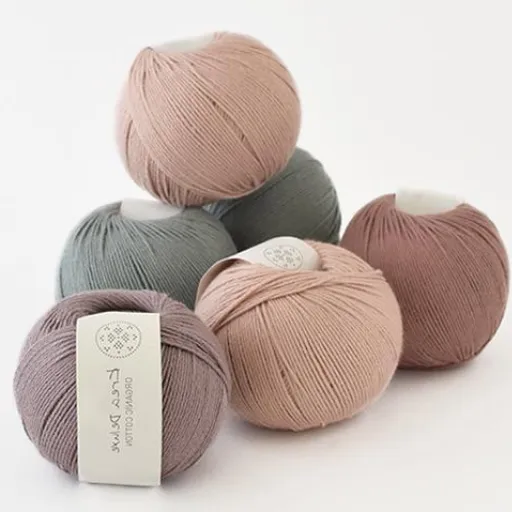


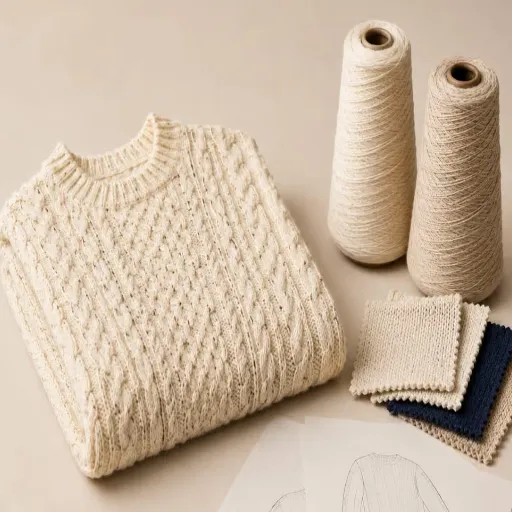
Custom yarn for branding is yarn developed to your brand’s exact identity: colors matched to Pantone or a physical swatch, fiber and texture chosen for hand feel and performance, and labels, logos, and packaging that carry your name. It turns a commodity material into a signature product your competitors can’t copy.
Think about the red that makes a cola brand recognizable at 50 feet, or the blue that signals a tech giant from across the room. That shade is brand equity, worth more than any slogan. Now imagine weaving it directly into the yarn your products are made from. That’s the opportunity here, and most brands haven’t taken it yet.
Here’s the problem: search for custom yarn for branding and you’ll find dye houses with color spec sheets, private-label catalogs full of packaging options, knitwear factory pages, and abstract brand-strategy articles. What’s missing is a plain-English guide that connects a brand identity to a finished, color-matched, logo’d, packaged, and scalable yarn product. That’s exactly what this article is.
By the end, you’ll know everything that can be branded on and around yarn. You’ll learn how to match your exact brand colors, add your logo, and design labels and packaging that tell your story. We’ll cover what it really costs and how to scale from a limited edition to a core line. Contact Hebei Lida Textile Co., LTD for custom yarn tailored to your specifications.
Key Takeaways
- Your brand color is the most powerful logo on a yarn product. Top dyers match shades to Pantone with Delta E under 1.0, so “exact” is achievable, not aspirational.
- Branding goes far beyond the yarn itself: paper bands, tube labels, woven labels, hang tags, polybags, and cartons all carry your brand.
- Custom dyeing typically needs 500 to 1,000 kg per color. The stock-hybrid path (2 custom colors + stock shades) can cut minimums 60 to 80 percent for small launches.
- Expect +10 to +25 percent cost for a brand color, plus 2 to 5 working days for lab dips before bulk production.
- A limited-edition hand-dyed batch of 10 to 20 kg per color can sell out in three weeks at full retail, proving small-batch programs work.
What Is Custom Yarn for Branding?
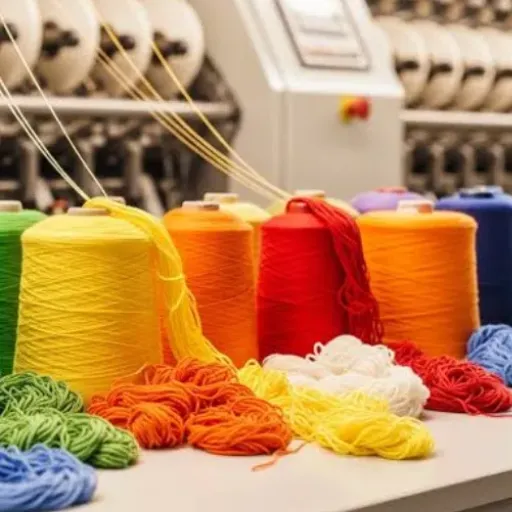
Custom yarn for branding is yarn developed to a brand’s specific identity: exact brand colors matched to Pantone or a physical swatch, fiber and texture chosen for hand feel and performance, plus labels, logos, and packaging that carry the brand name. The finished product is unmistakably on-brand and defensible as a signature offering.
It’s worth separating this from two related articles in our custom yarn solutions cluster. Custom yarn design and specification owns the technical side: fiber, twist, and count decisions. Custom yarn for fashion owns the collection calendar and seasonal timing. This guide owns the brand identity application: color, logo, packaging, and the program you build around them. If you’re a brand manager, marketing lead, DTC founder, craft-yarn brand owner, or merchandise buyer, this is your playbook.
What Can Be Branded Around Yarn
Almost everything. Here’s the full map, because most brand teams only think about the label:
- The yarn itself: brand color, fiber, and texture. This is the highest-value branding surface, because it’s the product.
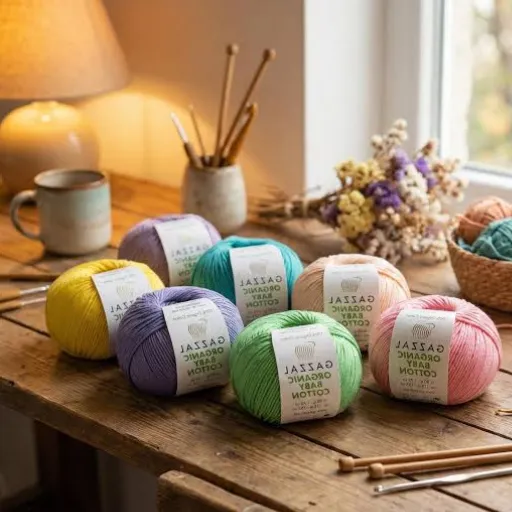
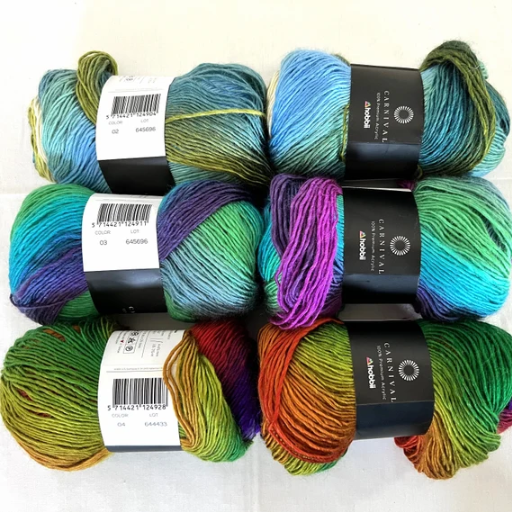
- The band and labels: paper band on a skein or ball, tube label on a cone, woven label, printed label, hang tag, and care card.
- The packaging: polybag, box, carton, and knit kits.
- The finished product: a knit-in logo (jacquard or intarsia), embroidery, or a printed logo on a garment.
The custom yarn manufacturing process is where all of this comes together, from dyeing your brand color to winding, labeling, and boxing the finished cones.
Custom vs. Private Label vs. Stock Yarn: What Actually Changes
These three terms get used interchangeably, and they’re not the same thing:
- Custom yarn: your brand’s full spec. Color, fiber, count, texture, and finish are all built to your requirements. Highest control, highest minimums.
- Private label yarn: your brand applied to a proven yarn base. The mill’s existing yarn, dyed and packaged with your name, colors, and labels. Faster and cheaper than full custom.
- Stock yarn: the mill’s existing shades and lots. Fastest lead time and lowest minimums, but you pick from what’s on the shelf.
Most successful brands start on stock or private label, then move toward custom as the line proves out. We’ll show you the exact numbers for that decision later.
Why Brands Choose Custom Yarn
The short answer: custom yarn for branding gives you a signature color and feel that are the hardest things for a competitor to copy. Anyone can print your logo. Nobody can legally own a color, but you can own one in practice by being the brand that consistently delivers it.
There’s strong precedent for this. Aditya Birla Yarn, which holds roughly 13 percent of the global synthetic yarn market, transformed from a commodity supplier into a corporate brand by building consumer-friendly sub-brands like ABY Flexo, Softura, Style, and Colorlast, each with its own colors and story. The ingredient-branding play, familiar from “Intel Inside,” is alive in fibers: Nylstar sells only its branded Meryl yarns to Nike, Adidas, and Lululemon because those brands want supply-chain transparency they can tell customers about.
Here’s a concrete example. Gebrüder Otto, a German yarn producer, launched a cotton yarn called “Cotton since 1901. Made in Germany” with QR-code hang tags that let shoppers trace the fiber to its farm. That single move turned a commodity yarn into a product with a story people remember and share. Your brand can do the same thing on a smaller scale, and the custom yarn production workflow is built to support it.
Beyond differentiation, custom yarn gives you three practical wins: consistent brand color across every batch, retail-ready packaging, and provenance stories that support premium pricing.
Brand Color Matching: From Pantone to Finished Yarn
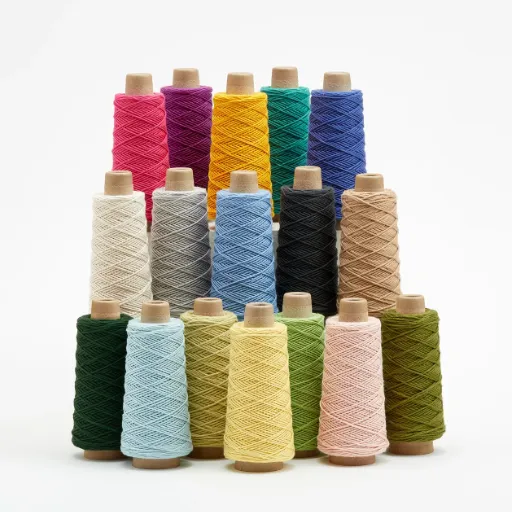
Color is where custom yarn for branding lives or dies. Standard yarn libraries historically offered only 150 to 200 stock colors. PANTONE-licensed matching now covers 2,700-plus shades for dyed yarns, which is why “exact brand color” is finally achievable for a mid-size brand. Getting there takes a process, and knowing it in advance saves you weeks.
The Color Matching Process
Every mill runs a version of this loop:
- Submit a color reference. Give the mill a Pantone code (TPX or TCX), CIELAB data, a physical swatch, a yarn or fabric sample, or a color card.
- Receive lab dips. The mill dyes small samples to match your reference. Expect 2 to 5 working days for these, faster at PANTONE-licensed dyers (2 to 3 days) and slower at some OEMs (7 to 10 days).
- Approve or adjust. You approve the dip that matches best, or ask for a revised round.
- Approve bulk. The approved lab dip becomes the contract reference for production, so every batch is checked against the same standard.
Precision matters here. Top dyers hit Delta E under 1.0, which is a scientific measure of color difference (under 1.0 is essentially imperceptible to the eye). They also verify color fastness to grade 4 to 5 on the ISO 105 scale, meaning the color resists fading and rubbing through washing and wear. Those two numbers are the difference between a yarn that stays on-brand for years and one that fades after three washes.
Why “Same Pantone” Isn’t the Same Color Everywhere
Here’s the part that surprises most brand teams: the same Pantone code produces different results on different yarns. Fiber type, yarn count, knit structure, and dye method all shift the final shade. A code that looks perfect on cotton will read differently on recycled polyester.
That’s not a mill failure. It’s physics. Each spec needs its own development and approval, which is why you lock an approved lab dip as the contract standard for each product, not just one shared reference across your line. This is also why batch-to-batch verification under standard lighting is non-negotiable. A reliable supplier shades and sorts production so your second order matches your first.
Stock Colors vs. Custom Dyeing: The Hybrid Playbook
For a brand on a budget, the custom-dyeing MOQ wall is real. Custom dyeing often requires around 50 kg per color, which for a sock brand means 1,000-plus pairs per SKU before you’ve sold a single unit. That effectively kills a startup budget.
The fix is a hybrid approach. Factory-held stock yarn in Pantone-matched colors cuts order minimums 60 to 80 percent and pulls lead time from 30 to 45 days down to 7 to 14 days, enabling 100 to 200 unit test runs.
Consider Maya, who launched a boutique sock brand in March 2026. She was quoted 50 kg per custom color and nearly walked away. Instead she picked two custom signature colors plus three stock shades, tested 150-pair runs of each, and proved the market before committing to custom dyeing. Her per-kg cost dropped 60 percent versus going fully custom on day one.
Here’s the rule: ask every supplier for their in-house seasonal swatch card before you commit to custom dyeing. You might find a stock shade that’s already 95 percent of your brand color, and that’s an instant win. We cover this in depth in how to choose a custom yarn supplier.
Dye Methods That Matter for Branded Yarns
The dye method changes how the color behaves, so it deserves a mention:
- Dope-dyed: pigment added to the polymer before spinning. Color goes all the way through the fiber, so it won’t fade or wash out. Best for UV resistance and consistency.
- Package-dyed: dye forced through wound yarn packages. The standard for most custom color work.
- Hank-dyed: yarn dyed in loose skeins. Great for soft, vibrant colors and small batches.
- Space-dyed or gradient-dyed: color applied in segments for ombré and variegated effects. Perfect for a signature look competitors can’t replicate.
Custom yarn design and specification walks through how to choose among these for your product.
How to Put Your Logo on Yarn Products
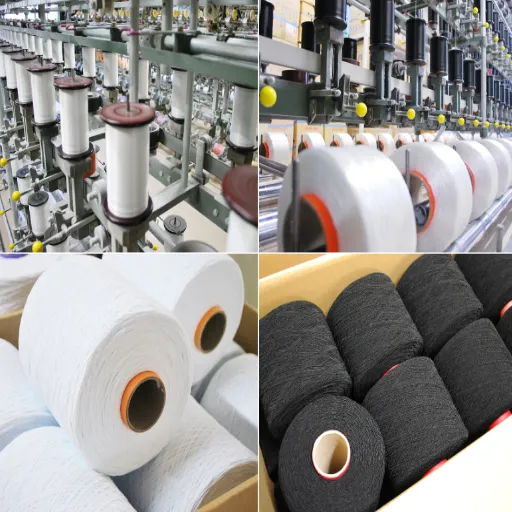
Your color is the primary logo on a yarn product, but your actual mark still needs a home. Here are the four proven methods, in order of permanence.
Knit-In Logos (Jacquard and Intarsia)
A knit-in logo is woven directly into the fabric. Jacquard patterns give you detailed, multi-color designs; intarsia gives you clean blocks of solid color. Because the logo is part of the fabric itself, it can’t peel, crack, or wash off. This is the premium choice for finished garments and accessories, and it’s what most designer knitwear brands use. It’s also the most expensive, since it adds pattern programming and knitting time to every piece.
Woven Labels (Jacquard, Damask, Satin)
A woven label carries your logo stitched into the label’s own fabric. Most woven labels support 4 to 6 colors, and fineness ranges from 28 to 92 stitches per centimeter, with higher density giving finer, more detailed results. Damask and satin weaves give a smooth, premium feel. Woven labels are durable, won’t fade, and can include metal or reflective threads for an upscale look. This is the workhorse choice for apparel brands.
Printed Labels, Hang Tags, and Care Cards
Printed labels are the most cost-effective route, and they carry more than a logo: brand name, color name, fiber content, care instructions, and a QR code that leads to your story or a traceability page. Hang tags and care cards are the same idea with more room to tell your brand’s story. For a craft yarn brand, a well-designed paper band plus hang tag does the heavy lifting.
Packaging as the Logo
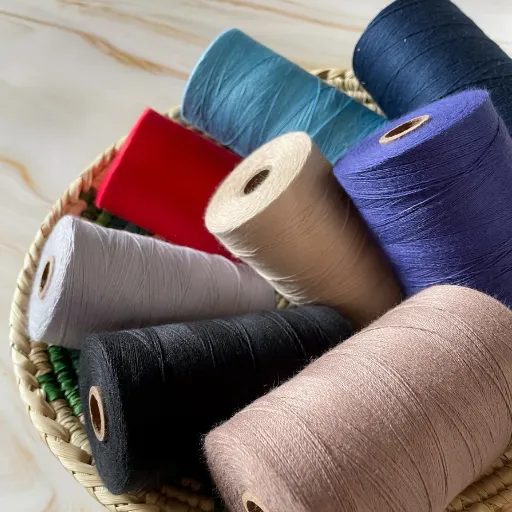
Finally, packaging is branding you can’t ignore. For a ball or skein, a paper band with your brand name, color name, and a QR code is retail-ready. For a cone, a custom tube label carries your mark in mill settings. Polybags, boxes, and cartons extend the brand from the shelf to the unboxing. The full inventory of where branding goes is in the next section.
Here’s a simple decision tree to pick your method:
- Selling finished garments? Knit-in or embroidered logos.
- Selling yarn in balls or skeins? Paper band plus hang tag.
- Supplying yarn to mills? Tube labels plus carton marks.
- Tight budget? Printed labels and packaging first, upgrade to woven or knit-in as you grow.
Turn your yarn concept into production with Hebei Lida Textile Co., LTD.
Designing Branded Yarn Labels and Packaging
Your packaging needs to carry specific information to function at retail and in the mill, and it all fits on a small surface:
| Where branding goes | What it carries |
|---|---|
| The yarn itself | Brand color, fiber, texture |
| Paper band (ball/skein) | Brand name, color name, weight |
| Tube label (cone) | Count, lot, care, barcode |
| Woven/printed label | Logo, brand name |
| Hang tag / care card | Story, QR code, care |
| Polybag / box | Retail-ready presentation |
| Carton | Outer branding, lot marks |
Format follows yarn type. Balls and skeins get paper bands designed for the shelf, so the band fit and barcode readability matter. Cones get tube labels built for mill handling and carton management. Hanks are often packed loose with a hang tag.
Whatever the format, ask for sample approval on both the yarn and the packaging before bulk production, and verify color, weight, winding, band accuracy, and carton quantity in QC. The private-label packaging playbook is a solid external reference for these specs.
For budget-conscious brands, custom yarn for small businesses covers how to get retail-ready packaging without over-ordering.
Custom Yarn for Branding: Costs, MOQs, and Lead Times
Here’s the honest money conversation, because it’s where most branded yarn projects stall. The table below, drawn from the custom yarn pricing guide at GLYarn, shows what each customization level adds to your base yarn cost:
| Customization type | Cost premium |
|---|---|
| Brand color match | +10 to +25% |
| Custom fiber blend | +15 to +30% |
| Custom twist | +10 to +20% |
| Functional finishes | +30 to +100% |
| Full custom development | +50 to +200% plus sampling |
MOQs follow a similar ladder. Stock yarn starts from one cone or 20 to 50 kg, with samples as low as 1 kg. Custom color (package-dyed) typically needs 500 to 1,000 kg per color, though some mills accept 300 kg and small-batch dyers work from 5 to 10 kg per shade. Custom blends run 1,000 to 3,000 kg. R&D samples sit at 1 to 100 kg.
Lead times add up fast, so plan backward from your launch date. Custom color adds 2 to 3 weeks on top of production (7 to 14 days added, 30 to 45 days total). Custom blends add 4 to 8 weeks, and functional finishes add 4 to 10 weeks. Lab dips take 2 to 5 working days, yarn samples 3 to 7 days, and packaging samples 7 to 15 days; bulk production runs 15 to 25 days.
Budget for 3 to 5 sampling rounds, each 2 to 4 weeks, and you’ll have an accurate timeline.
How to Start Small: Limited Editions and Sample Programs
You don’t need to fund a full custom line on day one. The stock-hybrid approach (2 custom colors plus stock shades) gets you to market fast, and limited editions are another proven entry point.
Consider Jules, who runs a DTC yarn brand. She ran a numbered, tracked small-batch hand-dye of 10 to 20 kg per color for a limited edition, and it sold out in three weeks at full retail. The scarcity and the story drove the premium, not the volume.
That’s the pattern that works: use small batches to test color, packaging, and demand, then scale what proves out.
Scaling From Limited Edition to Core Line
When a limited edition sells through, lock the approved spec (color, fiber, count, label, packaging) as your brand standard. Then commit to repeat volume to bring the per-kg cost down, and share your consumption data with the supplier so they plan dye lots around your program. Build a seasonal cadence: a core line that never changes, plus drops and collaborations that keep the brand fresh. Custom yarn for small businesses has more on staging this growth.
Sustainability as a Brand Differentiator
When you’re developing custom yarn for branding, sustainability is only valuable if it’s verifiable, and the certification landscape makes that possible. OEKO-TEX Standard 100 covers harmful substances, GRS verifies recycled content, GOTS covers organic cotton, RWS covers responsible wool, and BSCI covers social audits. These aren’t marketing badges; they’re contract requirements that make your brand claims checkable.
The options are real: recycled polyester (rPET), organic cotton, low-impact dyes, and waterless dyeing processes all feed branded yarn programs. Transparency and traceability have moved from buzzwords to deal-breakers, especially for recycled-yarn claims. A QR-code hang tag that shows your fiber’s origin turns a sustainability claim into proof a customer can verify on the spot.
Just avoid greenwashing. Every claim you make should trace to a third-party audit or a documented process. We cover the certified options in depth in custom eco-friendly yarn solutions, and you can explore sustainable yarn options across the broader cluster.
Building a Branded Yarn Program
You now have every piece. Here’s how they fit into a repeatable custom yarn for branding program, in the order a brand team should work through them:
- Define your brand identity. Palette, logo, tone, and story. This is the source of truth.
- Translate it to a yarn spec. Palette to fiber, count, and texture. Brand story to a color name and a label design.
- Match the colors. Pantone or swatch reference, lab dips, approval, batch standards.
- Decide logo execution. Knit-in, woven, printed, or packaging.
- Design labels and packaging. The full touchpoint map from the table above.
- Approve samples. Both yarn and packaging, before bulk.
- Scale the program. Limited edition to seasonal drop to core line, with locked specs and repeat volume.
The brands that win at this treat their yarn system like their design system. They build a brand color system that works across product types, name every color so customers can order it again, and use provenance and QR codes to keep the story alive at the point of sale. Aditya Birla’s sub-brand architecture and Gebrüder Otto’s traceability are the large-scale versions of what you can do at your size.
That’s the complete custom yarn for branding playbook. Ready to develop your branded yarn line? Talk to Hebei Lida about your project, and we’ll walk you through Pantone-matched brand colors, custom labels and packaging, small-batch programs, and the manufacturing quality to scale from limited edition to core line.
Frequently Asked Questions About Custom Yarn for Branding
What is custom yarn for branding?
Custom yarn for branding is yarn developed to a brand’s specific identity: exact brand colors matched to Pantone or a physical swatch, fiber and texture chosen for hand feel and performance, plus labels, logos, and packaging that carry the brand name. The finished product is unmistakably on-brand.
Can you put a logo on yarn?
Yes, in several ways. Your brand color is the most powerful logo on the yarn itself. You can also knit a logo into finished products (jacquard or intarsia), weave it into a label, print it on a label or hang tag, or apply it via paper bands, tube labels, and packaging.
How do you match brand colors to yarn?
Submit a color reference (Pantone TPX/TCX code, CIELAB data, or a physical swatch) to the mill. They produce lab dips in 2 to 5 working days, you approve the best match, and that approved dip becomes the contract standard for bulk production. Top dyers match to Delta E under 1.0.
What is the MOQ for custom branded yarn?
Stock yarn starts from 1 cone or 20 to 50 kg. Custom color dyeing typically needs 500 to 1,000 kg per color, some mills accept 300 kg, and small-batch dyers work from 5 to 10 kg per shade. Custom blends run 1,000 to 3,000 kg, with samples as low as 1 to 2 kg.
How much does custom brand color yarn cost?
A brand color match adds 10 to 25 percent to your base yarn cost. Custom blends add 15 to 30 percent, custom twist 10 to 20 percent, functional finishes 30 to 100 percent, and full custom development 50 to 200 percent plus sampling fees.
How long does custom dyed yarn take?
Lab dips take 2 to 5 working days. Custom color adds 2 to 3 weeks to production (30 to 45 days total). Custom blends add 4 to 8 weeks, functional finishes add 4 to 10 weeks, and bulk production itself runs 15 to 25 days. Plan for 3 to 5 sampling rounds.
What is private label yarn?
Private label yarn is a proven mill yarn base, dyed and packaged with your brand name, colors, and labels. It’s faster and cheaper than full custom development and gives you retail-ready presentation without reinventing the product.
Can small businesses order custom branded yarn?
Yes. Use the stock-hybrid approach: 2 custom signature colors plus stock shades cuts minimums 60 to 80 percent and enables 100 to 200 unit test runs. Small-batch dyers also accept 5 to 10 kg per shade for limited editions.
Conclusion
Custom yarn for branding turns a commodity material into a brand differentiator. Start with your brand identity, translate it into a yarn spec (color, fiber, and texture), decide how your logo is applied, and design labels and packaging that tell your story. Then plan backward from your launch date for cost, MOQs, and sampling rounds.
Here’s the short version to remember:
- Your exact brand color, matched to Delta E under 1.0, is the most defensible logo you own.
- Branding lives on the yarn, the band, the label, the hang tag, the polybag, and the carton.
- Custom dyeing needs 500 to 1,000 kg per color; the stock-hybrid path cuts that 60 to 80 percent for small launches.
- Budget +10 to +25 percent for a brand color and 2 to 5 working days for lab dips.
- Small-batch limited editions prove demand before you commit to a core line.
The tools, the processes, and the small-batch paths all exist today. The only missing piece is the decision to make your yarn unmistakably yours. When you’re ready, request your branded yarn program and Hebei Lida will help you take it from brand palette to finished product.