

Fiber preparation is the first stage of yarn production, where raw baled cotton, wool, or synthetic staple is opened, cleaned, blended, and aligned before it can be spun into yarn. It determines the ceiling on yarn evenness, strength, and defect levels.
Here’s the part most buyers miss: raw fiber is the most expensive input in your yarn, often over half the total cost. Yet almost no one asks how that fiber was prepared before it hit the spinning frame. Two yarns with the same count and twist can feel and wear completely differently depending on how well their fibers were opened, blended, and cleaned.
If you’re a fashion designer, home textile brand, or industrial buyer, you’ve probably chosen yarn by count and color while never considering fiber preparation. That’s a missed opportunity. By the end of this guide, you’ll understand each stage of preparation, why it matters to the yarn you order, and how to evaluate whether a manufacturer controls quality at this stage.
Key Takeaways
- Fiber preparation is the first stage of yarn production, covering fiber selection, bale opening, blending, cleaning, and carding before spinning.
- Raw fiber is the largest cost in yarn manufacturing, often more than 50% of the total, so preparation choices drive both quality and price.
- Blending is widely considered the most important preparation step because it reduces lot-to-lot variation and improves yarn evenness.
- Blowroom cleaning removes 40 to 70% of trash, but aggressive cleaning can damage fibers, so the right machinery settings matter.
- Fiber quality parameters such as staple length and micronaire are easy to check and directly predict yarn strength, evenness, and pilling.
What Is Fiber Preparation in Yarn Production?
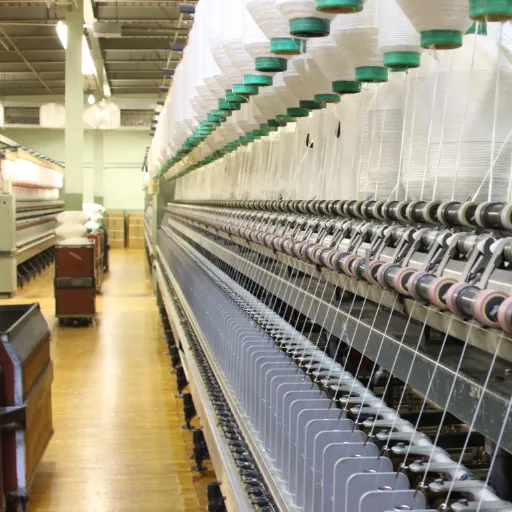
Fiber preparation is everything that happens to raw fiber between the bale and the spinning machine, a process CottonWorks describes for spinning mills. Its goal is simple to state and hard to execute: deliver clean, individualized, well-blended, and aligned fibers to the spinning frame, every single time.
The process has three core jobs. Open the compressed, tangled bales into small, fluffy tufts. Clean out trash, dust, seeds, and plant matter without breaking the good fiber. Blend different fibers or lots so every meter of yarn has the same composition. Miss any of the three and the problem shows up later as thick and thin places, shade variation, weak spots, or expensive fabric defects.
Consider what happened to Marcus at Nordic Home Textiles. His company ordered a large run of cotton yarn for a curtain collection, and he specified count, twist, and color down to the last digit. What he never asked was how the fiber was blended. Halfway through production, his manufacturer ran a different cotton lot through the line without adjusting the blend. The result was a subtle but visible shade change across batches, and his team had to rework an entire production run. The yarn specifications were identical. The fiber preparation was not. Connect with us for advanced yarn manufacturing and flexible production solutions.
Where Fiber Preparation Fits in the Yarn Production Process
Fiber preparation sits at the very front of the journey. The yarn production process runs from fiber selection through carding, drawing, spinning, twisting, dyeing, and finishing, and preparation sets everything else up. Get it wrong and even the best spinning machines cannot rescue the yarn, because they can only work with the fiber they’re given. That’s why quality is effectively decided before the first spindle turns.
The Stages of Fiber Preparation: From Bale to Ready-to-Spin Fiber
Fiber preparation is not a single step. It’s a sequence of machines and processes, each one opening the fiber a little more and cleaning it a little better. Here’s how it flows in a modern mill.
Fiber Selection and Intake
Raw material arrives in compressed bales, and the mill’s first job is to know exactly what it has. Cotton bales are classed for length, micronaire, strength, color, and trash content, often using High Volume Instrument (HVI) testing. Synthetic staple comes with its own specifications, and recycled fiber carries the widest variability of all.
Selection matters commercially: raw fiber is more than 50% of total yarn cost, so buying better fiber than you need is unprofitable, while worse fiber produces yarn that fails your customers. This is the first place a manufacturer’s discipline shows.
Bale Opening
Before anything can happen, the compressed, tangled mass in a bale must be broken apart. Bales are conditioned and arranged in a “laydown” of matching specifications, then a bale plucker moves along the row, removing a small amount of fiber from each bale on every pass. This gradual approach is deliberate: it minimizes fiber damage while pulling from many bales at once, which is itself an early form of blending.
Opening happens progressively. A series of blowroom machines with finer and finer teeth breaks large clumps into smaller tufts, then opens them toward individual fibers. Older mills needed four to seven beating points; today’s equipment does the job with two or three for gentler handling and less fiber breakage.
Blending and Mixing
Blending is regarded as the most important process in a spinning mill, and with good reason. It reduces lot-to-lot variation in fiber characteristics, permits uniform processing, and directly improves yarn quality. A good blend is both homogeneous, meaning the correct proportions throughout, and intimate, meaning individual fibers actually lie side by side rather than in clumps.
Mills use several blending methods. Bale laydown is the primary stage, arranging matching bales to disperse fiber variables. Multi-cell blenders randomly fill and empty chambers to even the mix, sandwich blenders lay fibers in layers and remove them perpendicularly; and modern continuous blenders feed fiber pneumatically into vertical chutes. The best multicomponent machines blend two to eight components with a deviation below 1 percent. Contact our experts for high-quality yarn production designed around your requirements.
Cleaning and Contamination Removal
Cleaning removes trash, dust, broken seeds, and foreign matter. Coarse cleaners go first, handling the large, heavy particles using gravity, centrifugal force, airflow, and mechanical beating against grid bars. Fine cleaners sit last in the line, just before carding, removing the smaller contaminants.
Cleaning efficiency typically lands between 40 and 70 percent, and there’s a genuine trade-off: mechanical action that removes trash can also damage the good fiber. A mill that runs maximum cleaning intensity may end up with cleaner but weaker, shorter fiber. The skill is balancing the two.
Modern contamination detection goes beyond mechanical cleaning. Camera systems scan the fiber for shininess, color, transparency, fluorescence, and shape that differ from natural cotton, then air jets eject contaminants like plastic. A single piece of plastic film in a yarn can cause a visible defect or stop a machine.
Carding
Carding is where loose fiber first takes on textile form. A carding machine uses wire-covered cylinders and flats to disentangle, clean, and intermix the fibers, then lays them parallel into a continuous web. That web is gathered into a loose, untwisted rope called a sliver and stored in cans for the next stage.
Carding is the foundation of fiber alignment. Fibers that come out of the card are far more parallel than anything before them, which is essential for even, strong yarn, and carding also removes significant remaining trash and dust.
Drawing, Combing, and Roving
After carding, the sliver is combined with six to eight other slivers on a draw frame and drafted back down to a single sliver’s weight. This doubling step straightens the fibers, blends them further, and dramatically improves uniformity. For premium yarns, a comber then removes the shortest fibers, typically those half an inch or shorter, to create a finer, smoother, more lustrous product. The removed noil is recycled. Finally, a roving frame attenuates the sliver and inserts a slight twist so it can survive winding before spinning.
Each of these stages deserves its own treatment. For the detail on how carding differs from combing and how drawing and roving bridge fiber to yarn, those guides cover them in depth. The key point here: every stage before spinning exists to give the spinning machine the cleanest, most uniform input possible.
Why Fiber Preparation Determines Yarn Quality
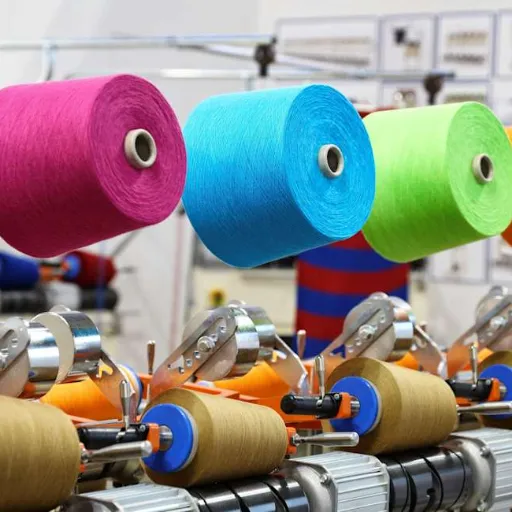
Every yarn quality parameter you care about traces back to preparation. Evenness, strength, hairiness, pilling, and dyeability are all influenced by how well the fiber was opened, blended, and cleaned, which is why two yarns with identical specs can perform so differently. Short fibers and poor blending create thick and thin places; inconsistent length leads to weak yarn and pilling; immature or contaminated fiber produces shade variation and dye streaks. A spinning machine can’t fix any of these; it can only pass them along to your fabric. Contact our experts for high-quality yarn production designed around your requirements.
Let us help you develop dependable yarn products with efficient manufacturing processes.
Fiber Quality Parameters Every Buyer Should Understand
You don’t need to run a mill to check fiber quality. A few standard parameters, printed on any competent fiber test report, tell you most of what you need to know.
| Parameter | What It Measures | What Good Looks Like | What It Affects |
|---|---|---|---|
| Staple length | Fiber length | Medium 0.94-1.12 in; long 1.13-1.25 in; ELS over 1.25 in | Strength, fineness, pilling, softness |
| Length uniformity | Consistency of lengths | Above 83% is good; below 79% is poor | Evenness, hairiness, spinning efficiency |
| Micronaire | Fineness and maturity | 3.5-4.9 for Upland cotton | Dye uniformity, neps, fineness of yarn possible |
| Fiber strength | Tenacity per tex | 28 g/tex and higher | Yarn strength, breakage in processing |
| Trash and contamination | Foreign matter | As low as possible; 1-2% at card input | Fabric defects, breaks, dye problems |
Staple length is widely considered the single most important fiber quality factor. Longer staples give more surface area for fibers to grip each other when twisted, producing stronger, smoother yarns with fewer protruding ends and less pilling. The fineness of yarn you can spin is directly proportional to staple length.
Micronaire is more subtle. It measures both fineness and maturity, and the premium range for Upland cotton is about 3.5 to 4.9. Below that, cotton is often immature, which means it absorbs dye unevenly and forms neps. Above it, the cotton is too coarse to spin into fine yarns. Both extremes carry price discounts for good reason. Reach out for customized yarn production support from fiber to finished yarn.
How Fiber Quality Affects Different Applications
The same preparation choices look different depending on your product. An upholstery brand needs long, strong, well-cleaned fiber to survive abrasion testing. A fashion label producing fine knitwear wants combed long-staple cotton for softness, sheen, and drape. An industrial buyer needs consistent, high-tenacity fiber that doesn’t vary lot to lot. Asking your manufacturer how they prepare fiber for your application is the most useful question you can ask.
Elena, a knitwear designer in Milan, learned this the hard way. Her signature sweater line used a fine cotton yarn that she’d sourced for years without issue. When she switched suppliers to save cost, the new yarn looked identical on the cone but knit up visibly hairier and pilled after a few wears. The count, twist, and fiber type were the same. The difference was that her old supplier used combed long-staple cotton with careful preparation, and the new one used carded, shorter fiber. The specification sheet didn’t show it, but the fabric did.
Fiber Blending: Combining Natural and Synthetic Fibers
Blending exists because no single fiber is perfect. Natural fibers like cotton and wool bring comfort and absorbency; synthetics like polyester and nylon bring strength, durability, and shape retention. Poly-cotton is the classic example, with cotton providing breathability and polyester adding strength and easy care.
Research backs up the quality benefit. Studies on cotton-Tencel blended ring-spun yarn found that 100% cotton yarn showed greater unevenness, more thick and thin places, more neps, and a higher imperfection index than the blended yarns. A well-chosen blend can outperform a single fiber used alone. Blending isn’t just a cost play; it’s a quality play.
The Economics of Fiber Blending
Because raw fiber is the largest cost in yarn production, blending is also a major cost lever. A mill can combine premium fibers with more economical ones to hit a target performance at a lower price, matching fiber to end use rather than overbuying quality you don’t need.
Custom Fiber Blends for Unique Products
For brands that want something distinctive, fiber preparation is where custom begins. You can specify the exact fiber blend, the proportion of recycled content, the combing level, and even the fineness of the resulting yarn. These choices are all set during preparation, before a single meter of yarn is spun.
If you’re developing a custom product, this is the stage to discuss with your manufacturer. Hebei Lida’s custom yarn solutions are built around exactly this flexibility: fiber blend, count, twist, color, and finish can all be tailored to your application, with sampling before you commit to volume.
Fiber Preparation for Cotton, Synthetic, and Recycled Fibers
Preparation differs by fiber type. Cotton arrives already ginned, meaning the lint has been separated from the seed at the gin. The mill then focuses on cleaning residual trash, opening the bale, and blending lots to even out natural variation, with combing available for premium yarns.
Synthetic staple such as polyester or viscose arrives as chopped, crimped fibers cut to a set length. Preparation is generally easier because synthetic fiber is more uniform and cleaner, though it still needs opening and blending to handle static and achieve a consistent mix.
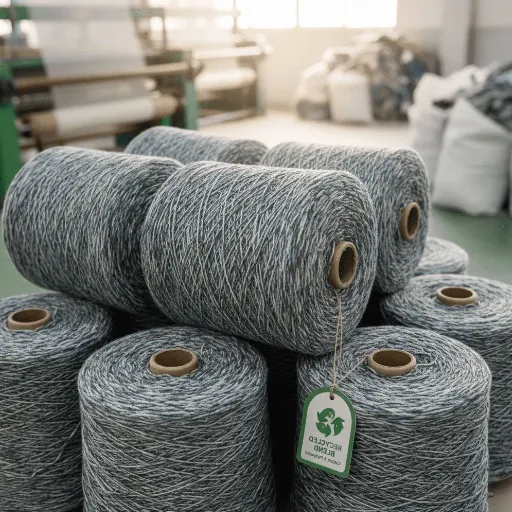
Recycled fiber is the hardest to prepare. Mechanically recycled cotton carries higher short-fiber content, more neps, and greater length variability than virgin cotton, which is why recycled content is often capped at around 20 percent in ring-spun blends.
Preparing Recycled Fibers Without Sacrificing Quality
The good news is that preparation technology is catching up. A collaboration between Recover, Rieter, and Birla Cellulose found that replacing virgin cotton with man-made cellulosic fiber of consistent length doubled recycled cotton content to 40 percent while improving yarn evenness, appearance, hairiness, and pilling. Preparation quality, not the recycled fiber itself, decides how much recycled content a yarn can carry.
The team at a sustainable activewear brand we work with wanted a higher recycled content in their performance yarns without the pilling and unevenness that mechanically recycled fiber often brings. Their solution was a carefully prepared blend of recycled cotton supported by a cellulosic fiber of matching length, processed on equipment tuned to handle short fibers gently. The result was a yarn that hit 40 percent recycled content and still passed their abrasion and pilling tests. The fiber preparation stage is exactly where that outcome was won or lost. Get in touch for professional yarn production solutions built for quality and consistency.
Sustainability in Fiber Preparation: Waste, Energy, and Recycling
Fiber preparation has a bigger sustainability footprint than most buyers realize, but it also offers some of the easiest wins in the whole production process.
Fiber preparation waste is valuable. Blowroom and carding waste contains a substantial share of recoverable good fiber, in some studies around 50 percent. Mills can feed it back into spinning or convert it into insulation and bio-composites, one of the simplest circular economy moves available.
Energy is another lever. Eco-efficient preparation and spinning routes can cut energy demand by 20 to 30 percent compared with standard ring-spun cotton production. Even a modest change, like removing a single draw frame passage, has been shown to cut yarn breaks by 30 percent, reduce imperfections by 38 percent, and save about 5 percent of energy.
The broader context is sobering. Global fiber production reached 132 million tonnes in 2024, yet recycled fibers hold just 7.6 percent of the market and less than 1 percent of fiber comes from textile recycling. If you’re sourcing eco-friendly yarn production methods, ask how your manufacturer handles preparation waste and energy, because that’s where a lot of the real impact lives.
How to Evaluate a Yarn Manufacturer’s Fiber Preparation Capability
You can’t see fiber preparation from a sample cone, but you can ask the right questions. Here’s what separates a mill that controls this stage from one that doesn’t.
- Do they test fiber on intake? Look for HVI testing and documented specifications for staple length, micronaire, strength, and trash content. A mill that doesn’t know its raw material can’t control its yarn.
- Can they show you their blending process? Blending is the most important preparation step. Ask how they manage lot-to-lot consistency and whether they use modern multicomponent blenders.
- What’s their cleaning approach? A mill should be able to explain how they balance cleaning efficiency with fiber damage, and how they handle contamination detection.
- Do they adapt preparation to the application? The best manufacturers tune preparation to your end use.
- What happens to their preparation waste? Recycling fiber preparation waste is both a sustainability story and a sign of process discipline.
Watch for red flags. A manufacturer who can’t produce fiber test data, treats blending as an afterthought, or can’t explain contamination control is a risk no matter how good the samples look. The samples you approve today are only as reliable as the process that produced them.
At Hebei Lida Textile Co., LTD, fiber preparation is the foundation of our quality promise. We test fiber on intake, blend carefully to hold consistency across lots, and tune preparation to each customer’s application, whether that’s upholstery, fashion, home textiles, or industrial use. If you’re ready to work with a manufacturer who controls quality from the first bale, contact us today for a quote or a free sample.
Frequently Asked Questions About Fiber Preparation
What is fiber preparation in yarn manufacturing?
Fiber preparation is the first stage of yarn production, where raw baled fiber is opened, cleaned, blended, and aligned before spinning. It covers fiber selection, bale opening, blending, cleaning, carding, drawing, and sometimes combing.
What happens to cotton before it is spun into yarn?
Cotton is ginned to separate lint from seed, then baled and sent to the mill. At the mill, the bales are opened into tufts, cleaned of trash and contaminants, blended to even out quality, and carded into a sliver. The sliver is drawn, and for premium yarns combed, before it’s spun into yarn.
Why is fiber blending important in yarn production?
Blending reduces lot-to-lot variation in fiber quality and improves yarn evenness. It lets mills combine different fibers to balance properties, like cotton for comfort and polyester for strength. Well-blended fiber produces more consistent yarn with fewer defects.
How does fiber length affect yarn quality?
Longer fibers produce stronger, smoother, more even yarn with less pilling, because they have more surface area to grip each other when twisted. Short fibers create more joins per meter of yarn, making it weaker and more prone to pilling.
What is micronaire and why does it matter?
Micronaire measures cotton fiber fineness and maturity. The premium range for Upland cotton is about 3.5 to 4.9. Low micronaire cotton is immature, absorbs dye unevenly, and forms neps. High micronaire cotton is too coarse to spin into fine yarn. Both extremes produce worse yarn.
Can recycled fibers be used in yarn production?
Yes, but preparation is the key. Mechanically recycled cotton has more short fibers and neps, which limits it to about 20 percent of ring-spun blends. With careful preparation and consistent-length support fiber, recycled content can be doubled to 40 percent without sacrificing yarn quality.
Conclusion
Fiber preparation is the invisible first stage of yarn production, and it decides more about your yarn’s quality than almost anything downstream. The three core jobs, opening, cleaning, and blending, set the stage for every parameter you care about: evenness, strength, pilling, dyeability, and consistency across lots.
The practical takeaways are simple. Know your fiber quality parameters, because staple length and micronaire predict yarn performance. Ask your manufacturer how they blend and clean, because that’s where consistency is won or lost. And if sustainability matters to your brand, ask about preparation waste and energy, because that’s where the biggest environmental wins live.
You don’t need to run a mill to benefit from this knowledge. You just need to ask better questions and work with a partner who can answer them. Fiber preparation is where quality is decided, so choose a manufacturer who controls it from the first bale. Request a quote from Hebei Lida today and see the difference that disciplined preparation makes in the yarn you receive.