




The best yarn for baby blankets is a combed or organic cotton in DK weight for most projects. A tight-spin acrylic is the practical choice for budget and high-wash blankets, and a fine superwash merino is the warmest option that still washes well.
Priya finished a baby blanket for her sister’s shower in March. She picked the softest skein in the shop, a loose-spun acrylic in pale grey, and the blanket looked beautiful in the photographs. By the third wash it had a halo of fuzz and the stitch definition had gone.
Her tension was fine. The yarn had been spun loose enough to feel soft on the shelf, and a baby blanket gets washed far more often than anything else in the house.
That’s the trade most guides skip. Softness in the shop isn’t the same as softness after twenty washes, and it isn’t the same as safety next to a newborn’s face.
This guide gives you a decision you can make before you spend the money. Start with who will use the blanket and how it will be washed. Then choose the fibre, the construction, and the weight. If you are still deciding between blanket types, our guide to choosing yarn for blankets covers bed blankets and throws.
Key Takeaways
- Combed or organic cotton in DK is the safest default for a blanket that will touch a baby’s face.
- A baby blanket is washed weekly, so wash survival matters more than warmth.
- “Soft” is a manufacturing choice. Looser twist and brushed surfaces feel softer but shed and pill faster.
- The AAP advises against loose blankets in a sleep area for babies under 1, so a baby blanket is a pram, floor, toddler, or gift item.
- OEKO-TEX Standard 100 Class I is the certificate that matters for anything against a baby’s skin.
The Short Answer: Best Yarn for Baby Blankets by Use
The table below answers what yarn is best for baby blankets by use case.
| Use | Best fibre | Weight | Why | Avoid |
|---|---|---|---|---|
| Newborn gift | Combed or organic cotton | DK (#3) | Soft, breathable, no fuzz, washes hot | Loose chenille, eyelash yarn |
| Pram and car seat | Cotton or cotton-bamboo | DK (#3) | Breathable, light, dries fast | Bulky acrylic, which traps heat |
| Toddler bed | Tight-spin acrylic or acrylic-cotton | Worsted (#4) | Survives weekly washing, dries fast | Single-ply or brushed acrylic |
| Keepsake | Fine superwash merino or combed cotton | Sport (#2) to DK | Drape, softness, longevity | Untreated wool, hand-wash-only yarn |
| Charity or bulk batch | Tight-spin acrylic | Worsted (#4) | Cost per yard, colour consistency | Novelty yarns, loose spin |
Start With the Use, Not the Fibre
Most guides begin with a fibre list. That’s backwards when you’re choosing the best yarn for baby blankets, because three constraints decide more than fibre does.
A Baby Blanket Is Not a Sleep Blanket
The American Academy of Pediatrics is direct: keep soft objects and loose bedding out of a baby’s sleep area, and that guidance applies up to 1 year of age. Use a wearable blanket or an extra clothing layer for sleep instead. Never use a weighted blanket for a baby. Read the AAP’s safe-sleep guidance in full.
So what is the blanket for? Prams, car seats, floor play, toddler beds, photographs, and gifts.
That isn’t a small distinction. It changes the brief from “keep a sleeping baby warm” to “survive constant washing and look good in a photograph.” For a newborn gift, wash survival and a clean surface matter more than warmth. For a toddler, durability and weight matter more.
Say this plainly to yourself before you choose a yarn. A blanket that is safe in a pram and beautiful as a gift is a success. A blanket presented as a sleep product is not.
How Often Will It Be Washed?
Weekly is the working assumption, not the worst case. A blanket that lives in a pram gets washed more often than one that sits on a shelf.
Wash frequency drives the fibre choice more than warmth does. Cotton and tight-spin acrylic improve with washing. Loose-spun acrylic and chenille degrade. Wool needs a gentler cycle than most people will give it.
What Will Touch It?
A baby’s face, hands, and mouth. That’s why shedding matters here more than on any other blanket you’ll make. A fuzzy yarn that sheds on a sofa is a nuisance. The same yarn next to a newborn’s nose is a different problem.
This is also where skin sensitivity comes in. Acrylic isn’t toxic, but it’s less breathable than cotton and it builds static. For a baby with eczema, that combination is worth avoiding. Our guide to acrylic and sensitive skin covers the detail.
Five Yarns to Avoid for a Baby Blanket
- Loose chenille, which sheds fibres next to a face.
- Eyelash and other fuzzy novelty yarns, for the same reason.
- Mohair and angora, which shed constantly.
- Single-ply yarns, which pill and lose shape.
- Untreated wool and anything labelled hand-wash only, which will fail in a normal wash.
What “Soft” Actually Means in a Yarn
Softness isn’t a single property. It comes from fibre diameter, twist, surface finish, and staple length. A mill can make almost any fibre feel soft in the shop by changing those four things.
Loosen the twist and the yarn feels plush. Brush the surface and it feels velvety. Use a shorter staple and it feels smoother at first. Every one of those choices increases shedding and pilling, because short fibres can escape the yarn structure under friction.
That’s why the softest skein is often the worst baby blanket yarn.
A combed, multi-ply yarn with a moderate twist feels slightly firmer in the skein. After two or three washes it softens, and it keeps its surface. The fibres are aligned, the plies hold them in place, and there is far less lint.
You can test this in a shop without any equipment. Pull a length and look at the halo against a dark sleeve. Rub the yarn between your fingers and see how many fibres come away.
Then check the ply count on the label. Two or three plies with a clear twist will outlast a loose single every time.
That single idea explains most of the recommendations on this page. A baby blanket is washed hard and touches a face, so you want a yarn that gets softer with washing rather than one that starts soft and disintegrates.
The Fibres, Honestly Compared
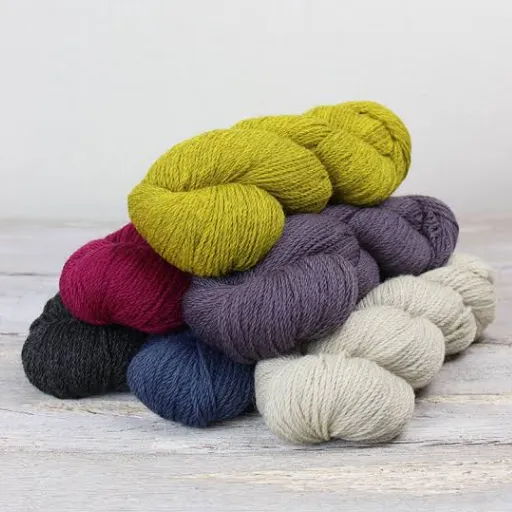
No single fibre is the best yarn for baby blankets. The right choice depends on the use you settled on above.
| Fibre | Breathability | Skin feel | Wash survival | Shedding and pilling | Best for |
|---|---|---|---|---|---|
| Combed cotton | High | Smooth, dry | High, softens with washing | Low | The default for skin contact |
| Organic cotton | High | Smooth, dry | High | Low | Certified gifts, eczema-prone skin |
| Cotton-bamboo | High | Silky, cool | Medium, grows when wet | Low to medium | Drapey pram blankets |
| Acrylic | Low to medium | Soft, can feel plasticky | High | Medium to high in a loose spin | Budget, charity, toddler blankets |
| Acrylic-cotton | Medium | Soft with some grip | High | Medium | A compromise for high-wash use |
| Superwash merino | Medium to high | Warm, fine | Medium, gentle cycle | Low | Winter pram blankets, heirlooms |
| Chenille or plush polyester | Low | Very soft | Medium | High | Older toddlers, decorative use |
Cotton and Organic Cotton
Cotton is the default for a reason. It breathes, absorbs, produces no fuzz, and gets softer with every wash. Combed cotton removes the short fibres that cause a hairy surface, which matters when the blanket is against a face.
The trade-offs are real. Cotton is heavy when wet, slow to dry, and has almost no elasticity. A large cotton blanket can stretch on the line. Pre-wash the yarn or add length if the pattern is tight.
Organic cotton is the same fibre grown and processed to a certified standard. It is worth paying for when the blanket is a gift and the claim matters. Our guide to organic cotton yarn for babies explains what the certification actually guarantees. The short version: the certificate is the proof, not the word “organic” on the band.
Cotton-Bamboo
Bamboo viscose, often sold as bamboo rayon, is a regenerated cellulose fibre. It isn’t a plant fibre spun straight from the stalk. It drapes beautifully and feels cool, which suits a pram blanket for warm weather.
However, it’s also weak when wet and it grows. A cotton-bamboo blanket can lose its shape after a few washes. Use it for drape and hand-feel, not for a blanket that will be washed weekly for two years.
Acrylic
Acrylic is cheap per yard, washable, moth-proof, colour-fast, and available in consistent shades across seasons. For a charity batch or a blanket that will be washed constantly, those advantages are decisive.
The costs, however, are breathability and fuzzing. Acrylic is a thermoplastic and it traps heat. A loose-spun acrylic develops a halo and then pills. A tight-twist, higher-ply acrylic behaves very differently from a fluffy one, so ask for the ply count rather than the brand.
For the full case, including where acrylic genuinely wins, see the acrylic baby blanket guide.
Superwash Merino
Merino is warm, fine, and thermoregulating. It stays warm when damp, which no cotton or acrylic does. Superwash treatment makes it machine washable, and that’s the version to choose for a baby blanket.
Two caveats. Some babies react to wool against the skin, so test with a smaller item first. And untreated wool will felt in the first warm wash, permanently. If the label doesn’t say superwash, treat it as hand-wash only.
Chenille and Plush Polyester
Chenille is the yarn most people picture when they hear “baby blanket yarn.” It is also the one to think hardest about.
Chenille is a pile structure, not a spun yarn. Short fibres stand up from a core, which is why it feels like a stuffed toy and why it sheds, mats, and worms. A baby’s face against a shedding pile is a problem on its own, before you even get to the sleep-safety question.
If you are weighing a polyester plush against cotton, our guide to polyester safety for babies covers the fibre itself.
That doesn’t make it wrong. For an older toddler, a decorative pram blanket, or a gift where hand-feel is the point, chenille is a fair choice. Buy a tight, dense version and wash it inside a pillowcase.
Rachel bought a chenille pram blanket because it was the softest thing in the shop. By six weeks it had matted, and she was picking fibres off her daughter’s coat. She switched to combed cotton for the next one.
Baby Blanket Certification: What to Look For on the Label
| What you need | Certificate | What it proves |
|---|---|---|
| Anything against a baby’s skin | OEKO-TEX Standard 100, Class I | Every component screened for 1,000+ harmful substances; covers through age 3 |
| An “organic” claim | GOTS | Certified organic fibre plus restricted processing, with stricter limits for baby goods |
| A toy or amigurumi | EN 71-3 | Toy-safety limits for extractable heavy metals |
“Baby” on a yarn label is marketing. It isn’t a standard, and it doesn’t tell you what was tested.
OEKO-TEX Standard 100 Class I is the certificate that matters for a blanket that will touch skin. It covers infants and children through age 3 and screens individual threads, buttons, and accessories, not just the finished fabric.
GOTS matters when the word “organic” is part of the promise. It covers the fibre and the processing, and it applies stricter limits to baby and personal-care products than to other certified goods. A blanket can be GOTS certified and still contain a small percentage of conventional fibre, so check the label threshold: 95% for “organic,” 70% for “made with organic.”
Baby Blanket Yarn Weight, Yardage, and Washing
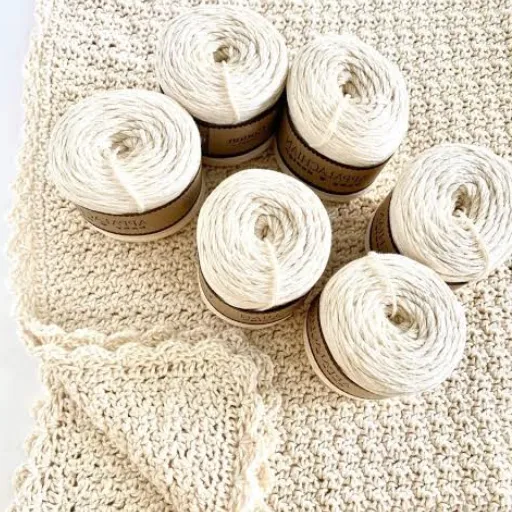
The Right Yarn Weight
DK (#3) is the category default. It gives a soft, light, breathable fabric with enough drape, and it works on 3.75 to 4.5 mm needles or a 4.5 to 5.5 mm hook.
Worsted (#4) is faster and gives a denser, warmer fabric. It suits toddler blankets and anything that will be washed hard.
Sport or fingering weights make a finer, lighter heirloom blanket, but they take far longer.
Bulky is usually the wrong choice here. It adds weight and heat, the loose gauge snags small fingers, and the blanket becomes harder to wash and dry. Save bulky for a sofa throw.
How Much Yarn
A baby blanket is commonly 30 × 40 inches (75 × 100 cm). A crib or pram size is closer to 36 × 54 inches.
For a crocheted baby blanket in worsted weight, plan on 1,200 to 1,600 yards. Knitting uses less yarn for the same size. Our guide to crochet yardage by project has the figures, and the general blanket guide covers throws and larger sizes.
Two rules prevent most problems. Buy one extra skein, and buy the whole project from a single dye lot. Running short in a discontinued colour can’t be fixed.
Washing It So It Survives
Wash the blanket before first use. That removes any factory finish and shows you how the fabric behaves before you gift it.
Use a gentle cycle, cool water, and low spin. Choose a fragrance-free, dye-free detergent and skip fabric softener entirely. Softener coats the fibres, reduces absorbency, and traps lint, which is the opposite of what a baby blanket needs.
Dry flat. Hanging a wet blanket stretches it permanently. Cotton can take a low tumble; wool should never be tumbled.
Frequently Asked Questions
What is the best yarn for a baby blanket?
Combed or organic cotton in DK weight suits most baby blankets. It breathes, produces no fuzz, and gets softer with washing. Choose tight-spin acrylic for budget and high-wash use, and fine superwash merino for warmth.
Is cotton or acrylic better for a baby blanket?
Cotton is better next to the skin because it breathes and doesn’t shed. Acrylic is better for cost, colour choice, and repeated machine washing. A cotton-acrylic blend is a reasonable middle ground.
Is acrylic yarn safe for baby blankets?
Acrylic isn’t toxic, and it’s widely used for baby items. Its weaknesses are low breathability, static, and fuzzing in a loose spin. It’s a practical choice for a pram or toddler blanket, less so for a newborn’s face.
What yarn weight is best for a baby blanket?
DK (#3) is the standard. Worsted (#4) works for a denser, faster blanket. Bulky is usually too heavy and too warm.
How much yarn do I need for a baby blanket?
A 30 × 40 inch baby blanket in worsted takes roughly 1,200 to 1,600 yards when crocheted. Knitting uses less. Buy one extra skein and keep to a single dye lot.
Can I use chenille yarn for a baby blanket?
Yes, with caveats. Chenille is soft but it sheds, mats, and worms. It suits an older toddler or a decorative blanket better than a newborn gift.
What yarn should I avoid for baby blankets?
Avoid loose chenille, eyelash and other fuzzy novelty yarns, mohair, single-ply yarns, untreated wool, and anything labelled hand-wash only. All of them either shed or fail in a normal wash.
Is merino wool safe for babies?
Fine superwash merino is safe for most babies and warmer than cotton. Some babies react to wool, so test a small item first. Untreated wool will felt in a warm wash.
What is the best yarn for a crochet baby blanket?
Combed cotton in DK works well. Crochet uses more yarn than knitting, so plan on 1,200 to 1,600 yards in worsted for a 30 × 40 inch blanket.
What is the best yarn for knitting a baby blanket?
The same fibres work. Knitting uses less yarn for the same size and gives a denser fabric at the same weight.
Sourcing Baby Blanket Yarn at Scale
A charity group in Leeds standardised on one tight-spin acrylic across forty blankets. The fibre was half the specification. The other half was consistency: count, twist direction, ply, and lot-to-lot colour.
The batch survived a sixty-wash test. The previous batch, a softer yarn from a different lot, did not.
Ask any supplier for the count, the blend ratio, the twist, the ply, and a lab dip before bulk. Those details predict how a yarn will behave in the wash far better than a fibre name on a sample card.
Planning a baby blanket range? Request a sample and specification sheet and we will match the construction to your wash and certification requirements.
Conclusion
The best yarn for baby blankets is the one that survives the wash and stays clean next to a face. For most projects that means a combed or organic cotton in DK weight. Tight-spin acrylic covers budget and high-volume work. Fine superwash merino covers warmth.
Three questions get you there faster than any fibre chart. Who will use the blanket? How often will it be washed? What will touch it?
Answer those, and the fibre choice usually makes itself.
Before you buy, check the ply count, look for a certification that matches the use, and buy one extra skein from a single dye lot. Then wash the finished blanket before you gift it. A blanket that comes out of the third wash looking like the first is the one that gets used.
Explore our yarn applications guide for the wider picture, or talk to our team about a construction built for your next range.