
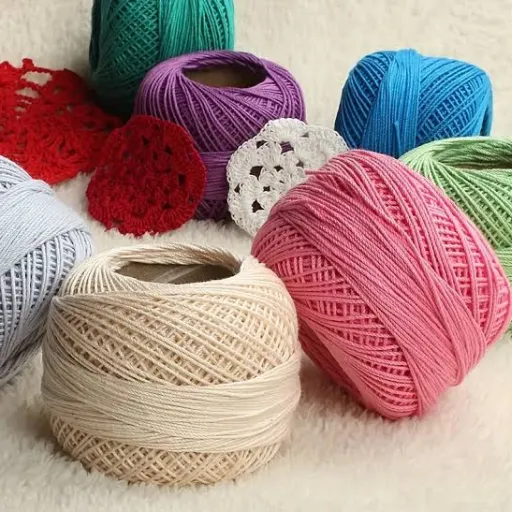
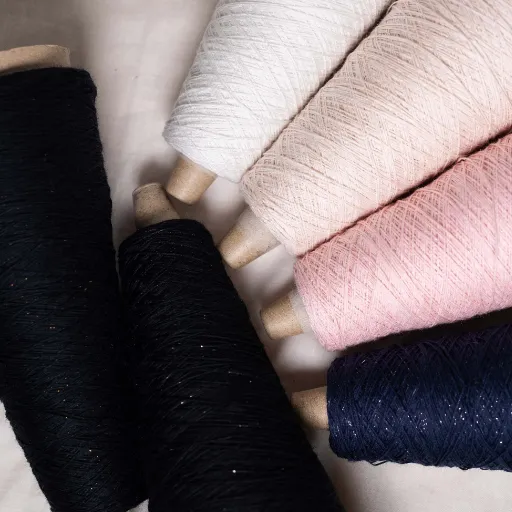
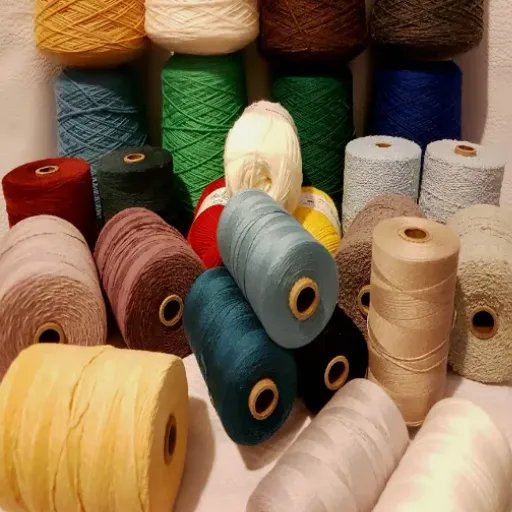


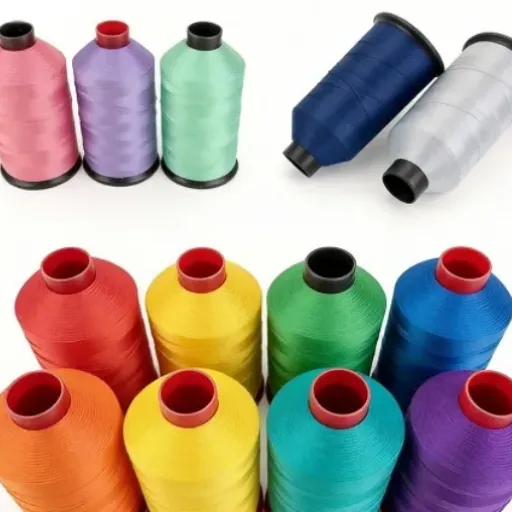
Is polyester yarn good for upholstery? Yes. For most residential sofas and a great deal of commercial seating, polyester is the best-value fiber you can specify. It resists abrasion and water-based stains, holds color well, cleans easily, and costs a fraction of wool or cotton. The caveat is that polyester yarn for upholstery is not one product. Its construction, twist, and dye method decide whether your fabric lasts five years or fifteen.
Tomás learned this the expensive way. He runs a mid-size sofa factory in Guadalajara, and in 2023 he switched a bestselling family line to a low-cost polyester knit because the price was unbeatable. Within a year, customers were returning cushions covered in pills and fuzz, and his customer-service team was re-covering seats at his cost. The fiber was not the problem. The yarn was. When Tomás re-specified a heavier, high-twist polyester with a tighter weave, the same “polyester” label started clearing 40,000 Martindale cycles.
This guide gives you the language to do what Tomás eventually did. You will learn the polyester yarn types used in upholstery, how to choose denier, filament count, and dye method, how polyester compares with nylon, cotton, and acrylic, and how to specify and source a polyester yarn you can actually verify. If you are still weighing fibers, start with our best yarn for upholstery guide, or step back for the full framework in our yarn for upholstery overview, and come back here once polyester is on your shortlist.
Key Takeaways
- Polyester is the default upholstery fiber because it balances abrasion resistance, stain resistance, colorfastness, and cost. Quality 100% polyester upholstery commonly tests between 35,000 and 50,000 Martindale cycles, with contract grades far higher.
- Polyester upholstery yarn is not one product. Filament yarns (FDY, DTY, air-textured), spun staple yarns, chenille, and high-tenacity yarns behave differently, so specify the form, not just the fiber.
- Denier sets the performance tier. Roughly 2,000 to 3,500 Dn suits light seating, 3,500 to 5,000 Dn is standard for residential sofas, and 5,000 to 9,000 Dn is for heavy commercial and contract use.
- Polyester’s honest limits are oil and grease stains, pilling in cheap low-twist constructions, and fading in full sun. Solution-dyed polyester improves fade resistance but still loses to solution-dyed acrylic outdoors.
- Recycled polyester performs well enough for upholstery. Blends around 50% recycled content preserve abrasion resistance, and GRS and OEKO-TEX certifications let you prove the claim.
Is Polyester Yarn Good for Upholstery?
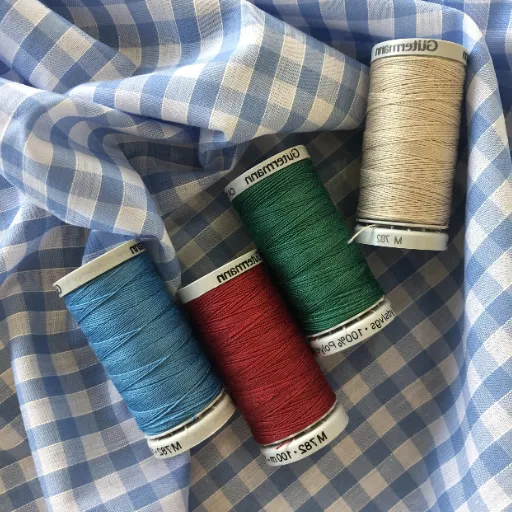
Polyester yarn is a yarn spun or extruded from polyethylene terephthalate (PET), the same polymer family used in beverage bottles. For upholstery, it is made into a durable thread engineered to be woven or knitted into fabric for sofas, chairs, and seating. It dominates the market for a reason: polyester makes up roughly 59% of all fiber produced globally, and a large share of that ends up in furniture and home textiles.
Here is the honest case for polyester as an upholstery yarn, and the honest limits you need to plan around.
Where Polyester Wins
- Abrasion resistance. Polyester performs strongly in rub testing. Standard woven 100% polyester upholstery commonly records between 35,000 and 50,000 Martindale cycles, and heavy-denier contract grades reach 90,000 cycles and beyond. That is well above the rough 15,000-cycle minimum for residential fabric.
- Stain resistance to water-based spills. Polyester absorbs very little moisture, so coffee, juice, and most everyday spills sit on the surface long enough to blot away. That same low absorption means it resists mold and mildew.
- Color retention. Polyester takes dye well and resists fading better than nylon, which degrades noticeably under UV light. Near bright windows, polyester is the safer synthetic.
- Easy care. Most polyester upholstery cleans with water-based cleaners (cleaning code W or WS), dries quickly, and needs no special conditioning.
- Cost and consistency. Polyester is inexpensive and manufactured at enormous scale, which means repeat orders stay consistent and prices stay low. For a furniture line, that predictability is a feature.
Where Polyester Needs Care
- Oil and grease. Polyester is oleophilic, meaning it attracts oil. Greasy food, cooking splatter, and oily handprints bond quickly and usually need a solvent-based cleaner. This is the single biggest stain weakness.
- Pilling in cheap constructions. Budget polyester weaves with low twist or loose construction pill under friction. Because polyester fibers are strong, pills do not break off on their own and must be shaved.
- Heat sensitivity. A hot iron or heater can melt or singe polyester fibers permanently.
- Breathability and static. Polyester can feel warm against skin, and static attracts lint and pet hair in dry rooms.
- Full-sun fading. Surface-dyed polyester fades faster than solution-dyed acrylic in direct outdoor sun. For outdoor seating, see the comparison below and our outdoor upholstery yarn guide.
None of these limits makes polyester a bad choice. They make it a choice that rewards specification. A well-chosen polyester yarn outperforms many natural fibers in the tests that matter most, which is exactly why the majority of upholstery fabric sold today contains it.
Types of Polyester Yarn for Upholstery
When a supplier says “polyester yarn,” they could mean any of several very different products. Choosing the right form is often more important than choosing the fiber.
Filament Polyester Yarns: FDY, DTY, and Air-Textured
Filament yarns are continuous polyester fibers extruded as one long strand. They come in three main types:
- FDY (fully drawn yarn). Smooth, strong, and low-stretch, with straight filaments. FDY suits tightly woven upholstery that needs dimensional stability and a cleaner, more uniform surface.
- DTY (draw-textured yarn). Textured, bulky, and slightly stretchy with a soft, full hand feel. DTY is common in knitted sofa fabrics and woven upholstery where comfort and cover matter.
- Air-textured yarn (ATY). Filaments bulked with compressed air to create a cotton-like, low-luster surface with high bulk. ATY is popular for structured upholstery fabrics and drapery-weight textiles because it covers well and feels less synthetic.
Spun Polyester Yarn
Polyester can also be cut into short staple fibers and spun like cotton. Spun polyester yarn has a matte, natural hand feel and is often blended with cotton, viscose, or other staples. The trade-off is that exposed fiber ends increase pilling risk, so spun polyester needs a tight twist and careful construction to perform in upholstery.
Polyester Chenille and Novelty Yarns
Chenille is not a fiber; it is a yarn structure, usually polyester, with a short plush pile trapped between two core yarns. Built with a short, tight pile, polyester chenille delivers a soft, velvety surface while still rating 20,000 to 50,000 double rubs, which is why it is everywhere in polyester sofa fabrics. Other novelty forms, such as boucle, slub, and loop yarns, add texture but generally suit lower-traffic accent pieces.
High-Twist, High-Tenacity, and Heavy-Denier Yarn
For commercial and contract seating, manufacturers specify heavy-denier polyester with high twist or high tenacity. Higher tenacity means the yarn resists breaking under tension, and a tight twist reduces pilling and abrasion. If a fabric must survive hotels, offices, or transit seating, this is the class of yarn to specify.
How to Choose the Right Polyester Yarn for Upholstery
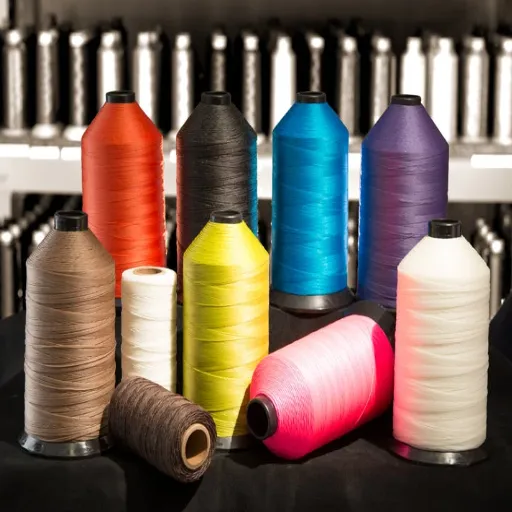
Selection comes down to matching the yarn specification to the workload. Four numbers matter more than any brand claim: denier, filament count, twist, and the abrasion rating.
Start With Denier
Denier measures yarn thickness, and for woven upholstery it maps fairly cleanly to intended use:
| Denier band | Typical use |
|---|---|
| 2,000 to 3,500 Dn | Dining chairs, accent seating, headboards, ottomans |
| 3,500 to 5,000 Dn | Residential sofas, sectionals, loveseats |
| 5,000 to 9,000 Dn | Heavy commercial, contract, hospitality, automotive |
A residential sofa spec usually lands in the 3,500 to 5,000 Dn range. If you push to heavy commercial, move into the 5,000 to 9,000 Dn band and raise the abrasion target accordingly.
Filament Count and Micro-Denier
The same denier can be split into many fine filaments, written as something like “300D/144F.” Higher filament counts produce a softer, more supple hand feel, while micro-denier filaments (below about 1.0 denier per filament) reduce pilling by exposing fewer coarse fiber ends. Mei-Lin, a product developer for a home-textile brand, discovered the difference when a “300 denier polyester” fabric kept coming out stiff and fuzzy. Re-specifying to 300D/144F with a compact weave gave her a smoother fabric that pill-tested far better, with no change in fiber or color.
Twist, Weave, and Rub Rating
A tighter twist produces a stronger, denser yarn that resists pilling and abrasion, while a loose twist fuzzes up under use. Construction matters too: a tight plain or twill weave outperforms a loose open weave made from the same yarn. Whatever you choose, ask the supplier for the abrasion result and the test it came from. Wyzenbeek (double rubs) and Martindale (cycles) are different machines and their numbers cannot be compared directly. Testex explains the two tests in plain English if you want the mechanics.
For durability detail beyond the fiber, our guide to upholstery yarn durability covers abrasion, pilling, and seam slippage in depth.
Color That Lasts: Dyeing and Colorfastness
Fading and uneven color are among the top reasons customers reject upholstery, and the culprit is almost always the dye method, not the fiber.
Solution-Dyed vs. Piece-Dyed vs. Yarn-Dyed
- Solution-dyed (dope-dyed) polyester. Color pigment is added to the polymer before the fiber is extruded, so the color runs through the entire fiber. This resists fading and crocking (color rubbing off) far better than surface dyeing, and quality solution-dyed polyester can be bleach-cleanable. It is the right choice for sunny rooms and anywhere lightfastness matters.
- Piece-dyed polyester. Fabric is woven first and dyed afterward. This offers the widest color range at lower cost, but color lives closer to the surface, so lightfastness and crocking resistance are weaker.
- Yarn-dyed polyester. Yarn is dyed before weaving, which enables stripes, plaids, and patterns. When using disperse dyes with UV absorbers, yarn-dyed polyester can reach high lightfastness, which is why automotive upholstery relies on it.
Why Disperse Dyes Matter
Polyester is hydrophobic, so it does not accept water-soluble dyes the way cotton does. It is colored with disperse dyes that penetrate the fiber at high temperature. For furniture near windows, spec lightfastness to a specific rating rather than assuming “polyester resists fading,” because surface-dyed polyester fades faster than its reputation suggests.
Want color matched to a furniture collection rather than picked from a chart? Explore our custom yarn solutions, where our team matches Pantone references and dye methods to your performance targets.
Polyester vs. Nylon, Cotton, Acrylic, and Olefin
Polyester rarely competes in a vacuum. Here is how it stacks up against the fibers buyers most often compare it with.
| Property | Polyester | Nylon | Cotton | Acrylic | Olefin |
|---|---|---|---|---|---|
| Abrasion resistance | High | Very high | Moderate | Moderate to high | High |
| UV / fade resistance | Good | Poor to fair | Poor | Excellent (solution-dyed) | Fair |
| Water-based stain | Excellent | Good | Poor | Good | Excellent |
| Oil / grease stain | Weak | Good | Moderate | Moderate | Excellent |
| Hand feel | Smooth, versatile | Slick | Soft, natural | Warm, wool-like | Waxy, tough |
| Typical cost | Low to mid | Mid | Low to mid | Mid | Low |
Polyester vs. Nylon
Nylon edges out polyester on pure abrasion resistance and on elasticity recovery, which is why premium fabrics blend 5% to 20% nylon into polyester or wool to reinforce stress points like armrests and cushion edges. Nylon’s weakness is sunlight, where it fades and degrades faster than polyester. If the piece faces bright windows, polyester wins; if it faces brutal traffic, a nylon blend wins. See our nylon yarn for upholstery guide for the full case.
Polyester vs. Cotton
Cotton is softer and more breathable, but it stains easily, wrinkles, and wears faster than polyester. Poly-cotton blends try to capture both: polyester provides abrasion resistance and dimensional stability, cotton adds breathability and a natural hand. For a busy family sofa, a polyester-dominant blend is usually the smarter call.
Polyester vs. Acrylic and Olefin Outdoors
This is where polyester needs the most honesty. Solution-dyed acrylic is the premium outdoor fiber: it holds color longest in full sun, is naturally water-resistant, and is bleach-cleanable. Olefin is the value pick with excellent water and stain resistance but less long-term UV durability. Solution-dyed polyester sits between economy and premium; it offers good strength and abrasion resistance at a low price, but in relentless full sun it fades faster than acrylic. For covered patios and shaded furniture, solution-dyed polyester is a solid budget choice. For all-day sun, spend on acrylic. Sunbrella’s fabric explainer walks through the outdoor options in more detail.
Recycled Polyester Yarn for Upholstery: Does It Perform?
Eco-conscious furniture lines increasingly ask for recycled polyester (rPET), and the honest answer is that it performs well when specified correctly. Studies on polyester chenille upholstery fabrics have found that 100% recycled yarn shows little to no statistically significant loss in breaking strength versus virgin yarn, and that a roughly 50% recycled, 50% virgin blend often preserves abrasion resistance best.
The broader picture matters for any sustainability claim. According to the Textile Exchange Materials Market Report 2025, polyester is about 59% of global fiber output, but only about 12% of it is recycled, and 98% of that recycled content comes from plastic bottles rather than textile-to-textile recycling. Choosing recycled polyester genuinely stands out, but verifying the claim requires certification.
Priya buys for a boutique-hotel group, and her sustainability target meant switching lobby seating to recycled content without failing contract rub counts. She specified a heavy-denier rPET yarn with a 50/50 recycled-to-virgin blend, rated at 50,000 Martindale cycles, and asked the supplier to provide GRS certification for the recycled content and OEKO-TEX for health safety. The line met her performance numbers and gave her marketing team a claim they could prove.
For a fuller look at sustainable fibers and certifications, our guide to eco-friendly upholstery yarn covers GRS, OEKO-TEX, and the other options for eco furniture lines.
Flame Retardancy and Contract Requirements
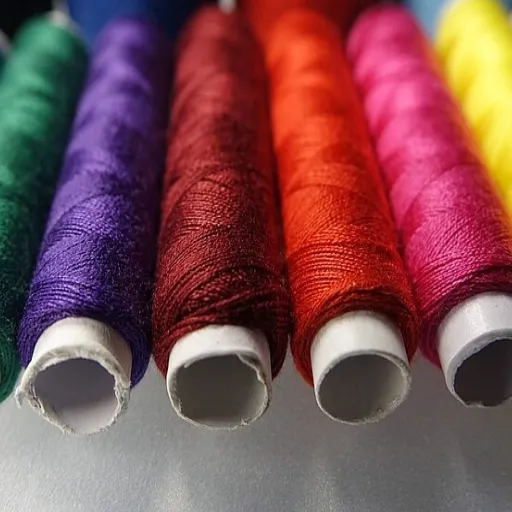
Contract and hospitality upholstery usually has to meet both an abrasion threshold and a flame code. Polyester can satisfy these in two ways:
- Inherently flame-retardant polyester. FR properties are built into the polymer, so the yarn resists ignition and self-extinguishes without topical finishes. This is the cleaner, longer-lasting route and is increasingly common in contract seating yarns.
- Topically treated polyester. A flame-retardant finish is applied to the fabric. This is cheaper, but the finish can wash out or wear away over time, so it needs re-verification.
Whatever route you take, get the abrasion rating, the FR standard, and the test lab in writing. Contract fabric buyers use published performance guidelines from bodies such as the Association for Contract Textiles as their baseline, and standards like ISO 14465 cover woven upholstery performance. If you plan to meet these codes, our guide to custom yarn for upholstery explains how to build them into an order. Source high-quality furniture upholstery yarn from Hebei Lida Textile Co., LTD.
How to Specify and Source Polyester Yarn for Upholstery
You can now write the one-page specification a supplier actually needs. A complete polyester upholstery yarn spec looks like this:
- Fiber: 100% polyester (or stated blend, such as polyester-nylon or poly-cotton)
- Recycled content and certification: for example, 50% rPET with GRS, if applicable
- Yarn form: FDY, DTY, air-textured, spun, or chenille
- Denier / filament count: for example, 3,800 Dn / 144F
- Twist level: tight twist for abrasion resistance where required
- Dye method: solution-dyed for high lightfastness, or disperse-dyed to match colors
- Performance targets: minimum double rubs or Martindale cycles, pilling rating, lightfastness rating
- FR requirement: inherent FR or topical, plus the specific code
Then verify before you commit. Ask for physical samples, test them in your own weave or knit, request the abrasion and pilling lab results, and confirm the color matches across batches. A supplier who cannot produce test data is a risk, no matter how good the price looks.
Ready to test a polyester yarn against your own furniture line? Contact Hebei Lida for sample cones and a specification-matched quote. Our team will help you confirm the right denier, twist, and dye method for your application.
Frequently Asked Questions
Is polyester yarn good for upholstery?
Yes, for most residential sofas and much commercial seating. Polyester resists abrasion and water-based stains, holds color well, cleans easily, and costs less than natural fibers. Choose quality construction, and manage its weaknesses: oil stains, pilling in cheap weaves, and fading in full sun.
Does polyester yarn pill on sofas?
Quality polyester resists pilling well, but cheap, low-twist, or loosely constructed polyester can fuzz under friction. Because polyester fibers are strong, pills do not fall off and need to be removed with a fabric shaver. A tight weave and micro-denier filaments reduce pilling.
Is polyester or nylon better for upholstery?
Nylon is more abrasion-resistant and recovers its shape better, making it excellent for high-traffic seating and blends. Polyester is more fade-resistant under UV and is usually cheaper. Use nylon for brutal traffic and polyester for sunny rooms or everyday value; a small nylon blend upgrades polyester’s resilience.
Does polyester upholstery stain easily?
Polyester resists water-based spills well, which is why it suits families. Its weakness is oil and grease, which it attracts and holds. Solvent-based cleaners handle most oily stains, so a WS cleaning code is the most forgiving option.
Is recycled polyester durable enough for upholstery?
Yes. Studies on polyester chenille upholstery show 100% recycled yarn loses little to no strength versus virgin yarn, and a 50/50 recycled-to-virgin blend often preserves abrasion resistance best. Ask for GRS and OEKO-TEX certification to verify the claim.
Is polyester flame-retardant?
Standard polyester will burn, but inherently flame-retardant polyester yarn resists ignition and self-extinguishes without topical finishes. Contract and hospitality seating usually specifies FR polyester or FR-treated fabric to meet local codes.
What denier polyester yarn is best for upholstery?
For residential sofas, aim for roughly 3,500 to 5,000 Dn. Use 2,000 to 3,500 Dn for light seating like dining chairs and accent chairs, and 5,000 to 9,000 Dn for heavy commercial and contract use.
Is polyester good for outdoor cushions?
Only in the right conditions. Solution-dyed polyester is durable and affordable for covered or shaded patios, but in full sun it fades faster than solution-dyed acrylic. For year-round, all-day sun, solution-dyed acrylic is the better investment.
Choose a Polyester Yarn You Can Verify
Polyester is the workhorse of upholstery yarn for good reason. It combines abrasion resistance, stain resistance, colorfastness, and value better than almost anything else, which is why it sits inside most upholstery fabric made today. The failures you read about, pilling sofas, stiff fabric, fading cushions, are rarely the fiber’s fault. They are the result of buying “polyester” without specifying the yarn.
To get upholstery that lasts, choosing the right polyester yarn for upholstery comes down to four things: pick the right yarn form (filament, spun, or chenille), match the denier to the workload, select the dye method for the light exposure, and verify performance with lab results before you commit. If your project needs recycled content, specify rPET with certification and expect it to perform. And when you need a polyester yarn manufacturer who can match the spec to the piece, not just sell you a cone, Hebei Lida Textile Co., LTD is here to help. Request samples and a specification-matched quote today, and put polyester to work the right way.