




The best yarn for upholstery is polyester for family sofas and commercial seating, solution-dyed acrylic or olefin for outdoor furniture, and wool blends for premium hospitality interiors. For a typical home, a polyester or cotton-polyester blend rated around 25,000 to 40,000 Martindale double rubs is the sweet spot most people should start with.
Ask ten people “what is the best yarn for upholstery?” and you will get ten confident answers, most of them wrong for your particular sofa. The confusion is understandable. Fiber suppliers sell polyester, mills push blends, designers defend wool, and every one of them is describing a tool without naming the job.
Let me make the job concrete, because it decides everything else. Upholstery yarn is the single biggest factor in whether a sofa looks new after a year or worn after a month, and the right choice is never a brand or a fashion trend. It is a fiber matched to how the seat will really be used. This guide walks you through a fast decision framework: pick your use case, read the recommended fiber and target rub count, check the comparison table, and finish with a sample workflow that lets you verify the yarn before you spend a cent. If you need the fuller fiber-by-fiber education first, our complete yarn for upholstery selection guide is the place to start.
Key Takeaways
- There is no single best yarn for upholstery. Polyester suits everyday family sofas, nylon or wool-nylon suits high-traffic commercial seating, solution-dyed acrylic or olefin suits outdoor pieces, and recycled polyester suits eco-conscious lines.
- Match the yarn to traffic, not to taste. A family sofa benefits from roughly 25,000 to 40,000 Martindale double rubs; a hotel lobby often needs 30,000 to 100,000.
- “Durable” is meaningless without a test standard. Wyzenbeek and Martindale numbers are not directly comparable, so always confirm which test a rating refers to.
- With pets and kids, boucle and loosely woven chenille are the two most tempting and most risky choices; claws and wear can hook loops into runs.
- Always verify with a sample and a spec sheet. Asking a supplier for fiber %, denier, twist, and a rub-test certificate prevents the costliest mistakes.
Why “Best” Depends on the Job
Upholstery fabric is tested for one thing above all: how it survives abrasion, the rubbing of bodies, clothing, pets, and cushion seams against the yarn day after day. That is why the buying conversation revolves around double rubs, a count of how many back-and-forth rubs a sample survives before the yarn begins to break.
Here is the catch most shoppers miss. Two major tests produce numbers that you cannot compare directly. The Wyzenbeek test, standard in the United States, rubs fabric back and forth and reports double rubs. The Martindale test, common in Europe, rubs in a figure-of-eight pattern and reports cycles.
A single fabric can score very differently on each. So a “30,000” on one scale is not the same as a “30,000” on the other. Testex explains the mechanics clearly. As a rough guide, 1.5 to 2 Martindale cycles equal about one Wyzenbeek double rub.
So the first rule of choosing the best upholstery yarn is to stop comparing numbers until you know the scale behind them.
The Five Decision Drivers
Once the test language is clear, five factors decide which yarn wins for you:
- Traffic. How often will the seat be used, and by whom? A formal accent chair, a family room sofa, and a hotel lobby need very different yarns.
- Environment. Indoor or outdoor? Sun exposure, humidity, pets, and children change the calculus.
- Aesthetics and hand feel. Do you want crisp linen texture, plush velvet softness, or a wool boucle look? Fiber and construction control this.
- Care and maintenance. Can you wipe spills, vacuum, machine-wash covers, or call a professional?
- Budget. Yarn cost differences are real and scale quickly across a furniture line or a full upholstery job.
A premium wool that is ideal in a formal sitting room is the wrong answer for a pet-friendly family sofa. A cheap, loosely spun fashion yarn can fail in months on a dining chair that gets used daily. The best yarn for upholstery is simply the one that satisfies these five drivers for your specific seat.
Priya learned this the hard way. As product manager at a small contract furniture company, she approved a cotton-linen blend for a line of office lobby chairs because the natural look won her design team over and the price looked great. The fabric was rated around 12,000 double rubs, fine for a rarely used chair. Eight months in, the lobby seats pilled and thinned at the front edge, and the warranty replacements ate the entire profit margin on the line. The yarn was not bad. It was simply specified for the wrong job, and nobody had translated “office lobby” into a rub-count requirement first. Get durable upholstery yarn solutions from Hebei Lida Textile Co., LTD.
The 7 Best Upholstery Yarns at a Glance
If you want the short answer before the reasoning, here are the most reliable picks, each with the situation it fits.
- Best overall for sofas: polyester, ideally a cotton-polyester blend, in the 3,500 to 5,000 denier range.
- Best for family sofas with kids and pets: high-twist polyester or nylon-reinforced polyester with a tight weave.
- Best for commercial, contract, and hospitality: heavy-denier nylon, polyester, or wool-nylon rated for heavy commercial use.
- Best for outdoor and patio: solution-dyed acrylic, with olefin as the budget alternative for shaded use.
- Best for eco-friendly collections: GRS-certified recycled polyester, which clears commercial-grade rub counts.
- Best for premium residential: wool or wool blends, and quality chenille where traffic allows.
- Best budget option: olefin for stain resistance, or blended polyester when you need softness on a tight budget.
Each pick below gets a fuller verdict with the numbers to specify.
Best Yarn for Upholstery by Use Case
Now for the verdict engine. Find your situation, and the recommended yarn falls out. For a detailed look at the science behind these picks, our upholstery yarn durability guide covers abrasion, pilling, and wear in depth.
Best Yarn for a Family Sofa with Kids and Pets
Choose high-twist polyester or a nylon-reinforced polyester, woven tightly. Aim for roughly 25,000 to 40,000 Martindale double rubs. The nylon adds abrasion strength exactly where family life attacks a sofa, and the tight weave gives a cat’s claw nothing to hook into.
Avoid open boucle and loosely constructed chenille here, no matter how soft they feel. Those looped and tufted surfaces are magnets for pet claws, and a single snag can pull a run across the cushion. A smooth, tightly woven polyester will hide the reality that family furniture is not a showpiece, it is a workhorse. Polyester yarn for upholstery gets the full treatment in its own guide if you want the evidence.
Best Yarn for Everyday Residential Sofas
For a normal living room sofa that gets daily use but not constant abuse, a cotton-polyester blend or a performance polyester is the practical champion. Blends give you the soft, breathable hand of cotton with the abrasion resistance and easy cleaning of polyester. A yarn around 3,500 to 5,000 denier and 25,000 to 40,000 Martindale cycles will comfortably outlast the sofa’s other components.
If you are choosing for a design studio or a furniture line, this is the default starting point for mainstream product. It reads as quality, wears well, and keeps unit cost in check.
Best Yarn for Dining Chairs and Accent Seating
Dining chairs and accent seats sit in the middle: used often but not all day, and they get the brunt of spills and quick cleanups. A tight-weave wool blend or an easy-clean polyester works well. Look for a durable construction rather than a fashion-soft yarn, and do not be tempted by a low rub count just because the chair looks delicate.
This is the category where a “decorative” rating under 15,000 will fail you, because dining chairs get scrubbed and moved constantly. Aim for at least the light residential tier.
Best Yarn for Commercial, Contract, and Hospitality
For offices, restaurants, hotels, and waiting areas, specification is not optional. Choose heavy-denier nylon, polyester, or a wool-nylon blend, and require a rating in the contract range: roughly 30,000 to 50,000 Martindale for medium-traffic spaces and up to 100,000 for heavy venues. Commercial buyers also need fire-safety compliance and cleanability, which is why synthetic-dominant yarns dominate this segment. Nylon yarn for upholstery is the commercial specialist if you want the deeper case.
The Association for Contract Textiles publishes performance guidelines that define heavy-duty thresholds, and contract specifiers should reference them before they sign off on any yarn. Over-specifying is a real mistake too: a hotel headboard does not need the same rating as lobby seating, and paying for 100,000 rubs where 30,000 would do wastes budget for nothing.
Best Yarn for Outdoor and Patio Furniture
Outdoor upholstery lives or dies on UV resistance and water behavior. Solution-dyed acrylic is the premium answer: the color runs through the entire fiber, so it resists fading for years, and quality versions stand up to bleach cleaning. Olefin is the strong budget value with excellent water and stain resistance, but in intense year-round sun it typically fades faster than solution-dyed acrylic. Choose by sun exposure: olefin for shaded patios and seasonal use, solution-dyed acrylic for full-sun coastal or desert settings. Our outdoor upholstery yarn guide compares the options in detail.
Best Yarn for Eco-Friendly Collections
If sustainability leads the brief, recycled polyester is the answer. Performance fabrics woven from recycled PET routinely clear 50,000 Martindale rubs, so you are not trading durability for your story. Look for GRS or OEKO-TEX certification to verify both the recycled content and the safety of the finished yarn, then put that certification on your spec sheet. Eco-friendly upholstery yarn covers the sustainable options and the proof you need.
Best Yarn for Premium Residential and Designer Pieces
For a formal living room or a designer showpiece, wool and quality chenille earn their place. Wool is naturally resilient, resists soiling and pilling, and even self-extinguishes against flame, which is why wool-nylon blends remain a hospitality staple. Quality chenille, built with a short, tight pile, delivers a plush surface and can still rate 20,000 to 50,000 double rubs when engineered correctly. Reserve these for lower-traffic premium seating, and keep the pet-friendly synthetics for the rooms that actually need them.
Best yarn for upholstery, by use case
| Use case | Recommended yarn | Target durability | Why |
|---|---|---|---|
| Family sofa (kids/pets) | High-twist polyester or nylon-reinforced polyester | 25,000 to 40,000 Martindale | Tight weave resists claws and wear |
| Everyday residential sofa | Cotton-polyester blend or performance polyester | 25,000 to 40,000 Martindale | Softness plus easy care |
| Dining chairs and accent seating | Wool blend or easy-clean polyester | Light residential and up | Survives spills and daily use |
| Commercial / contract | Heavy-denier nylon, polyester, or wool-nylon | 30,000 to 100,000 Martindale | Abrasion, fire safety, cleanability |
| Outdoor / patio | Solution-dyed acrylic (or olefin, shaded) | High UV + water resistance | Holds color and survives weather |
| Eco-friendly collection | GRS recycled polyester | 50,000+ Martindale | Durable and certifiably sustainable |
| Premium residential | Wool blend or quality chenille | 20,000 to 50,000 Martindale | Luxury hand feel and resilience |
If your product needs a specific color or performance spec that a standard yarn cannot meet, you can take the fiber you just chose and have it custom-made as upholstery yarn, from color matching to denier and twist. The right fiber decision gets you 80% of the way; customization closes the rest.
Synthetic vs. Natural Yarns: When Each Wins
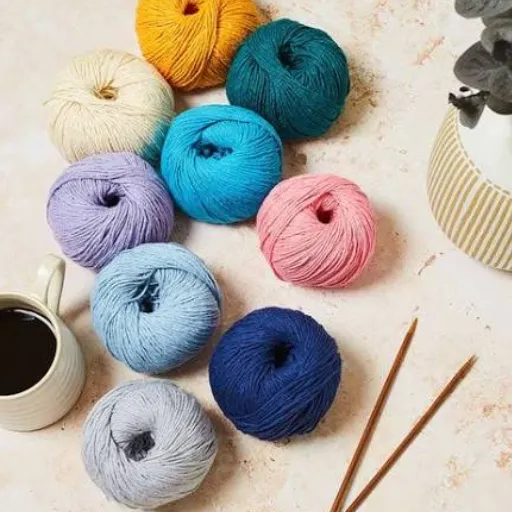
The synthetic-versus-natural debate is really a question of priorities, not quality. Synthetics win on durability, cleanability, UV resistance, and cost. Naturals win on hand feel, breathability, and a certain timeless aesthetic.
Why Synthetics Dominate Durability Tests
The abrasion evidence is consistent. Peer-reviewed testing on upholstery yarns repeatedly finds polyester among the most abrasion-resistant fibers, with the highest tenacity results. That is why polyester and nylon carry so much of the market.
Synthetics also shrug off moisture. Polyester has a moisture regain of about 0.4%, while cotton sits near 7 to 8%. So spills bead on the surface and wipe away instead of soaking in. Synthetics are also cheaper to produce than wool and often 20 to 40% less expensive than cotton per kilogram. Put together, that is why they dominate anywhere durability meets a budget.
When a Natural Fiber Is the Right Call
Naturals are not inferior, they are specialized. Wool gives you resilience, a rich hand, and natural flame resistance that synthetics must be treated to match, which is why wool-nylon blends are a premium contract staple. Cotton delivers breathability and a softness that reads as luxury, ideal for low-traffic rooms where you are dressing a space, not fortifying it. Linen brings a crisp, textured look that designers love, at the cost of durability that makes it a poor choice for hardworking seats.
Blends Often Beat Either Extreme
The best yarn for upholstery is frequently a blend. Cotton-polyester combines softness with easy care. Wool-nylon pairs luxury with abrasion strength. Nylon-reinforced polyester protects family furniture. If you cannot decide between a synthetic and a natural, a blend is usually the honest answer. This is also where a custom yarn supplier earns their keep, because blend ratios, denier, and twist can be tuned to your exact performance target rather than settled for off-the-shelf.
5 Upholstery Yarn Mistakes That Cost Real Money
Most failed upholstery projects were not unlucky. They made one of these five avoidable mistakes.
- Choosing a soft, loosely spun fashion yarn for a hardworking seat. That luxurious squishy yarn pills, sheds, and thins under real use. A yarn that looks gorgeous on the skein can be useless on a sofa.
- Putting boucle or loose chenille in a pet home. Claws hook the loops and pull runs. The two fabrics that feel most pet-friendly are often the least practical with pets.
- Specifying pure cotton for commercial or high-traffic use. Cotton’s 15,000 to 30,000 Martindale range and stain-prone nature make it a poor fit where synthetics thrive.
- Comparing rub counts from different test standards. A 30,000 Wyzenbeek and a 30,000 Martindale are not the same fabric. Always confirm the test behind the number before you compare.
- Ignoring solution-dyed versus piece-dyed under sunlight. Surface-dyed yarns fade fast near windows and outdoors. Solution dyeing locks color through the whole fiber and is the difference between a year and a decade of good looks.
Avoid these and you have already outdone most of the market, because most buyers learn these lessons on a warranty claim, not a spec sheet. Contact Hebei Lida Textile Co., LTD for quality furniture upholstery yarn.
How to Verify the Best Yarn Before You Commit
A spec sheet and a swatch will tell you more than any marketing copy. Before you commit to a yarn, ask the supplier for four things: the fiber percentage, the denier or yarn count, the twist, and the rub-test certificate with the standard named. Then request physical samples.
Read the certificate like this. Fiber percentage tells you what you are actually getting. Denier tells you thickness, and heavier denier generally means more strength for upholstery. Twist tells you how tightly the yarn is spun, and higher twist resists pilling and abrasion. The rub-test certificate shows the actual durability number, and the standard it lists tells you whether that number is Wyzenbeek or Martindale. Testex explains the technical details on reading Martindale and Wyzenbeek if you want to go deeper.
Then do a five-minute physical test with the samples in front of you. Rub the fabric hard against itself, drag a key or zipper across it, spill water on it and see how it beads, and hold it in direct sunlight for a week to check fading. Samples are cheap. A reupholstered sofa or a recalled furniture line is not. Connect with Hebei Lida Textile Co., LTD for customized upholstery yarn.
A Short Checklist of Questions to Ask a Supplier
- What is the exact fiber blend, and can you show it on a spec sheet?
- What rub-count rating does this yarn achieve, and on which test standard?
- Is the yarn solution-dyed or piece-dyed? How many light hours is it rated for?
- What is the denier and twist, and how does that affect durability?
- Can you provide a sample yardage and a test certificate before I order?
Oren, who sources fabric for a mid-size furniture brand, now treats these questions as non-negotiable. Years ago he skipped the certificate on a discounted polyester order. He learned only after production that the yarn was low-twist and surface-dyed. The first outdoor collection faded within a season, and the rework cost more than the discount ever saved.
Today his team requests samples and certificates on every candidate yarn. They have not had a single durability-driven return since. The lesson is simple: the best yarn for upholstery is the one you verify, not the one you assume.
For most buyers this is the point where a conversation with a manufacturer beats another hour of research. If you would like help matching a yarn to your furniture line, contact us for a sample pack and spec sheet, or read the full yarn-for-upholstery selection guide and our upholstery yarn testing standards explainer while you compare options.
Frequently Asked Questions
What is the best yarn for upholstery?
There is no single best yarn; the right one matches the use. Polyester and cotton-polyester blends suit everyday sofas, nylon-reinforced polyester suits family rooms and pets, solution-dyed acrylic or olefin suits outdoor furniture, wool blends suit premium hospitality, and recycled polyester suits eco-conscious collections.
What is the most durable upholstery yarn?
Nylon and heavy-denier polyester are the most durable common upholstery yarns, which is why they dominate commercial seating. In abrasion tests, polyester consistently shows among the highest tenacity, and nylon adds exceptional strength when blended into residential fabrics.
What is the best fabric for a family sofa with pets?
Choose a high-twist polyester or nylon-reinforced polyester with a tight weave, rated around 25,000 to 40,000 Martindale double rubs. Avoid boucle and loose chenille, because claws hook loops and pull runs.
Is acrylic yarn good for upholstery?
Acrylic can work for light-use upholstery and is excellent when solution-dyed for outdoor use, but it is generally less durable than polyester or nylon for hardworking indoor seats. Reserve it for accent pieces or outdoor applications where its UV resistance shines.
Wool or polyester, which is better for upholstery?
Polyester wins on durability, easy cleaning, and cost, making it the default for busy homes and commercial use. Wool wins on premium hand feel, resilience, and natural flame resistance, which is why wool-nylon blends are a hospitality staple. A blend often gives you the best of both.
What rub count should sofa fabric have?
For a normal sofa, look for at least 15,000 to 20,000 double rubs. A busy family sofa benefits from 25,000 to 40,000, and commercial seating often needs 30,000 to 100,000. Always confirm whether the number is Wyzenbeek or Martindale.
Can you use cotton yarn for upholstery?
Yes, for low-traffic furniture and accent pieces where its soft, breathable hand is an asset. Pure cotton stains easily and typically rates only 15,000 to 30,000 Martindale cycles, so it is a poor choice for commercial or hardworking family seating.
What is the best budget upholstery yarn?
Olefin offers excellent stain resistance at a low price and is a strong value for shaded or indoor-outdoor use. Blended polyester is the best budget option when you need softness and durability together.
Choose a Yarn You Can Verify, Not Just Advertise
The best yarn for upholstery exists, but only once you define the job. Match the fiber to traffic, environment, and budget, pin down the rub-count rating and the test standard behind it, and verify the winner with a sample and a spec sheet before you commit. Polyester for the family room, solution-dyed acrylic for the patio, wool for the showpiece, recycled polyester for the eco line, and a blend when you want the best of both worlds.
You now have the decision framework, the numbers, and the sample workflow to walk into any supplier conversation with confidence. Start by requesting a sample pack for your next project, and let the fabric prove the choice before your customers ever sit on it. If you want to talk through the options with a yarn specialist, our team at Hebei Lida Textile is ready to help you spec the right upholstery yarn for your line.