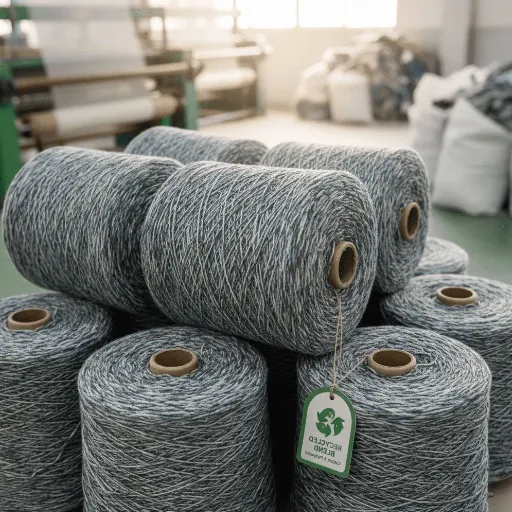

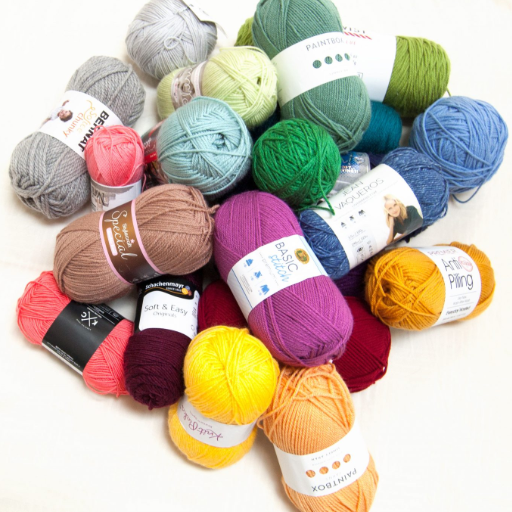


Custom fiber blending is the process of combining two or more fiber types in controlled proportions to engineer a yarn with a specific balance of strength, softness, durability, drape, and cost. Instead of choosing from a mill’s stock blends, you work with a manufacturer to develop a composition that hits your exact performance and price targets.
Your yarn needs a softer hand, more durability, or a price point the current supplier can’t reach. The answer usually isn’t a different yarn off the shelf. It’s a different blend, engineered from the fiber up. But most buyers specify blends by name, poly-cotton, wool-nylon, cotton-viscose, without realizing that a 10 to 15 point shift in the ratio measurably changes strength, feel, drape, and how the yarn dyes. It also changes what your finished product costs.
You may have ordered custom yarn before and assumed the factory would figure out the blend. Sometimes it does. But the buyers who get burned learn the hard way: a blend named on a quote sheet can come back with the wrong hand, too much shrinkage, a shade that won’t match across fibers, or a recycled-content claim that fails inspection. This guide gives you a plain-English framework to specify a custom fiber blend with confidence, from defining the end use to selecting fibers, determining blend ratios, choosing manufacturing methods, testing, and budgeting.
Key Takeaways
- Custom fiber blending starts with the end use, not the blend name. Define your performance priorities first, then choose compatible fibers and a ratio that delivers them.
- Blend ratio is the single most consequential specification in yarn development. Moving from 70/30 to 65/35 cotton-polyester changes strength, hand feel, shrinkage, and dye response, so specify ratios precisely.
- Balanced ratios win. Yarns where one component exceeds roughly 70% lose evenness and strength; the most uniform yarns run with component proportions around 20 to 40%.
- Spinning method changes the blend. Ring spinning gives the strongest, most even result, vortex reduces hairiness and pilling, and rotor spinning is fastest but can’t reach the finest counts.
- A custom blend typically adds 15% to 30% to the yarn cost, requires a minimum order of 1,000 to 3,000 kg, and adds four to eight weeks to lead time. Verify fiber content with ISO 1833 testing before you commit.
What Is Custom Fiber Blending?
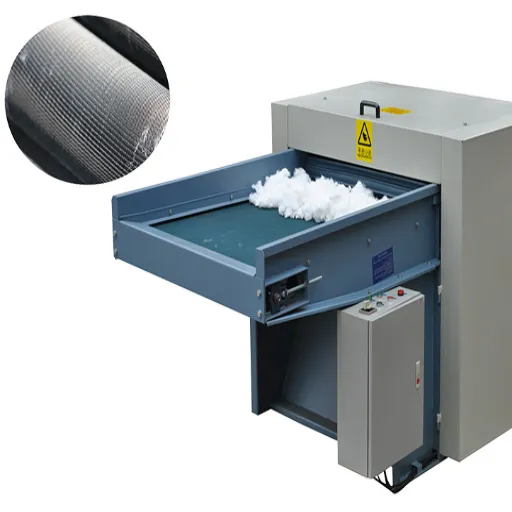
Custom fiber blending is the deliberate combination of two or more fiber types in controlled proportions to create a yarn with properties no single fiber offers on its own. The blend can be as simple as 65/35 cotton-polyester for a t-shirt yarn, or as engineered as a four-component recycled wool-nylon-hemp blend for an outdoor brand. What makes it “custom” is that the composition is designed for your specification rather than drawn from a manufacturer’s standard range.
Why blend at all? Because every fiber has weaknesses. Cotton is breathable but wrinkles and shrinks. Polyester is strong and shape-retaining but less comfortable against the skin. Wool is warm and moisture-wicking but can shrink and cost more. Nylon adds durability and elasticity but changes the hand. Blending lets you offset one fiber’s weakness with another’s strength. A sock yarn is often 80/20 wool-nylon because nylon makes the wool last far longer. A summer knit yarn is often 70/30 cotton-viscose because viscose softens the cotton’s feel.
A quality manufacturer treats custom fiber blending as an engineering decision, not an order form. It matches fiber lengths and fineness so the blend spins evenly, accounts for fiber loss in processing, and tests the finished yarn against the performance you asked for. Our guide to the custom yarn manufacturing process shows where blending fits in the full production cycle, and custom yarn design specifications explains how to turn your idea into a measurable spec.
Custom Fiber Blending vs. Fiber Mixing
The terms sound the same, but they mean different things in a mill. Fiber mixing is the broader process of feeding different fibers together so they share a machine. Fiber blending is the controlled, even distribution of those fibers throughout the yarn, typically achieved by drawing the fibers together on a draw frame or blending them intimately during carding.
The difference shows up in the finished yarn. True blending produces a yarn where the fiber composition is consistent along its entire length, which matters for even dyeing and predictable strength. Loose mixing can leave streaks, bars, or patches of one fiber, which is why a buyer who needs consistency should ask exactly how the blend will be made, not just what the percentages are. Need custom yarn for a unique textile project? Talk to Hebei Lida Textile Co., LTD.
Start With the End Use, Not the Blend Name
The most common mistake in custom fiber blending is choosing fibers before defining the application. The blend should follow the product, not the other way around. Before any ratio is discussed, decide what the yarn must do.
Defining Performance Targets by Application
Each application pulls different properties to the top of the list. A fashion knit needs softness, drape, and a clean surface. A curtain needs drape, weight, and lightfastness. An upholstery fabric needs abrasion resistance, strength, and often flammability compliance. An industrial product needs tenacity, heat or chemical resistance, and consistency across the entire run, which our custom yarn for industrial use guide covers in depth. And an eco-conscious collection needs recycled or certified content that still performs.
Write these targets down before you talk to a manufacturer. They become the criteria every blend decision is measured against, which is exactly how a custom yarn for fashion or custom yarn for upholstery should be specified: by the requirements it must meet.
Ranking Your Priorities
You can’t maximize everything in one blend. A yarn can be stronger, or softer, or cheaper, but rarely all three at once. Decide which two or three properties matter most, and be honest about the trade-offs.
- Cotton adds comfort, absorbency, and a natural hand, but wrinkles and shrinks.
- Polyester adds strength, shape retention, and abrasion resistance, but a less breathable feel.
- Viscose and modal add softness, drape, and dye depth, but are weaker when wet.
- Nylon adds durability and elasticity, but raises the price and changes the hand.
- Recycled fibers add sustainability, but often bring shorter staple lengths and more neps.
Rank your list, then use it to choose a blend family. A brand that needs maximum comfort for a t-shirt will lean cotton-heavy. A uniform maker that needs shape retention will lean polyester. An activewear brand that needs both will land near 50/50. That trade-off is the whole game of custom fiber blending. If you want to explore how these decisions turn into a full order, custom yarn solutions walks through what a manufacturer can build around your targets. Request a custom yarn solution designed around your product and production needs.
Common Custom Fiber Blends and What They Do
Once the end use is set, the blend family falls into place. These are the compositions buyers ask for most, with the ratios that work and the properties each one delivers.
| Blend | Typical Ratios | Best Use | Key Property |
|---|---|---|---|
| Cotton-polyester | 65/35, 50/50, 35/65 | Apparel, home textiles, uniforms | Balance of comfort, strength, shape retention |
| Wool-nylon | 80/20 | Socks, outerwear, carpets | Warmth plus durability and elasticity |
| Cotton-viscose | 70/30 | Summer knit apparel | Softness and drape |
| Acrylic-wool | 70/30, 50/50, 20/80 | Knitwear, blankets | Bulk and warmth at controlled cost |
| Acrylic-viscose | 70/30, 50/50, 30/70 | Knitwear, scarves, throws | Soft hand with strong dye depth |
| Recycled cotton-polyester | 50/50, custom | Eco-conscious apparel and home | Sustainability with structure |
| Melange (dyed + grey fiber) | Custom | Fashion, branded yarns | Heathered color, no dyeing needed |
Cotton-Polyester Blends
Cotton-polyester is the workhorse of custom fiber blending. The cotton brings comfort, absorbency, and a natural hand. The polyester brings strength, abrasion resistance, and dimensional stability. The ratio decides the personality of the yarn. A 65/35 cotton-dominant blend maximizes moisture comfort and feels more natural. A 50/50 blend sits in the middle. A 35/65 polyester-dominant blend maximizes strength and shape retention.
The polyester fraction also cuts post-wash shrinkage from roughly 7 to 8% for 100% cotton down to 3 to 5%, which matters enormously for garments that must hold their shape. One caveat: polyester takes a separate disperse dye bath from cotton’s reactive dyes, so solid-color products in high-polyester blends carry extra dyeing cost and complexity. That’s a cost to build into the spec, not discover at the lab dip.
Wool-Nylon Blends
Wool-nylon is the standard answer for products that need wool’s warmth and moisture management plus real durability. The classic 80/20 ratio keeps the yarn feeling like wool while the nylon makes it last through hard wear. It’s the go-to for socks, outdoor layers, and carpets, where a 100% wool yarn would pill and wear out too quickly. For premium products, some mills blend recycled wool and recycled nylon to keep the performance while cutting the footprint.
Cotton-Viscose Blends
Cotton-viscose gives summer apparel the softness and drape a plain cotton can’t. The common 70/30 ratio keeps enough cotton for structure while viscose adds a smooth, silky hand. Because viscose has excellent dye affinity, these blends take color well, which is why they show up in vibrant seasonal knitwear.
Acrylic-Wool and Acrylic-Viscose Blends
Acrylic blends are how knitwear gets the look and warmth of wool at a controlled price. Acrylic-wool runs from 70/30 for a budget product to 20/80 for a premium wool-like hand. Acrylic-viscose works the same way, with viscose adding softness and dye depth. These blends dominate blankets, scarves, and mid-market knitwear, where buyers need wool’s appeal without wool’s cost.
Sustainable and Recycled Blends
Recycled content changes the engineering problem. Recycled cotton and recycled polyester bring shorter staple lengths and more neps than virgin fibers, so a mill often pairs them with a support fiber like lyocell or virgin polyester to hold evenness and strength. Recycled wool-nylon blends follow the same logic: the recycled nylon rebuilds the durability the recycled wool loses. Certifications like GRS verify that the recycled content is real and traceable, and OEKO-TEX Standard 100 confirms the yarn is free of harmful substances. We cover verification in the testing section below.
Melange and Multi-Component Blends
Melange yarn, sometimes called heather, is a custom fiber blending technique that uses color as the design. Dyed fiber is blended with grey or undyed fiber in controlled proportions to create a heathered shade directly in the yarn, no fabric dyeing required. A designer can develop a signature colorway this way, and the same blend logic applies to three- and four-component blends for specific effects.
Fiber Compatibility: What Blends Well Together
Not every fiber plays nicely with every other. Before you lock a composition, check that the fibers are compatible in four ways: fiber length, fineness, moisture regain, and dye affinity.
Fibers with similar staple lengths process more evenly together. If one fiber is dramatically shorter, it gets lost in drafting, which is part of why recycled and biomass fibers need careful handling. Fibers with very different moisture regain, like wool and polyester, change how the yarn processes and how static builds up. And fibers with different dye affinities, like cotton and polyester, need separate dye baths, which adds cost and creates a shade-matching challenge in solid colors. The compatible families tend to group as cotton-family (cotton, viscose, modal, lyocell, bamboo), protein-family (wool, cashmere, alpaca, silk), and synthetic-family (polyester, nylon, acrylic). Stay inside a family or blend across deliberately, and your yarn will behave far more predictably. For the processing side of these choices, our guide to fiber preparation in yarn production explains how fiber quality upstream determines what a blend can achieve.
How Blend Ratio Affects Yarn Performance
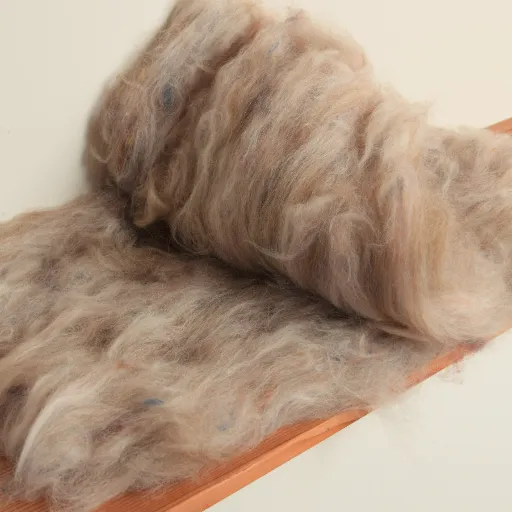
Blend ratio is the single most consequential specification in custom fiber blending. Small shifts of even 10 to 15 percentage points produce measurable differences in hand feel, durability, color output, and care requirements. The ratio you set is the difference between a yarn that works and a yarn that’s close.
Strength and Durability
Research on cotton-polyester yarns shows breaking strength climbs once polyester reaches roughly 50% in ring-spun yarns and around 66.5% in rotor-spun yarns. Below that threshold, the cotton’s weaker fibers dominate. A study on color-spun yarns also found a strong negative correlation between yarn evenness and tenacity, meaning the more uniform the structure, the stronger the yarn. In rabbit-hair and cotton blends, the 20/80 ratio delivered the best strength, and in bamboo-cotton, a 50/50 blend matched 100% cotton while higher bamboo content reduced properties.
Softness and Hand Feel
Softness usually tracks the natural or cellulosic share of the blend. More viscose, modal, or cotton softens the hand; more polyester or nylon stiffens it. The perceptual crossover in acrylic-wool blends happens around 40% wool, which is why a 50/50 blend feels distinctly wool-like while a 70/30 still reads as acrylic. If a soft hand is your priority, the natural and cellulosic content should be the majority.
Evenness and Defects
Balance is the enemy of defects. When any one component of a color-spun yarn exceeds roughly 70%, structural uniformity deteriorates sharply, with unevenness (U%) reaching above 30% versus under 12% for balanced blends. The most uniform yarns run with component proportions around 20 to 40%. In cotton-polyester yarns, fiber-blended constructions also show the best mass variation and fewest imperfections because the fibers are distributed evenly rather than clustered.
Dye Response and Color Consistency
Different fibers take dye differently. In a cotton-polyester blend, the polyester fraction won’t accept reactive dyes, so a solid shade requires a two-stage dye process and careful matching. In fiber blends, the same issue appears as barré, a stripe or uneven shade caused by fibers responding differently to the dye. This is why melange and fiber-dyed blends are often preferred for complex colors, and why solid-color blends need a lab dip per fiber base during development.
The 10 to 15 Point Rule
The practical takeaway from all this research is simple: specify your ratio precisely. “Poly-cotton” is not a specification. “65/35 cotton-polyester” is a starting point, and “62/38” can already behave differently. When you send a custom yarn design brief, put the exact percentages, count, twist, and dye method in writing, and require the mill to hold those numbers across the run.
How Custom Fiber Blending Is Manufactured
Understanding how a mill actually makes the custom fiber blending happen helps you ask the right questions and judge a supplier’s capability. Fiber preparation, from bale opening through spinning preparation, determines how evenly the components come together. There are three main blending methods, and the choice affects consistency.
Blending Methods
Sandwich or stack blending lays alternating layers of different fibers on top of each other and blends them, a common and low-cost method. Intimate blending in carding produces the most even distribution, which is why it’s preferred for performance and high-end yarns. Weigh-pan and multi-component blending, often with automated bale openers and precision feeders, delivers the tightest ratio control, with modern systems holding deviations under roughly 1%. If your yarn depends on an exact composition, ask which method the mill uses and how it verifies the ratio during production.
The Fiber-Loss Problem
Blending has a hidden variable: fiber loss. Short, brittle, or biomass fibers lose mass during cleaning, carding, and drawing. In one study of corn-silk and cotton yarn development, an initial 70/30 blend ratio became an 80/20 resultant blend after processing, because the corn silk preferentially lost fiber. Untreated biomass fibers can lose up to 40% of their mass in processing. The implication is that the ratio at the bale is not the ratio at the cone. A competent mill accounts for this and targets the final ratio at the yarn, which is one reason blend development should always start with a prototype and lab test rather than a full production run.
Choosing the Spinning Method for Your Blend
The spinning method shapes how the blended fibers arrange themselves in the yarn, and it changes the quality and cost of the result. Ring spinning produces the strongest, most even yarn, with the lowest irregularity (around 10.9% CVm in blended cottons), but it’s the slowest and most expensive. Vortex spinning is fast, produces low hairiness, and has excellent pilling resistance, with a hand close to ring-spun. Rotor (open-end) spinning is the fastest and cheapest but runs higher irregularity (around 15 to 16% CVm), can’t reach the finest counts, and gives a different, often harsher hand. A comparison of vortex, ring, and rotor spun yarns confirms these trade-offs, and our guide to yarn spinning techniques goes deeper into each system.
A luxury brand that needs a smooth, strong, fine yarn will choose ring spinning and pay for it. A sock manufacturer that needs volume and speed will choose rotor or vortex. The blend and the spinning method have to be specified together, because they co-determine the final hand and performance.
Testing and Verifying Your Custom Blend
Custom fiber blending only works if the finished yarn matches the composition and performance you approved. That means testing at the prototype stage and verifying the bulk. A blend that isn’t tested is a guess.
Lab Dips and Prototypes Before Bulk
Every custom blend should start with a prototype, not a production run. Yarn development for a new blend typically takes two to four weeks, covering fiber selection, ratio setting, count, and small test quantities. Custom color development adds two to three weeks for the initial lab dips, and each adjustment round adds about a week. Because the same dye reacts differently on each fiber, a blended yarn needs a separate lab dip per fiber base, and the color should be evaluated under multiple light sources. Always request a bulk strike-off after the lab dip is approved, because production equipment dyes differently than the lab.
Fiber-Content Verification
When the bulk arrives, the composition must be verified. The international method is the ISO 1833 series, quantitative chemical analysis that dissolves each fiber type to measure its mass percentage. ISO 1833-4 covers protein fibers like wool and cashmere in blends, and ISO 1833-19 covers cellulosic fibers like viscose, modal, and lyocell. Regional standards such as ASTM D276 and GB/T 2910 serve the same purpose in North America and China. Under EU Regulation 1007/2011, every fiber component above 5% must be listed with its exact percentage on the label, so a verified test report is also a compliance document.
Recycled-Content Verification
Recycled claims need their own proof. GRS certification verifies that recycled content is real and traceable, but the industry’s non-conformity rate for recycled fiber content was roughly 32% in 2022, meaning nearly one in three claims failed composition checks. If a blend’s recycled content matters to your market, require the GRS certificate number and validate it on the official portal, and consider an independent test report. The quality control guide for custom yarn orders explains how to handle verification and deviations end to end.
Physical Testing of the Blend
Beyond composition, the blend must perform. Standard tests cover yarn count, twist, tensile strength, elongation, evenness (CVm%), pilling, abrasion, and colorfastness. Evenness testing matters more for blends than buyers realize, because a poorly distributed blend shows up as streaks and cloudy dyeing in the fabric. Here is a short demonstration of how evenness testing works on the USTER Tester 6 so you can picture what the report is measuring.
Custom Fiber Blending: Cost, MOQs, and Lead Times
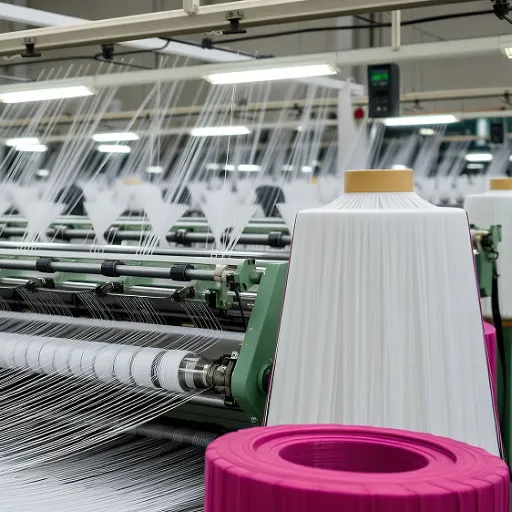
Custom fiber blending costs more than buying stock, but the premium buys exactly the yarn you need. Budget for three things: the cost premium, the minimum order, and the lead time.
- Cost: A custom blend typically adds 15% to 30% over the equivalent stock yarn. A fully developed new yarn, one that requires new fiber sourcing and extensive sampling, can add 50% to 200% plus development fees.
- MOQ: Custom blends usually require a minimum order of 1,000 to 3,000 kg per specification. Flexible low-MOQ programs for small brands can start around 50 to 100 kg per color, so first-time orders and capsule collections are achievable if you ask.
- Lead time: A custom blend adds roughly four to eight weeks to a standard order. Yarn development runs two to four weeks, lab dips two to three weeks, and each color adjustment adds about a week.
How to Budget a Custom Blend Project
Build the development phase into your calendar and your P&L. Expect a development or sampling fee, lab-dip fees per color, and possibly multiple prototype rounds before the blend is approved. Once the prototype passes, scaling from a small test batch to bulk is straightforward, but it carries its own costs. For a full breakdown of how custom yarns are priced and ordered, the custom yarn manufacturing guide has the complete cost and MOQ tables.
Frequently Asked Questions About Custom Fiber Blending
What is custom fiber blending?
Custom fiber blending is combining two or more fiber types in controlled proportions to engineer a yarn with a specific balance of strength, softness, durability, drape, and cost, designed to a buyer’s specification rather than chosen from a stock range.
What is the best blend ratio for cotton-polyester yarn?
It depends on the goal. A 65/35 cotton-polyester blend maximizes comfort, a 50/50 blends comfort and shape retention, and a 35/65 polyester-dominant blend maximizes strength and dimensional stability. Strength rises notably once polyester passes roughly 50% in ring-spun yarns.
What fibers can be blended?
Cotton-family fibers (cotton, viscose, modal, lyocell), protein fibers (wool, cashmere, alpaca, silk), and synthetics (polyester, nylon, acrylic) can all be blended, provided their fiber lengths, fineness, moisture regain, and dye affinity are compatible.
Which spinning method is best for blended yarn?
Ring spinning gives the strongest, most even blended yarn but costs the most. Vortex spinning is fast with low hairiness and excellent pilling resistance. Rotor spinning is fastest and cheapest but runs higher irregularity and can’t reach the finest counts.
How do I verify the fiber content of my custom yarn?
Request an ISO 1833 quantitative chemical analysis test report. For recycled content, require a GRS certificate and validate it on the official portal, because the industry’s non-conformity rate for recycled content claims was roughly 32% in 2022.
How much does a custom blend cost?
A custom blend typically adds 15% to 30% over stock yarn, with MOQs of 1,000 to 3,000 kg and four to eight weeks added to lead time. A fully developed new yarn can add 50% to 200% plus development fees.
Engineer the Right Blend for Your Product
Custom fiber blending is the difference between a yarn that’s close and a yarn that’s exactly right. Define the end use and rank your performance priorities. Choose compatible fibers and set the ratio precisely, because a 10 to 15 point shift changes the result. Understand how the blend is manufactured, from blending method to spinning technique, and verify the finished yarn with ISO 1833 fiber-content testing and physical performance tests before bulk production.
The buyers who get this right treat the blend as an engineering decision, not an order form. They specify exact percentages, test a prototype, approve the lab dip under multiple light sources, and verify the bulk before it ships. That discipline is what turns a custom fiber blend into a competitive advantage.
Hebei Lida Textile Co., LTD builds custom yarn solutions around exactly this level of engineering. We blend fibers to your performance and cost targets, hold the ratio across the run, and verify composition and quality before anything ships. Request a custom blend sample to test the difference for yourself, or contact us to discuss your next project.