



The cost of sustainable yarns in 2026 ranges from a 5% premium for recycled polyester in China to a 40% premium for organic cotton globally, with most eco-friendly options falling 15-30% above conventional yarns. On a total cost of ownership basis, recycled polyester can actually cost 12% less than virgin polyester over five years.
In May 2026, something unusual happened in China’s textile markets. Recycled polyester staple fiber prices fell below virgin polyester for the first time in years. Buyers who had avoided sustainable yarns because of cost suddenly faced a new question: why pay more for virgin fiber when the recycled option is cheaper?
If you have priced sustainable yarns recently, you have probably heard the same story. Organic cotton costs more. Recycled polyester carries a premium. Certification adds overhead. The upfront price tag almost always looks higher than conventional alternatives.
This guide gives you exact 2026 price benchmarks for every major sustainable yarn type. You will understand what drives the cost differences and learn how to calculate the true cost for your specific project, including hidden factors most buyers miss. We will cover fiber prices, cost drivers, certification breakdowns, and a practical calculator framework.
Key Takeaways
- The cost of sustainable yarns runs 15-40% above conventional options in 2026, though recycled polyester has reached cost parity, or even undercuts virgin polyester, in China.
- Raw materials account for 60-70% of yarn production costs, with organic cotton yields running 10-30% lower per hectare than conventional cotton.
- GOTS certification adds a 40-50% premium to organic cotton, while GRS certification for recycled polyester costs $7,000-9,000 annually per facility.
- Over a five-year total cost of ownership analysis, recycled polyester can deliver 12% savings compared to virgin polyester (€3,209 vs. €3,640 per ton).
- Blended yarns with a 55/45 organic-to-recycled ratio offer the fastest-growing balance of sustainability story and cost control for 2026.
How Much Do Sustainable Yarns Cost in 2026?
Understanding the cost of sustainable yarns — and broader eco-friendly yarn pricing — starts with the raw fiber. Prices vary by material, region, and certification status. Below is what buyers are actually paying in 2026. Contact Hebei Lida Textile Co., LTD to explore our wide range of sustainable yarn solutions designed for modern textile production.
Fiber-Level Price Benchmarks
At the fiber level, sustainable yarn prices carry clear premiums over conventional baselines. Conventional cotton currently trades at 0.60−0.75perpound.Organiccottonfibersitsat0.60−0.75perpound.Organic cotton fibers sit at 0.85-1.10 per pound, reflecting a 20-40% premium. Virgin polyester ranges from $0.70-0.90 per pound, while recycled polyester pricing has become highly regional. In China, recycled polyester staple fiber recently fell below virgin prices. In the United States, it still carries a 30-35% premium. The European Union sits closer to cost parity due to carbon pricing and extended producer responsibility regulations.
Lyocell and modal command higher prices than standard viscose, with the lyocell-viscose spread widening in 2026 as viscose prices climbed across Asia. Hemp and linen typically run 20-40% above conventional cotton, though their longer lifespan often offsets the initial investment.
Finished Yarn Cost for Manufacturing
For B2B manufacturing, organic cotton fabric costs 2.40−3.00perunit,withlandedcostsof2.40−3.00perunit,withlandedcostsof4.50-5.50 and typical B2B selling prices of 8.00−11.00.Grossmarginsreach42−508.00−11.00.Gross margins reach 42-502.20-2.80 per unit, with landed costs of 4.20−5.00andB2Bsellingpricesof4.20−5.00andB2Bsellingpricesof7.50-10.00. Gross margins fall in the 40-48% range.
These figures come from 2026 Southeast Asian manufacturing surveys and include fabric, labor, trims, and packaging. Your actual cost depends on volume, specifications, and sourcing region.
The China Anomaly: When Recycled Beats Virgin
Li Wei runs procurement for a mid-sized apparel brand in Guangzhou. For three years, he avoided recycled polyester because it cost 15% more than virgin. In May 2026, his spinning mill quoted Re-PSF at a price point below virgin PSF. The reversal happened because bottle collection volumes surged while virgin polyester feedstock costs tracked volatile oil prices. Li Wei’s brand switched 60% of its polyester content to recycled within one quarter.
This situation is not universal. In the United States, recycled polyester still commands a 30-35% premium. In Europe, regulatory pressure is pushing the two toward parity. Buyers need to check regional pricing rather than assume a single global cost of sustainable yarns.
Want to see how recycled polyester could reduce your material costs? Explore our eco-friendly yarn options to find the right fiber for your region and budget.
5 Factors That Drive Sustainable Yarn Costs
The cost of sustainable yarns is not arbitrary. Five specific forces determine what you pay at the mill.
Raw Material and Feedstock Availability
Raw materials comprise 60-70% of total yarn production costs. Organic cotton yields 10-30% less fiber per hectare than conventional cotton because farmers cannot use synthetic fertilizers or pesticides. Hand weeding replaces chemical herbicides, adding labor costs. Weather events hit organic crops harder because growers lack chemical protection.
Recycled polyester depends on PET bottle collection systems. When oil prices drop, virgin polyester becomes cheaper and recycled feedstock faces stiffer competition. Textile-to-textile recycling of textile waste remains especially expensive, with depolymerization alone costing €1,608 per ton.
Sarah Chen, a textile designer in New York, learned this lesson during the 2025 cotton harvest. She had committed to a GOTS-certified organic cotton line for her spring collection. A drought in India reduced certified organic output by 18%, and her supplier raised prices twice in six weeks. She now builds a 10-15% buffer into every organic cotton budget.
Certification and Compliance Costs
Certification is not free, but it is often smaller than buyers assume. GOTS certification runs €1,200-3,000 per facility annually, plus audit costs. GRS certification costs 7,000−9,000USDperyear.Theentry−levelRCSstandardruns7,000−9,000USDperyear.Theentry−levelRCSstandardruns3,000-5,000 annually. These fixed costs spread across large volumes, adding only pennies per unit at scale.
However, compliance requirements do add operational expense. Wastewater treatment, chemical restrictions, emissions controls, and energy mandates all increase mill overhead. These costs flow into the final price of certified sustainable yarns.
Processing Complexity
Sustainable yarns often require more processing steps. Recycled polyester must be collected, sorted, cleaned, shredded, and re-polymerized before spinning. Organic cotton must be ginned on dedicated or thoroughly cleaned equipment to avoid cross-contamination. Lyocell uses a closed-loop solvent system that is environmentally sound but capital-intensive.
Each extra step adds time, labor, and energy. That investment shows up in the cost of sustainable yarns.
Supply and Demand Dynamics
The global sustainable yarn market reached 5.2 billion in 2026 and is projected to hit 10.1 billion by 2033, growing at 7.6% annually. That outpaces the overall yarn market, which expands at roughly 4% per year.
At Yarn Expo 2025, 57% of surveyed buyers reported actively sourcing recycled or regenerated fibers. When demand outpaces certified mill capacity, prices rise. When new recycling capacity comes online, competitive pressure pushes prices down. The May 2026 China price inversion is a direct result of expanded Re-PSF capacity meeting stable demand.
Regional Manufacturing Variations
Asia dominates sustainable yarn production, but prices vary sharply across the region. China, India, and Pakistan each have different feedstock access, labor costs, energy prices, and regulatory environments. EmergingTextiles.com tracks weekly price divergences across these markets, and as of mid-2026, South Asian cotton prices are showing surprising divergence that is creating unexpected winners and losers among spinning mills.
Europe carries higher production costs but stricter sustainability mandates narrow the gap between conventional and recycled options. The EU Circular Economy Fund covers 15-20% of recycled polyester costs for qualifying manufacturers, reflecting broader circular economy policy support. North American pricing tracks domestic demand, import duties, and currency movements. Hebei Lida Textile Co., LTD offers innovative sustainable yarn solutions that help businesses achieve both quality standards and environmental goals. Contact us today for more details.
Organic Cotton vs Recycled Polyester: Which Costs More?

For most buyers, the choice narrows to two materials: organic cotton and recycled polyester. Understanding organic cotton vs recycled polyester cost is not as simple as checking a price list.
Upfront Cost Comparison
Organic cotton typically costs slightly more than recycled polyester at the finished yarn level. Organic cotton fabric runs 2.40−3.00perunit,whilerecycledpolyesterfabricruns2.40−3.00perunit,whilerecycledpolyesterfabricruns2.20-2.80 per unit. Landed costs follow the same pattern: 4.50−5.50fororganiccottonversus4.50−5.50fororganiccottonversus4.20-5.00 for recycled polyester.
Minimum order quantities also differ. Recycled polyester programs often accept orders of 150-300 pieces per style or color. Full custom GOTS organic cotton usually requires 300-500 pieces. For small brands, the lower MOQ of recycled polyester can make it more accessible even if the per-unit price is close.
Total Cost of Ownership (5-Year View)
Upfront price tells only part of the story. A five-year total cost of ownership analysis flips the equation for recycled polyester. According to TCO data from European textile supply chains, the recycled polyester price per ton over five years is €3,209, while virgin polyester costs €3,640 per ton. That is a 12% savings despite recycled polyester’s 161% higher upfront material cost.
The savings come from three sources. Recycled polyester often lasts 20% longer in heavy-use applications. Brands using recycled content avoid compliance penalties and carbon footprint costs that virgin users increasingly face. And recycled feedstock faces lower price volatility than oil-linked virgin polyester, making budgeting more predictable.
Organic cotton does not show the same TCO flip, but it delivers value differently. Products made with organic cotton command 15-20% price premiums at retail. Return rates tend to be lower because buyers perceive higher quality. The biodegradability story also resonates strongly with eco-conscious consumers.
When to Choose Which
Choose organic cotton when your brand story depends on natural farming, when the product touches skin directly, or when you are selling into markets where GOTS certification is expected. Choose recycled polyester when durability matters most, when you need lower MOQs, or when carbon pricing makes virgin polyester expensive in your region.
For many brands, the best answer is neither pure option. Blended yarns that combine organic cotton and recycled polyester are the fastest-growing segment in 2026. A 55/45 or 60/40 blend lets you tell both the natural farming story and the waste diversion story.
Not sure which sustainable fiber fits your budget and product goals? Contact our team for a personalized cost comparison based on your volume and specifications.
Certification Costs: What GOTS and GRS Add to Your Price
Certification is one of the most misunderstood parts of the cost of sustainable yarns. Buyers often assume it adds massive overhead. In reality, the per-unit impact is modest, while the market access it unlocks is significant.
GOTS (Global Organic Textile Standard)
GOTS is the most rigorous standard for organic textiles. Certification costs €1,200-3,000 per facility annually. The audit process takes 6-8 weeks. For organic cotton, GOTS compliance typically adds a 40-50% premium over conventional cotton at the fiber level, or roughly $0.05-0.15 per pound.
GOTS-certified products gain access to premium retail channels in Europe and North America. Many major fashion brands now require GOTS certification for any product labeled organic.
GRS (Global Recycled Standard)
GRS certification for recycled content costs $7,000-9,000 USD per facility annually. The timeline is similar to GOTS at 6-8 weeks. GRS covers not only the recycled content percentage but also social and environmental practices throughout the supply chain.
For recycled polyester, GRS certification is becoming a baseline requirement. Brands that want to make verifiable post-consumer waste claims need GRS. Transaction certificates track each batch through the supply chain, adding administrative work but also building the transparency that consumers increasingly demand.
RCS (Recycled Claim Standard)
RCS is the entry-level alternative to GRS. At $3,000-5,000 annually, it costs roughly half as much. RCS verifies recycled content but does not include the broader social and environmental requirements of GRS. It is a practical choice for cost-sensitive markets or for brands that are just starting their sustainability journey.
Is Certification Worth the Cost?
Certified sustainable products consistently command 15-20% price premiums at wholesale. For a typical production run, the certification cost per unit is measured in cents, while the enabled price premium is measured in dollars. The math favors certification for any brand that sells into retail or markets directly to consumers.
Beyond pricing, certification opens doors. EU retailers, North American eco-brands, and corporate procurement teams increasingly treat GOTS and GRS as minimum qualifications.
How to Calculate Your True Sustainable Yarn Cost
Smart buyers do not look at fiber price alone. They build a true cost model that includes every factor affecting their bottom line.
The Cost Calculator Framework
Start with the base fiber cost. Add the certification premium, which is the incremental price of certified fiber over conventional. Add processing overhead, which includes any extra steps required for sustainable production. Add logistics costs, which may be higher if you are sourcing from certified mills in specific regions. Finally, add a compliance buffer of 3-5% to cover unexpected audit requirements or documentation delays.
Here is a simplified example for a 1,000-unit run of organic cotton T-shirts. Base fabric costs 2.80perunit.Certificationadds2.80perunit.Certification adds 0.12, processing overhead adds 0.08, logistics adds 0.08, logistics adds 0.35, and the compliance buffer adds 0.10.Thetruefabriccostis0.10.The true fabric cost is 3.45 per unit, not the $2.80 sticker price.
Hidden Costs to Factor In
Quality assurance and testing add expense that conventional buyers sometimes skip. Sustainable yarns may require additional testing for chemical residues, fiber integrity, or recycled content verification. These tests cost $50-200 per batch but prevent much larger problems if a non-compliant shipment reaches your customer.
Longer lead times also carry cost. Organic cotton certification documentation can add 2-4 weeks to procurement timelines. That delay may force expedited shipping or missed market windows.
Lower MOQ premiums hit small buyers hardest. If you need only 200 units but your certified organic supplier requires 500, you either overproduce or pay a per-unit premium for small-batch production.
Cost-Saving Strategies
Blending is the single most effective way to control the cost of sustainable yarns without abandoning the sustainability story. A 60/40 organic cotton-to-recycled polyester blend reduces the organic premium while keeping both narratives intact.
Grouped or rolling orders help buyers who cannot meet large MOQs alone. By combining orders across styles or colors, you reach supplier minimums without overstocking any single SKU.
Long-term supplier agreements lock in pricing and reduce volatility. Hebei Lida Textile offers custom yarn solutions and regularly structures 12-month agreements with brands that want cost stability.
Regional sourcing optimization matters more in 2026 than ever before. If your market is Asia, recycled polyester may already be cheaper than virgin. If your market is Europe, carbon pricing may make conventional polyester artificially expensive. Match your material choice to your geography.
Where Are Sustainable Yarn Prices Heading?
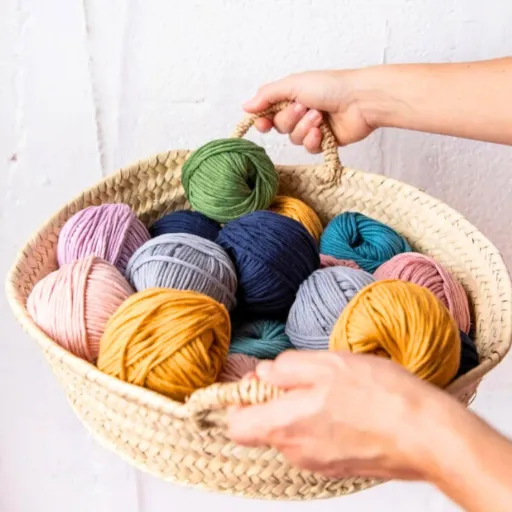
The cost of sustainable yarns in 2026 is not a fixed point. It is a moving target shaped by technology, policy, and market forces.
2026-2028 Price Outlook
Recycled polyester will remain the most dynamic segment. In China, the current cost advantage over virgin fiber may stabilize as demand catches up with expanded capacity. In Europe, approaching cost parity will likely tip into a clear recycled advantage as carbon pricing tightens. In the United States, the 30-35% premium will probably narrow to 15-20% as domestic recycling scales.
Organic cotton premiums will likely hold at 20-40% because supply constraints are structural. Lower yields, limited certified farmland, and climate vulnerability keep organic cotton from scaling as quickly as recycled synthetics.
Lyocell and modal prices are rising in 2026, tracking viscose price increases. The premium over conventional cellulosics will persist because the closed-loop production process is inherently more expensive to operate.
Forces That Could Lower Costs
Scale economies in recycled polyester production are the biggest downward pressure. As more mills install recycling lines and bottle collection infrastructure improves, per-unit costs fall. The EU Circular Economy Fund already subsidizes 15-20% of recycled polyester costs for qualifying facilities.
Textile-to-textile recycling could eventually bypass bottle-based feedstock altogether. When mills can recycle old garments directly into new yarn, textile waste becomes a valuable feedstock and the cost structure changes dramatically. That technology is not yet cost-competitive, but it is advancing rapidly.
Forces That Could Increase Costs
Carbon pricing mechanisms are spreading. The EU’s carbon border adjustment mechanism and similar programs in other regions will raise the cost of carbon-intensive conventional production, directly affecting the carbon footprint of virgin polyester. That makes sustainable options more competitive by comparison, but it also raises energy costs for all manufacturers. The EU Textile Strategy 2030 mandates recyclability and extended producer responsibility. Early movers who already use certified sustainable yarns will avoid the scramble costs that late adopters face when compliance deadlines arrive.
Climate volatility poses a growing threat to organic cotton. Droughts, floods, and shifting weather patterns in key growing regions create supply shocks that drive prices higher without warning.
Marcus Okafor runs a home textile brand in Lagos. In 2024, he committed to a 100% organic cotton bedding line. A poor harvest raised his fiber costs by 22% in three months. Rather than abandon sustainability, he shifted to a 70/30 organic-to-BCI cotton blend. His costs stabilized and he met his margin targets. Flexibility, he learned, is as important as commitment when managing the cost of sustainable yarns.
Conclusion
The cost of sustainable yarns is no longer a simple premium over conventional options. In 2026, the picture is nuanced, regional, and increasingly favorable to buyers who take a long-term view.
Here are the five points to remember. Sustainable yarns typically carry a 15-40% upfront premium, but the gap is narrowing every quarter. Recycled polyester has reached cost parity with virgin fiber in some markets and may already be cheaper in others. Certification costs are modest relative to the price premiums and market access they unlock. The true cost picture requires a five-year total cost of ownership view, not just a fiber price quote. And blended yarns offer the best balance of sustainability credibility and budget control for most brands.
The buyers who succeed with sustainable yarns understand the cost drivers, calculate their true landed cost, and choose the right material for their specific market and product.
Ready to get exact pricing for your next project? Contact Hebei Lida Textile today for a custom yarn quote tailored to your volume, specifications, and certification requirements.
Sources and further reading: