




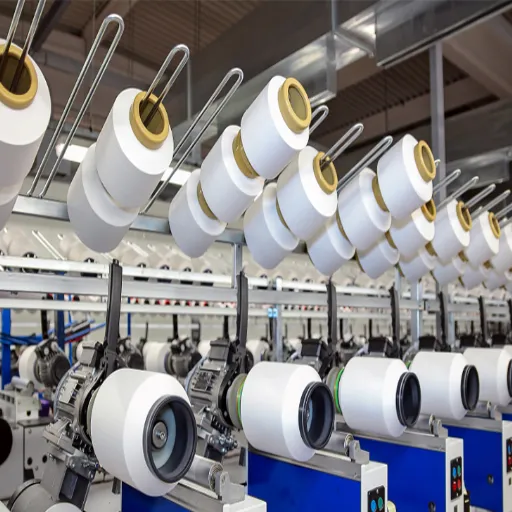
You can improve yarn production efficiency by optimizing raw material handling, implementing predictive maintenance, adopting smart automation, controlling your mill climate, upgrading spinning technology, applying lean waste-reduction principles, and managing energy consumption strategically. Leading mills that apply these strategies systematically see efficiency gains of 15 to 45 percent within the first year.
Here is a number that should stop every spinning mill manager in their tracks: the average yarn manufacturing operation leaves roughly 20 to 30 percent of potential efficiency on the factory floor. That is not theoretical waste. It is lost revenue, higher energy bills, and missed delivery deadlines that show up on the balance sheet every single quarter. U. S. textile mills turned a corner in 2023, posting a 6.8 percent jump in labor productivity according to the Bureau of Labor Statistics, yet the gap between average performers and best-in-class operations has never been wider. The good news? Most of these gains do not require multi-million-dollar machinery overhauls. They come from systematic optimization of processes you already control.
In this guide, you will learn seven proven, data-backed strategies to improve yarn production efficiency. Each strategy includes actionable steps, real-world results, and an honest look at implementation effort so you can build a roadmap that matches your budget and timeline. Whether you manage a small spinning unit or a large integrated mill, these principles apply.
Key Takeaways
- Predictive maintenance alone can reduce unplanned downtime by 45 percent and deliver over 650 percent first-year ROI.
- Controlling relative humidity between 40 and 50 percent can increase textile yield by up to 3.5 percent with minimal investment.
- AI-driven process optimization consistently improves yarn production efficiency by 15 percent while cutting breakage rates by 40 percent.
- Spinning processes consume 43 percent of total energy in textile manufacturing, making energy optimization one of the highest-impact targets.
- A phased implementation over 12 months, starting with quick wins like climate control and maintenance scheduling, produces faster payback than big-bang automation projects.
What Yarn Production Efficiency Really Means
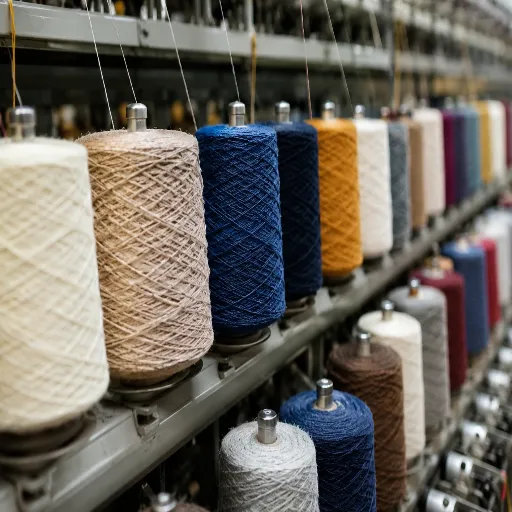
Before diving into tactics, it helps to define the target. Yarn production efficiency measures how effectively your operation converts raw fiber into finished yarn with minimal waste, downtime, and energy use. The key metrics every mill should track include spindle utilization rate, production per spindle per hour, yarn realization percentage, waste percentage, energy consumption per kilogram of yarn produced, and breakdown hours per month.
When Marcus Chen took over as operations director at a mid-size spinning mill in Jiangsu province in early 2024, his first shock came from the numbers. Spindle utilization sat at 62 percent. Waste ran at 8.2 percent. The mill was losing an estimated 12 production hours every week to unplanned stoppages. Marcus later told us: “I thought we needed new ring frames. Turns out we needed better data.” Within eight months, without replacing a single major machine, his team pushed utilization to 79 percent and cut waste to 5.1 percent. The turning point was not capital expenditure. It was a shift to data-driven process control. His story illustrates a principle we will return to throughout this guide: small, disciplined improvements compound across the production chain. Contact Hebei Lida Textile Co., LTD today for professional yarn manufacturing solutions tailored to your business needs.
Strategy 1: Optimize Raw Material Handling and Fiber Blending
Efficiency starts before fiber ever touches a carding machine. Inconsistent raw material is the silent killer of yarn production efficiency. When bale properties vary, your entire downstream process compensates with slower speeds, higher breakage rates, and off-quality yarn that requires rework.
Implement Systematic Bale Testing
Start with high-volume instrument (HVI) testing for every bale lot you receive. Measure staple length, micronaire, strength, and color grade. Do not rely on supplier certificates alone. Create a bale inventory database that maps each lot to its test results so your blending recipes are based on actual fiber properties, not assumptions.
Automate Your Blending Process
Manual blending introduces human error and inconsistency. Automated bale openers and blending systems homogenize fiber properties before carding, which directly reduces variation in sliver quality. Mills that switch to automated blending typically see waste reduction in the blow room of 15 to 20 percent because the carding stage encounters fewer clumps and irregularities.
Control Moisture from the Start
Fiber moisture content should sit between 7 and 9 percent when it enters production. Below 7 percent, fibers become brittle and breakage rates climb. Above 9 percent, you risk mold, uneven dye uptake, and weight inconsistencies that hurt your yarn realization percentage. Install moisture sensors at the bale opening stage and condition fibers in a controlled environment before processing.
Want to see how precision fiber handling works in practice? Explore our advanced yarn manufacturing capabilities and custom blending options.
Strategy 2: Implement Predictive Maintenance
The old model of fixing machines after they break is expensive. A single ring frame failure can idle 500 spindles for hours. Predictive maintenance shifts your team from reactive firefighting to proactive intervention by monitoring machinery health in real time.
Start with the Highest-Impact Machines
Focus first on ring frames, carding machines, and draw frames. These three asset categories drive the majority of unplanned downtime in most spinning mills. Install vibration sensors and temperature monitors on critical bearings and drive motors. Modern IoT sensor packages can alert you to bearing degradation days or even weeks before failure.
Real Results from Real Mills
A spinning mill in Gujarat, India, deployed an AI-powered maintenance system across its ring frames in 2024. The system detected abnormal vibration on Ring Frame Number 12 twelve days before the bearing would have seized. The maintenance team scheduled replacement during a planned shift change, avoiding what would have been 72 hours of unplanned downtime. The mill estimates that single save prevented roughly $180,000 in lost production. Across the full deployment, unplanned downtime dropped 45 percent and maintenance costs fell 30 percent. First-year ROI on the system exceeded 650 percent.
Build a Simple Maintenance Scorecard
If full AI deployment feels out of reach, start simpler. Create a weekly maintenance scorecard that tracks lubrication schedules, cleaning frequency, parts replacement history, and temperature readings. Assign ownership to specific technicians. The discipline alone typically reduces breakdown frequency by 15 to 20 percent.
Strategy 3: Upgrade to Smart Automation and AI
Automation in yarn manufacturing has moved far beyond auto-doffing. Today’s smart systems use artificial intelligence to optimize spinning parameters dynamically, adjusting spindle speed and tension in real time based on fiber properties and environmental conditions.
AI-Driven Process Control
AI algorithms can analyze data from hundreds of spindles simultaneously, identifying subtle patterns that human operators miss. When fiber micronaire shifts slightly, the system adjusts carding and drawing settings automatically. When humidity rises, tension controls compensate before yarn breaks increase. Mills running AI-optimized controls report efficiency improvements of approximately 15 percent and yarn breakage reductions of up to 40 percent.
Automated Visual Inspection
Contamination remains one of the costliest quality issues in yarn production. Seed coats, trash, and colored fibers that slip through early processing become expensive defects in finished fabric. Automated optical inspection systems now detect contaminants at the winding stage with far greater accuracy than human operators. These systems remove faulty sections automatically and generate data that helps you trace contamination back to specific bale lots or processing stages.
Auto-Doffing and Auto-Piecing
Auto-doffers remove full packages and replace them with empty tubes without stopping the machine. Auto-piecers join broken ends automatically. Together, these technologies reduce labor requirements and eliminate the productivity losses that occur during manual doffing. Modern auto-piecing systems achieve efficiency rates above 85 percent with piecing speeds up to 60 ends per hour.
Ready to explore how modern automation can transform your mill’s output? Learn more about our state-of-the-art yarn manufacturing equipment and technology.
Strategy 4: Master Climate Control in Your Mill
Here is a contrarian truth: some of the highest-return efficiency improvements cost almost nothing. Climate control is the perfect example. Yarn is a hygroscopic material. Its behavior changes dramatically with temperature and humidity. Yet many mills run climate systems on fixed schedules rather than real-time fiber needs.
Find Your Optimal Range
For most cotton and cotton-blend yarns, the optimal relative humidity is 40 to 50 percent at temperatures between 35 and 40 degrees Celsius. Polyester and synthetic fibers often perform best at slightly lower humidity, around 35 to 45 percent. The key is consistency, not perfection. Wide humidity swings cause fiber expansion and contraction, which directly increases breakage rates and diameter variation.
Measure the Impact on Yield
A well-controlled environment does more than reduce breaks. It stabilizes fiber weight. When humidity is too low, fibers lose moisture and weigh less than they should. When humidity is too high, they absorb excess moisture. Proper control can improve your yarn realization percentage by up to 3.5 percent, which translates directly to more salable product from the same raw material input.
Invest in Zone-Level Control
Instead of one central climate system for the entire mill, consider zone-level humidity and temperature control. Different processing stages have different requirements. Carding rooms may need slightly higher humidity than spinning frames. Winding areas may need tighter control than preparatory stages. Zone control lets you optimize each area independently rather than compromising everywhere.
Strategy 5: Apply Advanced Spinning Technologies
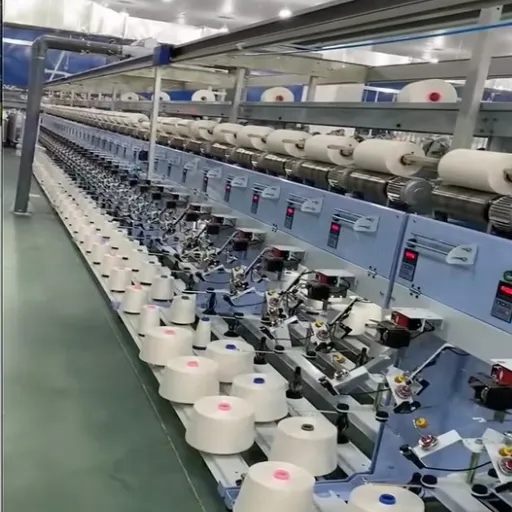
Not every mill can replace its entire spinning installation, but when you do upgrade, the technology choices you make have long-term efficiency implications.
Compact Spinning
Compact spinning condenses the fiber strand before twisting, which produces yarn with reduced hairiness and better strength. The efficiency benefit comes downstream: compact yarns require up to 50 percent less sizing chemical during weaving, and the improved yarn quality reduces loom stops. On the spinning frame itself, compact systems typically deliver a 3 to 5 percent productivity improvement compared to conventional ring spinning.
Air-Jet and Vortex Spinning
For coarser count yarns and certain synthetic applications, air-jet and vortex spinning offer compelling speed advantages. These technologies eliminate the roving preparation step entirely, which simplifies your process flow and reduces both labor and intermediate handling. Vortex spinning in particular produces yarn with excellent uniformity and low hairiness at speeds significantly higher than ring spinning.
Contamination Clearers and Electronic Yarn Clearers
Electronic yarn clearers continuously monitor yarn diameter and remove faults automatically. Modern clearers can distinguish between different fault types and classify them, giving you detailed data about where defects originate. When paired with automated winding, these systems ensure that only quality yarn reaches your customers, which reduces returns and reworks that drain efficiency.
Have questions about yarn manufacturing or bulk yarn orders? Contact Hebei Lida Textile Co., LTD for fast and professional assistance.
| Technology | Best For | Key Efficiency Benefit |
|---|---|---|
| Compact Spinning | Fine to medium counts, quality-sensitive apps | 50% less sizing, 3-5% productivity gain |
| Rotor / Open-End | Coarser counts, cost-sensitive production | Eliminates roving step, lower labor |
| Air-Jet / Vortex | Synthetic blends, high-speed needs | Very high speeds, low hairiness |
| Ring Spinning (Standard) | Premium fine counts, maximum flexibility | Widest count range, best yarn quality |
Strategy 6: Reduce Waste Through Lean Principles
Waste in yarn manufacturing falls into two categories: hard waste, which includes selvedge trimmings and unusable fiber that goes to recycling or landfill, and soft waste, which includes rework, off-quality production, and customer returns. Both erode margins, but soft waste is often invisible because it does not show up on the shop floor as physical material.
Map Your Value Stream
Value stream mapping traces every step from raw fiber receipt through finished yarn dispatch, highlighting where time, material, and effort add no value. Common non-value-added steps in spinning mills include excessive work-in-process inventory, redundant material handling, waiting time between processes, and overproduction of counts that are not immediately needed.
Deploy Statistical Process Control
Statistical process control (SPC) uses control charts to monitor critical parameters like yarn count, strength, and evenness in real time. When a parameter drifts outside control limits, the system flags it immediately so operators can correct the issue before it becomes a quality defect. Mills using SPC consistently report defect reductions of 15 to 20 percent because problems are caught early, not after full packages are produced.
Track Waste by Source
Break down your waste measurement by process stage: blow room, carding, drawing, roving, spinning, and winding. When you know exactly where waste originates, you can target improvements precisely. One mill in Vietnam discovered that over 60 percent of its avoidable waste came from poor carding settings. Adjusting wire maintenance schedules and cylinder speeds cut card waste by 35 percent within three months.
Looking for sustainable ways to minimize waste across your production line? Discover our eco-friendly yarn production methods and sustainable material options.
Strategy 7: Optimize Energy Consumption
Energy is one of the largest cost components in yarn manufacturing after raw materials. Research from textile plants worldwide shows that spinning processes alone consume roughly 43 percent of total plant energy, with wet processing taking another 35 percent. If you are serious about improving yarn production efficiency, energy cannot be an afterthought.
Conduct an Energy Audit
Start with a formal energy audit that maps consumption by machine, by process stage, and by shift. Identify peak demand periods and compare them against your production schedule. Many mills discover that they are running compressors, climate systems, and auxiliary equipment at full capacity even during low-production shifts.
Recover Waste Heat
Heat recovery systems capture thermal energy from hot water and hot exhaust air and redirect it to preheat incoming water or air. The NRDC has documented textile mill cases where heat recovery produced steam savings of 15 to 35 percent. A large fiber dyeing operation in one documented case saved $570,000 annually from heat recovery and boiler efficiency improvements combined.
Shift Peak Loads
Electricity pricing in many regions includes demand charges based on your highest usage period. By shifting non-critical loads to off-peak hours, mills can reduce electricity costs by approximately 10 percent without any capital investment. Simple measures like scheduling bale opening and preprocessing during night shifts can make a meaningful difference.
Upgrade to Energy-Efficient Machinery
When replacement cycles arrive, prioritize energy efficiency in your machinery specifications. The Rieter Autocoro 11 rotor spinning machine, for example, uses 48 percent less energy than older-generation machines and 10 percent less than its immediate predecessor. Over a machine’s 15-to-20-year lifespan, those savings compound into substantial cost reductions.
Your 12-Month Implementation Roadmap
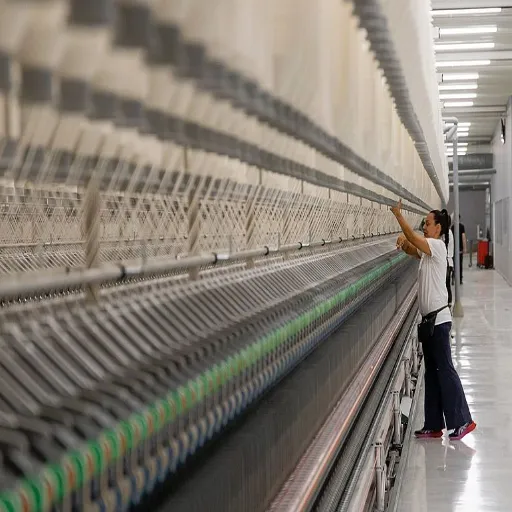
You do not need to implement everything at once. In fact, trying to do too much simultaneously often backfires because your team cannot absorb multiple major changes at the same time. Here is a phased approach that balances quick wins with long-term transformation.
Phase 1: Quick Wins (Months 1 to 3)
Focus on changes that require little or no capital investment. Optimize your climate control settings based on fiber type. Implement a structured preventive maintenance schedule with clear technician ownership. Begin HVI testing for all incoming bale lots. Deploy basic SPC charts on your most critical yarn counts. These four actions alone can deliver 5 to 10 percent efficiency gains within a quarter.
Phase 2: System Upgrades (Months 4 to 6)
Add IoT sensors to your highest-impact machines for condition monitoring. Conduct a formal energy audit and implement the top three recommendations. Upgrade to automated bale blending if you are still using manual processes. Train operators on data-driven decision making using the metrics you are now collecting.
Phase 3: Advanced Integration (Months 7 to 12)
Deploy AI-driven process optimization on pilot machines before full rollout. Integrate your quality data, production data, and maintenance data into a unified dashboard. Evaluate advanced spinning technologies for your next machinery replacement cycle. Begin predictive maintenance based on the sensor data you have been collecting.
How to Measure Success
Efficiency improvements only matter if you can measure them. Track these key performance indicators monthly and share them with your entire team:
- Production per spindle per hour: The fundamental productivity metric.
- Yarn realization percentage: Output weight divided by input fiber weight, expressed as a percentage.
- Waste percentage: Total waste divided by total input, tracked by process stage.
- Energy consumption per kilogram of yarn: Total kWh divided by total yarn output.
- Breakdown hours per month: Sum of all unplanned stoppage time.
- First-pass quality rate: Percentage of yarn that passes all quality checks without rework.
When Mei-Lin Park’s team at a Thai spinning mill began publishing these six metrics on a dashboard visible to every shift, something unexpected happened. The night shift, historically the lowest-performing crew, began voluntarily competing with the day shift. Within four months, night shift output per spindle improved 11 percent. “The numbers made it a game,” Mei-Lin explained. “Everyone wanted their shift to be the green one on the board.” Her experience shows that measurement does not just track progress. It drives behavior.
For premium yarn manufacturing and dependable supply support, contact Hebei Lida Textile Co., LTD today.
Frequently Asked Questions
What is the fastest way to improve yarn production efficiency?
The fastest returns typically come from climate control optimization and structured maintenance scheduling. Both require minimal capital investment and can deliver measurable improvements within weeks. One mill improved yield by 2.8 percent in the first month simply by stabilizing humidity at 45 percent relative humidity.
How much does it cost to implement predictive maintenance in a spinning mill?
Entry-level IoT sensor packages for condition monitoring start at a few thousand dollars per machine. Full AI-powered predictive maintenance platforms cost more but typically pay for themselves within 6 to 12 months. The documented case of 650 percent first-year ROI is exceptional but not unique; most mills see payback periods under 18 months.
Can small spinning mills benefit from automation, or is it only for large operations?
Small mills can benefit significantly, but the approach should be selective. Focus on one or two high-impact areas rather than attempting full automation. A small mill might start with automated winding and electronic yarn clearers, which improve quality and reduce labor without requiring massive investment.
What is the ideal humidity level for yarn production?
For most cotton and cotton-blend yarns, maintain relative humidity between 40 and 50 percent at 35 to 40 degrees Celsius. Synthetic fibers generally perform best at 35 to 45 percent relative humidity. Consistency matters more than hitting an exact number.
How does energy consumption break down in a typical spinning mill?
Spinning processes account for approximately 43 percent of total energy use, followed by wet processing at roughly 35 percent. The remainder goes to climate control, compressed air, lighting, and auxiliary systems. This breakdown makes spinning and wet processing the priority targets for energy optimization.
What is the difference between hard waste and soft waste in yarn manufacturing?
Hard waste consists of physical material that cannot be used, such as trimmings and contaminated fiber. Soft waste includes rework, off-quality production, and customer returns. Hard waste is visible on the shop floor. Soft waste is harder to see but often costs more because it includes labor, machine time, and lost customer confidence.
Conclusion
Improving yarn production efficiency is not about finding one magic fix. It is about systematically optimizing every link in your production chain, from the moment fiber arrives at your gate to the moment finished yarn ships to your customer. The seven strategies in this guide give you a framework for doing exactly that.
Start with the quick wins: get your climate control right, schedule your maintenance properly, and test every bale lot that enters your mill. Then build momentum with IoT sensors, energy audits, and statistical process control. Over time, advanced technologies like AI-driven optimization and predictive maintenance will compound your gains.
Remember Marcus Chen, the operations director who thought he needed new ring frames? His mill now runs at 79 percent spindle utilization, and the team is targeting 85 percent by year end. “The machines were fine,” he told us recently. “We just needed to understand them better.” That understanding is within reach for every mill willing to measure, analyze, and improve.
At Hebei Lida Textile Co., LTD, we apply these same principles in our own manufacturing operations every day. If you are looking for a yarn partner who understands production efficiency from the inside out, contact our team today to discuss how our high-quality yarns and custom solutions can support your next project.