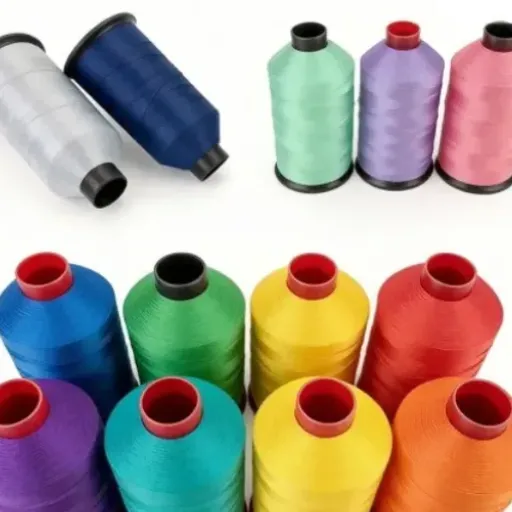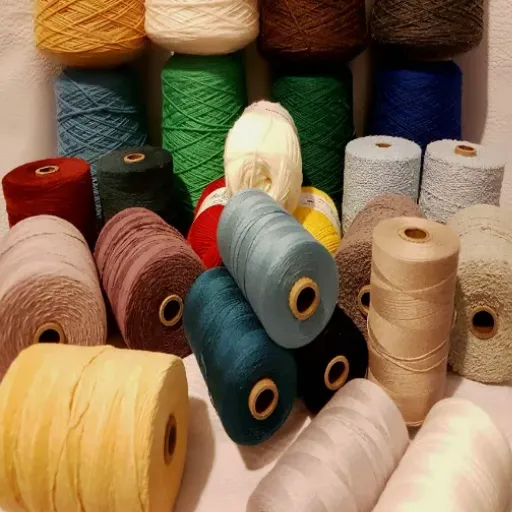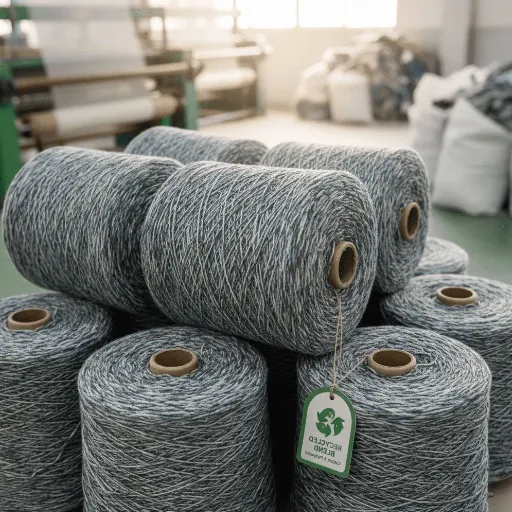




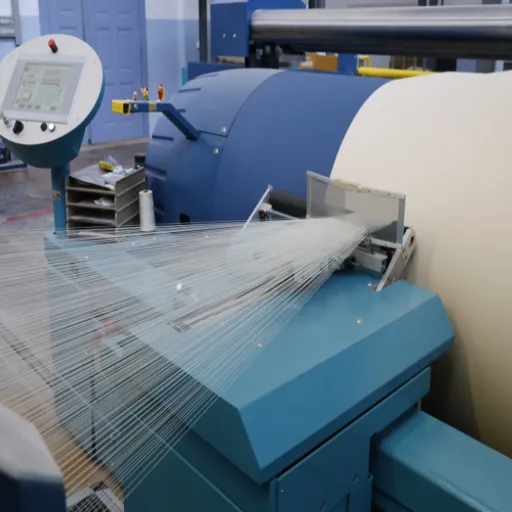
There are a number of practices encompassed by the term yarn factory operations. This includes the whole mechanisms the equipment and the standards about this equipment that is used in the processing of raw fibers into a final yarn that can be knitted or woven. It is not enough therefore for a factory to simply process the wool into threads or yarn; the fibers have to be processed, the production has to be scheduled, the equipment has to be maintained, the items have to be checked and finally the items and procedures of packaging have to be integrated into a smooth operation which brings comparable outcomes one time to another that is from batch to batch of production.
If you are running a retail store it is also important to understand how a factory operates and works in order to find the right yarn suppliers for your fashion, home textile and industrial goods even before you pay for the items. Reliable yarn suppliers have a stake in maintaining their operations and long-term relationship with clients and it is for this reason that they maintain professionalism in their operations whereas other suppliers do not bother.
In this guide, we are going to give a complete walk-through of the operations of a modern yarn factory. You will see how the production line is structured, what equipment helps to make the process faster, where quality is most important, and what things to pay attention to during an inspection. If you are about to work with a supplier or wish to understand the chain of textile better for some other reasons, this paper is full of practices that we can use.
Want to see how professional yarn factory operations translate to better products for your business? Contact Hebei Lida Textile to schedule a virtual factory tour and see our production floor in action.
Key Takeaways
- Yarn factory operations include far more than spinning: they cover intake, scheduling, maintenance, quality control, and logistics as an integrated system.
- The standard production line runs through seven stages: raw material intake, blow room, carding, drawing, roving, spinning, and winding.
- Modern factories achieve 75-85% Overall Equipment Effectiveness (OEE) through preventive maintenance, automated monitoring, and lean workflows.
- Smart factory technology has reduced labor requirements from 80 workers per 10,000 spindles to fewer than 15 in fully automated mills.
- Buyers should verify stage-gate quality controls, equipment maintenance logs, and certifications before committing to a supplier.
What Are Yarn Factory Operations?
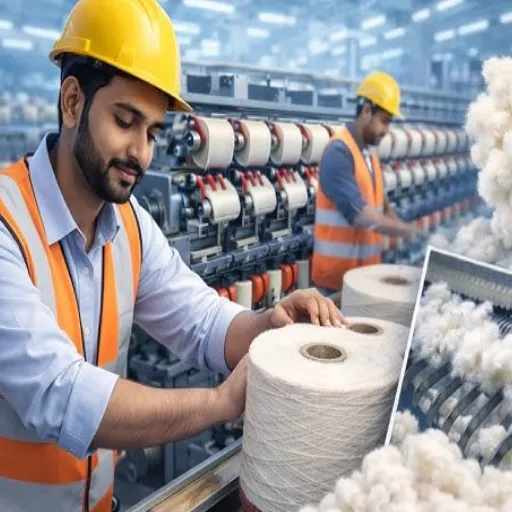
The term yarn factory operations refers to how all elements are crafted in a textile facility for the production of yarn. This includes the printing process itself, the practices of machinery maintenance, operational planning, control over raw materials, formulation of quality assurance and rectification frameworks, and also compliance with environmental requirements. Everything is an operation – everything from deciding when to repair the carding machine to effects of the humidity on fibers.
When it comes to the production of yarn, it is a common belief with the customers that such facilities are essentially a few machine strokes arranged in a hierarchical order. However, the mechanical part accounts for a mere 20% of the factory’s success narrative but the rest of 80% cuts into this perception: things such as maintenance timetables that address breakdowns, defect containment that eliminates defects early on; planning production in such a manner that one can meet orders without leaving too much excess capacity and systems of performance that keep improving.
In the meantime, you can consider it a food place. Here, the brainchild of the person who thought it up is accompanied by where they got the products from, how the kitchen is arranged, how the staffs are trained, and how good communication skills are used among the staff to maintain discipline. Just like a restaurant exists based on more than food, the yarn mill operates on more than just the physical machinery. The machines in the roving and spinning sections and designing of the frames will produce the yarn, but in addition to this, a much larger machine is in operation. It determines if that yarn will be the product ordered by the client and it will be shipped within the lead time provided and whether the cost will be within the markup as stated in the quotation. Hebei Lida Textile Co., LTD is committed to delivering quality yarn manufacturing services for customers worldwide — contact us now for more details.
How Operations Differ by Factory Type
Both synthetic and cotton yarn factories do not follow same methodology. A ring spinning plant treats raw material differently from an extrusion plant or from a fully integrated worsted unit. In Guargaon, there is a center named Sai Preethi. Here we intensively take care of removal of foreign bodies through opening and carding processes. However, in synthetic yarn plants the emphasis is mainly on polymer extrusion and texturising. It is a process that every blended yarn producer knows through procedures of very precise fiber mix ratios and compatibility tests. If the buyers are aware of these differences in approach, they are able to assess whether the operational strengths of a given factory are in keeping with their particular requirements of the material they seek to procure.
The Yarn Production Line: Step-by-Step Operations
The first time Elena Rodriguez, a sourcing manager for a Spanish textile brand, visited a yarn supplier in 2023, she thought she was in for a simple mills visit. Rather, she had to contend with a multi-zone building, where raw bales of cotton made their entrance to one end, progressively transformed into precision wound cones before exiting the other, each having its own environmental and operational standard. Her trip of the plant took her four hours. And, during those four hours, she learned why action quality might be considered almost as much as the final product.
Every yarn manufacturing plant will follow ‘this scenario’: that of stages one by one. Here is how these stages are coped with in modern times.
Raw Material Intake and Storage
Different operations are conducted before a fiber is fed into the machine. Bale is carefully inspected for, such as moisture content, color uniformity and, contamination. Commercial mills properly store unprocessed natural fibers in warehouses with climate control at temperatures ranging from 20-25 degrees Celsius and relative humidity between 60 and 65% in order to avoid excessive moisture intake of the fiber that could cause it break down in the process.
The work of the forklift driver includes stuff like memorizing batch numbers, cutting list numbers, and the results of the tests made. Supplier tracking is particularly valuable when failure to adhere to specifications takes place in the course of manufacturing. Unwillingness to go through the intake procedures makes them aging aty times-Genbang caused technolgoy-factory-to ship and then even after the faulty lana reached customer thr factory sudenly realizes the wareawarenthen unwiling to deal with inhaketing the lana.
Blow Room Operations
Staring within the blowroom, the first processing area commenced by the factory. At the openers also the bales, two main tasks come in as well as slithers of the compression’s fibers. Furthermore one uses strain generated by mechanical action as will be further illustrated in the extraction along with transportation of dust, trash, seed – like material, sand and some short fibers contained in others. Other machines known as blenders combine different grades in order to produce a mixture which is uniform in terms of quality throughout the coil.
The presence of procedures at this point will also depend directly on the final quality of the filched yarn. Aggressive opening is damaging to the fibers in that it deteriorates them thereby reducing the tenacity of yarn produced. Conversely, holding back on opening is detrimental because it leads to contamination of the product and there will be fibre in the form of neps and weak links in the spun yarn. Waste extraction rates in the blowroom operation are usually considerable and the operations have become about effective waste management techniques that are operated under normal conditions, where they can still manage to collect a considerable percentage of the wastes; 5 to 10 percent for example recollecting the blasted wastes by use of pneumatic waste control. Looking for reliable yarn manufacturing services? Reach out to Hebei Lida Textile Co., LTD for high-quality products and competitive pricing.
Carding and Sliver Formation
Carding is a process by which the loose tufts are spread along the machine direction as parallel fibrils called sliver. Grinding suface with accurate spacing does not only align the fibres but also remove the defective fibrils and impurities. Thereafater the web is then passed tio a machine where it is put into a uniform sliver looking like a rope and placed inside cans.
Clothing industry, where the individual gets to make something out of the raw materials and sell it for a profit. Customers get to interact with the bar machines to get the necessary information on the available products and the package of wool or blend that they require, alps are given. Care instructions as well as the amount of effort that must be made before the care process is started should also be printed.
Drawing and Roving
Several pieced combined get to draw fringe tools where the slivers are twist and elongated the mass of the fiber. Doubling – put many slivers into one — is helpful in covering for small errors in the single feeds. The incharlation removes impurities of the fibers making it possible for the formation of strong parallel structure.
Then this web goes in the roving frame (called simplex). Roller system supples the web at another stage and rotates slightly the web to enhance the creation of a more consolidated roving as the results thinner and stiffer web is quite difficult to wound on pullrley. The raving frames prepare the web for the final spinning but doesn’t add much in terms of linkage therefore quality control monitor the web in terms of raving types in relation to the amounts and level of twist in the materials as having other methods.
Spinning Floor Operations
Spinning represents the core transformation where fibers become yarn. The roving passes through a drafting system that stretches it to the desired fineness, then a twisting mechanism binds the fibers together into a continuous strand. Modern factories employ several spinning technologies depending on product requirements:
| Spinning Method | Best Application | Key Advantage |
|---|---|---|
| Ring spinning | High-quality fine-count yarns | Smooth, strong output ideal for premium fabrics |
| Rotor (open-end) spinning | Coarse yarns, short-staple fibers | Higher productivity and lower energy per kilogram |
| Air-jet (vortex) spinning | Technical and knitting yarns | Low hairiness, smooth surface finish |
| Compact spinning | Premium low-hairiness applications | 15% higher strength with minimal fiber fly |
Spinning floor operations require constant attention to traveler speed, spindle condition, and breakage rates. A well-run ring spinning section achieves breakage rates below 30 breaks per 1,000 spindle hours. Each break stops production on that spindle until an operator repairs it, so minimizing breaks directly improves efficiency and output.
Winding, Quality Checks, and Packaging
Prior to yarn winds into cones, in most yarn-spinning factories, auto-coners have come equipped with the addition of an electronic yarn clearing (echo) division. The included sensors can inspect tickets for such irregularities or contamination and remove them in time. As well, nowadays splicers are widely used for the automatic joining of the cut ends of the thread to avoid defects such as knots which would otherwise halt the next operation.
In the final stages of packaging, the product is further sorted according to batch, count and quality level by including these details on the label laid on the pack. The tapes are intended to be dispatched and the finished cones are warehoused under hygienic or temperature controlled conditions. Such measures are also designed to shield the packaged product from environ enerally, these are precautions against moisture and physical stresses in transit, which are major customer concerns.
Key Equipment in Modern Yarn Factories
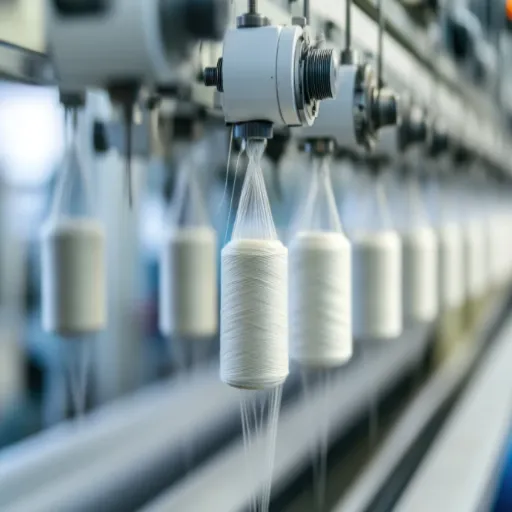
The machinery portfolio in a yarn factory determines both capability and efficiency. Buyers who understand key equipment can better assess whether a supplier has invested in modern technology or relies on aging assets prone to downtime.
Blow Room Machinery
Modern blow room lines feature automated bale opening, intelligent blending systems, and multi-stage cleaning sequences. Trützschler’s TC 30i card, showcased at ITM 2026, delivers up to 40% higher productivity while maintaining yarn quality. The T-GO automatic carding gap optimizer ensures consistent settings without manual intervention. Leading factories also deploy T-CAN self-driving cans with AGV technology, reducing manual material handling and associated labor costs.
Carding and Combing Equipment
High-production cards with integrated leveling systems dominate modern installations. The CDS (Card with Drafting System) configuration eliminates the separate draw frame stage for rotor and air-jet applications, shortening the production line and reducing energy consumption. Combing machines, used for premium yarns requiring extra fineness, remove short fibers called noils. Forward-thinking factories recycle these noils into lower-grade production rather than discarding them.
Drawing and Roving Frames
Precision roller systems with electronic drafting control characterize contemporary draw frames. Roving frames feature individual spindle monitoring that tracks performance metrics for each position. This granularity allows maintenance teams to address underperforming spindles before they affect batch consistency.
Spinning Machines
Ring spinning frames remain the standard for high-quality output, with modern machines achieving 15-20% energy reduction compared to 2021 benchmarks through efficient motor designs. Rotor spinning has advanced to 200,000+ RPM speeds, making it competitive for coarse-count applications where productivity matters more than ultimate fineness. Air-jet and compact spinning systems serve specialized markets requiring particular surface characteristics or strength profiles.
Winding and Packaging Systems
Auto-coners with electronic yarn clearers, automatic splicers, and tension-controlled winding form the final production stage. Fully automatic packaging systems handle cone labeling, bagging, and palletizing with minimal human intervention. These systems reduce handling damage and improve traceability through barcode or RFID integration.
Quality Control at Every Stage
Quality in yarn manufacturing is not a final inspection activity. It is a distributed system of checkpoints that prevents defects rather than catching them after the fact. Professional factories embed quality verification into every operational stage.
Fiber Testing Before Production
Before any bale enters the blow room, quality teams test samples for micronaire (fiber fineness), staple length, strength, and color grade. High Volume Instrument (HVI) testing provides rapid, repeatable results that guide blending decisions. Factories that skip this step risk processing incompatible fibers that produce uneven yarn with unpredictable dye uptake.
In-Process Quality Checks
During carding, operators monitor sliver evenness visually and through periodic weight checks. Drawing frames include auto-leveling sensors that adjust roller settings to maintain consistent output. On the spinning floor, technicians randomly sample cops (partial packages) to check twist levels, hairiness, and break rates against control charts.
Final Yarn Testing
Finished yarn undergoes comprehensive laboratory testing before release. Standard parameters include:
- Evenness (CV%): Measures mass variation along the yarn length, tested on Uster instruments
- Tenacity/RKM: Breaks force per unit linear density, indicating yarn strength
- Hairiness: Counts protruding fiber ends that affect downstream processing and fabric appearance
- Neps and trash: Quantifies remaining fiber knots and foreign particles
- Count consistency: Verifies that actual yarn thickness matches the nominal specification
Results typically compare against Uster Statistics benchmarks, which grade performance against global industry data. Yarns ranking in the top 5-25% of Uster Statistics command premium pricing and are suitable for demanding applications.
Defect Tracking and Remediation
When testing reveals out-of-specification results, quality teams trace the issue to its source stage. A strength problem might trace back to excessive carding waste. An evenness issue might originate from worn draw frame rollers. Systematic root cause analysis prevents recurrence and continuously improves the operational system.
Looking for a yarn supplier with rigorous quality control at every stage? Explore our quality assurance processes and see how Hebei Lida Textile maintains consistent standards from fiber intake to final cone.
Efficiency Metrics That Matter
Operational excellence in yarn manufacturing is measurable. Buyers who understand these metrics can evaluate factory performance objectively rather than relying on sales presentations.
Overall Equipment Effectiveness (OEE)
OEE combines three factors into a single percentage: availability (how often equipment runs versus being down for maintenance or changeovers), performance (actual speed versus designed speed), and quality (good output versus total output). Modern yarn factories target 75-85% OEE on critical equipment. Facilities scoring below 60% typically suffer from chronic maintenance issues, poor scheduling, or operator skill gaps.
Spindle Utilization and Productivity
Spindle utilization measures the percentage of time spinning positions are actively producing yarn versus stopped for breaks, doffing (removing full packages), or maintenance. A well-managed ring spinning section achieves 95%+ utilization during scheduled running hours. Productivity metrics such as grams per spindle per hour enable comparison across different machine types and yarn counts.
Waste Management and Recovery
Waste is inevitable in yarn production, but its magnitude and handling reveal operational sophistication. Professional factories separate waste by type and quality: clean pneumafil (vacuum-collected fibers) returns to lower-grade production, while contaminated trash goes to external recyclers. Total waste percentages below 8-10% of input weight indicate efficient processes. Factories generating 15%+ waste often have equipment alignment problems or poor operator practices.
Energy Consumption per Kilogram
Spinning is energy-intensive. A typical ring spinning installation consumes approximately 2 megawatts for 20,000 spindles. Leading manufacturers like Rieter have targeted 15% energy reduction in ring spinning by 2025 compared to 2021 baselines through efficient motor designs and optimized machine settings. Energy consumption per kilogram of yarn produced serves as a benchmark for both cost efficiency and environmental impact.
Modern Innovations in Yarn Factory Operations
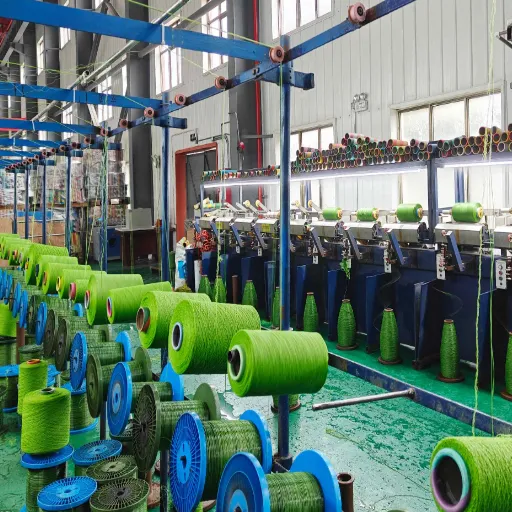
Management of a medium-sized textile mill in Vietnam, as well, encountered the situation of increasing labor costs and rising expectations about the quality of the exported goods. To counter new pressures, in 2024, they acquired and planted IoT sensors across the spinning machines, 15,000 spindles in the ring spinning section connected to an eye pleasing central app. Just six months in use, the software help to identify an unusual high rate of damages on several machine positions – afternoon shifts only. Considerable losses of the material was realized due to unavailability of steam control at shift change. Introducing an amended procedure regarding the ventilation arrangement resulted in a decrease of breaks by about 22% as well as an enhancement to the machine productivity and efficiency.
This is one of the scenarios showing how the adopted technology is transforming the operations of yarn factories in the years 2025 and 2026.
Smart Factory Technology and IoT
Internet-connected sensors now monitor temperature, humidity, vibration, and power consumption across production floors. Real-time dashboards alert supervisors to deviations before they affect product quality. Some advanced installations use machine learning algorithms to predict optimal process parameters based on fiber properties and environmental conditions. The global spinning machinery market, valued at USD 7.98 billion in 2025, is projected to reach USD 12.6 billion by 2035, driven largely by demand for intelligent automation.
Predictive Maintenance Systems
Instead of servicing equipment on fixed schedules regardless of condition, predictive systems analyze vibration signatures, temperature trends, and power draw patterns to forecast failures before they occur. This approach reduces unplanned downtime — the most expensive kind — by 30-50% compared to traditional preventive maintenance. For a 20,000-spindle installation, preventing one major breakdown can save tens of thousands of dollars in lost production.
ERP Integration for Production Planning
Enterprise Resource Planning systems connect sales orders, raw material inventory, production schedules, and shipping logistics into unified workflows. When a customer places an order for 50 tonnes of 30-count combed cotton yarn, the ERP calculates raw material requirements, assigns machine capacity, schedules quality testing slots, and generates shipping documentation automatically. This integration reduces lead times, prevents stockouts, and improves on-time delivery performance.
Sustainable Operations Practices
Modern factories increasingly prioritize environmental performance alongside economic metrics. Water recycling systems, energy-efficient motors, and waste heat recovery reduce both cost and carbon footprint. Microwave thermal pretreatment, now entering commercial use, reduces fiber preparation time by 95% compared to conventional methods. Plasma treatment achieves up to 90% energy efficiency for certain finishing processes. These technologies matter to buyers facing sustainability mandates from their own customers or regulatory requirements in target markets.
How to Evaluate a Yarn Factory as a Buyer
Marcus Weber, a furniture manufacturer in Germany, learned about factory evaluation the hard way. In 2022, he selected a yarn supplier based on price alone. The first shipment arrived two weeks late. The second contained color variations that made his upholstery fabric look striped. When he finally visited the factory, he found carding machines running without auto-leveling, quality records kept in handwritten notebooks, and no humidity control in the spinning hall. He switched suppliers within six months, but the disruption cost him a major retail contract.
His experience offers lessons for any buyer evaluating yarn suppliers.
Questions to Ask on a Factory Tour
- What is your current OEE, and how has it trended over the past 12 months?
- Can you show me maintenance logs for the machines that would produce my order?
- What quality testing do you perform at each production stage, and can I see recent results?
- How do you trace raw material batches through to finished yarn?
- What certifications do you hold, and when were they last audited?
- How do you handle off-specification yarn, and what are your typical waste percentages?
Red Flags to Watch For
- Excessive machine downtime: Multiple idle machines suggest maintenance problems or insufficient orders
- Poor housekeeping: Trash accumulation, oil leaks, and disorganized material storage indicate weak management
- No documented quality data: Factories relying on “we check everything” without records lack systematic control
- Outdated equipment: Machines older than 20 years without recent retrofits struggle with modern quality demands
- High employee turnover: Constantly training new operators produces inconsistent output
- No environmental controls: Missing humidity or temperature management affects fiber behavior unpredictably
Certifications and Standards to Verify
| Certification | What It Covers | Why It Matters |
|---|---|---|
| ISO 9001 | Quality management systems | Indicates systematic process control |
| ISO 14001 | Environmental management | Verifies environmental commitment and compliance |
| OEKO-TEX Standard 100 | Harmful substance testing | Ensures yarn safety for skin contact applications |
| GOTS | Organic textile processing | Validates organic fiber claims |
| GRS | Recycled content verification | Confirms recycled material percentages |
A factory holding relevant certifications has invested in documented, auditable systems. This reduces buyer risk compared to uncertified competitors who may perform well on good days but lack the structure to maintain consistency.
Conclusion
Operating a yarn mill is a rather advanced sector where there are indispensable physical operations, quality assurance processes, operational maintenance policies, and management functions as well. Advanced facilities do not only just have proper machineries they use; they are facilities that have such machineries in place and, use them in proactive manner by anticipating issues, preventing mistakes, and improving performance in a more strategical manner.
These operational basics for instance are crucial for purchasing as they give an effective assessment structure which one can use. These include an assessment on whether supplier has the necessary systems in place to ensure one gets consistent products, on- time delivery of the products and similarly armoring supplier to grow together with them.
The five principles that distinguish top-tier yarn factory operations are:
- Stage-gate quality control that catches problems early rather than at final inspection
- Preventive and predictive maintenance that maximizes equipment availability
- Data-driven production planning that balances capacity, inventory, and customer commitments
- Environmental control that stabilizes fiber behavior and product consistency
- Continuous improvement culture that drives waste reduction and efficiency gains over time
The global yarn market, valued at USD 14.98 billion in 2025 and projected to reach USD 18.70 billion by 2030, continues to reward manufacturers who invest in operational excellence. Buyers who partner with these facilities gain more than yarn. They gain supply chain reliability that supports their own growth.
Ready to partner with a yarn manufacturer that prioritizes operational excellence? Contact Hebei Lida Textile today for a free consultation, sample request, and virtual tour of our production facilities. We combine advanced manufacturing technology with rigorous quality systems to deliver yarns that meet your exact specifications, batch after batch.