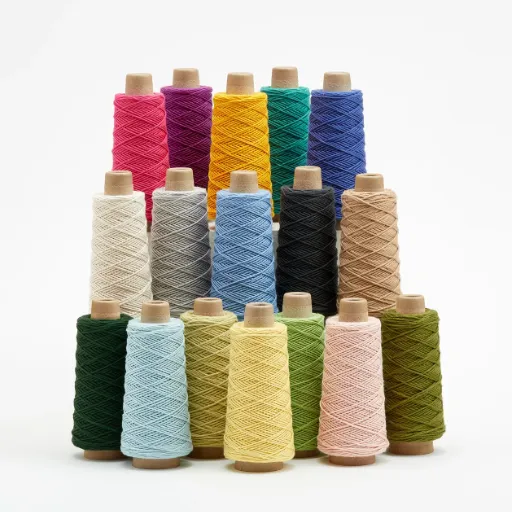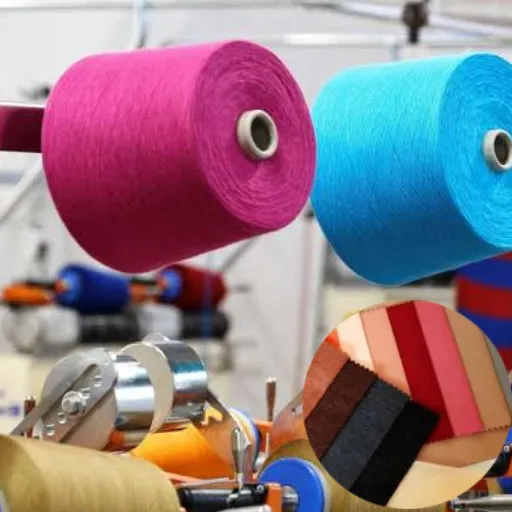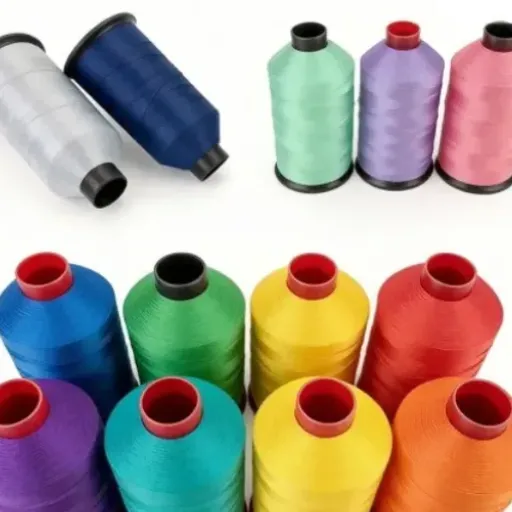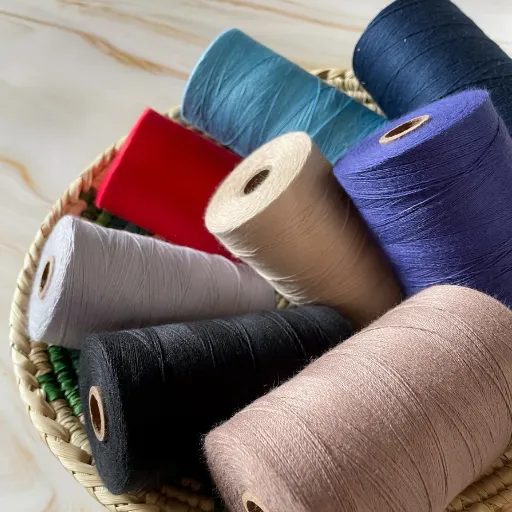
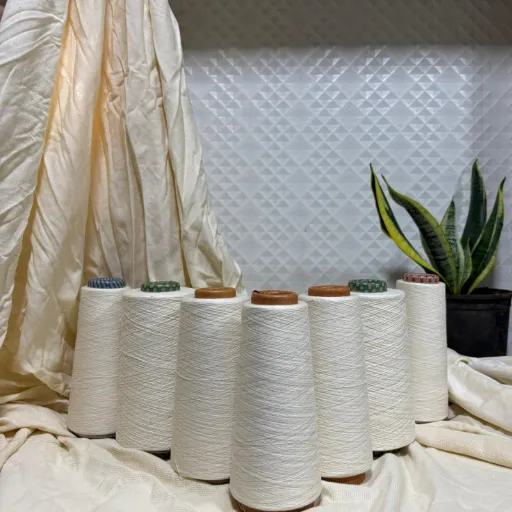
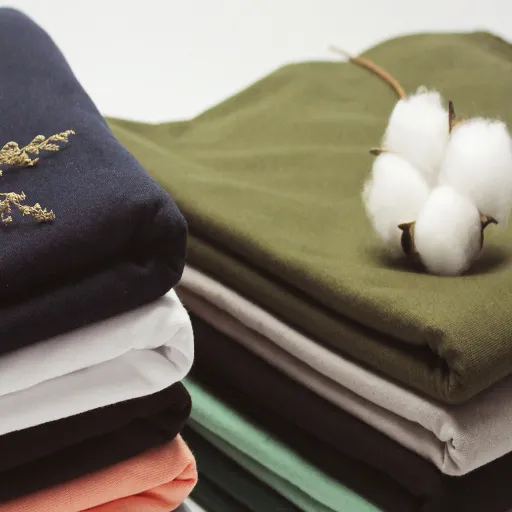
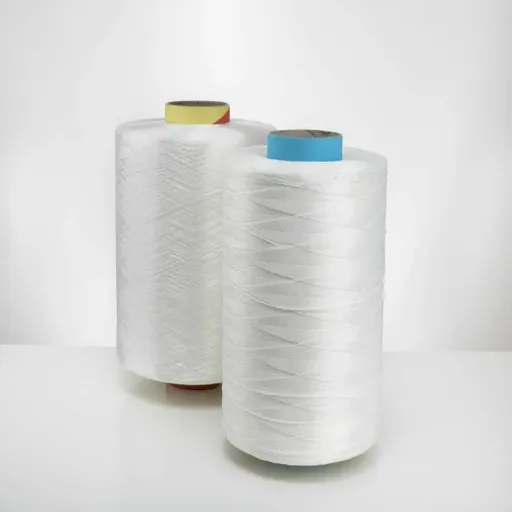

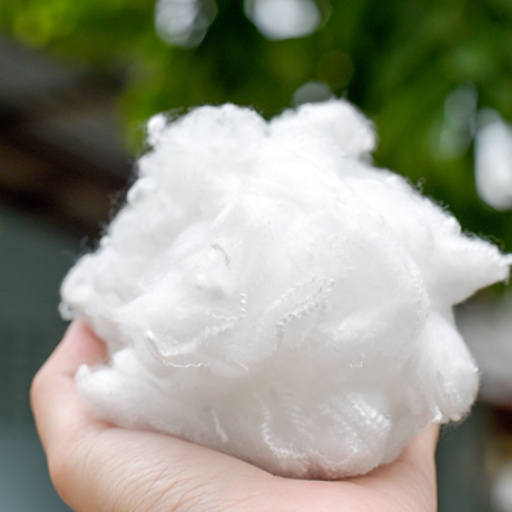


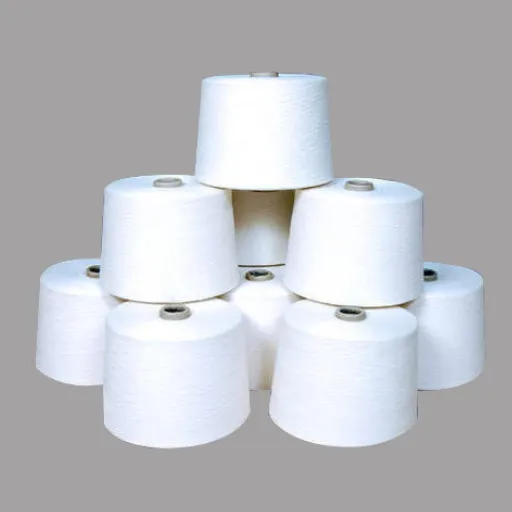
There exist different ways of processes that change a various fiber to thread when it is transformed to well-defined process often represented in the beard fibers. The yarn is classified into some specific categories based on the exact equipment used in the methods and equipments. It can be very difficult to draw the line when it comes to the differences between a 4 and 14 sewing threads. The biggest difference is largely in the work.
Most of the people who buy yarn will have the weight type as well as the fiber content. But weight only tells everything about neither evenness nor twist nor its structural integrity which may be the consideration as to why your garment became shorter after the third wash or it has survived for so long without changing style. Learning about the process of production of yarns will equip you with comparative words and performance measures to use and feel comfortable with competitive tendering processes.
In this article, we guide you through the complete yarn production process considering the raw fiber of the fabric until the final finished yarn cone. We will make a comparative analysis of the conventional and state-of-the-art methods employed in the manufacturing of yarn quality attributes. You will be taught how to recognize a high-quality product and its quick ‘cost-effective’ counterpart. When you finish, you will have a clear idea of what yarn you need to specify in your future the purchase specifications. If you have any questions or need further assistance, don’t hesitate to get in touch with us.
Key Takeaways
- Yarns are manufactured through 8 precise stages: opening, carding, combing, drawing, roving, spinning, winding, and finishing.
- Ring spinning produces the finest yarn but runs slowest; open-end spinning runs 5–8x faster and suits bulkier, cost-sensitive applications.
- Combed cotton yarn commands a 20–30% price premium over carded because it removes short fibers and produces a smoother, stronger thread.
- Modern mills use Uster evenness testing, tensile strength analysis, and twist measurement to verify quality at every stage.
- Sustainability is now embedded in the manufacturing process itself — not a separate add-on — through closed-loop water systems and recycled fiber integration.
- The right yarn manufacturing partner combines modern equipment, rigorous quality control, and transparent communication about what you’re actually buying.
What Is Yarn? A Quick Definition
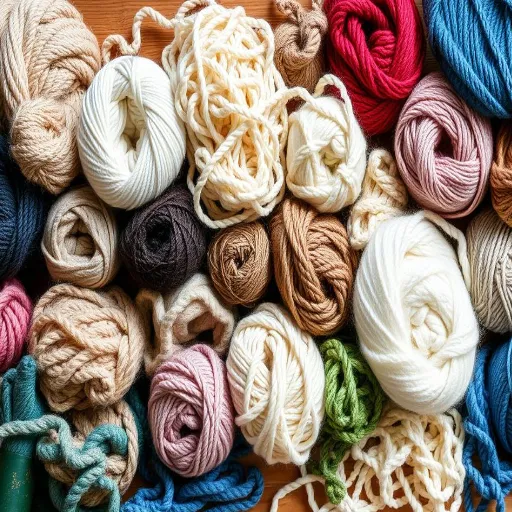
Yarn is a long single piece of fibers that are woven into a twisted construction by the method of twisting fibers or pulling lengthwise from a source of materials that consists of continuous monofilaments. It is the main component of most fabric-related products such as the one you wear on your body or the one used to cover your seat.
Different types of yarn can be used for knitting – both of which are hand-knitting and machine-knitting. One of them is called spun yarn, which is made up of small fibers such as cotton, wool, rayon, or short manmade fibers. Moreover, long fibers like polyester of nylon, for example, are twisted or non-twisted and may be stretched.
When it comes to yarn or spinning yarn, as is the main topic of this piece, filament yarn accounts for the largest share. The world market as of 2024 is approximately 11.5 billion and it and it should increase to about 16 billion by 2030. China alone produces about 40% of world yarn output. Knowledge of staple fiber production would contribute to an advanced procurement activity in almost all sectors.
The Yarn Production Process: 8 Key Steps
The yarn manufacturing process follows a logical progression from chaos to order. Raw fibers arrive as tangled, dirty bales. They leave as smooth, measured, and tested cones ready for weaving or knitting.
Here is the complete step-by-step yarn production process:
- Fiber preparation and opening — Raw fibers are cleaned, blended, and loosened into a workable state.
- Carding — Fibers are disentangled and aligned into a thin web called a sliver.
- Combing (optional) — Short fibers and impurities are removed to produce a smoother, stronger yarn.
- Drawing — Multiple slivers are combined and stretched to improve fiber alignment and evenness.
- Roving — The sliver is attenuated further and given a light twist to prepare it for spinning.
- Spinning — Fibers are twisted together into a continuous yarn of the desired count and strength.
- Winding — The spun yarn is wound onto cones or packages for storage and transport.
- Finishing and packaging — Final quality checks, treatments, and packaging prepare the yarn for shipment.
Each step shapes the final yarn’s properties. Skip a step, rush a stage, or use outdated equipment, and the difference shows up in uneven dye uptake, excessive breakage during weaving, or premature wear in the finished product.
1. Fiber Preparation and Opening
Raw fibres in significant numbers are shipped to the spinning mill in compressed bundles, often weighing several hundred kilos. These hide skin, seeds, leaves, and other impurities. Machineries such as the openers and the beaters are used in the second process for the loosening of the fibres present in the bales.
This double action is necessitated by two functions: the elimination of impurities and the formation of a blend that can be spun easily. For instance, with cotton, we must get rid of seed fragments and short fibres. Any mixture with synthetic constituent requires uniform distribution of the polyester or nylon over the cotton.
Such job matters more than many a buyer would imagine. The improper lap preparation of the wastes creates lines of hairs on the fabric. Here, the modern opened up with electronically regulated feeding makes the batting flawless, the older manual systems with their self-determined and varying feeding mechanisms lead to inferior quality of the material.
Quality signal to watch: Ask your supplier whether they use automated bale opening with computerized blending ratios. Manual batch blending is cheaper but far less consistent.
2. Carding
After the processing of this started material, straight fibers reaches the carding machine where they are combined get woven. Carding is followed by which the fibers are thinned out and made ever harder so that they are easily processed into the filaments by the help of concavely curved and rotating wire hand-cards. The output is a soft, rope-like strand called a sliver.
Most remaining impurities and short fibers are left behind on the strip during the carding process. This also distinguishes the way they are aligned—provided that the yarn is spun in an ideal manner, certain modifications may be carried out such as even dyeing.
In these days the carding machines consist of the modern and high speed auto levelling devices, which evens out the sliver in feed-to-ruffle before the carding section. When the sliver deviates from the mean level by a pre-defined quantity, the system initiates some correction process to bring the sliver thickness back within the specified M/M ‘tolerance’ otherwise the quality of the sliver will drop drastically with the probability of producing below that thetable end production- as any small deviation would result in a thick spot in one section of the drawn sliver. This kind of flexibility was not there in the predominantly mechanical carding systems of the past era.
Quality signal to watch: Neps — small knots of tangled fiber — are a common carding defect. High-quality carding produces sliver with minimal nep formation, which translates to smoother fabric surfaces.
3. Combing (Optional, for Premium Yarns)
Combing is a sifting operation where high cost yarn is distinguished from low-cost yarn. The combing machine removes short fibers, neps, and other garbage which the teased one failed to remove. The output is an even, tougher, and stronger yarn.
In the case of combed cotton yarn, the price is usually 20 to 30 percent more than carded yarn. The reason is that there is a more steep additional unit of time for preparation of the fibers for the process, and the waste of the fiber is inevitable, short fibers are disposed of along with the production of waste because of the processing of refining and fiber lapping. On the other hand, the end product, that is combed yarn is very lucrative since the fabric made can be dyed easily as well as gives a better feel to the hand and there is less itching due to reduced pilling.
Not all requirements of every product can be met using combed yarn. For certain sectors such as, industrial textiles, plain clothes and clothes for the working people and other applications where the price of the fabric is a major issue, carded yarn is perfectly suitable. However, for expensive tastes of top designers, fashion houses, high end home textile brands producing upscale bed linen, or boundaries when perfection matters to the appearance of the fabric or other apparel, combing pays off.
For his dress-shirt collection, with an upgrade from carded to combed Pima cotton, there would be less return rate. That is because the straightened yarn did now deform even after series of washing, and had a relatively smooth surface for customers. The added expense per meter was covered in the very first trial.
Quality signal to watch: Ask for the “combing noil percentage.” A noil rate of 12–18% is normal for combed cotton. Rates below 10% suggest incomplete combing. Rates above 20% indicate either very short staple cotton or overly aggressive combing that removes usable fiber.
4. Drawing
After carding (and combing, if the technique is applied), different slivers are processed through a drawing frame at the same time. The drawing process unites many slivers elongated into galleries, where the elongation improves the slivers’ fibers alignment and reduces thickness deviations.
In its essence, drawing is a blending and even leveling. Combining multiple slivers fills the thin parts of one with the thick parts of another. The output is a more even sliver with its fibers well aligned.
In point of fact, nowadays all drawing frames operate with computers and utilize modern drafting systems with precise roller control. Incidentally, some of these systems also automatically take the measurement of average sliver thickness and obtain it by accordingly regulating the roller speeds. The modern method introduced here has a significant role in reducing the errors caused by extreme old fashioned mechanical systems.
Quality signal to watch: Drawing frames with autolevelers produce significantly more uniform sliver than mechanical drafting systems. Ask whether your supplier uses autoleveling drawing frames — the difference in final yarn evenness is measurable.
5. Roving
The drawn silver is still too thick to convert it directly into yarn. Roving attenuates the silver further, decreasing its diameter while providing slight twist to give it sufficient self support. The product which has been made is termed as roving – thin strand with slight twist aimed at the spinning frame.
Roving is the last preparatory process before actually conducting spinning. In this operation, the extent of drafting depends on the required yarn count. It is little in the case of finer yarns at the roving stage.
Nowadays roving machines have flyer systems, which allow more precise control over speeds. The twist introduced at this point is only to have the fibers stay in form without adding too much twists which can make drafting at the spinning frame rather difficult or insufficient twists which could lead to the breaking of the roving while handling.
Quality signal to watch: Roving uniformity directly affects spinning efficiency. Uneven roving causes periodic thick and thin places in the final yarn, which show up as visible defects in woven or knitted fabric.
6. Spinning
Spinning is essential in the process of making yarn. In this stage, the processed fiber or roving is reduced into its final breadth and put under twist to join the fibers together to come up with continuous yarn.
The volume of twist is imperative. Insufficient torque leads to weak yarns that are easy to rupture while weaving or using. Excessive twist however makes the yarn too stiff and matted; it becomes harsh on the skin with loss of its suppleness. The direction of twist is another important consideration as Z twist (clockwise) is commonly used in most single yarns, while S twist (anticlockwise) is used in ply yarns or other suitable applications.
Ring spinning, which is regarded as the main method of spinning in the whole world, is responsible for fabricating more than 70% of the overall fibres. However, recent high speed spinning systems are being developed, among them, the open-end (rotor) spinning, air-jet spinning, and vortex spinning, which are less costly yet of lower quality are slowly taking over the market.
Want to understand which spinning method is right for your application? Our team at Hebei Lida Textile can walk you through the tradeoffs between ring, open-end, and air-jet spinning for your specific end use. Contact us to discuss your yarn manufacturing requirements.
Quality signal to watch: Yarn count (thickness) and twist factor should match your specification exactly. Even a 5% deviation in twist can change how the yarn behaves during dyeing and finishing.
7. Winding
After the cotton is processed at the spinning mill, the resulting slubbing is further processed at a textile mill where it is utilized in the machinery to generate yarn. Once Yarn is made on the spinning mule it is Wound on to small Bobbins. It’s Not just turning the yarn onto the Bobbins, it is in turn taken as a quality check point.
At this stage, the yarn is passed through clearing apparatus, that identifies and removes thick, thin places and strange matter from the yarn. Capacitive or optical sensors in modern electronic yarn clearers continuously detect the yarn diameter. When a defectless yarn reaches the clearing unit it is not spliced but cut and spliced with the new yarn available and taken forward.
The thick spots will not allow the fabric to be knitted as there are pointed needle parts, the fabric is also affected by thin spots. Processing ends in spots due to thin dimension of the yarn hence the whole strength of the yarn or fabric becomes weaker.
Quality signal to watch: Ask for the clearing limits your supplier uses. Standard settings remove defects above 150% or below 50% of nominal diameter. Premium settings use tighter tolerances (120% / 60%), producing noticeably cleaner yarn.
8. Finishing and Packaging
The worst stage of yarn production involves all post-spinning operations and addresses yarn packing. It may be the treatment involved in waxing (for instance, when knitting is used to minimise friction), steaming (to introduce twist and relax the yarn) and may also involve mercerization (boosting the lustre and strength of cotton).
The packaging of the yarn is also very crucial. Consistent tension and density of the thinking are important right from the start when winding the cones. Loose coiling will only lead to the yard interweaving with itself. While tight coiling will squeeze the yarn and even alter structural components. The counts, i.e. the plates, the fibre material, the bale numbers, the and when it was produced, and the other mandatory grounds for affixing the educated thematable data.
Quality signal to watch: Lot traceability is essential for quality control. Every cone should carry a lot number that links back to the specific bale of fiber, the machine it was spun on, and the operator who ran it. Without this traceability, defect investigation becomes nearly impossible.
Yarn Manufacturing Techniques: Comparing Spinning Methods
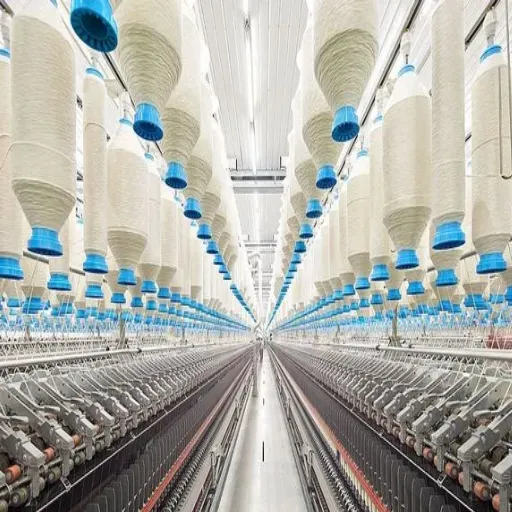
Not all spinning is the same. The method chosen affects everything from production speed to yarn texture to cost. Here’s how the four main yarn manufacturing techniques compare.
| Method | Speed | Yarn Quality | Best For | Relative Cost |
|---|---|---|---|---|
| Ring Spinning | Slowest | Highest strength, finest count, smoothest surface | Fashion, premium apparel, fine-count yarns | Highest |
| Open-End (Rotor) | 5–8x faster than ring | Good strength, bulkier hand, slightly hairier | Towels, denim, basic apparel, industrial fabrics | Lower |
| Air-Jet Spinning | Very fast | Smooth surface, low hairiness, moderate strength | Technical textiles, bed linens, quality apparel | Medium |
| Vortex Spinning | Very fast | Cotton-like feel, minimal pilling, consistent | Knitwear, casual apparel, home textiles | Medium |
In Berlin, there was a textiles business woman known as Elena Voss who passed through the same phase when she was starting off her brand. The lady started producing her products with the assumption that ring spun yarn was the only solution availabe. On the first order she placed for her sample ring spun cotton towels which came back beatiful and 35% above her target price. Her supplier came up with open-end spinning machine which is also called a rotor spinning machine. The towels were bulkier and more absorbent than usual in a way that the customers greatly appreciated. The lower prices allowed her to preserve the profit margin but with no damage done to the perception of the quality. There are cases when even so popular a term as the “premium” is incompatible with the task at hand.
For the areas that demand durability, smoothness and high counts, ring spinning still takes the day. Nonetheless, open-end and eventually air-jet spinning systems have greatly caught up with ring spinning in terms of quality. In most cases, the faster performance of new techniques implies cost-savings with little or no compromise on quality. Contact Hebei Lida Textile Co., LTD today for professional yarn manufacturing solutions tailored to your business needs.
Quality Control in Modern Yarn Manufacturing
Quality control in yarn manufacturing isn’t a single checkpoint — it’s a continuous process embedded at every stage. Modern mills use a combination of online monitoring, laboratory testing, and statistical process control to maintain consistency.
Uster Evenness Testing
The global standard for yarn quality measurement is Uster Statistics, published by Uster Technologies. These benchmarks compare a mill’s yarn evenness against worldwide production data. Yarn that scores in the top 25% of Uster Statistics is considered premium quality.
Evenness testing measures variations in yarn mass per unit length. Uneven yarn creates visible defects in fabric called bars or streaks. Online evenness testers mounted on the spinning frame measure this in real time and alert operators when quality drifts.
Tensile Strength and Elongation
Every production lot should be tested for breaking strength and elongation at break. These values determine whether the yarn will survive the stresses of weaving or knitting without excessive breakage.
For weaving, high tensile strength is critical because the yarn undergoes repeated abrasion against loom parts. For knitting, moderate strength with good elongation is preferred because the yarn must stretch around needles without snapping.
Twist Measurement
Twist per meter (or twist per inch) is measured using a twist tester. The correct twist factor depends on fiber type, yarn count, and end use. Cotton yarns typically use higher twist factors than synthetic yarns because cotton fibers are shorter and require more cohesion.
Hairiness and Imperfections
Yarn hairiness — the number of protruding fiber ends per unit length — affects fabric appearance and performance. Excessive hairiness causes pilling in finished fabric and increases linting during processing. Modern spinning techniques like air-jet and vortex produce yarn with significantly lower hairiness than ring or open-end spinning.
What should you request from your supplier? Ask for a quality report that includes Uster evenness CV%, tensile strength (cN/tex), elongation at break (%), twist per meter, and hairiness index. If your supplier can’t provide these metrics, you don’t have objective quality data — you have assurances.
Ready to see the difference that rigorous quality control makes? Request a yarn sample from Hebei Lida Textile and compare our test data against your current supplier’s specifications.
Sustainable Yarn Production: What Modern Mills Are Doing
Sustainability in yarn manufacturing is no longer a separate initiative tacked onto the end of the process. Leading mills embed environmental responsibility into every stage of production.
Raw Material Innovation
Textile Exchange reports that recycled polyester yarn production has grown approximately 15% year-over-year since 2020. Modern mills can now process post-consumer plastic bottles into high-quality polyester fiber that meets the same performance standards as virgin material. Organic cotton, grown without synthetic pesticides, provides a natural alternative for brands seeking GOTS certification.
Water and Energy Efficiency
Yarn manufacturing is less water-intensive than fabric finishing or dyeing, but it still uses substantial resources. Modern mills employ closed-loop cooling systems, heat recovery from spinning machines, and LED lighting throughout facilities. Some advanced mills have reduced water consumption per kilogram of yarn by over 30% through process optimization alone.
Waste Reduction
Carding and combing generate waste fiber called noil and flat strips. Traditionally discarded, this material is now collected, cleaned, and reprocessed into lower-count yarns or nonwoven applications. Even spinning waste — broken ends and off-spec yarn — is recycled back into the opening line.
Certifications That Matter
When evaluating a supplier’s sustainability claims, look for third-party certifications:
- GOTS (Global Organic Textile Standard) — verifies organic fiber content and responsible manufacturing
- GRS (Global Recycled Standard) — certifies recycled content and chain of custody
- OEKO-TEX Standard 100 — tests for harmful substances in the final product
These certifications provide independent verification that sustainability claims are backed by audited processes, not just marketing language.
What to Look for in a Yarn Supplier
Doing business means understanding the manufacturing aspects of yarn production. However, the real winning strategy involves creating synergies with the supplier who manufactures within your required quality and due season.
David Park is a Procurement Manager at a company that supplies car interiors in Detroit. He learned this lesson the hard way. His former yarn supplier was able to get him the best deal on the polyester requirement for seat covers. Unfortunately, after six months of production an irregular twist in the yarn being weaved caused the weaving to break down leading to an increase of 12 percent in his cost of production. Upon carrying out an assessment of the supplier’s facilities, he noticed thirty year old ring frames which had no adequate electronic monitoring systems as well as a quality lab that had not been calibrated in two years. He instead sourced from a supplier who had invested in the latest air-jet spinning technology and Uster monitoring functioning in real time. The market price was 8 percent higher. But this time, his total production cost dropped by 14%.
Here are the capabilities that separate reliable yarn suppliers from risky ones:
Modern Equipment Age. Spinning frames older than 20 years struggle to maintain the tolerances that modern applications demand. Ask when the equipment was installed and whether it has been retrofitted with electronic monitoring.
In-House Testing Laboratory. A supplier without a fully equipped quality lab is essentially outsourcing quality control to you. The lab should have Uster testers, tensile testers, twist testers, and raw fiber testing equipment.
Lot Traceability. Every cone should carry a lot number that traces back to the specific raw material batch, machine, and shift. This enables rapid defect investigation and containment.
Technical Consultation. The best suppliers don’t just take orders — they advise. They should be able to recommend fiber blends, yarn counts, and twist factors based on your end-use requirements.
Customization Capability. Can the supplier adjust twist, blend ratios, or yarn count for your specific needs? Custom yarn solutions require flexible equipment and technical expertise that commodity suppliers often lack.
Certifications and Compliance. For eco-friendly yarn production, verify active certifications rather than accepting general sustainability claims. Request copies of current certificates and check their validity dates.
Frequently Asked Questions
What is the difference between carded and combed yarn?
Carded yarn is produced after the carding stage without additional combing. It contains more short fibers and has a slightly rougher, hairier surface. Combed yarn undergoes an additional combing stage that removes short fibers and impurities, producing a smoother, stronger, and more uniform yarn. Combed yarn typically costs 20–30% more and is preferred for premium applications where surface quality matters.
How long does it take to manufacture a batch of yarn?
From raw fiber bale to finished cone, the yarn production process typically takes 3–7 days depending on the fiber type, yarn count, and lot size. Combed yarns take longer because of the additional combing stage. Specialty treatments like mercerization or waxing add another 1–2 days. Lead times from order to shipment typically range from 2–6 weeks depending on the supplier’s capacity and current backlog.
Can yarn be customized during manufacturing?
Yes. Customization can occur at multiple stages: fiber blend ratios in the opening stage, yarn count and twist factor at the spinning frame, and post-spinning treatments like waxing or steaming. Color can be added through fiber dyeing (before spinning) or yarn dyeing (after spinning). Many suppliers offer custom yarn solutions tailored to specific end-use requirements.
What equipment is used in yarn manufacturing?
The core yarn manufacturing equipment includes: bale openers, carding machines, combing machines (optional), drawing frames, roving frames, spinning frames (ring, open-end, air-jet, or vortex), winding machines with electronic yarn clearers, and testing equipment (Uster testers, tensile testers, twist testers). Modern mills also use automated material handling systems and computerized process monitoring.
How is yarn quality measured?
Yarn quality is measured through several standardized tests: Uster evenness (mass variation along the yarn), tensile strength (force required to break the yarn), elongation at break (how much the yarn stretches before breaking), twist per unit length, hairiness index, and nep count. These metrics are compared against Uster Statistics benchmarks to determine whether the yarn meets premium, standard, or below-standard classifications.
Conclusion
The way from the bale of raw fiber to the processed cone of yarn is one of the most advanced processes in manufacturing. It is this process of manufacturing yarn — which is completed through eight different processes of cleaning, parallelization, attenuation, twisting, and testing – completely all the principal characteristics of the end products to include the strength, the sombres, the affinity for dyes and the durability.
One strategy that redistributes priorities in the marketing field is seeing the proccess. Instead of searching for the cheapest yarn based on the price competition among the numerous suppliers, you are able to focus on this value chain process which in reality makes a difference in quality; such as the state of equipment and age, process controls, segmentation and the skill for the team. Instead of going with the most expensive option you can they the appropriate spinning technique that suits the purpose better. Even And you will be able to raise some questions, which Is an undoubtedly essential marketing skill proving the fact that this supplier can be a technical manufacturing supplier and not another middle person!
At Hebei Lida Textile Co., LTD, we manufacture high-quality yarns using modern equipment, rigorous quality control, and sustainable practices. Whether you need standard counts, custom yarn solutions, or guidance on fiber selection, our team is ready to help. Contact us today to request a sample or discuss your next project.
Want to explore how different yarns perform in real-world applications? Read our guide to yarn applications by industry for specific recommendations across fashion, home textiles, and industrial use.