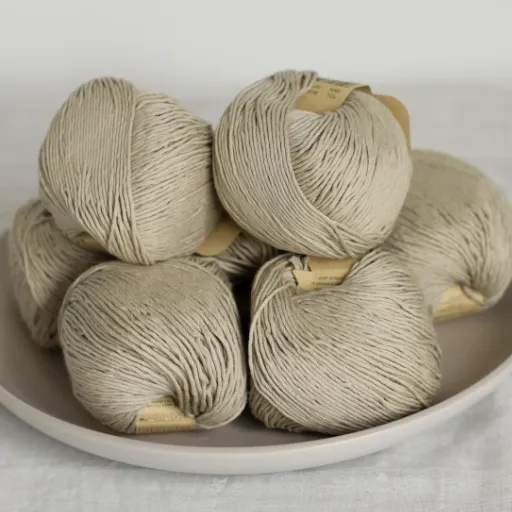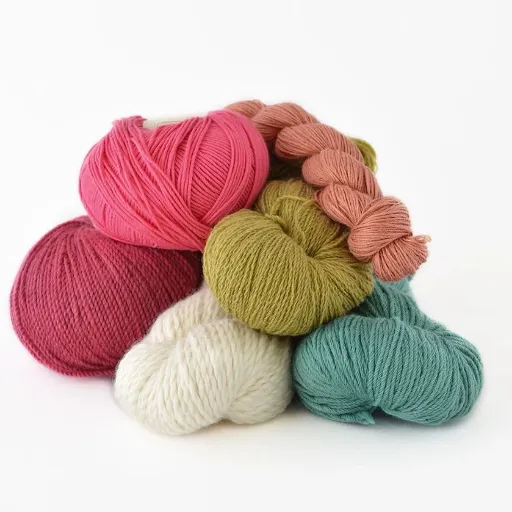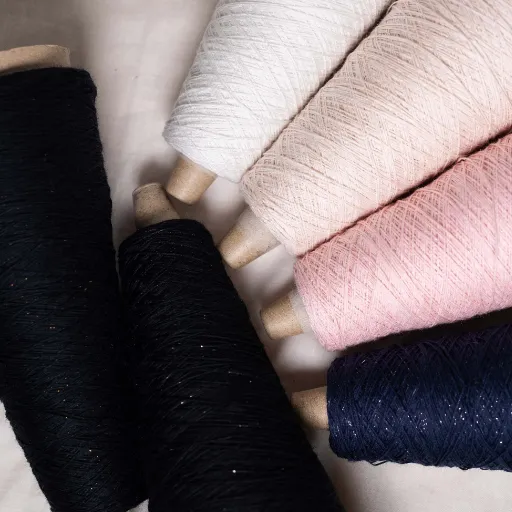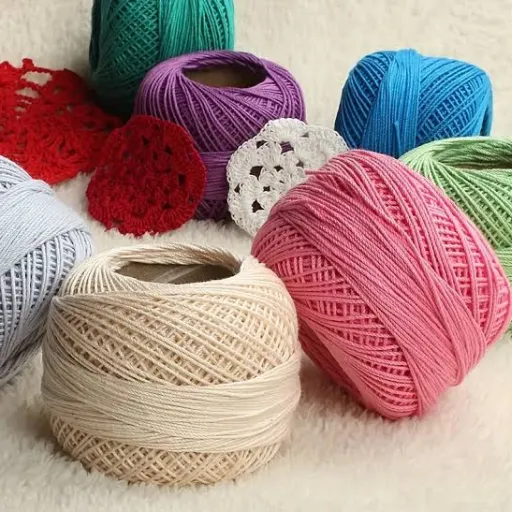
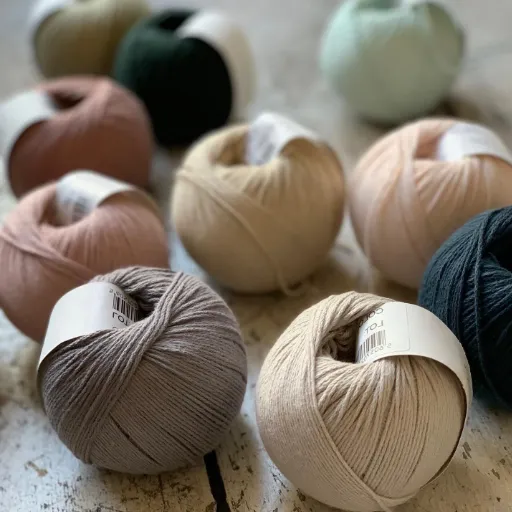

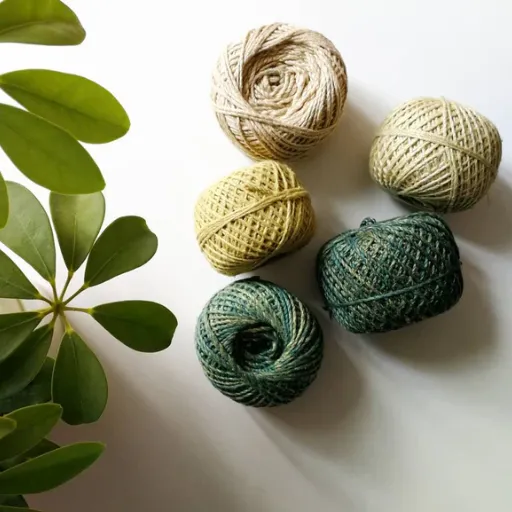


A tire, a T-shirt, and a baby blanket can all begin as the same word: yarn. What separates them is the engineering between the fibre and the finished product, meaning the structure, the twist, the count, and the demands of the job the yarn was designed to survive.
Yarn applications are the end uses a textile yarn is engineered for. Most guides to types of yarn and their uses organise the subject by fibre, which tells you what a yarn is made of, not what it is for.
That order is backwards for anyone specifying a product, whether in apparel, home textiles, or industry. Buyers and makers start with the job: a seating fabric, a summer knit, a conveyor belt, a baby blanket. The fibre follows.
This guide maps yarn applications by end use. You will get the four categories the industry uses, the counts and structures that suit each one, a plain-language table of yarn types and their uses, and the mismatches that cause real failures. If you have ever specified a yarn that passed the lab and failed in service, the failure-modes section is the part to read first.
Key Takeaways
- Yarn applications fall into four groups: apparel, home textiles, industrial and technical products, and craft projects. Each sets different requirements for fibre, structure, twist, and count.
- The same fibre can excel in one application and fail in another. Organic cotton is a flagship bedding fibre and a compromised contract upholstery fibre.
- Count and structure matter as much as fibre. Combed compact cotton at Ne 40 to 100 behaves nothing like carded cotton at Ne 12 to 22.
- Industrial yarns are engineered for tenacity, heat, and fatigue, not hand-feel. They follow a separate specification logic rather than a premium version of apparel yarn.
- Most application failures are predictable: cotton in high-abrasion seating, acrylic outdoors, 100% cotton in stretch garments, filament yarn where insulation is needed.
What Are Yarn Applications?
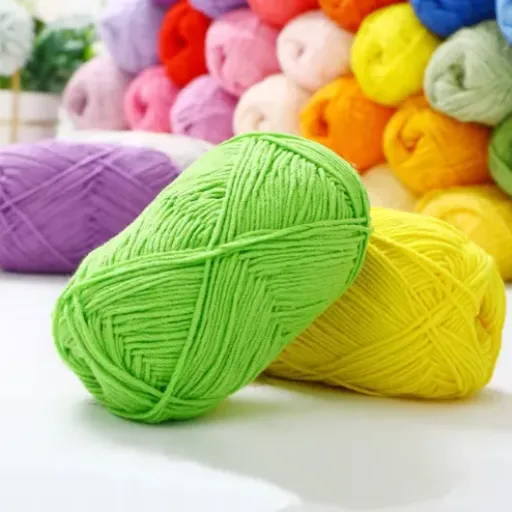
Yarn applications are the end uses a yarn is engineered for, grouped into four broad categories: apparel, home textiles, industrial and technical products, and craft projects. Each category sets different requirements for fibre, structure, twist, and count, so a yarn that performs well in one application can fail in another.
The industry standard split is three categories: apparel, home textile, and industrial. Market researchers use that segmentation because it maps to how yarn volume is bought and sold, and a 2023 forecast from Research and Markets projected the textile yarn market reaching roughly USD 18.5 billion by 2028 on that basis. We add a fourth category, craft and project use, because it is how a large share of readers search and because the selection logic is genuinely different. Craft buyers choose by project and yarn weight, not by tenacity or count.
The categories overlap. A cotton yarn can go into a T-shirt, a bed sheet, a canvas bag, or a dishcloth.
What changes is the specification. A yarn is not good or bad in the abstract. It is good or bad for a job.
Not sure which category your product falls into? Tell us what you are making and we will match the fibre, structure, and count to the application.
How Yarn End Uses Are Classified
Four lenses decide how a yarn behaves: fibre content, structure, twist level, and spinning method. The end use tells you which lens matters most.
Fibre content sets the baseline. Cotton is absorbent, breathable, and cellulosic. Wool insulates and resists flame naturally. Polyester is strong, dimensionally stable, and holds colour. Nylon adds abrasion resistance and elasticity.
Each fibre has limits that no amount of processing removes.
Structure is the next decision. Staple yarn is spun from short fibres, which gives it softness, bulk, and absorbency, plus a tendency to pill. Filament yarn is made from continuous strands, so it is smoother, stronger, and more uniform, with lower absorbency.
Core-spun yarn wraps a staple sheath around a filament core, which is how stretch denim gets both a cotton hand and reliable recovery. For a full walkthrough, see how yarn is spun.
Twist changes the surface and the durability. Low twist keeps yarn soft and absorbent, which suits knitwear and towelling. High twist produces a crisper, stronger yarn that resists abrasion, which suits crepe, voile, and many upholstery and industrial constructions.
Twist direction matters too, because it affects how a fabric lies and how it torques during making-up.
Spinning method sets the count range and the economics. Open-end and rotor spinning handle coarse counts efficiently. Ring spinning covers medium and fine counts and is preferred for quality wovens. Compact spinning takes the finest end.
ScienceDirect’s reference on single yarn is a useful technical baseline for structure and twist.
A single yarn is one strand. A plied yarn twists two or more strands together, which improves strength, uniformity, and balance, and reduces pilling. That difference alone explains much of the gap between a garment that still looks new after a year and one that does not.
Types of Yarn and Their Uses in Apparel
Apparel is the largest yarn application by volume and the most fragmented, because a T-shirt, a suit, a pair of jeans, and a swimsuit ask for different things. The table below is the short version across all four major categories. The rest of this section narrows to apparel, where the selection logic is most familiar.
| Yarn type | Best applications | Avoid or handle with care |
|---|---|---|
| Combed compact cotton | Fine shirting, premium sheeting, underwear, smooth knits | High-abrasion upholstery |
| Carded cotton | Denim, casual knits, canvas, towelling | Fine, smooth-handed premium fabrics |
| Wool and worsted | Knitwear, suiting, blankets, heavy drapery | Next-to-skin summer wear; untreated machine-wash programmes |
| Acrylic | Sweaters, hats, blankets, fleece-look knits | Damp outdoor use; high-heat pressing |
| Polyester, spun or filament | Activewear, outerwear, upholstery, ropes, filtration | Next-to-skin in hot, humid conditions; loft-critical insulation as filament |
| Nylon | Hosiery, swimwear, abrasion-resistant blends, airbags, seat belts | Long UV exposure without stabilisation |
| Elastane, usually core-spun | Stretch denim, swimwear, sportswear, hosiery | Any 100% use; high-temperature processing |
| Linen | Suiting, shirting, table linen, curtains | Where a smooth, soft hand is required |
| Viscose and rayon | Drapey apparel, linings, soft furnishing | Heavy abrasion; wet processing without care |
| Polypropylene | Geotextiles, ropes, industrial bags, base layers | High-temperature processing; visible upholstery |
Within apparel, the fibre alone rarely decides the outcome. Construction does the rest.
Combed compact cotton produces smooth, strong yarns for premium garments. Carded cotton is the workhorse for casual wear and denim, where a slightly more textured hand is acceptable or desirable. Core-spun yarn is the standard for denim and much activewear, because it combines a cotton outside with a filament core for strength and stretch recovery. Worsted wool, with its long fibres combed parallel, gives knitwear and suiting their clean surface and drape.
Elastane is the exception that proves the point about structure. It is almost never used alone. It appears as a core or a covered component at low percentages, and it can stretch by several hundred percent and recover, which is what allows a cotton-rich fabric to behave like a stretch fabric without losing its hand.
Filament yarn is where apparel buyers most often choose wrongly. A smooth filament polyester has a cool, sleek hand that suits activewear and linings. In a jumper or a scarf, the same yarn feels flat and provides no loft, so it has to be textured or blended with staple fibre. If the requirement is warmth, smoothness is a liability.
Developing a garment range? See how custom yarn for fashion is specified from fibre through count to finish.
Home Textile Yarn Applications
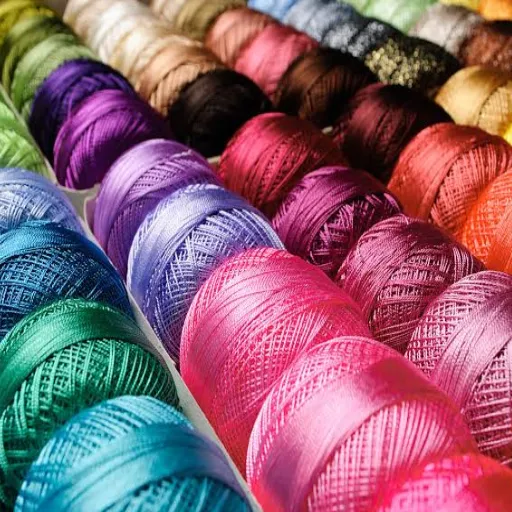
Home textiles make yarn specification concrete, because the performance requirements are visible. A sheet is washed every week, a curtain sits in sunlight for years, a sofa takes abrasion, and a towel has to absorb water quickly.
The priorities differ by product:
- Bedding: softness, absorbency, wash durability, pilling resistance.
- Towelling: absorbency, wet abrasion, loop stability.
- Upholstery: abrasion, seam strength, light fastness, flammability.
- Curtains: drape, light fastness, dimensional stability.
- Carpets: pile recovery, abrasion, stain behaviour.
Counts follow the job. Fine combed or compact ring-spun cotton in the Ne 40 to Ne 100 range suits premium sheeting and fine bed linen, while heavier bed sheeting sits around Ne 12 to Ne 22. Yarn for upholstery typically runs Ne 12 to Ne 32, and yarn for curtains Ne 6 to Ne 22. These are starting points, not rules, but they narrow the search quickly.
The most expensive mistake in this category is assuming that a good apparel fibre is a good furnishing fibre. A hotel project makes the point better than any table.
Specifying a home textile range? Our guide to choosing a furniture-grade yarn covers the abrasion and flammability tests that decide whether a seating fabric survives contract use.
In 2023, a contract buyer named Priya specified a 100% cotton velvet for a 40-room hotel lobby. The hand was excellent, the colour was right, and the fabric passed the dry Crib 5 flame test.
It failed on two counts in service. Abrasion testing put it at roughly 20,000 Martindale cycles, below the 30,000 that contract seating usually requires, and the flame-retardant back-coating did not survive the water-soak stage of full certification.
The fibre was beautiful. The application was wrong. The replacement was a cotton-polyester blend with a Schedule 3 interliner, which met both requirements.
For bedding specifically, organic certification changes safety and traceability but not abrasion, light fastness, or flammability. Our guide to organic cotton in home textiles sets out where the fibre wins and where it does not.
Craft and Project Applications
Craft buyers choose by project and yarn weight rather than count, and the Craft Yarn Council’s 0 to 7 system is the shared reference across patterns.
| Weight | Name | Typical projects |
|---|---|---|
| 0 | Lace | Shawls, doilies, fine lace work |
| 1 | Super fine (fingering) | Socks, baby garments, lightweight shawls |
| 2 | Fine (sport) | Lightweight sweaters, baby blankets |
| 3 | Light (DK) | Sweaters, hats, scarves, blankets |
| 4 | Medium (worsted, aran) | Jumpers, blankets, hats, home accessories |
| 5 | Bulky (chunky) | Quick blankets, thick hats, cardigans |
| 6 | Super bulky | Rugs, extreme knits, quick throws |
| 7 | Jumbo | Arm knitting, giant blankets, display pieces |
Within a weight, the fibre still decides whether the project works.
Beanies and hats need warmth with shape retention, so the best yarn for beanies holds ribbing without sagging. Wool and wool blends insulate best. Acrylic is warm, cheap, and easy to wash, but it pills and builds static.
Cotton is cooler and better for mild climates, though it has less elasticity, so ribbed bands can relax. Our comparison of cotton versus acrylic for beanies covers the trade-off in detail.
Blankets and throws are usually the largest project a crafter makes, so speed and washing matter as much as softness. Bulky weights finish faster. If the blanket will be machine washed, choose a yarn with an anti-pilling treatment or a tighter twist, because a soft low-twist yarn will fuzz under repeated washing.
Crochet is where fibre choice is most visible. Amigurumi needs a tight, firm cotton that holds its shape. Wearables need drape, which points to softer cottons, wool, or blends.
Dishcloths need absorbency plus abrasion resistance, which is one of the few places where a rougher cotton outperforms a softer one. For synthetic options, see polyester yarn for crochet.
Baby items add a safety layer. Softness and washability come first, followed by certification if the item will be marketed as organic. GOTS or OCS documentation is the relevant proof. For acrylic, a fibre many beginners start with, our guide to acrylic yarn for knitting and crochet explains where it works and where it disappoints.
Industrial and Technical Yarn Applications
Industrial yarn applications are the least visible and the most demanding. The application set includes tire cord, seat belts, airbags, ropes, nets, sails, filtration media, conveyor belts, geotextiles, composites, medical sutures and scaffolds, and protective textiles.
These yarns are specified like engineering materials. The buyer asks for tenacity, elongation at break, heat resistance, fatigue resistance, UV stability, and dimensional stability. Hand-feel and appearance are often irrelevant. That is the opposite of the apparel brief, and it is why an industrial yarn is not a premium version of an apparel yarn.
The fibre set reflects those priorities. High-tenacity polyester goes into tire cord, seat belts, conveyor belts, ropes, and geotextiles. Nylon is used where elasticity and toughness matter, such as airbags and ropes. Aramid serves protective textiles and composites where heat and cut resistance are required.
Carbon fibre serves structural composites. Polypropylene appears in geotextiles, sacks, and ropes where chemical resistance and low weight matter more than temperature performance. For a closer look at one of these families, see polyester staple fiber applications.
The mismatch between consumer and industrial expectations is easy to illustrate.
Sourcing for a technical or industrial programme? Our overview of industrial yarn manufacturing standards covers tenacity, testing, and the specification documents buyers should request.
In 2022, a tier-one automotive supplier named Tomas rejected an entire batch of seat fabric. The yarn contained slub, the deliberate thick-and-thin effect that makes a drapery fabric look crafted. In a car seat, the same effect read as a defect, because automotive buyers expect visual uniformity across thousands of identical parts.
The spinner had delivered exactly what the purchase order specified. The specification itself was the error, because it had been copied from a furnishing programme without translating the tolerance requirements.
How to Choose a Yarn for Your Application
Choosing yarn by application is a short sequence, and running it in order prevents most expensive mistakes:
- Define the end use. What is being made, and what will it be exposed to?
- State the performance requirement. Abrasion, light, moisture, heat, stretch, fire, skin contact, cost.
- Choose the fibre. Match the requirement to the fibre family.
- Choose the structure. Staple, filament, core-spun, single, or plied.
- Set the count. Fine for smoothness and drape, coarse for bulk and durability.
- Specify the finish. Softening, anti-pilling, water repellency, flame retardancy, or none.
The questions that drive steps two and three are worth asking explicitly:
- How many abrasion cycles will the product see?
- Will it sit in direct sun?
- Will it be washed hot, or dry cleaned?
- Does it need to stretch and recover?
- Is it next to skin?
- Does it have to pass a flammability standard?
- What is the target cost per unit?
“Best yarn” is meaningless without an application. A soft low-twist cotton is the best yarn for a scarf and the wrong yarn for a bus seat. The useful question is always “best for what, under which test.”
Ask suppliers for the test data behind the claim. Martindale abrasion (ISO 12947), light fastness (ISO 105-B02), pilling (ASTM D3511 or D4970), and flammability (BS 5852 for UK contract furniture) are the four results that settle most application questions.
What Goes Wrong: Common Application Mismatches
Most failures are not manufacturing defects. They are specification errors, and they follow patterns.
Cotton in high-abrasion upholstery. Cotton typically reaches 15,000 to 30,000 Martindale cycles, against 30,000 to 100,000 or more for polyester. Contract seating usually starts at 30,000. A 100% cotton fabric on a hotel chair sits below the threshold unless the construction is heavy and protected.
Acrylic in damp outdoor use. Acrylic insulates well and resists sunlight reasonably, but it traps moisture and builds static, and it is a poor choice for cushions that stay outside. Solution-dyed acrylic is the material outdoor furniture is usually built around for good reason.
100% cotton in stretch garments. Cotton has little elastic recovery. A cotton jersey legging will grow at the knee and seat and stay there. The fix is core-spun or plied construction with elastane.
Filament yarn where insulation is needed. Continuous filament is smooth and dense. It conducts heat away and provides no loft, so it is the wrong choice for a winter knit unless it is textured or blended with staple fibre.
Slub or fancy yarn in automotive upholstery. The thick-and-thin effect that reads as craft in drapery reads as a defect in a car seat. Appearance tolerances change with the market, and the yarn has to match them.
Soft low-twist yarn in high-abrasion areas. Cuffs, collars, pocket edges, and seat surfaces need twist and, often, a plied construction. Softness at the yarn stage becomes pilling and thinning at the wear point.
Eco-marketed fibre in a performance application. Certification is real and worth having, but it does not change abrasion, light fastness, or flammability. An organic cotton upholstery fabric wears and burns like a conventional cotton one.
| Application | Common mistake | Result |
|---|---|---|
| Contract upholstery | 100% cotton, no durable FR treatment | Fails abrasion and post-soak flammability |
| Outdoor cushions | Cotton or standard acrylic | Mildew, fading, loss of strength |
| Stretch leggings | 100% cotton single jersey | Growth and bagging, no recovery |
| Winter knitwear | Smooth filament polyester | Dense, no loft, poor warmth-to-weight |
| Automotive seating | Slub or fancy yarn | Rejected as a visual defect |
| Cuffs and collars | Soft low-twist single yarn | Pilling, thinning, early wear |
| Eco performance wear | Organic fibre without functional engineering | Certification without performance |
Frequently Asked Questions
What is yarn used for?
Yarn is used to make woven, knitted, and braided textiles. The main applications are apparel, home textiles such as bedding and upholstery, industrial and technical products such as tire cord and filtration, and craft projects such as blankets and garments.
What are the main types of yarn and their uses?
Cotton suits apparel, bedding, and towelling. Wool suits knitwear and suiting. Polyester suits activewear, upholstery, and industrial products. Nylon suits hosiery, swimwear, and abrasion-resistant applications. Acrylic suits sweaters, hats, and blankets. Linen suits suiting and table linen. Each type has applications where it should be avoided.
What is the strongest yarn for industrial use?
Strength depends on the fibre and the construction. High-tenacity polyester, nylon, aramid, and carbon fibre yarns are among the strongest available, and each suits a different requirement. Aramid and carbon serve protective and composite uses, while high-tenacity polyester dominates tire cord, belts, and ropes.
What yarn is best for upholstery?
There is no single best yarn. Polyester and polyester blends offer the widest abrasion range, typically 30,000 to 100,000 or more Martindale cycles. Wool performs well in contract settings. Cotton works for residential and decorative pieces but usually falls short of contract abrasion thresholds unless the construction is heavy and protected.
What is filament yarn used for?
Filament yarn is used where smoothness, strength, and uniformity matter: activewear, linings, hosiery, tire cord, seat belts, ropes, and filtration. It is a poor choice where loft or insulation is needed unless it has been textured or blended with staple fibre.
Is acrylic yarn good for outdoor use?
Generally no. Acrylic handles sunlight better than untreated polypropylene, but it traps moisture, builds static, and does not weather well in damp conditions. Solution-dyed acrylic is the exception, and it is widely used in outdoor furniture for that reason.
What yarn is used for tires?
Tire cord is usually made from high-tenacity polyester, nylon, or aramid, depending on the tire type and the performance requirement. These yarns are engineered for high tenacity, fatigue resistance, and heat stability rather than appearance or hand-feel.
What is the difference between yarn and thread?
Yarn is a continuous strand of fibres or filaments used to make fabric. Thread is a specialised yarn engineered for sewing, with the strength, smoothness, and consistency needed to pass through a needle and hold a seam. All thread is yarn, but most yarn is not thread.
Source Yarn for Your Application
Hebei Lida Textile runs cotton, polyester, acrylic, wool, and blended yarns across the counts that apparel, home textile, and industrial programmes actually use, with the certifications and test data to support the specification you are writing. If you are weighing two options, we will tell you which one fits your application and which one will cost you later.
Request a yarn sample Tell us your end use, target count, and performance requirement, and we will send relevant samples with test data.
Conclusion
Yarn applications are best understood by end use, not by fibre. Apparel rewards hand, drape, and recovery. Home textiles reward abrasion resistance, light fastness, and wash durability. Industrial products reward tenacity, heat resistance, and fatigue life. Craft projects reward weight, softness, and washability.
The same fibre can serve several of these categories, but only when the structure, twist, and count are re-specified for each one.
The three points worth carrying forward are these. Count and structure change performance as much as fibre does, which is why a combed compact cotton and a carded cotton behave like different materials. Industrial yarns follow their own specification logic and should never be bought from an apparel brief. And most failures are predictable mismatches, from cotton in contract seating to slub yarn in a car seat, which means the cheapest quality control is a better specification at the start.