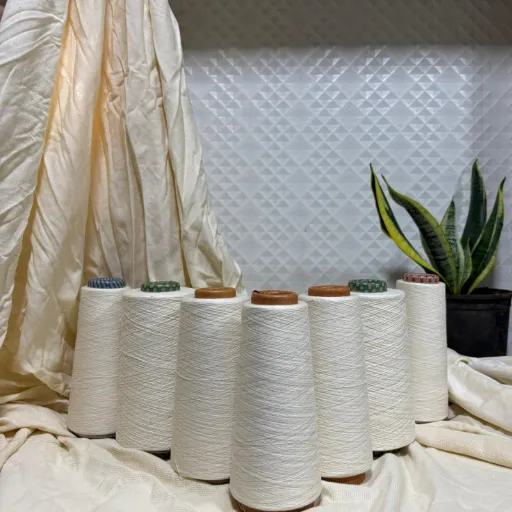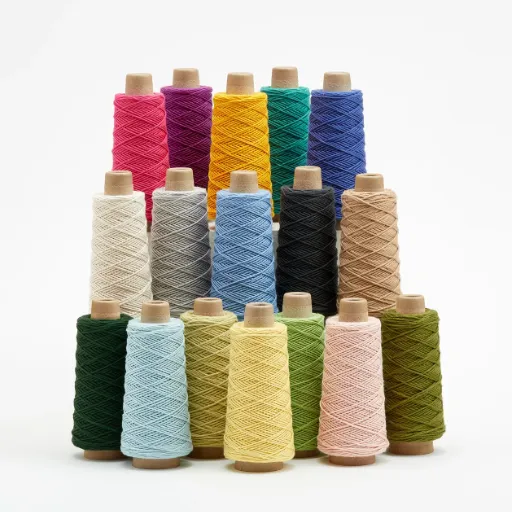

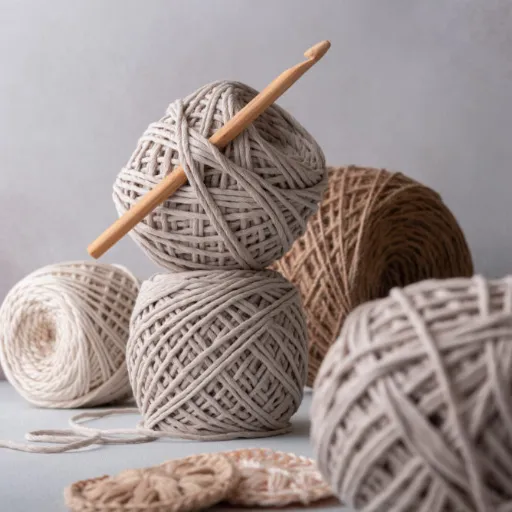


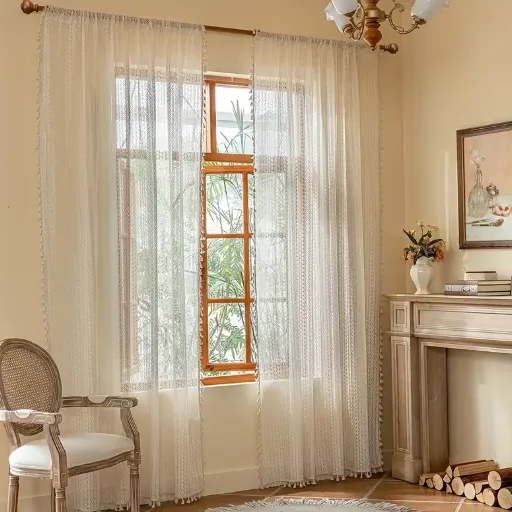
Custom yarn for curtains is curtain yarn manufactured to a buyer’s exact requirements: fiber, yarn count or denier, twist, color, dye method, and performance features like lightfastness and flame retardancy. It replaces a stock yarn with one engineered around your window treatment, so the finished curtain delivers a specific light-control, drape, and durability goal.
A hotel’s 3,000-meter blackout run, a designer’s whisper-thin sheer in a signature color, and a startup’s first 20 bolts all start with the same question: can I get yarn made exactly how my window treatment needs it? Most of the advice online is written for knitters or generic fabric buyers, not for the people who make curtains for a living. It buries the details that matter, like how to turn “I need curtains for a bright south-facing room” into a measurable yarn specification, or what really happens when you ask a mill for a custom shade.
This guide is different. By the end, you’ll know what you can customize, how to translate a window application into a yarn spec, and which testing numbers to ask for. You’ll also know what the order really costs, where the minimums sit, and how to start small without paying the full “custom” tax. Start with the big picture in our overview of custom yarn solutions, then come back here for the curtain-specific detail. Turn your yarn concept into production with Hebei Lida Textile Co., LTD.
Key Takeaways
- Custom yarn for curtains is specified around the window treatment first: sheer, standard, blackout, and contract curtains each need a different fiber, count/denier, twist, and dye method.
- Yarn count is the buying language for spun yarns (sheer 40s to 60s+ Ne, standard 21s to 40s Ne, blackout 10s to 30s Ne), while denier is the language for filament yarns (sheer 550 to 900 Dn, blackout 3,000 to 9,000 Dn).
- Lightfastness is a measurable number: ISO 105-B02 grades from 1 to 8, each point roughly doubling fade resistance, and contract curtains should target Grade 4 or higher.
- Custom color is the lowest-cost customization at roughly 10% to 25% above stock, while full custom development runs 50% to 200% higher; custom-color MOQs typically start at 500 to 1,000 kg per color.
- Flame retardancy is a hidden spec for contract curtains: NFPA 701 in the US, BS 5867-2 Types A/B/C in the UK and EU, with inherent FR fibers surviving wet cleaning while chemical treatments need reapplication.
What Is Custom Yarn for Curtains?
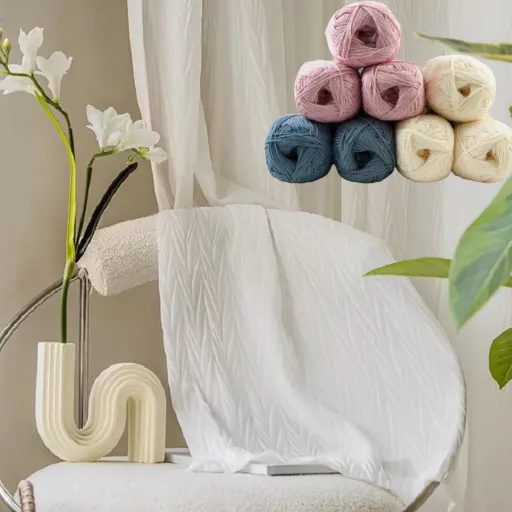
Custom yarn for curtains means producing a yarn to your specification instead of pulling from a mill’s existing stock range. A standard yarn for curtains is built around what a factory already makes. A custom curtain yarn, or custom yarn for drapery if you prefer the trade term, is built around what your collection needs: a specific fiber blend, a count or denier range, a twist level, a proprietary shade, or a performance property like lightfastness or flame retardancy that no stock product offers.
Curtains are a demanding application for a reason. They hang under their own weight, which makes drape the first thing buyers notice. They face daily sunlight, which makes fading the first thing they complain about. And they are bought in enormous single runs, which makes color consistency the first thing that goes wrong on a reorder.
A custom yarn spec translates all three into measurable properties. That is why the buying process starts with the window, not with a color swatch. Contact Hebei Lida Textile Co., LTD to discuss your custom yarn requirements.
Custom vs. Stock Curtain Yarn: What Actually Changes
| Aspect | Stock Curtain Yarn | Custom Curtain Yarn |
|---|---|---|
| Fiber and blend | Fixed by the mill | Specified by you |
| Count and denier | From the existing range | Engineered to your spec |
| Twist and texture | Standard options only | Low or high twist, fancy effects |
| Color | Stock shades only | Pantone, swatch, or proprietary recipe |
| Performance | Whatever the stock offers | Lightfastness, UV, and FR specified to target |
| Minimum order | Low, existing recipe | Depends on customization type |
| Cost | Base price | +10% to +200% depending on complexity |
| Lead time | From stock or short run | Sampling plus production time |
What Can Be Customized
- Fiber and blend: polyester, polyester-cotton, polyester-viscose, cotton, linen, silk, or engineered blends, including recycled options.
- Yarn count or denier: the yarn’s thickness, which drives fabric weight, opacity, and how the curtain drapes.
- Twist and texture: low twist for a soft, fluid drape, or high twist for a crisp, durable hand, plus fancy effects like slub, bouclé, and neppy.
- Color: matched to a Pantone code, a fabric swatch, or a proprietary brand color.
- Dye method: package dyeing for flexible indoor color or solution dyeing for UV-stable, sun-exposed curtains.
- Performance: lightfastness, flame retardancy, and UV resistance specified to a test standard.
- Package and branding: cone, ball, or hank formats, plus private-label branding.
If you want to understand how each of these choices is physically made, our complete guide to custom yarn manufacturing walks through fiber blending, spinning, and dyeing for a custom order. This article stays focused on the buying decision for window treatments.
How to Choose the Right Curtain Yarn Fiber
The fiber decision drives everything downstream, so it is the first thing to get right when you spec custom yarn for curtains. Start with the end use: where will the curtain hang, how much light should it filter, and will it face direct sun? Then pick the fiber that fits. The table below gives you the plain-English comparison to plan around.
| Fiber | Drape | UV / Lightfastness | Care | Best For |
|---|---|---|---|---|
| Polyester | Smooth, holds pleats | Excellent, resists fading | Easy care, low shrinkage | Workhorse: most curtains, especially blackout |
| Polyester-cotton | Soft, matte hand | Good | Machine washable | Bedrooms and living rooms |
| Polyester-viscose | Fluid, silky lustre | Good | Dry clean preferred | Premium drapery, sheers |
| Linen | Crisp, elegant, stiff | Fades over time | Wrinkles, shrinks 5-10% | Casual, breathable spaces (often blended) |
| Cotton | Good drape, soft | Fades in direct sun | Shrinks ~5%, creases | Light-filtering styles, not sun-facing |
| Silk | Luxurious, heavy folds | Fades in sun | Delicate, dry clean | Formal settings, always lined |
Polyester: The Curtain Industry Workhorse
Polyester is the most common curtain yarn for good reason. It resists UV damage and fading, holds its shape without stretching or shrinking, absorbs almost no moisture, and resists wrinkles. That combination makes it the default for everything from sheer voile to triple-weave blackout. Around 35.8% of the curtain material market runs on polyester, and high-tenacity “faux linen” polyester now mimics natural textures at a fraction of the cost. For contract and hospitality drapery, it also takes flame-retardant engineering well.
Polyester-Cotton and Polyester-Viscose Blends
Blends combine polyester’s durability and dimensional stability with another fiber’s hand feel. A polyester-cotton blend delivers a soft, matte surface that reads as natural and wears well, which makes it a favorite for bedrooms and living rooms. A polyester-viscose blend produces a fluid, silky drape and a slight lustre that catches light beautifully, which makes it the go-to for premium drapery. If sustainability matters to your brand, our guide to eco-friendly yarns for curtains covers recycled polyester, organic cotton, and certified blends in detail.
Linen, Cotton, Silk, and Other Naturals (and Their Trade-offs)
Natural fibers give curtains an unmistakable character, but each one carries a trade-off that a custom order can manage. Linen drapes with an elegant, slightly crisp stiffness and breathes well, but it wrinkles and shrinks 5% to 10% on first cleaning. Cotton has beautiful drape and softness but fades in direct sun, shrinks about 5%, and creases easily. Silk delivers the ultimate luxury drape and blocks light well, but it fades in sunlight and is delicate and expensive, so it should always be lined or interlined.
Pure cotton is generally not recommended for curtains precisely because of fading and shrinking. Linen and silk work best when blended with a synthetic or used with a lining. A custom blend lets you keep the natural look while engineering away the failure modes.
Eco-Friendly Custom Options
Recycled polyester, including air-textured yarn (ATY) and REPREVE-type recycled filament, plus organic cotton and recycled-viscose blends, are now standard custom options for curtain brands. European buyers in particular increasingly require OEKO-TEX certification and transparent supply-chain documentation for imported curtains. Recycled fiber’s share of textile production has grown from roughly 4% to about 9%, and that shift is showing up in curtain specs. Specify these up front, and ask your supplier which certifications the finished yarn carries.
Want to compare how a specific fiber drapes and fades on your own samples? Explore our custom yarn solutions and our team can send you comparison cones with test data.
Curtain Yarn Specifications: Count, Denier, and Weight
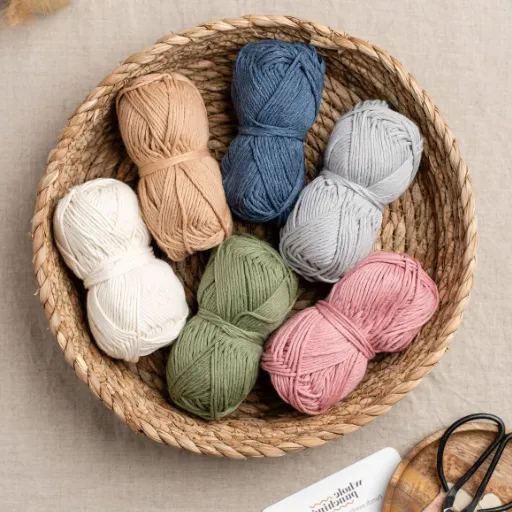
Yarn thickness is measured two ways, and you will need both depending on whether the yarn is spun or filament. Spun yarns are described by yarn count, usually English count (Ne) or Tex. Filament yarns are described by denier (Dn), the weight in grams of 9,000 meters of yarn. Higher Ne means a finer yarn; higher denier means a thicker one. The yarn-count guide from GLYarn and the denier guide from Citius Textiles together cover the practical ranges.
| Curtain Type | Yarn Count (spun) | Denier (filament) | Fabric Weight | Typical Light Control |
|---|---|---|---|---|
| Sheer / voile | 40s to 60s+ Ne (10-15 tex) | 550 to 900 Dn | ~50-150 g/m² | 10-30% filtration |
| Semi-sheer | 32s to 45s Ne | 900 to 1,500 Dn | 150-250 g/m² | 30-60% filtration |
| Standard drapery | 21s to 40s Ne (15-30 tex) | 1,500 to 3,000 Dn | 250-400 g/m² | 60-90% filtration |
| Blackout / thermal | 10s to 30s Ne (30-60 tex) | 3,000 to 5,000 Dn | 400-500 g/m² | 95-99%+ block |
| Theatrical / acoustic | Coarse spun or heavy filament | 5,000 to 9,000 Dn | 500+ g/m² | Near-total block |
Count and denier drive weight, drape, opacity, and light-blocking. A finer yarn weaves into a lighter, more transparent fabric that filters light gently; a coarser yarn produces a heavier, denser fabric that blocks it. For contract and hospitality curtains, the framework to ask about is ASTM D3691, the standard that sets minimum requirements for strength, dimensional change during cleaning, colorfastness, and flammability. If a supplier quotes you a curtain yarn spec, ask whether it is measured against ASTM D3691 and what the test values are. Turn your yarn concept into production with Hebei Lida Textile Co., LTD.
Translating a Window Treatment Into a Yarn Spec
This is the bridge almost no one explains when you order custom yarn for curtains. A buyer says “I need curtains for a bright south-facing living room,” and the mill asks for a fiber, a count, and a lightfastness grade. Here is how the window translates into the spec, from the lightest to the heaviest treatment.
Sheer and Voile Curtains
Sheers are built from the finest yarns: 40s to 60s+ Ne spun or 550 to 900 Dn filament, at a low fabric weight around 50 to 150 g/m². Use fine-count polyester or polyester-viscose so the fabric stays sheer without sagging. Specify a high twist, around 800 TPM or higher, for wrinkle recovery and snag resistance, because a loose, low-twist sheer will catch and pull in a busy household. Sheers filter 10% to 30% of light while still letting the room feel open.
Standard and Lined Drapery
Standard drapery is the workhorse range: 21s to 40s Ne spun or 1,500 to 3,000 Dn filament. This range balances drape, opacity, and durability, and it pleats well, which is why it covers most residential and many commercial installations. If the curtain will be lined, the face yarn can run slightly lighter, since the lining carries part of the light-blocking job.
Blackout and Thermal Curtains
Blackout construction is where the spec gets serious. Coarse counts (10s to 30s Ne) or heavy filament (3,000 to 9,000 Dn) form the body, and the light-blocking comes from the structure. A triple-weave with a black core yarn can block 99.99% of light, while multi-layer coatings and high-GSM polyester are simpler alternatives.
Blackout fabrics account for about 29% of global curtain-fabric demand, and a well-constructed blackout curtain can cut heat loss through windows by up to 25%. The trade-off is weight. A heavyweight blackout needs a strong track and may not suit motorized operation without a heavier motor.
Drape, Twist, and Texture: Engineering How Curtains Hang
Drape is measurable, and that is the piece most buyers never learn to specify. The drape coefficient, measured on a Cusick drapometer with a 300 mm specimen over a 180 mm disc, runs from 0% to 100%. A lower coefficient means more drapable: softer, with more folds. A higher one means stiffer, with fewer, wider folds. Knits drape more than wovens, and among wovens a plain weave drapes most while twill drapes least.
Twist is the lever at the yarn level. As Terralinen explains, low-twist yarns give curtains a soft, fluid drape that filters light gently, but they pill and abrade more easily. High-twist yarns are stronger, smoother, and pilling-resistant but crisper, which is why contract buyers lean on them.
For texture, fancy effects like slub, bouclé, curly, and neppy add drapery character, while air-textured yarn (ATY) gives polyester a cotton-like hand with bulk and wrinkle resistance. If you want to see how a design concept becomes a spec, our guide to custom yarn design walks through the method.
Smart-Home and Motorized Curtains
Motorized and smart curtains are moving from novelty to normal. Smart curtain penetration grew from 8% in 2020 to 27% in 2026, and motorized units add 15% to 20% of unit value. That changes the yarn spec: heavyweight blackout constructions and long drop lengths need yarn that runs smoothly on a motorized track, so rigidity, weight per meter, and consistent roundness matter more than they did for a hand-pulled drape. If your curtain is going on a track, tell your yarn supplier the drop length and motor load up front.
Custom Curtain Yarn Color Matching, Dyeing, and Lightfastness
Color is the most common customization on custom yarn for curtains, and it is also the one buyers get wrong most often. The process starts with a reference, usually a Pantone code or a fabric swatch. The mill develops a lab dip, a small dyed sample you approve under multiple light sources: daylight (D65), store lighting (TL84), and home lighting (A), because all three change how a color reads. Expect two to three rounds of lab dips before the color is locked.
Then comes the dye method, and this is a genuine buying decision for curtains.
- Solution dyeing (dope dyeing) adds pigment to the polymer before the fiber is formed, so the color runs through the fiber like a carrot, not a radish. It is the best choice for sun-exposed curtains and blackout constructions because the color cannot fade from the surface, and it resists bleach and harsh cleaning. The trade-off is a higher minimum order.
- Package dyeing dyes the yarn after spinning and gives you flexible, consistent color across batches. It suits indoor collections where you need the same shade run after run. Custom package-dyed color typically carries a 500 to 1,000 kg minimum per color.
Lightfastness is measurable, and it is the number that protects your brand’s color. ISO 105-B02 grades fade resistance from 1 to 8, and each +1 point roughly doubles the time before the same amount of fading appears. Contract curtains should target Grade 4 or higher. The construction matters too: a physically woven black-yarn blackout fabric scored Grade 5 (no visible change) in a fade test, while a chemically coated blackout scored Grade 3 (noticeable fading). If your curtains face direct sun, solution dyeing plus a woven construction is the more durable spec.
For large curtain runs, color-lot management is the difference between a clean reorder and a disaster. Dye lots shift 2 to 3 Delta E units between batches, which is imperceptible in a single panel but obvious across a wall of panels. Approve a physical standard, ship each order from a single dye lot, and reserve 10% to 15% of the original dye lot for reorders, typically stored free for about six months. For the full lab-dip workflow, our article on custom yarn dyeing and color matching covers it end to end.
Fire Retardancy for Curtains: Standards by Region

Flame retardancy is the hidden spec for contract and hospitality curtains. Buyers rarely ask until it is too late, and the standards vary by market. Here is the plain-English version.
NFPA 701 (United States)
NFPA 701 is the US standard for flame propagation in draperies and textiles. It is the federal requirement for curtains in public spaces like schools, theatres, and event venues. If your curtain is going into any building with public access in the US, ask your yarn supplier whether the finished fabric passes NFPA 701.
BS 5867-2:2008 (UK and EU) and Other Codes
BS 5867-2:2008 is the British standard for flammability of curtains, drapes, and blinds. It is graded in three types, each a step up in severity: Type A is the basic requirement, Type B covers hotels, public buildings, and offices, and Type C is for hospitals and settings where the fabric is laundered up to 50 times. Related codes include M1 in France, EN 13773 in Europe, DIN 4102 B1 in Germany, and the IMO FTP Code for marine and transport installations. If you export, confirm which standard your target market enforces before you approve a spec.
Inherent FR vs. Chemically Treated
You have two technology choices. Inherent flame-retardant fibers, like Trevira CS and most 100% polyester used for contract drapery, build the protection into the polymer. That makes the FR permanent and able to withstand wet cleaning.
Chemically treated yarns cost less but lose their protection after wetting and need re-treatment. For hospitality curtains that get laundered repeatedly, inherent FR is almost always the right spec. If you are sourcing testing-heavy contract orders, our guide to custom yarn for industrial applications covers the certification workflow in more depth.
Custom Curtain Yarn MOQs, Costs, and Lead Times
This is the section buyers want but rarely find when they price custom yarn for curtains. Here is the honest version.
| Customization | Typical MOQ | Cost Premium |
|---|---|---|
| Stock yarn | 1 cone (sample) or 20 to 50 kg | Base price |
| Custom color, package-dyed | 500 to 1,000 kg per color | +10% to +25% |
| Custom blend / custom-spun | 1,000 to 3,000 kg | +15% to +30% |
| Custom twist / texture | 500 to 1,000 kg | +10% to +20% |
| Functional finish (FR, UV) | 1,000 to 3,000 kg | +30% to +100% |
| Full custom development | Project-based | +50% to +200% plus sampling fees |
| Trial / sample lot | From 2 kg, custom-dyed from 20 kg | Sample fees |
Lead times follow the same pattern. Sampling runs 3 to 5 days for stock, longer for a custom weave or color. Bulk production takes 25 to 35 days after approval, stretching to 45 days for heavily customized jacquard constructions. Sea freight then adds 25 to 45 days to US and EU ports, while air freight runs 5 to 7 days at roughly 5 to 8 times the cost. Plan backward from your launch date, and build sampling time into the schedule.
How to Start Small: Low-MOQ Strategies for Curtain Brands
Small brands often assume low-MOQ custom yarn is out of reach. It is not, if you know the workarounds.
- Stock-plus-custom hybrid: pair one or two custom colors with stock colors from the mill’s range. In one documented case, a designer’s per-kilogram cost tripled on a fully custom batch, then dropped 60% after redesigning the collection around two custom colors and three stock colors.
- Consolidate colorways: a curtain collection with 12 shades fights twelve dye-lot minimums. Tightening to 4 to 6 colors that still anchor the brand clears the minimums and lowers the effective per-color cost.
- Flexible-MOQ programs: a growing number of mills, including Hebei Lida, run low-MOQ programs for startups. You can launch a custom color on a smaller lot instead of waiting for a 1,000 kg order. Our guide to custom yarn for small businesses covers the full playbook.
Total Cost of Ownership: Beyond Price per Kilogram
The yarn price is not the whole story. Fabric is 45% to 60% of a curtain’s unit cost, and yarn performance drives that number. A yarn with poor dye uptake costs you in rework. A yarn that breaks on the loom costs you in downtime and weaving productivity.
When you evaluate a custom quote, ask about the mill’s weaving breakage rate and how the yarn performs in production, not just the per-kilogram price. A slightly more expensive yarn that weaves clean and dyes true is often the cheaper curtain.
Ready to price your first custom curtain yarn order? Talk to our team about your project and we will walk you through MOQs, cost premiums, and a realistic timeline.
How to Order Custom Yarn for Curtains
This is how to order custom yarn for curtains without surprises, step by step.
- Define the window treatment: sheer, standard, lined, blackout, thermal, or contract. This sets your light-control, drape, and FR requirements.
- Specify the fiber and blend: polyester for workhorse performance, blends for hand feel, naturals for character, recycled options for sustainability.
- Set the count or denier: use the ranges in this guide to match thickness to opacity and weight.
- Choose twist and texture: low twist for soft drape, high twist for durability, fancy effects for character.
- Match the color: send a Pantone code or swatch, and approve lab dips under daylight, store, and home lighting.
- Confirm dye method and performance: solution dyeing for sun-exposed and blackout curtains, package dyeing for indoor, and confirm lightfastness and FR grades.
- Request samples and test reports: physical sample cones plus data on lightfastness, flammability, strength, and dimensional stability.
- Approve bulk production: confirm MOQ, price, lead time, and the dye-lot plan in writing.
- Receive, inspect, and shade-sort: verify the delivery matches the approved sample and the reserved dye lot.
What to Request From a Supplier
- A technical spec sheet with fiber content, count or denier, twist, and fabric weight target.
- Test reports for lightfastness, flammability, strength, and dimensional stability where relevant.
- Lab dips shown under daylight, store, and home lighting.
- A written MOQ confirmation per color and per customization type.
- A dye-lot plan for large runs, including the reserve percentage for reorders.
- Physical sample cones, not just digital mockups.
Choosing a Custom Yarn for Curtains Supplier
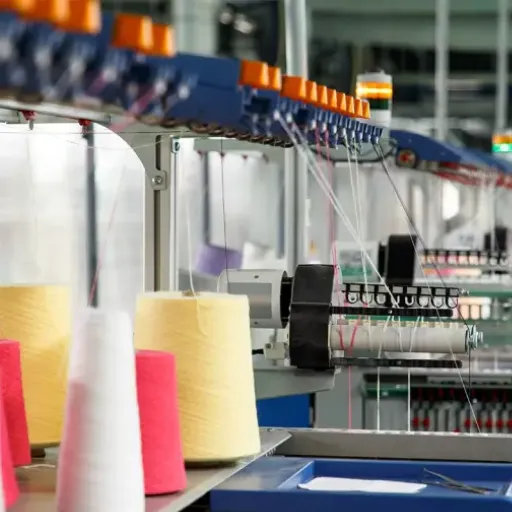
The supplier you pick matters as much as the spec. Vet them on test-report transparency, the lab-dip process, dye-lot management, MOQ flexibility, certifications (OEKO-TEX, GRS, ISO 9001), and hands-on experience with curtain applications. Before you commit, ask these questions:
- Can you run lightfastness tests to ISO 105-B02, and what grades do your curtain yarns typically hit?
- What is your actual MOQ for custom color, custom blend, and solution dyeing?
- How do you manage dye lots on large curtain runs, and will you reserve stock for reorders?
- Which flame-retardancy standards do you certify to, and is the fiber inherently FR or treated?
- Can you support a low-MOQ first run while we validate the market?
- Do you coordinate curtain yarn with upholstery programs, so we can keep one brand color across both?
When Elena at a mid-size curtain brand first ordered custom yarn, she approved a supplier on price alone and skipped these questions. The first bulk delivery was two shades off from the approved lab dip, and re-dyeing cost her three weeks and a missed hospitality contract. The lesson stuck: the spec, the test reports, and the vetting are the same job. If you are also buying upholstery yarn for the same collection, our guide to custom yarn for upholstery shows how the two programs can share fiber, color, and dye method to lock one brand identity across a whole custom yarn for home textiles program.
Frequently Asked Questions About Custom Yarn for Curtains
What is custom yarn for curtains?
Custom yarn for curtains is curtain yarn manufactured to a buyer’s specific requirements, including fiber, yarn count or denier, twist, color, dye method, and performance features like lightfastness and flame retardancy, rather than a standard stock yarn.
What is the best yarn for sheer curtains?
Fine-count polyester or polyester-viscose at 40s to 60s+ Ne or 550 to 900 Dn, with a higher twist around 800 TPM or more for wrinkle recovery and snag resistance.
What yarn is used for blackout curtains?
Coarse counts of 10s to 30s Ne or filament of 3,000 to 9,000 Dn, often built into a triple-weave with a black core yarn for up to 99.99% light block, with solution dyeing preferred for UV stability.
What is the minimum order for custom curtain yarn?
Custom color, package-dyed, typically starts at 500 to 1,000 kg per color. Trial lots start from 2 kg, and flexible low-MOQ programs can support smaller first runs.
How much does custom curtain yarn cost?
Custom color adds roughly 10% to 25% over stock. Custom blends add 15% to 30%, functional finishes like FR and UV add 30% to 100%, and full custom development runs 50% to 200% higher plus sampling fees.
How long does a custom curtain yarn order take?
Sampling runs 3 to 5 days for stock and longer for custom. Bulk production takes 25 to 35 days after approval, up to 45 days for heavily customized constructions, plus 25 to 45 days of sea freight to US and EU ports.
What lightfastness rating do curtains need?
Contract and hospitality curtains should target ISO 105-B02 Grade 4 or higher. Each grade point roughly doubles the time before the same amount of fading appears, and solution-dyed, woven constructions outperform chemically coated ones.
Can I get flame-retardant custom curtain yarn?
Yes. Inherent flame-retardant fibers like Trevira CS build protection into the polymer and survive wet cleaning, while chemical treatments cost less but need reapplication after wetting. Certify to NFPA 701 in the US or BS 5867-2 Types A/B/C in the UK and EU.
How do I keep curtain color consistent across large batches?
Approve a physical standard, ship each order from a single dye lot, and reserve 10% to 15% of the original dye lot for reorders, since dye lots can shift 2 to 3 Delta E units between batches.
Conclusion
Ordering custom yarn for curtains starts with the window, not the yarn. Decide what light control, drape, and durability the treatment needs, translate that into fiber, count or denier, twist, and dye method, and then specify the performance numbers that protect your investment: lightfastness grade, flame-retardancy code, and dimensional stability.
- Start with the window treatment, then choose fiber, count/denier, twist, and dye method to match it.
- Use count (Ne) for spun yarns and denier (Dn) for filament yarns, with sheer to blackout spanning 550 to 9,000 Dn.
- Specify ISO 105-B02 lightfastness Grade 4 or higher for contract curtains, and prefer solution dyeing for sun-exposed and blackout constructions.
- Budget for cost premiums of 10% to 200% depending on customization depth, and plan for MOQs of 500 kg and up on custom color.
- Ask for test reports, lab dips under multiple light sources, a written MOQ confirmation, and a dye-lot plan before you commit.
If you are ready to see how it works in practice, talk to Hebei Lida about your custom curtain yarn project. We will send sample cones, walk you through the lightfastness and FR test data, and help you scope an order that fits your budget, your launch date, and your windows. Your curtains deserve a yarn built for them, and that starts with a conversation.