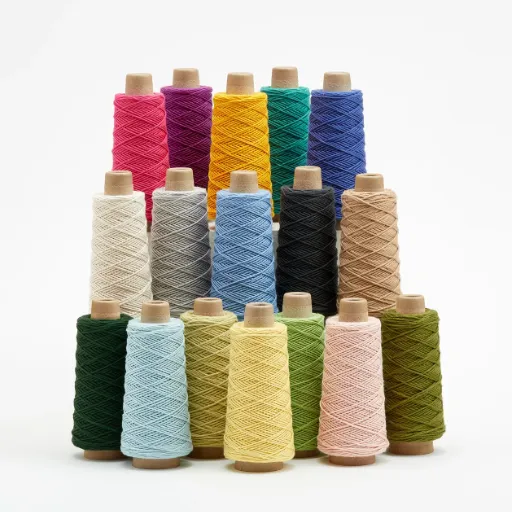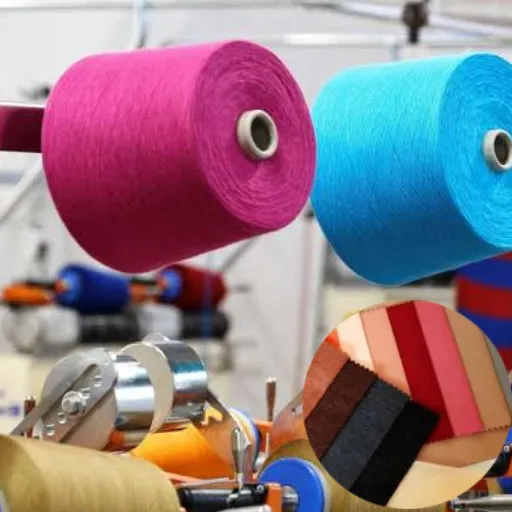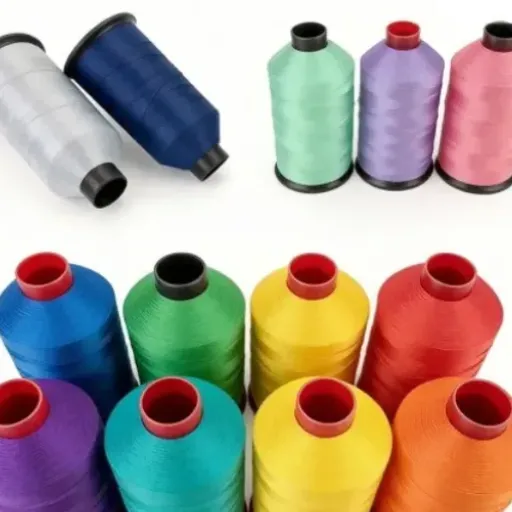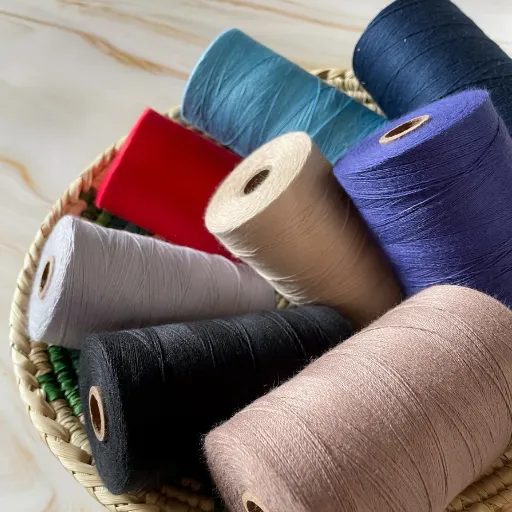
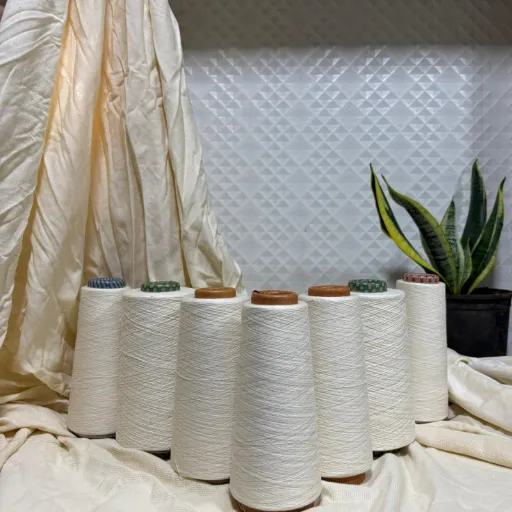



Custom yarn for upholstery is yarn manufactured to a furniture brand’s exact requirements. That includes fiber, denier, twist, ply, color, and performance features such as abrasion resistance and flame retardancy. It lets you lock a signature color, engineer a specific hand feel, or hit a contract-grade durability rating that no stock yarn provides. The process is more accessible than most furniture brands assume, especially when you know how to specify, what it costs, and where the minimums actually sit.
A furniture brand’s signature bouclé, a hotel’s 50,000-double-rub contract spec, and a startup’s first 200-meter run all start with the same question. Can I get upholstery yarn made exactly the way I need it? Most of the advice online is written for knitters or hobby dyers, not for people who build furniture for a living. It buries the details that matter, like how to turn “I need something durable” into a measurable spec, or what really happens when you ask a mill for a custom color.
This guide is different. By the end, you’ll know what you can customize, how to translate your furniture application into a yarn specification, and what testing numbers to ask for. You’ll also know what the order actually costs and how to start small without paying the “custom” tax.
Need custom yarn for a unique textile project? Talk to Hebei Lida Textile Co., LTD.
Key Takeaways
- Custom upholstery yarn lets you control fiber, denier, twist, ply, color, and performance features like abrasion resistance and flame retardancy, but the spec must start from the application, not the other way around.
- Abrasion thresholds are the buying language you need: 15,000 Wyzenbeek double rubs for low-traffic furniture and 30,000 for high-traffic commercial, with no direct conversion to Martindale cycles.
- Custom color is the lowest-cost customization at roughly 10% to 25% above stock, while a fully developed new yarn can run 50% to 200% higher.
- MOQs for custom color typically start at 500 to 1,000 kg per color, but flexible programs and stock-plus-custom hybrids let small brands launch at 50 to 100 kg.
- Solution dyeing (dope dyeing) is the right choice for outdoor upholstery because the color runs through the fiber, while package dyeing suits indoor collections that need batch-to-batch consistency.
What Is Custom Yarn for Upholstery?
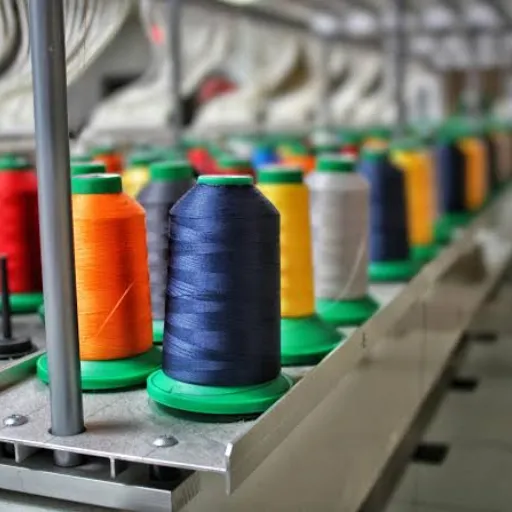
Custom yarn for upholstery means producing a yarn to your specification rather than pulling from a mill’s existing stock range. As one yarn manufacturer puts it, off-the-shelf yarn never quite fits. A standard yarn for upholstery is built around what a factory already makes. A custom yarn for furniture is built around what your collection needs: a specific fiber blend, a denier range, a twist level, a proprietary shade, or a performance finish that no stock product offers.
Upholstery is a demanding application. Fabric on a sofa faces constant friction, body weight, spills, cleaning agents, and in commercial settings, flammability rules. A custom yarn spec translates those demands into measurable properties. That’s why the buying process starts with the application, not with a color swatch.
Custom vs. Stock Upholstery Yarn: What Actually Changes
| Aspect | Stock Upholstery Yarn | Custom Upholstery Yarn |
|---|---|---|
| Fiber and blend | Fixed by the mill | Specified by you |
| Denier and twist | From the existing range | Engineered to your spec |
| Color | Stock shades only | Pantone, swatch, or proprietary recipe |
| Performance | Whatever the stock offers | Abrasion, UV, and FR specified to target |
| Minimum order | Low, existing recipe | Depends on customization type |
| Cost | Base price | +10% to +200% depending on complexity |
| Lead time | From stock or short run | Sampling plus production time |
What Can Be Customized
- Fiber and blend: polyester, nylon, olefin, cotton, wool, or engineered blends like a 70/30 polyester-cotton or wool-polyamide mix.
- Denier: the yarn’s thickness, which drives weight and durability. For upholstery, 2,000 to 9,000 denier covers everything from dining chairs to heavy commercial seating.
- Twist and ply: higher twist grips fibers more firmly, reducing pilling and shedding, which matters on a seat that sees constant movement.
- Color: matched to a Pantone code, a fabric swatch, or a proprietary brand color.
- Dye method: package dyeing for indoor consistency or solution dyeing for outdoor UV stability.
- Performance finish: flame retardancy, antimicrobial treatment, water repellency, or UV protection.
- Package and branding: cone, ball, or hank formats, plus private-label branding.
If you want to understand the manufacturing side of each of these choices, our complete guide to custom yarn manufacturing walks through how fiber blending, spinning, and dyeing change for a custom order.
How to Choose the Right Upholstery Yarn Fiber
The fiber decision drives everything downstream, so it is the first thing to get right when you spec custom yarn for upholstery. Start with the end use, then pick the fiber that fits. If you’re still weighing stock options, our guide to the best yarn for upholstery covers those first. The table below gives you the denier ranges to plan around.
| Application | Denier Range |
|---|---|
| Dining chairs, accent seating, headboards | 2,000 to 3,500 Dn |
| Standard residential sofas, sectionals | 3,500 to 5,000 Dn |
| Heavy-duty commercial, hospitality, automotive | 5,000 to 9,000 Dn |
Polyester: The Upholstery Workhorse
Polyester is the most common upholstery yarn for good reason. It offers strong abrasion resistance, good colorfastness, stain and wrinkle resistance, and a low cost per kilogram. It also takes flame-retardant engineering well, which is why contract and hospitality buyers lean on it. For outdoor pieces, solution-dyed polyester holds color for eight to ten years of sun exposure.
Nylon: The Choice for High-Traffic Commercial
Nylon has the best abrasion resistance of the common upholstery fibers and the elasticity to bounce back from compression. That makes it the go-to for office seating, hotel guest rooms, and other high-traffic commercial upholstery applications for sofas and contract seating. It costs more than polyester, but it outlasts it where the traffic is heaviest.
Olefin, Acrylic, and Natural Fibers
Olefin and acrylic are the outdoor specialists, usually solution-dyed so the color cannot fade from the surface. Cotton, linen, and wool deliver the natural hand feel that luxury residential buyers want, but they trade away some durability and are more prone to staining and pilling. Wool has a built-in advantage in flame resistance and works well in wool-polyamide blends for transport seating.
Blends: Engineering the Best of Both
Blends let you combine performance with comfort. A 70/30 polyester-cotton blend gives you polyester’s abrasion resistance and dimensional stability with cotton’s breathability and softer surface. Wool-polyamide combinations are custom-developed for bus, train, and aviation upholstery. If sustainability matters to your brand, our guide to eco-friendly upholstery yarn covers recycled polyester and organic cotton options.
Want to see how a specific fiber performs on your furniture line? Explore our custom yarn solutions and our team can walk you through the trade-offs with sample cones.
Translating Performance Requirements Into a Yarn Spec
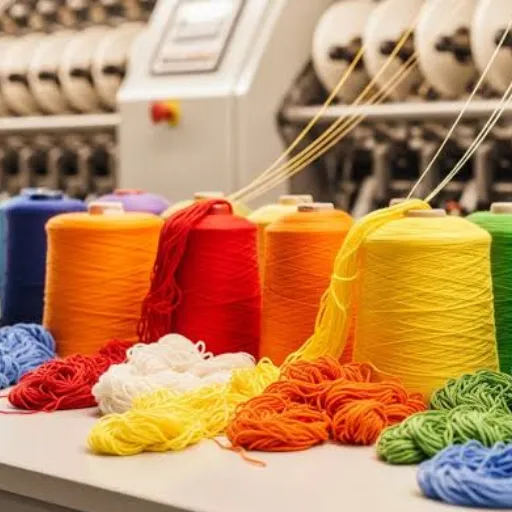
This is the step almost no one explains when you order custom yarn for upholstery. A furniture brand says “I need something durable,” and the mill asks for a double-rub number. Here’s what those numbers mean and how to pick them.
Abrasion Resistance and Double Rubs
Abrasion resistance is measured in double rubs, and two test methods dominate. Wyzenbeek (ASTM D4157) is the standard in the US, rubbing fabric back and forth in straight lines against cotton duck. Martindale (ASTM D4966 / ISO 12947) is the European and international standard, using a figure-eight motion against worsted wool. The Association for Contract Textiles publishes the thresholds that buyers actually specify:
| Application | Wyzenbeek | Martindale |
|---|---|---|
| Low traffic / private spaces | 15,000 double rubs | 20,000 cycles |
| High traffic / public spaces | 30,000 double rubs | 40,000 cycles |
| High traffic / coated fabrics | 50,000 double rubs | Not specified |
There is no direct conversion between the two tests, so ask a supplier to run the method your market uses. Specify Martindale for UK and European projects, Wyzenbeek for US projects, and both for international work. For a deeper explanation of these standards, see our guide to upholstery yarn testing standards. Ask the supplier to turn your target into upholstery yarn specifications you can put on a purchase order.
Colorfastness and Lightfastness
Colorfastness measures how well a yarn resists fading, crocking, and washing. Lightfastness measures fade resistance under UV light, usually rated on the blue wool scale from 1 to 8. Outdoor furniture needs a high rating, and solution dyeing is the surest way to get it because the pigment is embedded in the fiber itself. Our guide to upholstery yarn colorfastness goes deeper on ratings and dye methods.
Flame Retardancy for Contract and Commercial Furniture
Commercial upholstery is governed by flammability standards that vary by market: BS 5852 in the UK, CAL TB 117-2013 in the US, EN 1021 Parts 1 and 2 in Europe, and IMO FTP Code for marine and transport seating.
You have two technology choices. Inherent flame-retardant fibers build the protection into the polymer, so it is permanent and survives washing. FR finishes are applied to the yarn or fabric and cost less, but they raise durability and toxicity questions. If you need a flame-retardant custom yarn, ask the supplier which standards they certify to and whether the fiber is inherently FR or treated.
Cleanability, Pilling, and Seam Slippage
Double rubs do not tell the whole story. Pilling tendency, seam slippage, and cleanability all affect how a sofa looks after two years of use. A loosely looped bouclé can pass the same 50,000 double rubs as a tight polyester and still pill in a residential living room. Ask for a test report that covers all of these, not just abrasion. For a deeper look at what wears out in real use, see our guide to upholstery yarn durability.
Ready to get a test report for your upholstery yarn? Request a sample and we will send you data on abrasion, colorfastness, and the other specs that matter.
Custom Color Matching and Dyeing Methods for Upholstery
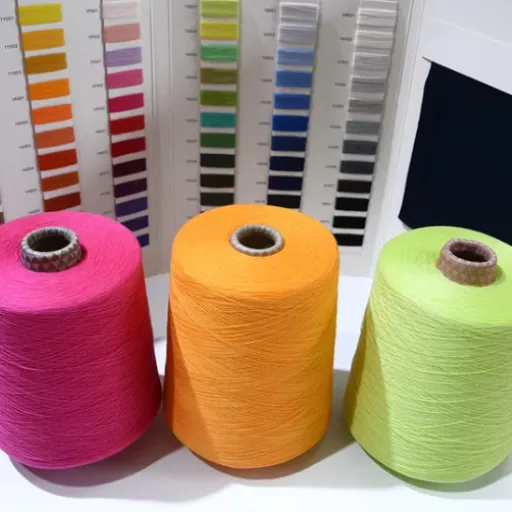
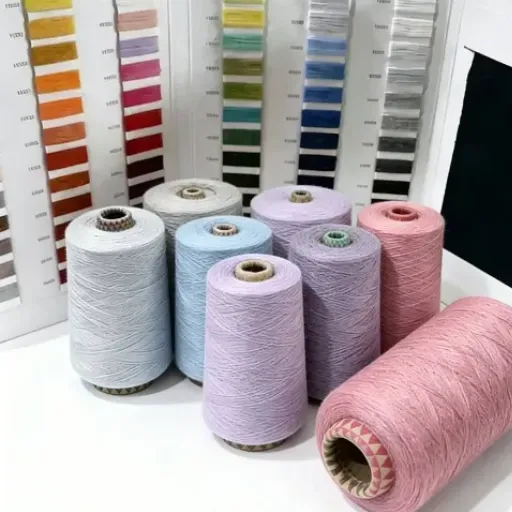
Color is the most common customization on custom yarn for upholstery, and it is also the one buyers get wrong most often. If you need a custom color upholstery yarn, the process starts with a reference, usually a Pantone code or a fabric swatch. The mill develops a lab dip, a small dyed sample you approve under multiple light sources.
Custom yarn color matching is a science of light: daylight, store lighting, and home lighting all change how a color reads, so a good supplier shows you the dip under several conditions. Expect two to three rounds of lab dips before the color is locked.
Then comes the dye method, and this is a genuine buying decision for upholstery.
- Solution dyed upholstery yarn (dope dyeing) adds pigment to the polymer before the fiber is formed, so color runs all the way through like a carrot, not a radish. It is the best choice for outdoor furniture because the color cannot fade from the surface, and it resists bleach and harsh cleaning. The trade-off is a higher minimum order.
- Package dyeing dyes the yarn after spinning and gives you flexible, consistent color across batches. It suits indoor collections where you need the same shade run after run. Custom package-dyed color typically carries a 500 to 1,000 kg minimum per color, with some mills accepting 300 kg at a premium.
For multi-run furniture orders, shade sorting matters as much as the first match. A good mill sorts dyed lots into shade groups (A, B, C) so a reorder blends seamlessly with the original run. If you want the full detail on the lab-dip workflow, our article on custom yarn dyeing and color matching covers it end to end.
Custom Upholstery Yarn MOQs, Costs, and Lead Times
This is the section buyers want but rarely find when they price custom yarn for upholstery. Here’s the honest version.
MOQs by Customization Type
| Customization | Typical MOQ |
|---|---|
| Stock yarn | 1 cone (sample) or 20 to 50 kg |
| Custom color, package-dyed | 500 to 1,000 kg per color (some mills 300 kg at a premium) |
| Custom blend / custom-spun | 1,000 to 3,000 kg |
| Solution-dyed color | 3,000 to 10,000 kg per color |
| Flexible low-MOQ programs | 50 to 100 kg for simple custom colors |
Cost Premiums
- Custom color: +10% to +25%
- Custom blend: +15% to +30%
- Custom twist: +10% to +20%
- Functional finish (FR, antimicrobial, UV): +30% to +100%
- Full custom development: +50% to +200% plus sampling fees
Lead Times
Custom color adds roughly two to three weeks. A custom blend adds four to eight weeks. A functional finish adds four to ten weeks. A full custom development project, including three to five sampling rounds, runs four to five months minimum. Plan backward from your launch date, and build sampling time into the schedule.
How to Start Small: Low-MOQ Strategies for Furniture Brands
Small brands often assume low MOQ custom yarn is out of reach. It is not, if you know the three workarounds.
- Stock-plus-custom hybrid: pair one or two custom colors with existing stock colors from the mill’s range. In one documented case, a designer’s per-kilogram cost tripled on a fully custom batch, then dropped 60% after redesigning the collection around two custom colors and three stock colors.
- Share the development fee: if a mill charges a one-time color-matching or sampling fee, that fixed cost gets cheaper per unit as you order more. Splitting it across a season’s orders lowers the effective premium.
- Flexible-MOQ programs: a growing number of mills, including us at Hebei Lida, run low-MOQ programs for startups. You can launch a custom color on 50 to 100 kg instead of waiting for a 1,000 kg order.
Total Cost of Ownership: Beyond Price per Kilogram
The yarn price is not the whole story. Dye uptake, weaving productivity, and finished-fabric selling price often matter more than the cost per kilogram. A yarn that breaks on the loom costs you in downtime.
A yarn that takes dye poorly costs you in rework. When you evaluate a custom quote, ask about the mill’s weaving breakage rate and how the yarn performs in production, not just the per-kg price.
How to Order Custom Upholstery Yarn
This is how to order custom yarn for upholstery without surprises, step by step.
- Define the application: residential, commercial, outdoor, or contract. This sets your abrasion, UV, and FR requirements.
- Specify the yarn: fiber, blend ratio, denier, twist, and ply.
- Match the color: send a Pantone code or swatch, and approve lab dips under multiple light sources.
- Choose the dye method: solution dyeing for outdoor, package dyeing for indoor consistency.
- Request samples and test reports: physical sample cones plus data on abrasion, colorfastness, pilling, and FR compliance.
- Approve bulk production: confirm MOQ, price, and lead time in writing.
- Receive, inspect, and shade-sort: verify the delivery matches the approved sample.
What to Request From a Supplier
- A technical spec sheet with fiber content, denier, twist, and ply.
- Test reports for abrasion, colorfastness, pilling, and flame retardancy where relevant.
- Lab dips shown under daylight, store, and home lighting.
- A written MOQ confirmation per color and per customization type.
- Physical sample cones, not just digital mockups.
Choosing a Custom Yarn for Upholstery Supplier
The supplier you pick matters as much as the spec. Vet them on five things: test-report transparency, the lab-dip process, MOQ flexibility, certifications (OEKO-TEX, GRS, ISO 9001), and experience with upholstery applications. Before you commit, ask these questions:
- Can you run both Wyzenbeek and Martindale abrasion tests?
- What are your true MOQs for custom color, blend, and solution dyeing?
- How do you handle shade sorting across multiple production runs?
- Which flame-retardancy standards do you certify to, and is the fiber inherently FR or treated?
- Can you support a low-MOQ first run while we validate the market?
When Marcus at a regional furniture maker first ordered custom yarn, he skipped these questions and approved a supplier based on price alone. The first bulk delivery was two shades off from the approved lab dip, and re-dyeing cost him three weeks and a missed retail placement. The lesson stuck: the spec and the vetting are the same job. Contact Hebei Lida Textile Co., LTD to discuss your custom yarn requirements.
Frequently Asked Questions About Custom Yarn for Upholstery
What is custom yarn for upholstery?
Custom yarn for upholstery is yarn manufactured to a furniture brand’s specific requirements, including fiber, denier, twist, ply, color, and performance features like abrasion resistance and flame retardancy, rather than a standard stock yarn.
How much does custom upholstery yarn cost?
A custom color adds roughly 10% to 25% over stock. A custom blend adds 15% to 30%, a functional finish adds 30% to 100%, and a fully developed new yarn can run 50% to 200% higher plus sampling fees.
What is the minimum order for custom upholstery yarn?
Custom color, package-dyed, typically starts at 500 to 1,000 kg per color. Flexible low-MOQ programs can start as low as 50 to 100 kg for simple custom colors.
How long does a custom upholstery yarn order take?
Custom color adds two to three weeks, custom blends four to eight weeks, and functional finishes four to ten weeks. A full custom development project runs four to five months including sampling.
How many double rubs do I need for upholstery?
Low-traffic residential furniture should target 15,000 Wyzenbeek double rubs. High-traffic commercial furniture should target 30,000, and coated high-traffic fabrics 50,000.
Is solution-dyed yarn better for upholstery?
For outdoor upholstery, yes. Solution dyeing embeds the pigment in the fiber, so it resists fading and bleach. For indoor collections that need flexible, consistent color across batches, package dyeing is often the better fit.
Can I get flame-retardant custom upholstery yarn?
Yes. Inherent flame-retardant fibers build the protection into the polymer, while FR finishes are applied to the yarn. Both can be certified to standards like BS 5852, CAL TB 117-2013, and EN 1021.
Conclusion
Ordering custom yarn for upholstery starts with the application, not the color. Decide where the furniture will live, translate that into fiber, denier, twist, and dye method, and then specify the performance numbers that protect your investment: double rubs, colorfastness, and flame retardancy where the use demands it. Budget honestly for MOQs, cost premiums, and lead time, and lean on low-MOQ programs and stock-plus-custom hybrids if you’re starting small.
- Start with the application, then choose fiber, denier, twist, and dye method.
- Specify double rubs using the test method your market uses, and ask for a full test report, not just abrasion.
- Budget for cost premiums of 10% to 200% depending on customization depth, and plan for MOQs of 500 kg and up on custom color.
- Ask suppliers for lab dips under multiple light sources and a written MOQ confirmation before you commit.
- Vet suppliers on test-report transparency, shade sorting, certifications, and low-MOQ flexibility.
If you’re ready to see how it works in practice, talk to Hebei Lida about your custom upholstery yarn project. We will send sample cones, walk you through the test-report data, and help you scope an order that fits your budget and your launch date. Your furniture deserves a yarn built for it, and that starts with a conversation.