
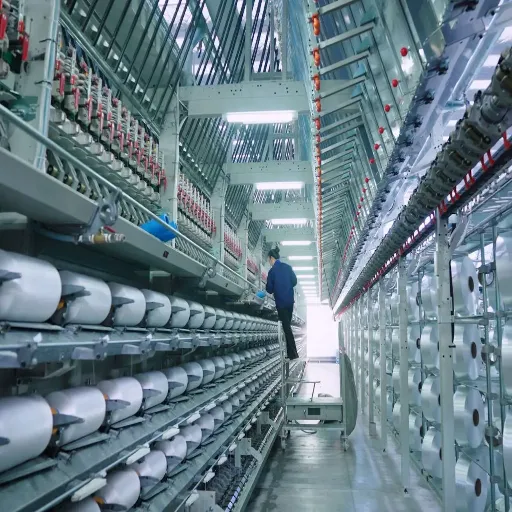
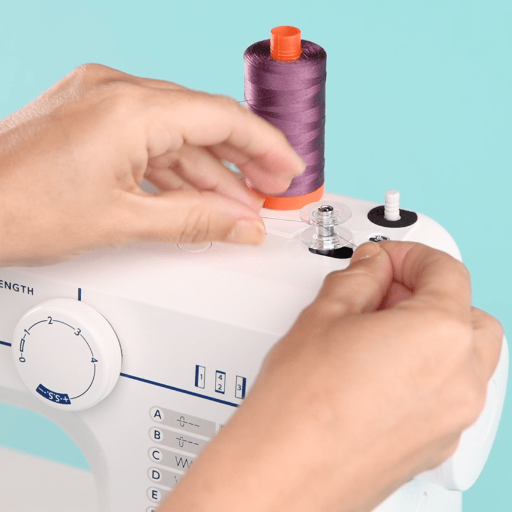


The yarn you source is only as good as the equipment that produces it. Whether you are a fashion designer developing a new collection, a home textile brand sourcing curtain fabrics, or an industrial buyer evaluating suppliers, understanding yarn manufacturing equipment helps you ask better questions and make smarter decisions.
Many buyers feel overwhelmed by the machinery side of textile production. Terms like ring spinning frame, rotor machine, and draw frame can sound intimidating. Yet the right yarn manufacturing equipment directly controls yarn strength, evenness, appearance, and cost. In this guide, we will walk you through the full equipment chain from raw fiber to finished cone, explain how to choose between spinning systems, and share maintenance practices that protect quality and uptime.
Key Takeaways
- Yarn manufacturing equipment includes fiber preparation, carding, drawing, spinning, winding, and quality control machines that work as one integrated system.
- Ring spinning produces the finest, strongest yarn; rotor (open-end) spinning offers higher speed and lower labor; air-jet/vortex spinning excels at synthetic blends and low-pilling yarns.
- Equipment selection should match your fiber type, yarn count, target application, capacity needs, and total cost of ownership, not just upfront price.
- Poorly maintained machinery causes 15-30% productivity loss, while predictive maintenance can cut downtime by 20%.
- Modern energy-efficient equipment and Industry 4.0 monitoring reduce both environmental impact and operating cost.
What Is Yarn Manufacturing Equipment?
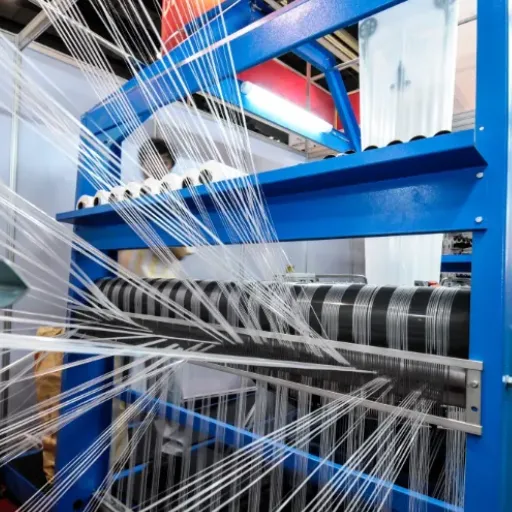
The global spinning machinery market is projected to grow from $9.2 billion in 2026 to $14.2 billion by 2034, according to Dataintelo. Much of that investment flows into Asia-Pacific, where China and India continue to expand and modernize mill capacity.
For buyers, this growth means more equipment choices. However, it also makes the selection process more complex.
Yarn manufacturing equipment is the integrated chain of machinery that transforms raw fiber into finished yarn. The process moves through opening and cleaning, carding, drawing, optional combing, roving, spinning, winding, and final quality control.
Each machine shapes the yarn’s final properties. Therefore, equipment choice is not just a purchasing decision; it is a quality decision.
Think of the equipment line as a relay race. If one station underperforms, the next station inherits the problem. A poorly maintained card increases neps. A misaligned ring frame creates thick and thin places.
That is why experienced manufacturers treat the equipment chain as a single system rather than a collection of separate machines.
For a broader view of how these machines fit into the overall workflow, see our complete guide to yarn manufacturing.
Major Categories of Yarn Manufacturing Equipment
Fiber Preparation Machines
Before fibers reach the spinning frame, they must be opened, cleaned, blended, and fed evenly. Fiber preparation machines include bale openers, mixers, pre-cleaners, fine cleaners, and chute feed systems. These machines remove trash, seeds, and dust while creating a uniform feed for the card.
This stage is easy to underestimate. However, uneven fiber preparation causes defects that no later machine can fully correct. Consistent opening and cleaning set the foundation for consistent yarn.
Carding Machines
Carding is often called the heart of the spinning mill. The carding machine disentangles fiber tufts into individual fibers, removes remaining impurities and short fibers, and forms a continuous strand called sliver. The quality of card sliver largely determines the quality of the final yarn.
Modern high-production cards use advanced wire clothing, auto-levelers, and integrated dust extraction to improve sliver uniformity. Investing in a well-maintained card pays dividends downstream by reducing neps, trash, and unevenness in the finished yarn.
Drawing, Combing, and Roving Frames
After carding, several card slivers pass through a draw frame. The draw frame drafts and doubles the slivers to improve uniformity and align fibers in parallel. For premium yarns, a comber removes short fibers and additional neps before another pass through the draw frame.
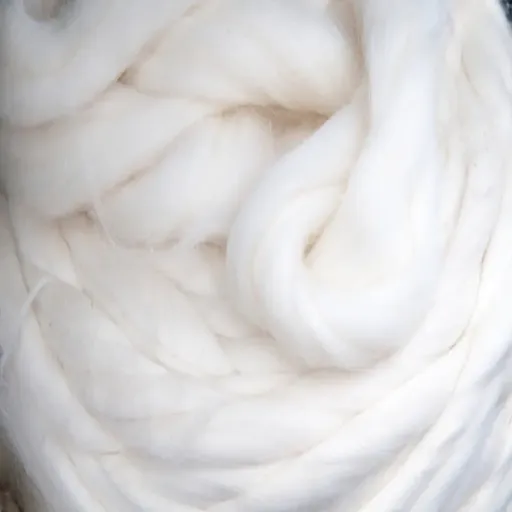
The roving frame, also called a speed frame or simplex, then drafts the sliver to near-yarn fineness and adds a small amount of twist. This intermediate strand, called roving, is wound onto bobbins and fed into the ring spinning frame. Without proper roving quality, ring spinning cannot deliver fine, strong yarn.
To understand how these preparation steps connect to the final product, read our step-by-step yarn production process.
Spinning Machines
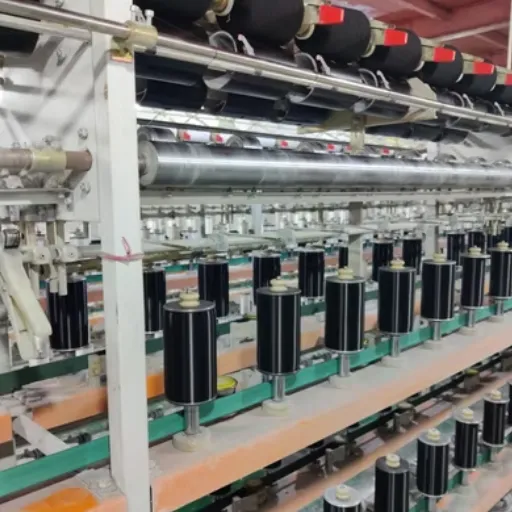
Spinning machines insert twist into the fiber strand to create yarn. The four main systems, and the textile spinning equipment behind each, are:
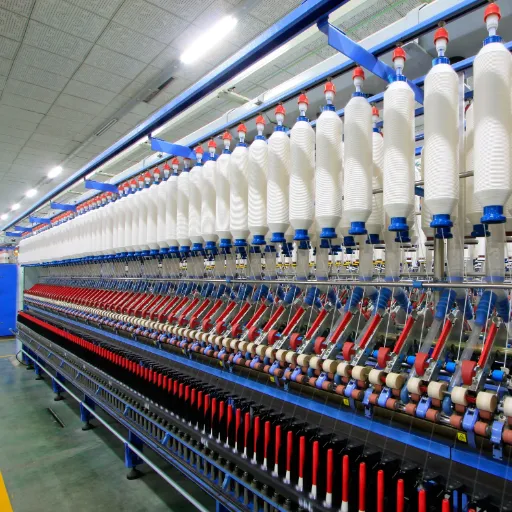
- Ring spinning frames/ring spinning machine: The most common system for high-quality cotton, wool, and blended yarns.
- Rotor (open-end) spinning machines/rotor spinning machine: High-speed systems that spin yarn directly from sliver without roving.
- Air-jet and vortex spinning machines: Systems that use air currents to wrap fibers around a core, ideal for synthetic and blended yarns.
- Compact spinning attachments: Add-ons for ring frames that reduce yarn hairiness and improve strength.
Each system uses different yarn manufacturing machinery, so the choice depends on the yarn you need.
Post-Spinning Equipment
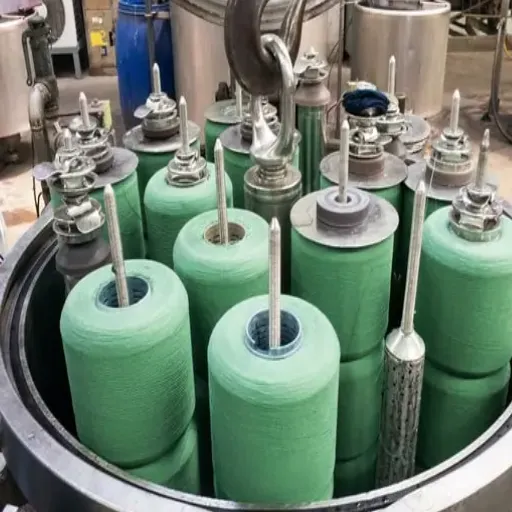
After spinning, yarn moves to winding, twisting, doubling, or texturizing machines. Auto-coners wind yarn onto cones while clearing defects. Twisting and doubling machines combine multiple strands for stronger or thicker yarns. Texturizing machines add bulk and stretch to synthetic filament yarns.
Quality control equipment also belongs in this category. Evenness testers, tensile strength testers, twist testers, and electronic yarn clearers verify that every batch meets specifications before shipment.
Textile Spinning Equipment Compared: Which System Fits Your Product?
Choosing the right spinning system is one of the most important equipment decisions in yarn production. Here is how the major systems compare.
| System | Best For | Key Equipment | Strengths | Limitations |
|---|---|---|---|---|
| Ring spinning | Fine counts, premium fashion, home textiles | Roving frame, ring frame, winder | Highest yarn quality, versatility, strong yarn | Slower, more labor and energy intensive |
| Rotor (open-end) spinning | Coarse counts, high-volume technical/industrial yarns | Draw frame, rotor machine, winder | High speed, lower labor, energy efficient | Coarser, lower strength than ring yarn |
| Air-jet / vortex spinning | Polyester blends, low-pilling yarns | Draw frame, air-jet/vortex machine | Very high speed, low hairiness, high automation | Lower yarn strength, fiber limitations |
| Compact spinning | Premium combed yarns, low-hairiness fabrics | Ring frame with compact attachment | Reduced hairiness, improved strength, smoother appearance | Higher investment and energy use |
Ring spinning remains the largest segment of the cotton spinning machinery market, accounting for roughly 49% of equipment demand, according to Persistence Market Research. It is the default choice when yarn strength and surface quality matter most.
When Anna, a home textile buyer, switched suppliers for her curtain line, she discovered that the new mill used older ring frames without compact spinning. The yarn looked acceptable on the cone, but it produced visible hairiness in the woven fabric. After moving to a supplier with compact ring frames, her fabric surface became noticeably smoother, and customer returns dropped by nearly one-third. The choice of equipment shaped the final product more than she expected.
How to Choose Yarn Manufacturing Equipment
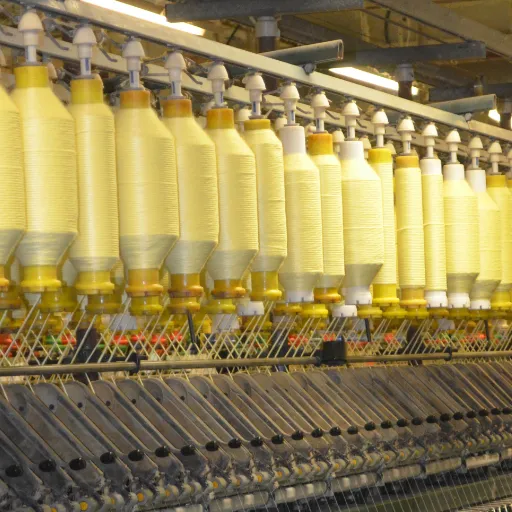
Selecting yarn manufacturing machinery is not only about price. The right choice balances product requirements, capacity, automation, energy use, and long-term support.
Define Your Product Requirements
Start with the end product. What fiber will you use? Cotton, polyester, wool, recycled blends, or specialty fibers? What yarn count and twist do you need? Will the yarn become fashion fabric, upholstery, curtains, or industrial webbing?
Each application demands different equipment. Fashion fabrics often need the strength and smoothness of ring or compact spinning. Industrial fabrics may prioritize the speed and economy of rotor spinning. Synthetic blends often suit air-jet systems.
Match Capacity to Demand
Spindle count and machine speed determine output. A small mill may run a few thousand spindles across one or two shifts. A large industrial plant may run tens of thousands of spindles around the clock.
Overbuilding capacity wastes capital and energy. Underbuilding capacity creates missed orders and long lead times. Match your equipment scale to realistic demand forecasts, and allow room for growth without overextending.
Evaluate Automation and Smart Features
Modern spinning equipment offers auto-doffing, automatic piecing, online quality monitoring, and IoT connectivity. These features reduce labor requirements and improve consistency. According to industry data, automatic ring spinning frames can reduce labor needs by up to 60% per 1,000 spindles.
Smart features also generate production data. For example, real-time monitoring of spindle speed, yarn breaks, and energy use helps managers spot problems before they become costly downtime.
Want to see how advanced equipment translates into custom yarn capabilities? Explore our custom yarn solutions to learn how modern machinery supports tailored specifications.
Compare Energy Efficiency
Energy is one of the largest operating costs in a spinning mill. Final spinning machines alone consume 63-79% of the energy used in spinning. When comparing machines, look at power consumption per kilogram of yarn produced, not just total motor size.
Modern energy-efficient machines use optimized drives, compact motors, and intelligent controls to cut consumption by 15-25% compared with older designs. Over a multi-year ownership period, those savings often exceed the initial price difference between machines.
Calculate Total Cost of Ownership
Purchase price is only the beginning. Total cost of ownership includes installation, training, energy, maintenance, spare parts, downtime, and eventual resale or upgrade value. A cheaper machine with expensive spare parts or poor local service can cost more over five years than a higher-quality alternative.
For reference, small-scale or lab yarn manufacturing equipment can range from $10,000 to $100,000. A small commercial spinning mill may require $300,000 to $500,000 or more. Large industrial polyester or cotton spinning plants typically need $5 million to $20 million or more in total capital expenditure.
Assess Supplier Support
A machine is only as reliable as the support behind it. Before buying, verify the supplier’s service network, spare parts availability, training programs, warranty terms, and references from mills similar to yours. Strong after-sales support reduces downtime and protects your investment.
Quick Equipment Selection Checklist
Use this checklist to compare options side by side:
- Confirmed fiber type, yarn count, twist, and end application
- Matched spindle count and production speed to demand
- Evaluated automation level and smart monitoring features
- Compared energy use per kilogram of yarn
- Calculated total cost of ownership over 5-7 years
- Verified local service, spare parts, and training support
- Reviewed references from mills with similar products
Maintenance Best Practices for Yarn Equipment
Even the best cotton spinning machinery will produce poor yarn if it is not maintained. Research from iFactory shows that poorly maintained textile machinery causes 15-30% productivity losses. The good news is that most problems are preventable.
Daily and Weekly Routines
Daily maintenance includes cleaning lint and debris from motors, vents, yarn paths, and electrical panels. Operators should inspect rollers, belts, sensors, and tension devices at the start of each shift. Weekly tasks include deeper cleaning, lubrication checks, and verification of critical settings.
Keep the mill environment stable. Most spinning equipment performs best at temperatures around 20-30°C and relative humidity of 50-60%. Excess humidity causes fibers to stick; low humidity increases static and yarn breaks.
Preventive Maintenance
Preventive maintenance follows a schedule based on runtime hours. Common replacement items include rings, travelers, aprons, bearings, and gears. For example, worn rings and travelers increase yarn hairiness and breakage, while worn aprons and rollers create thick and thin places.
Follow the “five rights” of lubrication: the right product, in the right place, in the right amount, at the right time, with the right attitude. Skipping lubrication is one of the fastest ways to shorten machine life.
Predictive Maintenance with Sensors
Predictive maintenance uses vibration sensors, current monitors, and thermal imaging to detect wear before failure. For example, vibration sensors on ring frames can identify spindle bearing wear early, while thermal imaging spots overheating motors or card clothing issues.
According to Textile School, predictive maintenance systems can reduce yarn defects by 15% and downtime by 20%. That combination protects both quality and profitability.
Common Equipment-Related Yarn Defects
Roughly 50-60% of yarn faults trace back to machine condition. Here are common defects and their typical equipment causes:
- Thick and thin places: worn or eccentric rollers, uneven top-arm pressure, or damaged aprons.
- Slubs: fly and fluff buildup in drafting zones, worn clearers, or damaged rotor grooves.
- Neps: dull card clothing, poor fiber opening, or incorrect card settings.
- Hairiness: worn yarn guides, damaged twist-stop parts, or inadequate fiber control in drafting.
- Twist variation: rotor contamination, worn navel, or unstable rotor speed.
When these defects appear, trace the problem upstream from winding to spinning to drafting to carding. The root cause is often a worn component rather than a raw-material issue.
Sustainability and Energy Efficiency in Modern Yarn Equipment
Sustainability is now a core consideration in equipment selection. Buyers, brands, and regulators increasingly expect mills to reduce energy use, waste, and water consumption. Modern yarn manufacturing machinery can help meet those expectations.
Energy Consumption by Process Stage
As noted by Rieter, final spinning machines consume 63-79% of the energy in a spinning mill. That makes spinning equipment the highest-impact place to improve efficiency.
Carding, blowroom, and winding use less energy individually. However, they still add up across a large plant.
Energy-Efficient Technologies
Today’s leading machines use compact direct drives, optimized rotors, low-friction components, and intelligent compressed-air systems. Some modern ring frames and air-jet machines reduce energy use by 15-25% compared with previous generations. Low-energy rotor machines are already the most efficient option per kilogram of yarn for coarse counts. For mills focused on sustainability, investing in energy efficient spinning machinery is one of the fastest ways to lower both carbon footprint and operating cost.
When evaluating equipment, ask suppliers for specific power consumption data per kilogram of yarn at your target count and production speed. Generic claims are less useful than numbers tied to your actual product mix.
Recycling and Circular Production
Equipment designed for recycled fibers is becoming more important. For example, mechanical recycling can shorten staple length and increase trash, which challenges older machines. Modern opening, carding, and rotor spinning systems handle recycled inputs more effectively, turning post-industrial or post-consumer fiber into usable yarn.
Inline monitoring also reduces waste. Electronic yarn clearers and evenness testers catch defects early, reducing the amount of off-quality yarn that reaches the customer.
Industry 4.0 and Smart Spinning
Smart manufacturing connects machines, sensors, and software into one visible system. Real-time dashboards show production rates, energy use, quality metrics, and maintenance alerts. Artificial intelligence can predict yarn breaks, optimize machine settings, and schedule maintenance automatically.
Industry data shows that 68% of textile mills rank Industry 4.0 as a top investment priority. Mills that adopt smart systems report faster throughput, fewer defects, and lower operating costs. For buyers, this means suppliers with modern equipment can often offer more consistent quality and more reliable delivery.
If sustainability is a priority for your brand, our eco-friendly yarn production guide explains how equipment choices support greener textile manufacturing.
How Much Does Yarn Manufacturing Equipment Cost?
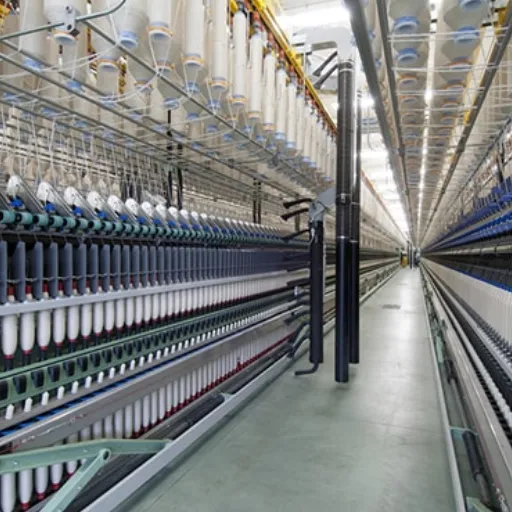
Cost is always a practical concern. While prices vary widely by technology, capacity, and supplier, here is a realistic comparison:
| Scale | Typical Investment | What’s Included | Best For |
|---|---|---|---|
| Small-scale or lab | 10,000−10,000−100,000 | Selected machines such as small cards, winders, or sample spinning frames | R&D, sampling, artisan production |
| Mid-scale commercial mill | 300,000−300,000−500,000+ | Small open-end or ring spinning operation with support equipment | Niche brands, regional suppliers |
| Large industrial plant | 5M−5M−20M+ | Complete polyester, cotton, or blended yarn facility including civil works and utilities | Mass-market and industrial yarn producers |
Key cost drivers include automation level, spindle count, technology type, country of manufacture, and the scope of installation and training. Remember that the lowest purchase price rarely produces the lowest total cost of ownership.
Choosing the Right Yarn Manufacturing Partner
You do not have to become a machinery expert overnight to source high-quality yarn. The right manufacturing partner already invests in the right spinning machinery, maintains it diligently, and uses it to meet your specifications.
When evaluating a yarn supplier, ask practical questions:
- What spinning systems do you operate?
- How do you maintain and calibrate your equipment?
- What quality control tests do you perform?
- Can you produce custom counts, twists, blends, or colors?
- What is your track record for on-time delivery?
At Hebei Lida Textile Co., LTD, we combine advanced yarn manufacturing equipment with rigorous quality control and a customer-focused approach. Whether you need standard yarns for fashion and home textiles or specialized solutions for industrial applications, we tailor production to your requirements. Our global delivery network serves buyers in over 50 countries, and our team is ready to help you find the right yarn for your next project.
Ready to source yarn backed by modern equipment and strict quality control? Contact us today to request a quote or sample.
Frequently Asked Questions
What equipment is used in yarn manufacturing?
Yarn manufacturing uses fiber preparation machines (bale openers, cleaners, mixers), carding machines, draw frames, combers, roving frames, spinning machines (ring, rotor, air-jet, compact), winders, twisting/doubling machines, and quality control testers. These machines work as an integrated system to convert raw fiber into finished yarn.
What is the difference between ring spinning and open-end spinning?
Ring spinning drafts roving into yarn on a ring frame and produces the finest, strongest yarn. Open-end (rotor) spinning feeds sliver directly into a high-speed rotor, eliminating roving and enabling faster, more economical production of coarser yarns.
How much does a small spinning mill cost?
A small commercial spinning mill typically costs 300,000to300,000to500,000 or more, depending on technology, capacity, and automation. Lab or artisan-scale setups can start under $100,000, while large industrial plants require several million dollars.
How can I reduce energy use in yarn production?
Focus on spinning equipment, which uses 63-79% of mill energy. Choose energy-efficient machines, optimize compressed-air systems, maintain motors and drives, and use real-time monitoring to identify waste. Modern machines can cut energy use by 15-25% compared with older models.
What causes yarn defects in spinning equipment?
Common causes include worn rollers, aprons, rings, and travelers; misaligned drafting systems; dirty rotors; dull card clothing; and incorrect tension or humidity. Roughly 50-60% of yarn faults are tied to equipment condition rather than raw material.
How often should spinning machines be maintained?
Daily cleaning and inspection should happen every shift. Scheduled preventive maintenance follows manufacturer recommendations based on runtime hours. Predictive maintenance using sensors can extend intervals while catching problems earlier.
Conclusion
Yarn manufacturing equipment is the foundation of every yarn’s quality, consistency, and cost. From fiber preparation through carding, drawing, spinning, and winding, each machine shapes the final product. Choosing the right spinning system, maintaining equipment properly, and investing in energy-efficient technology help mills deliver better yarn at lower total cost.
For buyers and designers, understanding this equipment landscape makes it easier to evaluate suppliers and specify exactly what you need. The best partners do not just own machines, they maintain them, optimize them, and align them with your product goals.
If you are looking for a yarn supplier with modern yarn manufacturing equipment, strict quality control, and global delivery, Hebei Lida Textile Co., LTD is here to help. Contact us to discuss your project, request a sample, or get a customized quote.