




Yes, small businesses can order custom yarn. In 2026, supplier overcapacity and flexible manufacturing have made low-MOQ custom yarn realistic for independent designers, startups, and small brands. The key is knowing which customization path matches your budget, volume, and timeline.
Most small brands assume custom yarn is reserved for major fashion houses. They visit supplier websites, see “MOQ 1,000 kg,” and quietly close the tab. That reaction is understandable, but it is also outdated. The global yarn market reached USD 38.13 billion in 2026, and manufacturers are increasingly willing to work with smaller buyers who can demonstrate clear product vision and reorder potential.
This guide shows how to access custom yarn for small businesses and custom yarn for startups with realistic budgets. You will learn how to start with samples, reduce minimums, avoid common first-order mistakes, and scale from a pilot batch to repeat bulk orders.
Key Takeaways
- Custom yarn is accessible to small businesses through low-MOQ programs and stock-yarn customization.
- Starting with samples and pilot batches reduces risk before committing to bulk.
- MOQs vary by customization type; color customization usually requires less volume than full custom blends.
- Smart negotiation, consolidated SKUs, and reorder commitments can lower minimums.
- The right supplier acts as a manufacturing partner, not just a vendor.
What Is Custom Yarn for Small Businesses?
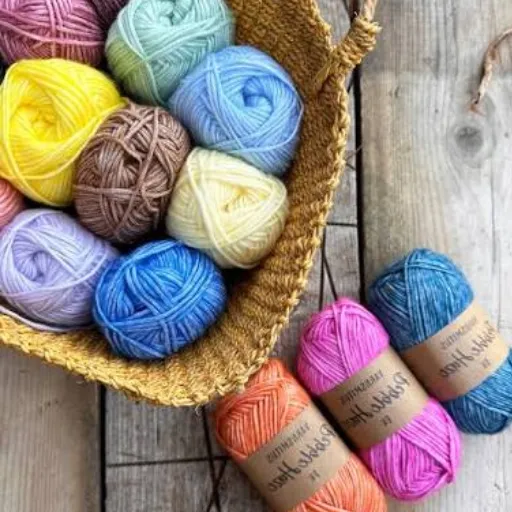
Custom yarn for small businesses is yarn produced in smaller quantities with tailored specifications, allowing independent brands, startups, and designers to create signature fibers without committing to large industrial minimums.
This is different from two better-known categories. Artisan hand-dyers create beautiful small-batch colorways, but they rarely control fiber sourcing, twist, or performance specs at an industrial level. Large industrial mills offer full customization, but historically they required multi-ton orders that shut out smaller buyers.
Small-business custom yarn sits in the middle. It gives you control over fiber content, yarn count, twist, color, and finish at volumes that match your launch or collection size. The result is a yarn that carries your brand identity while remaining practical to produce.
Why Custom Yarn Is Worth It for Small Brands
Small brands compete against companies with larger marketing budgets and established supply chains. Custom yarn levels that playing field in three specific ways.
First, it creates differentiation. A signature fiber, color, or texture makes your product instantly recognizable. Customers may not know why your throw blanket or sweater feels different, but they remember the experience. Learn how other small brands use custom yarn for branding to build product identity.
Second, it gives you control. You choose the exact performance characteristics your product needs, whether that is softness for apparel, abrasion resistance for upholstery, or UV stability for outdoor textiles.
Third, it supports sustainability storytelling. Custom orders let you select certified organic cotton, recycled polyester, or traceable wool, which strengthens your brand narrative and meets growing buyer expectations for transparency. Stay ahead of the latest sustainable yarn trends while building your collection.
When Maya launched her one-person knitwear label in Portland, she started with off-the-shelf merino. Her pieces were well-made, but buyers struggled to distinguish them from competitors. After switching to a custom heathered blend with a subtle Donegal nep, her sell-through rate doubled. The yarn itself became her quiet signature.
Want to explore what a custom yarn could do for your line? Browse our custom yarn solutions and see what is possible.
Debunking the “Custom Yarn Is Only for Big Brands” Myth
The belief that custom yarn requires enterprise-level volumes is one of the most persistent myths in textile sourcing. It was closer to true five years ago. It is not true today.
Fortunately, several market forces have shifted power toward small buyers:
- Manufacturing overcapacity has made suppliers more willing to accept smaller runs.
- Digital sampling and lab-dip workflows have reduced the cost and time of development.
- Stock-yarn customization lets brands test colors and finishes without spinning fiber from scratch.
- Direct communication with overseas mills has removed layers of middlemen who once inflated minimums.
According to 2026 sourcing data, many textile suppliers have reduced minimums by 50-70% compared to 2023-2024. That does not mean every mill will take 50 kg, but it does mean the right partner will work with you if your project is well-defined.
Low-MOQ Custom Yarn Options for Small Businesses
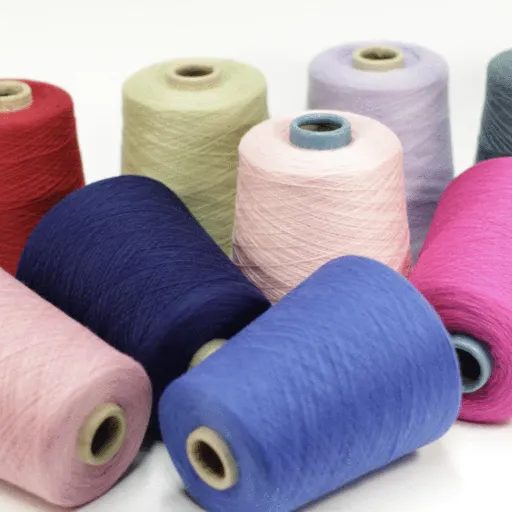
Not all custom yarn is created equal. The most accessible path depends on how much control you need and how much you can spend. Whether you are looking for low MOQ custom yarn or a fully bespoke blend, there is an option that fits your stage.
Stock Yarn + Custom Dyeing
This is the fastest and most budget-friendly entry point. You select an existing yarn base from a supplier’s stock, then choose or match a custom color.
For example, typical MOQs range from 50-300 kg per color. Timelines are usually 3-5 weeks after color approval. This approach works beautifully for capsule collections, seasonal color refreshes, and brand launches where the fiber itself does not need to be unique.
Small-Batch Custom Blends
When the fiber mix matters, you can order a custom blend in smaller quantities. This might mean a merino-nylon sock yarn, a cotton-linen summer yarn, or a recycled polyester-acrylic blend for home textiles.
Pilot runs often start at 100-500 kg. The trade-off is a longer timeline and higher per-kilogram cost than stock customization, but you get a yarn no competitor can copy.
Custom Yarn Sampling and Lab-Dip Programs
Before any bulk order, request physical samples. Lab dips typically take 7-10 days. Yarn samples follow in 2-4 weeks. This step protects you from expensive mistakes and gives you something tangible to show buyers or test in production.
Phased Production Agreements
A phased agreement lets you start with a pilot batch, prove demand, then commit to larger follow-up orders. Suppliers often offer better pricing once they see you are a serious repeat customer.
Typical MOQs and Costs for Small Businesses
Next, understanding the cost structure helps you choose the right path and negotiate confidently.
| Customization Type | Typical MOQ | Budget Range | Timeline |
|---|---|---|---|
| Stock yarn + custom dyeing | 50-300 kg/color | 2,000−2,000−8,000 | 3-5 weeks |
| Small-batch custom blend | 100-500 kg | 5,000−5,000−15,000 | 5-8 weeks |
| Full custom development | 1,000 kg+ | $15,000+ | 8-16 weeks |
| Lab dips / samples | 1-5 kg | 200−200−1,000 | 1-3 weeks |
These ranges are estimates. Actual pricing depends on fiber choice, yarn construction, dye method, and destination. Premium fibers like cashmere or silk push costs higher, while standard cotton and acrylic blends sit at the lower end.
Custom dye lot minimums are often set by spinners at 50-100 kg per color. Choosing stock colors or dyeing a stock base can cut your per-colorway minimum by 50-70%, which is why stock-yarn customization is usually the best first step.
How to Order Custom Yarn as a Small Business: Step-by-Step
Now that you know the options, a clear process keeps your first order on track and builds trust with your supplier. Here is the workflow we recommend at Hebei Lida Textile.
- Define your product and performance requirements. What will the yarn become? Who will use it? What durability, hand-feel, or certification does it need?
- Choose fiber content and yarn construction. Decide on fiber blend, yarn count, ply, and twist. If you are unsure, a good supplier will guide you.
- Select color references. Provide Pantone codes, physical swatches, or digital references. The more precise you are, the faster approval becomes.
- Request samples or lab dips. Never approve bulk from a photo. Physical samples reveal handling, dye fastness, and finish in ways images cannot.
- Evaluate handling and performance. Knit or weave a small test piece. Wash it. Stretch it. Compare it under different lights.
- Approve the sample and confirm your purchase order. Most suppliers require a deposit, often 30-50%, before bulk production begins.
- Monitor production and quality control. A reliable supplier will share QC checkpoints and keep you updated on progress.
- Receive, inspect, and plan reorders. Document shade bands and color standards so your next order matches the first.
For a deeper look at the full production journey, read our guide on the custom yarn production process from inquiry to delivery.
How to Reduce MOQs and Costs
Small buyers have more negotiating power than they think. Here are proven tactics to lower minimums without sacrificing quality.
- Use stock base yarns. Avoid custom spinning from raw fiber. Stock bases already exist, so the supplier only needs to dye or finish them.
- Consolidate colors and SKUs. Combine multiple colorways of the same base yarn to meet a combined minimum.
- Offer a higher deposit. A 50% deposit instead of 30% reduces supplier risk and can unlock lower minimums.
- Accept a small per-unit premium. Paying 8-12% more per kilogram can be worth it for the flexibility of a smaller run.
- Commit to a reorder schedule. Suppliers value predictable future business. A written reorder plan often leads to better terms.
- Piggyback on existing production runs. Ask if your color can be added to a scheduled dye lot for the same base yarn.
When Leo started his home textile brand in Austin, he wanted a custom sage green for a linen-cotton throw. The mill’s MOQ was 300 kg per color, far more than he needed. By combining his sage order with two neutral colors on the same base, he hit the combined minimum, split the run across three SKUs, and launched with exactly the palette he wanted.
What to Look for in a Small-Business-Friendly Supplier
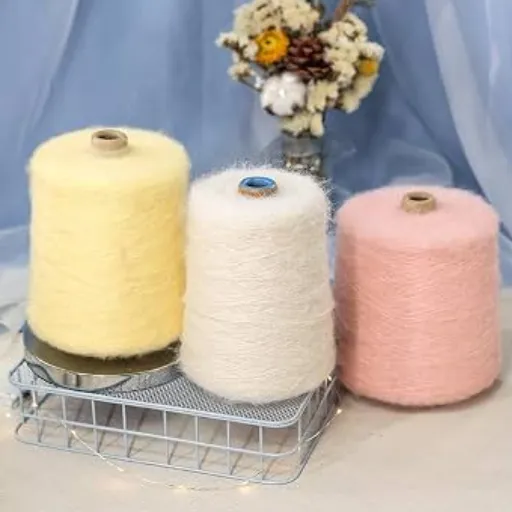
Not every manufacturer is set up to serve small brands. However, the right small batch yarn suppliers will treat your pilot order as the start of a partnership. Evaluate potential partners on these criteria.
- Low or flexible MOQs. Ask directly about minimums for stock customization, custom blends, and full development.
- Sampling support. A partner that resists samples is a partner to avoid.
- Clear communication. You need prompt, detailed responses to technical questions.
- Transparent pricing. Beware of suppliers who cannot explain cost drivers.
- Scalability. Confirm they can grow with you from pilot to bulk.
- Relevant certifications. OEKO-TEX, GOTS, GRS, or BCI may matter for your market.
- Willingness to educate. First-time buyers need guidance, not pressure.
For help preparing your design brief, see our checklist for production-ready yarn specifications. It covers fiber selection, color matching, yarn construction, and common mistakes to avoid.
Common Mistakes Small Businesses Make
First-time custom yarn buyers often learn expensive lessons. Here are the most common pitfalls and how to avoid them.
- Skipping physical samples. Photos and screens distort color. Always approve from a lab dip or yarn sample.
- Underestimating lead times. Custom work takes longer than stock orders. Plan samples 8-12 weeks before you need delivery.
- Approving from a single photo. Lighting and monitors vary. Insist on physical approval under your standard light source.
- Choosing price over consistency. The cheapest quote can cost more if the bulk batch does not match the sample.
- Ignoring reorder planning. Without shade bands and color standards, your second order may not match the first.
Scaling Your Custom Yarn Program
Finally, the goal of a first custom order is not just to launch a product. It is to build a repeatable system.
Start with one successful SKU. Document everything: fiber content, yarn count, twist, dye recipe, finish, and color standard. Once that SKU sells, expand to complementary colors or weights. Each successful order gives you data to negotiate better terms.
As volumes grow, you can move from stock-yarn customization to custom blends or even exclusive fiber development. The brands that scale well treat their supplier as a long-term partner rather than a one-time vendor.
When The Fiber Seed began as a family-run dyeing operation, its signature “Sprout” blend was mixed in small batches with domestic fiber. As demand grew, the founders transitioned from hand-processing to working with mills that could reproduce their recipe consistently. Today, their colorways are recognizable across hundreds of retailers because they built the right production partnership at each stage.
Ready to start your own custom yarn program? Contact our team to request samples or discuss a small-batch quote.
FAQ
Can I order custom yarn for small projects?
Yes. Small-batch suppliers and stock-yarn customization programs can handle orders as low as 50-300 kg per color. For very small test quantities, lab dips and sample lots of 1-5 kg let you evaluate options before committing to bulk.
What is the minimum order quantity for custom yarn?
MOQs vary by customization type. Stock yarn + custom dyeing often starts at 50-300 kg per color. Small-batch custom blends typically require 100-500 kg. Full custom development from raw fiber usually begins at 1,000 kg or more.
How much does custom yarn cost for small businesses?
Budget 2,000−2,000−8,000 for stock yarn + custom dyeing, 5,000−5,000−15,000 for a small-batch custom blend, and 15,000+forfullcustomdevelopment.Sampleandlab−dipprogramsusuallycost15,000+forfullcustomdevelopment. Sample and lab-dip programs usually cost $200- $1,000.
How do I find a custom yarn supplier for small orders?
Look for manufacturers that advertise low-MOQ programs, sampling support, and flexible production. Ask directly about their minimums for stock customization and custom blends. Review their certifications, request references, and evaluate sample quality before placing a bulk order.
How long does custom yarn production take?
Lab dips take 7-10 days. Yarn samples take 2-4 weeks. Stock yarn + custom dyeing typically takes 3-5 weeks after approval. Small-batch custom blends take 5-8 weeks. Full custom development can take 8-16 weeks.
Can small businesses get custom yarn dyed?
Yes. Dyeing stock base yarn is the most accessible form of custom yarn for small businesses. It offers lower MOQs and faster turnaround than spinning custom fiber from scratch.
What fibers work best for small-batch custom yarn?
Cotton, acrylic, and standard wool blends are cost-effective and widely available for small batches. Recycled polyester and organic cotton are popular for sustainable lines. Premium fibers like cashmere and silk work best once you have proven demand, since they carry higher minimums and costs.
Conclusion
Custom yarn for small businesses is no longer a luxury reserved for large brands. With the right strategy, independent designers and startups can access low-MOQ options, sampling programs, and phased production agreements that make custom yarn practical and affordable.
Start by defining your product needs clearly. Choose the customization path that matches your budget and volume. Request physical samples. Negotiate with confidence. And partner with a supplier who can scale with you as your brand grows.
At Hebei Lida Textile, we provide custom yarn solutions for businesses of all sizes. Whether you are launching your first capsule collection or expanding an existing line, our team can guide you from sample to bulk production.
Request a sample or small-batch quote today and take the first step toward a yarn that is uniquely yours.