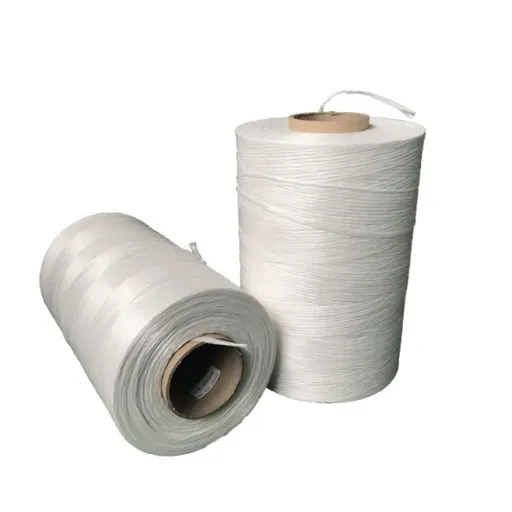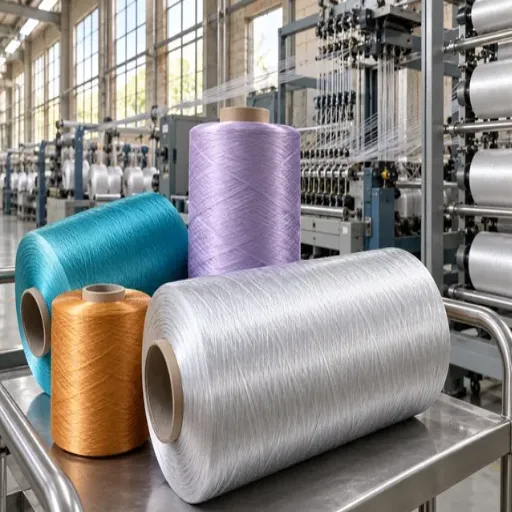
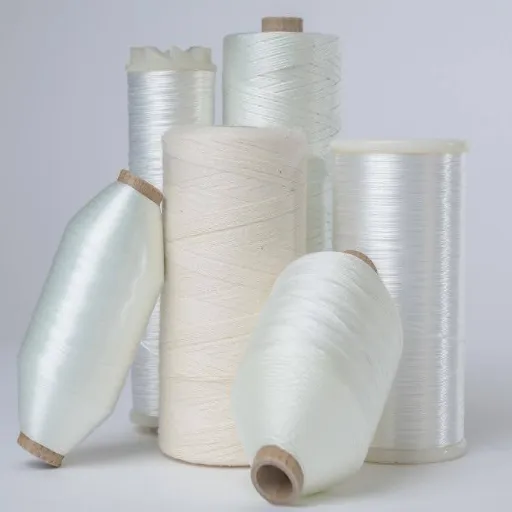




An industrial polyester yarn factory spins polyester filament into high-tenacity yarn for slings, webbing, geotextiles, hose reinforcement and rope. It’s a different business from the trader who resells that yarn under a factory-sounding name. Vetting one comes down to five moves: confirm what the plant produces, test the capacity claim, demand a specification that carries its test conditions, check certificates in their own registers, and read audit findings instead of the audit score.
Most supplier websites look alike. A trading company can publish a factory address, post machinery photos, borrow a certificate image and quote a delivery date without owning a single spindle. The evidence that separates the two sits in documents that cost effort to fake: lot test reports from your production run, a certificate scope that names your product class, and an audit report dated at the site that will spin the yarn.
This guide follows the order I would use on a first order, because that order protects the money at each stage. It covers what the plant makes, how factory, trader and converter differ, how to read a capacity figure, which lines a quotation must carry, what certificates prove, when an audit pays for itself, and eight questions that close most conversations early. Where Hebei Lida is relevant, I say what the company supplies and what it doesn’t claim.
If you already have a quotation and want a second read before you commit, .
Key Takeaways
- Factory, trader and converter carry different risks, and the paperwork you ask for changes with each.
- A capacity number means nothing without a date, a line count and a product range attached.
- Tenacity and shrinkage are only comparable when the test temperature, time and load travel with the figure.
- Certificates are verified in the issuing body’s register, not on the supplier’s download page.
- Audit findings carry more information than the audit score.
What an Industrial Polyester Yarn Factory Produces
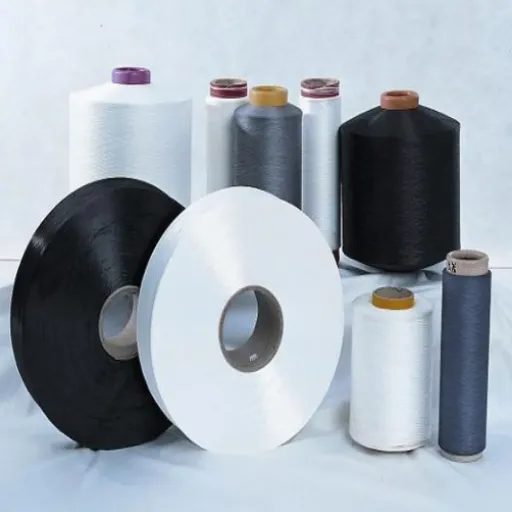
Start with the product’s own definition, because it rules out much of what gets sold as industrial yarn.
China’s current product standard, GB/T 16604-2026, covers polyester industrial filament made by the one-step process in a linear density range from 78 dtex to 9000 dtex. It was issued on 2 July 2026 and takes effect on 1 February 2027. That range is why a plant selling 150 denier carpet yarn isn’t in the same business, and why any quotation for industrial polyester yarn should start with a dtex number.
The standard splits the product into three classes: high-strength, low-shrinkage, and high modulus low shrinkage, known as HMLS. Sub-types include ultra-high strength, high-strength low-elongation and ultra-low shrinkage. Within each class, product is graded superior, first or qualified. A factory that quotes class and grade has told you something a factory that quotes “good quality” never will.
Identification follows a fixed convention: nominal linear density in dtex, then filament count as f. A yarn of 1110 dtex spun from 210 filaments is written 1110 dtex/210f. Two yarns can share a dtex figure and behave differently, because filament count sets flex fatigue and surface feel while total dtex sets strength. Ask for both numbers or you’re comparing half a product.
For the material itself, our guide to covers the grade families. If your application is load-bearing, the is the one to price.
Factory, Trader or Converter: The Distinction That Decides Your Risk
Three business models sell industrial polyester yarn, and each puts the risk somewhere different.
A factory owns spinning lines and sells its own output. A trader buys from factories and sells under its own name, adding logistics, credit and consolidation. A converter buys yarn and twists, heats, dyes or otherwise processes it before resale.
All three can be legitimate. The risk differs because the party controlling the process isn’t the same in each case.
With a factory, your risk concentrates in one plant: its quality system, its line availability, its labour and environmental record. With a trader, the plant stays invisible until something goes wrong, so the trader’s own qualification process becomes your quality system. With a converter, you inherit two process steps and the interface between them, which is where heat-setting and twist errors hide.
The test is documentary, not verbal. Ask for the name and address of the entity that will spin the yarn, then compare it with the entity on the invoice, the certificate scope and the audit report. When those four don’t match, you’re buying through an intermediary. That can be fine, as long as you know it and price it.
Contract manufacturing makes this harder. A group can audit its flagship plant, then run your order in a partner mill in another province. The audit date and the production site must match, or the audit proves nothing about your lot.
Our walks through the qualification sequence in more depth.
How to Read an Industrial Polyester Yarn Factory’s Capacity Claim
Capacity is the most inflated figure an industrial polyester yarn factory publishes, and the easiest to test.
Take two public examples from opposite ends of the market. Guxiandao, a Chinese producer established in 2003, states on its supplier profile an industrial polyester yarn capacity of 690,000 tonnes a year, alongside 1.1 million tonnes of chip, 200,000 tonnes of FDY and 50,000 tonnes of twisted yarn. Those are the supplier’s own published numbers. A buyer still has to confirm which lines they describe.
Recron lists an industrial yarn plant of 6,000 tonnes a year, commissioned in November 2008, running a denier range from 250D to 3000D. A capacity stated with a commissioning date is worth more than one stated without, because it tells you whether the plan is built or intended.
Then read the market. CCFGroup reported on 24 August 2026 that no new conventional high-tenacity capacity had come online in three years, while HMLS additions continued: 40,000 tonnes at Junma in 2024, 6,000 at Taiji in 2025, 20,000 at Junma and 25,000 at Polytex in the first half of 2026, and 80,000 at Haiyang phasing in during the second half. A plant quoting HMLS capacity in 2026 may be counting a line that’s still being commissioned.
Three questions turn a brochure figure into a fact:
- Which line, with what nameplate, will run my order?
- What did that line actually produce in the last twelve months?
- If my volume lands in a peak month, what is the booking lead time?
A plant that answers all three has a production plan. A plant that answers none has a PDF.
The Specification an Industrial Polyester Yarn Factory Must Quote
Tenacity and shrinkage without test conditions are marketing. With them, they’re engineering.
Hailide publishes an HT product at 1110 dtex, equivalent to 1000 denier, with tenacity of 91 N, or 8.2 cN/dtex, elongation of 14.0% and hot-air shrinkage of 8.0%. The remark row states the shrinkage condition: 177 °C for 10 minutes at 0.05 cN/dtex. Diolen’s 855T, at 1100 dtex and 210 filaments, is quoted at 83.6 cN/tex tenacity, 12.5% elongation and 6.1% shrinkage at 180 °C. Recron’s low-shrinkage yarn is quoted at 3% to 4% hot-air shrinkage at 190 °C for 5 minutes under 0.01 gpd, tested to ASTM D4974, D2256 and D1907.
Three published data sheets show how far the conditions move:
| Property | Hailide HT | Diolen 855T | Recron LS |
|---|---|---|---|
| Linear density | 1110 dtex (1000D) | 1100 dtex / 210f | 250D to 3000D range |
| Tenacity | 91 N (8.2 cN/dtex) | 83.6 cN/tex | Not stated |
| Elongation at break | 14.0% | 12.5% | Not stated |
| Hot-air shrinkage | 8.0% at 177 °C, 10 min, 0.05 cN/dtex | 6.1% at 180 °C | 3% to 4% at 190 °C, 5 min, 0.01 gpd |
| Test basis | Product data sheet | Product data sheet | ASTM D4974, D2256, D1907 |
Read those three side by side. Shrinkage runs from 3% to 8% across the set, and the gap comes as much from the test condition as from the polymer. A supplier who quotes “low shrinkage” without temperature, dwell time and load has given you a word, not a value.
A quotation worth comparing carries eight lines:
- Linear density in dtex and filament count, written as dtex/f.
- Class and grade: high-strength, low-shrinkage or HMLS, and superior, first or qualified.
- Tenacity with its unit, in cN/dtex or cN/tex, and the test standard behind it.
- Elongation at break, with the gauge length used.
- Hot-air shrinkage with temperature, time and load, plus the test method.
- Oil content, which GB/T 16604 leaves to agreement between buyer and seller.
- Interlacing degree, also set by agreement, and measured to FZ/T 50001.
- Package form, weight and winding, because a package that collapses in transit ruins the lot.
The standard’s test methods tell you which documents to request: GB/T 14343 for linear density, GB/T 14344 for tensile properties, FZ/T 50050 for dry-heat shrinkage, FZ/T 50001 for interlacing. A lot report citing those methods can be checked by a third lab. A report citing nothing can’t.
HMLS deserves its own note. GB/T 16604 defines an index of dimensional stability as elongation at 4.0 cN/dtex plus dry-heat shrinkage, which is why HMLS claims are tested under load rather than free. If a supplier’s HMLS figure was measured without that load, it was measured on a different product.
Quality Systems and Certificates: What They Actually Cover
Certificates divide into product-level and facility-level, and buyers mix them up constantly.
| Document | Level | What it covers | Where to check it |
|---|---|---|---|
| OEKO-TEX STANDARD 100 | Product | Finished article against 1,000+ harmful substances, four product classes | OEKO-TEX Label Check |
| OEKO-TEX STeP | Facility | Production site, six modules, three-year validity | OEKO-TEX certificate register |
| ISO 9001 | Facility | Quality management system, issued by an accredited body | IAF CertSearch |
| Lot test report | Batch | Measured properties of your lot | Your own lab or a third lab |
OEKO-TEX STANDARD 100 is a product certificate. It tests the finished article, thread included, against more than 1,000 harmful substances and assigns four product classes by skin contact. It says nothing about how the plant is run. Every genuine certificate can be checked by number or QR code in OEKO-TEX Label Check, and that check takes under a minute.
OEKO-TEX STeP is a facility certificate. It covers production sites from fibre to finishing across six modules, recognises ISO 9001, ISO 14001, SA8000 and BSCI where they exist, and runs for three years. It tells you about management systems, not about the tenacity of the yarn in your container.
ISO works differently again. ISO doesn’t certify or accredit anyone; it writes standards. An ISO 9001 certificate is issued by a certification body, and the ones worth trusting are accredited, which means you can find them in IAF CertSearch. A certificate missing from that register may still be real, but it was not issued under accreditation, and its weight in a customer audit is lower.
Two rules follow. Check the scope line, because a certificate can be genuine and still name a different site or a product class that excludes yours. Check the date too, because an expired certificate is a document, not evidence. Our covers the lot-level checks that no certificate replaces.
The Audit: When to Commission One and What to Read
An audit is expensive against a sample and cheap against a failed container.
Mill Scout, a sourcing support provider, puts the trigger at a first order above roughly $10,000, compliance exposure in the destination market, repeat production, or desk checks that leave a real question open. A one-day audit in China runs $500 to $900 plus travel. Against a first order of five figures, that’s insurance.
The report should cover seven areas: quality systems, production capability, the subcontracting map, material traceability, labour and working hours, environment and chemicals, and management honesty. The last one isn’t a formality. An audit that finds tidy records and evasive answers has found something.
Read the findings, not the score. A 92 with three open corrective actions tells you more than a 98 with none, because the first report shows what the auditor actually examined. Check the audit date and site address against the plant that will run your order, and ask any industrial polyester yarn factory for the corrective-action log from its previous audit. A supplier who can’t produce that log has not closed anything.
Re-audit on a schedule: annually for a running supplier, and on any change of site, ownership or major equipment. A certificate from three years ago describes a plant that may no longer exist in its current form.
From Sample to Bulk: What a Real Timeline Looks Like
Timelines are the easiest promise to make and the hardest to keep, so treat every date as a claim with an owner.
The sequence itself is fixed. Sampling confirms that the plant can hit your dtex, tenacity, elongation and shrinkage targets on its own equipment. A pilot lot confirms that the result repeats across a full package run. Bulk confirms that the line holds the specification at production speed, which is where draw ratio and heat-setting drift appear.
At each stage, ask what the stage produced and who signed it off. A sample with no test report is a favour. A pilot lot with a report citing GB/T 14343 and GB/T 14344 is evidence. A bulk lot with a retained sample and a certificate of analysis can be defended in a customer dispute.
Dates should be tied to a booking, not to a hope. “Thirty days” means nothing without the date the line is reserved and the volume that reservation covers. Ask for that reservation date in writing, and ask what displaces your slot if a larger order arrives.
A real industrial polyester yarn factory will put both dates in the email. Our product page quotes 7 to 10 days for sample delivery, and the team confirms the bulk window against the mill that will run the order.
For matching a yarn to an application before you sample, our sets out the application-to-specification mapping.
Eight Questions to Ask an Industrial Polyester Yarn Factory
Short questions, hard to answer without documents.
- Which legal entity will spin my yarn, and at which address? Compare the answer with the invoice and the certificate scope.
- Which line will run my order, and what did it produce last month? A nameplate figure and a recent output figure should both exist.
- Can you send a lot test report for the exact dtex/f I am buying? Not a catalogue page. A report for a lot.
- Under what temperature, time and load was shrinkage measured? No conditions, no comparison.
- Which certificates cover this product class, and what are their numbers? Then check them in the registers.
- What is your subcontracting map for this order? Any step that leaves the site should be named.
- What is the reservation date for my volume, and what displaces it? This turns a lead time into a commitment.
- Who signs the certificate of analysis, and what happens if my incoming test disagrees? The answer describes the claims process before you need it.
A supplier who answers six of eight with documents is worth a sample. A supplier who answers all eight with adjectives has told you what kind of relationship this will be.
What Hebei Lida Supplies, and What It Does Not Claim
Hebei Lida Textile is based in Xingtai, has worked in yarn for more than 15 years, and runs five warehouses with a network of more than 80 partner textile mills in China. That structure means the company sources and supplies industrial and textile polyester yarn rather than operating one integrated PET filament plant.
The distinction matters for this article, so I’ll be direct about it. We supply high-tenacity polyester yarn, DTY, FDY and spun polyester for industrial and textile applications, and we coordinate sampling, specification matching and delivery through partner mills. We don’t publish certificates for those mills, and this article won’t claim any. If a certificate is a condition of your order, ask us for the mill’s documents and verify them in the register yourself.
What we can do is shorten the search. Send a specification with dtex/f, tenacity, elongation and shrinkage conditions, and the team will say which partner mills can meet it, , and where a specification is unrealistic. Our lists the current offer, and the team can confirm warehouse coverage for your destination.
Frequently Asked Questions
What is the difference between an industrial polyester yarn factory and a supplier? A factory spins the yarn on its own lines. A supplier may be a factory, a trader or a converter. The paperwork test is the same in all three cases: entity, site, certificate scope and audit address should match.
How do I verify a factory’s certificate? Use the issuing body’s register. OEKO-TEX certificates are checked by number in Label Check, and accredited ISO certificates appear in IAF CertSearch. A PDF on a website isn’t verification.
What tenacity should industrial polyester yarn have? Published high-tenacity products sit around 8.2 to 8.4 cN/dtex, with super-high-tenacity grades reaching 8.5 to 9.2 cN/dtex. Your requirement depends on the application, and the figure is only comparable with its test standard attached.
Why does shrinkage vary so much between suppliers? Because the test condition varies. Published values run from 3% to 8% across low-shrinkage and high-tenacity products, measured between 177 °C and 190 °C with different dwell times and loads.
When should I commission a factory audit? At a first order above roughly $10,000, when the destination market carries compliance exposure, or when desk checks leave a real question open. A one-day audit in China costs $500 to $900 plus travel.
Does Hebei Lida manufacture industrial polyester yarn? Hebei Lida supplies it through a network of more than 80 partner mills and doesn’t claim to run its own PET filament plant or hold certificates for those mills. The company quotes specification, sample and delivery terms against the mill that will run the order.
The Vet Is Boring, and That Is the Point
The sequence works because each step is checkable. Confirm the product class and grade, read the capacity claim against a line and a date, demand conditions on every test figure, check certificates in their registers, audit when the order justifies it, and tie each date to a booking.
None of that requires trust in a website. It requires documents, and an industrial polyester yarn factory that has them will send them without drama. The ones that stall, swap a lot report for a catalogue page, or answer a shrinkage question with an adjective have saved you the cost of a bad first order.
If you have a specification in hand and want a second read on it, . We’ll tell you which mills can meet it and where the numbers don’t add up.