


Geotextile yarn applications are decided by five functions: separation, reinforcement, filtration, drainage, and protection. Woven geotextiles use high-tenacity polypropylene tape or multifilament yarn and high-tenacity polyester filament yarn. Nonwoven geotextiles use staple fiber or continuous filaments, not yarn.
That distinction matters because most buying guides start with the finished fabric. They compare weight, tensile strength, and price per square meter. By then, the yarn has already set the limits.
A geotextile rarely fails in the ground first. It fails upstream, when a yarn is approved on one number and installed in conditions that number never described.
This guide starts at the yarn. You’ll see which yarn construction fits each function, how PP and PET behave differently, which tests actually prove performance, and what to ask a supplier before you approve a lot. For the wider map of end uses, see how yarn applications are classified.
The scenarios below are composite examples of common specification problems. They are not named customer accounts.
Key Takeaways
- Woven and knitted geotextiles use yarn. Nonwoven geotextiles use staple fiber or continuous filaments, so confirm which input you are buying before you specify.
- The five functions, separation, reinforcement, filtration, drainage, and protection, each point to a different yarn property.
- PP wins on chemical resistance and low density. PET wins on modulus and sustained-load behavior. The environment decides which matters more.
- A yarn data sheet is useful only when it names the test method, tenacity, elongation, shrinkage, and UV package.
- A yarn supplier cannot certify a finished geotextile to AASHTO M288. Ask for yarn-level evidence, then qualify the fabric.
Have a geotextile yarn specification? Send the application, target standard, and required properties to our technical team. We will confirm what our yarn and fiber range can meet, and what you should test elsewhere. Request a specification review.
What Is Geotextile Yarn?
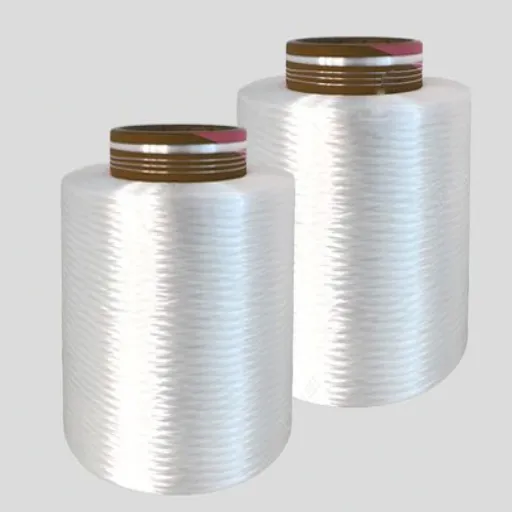
Geotextile yarn is a continuous strand of polymer filaments or slit film used to weave or knit a permeable geosynthetic fabric. It is the load-bearing element in a woven or knitted geotextile, and it’s specified by polymer, linear density, tenacity, elongation, shrinkage, and UV stabilization. Yarn for geotextiles is therefore specified before the fabric is designed.
The term covers four inputs that buyers often mix up:
- Slit-film tape. A polypropylene film is extruded, slit into narrow tapes, and drawn. The flat cross-section gives high strength per unit weight at a low cost.
- Multifilament yarn. Many continuous filaments are bundled into one strand. PP and PET multifilament yarns are the main high-tenacity options for woven geotextiles.
- Monofilament yarn. A single filament is used where a precise, uniform pore size matters, usually in filtration fabrics.
- Staple fiber. Short fibers are carded, laid into a web, and bonded. This is the input for needle-punched and heat-bonded nonwovens. It is fiber, not yarn.
A geotextile is a permeable textile used with soil, rock, or earth as part of a civil engineering project. The yarn is the load-bearing element in a woven or knitted product. In a nonwoven, the fiber web carries the load instead.
That difference shapes everything that follows. If you are a yarn spinner, woven and knitted geotextiles are your market. If you are a fiber producer, nonwovens are. Very few suppliers are strong in both.
A weaving mill in eastern China once approved a high-tenacity PP yarn on tenacity alone. The first lot ran well. The second lot broke repeatedly on the loom, and the finished fabric failed its wide-width elongation check.
Tenacity had stayed inside tolerance. Elongation had drifted by six percentage points.
The mill added elongation and shrinkage to its incoming specification that week. The yarn hadn’t lied. The specification had simply been too thin.
The Five Geotextile Functions That Decide Which Yarn You Need
Every geotextile specification starts with a function. In a geotextile yarn application, the function sets the property that matters, and the property points to a yarn or fiber. The five functions below follow the standard geotextile classification.
| Function | What it does | Critical property | Yarn or fiber implication |
|---|---|---|---|
| Separation | Keeps two soils or materials apart | Tensile strength, puncture resistance | Woven tape or multifilament; needle-punched nonwoven |
| Reinforcement | Carries tensile load in the structure | Modulus, low elongation, creep resistance | High-tenacity PET, woven or warp-knitted |
| Filtration | Lets water pass while retaining soil | Apparent opening size, permeability | Nonwoven or monofilament woven |
| Drainage | Conveys water within the plane | Permittivity, transmissivity | Thick needle-punched nonwoven or composite |
| Protection | Cushions a geomembrane or structure | Puncture, abrasion, mass per area | Heavy nonwoven |
Separation is the most common use. A geotextile sits between a soft subgrade and granular fill, so the yarn needs enough strength and puncture resistance to survive installation.
Reinforcement is the most demanding. The geotextile carries load, so the yarn needs a high modulus, low elongation, and creep resistance under sustained load. High-tenacity polyester yarn is usually the first choice. PP works in short-term or low-stress applications, but it creeps.
Filtration depends on pore size, not tensile strength. The fabric must retain soil while letting water through. A nonwoven with a uniform pore structure is often the best fit, while a monofilament woven gives more precise control over the opening size.
Drainage requires a structure that transmits water in its own plane. A thick needle-punched nonwoven or a geocomposite does this better than a thin woven fabric. Permeability and clogging resistance matter more than yarn strength.
Protection is about cushioning. A heavy nonwoven protects a geomembrane from stones and puncture during backfill. Mass per area and puncture resistance matter more than tenacity.
One geotextile rarely performs all five functions well. That’s why composite systems exist, and why a single “best geotextile yarn” claim is not useful. Find the right yarn for your application with Hebei Lida Textile Co., LTD.
Woven Geotextiles: PP Tape, PP Multifilament, and High-Tenacity PET
Woven geotextiles interlace two sets of yarns, warp and weft, at right angles. The structure gives high tensile strength at low elongation, which is why wovens dominate reinforcement and separation in road, rail, and embankment work.
Slit-film tape yarn
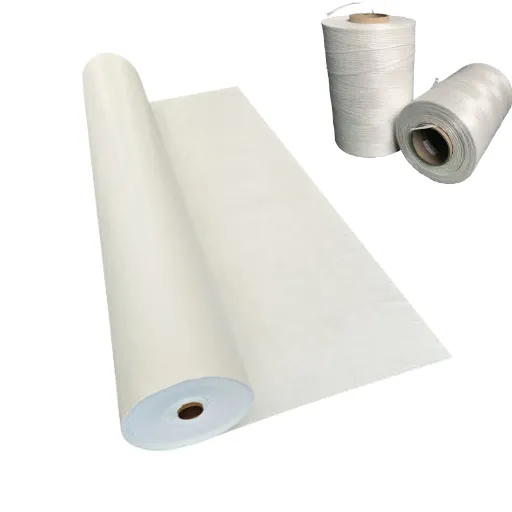
Slit-film tape starts as a polypropylene film. The film is extruded, slit into narrow tapes, and drawn to orient the polymer chains. The result is a flat, strong, low-cost yarn.
Tape is the workhorse of woven geotextiles. It offers high strength per kilogram, resists rot and most chemicals, and weaves easily into wide fabrics. Typical tape yarns sit around 1,000 to 1,500 denier, with tenacity of 5 to 7 g/d. Confirm the grade with the mill.
The weakness is UV. PP tape needs a stabilizer package, usually a hindered amine light stabilizer with carbon black or another UV absorber. A tape that passes a lab tensile test can still chalk and crack after weeks of site exposure if the package is too light.
Multifilament yarn
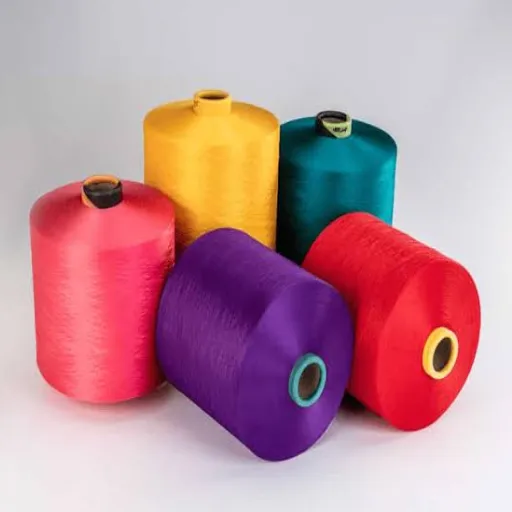
Multifilament yarn bundles many continuous filaments into one strand. High-tenacity PP multifilament is made by spinning and drawing fully oriented yarn (FDY), typically at 5.5 to 7 g/d. High-tenacity PET multifilament is typically 6 to 8 g/d. These are industry-typical ranges; confirm them with production.
Multifilament yarn gives a more flexible, more uniform fabric than tape. It is common in woven geotextiles, geotubes, and geobags, and it takes coatings more evenly, which matters for abrasion and UV performance. Monofilament is the third option, used where a precise pore size matters.
PP versus PET
The table compares polypropylene yarn and high-tenacity polyester yarn on the properties that decide geotextile performance.
| Property | Polypropylene (PP) | Polyester (PET) |
|---|---|---|
| Density | About 0.91 g/cm³, floats | About 1.38 g/cm³, sinks |
| Tenacity | 5 to 7 g/d, high-tenacity grades | 6 to 8 g/d, high-tenacity grades |
| Modulus | Lower | Higher |
| Creep under sustained load | Higher | Lower at moderate temperatures |
| Chemical resistance | Excellent against acids and alkalis | Good, but hydrolyzes in hot alkaline conditions |
| UV sensitivity | Needs a robust stabilizer package | Also needs stabilization, but generally more forgiving |
| Typical use | Drainage, waste containment, coastal works | Reinforcement, retaining walls, geogrids |
The choice is not about which polymer is “better.” It’s about which failure mode you can tolerate.
PP is chemically inert in most soil and waste environments. It resists alkalis and acids, and its low density helps in marine and soft-ground work. Its weaknesses are creep under sustained load and UV sensitivity without a good package.
PET has a higher modulus and better creep behavior at moderate temperatures, which makes it the default for reinforcement. Its weakness is hydrolysis: in hot, alkaline, or long-term wet conditions, it can lose strength over time.
A landfill drainage project once specified PET because of its higher modulus. The design didn’t account for the alkaline leachate and elevated temperature in the sump area.
After two years, the yarn in the exposed section had lost a significant share of its strength. The replacement specification used PP.
The lesson was not that PET is bad. It was that the environment, not the data sheet, decides.
For a deeper look at the yarn side, see our guide to high-tenacity polyester yarn for technical textiles. For the fabric side, our overview of polypropylene woven fabric covers construction and end uses.
Nonwoven Geotextiles: Why Fiber, Not Yarn, Does the Work
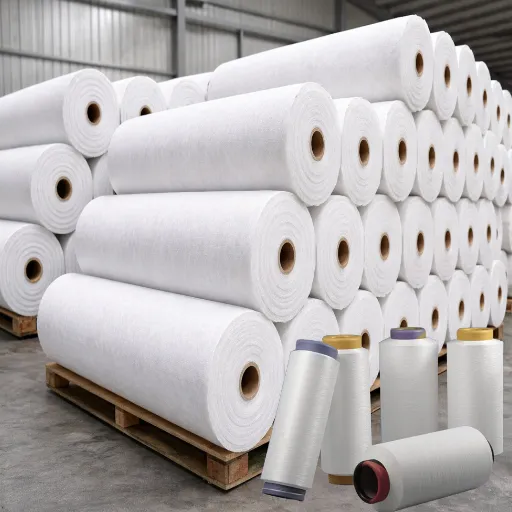
Nonwoven geotextiles are made directly from fibers or continuous filaments. There’s no yarn stage. The web is formed, then bonded mechanically, thermally, or chemically.
This is the largest part of the market by volume. Polaris Market Research puts nonwovens at about 68% in 2024, though definitions vary.
Needle-punched nonwovens
Staple fibers are carded into a web, then barbed needles push fibers through the thickness to entangle them. The result is a thick, permeable fabric with high elongation and uniform pores.
Needle-punched fabrics are the standard choice for filtration, drainage, separation, and protection. They conform to uneven surfaces and resist clogging better than thin wovens.
Spunbond nonwovens
Continuous filaments are extruded, laid into a web, and bonded. Spunbond fabrics are stronger and thinner than needle-punched fabrics at the same weight. They are common in separation, roofing underlay, and erosion control.
Heat-bonded nonwovens
Point or calendar bonding gives a stiffer, denser fabric for applications where dimensional stability matters more than drape.
Fiber specifications that matter
If you buy fiber for nonwoven geotextiles, the data sheet should name:
- linear density in dtex or denier;
- cut length in millimeters;
- crimp level and crimp stability;
- spin finish type and amount;
- UV stabilizer package;
- lot consistency data.
Typical polyester staple fiber for nonwovens runs from about 2 to 12 dtex, with cut lengths around 38 to 64 mm. The exact range depends on the line and the product. Confirm it with the producer.
If you are sourcing fiber rather than yarn, our guide to polyester staple fiber for nonwovens explains the grades and how they are specified. For a fabric-level view of the largest nonwoven geotextile category, see our article on nonwoven polypropylene geotextile fabric.
Knitted, Composite, and Container Systems
Not every geotextile uses a flat woven or nonwoven fabric. Three adjacent systems matter to yarn buyers.
Warp-knitted geogrids are made by knitting high-tenacity PET yarns into a grid, then coating it. The yarn needs high tenacity, low shrinkage, and consistent lots. A weak yarn shows up as a weak junction.
Geotubes, geobags, and geocontainers are large woven PP or PET tubes filled with sand, silt, or sludge. Seam strength, UV resistance, and abrasion matter as much as tenacity.
Drainage composites and erosion control mats combine a geotextile with a geonet, core, or fiber matrix. Yarn is a component, not the whole product.
These systems broaden the market for high-tenacity yarn, but they carry higher qualification barriers. A geotube buyer will ask for seam and UV data, not just a tenacity number.
Explore suitable yarn options for diverse applications with us.
Geotextile Yarn Specifications and Test Methods
A useful yarn specification has six lines. If a data sheet omits any of them, the buyer cannot compare suppliers.
| Line | What to state | Typical range to discuss |
|---|---|---|
| Polymer | PP, PET, or blend; virgin or recycled | Application-dependent |
| Linear density | Denier or dtex | About 1,000 to 1,500 denier for woven geotextiles |
| Tenacity | g/d or cN/tex, with test method | About 5 to 8 g/d for high-tenacity grades |
| Elongation | At break, with test method | About 15 to 25% for high-tenacity grades |
| Shrinkage | Boiling water or hot air, with method | Low shrinkage for geogrid and reinforcement |
| UV package | Stabilizer type and loading; exposure test | Specification-dependent |
The test method matters as much as the number. A tenacity value without a method is not a specification. It is a claim. The Geosynthetic Institute publishes durability and installation-damage guidance behind several of these tests.
Yarn tests versus fabric tests
Yarn properties are measured on the yarn. Geotextile performance is measured on the fabric. The two are related, but they are not interchangeable.
| Test | Standard | What it measures | Why the buyer asks |
|---|---|---|---|
| Yarn tensile | ASTM D2256 | Tenacity and elongation of the yarn | Confirms the input before weaving or knitting |
| Grab tensile | ASTM D4632 | Strength of a fabric sample gripped in the center | Common acceptance test for separation and filtration fabrics |
| Wide-width tensile | ASTM D4595 / ISO 10319 | Tensile strength of a wide fabric strip | Design value for reinforcement |
| CBR puncture | ASTM D6241 | Resistance to static puncture | Installation damage risk |
| Water permeability | ASTM D4491 / ISO 11058 | Permittivity and flow rate | Filtration and drainage design |
| Apparent opening size | ASTM D4751 / ISO 12956 | Pore size retained by the fabric | Soil retention and clogging risk |
| UV resistance | ASTM D4355 / EN 12224 | Strength retained after accelerated exposure | Site exposure and lifespan |
| Abrasion | ASTM D4886 | Resistance to surface wear | Installation and coastal applications |
A yarn supplier can provide ASTM D2256 data, raw material data, and lot certificates. A yarn supplier can’t certify a finished geotextile to AASHTO M288 or EN 13249 to EN 13257. Those standards apply to the finished product and the application. The fabric producer holds that responsibility.
That boundary isn’t a weakness. It’s useful. It tells the buyer how to read a geotextile specification in two layers: yarn evidence from one supplier, fabric evidence from another. It also prevents a yarn data sheet from being passed off as a fabric certificate.
We supply yarn and fiber. We do not weave, needle-punch, or coat geotextiles.
For process and quality context, see our article on industrial yarn manufacturing and quality control.
Matching Geotextile Yarn to Application
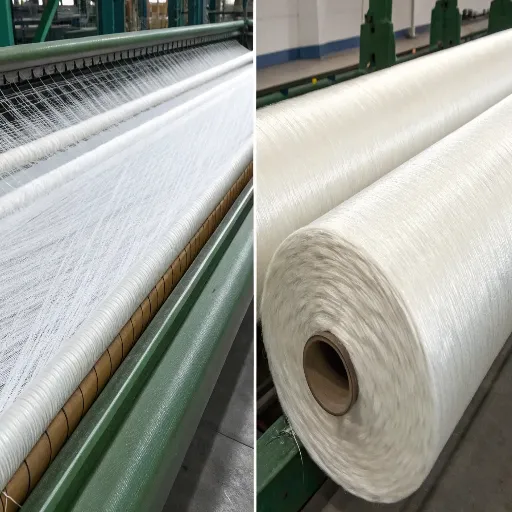
The table below maps geotextile yarn applications to a starting specification. It’s not a design. The geotechnical engineer sets the required strength, filtration, and durability values. The yarn must meet them.
| Application | Primary function | Polymer usually considered | Form | Property priority |
|---|---|---|---|---|
| Road subgrade separation | Separation | PP or PET | Woven tape or multifilament; nonwoven | Grab tensile, CBR puncture |
| Railway stabilization | Reinforcement and separation | PET | Woven | Wide-width tensile, low elongation |
| Drainage trench and pipe wrap | Filtration and drainage | PP | Nonwoven | Permeability, AOS |
| Landfill containment | Separation and protection | PP | Nonwoven or woven | Chemical resistance, UV |
| Coastal protection | Reinforcement and containment | PP or PET | Woven geotube or geobag | Tenacity, seam strength, UV |
| Retaining wall and slope | Reinforcement | PET | Woven or warp-knitted | Modulus, creep resistance |
| Erosion control | Separation and protection | PP | Nonwoven | UV, installation damage |
| Roofing underlay | Separation and protection | PP or PET | Spunbond nonwoven | Tear strength, UV |
Three rules follow from the table. Match the polymer to the environment before the strength target, because a stronger yarn that hydrolyzes is not stronger for long. Specify the installation damage test that fits the site, because a fabric that survives a lab tensile test can still be punctured by angular aggregate. Keep the filtration design separate from the yarn purchase, because AOS and permeability are fabric properties that the yarn enables but doesn’t replace. Talk to Hebei Lida Textile Co., LTD about your yarn application.
Sourcing Geotextile Yarn: A Buyer’s Checklist
A geotextile yarn supplier should be able to answer eight questions before you place a trial order. The same eight questions apply to every geotextile yarn application, from a road subgrade to a coastal geotube.
- Which application and standard are you supplying against? The answer should name the function and the finished-product standard, not just “geotextile.”
- What is the polymer grade? Virgin, recycled, or blended. If recycled, ask for the certification and the feedstock controls.
- What are the tenacity and elongation, and by which method? ASTM D2256 is the common yarn method. Ask for the report, not a summary.
- What is the UV package, and what exposure test supports it? “UV stabilized” is not enough. Ask for the stabilizer type, loading, and ASTM D4355 or EN 12224 data.
- How consistent is the lot? Ask for tenacity, elongation, and shrinkage ranges across the last several lots. A single certificate proves one lot, not a supply.
- Can you provide a COA and traceability? The certificate should tie the shipment to a lot, a production date, and a raw-material batch.
- What are the packaging, MOQ, and lead time? Package format affects weaving and knitting efficiency. MOQ affects trial cost.
- What is the change-notification process? A supplier that changes polymer, stabilizer, or finish without notice creates a hidden qualification risk.
A procurement manager once asked a supplier for the UV package details behind a “UV stabilized” claim. The reply named a generic additive at a loading well below the level needed for the exposure period. The supplier’s own accelerated weathering data showed less than half the required strength retention.
The buyer switched suppliers before the first production run. The question cost one email. The failure would have cost a project.
Frequently Asked Questions
What yarn is used in geotextiles?
Geotextile yarn applications fall into two families. Woven geotextiles use high-tenacity PP tape or multifilament yarn, high-tenacity PET multifilament, or monofilament. Nonwovens use PP or PET staple fiber or continuous filaments instead of yarn. The function and environment decide which.
Is polypropylene or polyester better for geotextiles?
Neither is universally better. PP resists chemicals and floats, which suits drainage, waste containment, and marine work. PET has a higher modulus and better creep behavior, which suits reinforcement. PET is vulnerable to hydrolysis in hot alkaline conditions.
Do nonwoven geotextiles use yarn?
No. Nonwovens are made directly from staple fiber or continuous filaments bonded into a web. There’s no yarn-spinning or weaving stage, which is why yarn and fiber suppliers serve different parts of the market.
How long does geotextile yarn last?
It depends on the polymer, UV package, soil chemistry, load, and exposure. There’s no single lifespan. A buried PP geotextile in neutral soil can last decades; an exposed PET fabric in hot alkaline conditions can lose strength much faster.
Can recycled polyester be used in geotextiles?
Yes, in many applications, provided the recycled yarn is qualified. Recycled feedstock can change tenacity, shrinkage, color, and hydrolysis behavior. A recycled-content certificate confirms the source, not the performance. Test the yarn and the fabric against the same specification.
What is the minimum order for geotextile yarn?
It depends on the polymer, the denier, the UV package, and whether the yarn is a stock grade or a custom run. Trial orders are usually smaller than production orders. Ask for the trial quantity and the lead time together, because a low MOQ with a long lead time can still stall a project.
What drives the price of geotextile yarn?
Polymer grade, denier, UV package, lot size, testing, and freight. UV-stabilized and low-shrinkage grades carry a premium, and trial quantities cost more per kilogram than container loads. Ask for a price against a defined specification, not a generic grade.
The Yarn Is the First Specification
Geotextile yarn applications are not a list of products. They are a series of trade-offs between strength, elongation, chemical resistance, UV exposure, and cost.
Five points to carry into your next project:
- Confirm whether the product uses yarn or fiber before you request a quote.
- Start with the function, then choose the polymer, then set the yarn properties.
- Treat PP and PET as different tools, not as grades of the same tool.
- Ask for the test method behind every number, especially tenacity, elongation, and UV.
- Keep the yarn specification and the finished-product standard separate, and make each supplier own their part.
If you are sourcing yarn for geotextiles, or fiber for nonwovens, send your application and target properties to our team. We will review the specification against our yarn and fiber range and tell you plainly what fits. Start a geotextile yarn review.
The best geotextile suppliers are not the ones with the longest product list. They are the ones who can explain why a yarn belongs in a given ground condition, and prove it lot after lot.