




Upholstery yarn colorfastness isn’t one grade or one test. It’s a family of separate tests, and a yarn that scores beautifully on one can fail badly on another. In practice, three numbers decide most outcomes: the lightfastness grade, the dry crocking grade, and the wet crocking grade. Buyers who specify only one of the three are the ones who end up re-covering furniture early.
Ask Maya about that. Maya is a product developer for a mid-sized furniture brand, and in early 2025 she signed off a pale sand colorway that her supplier’s spec sheet listed as “grade 4 colorfastness.” Everyone approved it in one meeting.
Eighteen months later, the cushions that sat near a south-facing window had gone two shades paler, and two armchairs had picked up a grey-blue haze where people rested their heads. The fabric had passed its test. It had simply passed a test nobody had defined.
That is the trap this guide closes. You’ll learn what the five colorfastness tests actually measure, how to read the two rating scales without confusing them, why crocking ruins pale upholstery more often than fading does, and how to write colorfastness into a yarn order so the color you approve is the color your customer keeps.
Key Takeaways
- Colorfastness is a family of tests, not a single grade. Light, crocking, washing, perspiration, and water are each measured separately on their own scale.
- Two scales get confused constantly: the Blue Wool scale runs 1 to 8 for light, while the Grey Scale runs 1 to 5 for color change and dye transfer. A “4” is not the same claim on both.
- Crocking, the transfer of dye through rubbing, is the failure most spec sheets leave out, and it is the most likely to ruin a light colorway in a residential setting.
- The ACT minimums for contract woven upholstery are a dry crocking grade of 4, a wet crocking grade of 3, and a lightfastness grade of 3 at 1,000 hours.
- Test hours are not years of service. Lightfastness should also be retested after any flame-retardant finish, because heat can shift the dye.
What Upholstery Yarn Colorfastness Actually Means
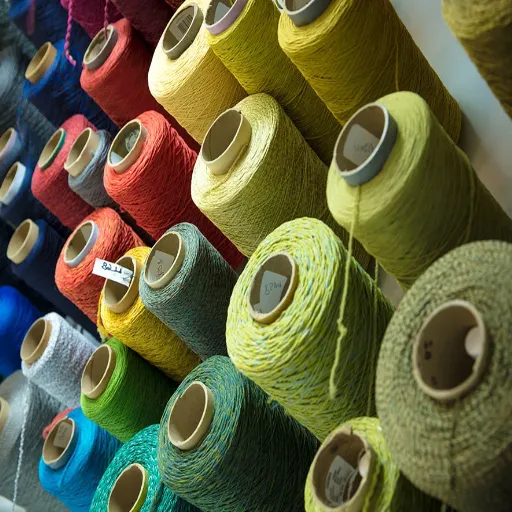
Upholstery yarn colorfastness is a yarn’s ability to hold its color when exposed to light, rubbing, washing, perspiration, and water. ISO and UK documentation spell it colourfastness; the tests are identical.
It isn’t a single test or a single number. Each of those exposures is measured separately, on its own scale. A yarn can therefore be outstanding against light and poor against rubbing, and both statements can be true at once.
This matters because the phrase “colorfast yarn” tells you almost nothing on its own. It’s a category, not a score. When a supplier promises colorfastness without naming which test and which standard, you have no way to compare two quotes or to know whether the yarn suits a sunny living room or a hotel lobby.
Think of it the way you would think about strength. Nobody asks whether a material is “strong” without saying strong against what: pulling, bending, heat, or fatigue. Color is no different. Light, friction, moisture, and detergent each attack a dyed fiber by a different route, so each gets its own test, its own apparatus, and its own grade.
The good news is that only a handful of those tests matter for upholstery, and the vocabulary is smaller than it looks. Once you know which five to ask for, and which two scales to keep apart, the rest of the specification falls into place. If you are still choosing between fibers, the broader framework in our yarn for upholstery guide sets the context; this article handles color.
Want to see this applied to a real colorway? Send us your reference and we will tell you which colorfastness grades it needs. Request a specification review.
The Five Colorfastness Tests, and What Each One Protects
Upholstery yarn colorfastness is usually assessed through five separate tests. Each answers a different question, and each carries its own pass mark. The table below is the one to keep open when you review a spec sheet.
| Test | Standard | Scale | Contract Minimum | What It Protects |
|---|---|---|---|---|
| Colorfastness to light (lightfastness) | ISO 105-B02 / AATCC 16, 169 | Blue Wool 1 to 8; AATCC Class 1 to 5 | Grade 3 at 1,000 hours (ACT) | Color near windows and in bright rooms |
| Colorfastness to crocking | ISO 105-X12 / AATCC 8 | Grade 1 to 5 | Grade 4 dry, Grade 3 wet (ACT) | Clothes, skin, and other fabrics |
| Colorfastness to washing | ISO 105-C06 | Grey Scale 1 to 5 | Varies by contract | Color loss during cleaning |
| Colorfastness to perspiration | ISO 105-E04 | Grey Scale 1 to 5 | Varies by contract | Dye transfer to skin and headrests |
| Colorfastness to water | ISO 105-E01 | Grey Scale 1 to 5 | Varies by contract | Spotting and bleeding from spills |
Two details in that table cause more confusion than everything else combined.
First, the scales aren’t interchangeable. Blue Wool is graded 1 to 8 because it uses eight physical reference samples. The Grey Scale is graded 1 to 5, and it is used for two different things: change in color and staining of an adjacent fabric. AATCC lightfastness reports a Class from 1 to 5.
Second, color change and color transfer are different failures. Washing, perspiration, and water tests ask whether the fabric’s own color shifted. Crocking and perspiration also ask whether color moved onto something else. A dark colorway can score well on change and poorly on transfer at the same time, which is exactly why pale upholstery and dark clothing are such an awkward pair.
Get these two distinctions right, and most spec-sheet arguments disappear. Get them wrong, and you can approve a “grade 4” that never addressed your actual risk.
Lightfastness and the Blue Wool Scale: Reading the Number Correctly
Lightfastness is the colorfastness of a dyed textile to light, graded by exposing specimens under a xenon arc lamp beside eight blue-dyed wool references. The reference that fades at the same rate as your sample sets the grade, so a Blue Wool score of 6 means your color behaves like reference number six under identical exposure.
The scale runs 1 to 8, and the step between grades is bigger than it looks. Each increase of one grade represents roughly double the lightfastness, meaning the same amount of fading takes about twice as long. A grade 6 is not slightly better than a grade 5. It is a different order of protection.
In plain terms: grade 1 fades in hours of direct sun, grade 4 is the floor most textiles need to avoid a care warning, grade 5 is the usual target for general domestic use, and grades 6 to 8 belong to fabrics facing sustained, severe light. Published application targets translate that into room conditions.
| Application | Target Lightfastness |
|---|---|
| Residential, moderate natural light | Grade 5 or higher |
| South-facing rooms, large glazed areas | Grade 6 or higher |
| Contract interiors (hotels, offices, restaurants) | Grade 5 minimum, 6 preferred |
| Glazed atria, lobbies, skylit spaces | Grade 6 to 7 |
| Marine and semi-outdoor seating | Grade 7 to 8 |
Beneath all of that sits a trap that catches experienced buyers. AATCC 16 and AATCC 169 report a Class from 1 to 5, which isn’t the Blue Wool scale. When one lab returns “Class 4” and another returns “Grade 4,” the two documents are describing different measurements. Neither number is wrong, but comparing them directly is.
This is why a specification should always name the standard alongside the grade. “Grade 5” alone is unverifiable. “Grade 5 to ISO 105-B02” is a claim a supplier can be held to. The Kothea light fastness and Blue Wool guide walks through the same scale with a designer’s framing, and the ISO 105-B02 method summary from dabedan explains how the test is actually run.
Fiber choice sets the ceiling. Silk is the most photosensitive of the common fibers, followed by cotton and linen with standard reactive dyes. Wool and mohair typically reach grades 5 to 6.
Polyester reaches 6 to 7, and solution-dyed polyester sits at the top of the range because the pigment is inside the fiber rather than on it.
Where High Colorfastness Polyester Yarn Fits
If light resistance is the deciding factor, a high colorfastness polyester yarn is the cheapest reliable route to grade 6 or 7. It is also the fiber most likely to hold that grade across a full production run, because the pigment sits inside the polymer instead of on the surface. The catch is the dye route, not the polymer.
Matching fiber to exposure is a separate decision, and our fiber-by-fiber comparison covers the rest.
Crocking: The Colorfastness Failure Nobody Specifies
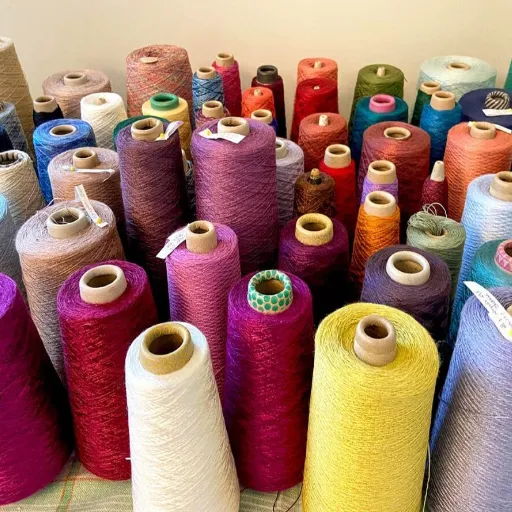
Crocking is the transfer of dye from a yarn or fabric onto another surface through rubbing. Of all the upholstery yarn colorfastness tests, it’s the one most often missing from a spec sheet, and the one most likely to ruin a pale colorway in a home.
Dry Crocking vs. Wet Crocking
Crocking is tested under both dry and wet conditions, and the results are reported separately. AATCC 8 rubs a standard white cotton cloth against the sample for ten back-and-forth cycles at one cycle per second and 9 newtons of force, then rates the staining against a chart where grade 5 means no transfer and grade 1 means heavy transfer.
Wet crocking is almost always the harsher number, and the reason is mechanical. Water breaks some of the bonds holding dye to the fiber, swells the fiber, and mobilizes dye that never fully fixed during dyeing. All three effects increase transfer at once.
That is why the ACT Voluntary Wet & Dry Crocking Guideline sets the contract minimum at grade 4 dry but only grade 3 wet. The lower wet bar isn’t a concession to laziness; it reflects how much harder the test is.
For hospitality and heavy residential use, asking for grade 4 on both is the safer target. And always ask for both numbers. A supplier who reports only dry crocking has told you half a story, and it’s the easier half.
Reverse Crocking: When the Dye Comes In
Crocking is usually imagined as your fabric losing color. The more common complaint in real homes runs the other direction.
Tomás manages banquettes and lounge seating for a boutique hotel group, and in the spring of 2025 he refitted a lobby with pale cream linen cushions. The fabric spec was strong: high lightfastness, solid abrasion, good dry crocking.
Within four months the seat backs had picked up faint blue-grey shadows. Nobody had spilled anything. The dye was arriving, not leaving, transferred from guests’ new indigo denim in a single sitting.
The mechanism is well understood. Indigo and sulfur dyes, the workhorses of denim, sit on the surface of the cotton rather than bonding deeply into it, so they rub off readily onto whatever they touch. This is called reverse crocking, and pale and white velvets are its favorite victims. The Qualitest explanation of dry versus wet crocking documents the same pattern in automotive interiors, where dark-wash jeans have marked white leather for years.
If your colorway is light, your crocking question is not only about your yarn. It is also about who will sit on it. The full crocking grade picture, including which colorways carry the highest risk, is set out in the Kothea specifier’s guide to color fastness and crocking.
Why Some Colors and Fibers Fail First
Two rules explain most color failures, and they point in opposite directions.
Dark shades usually score better on lightfastness. A deep navy or burgundy has to lose a great deal of color before the change becomes visible, while a pale sand shifts perceptibly after very little. This is why dark colorways often post impressive Blue Wool grades, and why a light neutral can look tired long before its rating suggests it should.
Dark shades carry the highest crocking risk. That same heavy dye load is what makes them transfer. Deep saturated reds, navies, charcoals, and dark green are the classic offenders, and the risk climbs further on velvet, where a pile surface multiplies the friction points. Dark shades win on light and lose on rub. Fewer spec sheets acknowledge both halves.
The dye chemistry behind the color matters too. Reactive dyes, which dominate cellulosic fibers, tend to show moderate lightfastness and real crocking susceptibility, and their crocking performance can drop after a flame-retardant treatment. Vat dyes are the most stable class on both counts, which is one reason they cost more. Our guide to matching dye class to fiber covers the pairing in depth; here the point is simply that “we used a good dye” isn’t a specification.
Flame retardancy deserves its own caution. Back-coating, the most common route to Crib 5 compliance, generally doesn’t affect the face fabric’s colorfastness when it is applied correctly and stays off the face. But some treatments expose the yarn to enough heat to shift the dye, and heat is exactly what lightfastness is measuring the cost of. Retest lightfastness after any finishing treatment, and treat the pre-finish result as provisional.
Natural fibers and synthetic fibers part company on light. Our guide to how wool, cotton, and linen behave covers the natural side, while our polyester case for upholstery makes the argument for the fiber that holds high colorfastness grades most reliably and cheaply, provided the dye method is right.
Dye Method and Colorfastness: What Changes and What Doesn’t
How the color gets into the fiber sets the ceiling on colorfastness before any test is run. Solution dyeing mixes pigment into the polymer before the fiber is extruded, so the color runs through the fiber rather than sitting on its surface. Yarn dyeing colors the yarn before weaving, which adds pattern flexibility and respectable lightfastness. Piece dyeing colors the finished fabric, which is the fastest and most economical route and the one most prone to fading.
The practical consequence is that two fabrics made from the same polymer can have very different colorfastness, and the dye method, not the fiber, drew the line between them. Our guide to how dye method decides outdoor fading works through that comparison for sun-exposed seating, so we won’t repeat it here. Indoors, the same logic applies with less drama: solution dyeing still gives the tightest batch-to-batch consistency, which matters when you are matching dye lots across a production run.
One clarification worth making, because it circulates as a rumor. A high colorfastness polyester yarn isn’t automatically solution-dyed, and a solution-dyed yarn isn’t automatically lightfast at every grade. Method and grade are two different claims. Ask for both, and ask which standard the grade was measured against.
How to Spec Upholstery Yarn Colorfastness Into an Order
This is the section to copy. A colorfastness requirement is only enforceable if it names the test, the scale, the grade, and the colorway it applies to. Replace vague language with a block like this on your next purchase order.
Colorfastness Requirement
- Fiber and blend: [e.g. 100% solution-dyed polyester]
- Colorway reference: [Pantone TCX number or approved physical swatch]
- Lightfastness: Grade [X] to ISO 105-B02, tested at [X] hours
- Crocking, dry: Grade [X] to AATCC 8
- Crocking, wet: Grade [X] to AATCC 8
- Washing and perspiration: Grade [X] to ISO 105-C06 and ISO 105-E04, where applicable
- Approved testing laboratory: [name]
- Flame retardancy: [treatment], with lightfastness retested after finishing
- Report required per colorway, not per fabric range
Three habits make that block work:
- State the standard, not just the grade.
- Separate dry and wet crocking, so neither can be quietly dropped.
- Confirm the result for the specific colorway you are buying, because a grade earned by a mid-tone beige proves nothing about the deep teal two rows down on the same card.
One final caution on the paperwork: fabric grades sold as A, B, or C are price and selection tiers. They carry no performance meaning at all. A modestly priced fabric can hold stronger colorfastness ratings than a premium one, which is why the requirement block matters more than the grade letter. When you are ready to build a collection around a defined color target, our guide to custom yarn for upholstery walks through sampling, lab dips, and color approval.
How to Evaluate a Colorfastness Claim
Even a complete test report has limits, and knowing them protects you.
Test hours are not years of service. There’s no reliable conversion between exposure hours under a xenon arc lamp and the calendar years a sofa will hold its color, because real rooms differ in latitude, orientation, glazing, and blind use. A lab result is a comparison tool, not a lifespan forecast.
ISO 105-B02 doesn’t model UV-filtering glazing. Low-emissivity window glass blocks a meaningful share of the ultraviolet that fades dye, so a bright modern room can be gentler than the test implies. It also doesn’t account for the cleaning products a facility actually uses.
Ravi learned that the expensive way. Ravi specifies seating for a contract furniture manufacturer, and in 2024 he placed a large order for a hotel refurbishment on the strength of a lightfastness result that passed comfortably. The finish shop then applied a back-coat for fire compliance. Nobody retested.
Six months into the installation, the deep teal bolsters along a glazed corridor had shifted visibly, and Ravi spent the winter negotiating replacements once the lab confirmed that the finishing step, not the dye, had moved the number. The same yarn passed twice and failed once, because only two of the three states were tested.
So read a report the way a skeptic would:
- Check that lightfastness names a standard and an exposure time.
- Check that crocking is reported dry and wet.
- Check which colorway was tested, and by which lab.
Then ask the two questions that expose most weak submissions: was anything applied after the test, and does the grade apply to my color or to the range average?
Frequently Asked Questions
What is colorfastness in upholstery yarn?
Colorfastness in upholstery yarn is the yarn’s ability to retain its color when exposed to light, rubbing, washing, perspiration, and water. Each exposure is tested separately and graded on its own scale, so a yarn can perform well on one and poorly on another.
What is the difference between colorfastness and lightfastness?
Colorfastness is the umbrella term covering resistance to every color-affecting exposure. Lightfastness is one specific member of that family, measuring resistance to light alone and graded on the Blue Wool scale from 1 to 8. A yarn’s lightfastness grade says nothing about its crocking or washing performance.
What is a good lightfastness rating for upholstery fabric?
Grade 5 or higher suits general domestic use, grade 6 or higher is safer in south-facing or heavily glazed rooms, and contract interiors typically require grade 5 as a minimum with grade 6 preferred. Outdoor and marine seating needs grade 7 to 8.
What does the blue wool scale measure?
The blue wool scale measures colorfastness to light. Eight blue-dyed wool references, numbered 1 to 8, each require roughly twice the exposure of the one below to show the same fading. A fabric’s grade is the reference that fades at the same rate as the sample.
What is crocking in upholstery fabric?
Crocking is the transfer of dye from fabric onto another surface through rubbing. It is graded 1 to 5, where 5 means no transfer. It is tested under both dry and wet conditions, and wet crocking is typically worse because moisture breaks dye-fiber bonds and mobilizes unfixed dye.
What is the difference between wet and dry crocking?
Dry crocking measures dye transfer from mechanical friction alone. Wet crocking repeats the test with a dampened cloth, which loosens dye, swells the fiber, and increases transfer. Most contract specifications require grade 4 dry and grade 3 wet, and hospitality buyers often ask for grade 4 on both.
Which upholstery fiber fades least?
Solution-dyed polyester and solution-dyed acrylic hold color longest, with polyester reaching grade 6 to 7 and solution-dyed acrylic reaching grade 7 to 8. Silk fades most readily, and cotton and linen sit in the middle with standard reactive dyes.
Do dark colors fade faster?
No. Dark colorways often rate higher on lightfastness because more color must be lost before a change becomes visible. Their real weakness is crocking: the heavy dye load that deepens the shade also makes transfer more likely.
How do I stop my sofa fabric from fading?
Specify a lightfastness grade that matches the room’s exposure, choose a fiber with a naturally high ceiling, and prefer solution dyeing where the color runs through the fiber. Position seating away from unshaded glazing, and use blinds during the strongest daylight hours.
Does flame-retardant treatment affect colorfastness?
It can. Back-coating usually leaves face colorfastness intact when applied correctly, but heat-intensive treatments can shift the dye. Ask for lightfastness to be retested after finishing, and treat any earlier result as provisional.
Color That Survives the Room It Lives In
Upholstery yarn colorfastness comes down to five short ideas. Colorfastness is a family of tests, not one grade. The Blue Wool scale runs 1 to 8 for light while the Grey Scale runs 1 to 5 for change and transfer, and the two can’t be compared.
Crocking is the test most often left off a spec sheet and the one most likely to spoil a pale colorway. Dark shades resist light but transfer easily, and a test result means nothing if no one retests after finishing.
Put those ideas into a written requirement, name the standard beside every grade, and confirm the number for your exact colorway. That is the difference between a yarn that passes a test and a yarn that passes the room.
If you want the second kind, talk to our team about a colorfastness specification built around your fiber, your color, and your test targets. We will quote against your requirement block and supply the test data to prove it.