
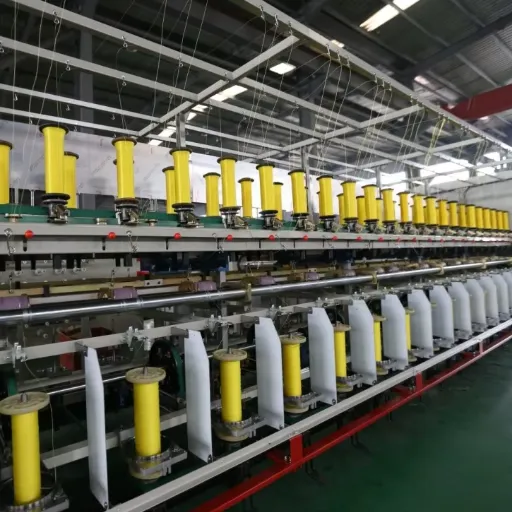


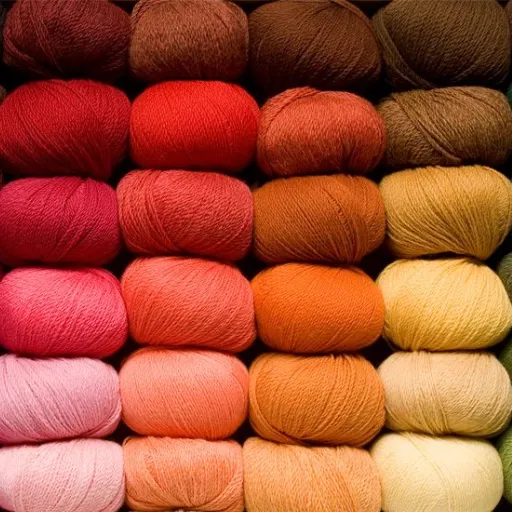
Drawing and roving yarn production turns a thick, untwisted carded sliver into a thin strand called roving, ready for spinning. The draw frame combines and evens several slivers into one uniform strand, and the roving frame thins that strand further and adds a light protective twist.
Here is the part most buyers miss: two machines they never see quietly decide how even, how strong, and how expensive their yarn is, and the work happens before the yarn reaches the spinning machine at all.
If you’re a fashion designer, a home textile brand, or an industrial buyer, you’ve probably chosen yarn by count, twist, and color while never asking how the sliver was prepared. That’s a missed opportunity. By the end of this guide, you’ll understand what drawing and roving actually do, how they decide your yarn’s quality and cost, why ring-spun yarn differs from rotor-spun yarn, and what to ask any supplier to verify a clean preparation process.
Key Takeaways
- Drawing combines 6 to 8 carded slivers and evens them, and it contributes less than 5 percent of production cost while having an outsized impact on yarn evenness.
- Roving is the final preparation step: it thins the drawn sliver and adds a deliberately light twist so the strand can reach the spinning frame without breaking.
- Evenness, strength, and thick/thin places are largely decided at drawing and roving, before spinning begins.
- Ring spinning needs roving, but rotor and air-jet spinning skip it, which is part of why ring-spun yarn costs more and why the two yarns behave differently.
- A good supplier can show you evenness data, tell you how many drawing passages they run, and explain how roving weight is set for your target count.
What Is Drawing in Yarn Production?
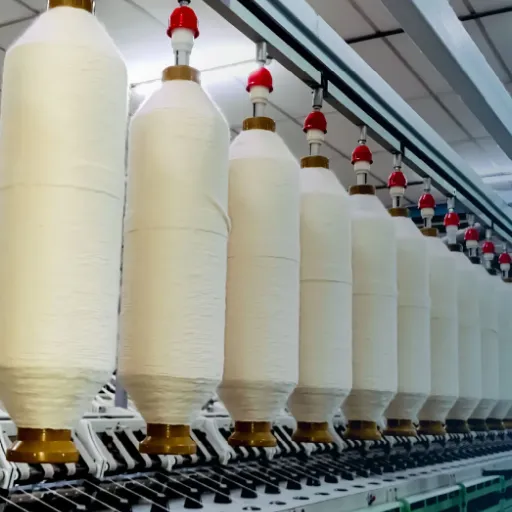
Drawing is the stage where several carded slivers are combined and stretched together on a draw frame to improve evenness, straighten fibers, and create a uniform strand for the next step. The draw frame in yarn production sits after carding, and after combing if the yarn is combed, and before roving. The National Cotton Council’s field-to-fabric guide places drawing squarely between carding and spinning in the standard cotton yarn production process.
Here is the surprising part about drawing: it’s cheap, but it matters enormously. Drawing typically accounts for less than 5 percent of yarn production costs, yet it has an outsized influence on quality, especially evenness. A fault created at the draw frame doesn’t stay at the draw frame. It flows through the roving and into every downstream yarn.
Connect with us for advanced yarn manufacturing and flexible production solutions.
At a glance, the two stages are easy to confuse. This table keeps them straight:
| Step | Machine | What It Does | Input | Output | Twist |
|---|---|---|---|---|---|
| Drawing | Draw frame | Doubles and drafts slivers to even and align fibers | 6-8 carded slivers | Uniform drawn sliver | None |
| Roving | Roving frame (speed / flyer / simplex) | Drafts the sliver thinner and adds a protective twist | Drawn sliver | Roving on bobbins | Light, protective |
Doubling vs. Drafting: How Evenness Is Won
Drafting and doubling in yarn production happen at the same time inside a draw frame, and they pull in opposite directions.
Doubling is the act of feeding several slivers together, usually 6 to 8, and combining them into one. Because thick spots in one sliver tend to line up beside thin spots in another, doubling averages out irregularities. Drafting is the act of stretching the combined strand between pairs of rollers running at increasing speeds, which thins it and straightens the fibers.
Drafting also adds a little irregularity of its own, through what mills call drafting waves. So a good drawing setup is a balance. Textile process research shows that typical mills run 6 to 8 doublings across 2 draw frame passages, and studies of cotton-polyester blend slivers found the optimum near 6 doublings and 2 passages, with measurable evenness gains at each extra passage. Let us help you develop dependable yarn products with efficient manufacturing processes.
Drawing Passages and Fiber Alignment
Drawing does more than smooth out thickness. Each passage pulls the fibers straighter and lays them more parallel, which gives the yarn strength when twist is later added. That’s why drawing is often called the stage that makes spinning possible.
The draft is increased gradually on purpose. A freshly carded sliver is thick and the fibers are still tangled, so the first passage can’t draft too aggressively. Later passages can take more draft because the fibers are already more aligned. This step-by-step straightening is why two passages are so common: one alone can’t do the whole job without damaging the sliver.
Autolevellers and Modern Draw Frames
Modern draw frames have one more tool: the autoleveller. An autoleveller continuously measures the weight per unit length of the sliver and corrects it in real time, catching irregularities that doubling alone can’t remove. This is a major quality step forward.
Leading equipment makers like Rieter have built autoleveller draw frames that run at delivery speeds up to around 1,200 meters per minute, with sensor systems that flag faulty sliver as it’s produced. If you want consistency across a large order, an autoleveller-equipped draw frame is one of the most valuable details a mill can have.
[Want to see how each production stage fits together? Start with the full yarn production process guide and jump back to carding and combing for what happens right before drawing.]
What Is Roving in Yarn Manufacturing?
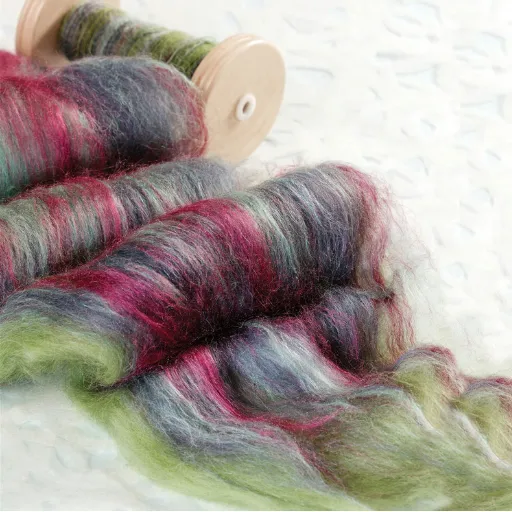
The roving process in yarn manufacturing is the final preparation step before spinning, where the drawn sliver is drafted thinner and given a light protective twist, then wound onto bobbins. The machine that does this is the roving frame, also called the speed frame, the flyer frame, or the simplex machine, and Textile Learner’s roving frame guide describes its four jobs: draft, twist, wind, and build a uniform package.
Why does this step exist at all? Because the drawn sliver is still far too thick to spin directly. A sliver must be attenuated somewhere between 50 and 400 times to reach the fineness of a typical yarn, and a spinning frame cannot handle that much draft alone.
The roving frame shares the burden. In the 1950s, mills experimented with spinning slivers directly using very large drafts, and yarn quality fell apart, so the roving stage stayed.
Sliver vs. Roving vs. Yarn: What’s the Difference?
The three names confuse a lot of buyers, so here’s the plain-English version. The journey is sliver to roving to yarn, and each step makes the strand thinner and stronger.
| Strand | Where It Comes From | Twist | Strength | Purpose |
|---|---|---|---|---|
| Sliver | Card and draw frame | None | Fragile, pulls apart by hand | Thick rope being prepared |
| Roving | Roving frame | Light protective twist | Cohesive enough to handle | Final input to spinning |
| Yarn | Spinning frame | Full twist | Strong finished product | Weaving and knitting |
Why Roving Twist Is Deliberately Light
Roving twist is a balancing act, and the twist is kept low on purpose. It only needs to give the roving enough cohesion to survive winding, unwinding, and the trip to the spinning frame.
If the twist is too high, the roving becomes hard to draft at the spinning frame, which causes thick spots and drafting problems in the finished yarn. If the twist is too low, the roving breaks apart.
Modern roving frames apply roughly 18 to 80 twists per meter, with total drafts in the 4-to-16 range, and flyer speeds reaching about 1,400 rpm. The numbers matter less than the principle: the roving must be strong enough to handle, yet loose enough to be drafted again.
Roving Weight and Yarn Count
The weight of the roving, expressed as its hank or linear density, is set to match the target yarn count. A finer yarn needs a finer roving, because the spinning frame can only do part of the thinning.
This is where custom production gets interesting. When you order a specific count, the mill sets the roving weight and the draft split between the roving frame and the spinning frame to hit it. Two mills making the same nominal count can make very different choices here, and the differences show up in evenness and strength.
How Drawing and Roving Yarn Production Affects Yarn Quality
If you want to know why one yarn looks cleaner and knits more evenly than another at the same count, the answer is often in the drawing and roving, not in the spinning machine.
Evenness is decided here. Thick places, thin places, slubs, and short-term variation largely trace back to how well the sliver and roving were prepared. The reason is simple geometry: one draw frame feeds roughly two speed frames, and each speed frame feeds roughly three ring frames. A single fault at the draw frame spreads through about six ring frames worth of yarn, so a clean draw frame is one of the cheapest quality insurance policies a mill can buy.
When Anna, a knitwear brand owner, switched suppliers to save money last year, she noticed her new fabric had more slubs and striped badly in dyeing. The count and twist were identical to her old yarn. What changed was invisible: the new mill ran one drawing passage with no autoleveller, so its sliver was less even.
The surface defects she saw were drafted into the yarn before spinning ever started. When she asked her supplier for evenness data, the numbers confirmed it, and she switched back.
The Yarn Properties Buyers Can Actually See
- Evenness and appearance: surface slubs, thin spots, and bars in knit or woven fabric trace straight back to sliver preparation.
- Strength and breakage: better fiber alignment from drawing means fewer weak points, both in processing and in the finished product.
- Uniformity in dyeing: an even yarn takes dye evenly. Stripes and patchy color are often a preparation problem, not a dyeing problem.
- Consistency across lots: an autolevelled draw frame keeps sliver weight steady, which keeps every batch close to the target count.
What Good Preparation Looks Like in a Test Report
A supplier who controls drawing and roving well can prove it. Ask for evenness data, reported as CVm percent, and imperfections, reported as IPI or thick/thin places per thousand meters. Lower CVm means a more even yarn. The same data appears on every serious yarn test report, and our guide to yarn quality control explains how to read it line by line.
Ring-Spun vs. Rotor- and Air-Jet-Spun: When Roving Is Skipped
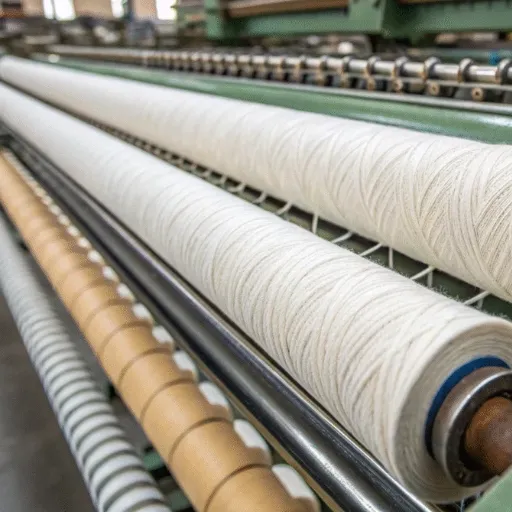
Not every spinning system needs a roving frame, and knowing which one your yarn came from tells you a lot about its cost and character.
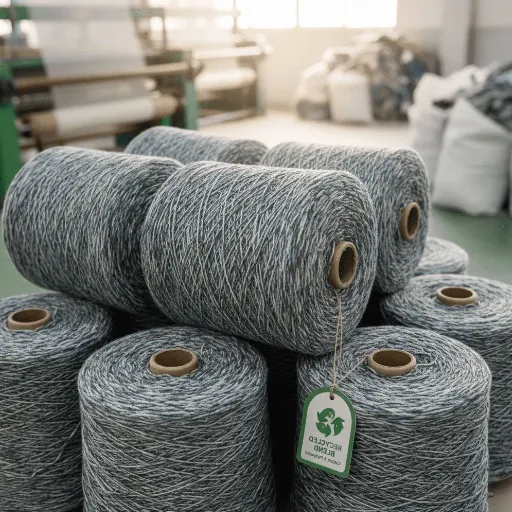
Ring spinning, the classic method, needs roving. The roving frame, along with the extra machines, floor space, energy, and labor it takes, is one reason ring-spun yarn costs more. It also produces the strongest, most even, most versatile yarn, which is why premium apparel and home textiles still use it.
Rotor spinning, also called open-end spinning, spins yarn directly from the drawn sliver. It skips the roving frame entirely, runs several times faster, and uses less energy, which makes it cheaper. The trade-off is that rotor yarn is slightly weaker, is limited to coarser counts, and has a different, harsher feel. Air-jet and vortex spinning also bypass roving and run fastest of all, but they need high-quality, longer-staple fiber and produce a stiffer yarn.
For a buyer, the practical question is whether the yarn you’re quoted is ring-spun or rotor-spun. They’re not interchangeable, even at the same count. If a product needs softness, strength, and evenness, ring-spun is usually worth the premium. If the product is cost-sensitive and can tolerate the different hand, rotor-spun is the economical choice. Our guide to yarn spinning techniques compares all the methods in detail.
Marcos runs a home-textile line and was losing margin on a budget curtain collection. His supplier offered a rotor-spun yarn at 20 percent below the ring-spun equivalent, and it looked identical in the cone.
In the finished curtain, the fabric had a slightly harder hand and pilled more after washing. Marcos kept rotor for the volume line and moved ring-spun back into his premium range. The preparation route, roving or no roving, is part of what he is now paying for. Reach out for customized yarn production support from fiber to finished yarn.
Drawing and Roving Across Applications
The same two machines serve every end use, but the emphasis shifts with the product.
- Fashion: fine, even yarns depend on careful drawing and roving preparation. Counts above 40s Ne simply can’t be spun well from an uneven sliver.
- Home textiles: bedding and towels need consistent evenness for softness and uniform dyeing, while upholstery and curtain yarns need uniform strength for abrasion resistance.
- Industrial and heavy-duty: woven technical fabrics need even, strong yarn so weak spots do not become failures under stress.
- Custom orders: doubling count, drawing passages, and roving weight can all be tuned to hit a target count and quality level, which is exactly what happens when you order yarn built to your specification.
For application-specific requirements, our guide to yarn production for home textiles and industrial use walks through how production parameters change for each end use.
What to Ask Your Supplier About Drawing and Roving
You don’t need to run a mill to protect your quality. You need to ask the right five questions, and a good supplier will answer all of them without hesitation.
- “How many drawing passages do you run, and how many slivers do you double at each one?”
- “Do your draw frames use autolevellers?”
- “Can you share evenness (CVm percent) and imperfections (IPI) data for this yarn?”
- “Is this yarn ring-spun, which uses roving, or rotor- or air-jet-spun, which skips it?”
- “Can you adjust roving weight and drafting to hit my target count and quality level?”
The answers tell you how much a mill actually controls the process. A supplier who can’t describe its own preparation stages, or who treats “sliver” and “roving” as interchangeable words, is a risk you can avoid.
At Hebei Lida Textile Co., LTD, we control drawing and roving as part of our custom yarn solutions, and we set doubling, passages, and roving weight to match each customer’s count and quality targets. Whether you need fine combed yarn for fashion or even, strong yarn for industrial use, our engineers can build a specification with you and prove it with test data. Contact us for a quote and a free sample.
Frequently Asked Questions About Drawing and Roving Yarn Production
What is roving in yarn manufacturing?
Roving is the thin strand produced in the final preparation stage before spinning. The roving frame drafts the drawn sliver thinner and adds a light protective twist, then winds it onto bobbins so the spinning frame can turn it into yarn.
What does a draw frame do?
A draw frame combines several carded slivers and draws them together. This evens out thickness, straightens and parallelizes the fibers, blends the material, and produces a uniform sliver for the next stage.
Why is drawing important in yarn production?
Drawing decides a large share of your yarn’s evenness, and it contributes less than 5 percent of production cost. A fault at the draw frame propagates through the roving into many downstream yarns, so good drawing protects quality cheaply.
What is the difference between sliver and roving?
A sliver is a thick, soft, untwisted rope of fibers from the card or draw frame. A roving is a thinner strand with a light protective twist, wound on bobbins, ready for spinning. Yarn is the finished, fully twisted product that comes after spinning.
Why does roving have twist?
Roving has just enough twist to hold the fibers together for winding, unwinding, and handling. It must stay low enough that the roving can still be drafted at the spinning frame, otherwise the finished yarn develops thick spots.
How many drawing passages are needed?
Most mills run 2 drawing passages with 6 to 8 doublings, and research suggests this near-optimal setup delivers strong evenness gains. Some setups use a different balance depending on the fiber and target quality.
Can yarn be spun without roving?
Yes. Rotor, air-jet, and vortex spinning produce yarn directly from the drawn sliver and skip the roving frame. Ring spinning, which still dominates premium yarn, requires roving. The choice affects cost, strength, feel, and the counts you can spin.
Conclusion
Drawing and roving yarn production is the quiet bridge between loose fiber and finished yarn. Drawing combines and evens the sliver, and roving thins it with a light twist so the spinning frame can finish the job. Together they decide your yarn’s evenness, strength, consistency, and a meaningful share of its price.
Three things are worth remembering. Preparation quality is decided before spinning begins, so ask about drawing passages and autolevellers. Ring-spun yarn uses roving while rotor and air-jet yarn do not, and that difference shows up in cost and hand feel. And a competent supplier can show you evenness data and explain how roving weight is set for your count.
You do not need to operate a spinning mill to benefit. You need to ask the right questions and work with a manufacturer who controls every stage, not just the ones that are easy to see. Request a quote from Hebei Lida today, and let our team help you specify a yarn whose preparation is as good as its final appearance.