


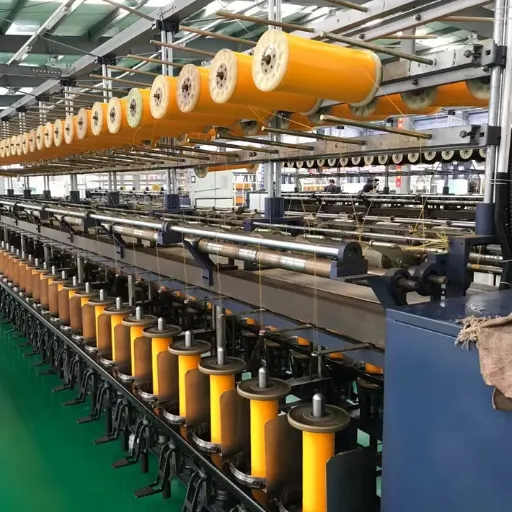
Yarn twisting and plying are the two manufacturing steps that determine how strong, soft, and durable a yarn will be. Twist binds fibers together and controls everything from tensile strength to pilling, while plying twists two or more singles in the opposite direction to create a balanced, more stable yarn.
Here’s the counterintuitive part most buyers miss: more twist does not always mean a stronger yarn. Every fiber has an optimum twist level, and going past it actually weakens the yarn while making it feel harsh. The sweet spot depends on your fiber, yarn count, and end use.
If you’re a designer, home textile brand, or industrial buyer, you’ve probably chosen yarn by count and fiber while rarely specifying twist and ply. That’s a missed opportunity: these two properties shape how your finished product looks, drapes, and survives daily use. By the end of this guide, you’ll understand twist direction, twist level, and ply structures, and know how to communicate them in a custom yarn order. Contact us for reliable yarn production solutions tailored to your specifications.
Key Takeaways
- Twist direction (S or Z) and twist level (turns per inch) control yarn strength, softness, hairiness, and pilling, but only up to an optimum point.
- Plying two or more singles in the opposite direction creates a balanced yarn that is stronger, more even, and less prone to bias than a single.
- For 2-ply cotton yarns, a ply twist around 3/4 of the single twist delivers the highest tensile strength.
- Multi-ply and cabled constructions are the standard choice for upholstery, heavy-duty, and technical applications where abrasion resistance matters.
- Buyers can specify twist and ply precisely using standard notation (ASTM D1244), turning a “nice to know” topic into a real procurement tool.
What Is Yarn Twisting and Plying?
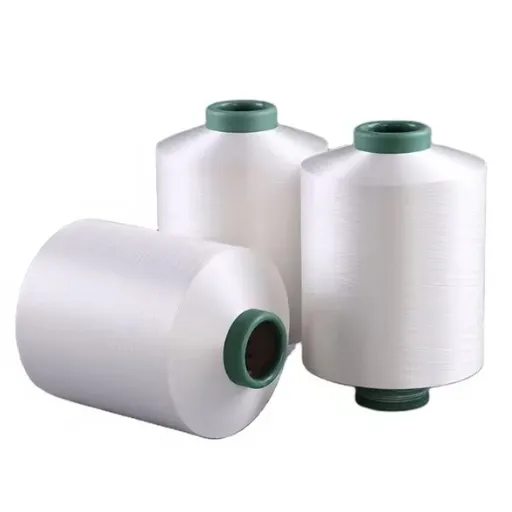
Twisting adds turns to a strand of fibers so they bind together and hold their shape. When fibers are twisted, they compress against one another, creating friction and lateral pressure that give the yarn cohesion and strength. Without twist, a bundle of loose fibers would simply pull apart.
Plying takes two or more twisted singles and twists them together, almost always in the direction opposite to the singles’ twist. This balances the torque in each single, so the yarn rests quietly instead of twisting back on itself. Together, twisting and plying define the yarn’s structure, which controls strength, elasticity, softness, and how it behaves in knitting, weaving, or sewing. Two yarns from the same fiber and count can perform completely differently if their twist and ply differ. Reach out for customized yarn production support from fiber to finished yarn.
Twisting vs. Plying: What’s the Difference?
They are two separate operations with two separate jobs. Twisting creates the single yarn by binding fibers together. Plying combines those singles into a thicker, more balanced product. In commercial manufacturing, singles are typically twisted one way and then plied in the opposite direction. A yarn written as “ZS” means the single was twisted Z and then plied S. Getting this direction right is the difference between a stable yarn and one that snarls, skews, and refuses to lie flat.
Where Twisting and Plying Fit in the Yarn Production Process
Twisting and plying sit near the end of the production journey, after fiber selection, carding, drawing, and spinning, and before dyeing and finishing. The yarn production process has seven main stages, and this one is where strength and structure are locked in. Get it right and everything downstream is easier; get it wrong and even the best fiber will disappoint.
Twist Direction: S-Twist vs. Z-Twist
Twist direction refers to the way fibers spiral along a yarn’s length. Hold a yarn vertically and look at the slant: if the fibers slant from upper left to lower right, like the middle of the letter S, it’s an S-twist; from upper right to lower left, it’s a Z-twist. The direction matters more than most buyers realize, because it affects how the yarn behaves in knitting, how a fabric resists skewing, and whether a sewing thread untwists during use.
| Property | S-Twist | Z-Twist |
|---|---|---|
| Fiber slant | Upper left to lower right | Upper right to lower left |
| Also called | Left twist, reverse twist | Right twist, regular twist |
| Common use | Singles in some systems, many plied yarns | Most industrial singles, warp yarns, sewing thread |
| In knitting | Suits left-handed crafters’ motion | Works with right-handed hook motion, less splitting |
| Balanced ply | Ply twist usually set opposite to singles | Ply twist usually set opposite to singles |
For most industrial yarns, singles are twisted Z and ply yarns are twisted S, though the exact convention varies by mill and end use. What matters most is that the ply twist runs opposite to the single twist. That opposition creates a balanced yarn.
What Is a Balanced Yarn?
A balanced yarn has no built-up torque trying to untwist it. When you hold a balanced plied yarn and let it hang, it stays straight; an unbalanced yarn twists back on itself, forming snarls and kinks that cause production problems and bias in finished fabrics. The amount of ply twist needed for balance depends on the twist in the singles: tightly twisted singles need more ply twist to calm them down, loosely twisted singles need less.
Twist liveliness is the tendency of a yarn to curl or snarl because of internal torque. Singles yarns are inherently twist-lively because all their energy is stored in one direction. Plying in the opposite direction relieves that torque, which is why plied yarns are noticeably calmer than singles of the same fiber.
How Twist Level Affects Yarn Strength, Softness, and Texture
Twist level is the number of turns per unit length, usually measured in twists per inch (TPI) or twists per meter (TPM). It has a bigger influence on yarn character than almost any other setting in the mill.
The relationship between twist and strength is a curve, not a straight line. As twist increases, fibers bind more tightly and yarn strength rises. But beyond a certain point, the fibers tilt so far that they stop contributing to strength efficiently, and the yarn actually gets weaker. Textile engineers call this the “critical twist” point, and it’s different for every fiber and count. This is why higher twist is not automatically stronger: the optimum maximizes strength while keeping the yarn soft enough for its purpose. Connect with us for advanced yarn manufacturing and flexible production solutions.
| Twist Level | Strength | Softness | Surface | Best For |
|---|---|---|---|---|
| Low twist | Lower | Softer, loftier, better drape | Fuzzier, more pilling | Scarves, soft knitwear, decorative textiles |
| Medium twist | Balanced | Balanced | Smooth | Most apparel and home textiles |
| High twist | High (to optimum) | Firmer, crisper | Smooth, less pilling | Upholstery, warp yarns, crepe effects, technical use |
Higher twist also reduces hairiness and pilling. Research on two-ply cotton yarns found that increasing the ply twist factor cut yarn hairiness by 19 to 94 percent for ring-spun yarns, depending on the starting point. Fewer loose fiber ends means fewer pills and a cleaner fabric surface, which is why high-twist yarns dominate heavy-wear applications.
Twist per Inch (TPI) and Twist Factor Explained for Buyers
Twist is written two ways on a specification. The simplest is turns per inch or turns per meter: “Z 15 tpi” means 15 Z-direction turns per inch. The more technical measure is twist factor, which normalizes twist for yarn thickness so you can compare yarns of different counts. You don’t need to calculate it yourself; just know it exists because a thick yarn and a thin yarn need different amounts of twist to reach the same fiber angle. If a manufacturer quotes “high twist,” ask for the actual TPI and direction so you can verify it.
High-Twist vs. Low-Twist Yarn: Which Should You Choose?
Choose high twist when durability, shape retention, and a smooth surface matter more than softness. Upholstery, warp yarns, and anything that faces heavy abrasion benefit from high twist. Choose low twist when drape, loft, and a soft hand are the priority. Low-twist yarns are beautiful for scarves and delicate knitwear, but they pill faster and don’t hold up under wear. The right choice depends on your application, and this is where a good manufacturer earns their keep: our engineers tune twist to the end use rather than applying a one-size-fits-all setting.
Ply Structures: From 2-Ply to Cabled Yarns
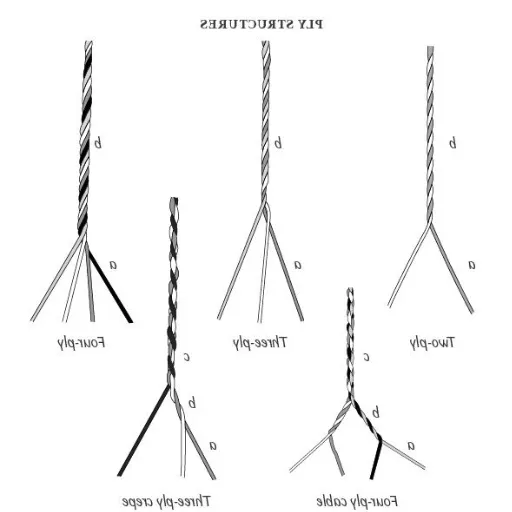
Ply refers to the number of singles twisted together. A single is one strand; a 2-ply is two singles twisted together; a 3-ply is three. Each additional ply changes the yarn’s roundness, strength, and surface character.
| Structure | Construction | Typical Applications |
|---|---|---|
| Single | One strand | Drape-heavy knitwear, decorative textiles |
| 2-ply | Two singles plied | Balanced apparel yarns, hosiery, medium-weight fabrics |
| 3-ply / 4-ply | Three or four singles plied | Durable knitwear, socks, upholstery-grade yarns |
| Multi-ply | Five or more singles | Heavy-duty home textiles, industrial fabrics |
| Cabled | Plied yarns plied together | Ropes, sewing thread, high-tenacity technical use |
| Cord | Two or more plied yarns twisted | Marine, industrial, and load-bearing applications |
Plying improves evenness as well as strength. When you twist two singles together, thick and thin sections tend to cancel each other out. Studies on cotton yarns show plying improves evenness by roughly 25 to 32 percent, close to the theoretical “law of doubling” value of about 29 percent. In some spinning systems, total yarn imperfections drop by up to 95 percent after plying. Let us help you develop dependable yarn products with efficient manufacturing processes.
2-Ply vs. 3-Ply Yarn: Which Is Stronger?
In general, more plies mean more strength and better roundness, but the jump is not always huge. Research on two-ply cotton yarns found that the highest tensile strength comes at a ply twist of about 3/4 the single twist, with a balanced structure reached at a ply twist multiplier of roughly 0.7. Three-ply yarns outperform two-ply yarns in tenacity, elongation, and evenness in many studies, and they’re rounder, giving better stitch definition. The trade-off is cost: more plies mean more processing and material. For most apparel, 2-ply is the sweet spot; for high-wear items like socks and upholstery, 3-ply or more is worth the extra expense.
What Is a Cabled Yarn and When Is It Worth the Cost?
A cabled yarn takes plying one step further: it plies two or more plied yarns together. The classic construction spins four singles in one direction, plies them in pairs in the opposite direction with extra twist, then cables the two plied pairs back in the original direction. The result has a distinctive square, almost braided cross-section. Cabled yarns are noticeably stronger, more abrasion-resistant, and less prone to pilling than ordinary plied yarns, which is why they’re used for sewing thread, ropes, and technical textiles where failure isn’t an option. The cost is real, so reserve cabling for applications that genuinely need the extra performance.
Fancy Structures: Crepe and Corkscrew Yarns
Beyond simple plies, twist can create texture. Crepe yarns use high twist and a mix of directions to create a bubbly, crinkled surface, while corkscrew and spiral yarns pair plies of different sizes or fibers so one wraps around another. These are a niche, and the twist balance is delicate, so work with a manufacturer who has the expertise.
Why Plying Makes Yarn Stronger (and More Stable)
Plying improves strength through a combination of effects. First, several strands share the load, so the yarn can bear more tension than any single of similar size. Second, plying increases inter-strand friction: the plies grip each other and add strength even as some of the singles’ twist is relaxed. Just as important, plying makes the yarn stable. Because the ply twist runs opposite to the single twist, torque is balanced and twist liveliness drops dramatically. A study of two-for-one and ring-twisted plied yarns found that two-for-one plied yarns were 12 to 22 percent less twist-lively than ring-plied yarns, and 6 to 22 percent more extensible, while staying 2 to 7 percent more even.
The Physics of a Balanced Plied Yarn
Every twisted single stores torsional energy. Ply two singles together in the opposite direction and that stored energy is balanced by the ply twist, making the yarn torsionally stable. This is why plied yarns are preferred for garments and fabrics that must hold their shape: they resist bias in knitting, reduce skewing in woven fabrics, and keep stitches crisp.
Twisting and Plying for Different Applications
The right twist and ply combination depends entirely on what you’re making.
Upholstery. Furniture faces constant abrasion, so you need a multi-ply, balanced-twist yarn with high abrasion resistance and minimal pilling. Most upholstery-grade yarns are 2-ply or 3-ply with medium-high twist. For heavy contract use, look for constructions that pass strict double-rub testing.
Curtains and drapery. Curtain yarns need good drape and dimensional stability, with enough weight to hang well. A balanced 2-ply with medium twist is a common choice. Lightfastness and colorfastness matter here, and those are influenced by dyeing and finishing as much as by twist.
Fashion and knitwear. This is where the trade-off between softness and durability is sharpest. Singles give beautiful drape and loft but pill and bias. A 2-ply with moderate twist offers a strong balance of hand feel, stitch definition, and durability, while high-end knitwear often uses 3-ply for roundness and resilience.
Industrial and technical. When failure isn’t an option, you move to cabled and cord constructions. High-tenacity plied yarns, often with protective coatings, are used in ropes, hoses, belting, and safety textiles, with twist tuned for maximum tensile strength and abrasion resistance.
Choosing Twist and Ply for Your Application
The clearest way to choose is to start with your fabric’s performance requirements, then work backward. What abrasion test must it pass? How much drape does it need? Will it face UV, water, or heavy flexing? Once you know the performance target, the twist and ply choices narrow considerably. A yarn that’s perfect for a lightweight blouse is wrong for a contract sofa, and vice versa. Our guide to yarn for upholstery walks through the selection criteria in detail, and our engineers are happy to recommend a construction for your end use.
How to Specify Twist and Ply in a Custom Yarn Order
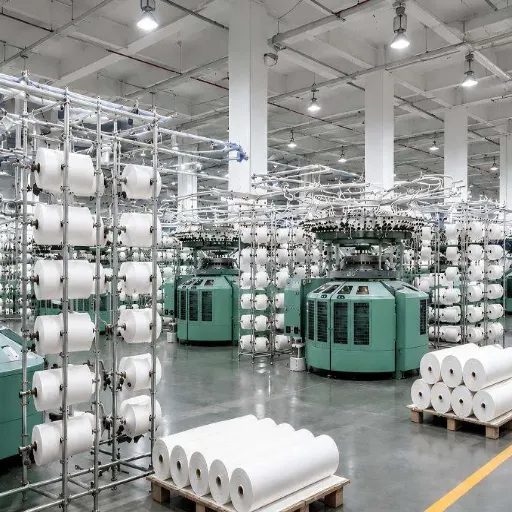
When you request a custom yarn, a manufacturer needs these details: material composition, yarn count, ply, twist direction, twist level, color reference, and final application. For twist, specify three things: the direction (S or Z), the level (low, medium, or high), and the amount in turns per inch or turns per meter, for example “Z 15 tpi.” Don’t leave twist as an afterthought, because it has as much influence on the final product as the fiber itself.
Reading a Yarn Specification
Standard notation from ASTM D1244 makes specifications unambiguous. A cabled yarn might be written like this:
24 Nec Z 15 tpi / 5 S 9 tpi / 3 Z 5 tpi
That reads as: a 24-count cotton single with 15 tpi of Z twist, plied 5 strands with 9 tpi of S twist, then cabled 3 strands with 5 tpi of Z twist. If a supplier sends you a spec you can’t parse, ask them to explain it; a good manufacturer will walk you through it happily.
The cost of customization is worth planning for. Custom twist typically adds roughly 10 to 20 percent over standard settings, custom fiber blends 15 to 30 percent, and full custom development can run 50 percent or more. Knowing this going in helps you budget and avoids surprises.
Reach out for customized yarn production support from fiber to finished yarn.
Questions to Ask Your Yarn Manufacturer
Before you commit to a supplier, ask these questions:
- What twist direction and TPI will you use for the singles and the ply?
- How do you verify twist consistency across a production run?
- Can you provide a test report showing strength, evenness, and hairiness?
- What ply structures do you produce in-house, and what’s your MOQ per structure?
- Do you recommend a different construction for my application than what I specified? Why?
A manufacturer who can answer these clearly is one who controls quality. One who waves them away is a red flag, because twist and ply are exactly where yarn quality is won or lost. Twist consistency matters across the whole lot: if twist varies from cone to cone, your fabric shows it as uneven shading, bias, or breakage. Ask for evenness and twist test results and compare them to industry norms.
At Hebei Lida, twist and ply are controlled at the machine level and verified with testing at every stage, which is part of our broader yarn quality control program. When you order custom yarn, you should expect that same rigor from any supplier you work with.
Custom Yarn Solutions at Hebei Lida
If you’re ready to specify twist and ply for your next project, we can help. Hebei Lida offers fully custom yarn solutions covering fiber blend, count, twist direction, twist level, ply structure, color, and packaging. Our engineers will recommend a construction matched to your application and confirm it with samples before you commit to a full run.
Frequently Asked Questions About Yarn Twisting and Plying
What is the difference between twist and ply?
Twist is the turns added to bind fibers into a single strand. Ply is the number of singles twisted together. A 2-ply yarn has two singles, each with its own twist, twisted together in the opposite direction.
Does higher twist always mean stronger yarn?
No. Yarn strength rises with twist up to an optimum point, then falls. Beyond the “critical twist,” fibers tilt so far that additional twist weakens the yarn and makes it feel harsh. The optimum depends on the fiber, count, and end use.
What is the best yarn ply for upholstery?
Multi-ply, balanced-twist yarns, typically 2-ply or 3-ply with medium-high twist, are standard for upholstery because they resist abrasion and pilling. For heavy contract use, look for constructions that pass high double-rub standards.
Are plied yarns better than singles?
It depends on your goal. Plied yarns are stronger, more even, less prone to bias and pilling, and more stable. Singles are softer and loftier with better drape, but they pill more and twist on themselves. For durability, plied wins; for pure softness, singles win.
How do I choose between S-twist and Z-twist yarn?
Match the twist direction to your application and let balance guide you. In knitting, twist direction affects how the yarn interacts with your machine or hook motion. In most cases, the key is that the ply twist runs opposite to the single twist, which creates the balanced yarn you want.
Conclusion
Twist and ply are the quiet determinants of yarn quality. Twist direction and twist level control strength, softness, hairiness, and pilling. Ply structure controls stability, evenness, and durability. Once you understand these levers, you can specify yarn with precision instead of relying on guesswork.
Here are the key points to remember:
- More twist is not always stronger; every fiber has an optimum twist level.
- Ply twist runs opposite to single twist to create a balanced, stable yarn.
- Plying improves evenness by 25 to 32 percent and reduces imperfections dramatically.
- Multi-ply and cabled constructions are the choice for heavy-wear applications.
- Specify twist direction, TPI, ply, and application in every custom yarn order.
The good news is that you don’t have to figure this out alone. A manufacturer who controls twisting and plying quality at the machine level will help you translate your performance requirements into the right construction, confirm it with samples, and deliver yarn you can count on.
Ready to put this into practice? Contact Hebei Lida or explore our custom yarn solutions to discuss your project. We’ll help you specify twist and ply that perform exactly where you need them.