




Yarn quality control is the systematic process of testing, measuring, and monitoring yarn characteristics at every stage of production to ensure the final product meets defined specifications. It spans raw fiber inspection, in-process monitoring during spinning, and finished yarn laboratory testing.
Every textile product you have ever touched started with yarn. When that yarn is inconsistent, the problems cascade. A fabric batch comes off the loom streaked with barre. A customer rejects an entire shipment because the yarn strength did not hold up. A furniture manufacturer faces warranty claims because the upholstery yarn abraded too fast. The root cause traces back to one thing in almost every case: gaps in yarn quality control.
Here is the part nobody talks about. By the time a defect is visible in finished fabric, the cost of fixing it has already multiplied by ten. You are not just replacing yarn. You are eating the cost of weaving, dyeing, finishing, shipping, and most painfully, the trust you already spent years building with your buyer. Quality control is not a cost center. It is the cheapest insurance policy a textile business can buy. Contact us for reliable yarn production solutions tailored to your specifications.
Key Takeaways
- Yarn QC spans three stages: raw fiber testing, in-process monitoring, and finished yarn laboratory analysis. Skipping any stage multiplies defect costs
- The five critical yarn quality parameters are count, strength, evenness, twist, and hairiness, each measured against ASTM and ISO standards
- Common defects like neps, thick/thin places, and contamination are largely preventable through fiber-level control and proper machine settings
- Buyers evaluating suppliers should look for real-time process monitoring, not just final inspection certificates. 76% of yarn quality issues originate from environmental and raw material factors
- QC-driven mills consistently report 15-20% fewer customer claims and measurable yield improvements, turning quality control from overhead into competitive advantage
What Is Yarn Quality Control?
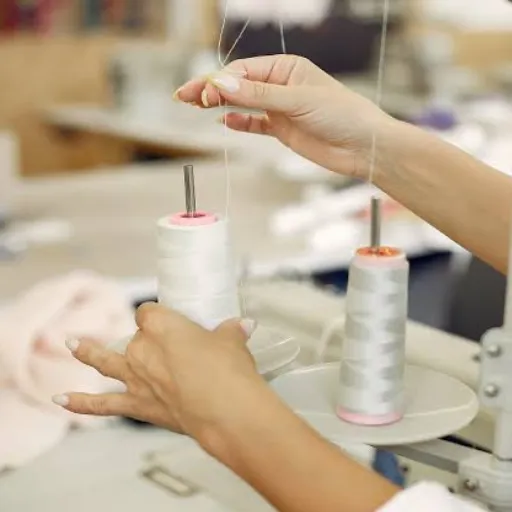
Yarn quality control is the structured framework of testing, measurement, and corrective action applied throughout yarn production. It starts before a single fiber enters the blowroom and continues until cones are packed for shipment.
A common misconception is that QC equals final inspection. That approach is reactive and expensive. Effective quality control is continuous. It catches deviations at the source: when the micronaire of a cotton bale drifts out of spec, when carding settings start generating excess neps, when the ring frame draft needs adjustment. By the time yarn reaches the winding department, your options for correction are limited to clearing defects you should have prevented upstream.
The workflow follows three stages: raw material inspection, in-process monitoring, and finished yarn testing. Each stage feeds data into the next. Skip the first, and you are compensating for fiber problems with machine adjustments. Skip the second, and you are discovering process failures only after production. A QC program that only tests finished yarn is not quality control. It is quality documentation of failure.
Why does this matter for buyers as well as manufacturers? Because your supplier’s QC program directly determines the consistency of your raw material supply. If you purchase yarn for fabric production, the quality of that yarn dictates your waste rate, your production efficiency, and your finished product’s reputation. Understanding yarn QC helps you choose suppliers who deliver consistent quality, not just competitive pricing. Contact our experts for high-quality yarn production designed around your requirements.
Key Yarn Quality Parameters and Testing Methods
Yarn quality is measured against five fundamental parameters. Each has defined test methods, accepted tolerances, and specific implications for downstream processing.
Yarn Count (Linear Density)
Count measures the mass per unit length of yarn. It determines fabric weight, density, and hand feel. For consistent fabric production, count variation must stay within tight tolerances, typically plus or minus 3% for most commercial yarns.
Testing uses a wrap reel to prepare standard-length skeins, typically 120 yards, weighed on an analytical balance. The auto sorter automates this for higher throughput, providing both count and CV% across multiple bobbins. For plied yarns, the resultant count of the finished yarn is verified separately. Standard references include ISO 2060 and ASTM D1907.
When count drifts, everything downstream shifts. Fabrics come out heavier or lighter than specified. Dye uptake varies between sections. Garment weights miss targets. A spinning mill in Tamil Nadu learned this the hard way when a miscalibrated auto sorter went undetected for three weeks. The resulting count variation produced 12 tons of fabric that failed customer specification. The cost of the calibration check? Twenty minutes per shift.
Yarn Strength and Elongation
Strength, measured as tenacity in grams per tex (or centinewtons per tex), directly predicts how yarn will perform during weaving, knitting, and in end-use. Elongation at break indicates how much the yarn stretches before failing, a critical factor for applications that experience repeated tension.
Single yarn strength testing follows ASTM D2256 or ISO 2062, using instruments like the Uster Tensorapid. Lea strength testing (ASTM D1578) measures the breaking force of a full skein, and the Count Strength Product (CSP) combines lea strength with count for an overall quality index.
For context, a typical cotton ring-spun yarn for woven fabrics should deliver minimum tenacity around 12 cN/tex. Knitting yarns can accept slightly lower values because they experience less tension during processing. Upholstery yarns need to exceed 15 cN/tex because abrasion resistance depends heavily on fiber tenacity.
Reach out for customized yarn production support from fiber to finished yarn.
Yarn Evenness and Imperfections
Evenness, expressed as U% or CV%, measures mass variation along the yarn length. Uneven yarn produces fabric with visible streaks, inconsistent dye absorption, and weak spots that break during processing.
Testing is performed on an evenness tester, typically a capacitance-based instrument, with the Uster Tester being the global standard. Over 16,000 Uster Testers operate in 65 countries, and “Uster” has practically become a generic term for evenness testing among mill personnel.
The instrument reports three categories of imperfections per 1,000 meters: thin places (cross-section drops 30-60% below average), thick places (cross-section rises 35-100% above average), and neps (localized entanglements 40-400% above average for approximately 1 mm). These numbers are benchmarked against Uster Statistics, the industry’s global quality database, which lets mills compare their yarn against worldwide production.
Yarn Twist
Twist binds fibers together to create strength. Measured in turns per meter (TPM), twist affects yarn strength, hand feel, fabric drape, and even dye uptake. Too little twist, and the yarn is weak and hairy. Too much, and it becomes stiff, livelier on the knitting machine, and prone to snarling.
Testing per ISO 2061 uses the direct counting method for single yarns and the untwist-retwist method for plied yarns. Twist direction, S or Z, must be verified because opposing twist directions between singles and plies affect torque balance in the finished fabric.
For knitting yarns, lower twist factors (alpha 3.4 to 3.8) produce softer hand feel. Hard-twist yarns for voile or crepe fabrics use factors from 4.5 to 5.0. Getting this wrong is not subtle. An Italian knitwear producer once received a shipment of yarn twisted to weaving specifications. The fabric spiraled. Every panel skewed. The entire production run was scrapped.
Hairiness
Hairiness measures protruding fiber ends on the yarn surface. While some hairiness is unavoidable, excessive hairiness creates pilling, uneven dyeing, weaving difficulties from tangled warp threads, and poor print definition in fabrics.
Measured with a hairiness index tester, the value represents the total length of protruding fibers per centimeter of yarn. Uster evenness testers also report hairiness index (H) as a standard output. Reducing hairiness involves controlling short fiber content in raw material, optimizing twist, and managing spinning conditions, particularly traveler selection and ring frame humidity.
Common Yarn Defects: Causes, Effects, and Solutions
Every spinner deals with defects. The difference between an average mill and an excellent one is how systematically defects are tracked, traced, and eliminated. For a full walkthrough of the production stages where these defects originate, see our guide to the yarn spinning process.
| Defect | Common Cause | Effect on Fabric | Solution |
|---|---|---|---|
| Thick and thin places | Improper draft settings, roller eccentricity, short fiber content | Visible barre, streaks, uneven dyeing | Optimize break draft, check roller condition, control short fiber percentage |
| Neps | Immature fiber, aggressive carding, poor card clothing maintenance | Fabric pills, rough hand feel, printing defects | Improve fiber maturity blend, reduce carding speed, replace worn card clothing on schedule |
| Slubs | Poor carding, damaged card flats, inconsistent roving | Visible fabric defects, weak points that break in weaving | Check card settings daily, replace damaged flats, maintain consistent roving tension |
| Hairiness | High short fiber content, insufficient twist, low humidity in spinning | Pilling, poor print quality, weaving stoppages | Reduce short fiber input, optimize twist, maintain spinning room at 55-65% RH |
| Contamination | Foreign fibers in raw material, dirty transport, poor housekeeping | Rejected fabric lots, costly claims in export markets | Double contamination clearing at winding, strict housekeeping protocols, source from cleaner cotton |
| Count variation | Incorrect hank in drawing, worn drafting elements, blending errors | Fabric weight variation, dye uptake inconsistency | Auto-levelers at draw frame, statistical process control with control charts, regular hank checks |
| Snarls and kinks | Unbalanced twist, insufficient heat setting in synthetics | Fabric spiraling, sewing problems, distorted garment panels | Adjust ply twist ratio, heat-set at correct temperature, steam-condition yarn before knitting |
The recurring theme across these defects is clear: prevention at the source costs far less than detection at the end. Neps created in the blowroom cannot be fully eliminated at the card. Thick and thin places from a worn drafting roller will not be caught until the evenness tester, and by then the yarn is already produced.
Yarn Quality Control Standards and Industry Benchmarks
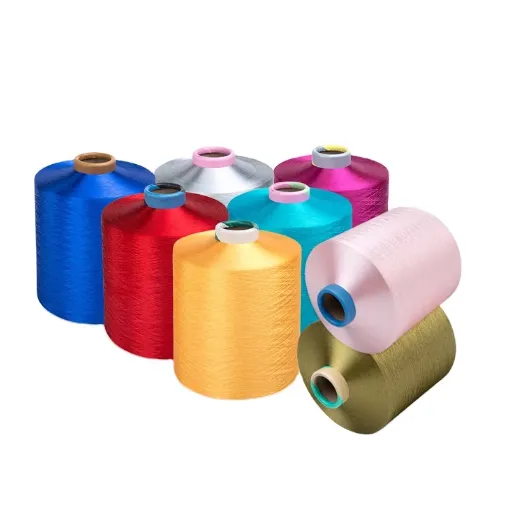
International standards provide the common language for yarn quality. When a buyer in Germany orders yarn from a manufacturer in China, both parties reference the same ASTM or ISO test methods. This prevents disputes and creates objective criteria for acceptance.
The foundational standard for sampling, ISO 1130:2026, was updated in January 2026 and now covers fibers, yarns, and fabrics in a single framework. Proper sampling is essential because testing an unrepresentative sample produces misleading results, no matter how accurate the instrument.
Key testing standards include ASTM D2645 (tolerances for cotton and worsted spun yarns), ISO 2060 and ASTM D1907 (linear density), ISO 2062 and ASTM D2256 (tensile properties), ISO 2061 and ASTM D1422 (twist), and ASTM D1425 (evenness). For appearance grading, ASTM D2255 defines methods for visually assessing yarn against photographic standards, with grades running A through D. A typical acceptance criterion requires 80% of specimens to meet or exceed the specified grade, with no specimen more than one grade below.
Beyond individual test standards, Uster Statistics serves as the global benchmark for yarn quality. Updated regularly with data from mills worldwide, it provides percentile rankings for every quality parameter. A yarn rated at the 50th percentile is globally average. At the 25th percentile, the yarn outperforms 75% of comparable production. Mills use these percentiles not only for internal benchmarking but also as commercial specifications. A contract might specify “Uster Statistics 25% for evenness” as a quality requirement.
Certifications add another layer of credibility. OEKO-TEX Standard 100 certifies that yarn is free from harmful substances. GOTS (Global Organic Textile Standard) verifies organic status through the entire supply chain. ISO 9001 certification of the quality management system demonstrates that QC processes are documented, audited, and continuously improved. For buyers, these certifications reduce the due diligence burden when qualifying new suppliers. Let us help you develop dependable yarn products with efficient manufacturing processes.
The Quality Control Process: From Raw Fiber to Finished Yarn
Quality control is a three-stage process, each stage building on the one before it.
Stage 1: Raw Material Inspection
Raw fiber accounts for up to 75% of yarn production costs. That means getting fiber right is both the biggest quality lever and the biggest cost lever available to a spinner.
Fiber testing begins with HVI (High Volume Instrument) analysis, which measures staple length, strength, micronaire (fineness/maturity), color, and trash content simultaneously. A single HVI test takes about 20 seconds. For deeper analysis, the AFIS (Advanced Fiber Information System) provides detailed neps counts, fiber length distribution, short fiber content by weight and by number, and maturity ratio.
The most important number is micronaire. This single parameter, fiber fineness, determines spinnability, yarn strength, dye uptake, and fabric hand feel. When micronaire varies between bales in the same laydown, the resulting yarn will have inconsistent dye affinity. That produces barre in fabric. There is no way to fix it after spinning. The solution is disciplined bale management: testing every bale, grouping bales with similar micronaire into consistent laydowns, and minimizing variation both within and between laydowns.
A Fiber Quality Index (FQI) can synthesize multiple fiber measurements into a single number using the formula FQI equals L times U times S divided by F, where L is 50% span length, U is uniformity ratio, S is bundle strength, and F is micronaire. This helps mills compare cotton lots objectively rather than relying on experience alone.
Stage 2: In-Process Control
Once production starts, monitoring shifts from the lab to the shop floor. Each department has defined checkpoints and control limits.
At the blowroom, the focus is on nep generation and trash removal efficiency. If blowroom settings are too aggressive, short fiber content rises and neps multiply, and those neps are nearly impossible to remove completely in subsequent stages. Routine AFIS testing after maintenance or laydown changes verifies that opening and cleaning are operating at the right balance.
At carding, cylinder speed, flat settings, and doffer speed determine nep removal efficiency and fiber individualization. Control charts track sliver hank and evenness through drawing, where auto-levelers keep short-term mass variation below 1%.
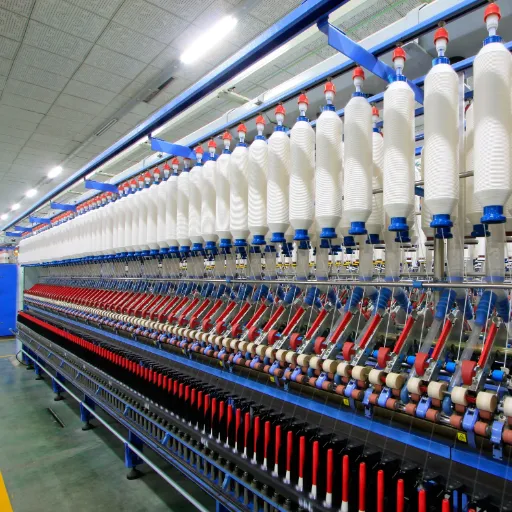
At the ring frame, spindle speed, traveler selection, draft settings, and humidity control interact to determine yarn strength, hairiness, and imperfection levels. Statistical process control using X-bar and R charts monitors count and strength over time. When a point falls outside control limits, the process is stopped and investigated, not adjusted blindly.
A real example: a mill in Shandong running 150,000 spindles upgraded from manual data collection to real-time monitoring using an integrated quality management system. Within months, they reduced clearer cuts by about 15 per 100 kilometers and saw customers specifically requesting yarn from the monitored production line. Measurement changed behavior, and behavior changed results.
Stage 3: Finished Yarn Testing and Inspection
Final testing verifies that the finished product meets specification before it ships. Laboratory testing covers evenness, tensile properties, twist, count, and hairiness on a statistically valid sample from each lot.
Visual inspection grades yarn appearance against photographic standards, assessing neps, slubs, fuzziness, and foreign matter. The BIS grading system assigns grades A through D, with Grade A representing yarn free of large neps and foreign matter. Lot acceptance uses AQL (Acceptable Quality Limit) sampling per ISO 2859 or ANSI/ASQ Z1.4, with defects classified as critical, major, or minor.
For buyers running their own inspection, key checks include verifying count with a wrap reel and balance, visually inspecting under D65 lighting for shade consistency and contamination, and knitting a small sample to check fabric appearance before committing to full production. An hour spent on incoming yarn inspection saves the cost of discovering a quality problem in finished fabric. Contact our experts for high-quality yarn production designed around your requirements.
Key Testing Equipment for Yarn Quality Control
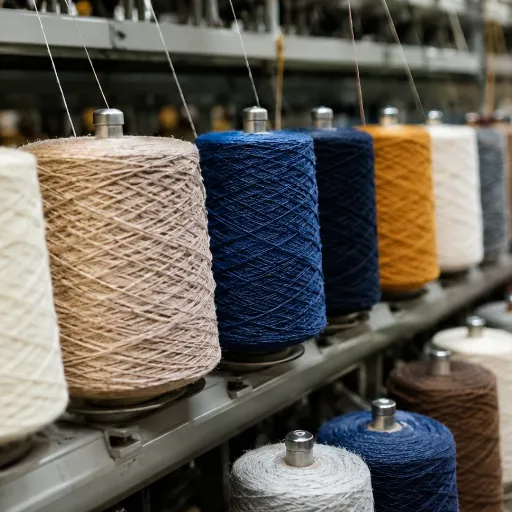
Effective QC requires the right instruments. The essential toolkit for a spinning mill laboratory includes evenness testers (Uster Tester), fiber testers (HVI, AFIS), single yarn strength testers, twist testers, wrap reels with analytical balances, yarn fault classifiers (Uster Classimat), and moisture regain testers. For a deeper look at how these instruments fit into the production line, see our guide to yarn manufacturing equipment.
Technology is changing how mills manage quality. IoT sensors on individual spinning positions now transmit real-time data on temperature, humidity, and spindle speed to centralized dashboards. Computer vision systems using deep learning algorithms can detect and classify yarn hairiness and surface defects automatically. One research prototype achieved correlation between vibration anomalies and 85% of defect incidents using simple accelerometer sensors, pointing toward affordable predictive maintenance tools for mills at any scale.
The trend is toward integrated quality management systems. Rather than separate lab tests and shop floor observations, data from all sources, HVI, AFIS, evenness testers, and real-time sensors, feeds into a single platform. This lets mill management trace a quality deviation in finished yarn back to a specific bale laydown, machine, or shift. Problem-solving becomes faster and more precise when you can see the entire chain of cause and effect.
How to Evaluate a Yarn Supplier’s Quality Control
If you are sourcing yarn rather than manufacturing it, evaluating a potential supplier’s QC program is essential due diligence. Price and delivery matter, but consistency of quality determines whether the relationship works long-term.
Ask these questions when qualifying a yarn supplier:
First, how often do they test? Best practice mills test every control unit, typically each production lot or shift, for count, strength, evenness, and twist. Testing only on customer request is a red flag.
Second, what equipment do they use? Calibrated instruments from recognized manufacturers matter. A mill running Uster or Premier evenness testers with current calibration certificates demonstrates commitment to objective measurement.
Third, what standards do they follow? They should reference specific ASTM or ISO test methods in their quality documentation, not just internal procedures.
Fourth, what certifications do they hold? ISO 9001 for quality management, OEKO-TEX Standard 100 for product safety, and GOTS or GRS for organic/recycled claims are the minimum credible set for export-oriented suppliers.
Fifth, do they use real-time process monitoring or only end-of-line testing? The difference between detecting a problem in the ring frame versus discovering it during final inspection is thousands of kilograms of yarn. Suppliers with in-process monitoring consistently deliver more uniform quality.
Red flags include reluctance to share test data, inability to explain their sampling methodology, lack of traceability from bale to shipping lot, and inconsistency between certificates and your own incoming inspection results. One failed incoming check might be an anomaly. Two is a pattern worth acting on.
Conclusion
Yarn quality control is the foundation that every textile product rests on. When QC is treated as a production overhead, it costs money. When it is treated as a strategic capability, it makes money through fewer claims, higher customer retention, access to premium markets, and lower total cost of quality over time.
The data is clear on what works. Control fiber quality at intake, because 75% of production cost and most quality outcomes are determined before a single fiber enters the card. Monitor the process in real time, because corrective action taken in the ring frame costs a fraction of rework after winding. Test finished yarn systematically against international standards, because objective data builds buyer confidence faster than any sales pitch.
At Hebei Lida Textile, we apply rigorous quality control at every stage of yarn production. Our testing laboratory operates to ISO and ASTM standards, and our products are trusted by businesses in over 50 countries. Whether you need yarn for fashion, upholstery, curtains, or industrial applications, we deliver consistent quality backed by documented QC processes.
Contact us today to discuss your yarn quality requirements or request a sample to experience our standards firsthand.