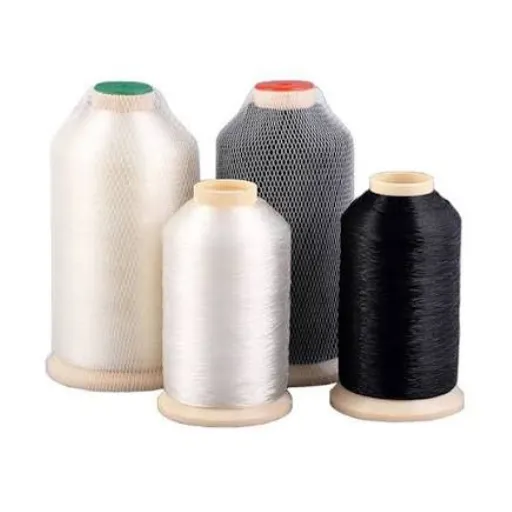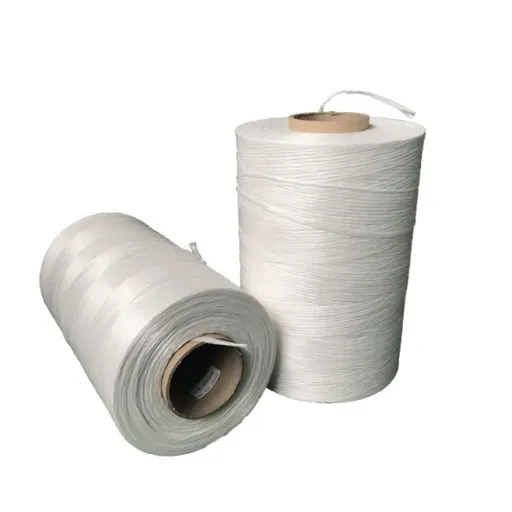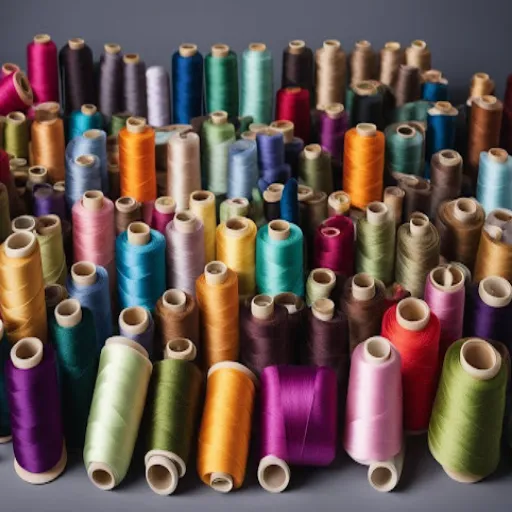
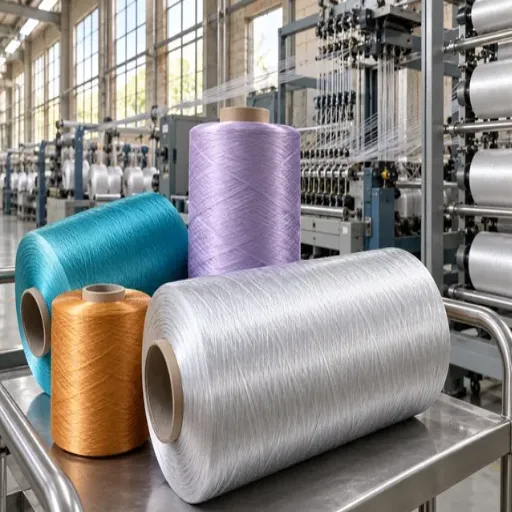
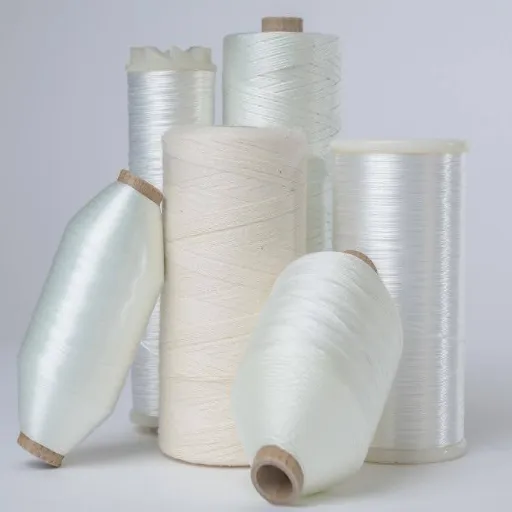
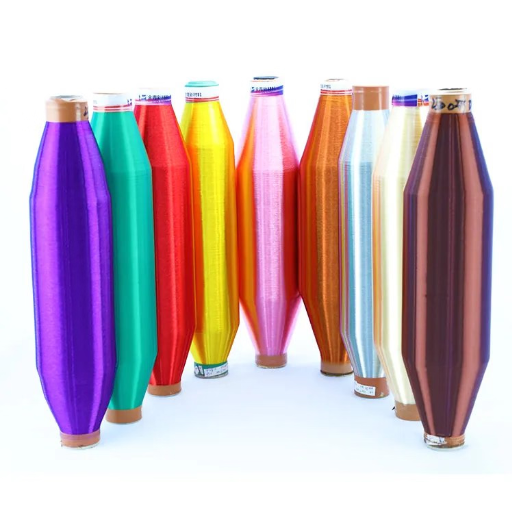
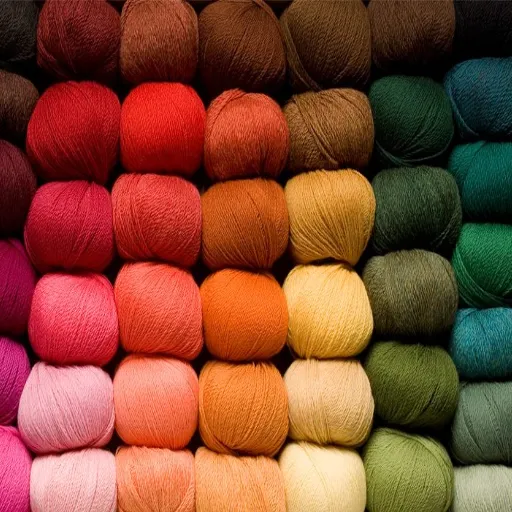


The types of sewing thread you meet in a garment factory or a home sewing room fall into seven practical families, and every one of them is defined by three things: fiber, construction, and size. Polyester, cotton, and nylon do most of the work. Spun, core-spun, continuous filament, and bonded decide how the thread behaves under the needle. Tex, denier, Nm, Ne, and ticket numbers decide whether the spool in front of you is the one your spec sheet asked for.
Here’s a trap that catches experienced buyers. A sourcing coordinator raises a purchase order for 40/2 spun polyester, 6,000 meters, copied from a supplier catalog line that also reads Tex 27. The factory tech pack, written by someone else, specifies Tex 30.
Nothing on either document explains how the two figures relate, so she orders both to be safe. They’re the same thread. The duplicate freight is the real cost, not the thread.
Most buyers learn thread by product name, which is why one item arrives with three labels. This guide covers what thread is made of, how it’s built, how it’s numbered, and which construction fits which fabric and machine. By the end, a thread spec sheet and a purchase order should read as the same document.
If your specification is already written, our thread team can check it against the construction and count the seam actually needs.
Key Takeaways
- Polyester core-spun is the default for most apparel seams. Cotton suits heat and natural-fiber work, and nylon wins where abrasion and flexing dominate.
- Construction matters as much as fiber. A spun and a core-spun thread of identical size sew differently and look different on the finished seam.
- Tex is grams per 1,000 m, denier is grams per 9,000 m, Nm is meters per gram, Ne is 840-yard hanks per pound, and ticket number is a commercial label with no fixed meaning.
- A
40s/2cotton-count thread works out at Tex 29.5, which the trade sells as Tex 27 to Tex 30 and prints as Ticket 100 to 120. One thread, three labels.- Put fiber, construction, tex, and ply count on the purchase order in writing. “40/2” on its own leaves the construction undefined.
What Are the Types of Sewing Thread?
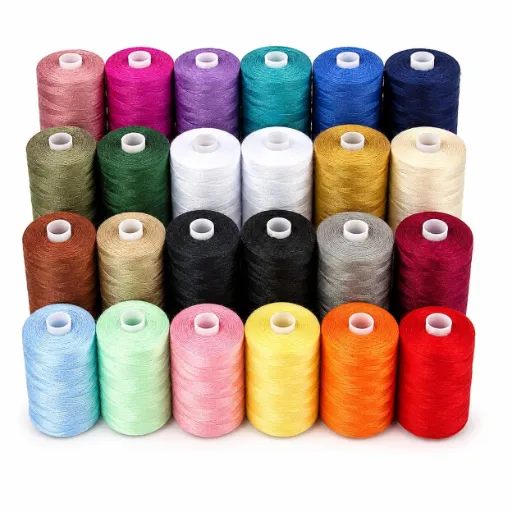
Sewing thread is classed by fiber (polyester, cotton, nylon, silk, rayon, specialty fibers), by construction (spun, core-spun, continuous filament, textured filament, bonded, monofilament, wrapped), and by size (tex, denier, Nm, Ne, ticket). Fiber sets durability and heat behavior, construction sets strength and appearance, and size sets which needle and fabric it suits.
Those three axes are independent, and that’s the whole difficulty. A polyester thread can be spun, core-spun, filament, textured, or bonded, and each version behaves like a different product on the machine. Cotton can be spun or core-spun with a polyester core; nylon is usually sold bonded.
Two suppliers can both quote “polyester thread” and be describing materials that share only a chemical name. That is why a list of types of sewing threads by name alone is not much use to a buyer.
The seven families this guide covers:
| Family | Fiber | Construction | Typical use |
|---|---|---|---|
| Spun polyester and cotton | Polyester, cotton | Staple fiber twisted and plied | Cheapest apparel seams, quilting |
| Core-spun polyester | Polyester, cotton sheath | Filament core inside spun sheath | Denim, workwear, knits |
| Continuous filament | Polyester, nylon | Endless filaments | Embroidery, fine synthetics |
| Textured filament | Polyester | False-twist crimped | Overlocking, coverstitch |
| Bonded | Nylon, polyester | Filament plus resin bond | Leather, outdoor, upholstery |
| Monofilament | Nylon, polyester | Single filament | Hemming, quilting |
| Silk, rayon, wrapped metallic | Silk, viscose, metal | Various | Tailoring, embroidery, effects |
That table is the map. Our sewing thread range covers spun and filament counts from fine apparel sizes up to heavy industrial plies.
Types of Sewing Thread by Fiber
Fiber is the first decision because construction adjusts behavior but cannot change chemistry. A polyester core-spun and a cotton spun of the same size still differ in heat tolerance, moisture behavior, and how they age.
| Fiber | Strengths | Weaknesses | Where it wins |
|---|---|---|---|
| Polyester | UV resistance, low moisture absorption, colorfast, low cost | Lower elongation than nylon | Apparel, home textiles, outdoor |
| Cotton | Matte hand, heat tolerance, natural fiber match | Abrasion wear, shrinking, lower strength | Quilting, cotton and linen garments |
| Nylon | Highest tensile and elongation | Moderate UV, lower heat tolerance | Leather, webbing, upholstery |
| Silk | Fine, strong, elastic | Cost, limited supply | Tailoring, basting, buttonholes |
| Viscose rayon | High luster, dye uptake | Low wet strength | Embroidery, decorative trims |
Polyester Thread
Polyester thread is the workhorse. It resists UV light well, absorbs almost no water, holds color, and costs less than nylon or silk. Polyester sewing thread can be spun, core-spun, made as continuous filament, textured, or bonded, which is why most “types of sewing thread” a buyer encounters are polyester variants wearing different names.
That range is the point. One fiber, five products, five different seams.
Cotton Thread and What Mercerizing Changes
Cotton thread gives a matte, natural hand and behaves well in cotton and linen garments. Cotton sewing thread is the traditional choice for quilting and heirloom sewing, where the thread should look like fiber rather than like plastic. It is also softer against skin and takes high iron temperatures without glazing the way some synthetics do.
Mercerizing is the treatment that separates ordinary cotton thread from the glossy kind. Mercerized cotton thread is held under tension in a sodium hydroxide solution of roughly 20% to 30%. That swells the fiber, improves dye uptake and tear strength, reduces shrinkage, and gives the silk-like luster associated with better cotton thread. The luster comes from the tension, not the alkali alone, a detail recorded from Horace Lowe’s 1889 process (Wikipedia: Mercerisation).
What mercerizing does not do is make cotton as abrasion-resistant as polyester. Cotton still breaks down faster than filament synthetics in high-rub seams, and it shrinks more in the wash. For workwear and heavy denim, cotton is usually not the answer.
Nylon Thread
Nylon has higher tensile strength and higher elongation than polyester, which makes it the better choice where a seam flexes repeatedly or takes shock loads. Its weakness is environmental. UV resistance is moderate where polyester is excellent, and heat tolerance is lower, so a hot iron or heated press can soften nylon where polyester would hold (Mekong Garment: polyester vs nylon).
Because nylon is almost always sold as a bonded filament in commercial sizes, you will meet it as V-69, V-92, V-138, and so on, not as a cotton count. Bonded nylon thread is the standard for leather goods, footwear, upholstery, webbing, and outdoor equipment, and nylon thread for sewing a heavy seam is usually specified in exactly that form.
Silk, Viscose Rayon, and the Specialty Fibers
Silk thread is fine, strong, and elastic, used in tailoring, basting, and buttonholes where a delicate thread disappears into the cloth. It is expensive relative to polyester and rarely specified for volume production.
Viscose rayon thread has high luster and takes dye brilliantly, which is why it appears in embroidery, decorative topstitching, and some trims. Its wet strength is lower than dry strength, so it isn’t a structural thread.
Specialty fibers fill narrow needs. Aramid threads handle flame and heat resistance. Water-soluble basting thread disappears after washing. Wrapped metallic thread, where a filament core is wrapped with metallized foil, is the classic construction for metallic embroidery (AMANN: wrapped yarn).
Types of Sewing Thread by Construction
If fiber is what the thread is made of, construction is how it is put together. This is the layer most buying guides skip, and it is the layer that explains why two threads with the same fiber and the same size perform differently.
Spun Thread
Spun thread starts as staple fiber, typically 20 mm to 70 mm long, twisted into a single yarn and then plied. The result is matte, soft, and slightly hairy, with good cover in the seam. It is the cheapest construction and still the most common in cotton and poly-cotton apparel. A spun polyester thread is the version most home sewists buy without knowing the name.
The trade-offs are predictable. Short fibers mean more lint around the needle and bobbin case, and the yarn is weaker than a filament of the same size because strength is lost at every fiber end. Spun thread also runs hotter at high machine speeds. Ply and twist are worth understanding if you buy in volume, and the mechanics are the same as in any plied yarn (yarn twisting and plying).
Core-Spun Thread
Core-spun thread wraps a continuous multifilament polyester core in a spun sheath, usually polyester or cotton. AMANN describes the ratio as roughly two-thirds core to one-third sheath. The core carries the load and provides elongation; the sheath provides the sewing surface, friction behavior, and matte appearance.
Where suppliers sell it under the label “core spun thread,” the sheath fiber is the detail to confirm in writing. A core spun polyester thread with a cotton sheath and one with a polyester sheath are different products for a matching-seam decision.
That split is why core-spun dominates denim, workwear, knits, and any seam that must survive industrial washing. Manufacturers describe the advantage as higher seam strength and abrasion resistance than an equivalent-size spun thread, because the load sits on continuous filaments rather than a twisted bundle of staple fiber. The definition and sheath ratio come from AMANN’s core-spun thread page.
Core-spun has one failure mode worth knowing. If the sheath is polyester and the fabric is nylon, the visible stitch can reflect light differently from the cloth and read as dull or shiny. The fix is a sheath that matches the fabric, not a heavier thread.
Continuous Filament Thread
Continuous filament thread is made from endless filaments, with some yarns carrying up to about 200 filaments. Nothing has to be twisted from short fibers, so the thread is smooth, lustrous, and highly abrasion resistant. Filament polyester and filament nylon both fall in this group.
Trilobal polyester is the classic embroidery filament. Its triangular cross-section reflects light in a way round filament does not, which produces the sheen embroidery relies on. Filament thread is also stiffer than spun, so it needs a slightly larger needle eye and more careful tension.
Textured Filament Thread
Textured filament is filament that has been false-twisted and heat-set so the filaments crimp. The crimp adds bulk without weight, softens the hand, removes the shine, and gives the thread stretch.
This is the construction behind most overlocking and coverstitch thread. A serger needs thread that covers the seam edge and stretches with a knit, and a textured filament does both at lower linear density than spun would need. It is a poor choice for a structural straight seam, where the built-in stretch works against you.
Bonded Thread
Bonded thread is filament thread treated with a resin bond after twisting. The bond holds the filaments together so the thread resists fraying, abrasion, and moisture penetration, and it keeps its shape when pulled through leather or heavy webbing.
Bonded nylon and bonded polyester are sold in commercial sizes rather than cotton counts. In that system, the commercial size equals the denier divided by 10, so a V-69 is 690 denier. On home machines, V-69 is usually the heaviest size that passes through the tension discs and eye comfortably. The needle eye generally needs to be about 40% larger than the thread diameter to avoid abrasion.
Monofilament Thread
Monofilament is a single continuous filament, sold as nylon or polyester. It is nearly invisible in a seam, which is why it appears in machine hemming, blind stitching, and quilting where the thread should not show.
It is not a structural thread. Knot strength is low, the surface is slippery, and it is heat sensitive at the needle. Use it where invisibility is the requirement and the seam is not load-bearing.
Sewing Thread Size: Tex, Denier, Nm, Ne, and Ticket Numbers
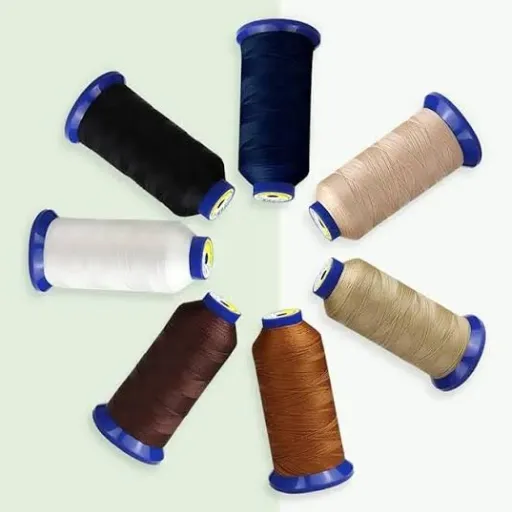
Thread size is where most buying errors start. Five systems are in active use, and they run in opposite directions. A sewing thread size chart only helps if you know which system its numbers belong to, so start with the definitions.
| System | What it measures | Direction | Example |
|---|---|---|---|
| Tex | grams per 1,000 m | Higher number = thicker | Tex 30 |
| dtex | grams per 10,000 m | Higher number = thicker | dtex 300 |
| Denier | grams per 9,000 m | Higher number = thicker | 225 denier |
| Nm (metric count) | 1,000 m hanks per kilogram | Higher number = finer | Nm 40 |
| Ne (cotton count) | 840-yard hanks per pound | Higher number = finer | 40s |
| Ticket | commercial label only | No fixed physical meaning | Ticket 120 |
Tex, dtex, and denier are direct systems: they measure mass per fixed length, so a larger number is a heavier thread. Nm and Ne are indirect systems: they measure length per fixed mass, so a larger number is a finer thread. That inversion causes most of the confusion. A “40” in one system is a medium apparel thread; a “40” in another is a fine one.
Tex is the system to quote on a purchase order, because it is a direct measurement and every other system converts into it. A tex thread size cannot be misread the way a cotton count can, and thread denier runs the same direction, so the two convert without a lookup table (Wikipedia: Units of textile measurement).
To make it concrete, the standard conversion chart equates 40 weight with Nm 40, 225 denier, Tex 25, and dtex 250 (WAWAK conversion chart). A 40s/2 cotton-count thread is a different animal. The 40 is the single-yarn count in Ne, and the 2 is the number of plies. The plied count is 40 divided by 2, or 20 Ne, which converts to Tex 29.5.
Ticket numbers are the last layer. Coats gives the commercial formula as ticket equals 1,000 divided by tex, multiplied by 3 (Coats: Thread Numbering). A Tex 40 thread therefore works out at Ticket 75. Applied to a 40s/2 at Tex 29.5, the formula gives about Ticket 102, which is why suppliers list that thread anywhere from Ticket 100 to Ticket 120.
Coats also publishes the warning that matters more than the formula: a ticket number in one type of thread is not the same as in another. Ticket 40 cotton is not Ticket 40 core-spun. The ticket system is a commercial shorthand, not a measurement, and it should never be the only size on a purchase order.
Sewing machine tension and needle choice depend on getting this layer right. If your machine is skipping, looping, or shredding thread, check the size relationship between thread, needle, and fabric before blaming the machine (choosing the right thread for your sewing machine).
Matching Thread Weight to Fabric and Needle
The table below pairs fabric weight with a construction, a count, a tex range, and a needle. The Ne/ply column uses counts that are standard in bulk apparel and that this site’s own thread range covers.
| Fabric weight | Example fabrics | Construction | Ne/ply | Tex | Needle (metric/US) |
|---|---|---|---|---|---|
| Very light | Chiffon, voile, organza, fine silk | Fine spun polyester or cotton | 60s/2 | 17-20 | 65/9 to 70/10 |
| Light | T-shirt jersey, lawn, lining | Spun or core-spun | 50s/2 | 23-25 | 70/10 to 80/12 |
| Medium | Poplin, shirting, most knits | Core-spun polyester | 40s/2 | 27-30 | 80/12 to 90/14 |
| Medium-heavy | Denim, twill, workwear | Core-spun or bonded polyester | 40s/3, 30s/2 | 40-45 | 90/14 to 100/16 |
| Heavy | Canvas, upholstery, bags | Bonded polyester or nylon | 20s/2 to 20s/3 | 60-80 | 100/16 to 110/18 |
| Extra heavy | Leather, webbing, tarpaulin | Bonded nylon | 20s/4 and up, 210D/3 | 90-105 | 130/21 to 160/23 |
Weight bands follow WAWAK’s published Tex ranges for lightweight, medium, and heavy thread. Needle pairings follow the diameter charts used by industrial thread suppliers and the needle conventions printed on machine charts. Your machine manual is the final authority for your specific model.
Read this as a sewing thread weight chart in tex rather than in weight numbers, because the two systems do not line up at every size. A 40-weight thread sits at Tex 25, and a 40s/2 thread sits at Tex 29.5. Both carry the number 40. The column that matters on a purchase order is tex.
The table will disagree with itself at the edges, and that is normal. A heavy knit can take a 40s/2 core-spun where a heavy woven takes 40s/3. A dense canvas might run a heavier thread than its weight suggests because the seam is short and loaded. Treat the table as a starting point for sampling, not a substitute for a sew-off.
Illustration: A bag maker switches from spun to core-spun thread on a 1,000-denier nylon shell to stop thread breakage at the needle. The breaks stop. The visible topstitch, though, goes dull and slightly shiny compared with the previous seam. Nothing is wrong with the thread; the polyester sheath and the nylon shell reflect light differently. The correction is a construction with a matching sheath, not a heavier thread. Names and figures in the examples in this article are illustrative. The document patterns are not.
Which Types of Sewing Thread for Which End Use?
Construction and size narrow the choice. End use settles it.
| End use | Default choice | Size starting point |
|---|---|---|
| Apparel and knits | Core-spun polyester | 40s/2 to 50s/2 |
| Denim and workwear | Core-spun polyester | 40s/3, 30s/2 |
| Quilting | Cotton or cotton-wrapped poly | 40 or 50 weight |
| Upholstery | Bonded polyester or nylon | Commercial size by abrasion |
| Leather and footwear | Bonded nylon | Commercial size by thickness |
| Outdoor and technical | Bonded polyester or nylon | Commercial size by exposure |
| Embroidery | Trilobal filament, rayon, metallic | 40 weight typical |
| Automotive and industrial | Bonded nylon, high-tenacity filament | Commercial size by heat |
Four of those rows deserve a note, because the choice is not obvious from the fiber alone.
Industrial and automotive. Industrial sewing thread in these sectors is usually bonded nylon or high-tenacity filament, specified against the heat the part sees after sewing. Trim is often pressed or heat-set after the seam closes, and a thread chosen only for seam strength can fail at that stage.
Quilting. Cotton or cotton-wrapped polyester in 40 or 50 weight, matched to cotton batting and backing. Weight and fiber match matter more than construction here. For the project-specific version, see the complete guide to sewing thread for quilting and embroidery.
Leather and footwear. Bonded nylon heavy enough for the material thickness, with a cutting-point needle. Core-spun rarely suits leather, which doesn’t flex the way cloth does.
Outdoor and technical. Bonded polyester for UV exposure, bonded nylon where abrasion and flexing dominate. That UV and heat trade-off decides more outdoor specs than strength does.
Illustration: An automotive trim supplier presses a bonded nylon seam at the same temperature that works on bonded polyester. The nylon softens and the seam flattens. Nothing failed on the machine and nothing failed in the seam test. The specification failed at the finishing stage, because nobody checked the heat tolerance of the fiber against the process downstream.
Buying Sewing Thread in Bulk: Cones, Plies, and Spec Sheets
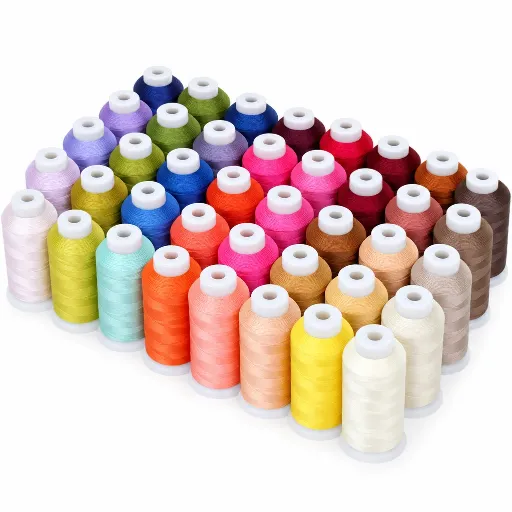
The packaging matters as much as the thread. A cone is wound for machine use, with a tapered base that sits on a holder and pays off cleanly at speed. A spool is a smaller put-up for domestic machines, and a tube is a straight-sided package for larger industrial volumes. Buying “thread” without naming the put-up is how a factory ends up with 100 small spools where it expected 20 cones.
Plies work the same way at the yarn level. A 40s/2 is two plies of 40-count single yarn; a 40s/3 is three. More plies at the same single count give a heavier, stronger thread, which is why 20s/2 and 20s/3 are not interchangeable even though both get called 20s.
A purchase order that avoids the double-shipment problem needs five fields. List the fiber, the construction, the size in tex with count and ply in brackets, the finish (bonded, mercerized, soft, glazed), and the put-up in meters or kilograms per cone. Add a color standard and a colorfastness test method if the seam will be visible.
Illustration: A sourcing coordinator raises a purchase order for
40/2 spun polyester, 6,000 meters, quoting a supplier’s Tex 27 line. The factory tech pack says Tex 30. She orders both rather than reconcile them. They are the same thread, and the second container was avoidable. Writing “Tex 27 to 30, 40s/2, spun, 5,000 m cones” on the order would have prevented it.
Part of a supplier’s job is to make that reconciliation unnecessary. Hebei Lida works through 80-plus partner textile manufacturing facilities and holds stock across five warehouses in China. A thread query can usually be matched to a construction that already exists rather than built from scratch. The team brings 15-plus years across seven product lines and seven application sectors.
For a recognizable reference point, the Gütermann CA02776 all-purpose thread is a spun polyester in a mid-range count that most sewists have used. It’s a fair benchmark for what “all-purpose” means in practice. What a bulk buyer needs beyond that benchmark is a written specification and a test method, and thread testing and quality control covers what to ask for. Ask for certificates if your customer requires them, and check the scope line rather than the logo, because a certificate covers a specific product and facility.
Frequently Asked Questions
What are the different types of sewing thread?
Sewing thread types divide by fiber (polyester, cotton, nylon, silk, rayon, specialty) and by construction (spun, core-spun, continuous filament, textured filament, bonded, monofilament, wrapped). That gives more than twenty combinations, and each is a distinct product with its own strength, appearance, and heat behavior.
Which is thicker, 40 weight or 50 weight thread?
40 weight is thicker than 50 weight. Weight numbers follow the Nm system, where a lower number means a heavier thread. The same logic applies to 30 versus 40: 30 is the heavier of the two.
What is the strongest thread to use for sewing?
For a given size, bonded nylon has the highest tensile strength and elongation, which makes it the strongest choice for load-bearing seams. Bonded polyester is close and holds up better to UV and heat. “Strongest” also depends on matching the thread to the fabric, since an over-strong thread can cut a light cloth.
What is the most common sewing thread size?
In apparel production, 40s/2 core-spun polyester is the most common size. In home sewing, an all-purpose 40-weight spun polyester covers the widest range of fabrics.
Is size 10 or 20 thread bigger?
Size 10 is heavier than size 20 in cotton count, because cotton count runs finer as the number rises. Confirm which system the label uses first, since tex and denier run the opposite way and a “20” in denier is much finer than a “10” in cotton count.
Is polyester or nylon thread better?
Nylon is stronger and stretches more, which suits abrasion and flexing. Polyester resists UV better and tolerates more heat, which suits anything that will be washed, dried, ironed, or left in sunlight. For outdoor gear the answer is usually polyester; for leather and webbing it is usually nylon.
Conclusion
The types of sewing thread come down to three decisions that a buyer can make in order. Choose the fiber against heat, light, and moisture. Choose the construction against abrasion, seam appearance, and the machine. Choose the size against the fabric weight and the needle, and write it in tex so nobody has to convert it back.
Most thread problems are specification problems, not product problems. The duplicate container, the dull topstitch on a nylon bag, the flattened seam at the pressing stage: each one traces back to a field that was left off a document. Once fiber, construction, tex, and ply are written down, the conversation with a supplier becomes a comparison instead of a guess.
If you are specifying thread for a production run, talk to our thread team with your fabric, needle, and seam requirements. We will match the construction and count to what the seam actually has to do, and put the specification in writing before anything ships. You can also reach the team on WhatsApp or by phone at +86-13223278375.