




The best yarn for blankets is wool or a wool blend for warmth that lasts, acrylic for budget and machine washing, and cotton for a light summer blanket. Choose by how the blanket will be washed and how heavy it will hang, not by how soft the skein feels in the shop.
That’s the short answer to what yarn is best for blankets. The longer answer starts with a fact most buying guides leave out.
Rachel finished a bulky acrylic throw in November. It was the softest yarn in the shop, worked on the needle size printed on the band, and for two months it looked exactly like the photograph. By February it was 15 cm longer, the stitches had flattened, and the whole thing sagged off the arm of the sofa.
Nothing had gone wrong with her tension. The yarn had been asked to do something it was not built for. A blanket carries several kilos of its own weight, every day, for years. Most yarns sold for blankets are chosen for how they feel in the hand, never tested against that load.
This guide works through the choice in the order that decides it: how the blanket gets washed, how heavy it hangs, how warm it needs to be, what weight the pattern calls for, and only then which fibre follows.
Key Takeaways
- A blanket is the only craft project that must carry its own weight for years. A loose, low-twist yarn collapses under that load and the blanket “grows” in length while the stitches flatten.
- Washability is the first decision, not the last. A beautiful wool blanket that can’t go in a machine will not get used. For most people, superwash wool is the only wool that belongs on a bed.
- Warmth and weight are different properties. Loft traps air; weight presses down. A bulky acrylic throw and a DK wool throw can be equally warm and feel nothing alike.
- Acrylic pills because short fibres work out of a loose twist under agitation. A tighter twist, a longer staple, or more plies resists it at any fibre content.
- Chenille is a pile structure, not a spun yarn. That’s why it sheds, mats, and worms, and why “anti-pilling chenille” is a contradiction in terms.
The Short Answer: Best Yarn for Blankets by Type
Find your blanket, then read the sections below for the reasoning. The last column is where most disappointing blankets come from.
| Blanket type | Best fibre | Weight | Needle / hook | What goes wrong |
|---|---|---|---|---|
| Bed blanket | Superwash wool, or a wool-rich blend | Worsted (#4) to bulky (#5) | 5 to 8 mm | Untreated wool felts in the first warm wash |
| Sofa throw | Tight-twist acrylic, or acrylic-wool | Bulky (#5) | 6 to 9 mm | Low-twist yarn sags and grows with daily use |
| Baby blanket | Soft cotton, organic cotton, or fine merino | DK (#3) | 3.75 to 4.5 mm | Frequent washing fuzzes a loose-spun yarn fast |
| Summer blanket | Cotton, or a cotton-linen blend | DK to worsted | 4 to 5.5 mm | Cotton gets heavy when damp and stretches on a line |
| Outdoor and picnic | Tight-twist acrylic, or a cotton-rich blend | Worsted (#4) | 4.5 to 5.5 mm | A soft fluffy yarn goes bald where it meets the ground |
| Decorative chunky throw | Chenille or roving-style bulky | Super bulky (#6) to jumbo (#7) | 9 to 15 mm | Chenille worms and mats; the fabric is the whole point |
Want to see how a tighter twist behaves before you commit to a hundred skeins? Request a yarn sample and spec sheet and we will send the construction details with it.
What Yarn Should You Use? A Four-Step Decision
Most guides start at fibre and work backwards. That is why they produce a list of materials rather than a recommendation. Start here instead.
- How will it be washed? Machine, hand, or spot-clean only. A baby blanket gets washed weekly. A decorative throw gets dusted.
- Where will it live, and how much will it be leaned on? A bed blanket hangs. A sofa throw gets sat on and walked over.
- How warm does it need to be, and is that loft or weight? Different questions, different answers.
- What weight does the pattern call for? The only step where the pattern gets a vote.
Fibre falls out of the first three. If you reach step four still unsure, choose a tighter twist over a softer hand. You’ll notice the difference in year two, not week one.
Why Blankets Break the Usual Rules
A hat sits on a head. A sweater hangs from shoulders and gets washed a few times a season. A blanket differs in two ways that change everything.
It carries its own weight. A 50 × 60 inch throw in a bulky yarn weighs several kilos. That load pulls downward for years. In a tightly spun, plied yarn the fibres grip each other and resist it. In a loose, lofty, low-twist yarn they slide, the fabric relaxes, and the blanket gets longer and thinner. That is the “growing” problem, and it is a construction fault, not a tension fault.
It gets washed constantly. A blanket used daily might be washed thirty times a year. Each wash is agitation, and agitation works loose fibres to the surface. Over a decade that is several hundred cycles, which is how a yarn that looks perfect new becomes a halo of fuzz by year three.
A third force goes unmentioned in most buying guides: abrasion. Sofa arms, floors, pet claws, and car seats all rub, and abrasion resistance comes from twist and ply, not fibre. A tightly plied cotton outlasts a soft loose acrylic in a high-contact spot.
Warmth vs Weight: The Distinction Nobody Makes
Ask what the warmest yarn for a blanket is and most guides rank fibres. That answer is incomplete, because a blanket keeps you warm in two separate ways.
Loft traps air. Air is the insulator. A lofty yarn holds a layer of still air against you, which is why a light bulky acrylic can feel warmer than a dense DK wool of the same total weight.
Weight presses down. A heavy blanket feels comforting and stays put on a bed. It also drags on your shoulders and, in a loose construction, drags itself out of shape.
These pull in opposite directions, so the warmest blanket is not automatically the best one. For a cold bedroom, choose loft plus enough weight to stay in place: a wool or wool-blend bulky. For a sofa throw in a heated house, a lighter lofted yarn is warmer than its weight suggests.
Cotton sits at the other end: cool, dense, and heavy. That’s the property you’re buying, not a flaw. Contact Hebei Lida Textile Co., LTD for application-specific yarn.
Wool, Acrylic, Cotton, or Chenille: The Honest Trade-Off
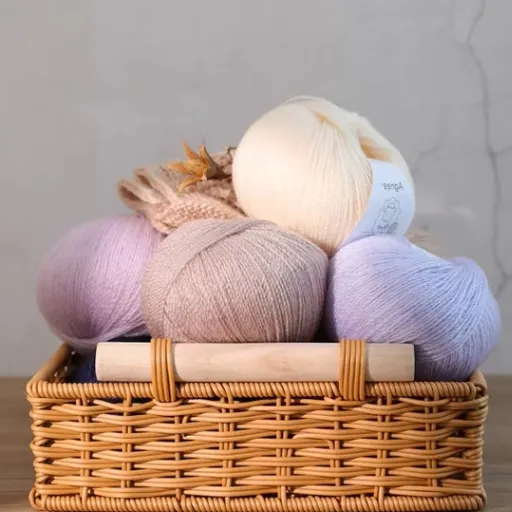
| Property | Wool | Acrylic | Cotton | Chenille |
|---|---|---|---|---|
| Warmth | High, even when damp | High, light for its warmth | Low to moderate | High |
| Machine washable | Only if superwash | Yes | Yes, but heavy when wet | Yes, with care |
| Pilling | Moderate; depends on twist | High in loose spins | Low | Sheds rather than pills |
| Holds shape under load | Best, because the fibre recovers | Poor in low twist | Moderate, but grows heavy | Poor; mats and worms |
| Breathability | Good | Poor | Best | Poor |
| Abrasion resistance | Good | Moderate | Good when plied | Poor |
| Cost per blanket | Highest | Lowest | Moderate | Moderate |
Wool: Warmth and Recovery, and Why Superwash Matters
Wool is the best blanket fibre on the list for one reason: it recovers. Stretch it and it comes back. That’s what keeps a wool blanket the same size in year five as it was in week one.
The catch is washing. Untreated wool fibres have overlapping scales that lock under heat and agitation. That’s felting, and it’s permanent. A beautiful untreated wool blanket washed once at 40 °C can come out fit for a doll.
Superwash wool is treated so the scales cannot lock, and it machine washes. For a blanket that will be used on a bed, superwash is not a luxury but the practical default.
Acrylic: The Budget Answer, and Its Real Weakness
Acrylic earns its place: cheap, machine washable, moth-proof, available in consistent colours across seasons, and warm for its weight. It’s why acrylic dominates the blanket market.
Its weakness is pilling, and the mechanism matters. Pilling happens when short fibres work loose under friction and tangle into small balls on the surface. Acrylic is usually spun from cut staple, so it has plenty of fibre ends to lose. Loose twists release them faster, and machine agitation accelerates the process.
That gives you three ways to specify against it: a tighter twist, a longer staple, or more plies. Any of the three reduces the loose ends that can escape. A tightly spun acrylic serves a sofa for years; a soft brushed low-twist acrylic haloes within months. The label rarely says which you have, so ask, or buy a sample and rub it.
For the full mechanism, see why polyester and other synthetics pill. For a closer comparison of the two synthetic blanket fibres, we have a side-by-side of polyester and acrylic in blankets.
Cotton: Cool, Heavy, and It Grows
Cotton is breathable, absorbs moisture, and feels cool against the skin, which makes it the natural choice for summer blankets and warm rooms.
Two properties to plan for. Cotton is heavy, and heavier still when wet, so a cotton blanket on a bed sags under its own weight. And cotton has no elasticity, so it doesn’t spring back. Dry it flat, not on a line, or you’ll add length you cannot remove.
Where cotton wins outright is baby blankets and summer throws, where breathability matters more than warmth. For cotton’s coolness with a little more structure, a cotton-rich blend is the compromise. We cover cotton-acrylic blends separately.
Chenille: A Pile Structure, Not a Spun Yarn
Chenille is what most people buy when they buy blanket yarn, and it’s worth understanding what it actually is.
A conventional yarn is spun: fibres twisted into a continuous strand. Chenille is built differently. Short fibres stand out perpendicular from a core, held by tight twists.
That pile is the softness, and it’s also the problem. The standing fibres abrade away, so chenille sheds. The structure compresses and mats under weight. And because the pile has no grip between stitches, chenille stitches slide into thin cords: the “worming” every chenille maker eventually meets.
One consequence worth stating plainly: “anti-pilling chenille” is a category error. Pilling is a property of spun staple yarns. Chenille doesn’t pill; it sheds.
None of this makes chenille wrong, only specific. It’s excellent for a light-use decorative throw where softness is the point and nobody drags it across a floor. It’s a poor choice for a bed blanket washed weekly.
Choosing the Right Yarn Weight for a Blanket
The Craft Yarn Council weight system runs from 0 (lace) to 7 (jumbo). For blankets, five categories matter.
| # | Name | Knitting needles | Crochet hook | Best for |
|---|---|---|---|---|
| 3 | Light (DK) | 3.75 to 4.5 mm / US 5 to 7 | 4.5 to 5.5 mm / 7 to I-9 | Baby blankets, summer blankets, drape |
| 4 | Medium (worsted, afghan, aran) | 4.5 to 5.5 mm / US 7 to 9 | 5.5 to 6.5 mm / I-9 to K-10.5 | The default for most blankets |
| 5 | Bulky (chunky) | 5.5 to 8 mm / US 9 to 11 | 6.5 to 9 mm / K-10.5 to M-13 | Quick throws, cosy sofa blankets |
| 6 | Super bulky | 8 to 12.75 mm / US 11 to 17 | 9 to 15 mm / M-13 to Q | Fast, plush, statement throws |
| 7 | Jumbo | 12.75 mm and up / US 17 and up | 15 mm and up / Q and up | Arm knitting, giant decorative pieces |
The CYC is careful about these numbers: “GUIDELINES ONLY: The above reflect the most commonly used gauges and needle or hook sizes for specific yarn categories.” Your pattern’s gauge always wins.
Bulky finishes faster but uses more yarn per square inch, so the speed saving is partly paid back in material. And super bulky and jumbo need a very simple stitch, because the fabric is the point; a cable or lace pattern disappears into a chunky yarn.
How Much Yarn Does a Blanket Take?
This is where most people under-buy and then discover the dye lot is gone. Sizes first, as commonly made:
| Blanket size | Typical dimensions |
|---|---|
| Baby | 30 × 40 in (75 × 100 cm) |
| Crib or pram | 36 × 54 in (90 × 135 cm) |
| Throw | 50 × 60 in (125 × 150 cm) |
| Twin | 65 × 90 in (165 × 230 cm) |
| Queen | 90 × 90 in (230 × 230 cm) |
For yardage, the most reliable public figure comes from FiberMath, which models blanket yardage from the median yards per square inch across 2,681 knitted and crocheted blanket patterns published on Ravelry. Their figure for a worsted-weight throw at 50 × 60 inches is roughly 2,820 yards knitted and 3,000 yards crocheted.
Two rules follow from that number, and they matter more than any estimate.
Buy one extra skein. Running short by half a skein at 80 percent completion is unrecoverable if the colour has been discontinued.
Buy the whole project from a single dye lot. Check the lot number on every ball at the till. Two skeins from different lots can differ visibly in the finished fabric, and the difference shows under a window, not under shop lighting.
For crochet-specific yardage by project, including baby blankets and full throws, see our crochet guide.
Why Your Blanket Grew, Pilled, or Went Bald
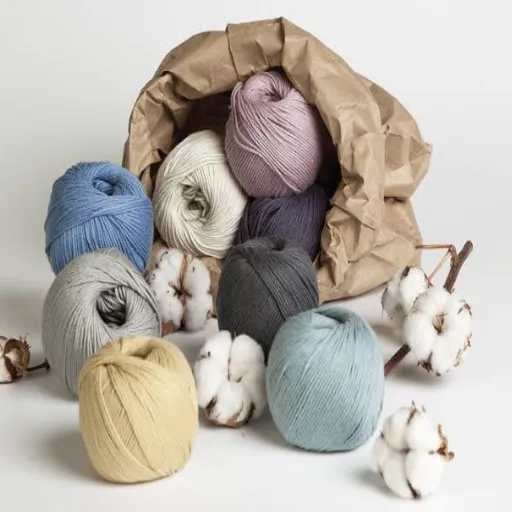
Almost every blanket complaint traces back to one of these. None of them is a tension problem.
It grew longer and thinner. A loose, low-twist yarn can’t hold its own hanging weight. The fibres slide, the fabric relaxes, and length appears from nowhere. The fix is a tighter twist or a denser gauge at the start, not a repair afterwards.
It pilled within a few months. Short fibres worked out of a loose twist under agitation. Washed weekly, a baby blanket gets there fastest. Wash inside a pillowcase on a gentle cycle, and skip fabric softener, which coats fibres and traps pills.
It wormed. Chenille’s pile structure, not your tension. There’s no fix.
It matted or felted. Heat plus agitation on a pile or untreated-wool fabric. Wash cool, dry flat, never tumble wool.
It went bald in patches. Abrasion, and the patches show you where: the sofa arm, the floor edge, the spot the dog sleeps. A higher ply resists it, and fibre choice alone can’t solve this one.
It felt heavy and clammy. Cotton behaving as cotton does. Not a defect, but a reason to choose a different fibre for a winter bed.
Talk to Hebei Lida Textile Co., LTD about your yarn application.
Caring for a Blanket So It Lasts
Wash cool, on a gentle cycle, with low agitation. Heat and agitation damage every fibre on this list.
Dry flat: hanging a wet blanket stretches it permanently, and a wet wool blanket is heavy enough to damage its own shape. Store folded, not on a hanger, and skip fabric softener on anything that pills. For fibre-specific care, our guide to washing acrylic yarn covers temperatures and drying.
Frequently Asked Questions
What is the best yarn for a blanket?
Wool or a wool blend for warmth and shape retention, acrylic for budget and washability, and cotton for a cool summer blanket. Choose superwash wool if the blanket will go in a machine.
Is acrylic or wool better for a blanket?
Wool holds its shape and stays warm when damp; acrylic is cheaper and easier to wash. For a bed blanket, superwash wool is the better long-term buy. For a sofa throw on a budget, a tight-twist acrylic is entirely reasonable.
What is the warmest yarn for a blanket?
Wool, closely followed by acrylic, because both trap air well. Loft matters as much as fibre: a bulky acrylic can feel warmer than a dense DK wool.
What yarn weight is best for a blanket?
Worsted (#4) is the default and suits most patterns. Bulky (#5) finishes faster and makes a cosier throw. DK (#3) is right for baby blankets and drape. The yarn weight for a blanket matters most on a bed, where a heavier fabric stays put.
How much yarn do I need for a throw blanket?
Roughly 2,820 yards knitted or 3,000 yards crocheted for a 50 × 60 inch worsted throw, based on FiberMath’s analysis of 2,681 Ravelry patterns. Buy one extra skein and keep to a single dye lot.
Can you use cotton yarn for a blanket?
Yes, and it is the best choice for a summer or baby blanket. Plan for the weight: cotton is heavy when wet and has no elasticity, so dry it flat.
What is the best yarn for a baby blanket?
A soft DK cotton, organic cotton, or fine merino. It will be washed often, so prioritise washability and a tighter spin over softness. We cover acrylic for baby blankets separately.
What is the best yarn for a blanket for beginners?
A worsted-weight tight-twist acrylic on a simple stitch: forgiving, washable, and cheap enough to practise on. Our guide to choosing your first yarn covers the basics.
Sourcing Blanket Yarn at Scale
If you are specifying blanket yarn for a range rather than a single project, the variable that decides your returns rate is consistency: the same count, twist, and colour from lot to lot, across seasons.
A blanket is a large piece of fabric with no seams to hide variation in, so two dye lots that differ slightly will show across the width of a single throw. Our team supplies construction specifications and lot documentation with each order so your repeat runs match the first. Talk to us about your requirements and we will match a construction to your specification.
Conclusion
The best yarn for blankets comes down to four questions, asked in order: how will it be washed, how much will it be leaned on, how warm does it need to be, and what weight does the pattern call for. Fibre is the answer to those questions, not a starting point.
Here is the short version to carry into the shop:
-
- Bed blanket: superwash wool or a wool-rich blend, worsted to bulky.
- Sofa throw: a tight-twist acrylic, bulky, with one extra skein bought.
- Baby or summer blanket: cotton or fine merino, DK, dried flat.
- Chenille: a light-use decorative throw, chosen with its shedding and worming understood.
Priya learned the last part the expensive way. She made a chenille throw for a south-facing sofa, and by the following spring the arm nearest the window had gone flat and matted where the sun and the family had both worked on it. The yarn was not faulty. It was doing exactly what a pile structure does under abrasion.
Choose for the life the blanket will actually have. It will still be on your sofa long after the colour has gone out of fashion, and a well-chosen yarn is the only thing that keeps it looking like the day you finished it.
Planning a blanket range rather than a single project? Send us your specification and we will match a construction to it, with samples and lot documentation.