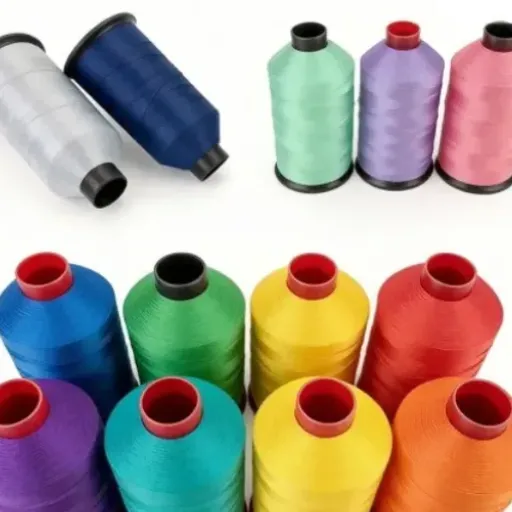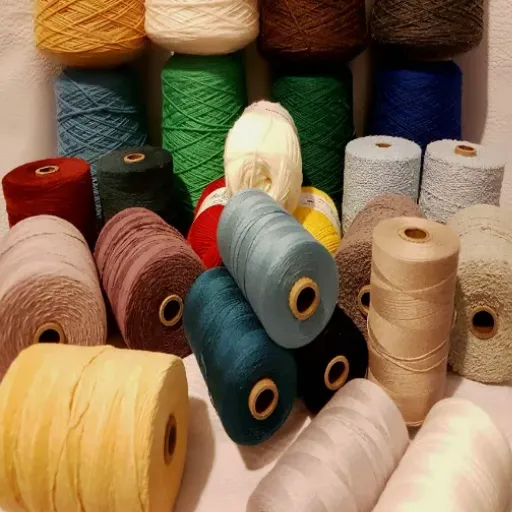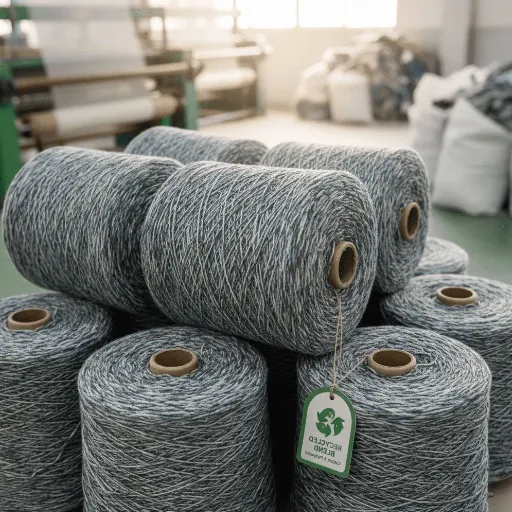



The entire yarn production process has got in most of the 7-9 steps which change raw fiber to threads. In addition to that, each step is also a check lead, because of carding or drawing disastrous in the initial levels beget unevenness, relative weak points, and disgruntled end users at the tail end.
The established descriptions of the yarn production process are suitable for engineering students in textiles. Almost never to attend are the buyers, sourcing managers and designers to such an extent to be taken through all of the production stages providing practical ways, like what to demand from suppliers, what to check when visiting the factory, how the design karma gets back to the yarn which is finally produced.
Here, we shall resolve this difficulty using the abovementioned plan and step by step will assist you in understanding complete yarn production. We will analyze the manufacturers of the region, relate to each step the correspondence of the decisions to the development of the textile material and practical approach in respect of the features of the product that you will receive. Hebei Lida textile co.; Ltd since its inception as a organization, has engaged in yarn production with wide customers globally in fashions, home textiles and industrial application as depicted in this map, which is for internal explanations and for customers as well.
For personalized assistance or more details, please contact us via our support page.
Key Takeaways
- Yarn production runs through 7-9 distinct stages, from fiber selection through finishing, and each stage is a quality checkpoint.
- Two main routes exist: staple-fiber spinning (cotton, wool, blends) and continuous-filament melt spinning (most synthetics).
- Process choices like drawing ratio, twist level, and finishing decisions directly shape the strength, hand, and end-use behavior of your finished yarn.
- Lead times typically run 1-3 weeks for standard stock yarn, 4-6 weeks for fresh production runs, and 6-12 weeks for custom specifications.
- Modern automation and real-time monitoring across the production line is now table stakes for buyers expecting consistent yarn batch after batch.
What Is the Yarn Production Process?
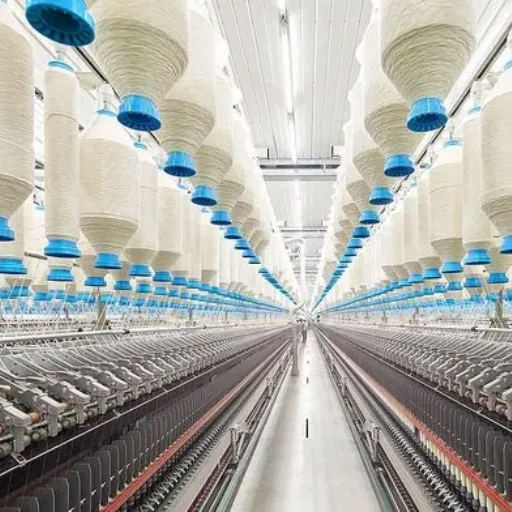
Yarn production is the set of mechanical and thermal steps, which converts raw fiber, be it natural or synthetic, into yarn (continuous, twisted strand) capable of application in weaving, knitting, or other fabric projects. As the fiber of the yarn unfolds, the whole process travels through 7 to 9 steps that bump into one another.
Why is the process relevant to consumer? Because the outcome of all these stages is what is put in the packaging for delivery. Some factories, with their superior technologies, produce yarn that is evergreen and the outcome is always a very good yarn. In some factories, with their poor technologies, they produce yarn which snaps when weaving, the dye does not stick or the washing durability is disastrous for the manufacturers. Understanding how yarn manufacturing actually flows on the factory floor turns vague spec sheets into real questions you can ask suppliers.
Staple-Fiber vs. Continuous-Filament Production: Two Routes to Yarn
Yarn production splits into two fundamental routes based on the starting fiber:
- Staple-fiber yarn: Short-cut fibers (cotton, wool, polyester staple, acrylic, blends) are aligned, drawn, and spun together. This is the classic spinning route, and it’s what most people picture when they think of yarn making.
- Continuous-filament yarn: Synthetic fibers (polyester, nylon, polypropylene) are melt-extruded as one long continuous strand. The “spinning” happens at the spinneret, then drawing and texturing finish the work.
A buyer sourcing cotton-blend bedding yarn is on the staple-fiber route. A buyer sourcing high-tenacity polyester for car seatbelts is on the continuous-filament route. Different machinery, different timelines, but the same end goal: a consistent, specified yarn.
The 8 Steps of Yarn Production
Here is the staple-fiber yarn production process in 8 steps. We’ll note where the continuous-filament route diverges so synthetic-yarn buyers can map it onto their own sourcing decisions.
Step 1: Fiber Selection and Preparation
The production commences before the whirring of any machine. The raw fiber variety- be it bales of cotton, polyester, wool, or a mixture- is assessed for quality, as well as for presence of moisture and impurities, and it is recorded accompanying the order that it was placed. As the producers of a responsible production do keeping records of every bale or chip lot information for clear accountability.
What to look for so that the buyer is safe: information concerning the origin of fibers, record of inspection and quality control immediately upon receipt of materials, recent reports on the status of blending that should substantiate whether any bales were thinned and how this is supported. The first QC checkpoint sits here and it is also invisible from the outside unless you ask.
Step 2: Opening, Cleaning, and Blending
Once the bales arrive, they are untied and opened, fibers are loosened and various impurities like seed, dust and short fibers are stripped. Modern lines for preparation use chute feeders and automated blending devices for mixing fiber from numerous bales permanently. As a result, at the end of the process a clean evenly mixed fiber feed is ready for carding.
Q. C. based measure: visual observations of cleanliness and uniformity of blending. This stage is often omitted or performed carelessly and results in “evenness” of yarn defects later.
Step 3: Carding (and Combing for Premium Yarn)
Carding is a technique that involves lining up fibers in approximately a common direction, separating and eliminate the remaining short fibers, and then creating a continuous loose thread of paired fibers known as a sliver. For high end yarns perfect for excellent apparel or bedding sets, the producers perform combing which is performing more fiber selection procedure and an increase in the loose thread count.
When there is a request from a designer, such as Sarah, who is into a touch of made to order luxury home décor brand specializing premium bedding in Portland, to manufacture a combed cotton for primary sheet sets, the difference is experienced in the texture and lifespan of the end product. The combed fiber is more consistent the strand with which fabric is woven is smoother, and the smoothness of the fabric in below are traces of less pill in the fabric for some time. Omitting the combing when a premium standard is set produces initially pleasing bedding, however, the bedding starts developing pills after just a couple of washes.
QC checkpoint: sliver evenness and fiber length distribution.
Step 4: Drawing and Doubling
In parallel drawing, a direction parallel to the machine direction, multiple slivers are combined and stretched in parallel through pairs of rollers that increase in speed in a gradual manner. This improves the processing of fiber crimped, aligned fibers and creates a more regular sliver. Most quality yarn production undergoes two or three drawing stages.
If a manufacturer performs only few drawing passages, resulting in tension in the yarn in the cv% is higher. If a manufacturer does too many passes, this practice becomes avoidable. How many drawing passages a manufacturer subjects the product you ask about, is not a question many buyers pose but it is a just one.
QC checkpoint: sliver evenness, weight per unit length.
Step 5: Roving (Pre-Spinning Preparation)
The sliver is drawn even more attenuated, twisted, and held together at a small twist for the next operation. Roving is the front-end material of ring spinning which is a commonly practiced highly productive spinning technology. Some open-end and air jet spinning systems bypass this roving stage.
QC checkpoint: roving uniformity and twist consistency.
Step 6: Spinning
This is where yarn becomes yarn. The roving is drawn out further, twist is applied, and the fiber bundle is locked into a continuous strand wound onto a bobbin. Several spinning methods are in use today:
- Ring spinning: Traditional, high-quality, slower, the standard for premium yarn.
- Open-end (rotor) spinning: Cost-effective, high-volume, ideal for medium-quality applications.
- Air-jet spinning: Fast, smooth output, well-suited to synthetic fibers.
- Compact spinning: A premium variant of ring spinning that produces low-hairiness yarn.
For continuous-filament synthetic yarn, the analog of spinning is melt extrusion: polymer chips are melted, forced through a spinneret, and drawn down into continuous filament. Different spinning methods produce different yarn properties, and the choice usually depends on the application. For a deeper comparison, see our overview of yarn manufacturing techniques.
QC checkpoint: yarn count consistency, twist accuracy, strength uniformity, package weight.
Step 7: Winding, Twisting, and Plying
Once the yarn is manufactured with a spinning frame, the next stage is to put it into suitable package (cone, beam or tube) for transfer to the following processes or sections. Also in this stage, yarn can be twisted in various forms such as doubling, cabling which is the combination of two yarns; singles or plies/clusters to make the final product, highly twisted multi-ply yarn useful for industrial purposes.
Two-ply yarn is stronger and more balanced than single-ply yarn. Cabled construction is standard for industrial yarn manufacturing where extreme tenacity matters.
QC checkpoint: package weight uniformity, ply twist accuracy, splicing quality.
Step 8: Finishing, Testing, and Packaging
After the yarn finisher, at the last stages, the yarn undergoes finishing for the end usage. In the case of synthetic yarns, heat setting is used as a means to lock the fibers in place after the yarn structure has been completed hence its potential to strength bonds between fibers in them is low. A number of other finishes including antistatic, antimicrobial, water-repellent, single by UV stabilizers, and provision of dye-stuff are also offered here. Yarn is taken through the final quality control test and prepared to be shipped.
QC checkpoint: final yarn certification, batch documentation, retention sample collection.
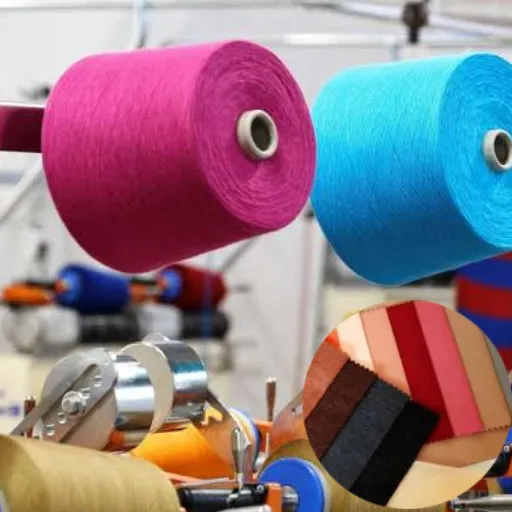
For a practical experience of the way spinning and withdrawal is performed at the factory being at a working concentration, let us look at, for instance, a typical spinning mill. Contact Hebei Lida Textile Co., LTD today for professional yarn manufacturing solutions tailored to your business needs.
Quality Control Throughout the Yarn Production Process
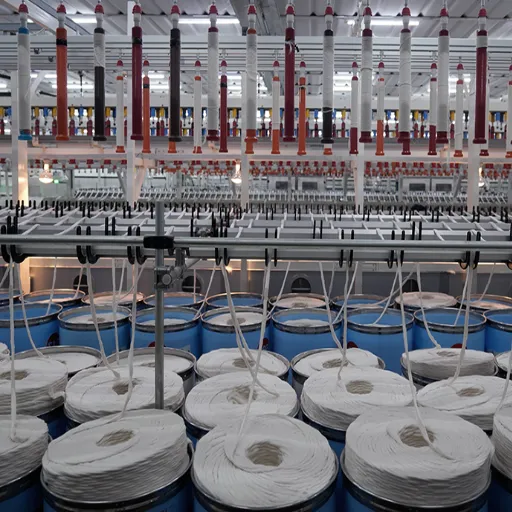
Quality control isn’t a separate stage at the end. In a well-run mill, QC is layered into every stage above. The most common test methods buyers should know:
- USTER evenness testing: measures yarn unevenness, thin places, thick places, and neps; the global benchmark
- Tensile testing: per ASTM D2256 or ISO 2062, measures breaking load and elongation
- Hairiness measurement: H value, predicts pilling and weaving behavior
- Twist measurement: confirms TPI/TPM matches the specification
- Moisture content testing: critical for cotton and natural fibers
An excellent QA management involves tangible results. These include keeping records of all the tests conducted at every single step of the process, storage of samples, proving to the effect that all batches of cones could be traced back to a specific production and test session.
Lin Wei is responsible for the production of a located spinning mill. It is situated in the outskirts of Shanghai. This happened this way towards the end of 2024. One early dawn, he observed one of the drawing-frames in his line running off calibration and distorting the sliver slightly but defying it being noticed without USTER monitoring. Understood—therefore, inappropriateness now will prompt yet another 90-minute line downtime, everything will be corrected and production for the last 3 hours will be simply written off. The damage in this break was actually real, but quite minor. Allowing that sliver in that state up to the spinning, packaging and dispatch and eventually being rejected by the key weaving customer due such wreak havoc would have caused losses of an order of magnitude greater. This is the point where the live quality control system practiced at every possible stage offers you return.
For more on what good operations look like inside the factory, see our piece on yarn factory operations.
How Production Choices Shape Your Finished Yarn
Production decisions aren’t background details. They directly determine how your finished yarn behaves in weaving, knitting, dyeing, and end use:
- Drawing ratio: more drawing means more parallel fibers, higher tenacity, and better evenness; under-drawing leaves a weaker, less consistent yarn
- Twist level (TPI / TPM): higher twist means stronger and stiffer yarn but harsher hand; lower twist gives a softer hand but weaker yarn
- Spinning method choice: ring-spun yarn has different hand and hairiness than open-end yarn made from the same fiber
- Finishing treatments: a yarn pre-treated for vat dyeing absorbs dye differently than untreated yarn; UV stabilizers in industrial yarn determine outdoor lifespan
If you’re working on a custom specification, these are the levers your manufacturer pulls during custom yarn manufacturing. Specifying them clearly up front saves rounds of sampling and shortens your time to a final approved yarn.
Typical Lead Times in Yarn Production
Lead times reflect what’s customized. Off-the-shelf yarn ships fast because it’s already produced; custom yarn takes longer because it requires fresh production runs and multiple QC checkpoints.
Realistic ranges for buyers planning timelines:
- Stock yarn (standard specifications already in inventory): 1-3 weeks from order to shipment
- Standard production runs (new batch, common specs): 4-6 weeks
- Custom yarn production (custom blend, color, finish, twist): 6-12 weeks
- Highly custom industrial yarn (custom denier, finish, certification): 8-14 weeks
What stretches lead times: custom fiber sourcing, blending validation runs, custom dyeing or finishing, third-party certification testing, and packaging requirements that differ from your manufacturer’s defaults. Buyers can shorten lead times by giving clear specifications upfront, approving samples promptly, and accepting standard packaging where it doesn’t affect end use.
Modern Automation and Smart Manufacturing in Yarn Production
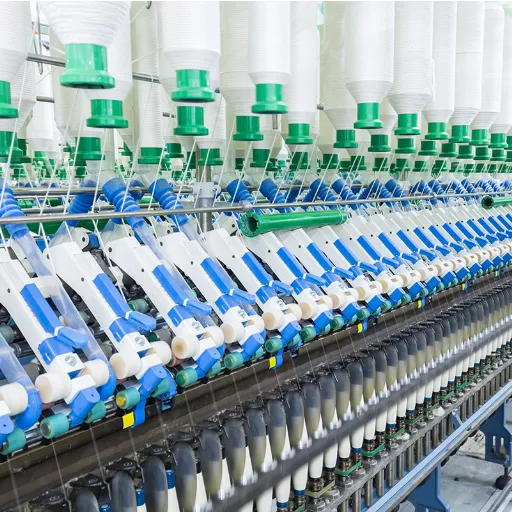
In 2026, the yarn production line is going to differ from the line of 2010. Real-time, automated processing of disturbing impacts, opening of bales without human intervention and prevention of wearing of spinning frames, monitoring over changes of yarn quality with time shifts and machines specified is general practices of competitive mills. Newer monitoring systems such as USTER’s can identify an increase in evenness deviation in the yarn within minutes, not hours after the end of production.
Why does automation matter for buyers? Three reasons:
- Consistency: real-time monitoring catches drifts that human inspection misses
- Faster lead times: automated bale handling and chute-feed systems reduce changeover time between specs
- Better traceability: every bobbin can be tied back to specific machine, shift, and operator data
When you tour a manufacturer or evaluate one remotely, asking about automation and live monitoring is a fast way to gauge how seriously they take consistency. For more detail on what to look for, see our guide to yarn manufacturing equipment.
Frequently Asked Questions
Could you inform me about the process of how yarn is manufactured from the fibre, please?
The production of yarn is a very detailed process which comprises 7-9 processing steps. The purpose of the process is to convert the crude fiber which can be either natural or man-made such as hemp, jute, wool, polyester or polypropylene, and many others, into a twisted band with a continuous length which can be woven or knitted. Fiber opening and cleaning, opening and cleaning fiber, carding, drawing, roving, spinning, winding and finishing are in the cycles.
How stages of yarn manufacturing differ?
Eight main stages or procedures include fiber selection and done to stiffen over the fibers, then carding (and if necessary combing), drawing and doubling, roving, spinning, winding and plying, and testing, and finally, the last stage is outlining– testing and packaging. Unlike other types of production, for the making continuous-filament synthetic yarn only a limited number of initial stages is required. It is the melt extrusion in the spinning stage.
How is yarn produced from raw fiber?
Raw fiber is cleaned, aligned, drawn out into a thin uniform strand, twisted to lock fibers into a continuous yarn, and then finished and tested. The exact path differs for short-cut staple fibers like cotton and continuous-filament synthetics like polyester, but both end with a tested yarn ready to ship.
What is carding in yarn production?
Carding is the stage where fibers are aligned roughly parallel, remaining short fibers and impurities are removed, and the fiber mass is shaped into a continuous loose rope called sliver. Carding sets up the evenness and quality of every later stage, so weak carding limits the quality of the finished yarn.
What is the difference between spinning and yarn production?
Spinning is one of the steps in the process of forming thread, where twisting is embossed into the fibers, creating a length of thread. Production of thread is an extensive procedure that involves working with fiber in its original state up till the last stage where it is tested and packed into the form of a finished thread apart from the stage before and after spinning.
What is the Time Frame for making of the Yarn?
In stock, standard yarn is available to be shipped in 1 to 3 weeks. Specially chic yarn, on the other hand, is at its utmost delivery period- 4 to 6 weeks. Specialty fiber compilers, such as wool, polyester, silk and other blends, collections and dyes take over 6 to 12 weeks for production. While very specialized production of industrial floors that have even attestation tests to be conducted will take between 8 to 14 weeks.
How is the yarn production controlled on quality grounds?
Quality control is inherent to all the stages and does not come at the end only. Producers control the level of fiber cleanliness, sliver evenness, drawing weight evenness, spinning uniformity, twist control and test the final yarn capacity, ribcopy and appearance. There is also fitting control, whether or not countergum is added in the carding process. A good mill saves all the quality records, samples for retention and keeps track of each batch.
For premium yarn manufacturing and dependable supply support, contact Hebei Lida Textile Co., LTD today.
Sourcing With Confidence Once You Know the Process
The making of yarn includes making a startling number of decisions, combinations of settings on machines that involve fine tolerances, as well as several forms of quality control measures. The difference between you and these buyers is that you understand the process, which, in most cases, most don’t: it gives you this confidence and the ability to ask very specific products/bulk questions in very informal levels, regarding certain prices and who amongst them has the edge, is this a manufacturer’s well-managed production line or these are manufacturers who supply and prey.
Three things to take note of. Primarily, every segment is a significant qualifier which well established organizations confirm with proof. Next, remember that your yarn does not act the way it does simply because of how carding, drawing, spining and finishing is carried out; one has to remember that choices available at each stage and most importantly after drawing also has a significant influence. Lastly, lead times determine how customized the production is and being very clear upfront about requirements is the most effective way to minimize a timeline.
If you’re scoping a yarn project, sourcing for a new application, or evaluating a switch in supplier, contact Hebei Lida Textile Co., LTD to walk through your specifications. We’ll talk through fiber options, production routes, and lead times, then send samples and the test reports behind them so you can evaluate against your end use.