




The polyester staple fiber (PSF) is a multipurpose and high-quality material which is essential for many sectors. PSF plays a very critical role in fashion and home furnishings and automotive and construction applications; thus, it has become the best option for manufacturers all over the world. Nevertheless, what gives this fiber its widespread use, and in what ways can it be utilized to satisfy different needs? This guide is all about the core properties of polyester staple fiber, its amazing traits, and the reasons why it is the number one choice in many applications. In case you are a manufacturer, a designer, or just a curious person wanting to know the latest material innovations, this article will give you the most precious insights regarding PSF strengths and uses, thus enabling you to grasp its significance in the current-day industries more easily. Get a Quote for Bulk Polyester Fiber
Introduction to Polyester Staple Fiber
Importance of Polyester Staple Fiber in Modern Industries
Modern industries would not regard Polyester Staple Fiber (PSF) as an essential material if it were not for its various applications, affordability, and eco-friendliness. The latest data indicate that it is the staple fibers that hold a major share of the market, which by 2027 will amount to over $150 billion globally. Factors driving the large demand for PSF are textiles, automotive, construction, and home furnishings which want it for its advantage of covering a wide range of applications.
The most likely advantage of PSF is that it can embrace new conditions. It is among the main materials in clothing, and its most common mix is with cotton where the resulting fabric has a longer life cycle and is less wrinkle-prone. The suppliers of non-woven geotextiles consume PSF wherein the product gets the needed strength and the characteristic of not being quickly shrunk. Furthermore, its recycling being a source has contributed a lot to the acceptance of PSF fiber in the support of the circular economy. For instance, the recycling of PET bottles generally yields PSF, thus, the providing of an invaluable and an environmentally-friendly material that is also sought after by the sustainability-attracted industries.
Importance of Knowledge of Polyester Staple Fiber
Polyester Staple Fiber (PSF) has been a critical material for various industries due to its versatility, durability, and cost among others. The versatility of PSF is so extensive in the manufacturing of textiles, non-woven fabrics, and home furnishings that it can be considered a very important source for various sectors such as automotive, construction, and apparel. Among its many advantages, being lightweight as well as very strong permits the use of it for a long period with little wear and tear.
The most recent statistics show that the worldwide market for polyester staple fiber has a very optimistic growth forecast. One of the primary factors driving demand is the growing preference for sustainable and recycled materials, whereby recycled polyester staple fiber is the one that is becoming more widely accepted. The recycled PSF made from post-consumer PET bottles not only reduces the demand for virgin polyester but also the environmental impact, thus, adhering to the circular economy model.
Definition and Characteristics of Polyester Staple Fiber
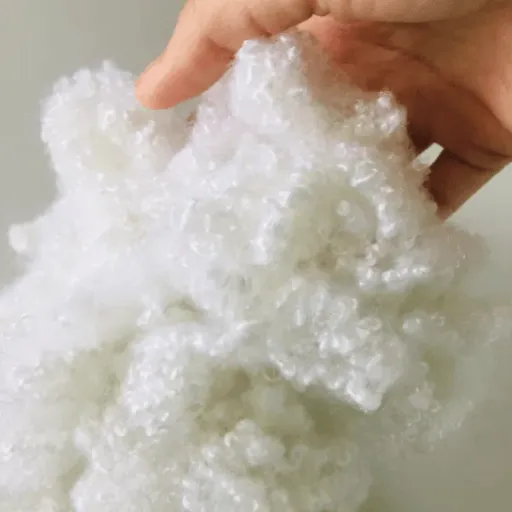
What is Polyester Staple Fiber?
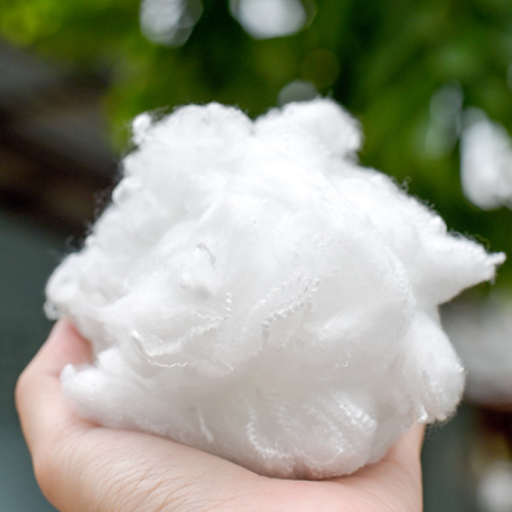
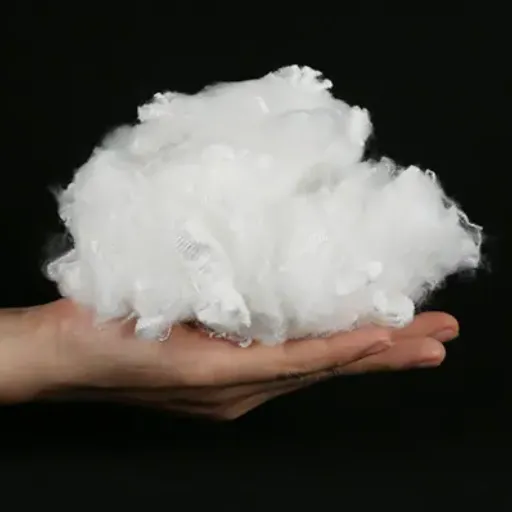
Polyester Staple Fiber (PSF) is a man-made fiber that, to a large extent, has its origin in the chemical treatment of terephthalic acid and ethylene glycol (PTA and MEG respectively). Its low price, flexibility, and durability make it a key raw material for various industries. The PSF fiber has short discrete lengths that can be used in the application for the fiber alone or in combination with others like cotton, wool, or rayon based on the end-use.
The demand for global PSF has uptake fast which basically stems from the fact that it is used in textiles, home furnishings, automotive interiors, and technical textiles.It is forecasted that the market will have a CAGR of around 5.7% in the period from 2023 to 2030.
Comparison to Other Fiber Types
The Polyester Staple Fiber (PSF) exhibits all the characteristics of the other popular fibers and even goes beyond them in some aspects due to its high durability, low price, and customization to the client’s needs. For instance, while cotton fibers are classified as the softest and most breathable ones, they still cannot compete with polyester in terms of strength and wrinkle resistance, where the latter is the winner. Besides, cotton farming is very water- and resource-intensive, which puts polyester ahead of cotton in terms of sustainability, provided that all lifecycle impacts are accounted.
Wool fibers, on the one hand, have their drawbacks; they are heavy, have issues like shrinking, and require careful handling. However, polyester, on the other hand, can be used to make lightweight, versatile fabrics that are very easy to wash and care for making them very practical for everyday use.
Polyester is more resistant to UV and absorbs light less, thus retaining color better than nylon and acrylic which justifies its use in those applications where the durability of brightness is an absolute must. Market reports of 2023 showed that polyester was responsible for almost 55% of the world’s total fiber production, thereby demonstrating its cost-effective nature and the expansion of its market in the industry sectors.
Different Types of Polyester Staple Fibers
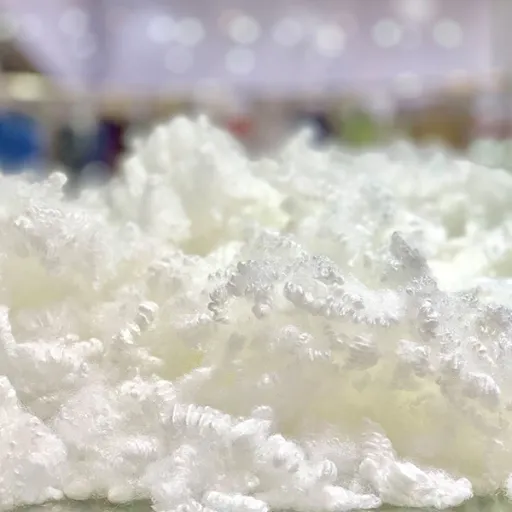
High-Performance Polyester Staple Fibers
Very high-quality PSF that is able to fulfill the majority of industries is very strong and durable, resistant to wrinkles, and shrinkage. The fibers are certainly being combined with the most advanced technologies to the greatest extent possible in the sectors of automotive, construction, and geotextiles as well as healthcare.
Possibly, one of the main PSF manufacturers’ goals has been to enhance the characteristics of the fibers and at the same time support the sustainable development agenda. For instance, the polymer science research advances account for the birth of both recyclable and biodegradable PSF at the same time. Nanotechnology application, by contrast, helped to produce fibers with such a high-limited resistance to heat and UV that they could be used for specialized applications only.
Statista’s 2023 market research states that the total PSF market worldwide will reach 38.5 billion dollars in 2028, which means a 6.5% annual increase from 2022 to 2028. The Asia-Pacific area is still at the top when it comes to production as it generates over 65% of the global supply and China is the leading country due to its western-like textile manufacturing sector. At the same time, Europe and North America are striving to be green by producing environment-friendly PSF that would meet strict environmental regulations.
Recycled Polyester Staple Fibers (RPSF)
Recycled Polyester Staple Fibers (RPSF) are presumed to be the most lucrative environmental alternative to the consumer-driven plastic waste problem. The main raw material for RPSF production is post-consumer PET bottles, which not only help to minimize landfill dumping but also lower the use of virgin polyester which is petroleum-based, hence energy and crude oil resources are not consumed much.
The method consists of used PET bottles that are collected and cleaned and then converted into flakes and finally reprocessed into filaments. New data suggests that about 1.5 tons of CO2 emissions are avoided for every ton of RPSF produced when compared to the virgin polyester production process. In addition, it is estimated that recycling a single plastic bottle enables the energy consumed by a 60-watt bulb to be stored for as long as six hours.
RPSF is being widely adopted by the textile, automotive, and construction industries that are the main consumers of this material. The daily margarine disguised with comfortable sportswear, furnishing, and nonwoven fabrics is RPSF Peters. According to an assessment from Allied Market Research, the global market for recycled polyester will reach 8.1 billion dollars by 2027, with an annual compounded growth rate of 8.6% starting from the year 2020. This kind of expansion not only demonstrates that the environmental advantages of the materials are appreciated by the industries but also acknowledged by the consumers.
Key Applications of Polyester Staple Fiber
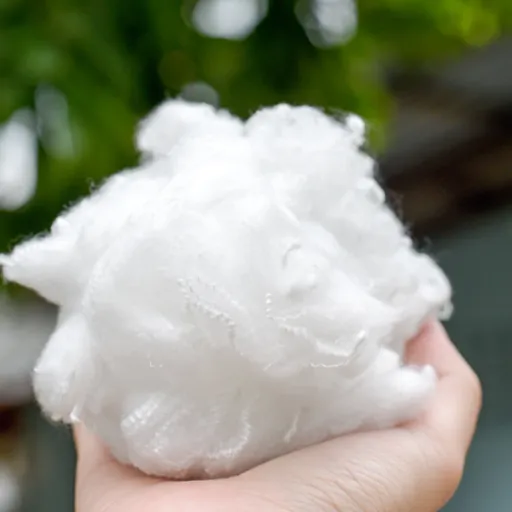
Use in Apparel and Sportswear
Polyester Staple Fiber (PSF) is an important and vital substance in the garment and sportswear factories due to its multipurpose and strong and soft features. Global market of polyester is very vast though it gets around 55% of total fiber needs from the polyester sources making it the most widely used synthetic fiber. RPSF (Recycled Polyester Staple Fiber), in particular, has become very popular as the brands are turning towards eco-friendly practices.
The best feature of PSF is moisture retention, which facilitates it to be the best fabric for the activewear and sportswear market. The body sweat is drawn out from the skin and passed through the fabric where it evaporates rapidly, so, the PSF clothing not only supplies the comfort of the wearer during heavy workout sessions but also adds up to the whole thing. Besides, PSF is non-woven and will stain and shrink and lose its going-PH performance level that is expected by the customer over a long period of time.
The section of applications in Home Textiles and Furnishing
Recycled polyester staple fiber (RPSF) is used more and more in home textiles and furnishings for its properties of being strong, easy to work with and eco-friendly. This sector has a vast potential of using RPSF materials in every corner of the business from upholstery and cushions through curtains and carpets to rugs. According to the report published by Research and Markets, the global market for home textiles, which was $125 billion in 2022, will be greatly increased by 2030, one of the reasons will be that it is going to be driven by the rising demand for eco-friendly materials like RPSF.
The main industry players are equipping their production lines with RPSF and are ready for the coming demand for sustainable but high-quality and fashionable products. For instance, RPSF-based textiles have for some time been widely utilized in the making of sofas because they allow for the provision of wonderful texture and durability at the same time. Moreover, due to its lightweight and hypoallergenic characteristic, RPSF has become a central area for bed linens and pillows where comfort and wellness are the priorities.
Call-to-Action (CTA)
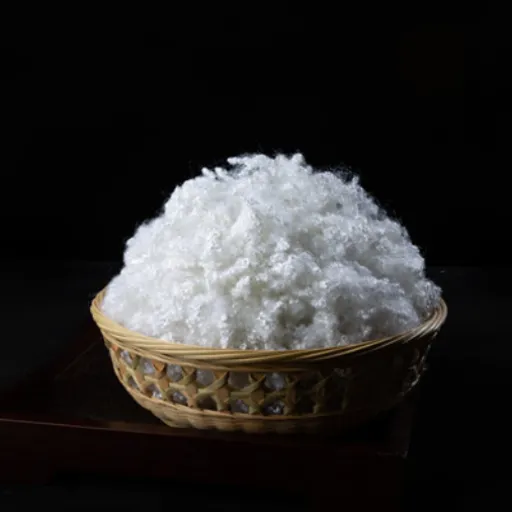
Explore the Benefits of Polyester Staple Fiber (PSF) Today
The versatility and eco-friendliness of Polyester Staple Fiber (PSF) are the main reasons it is widely used in various industries such as home textiles, upholstery, insulation, etc. Without considering the methods of manufacture, it is still the case that PSF is a green product. Moreover, the global market for recycled polyester is expected to grow and achieve a compound annual growth rate (CAGR) of more than 6.8% during the years 2023 and 2030, thereby indicating the demand for eco-friendly materials.
PSF has a combination of qualities that makes it suitable for upholstery; therefore, the very long-lasting furniture will keep comfort and aesthetics over time. At the same time, the use of this material in insulation products leads to efficient performance while the environmental impact is still lower compared to other materials. A number of manufacturers have made up their minds to adopt state-of-the-art technology as well as recycling of PET (rPET) to become the first choice of PSF that is still affordable and gentle on the environment.
Choosing the Right Polyester Staple Fiber
Application-Specific Requirements
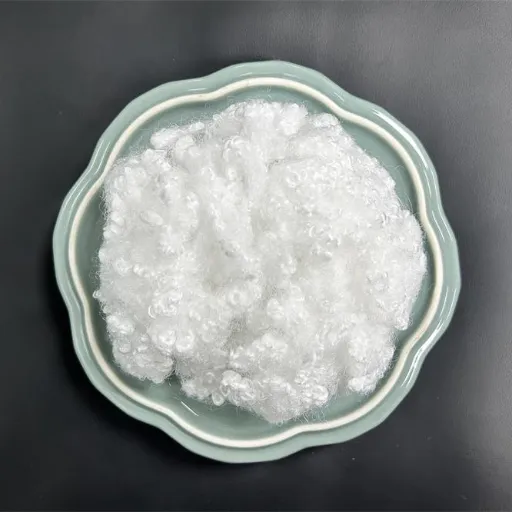
The very first step is to mention what the PSF is going to be used for. For instance, the fibers destined for textile manufacture could be supposed to be soft and fine, the ones for furniture or insulation could be simply the strongest and the warmest. Hollow conjugated fibers, for instance, are simply the best for filling and softening because they have great loft and softness.
Denier and Cut Length
Thickness (denier) and length of cut are essential to be certain that the product is optimal for your specific application. The lower-denier fibers, like 1.2D or 1.4D, are softer and more suitable for clothing while the higher-denier ones like 15D are dedicated to very rigorous applications like wadding or insulation. Cut length usually is between 32 mm and 64 mm and it has to conform with the machinery and the process requirements.
Material Composition
While the sustainable aspect of the product becomes the main factor in sale, it will be a good idea to consider PSF made with recycled PET (rPET) as one of the raw materials. The recycled fibers not only keep the environment cleaner by cutting down waste, but they also support the formation of a circular economy, thus becoming the eco-friendly choice for companies that care for the planet.
Performance Criteria
Seek out quality traits that symbolize the product’s requirements such as resistance to moisture, thermal stability, elasticity, and strength. Such traits could have a huge impact on the performance and life cycle of the end product.
Reference Sources
-
Hydrothermal Reduction of Graphene Oxide by Glucose for the Preparation of Graphene/Polyester Staple Sponge and Its Applications in Oil Spill Cleanup
- Key Findings: This study explored the use of graphene-coated polyester staple fibers for oil spill cleanup. The hydrothermal reduction method using glucose was found to be more effective than hydrazine hydrate reduction, resulting in better coating and fewer particles on the fibers.
- Methodology: The researchers employed hydrothermal reduction to coat polyester staple fibers with graphene, analyzing the surface properties and effectiveness in oil absorption.
- Read more
-
An Overview of Geotextiles: Industrial Application in Technical Textiles
- Key Findings: This paper provided an industrial perspective on geotextiles, including the role of polyester staple fibers in technical textiles. It highlighted the importance of staple fibers (2-10 cm in size) in woven processes for geotextile applications.
- Methodology: The study reviewed industrial processes and applications of geotextiles, focusing on the properties and production of staple fibers.
- Read more
-
CO2 Laser Dye Patterning for Textile Design and Apparel Manufacture
- Key Findings: This research investigated the use of CO2 laser dye patterning on textiles made of 100% polyester staple fibers. It emphasized the precision and uniformity achieved compared to traditional dyeing methods.
- Methodology: The study analyzed laser parameters and their effects on dye application, focusing on polyester staple fiber textiles.
- Read more
Frequently Asked Questions (FAQs)
What is polyester staple fiber and how is it related to the production of polyester fiber?
Polyester staple fiber is produced by the processing of polyethylene terephthalate (PET), a synthetic polymer which is then cut into short pieces, suitable for spinning and yarn production. In the fiber production, the raw material PET is first melted, then either extruded as filament or spun into staple, then drawn and cut to make fibers that can be blended with others such as viscose or cotton.
What is the difference between the different types of polyester fiber that are most common?
The two main types of polyester fibers are polyester filament (yarns of continuous filaments) and polyester staple (fibers of short length). The use of polyester filament is more for the production of smooth textiles and the technical fabrics, while that of polyester staple is in the textile industry for the production of yarns for nonwovens and blends. Variants include hollow polyester for insulation, recycled polyester fibers made from post-consumer PET bottles, and specialty fibers that have higher resistance to abrasion or crimp for bulk and loft.
What are the major uses of the polyester staple fiber?
Polyester staple fiber is primarily found in clothing, upholstery, home-furnishing, bedding, and industrial nonwovens. It is perfect for such applications as mattress fillings, cushions, quilt batting, and filter media that require dimensional stability, abrasion resistance, and high strength. The fiber can be blended with viscose, acrylic, or bamboo fiber to enhance hand, breathability, and moisture management properties for various polyester products.
What is the difference between textile quality when comparing recycled polyester fibers with that of virgin polyester?
Recycled polyester fibers which are usually made from recycled PET bottles, are quite versatile in terms of fabric and nonwoven applications and, if correctly processed, can even compete with virgin polyester in certain performance metrics like tensile strength and abrasion resistance. Product quality is dependent on the supplier and the fiber manufacturer’s processing control, thus, high-quality recycled polyester can be perfect for applications that focus on sustainability but still require the durability or strength of the fiber not to be compromised.
What factors should textile manufacturers take into consideration when selecting a fiber supplier or manufacturer?
When choosing a supplier or fiber manufacturer, consider raw material traceability (PET origin), product quality testing, available fiber types (filament vs. staple, hollow polyester), production capacity, and certifications for recycled content. Also evaluate whether the supplier offers fibers tailored for specific fiber applications such as yarn spinning, upholstery, or home furnishing, and whether they provide technical support for fabric production and downstream processing.