



Last year, a furniture manufacturer in Germany nearly lost a six-figure contract after ordering the wrong polyester yarn type for an outdoor upholstery line. They needed high-tenacity filament yarn with UV resistance, but received standard spun polyester instead. The fabric faded within three months. That single mix-up cost them the client and six months of rework.
If you have ever stared at a supplier catalog wondering what POY, FDY, or DTY actually mean for your project, you are not alone. The world of polyester yarn types is vast, technical, and full of look-alike options that perform completely differently in real-world conditions.
This guide will change that. You will learn the three main categories of polyester yarn, how each filament and spun variety behaves, and exactly which type to choose for fashion, home textiles, or industrial applications. By the end, you will speak the language of polyester yarn like a seasoned manufacturer.
What Is Polyester Yarn?
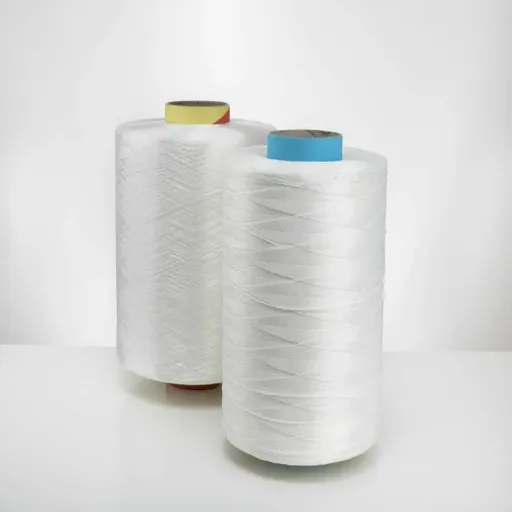
Polyester yarn is a synthetic yarn made primarily from polyethylene terephthalate (PET), a polymer derived from petroleum-based feedstocks. Manufacturers create it by melting PET chips and extruding the molten polymer through tiny holes called spinnerets. The resulting fibers are drawn, twisted, and wound into yarn.
The result? A remarkably versatile material that resists stretching, shrinking, and wrinkling. It dries quickly, holds dye well, and stands up to heavy use. These properties make it the most widely produced synthetic fiber on earth.
If you want a deeper dive into the chemistry and manufacturing process behind this material, our article on what is polyester yarn breaks it down in plain terms.
The Three Main Categories of Polyester Yarn
Before we get into the technical subtypes, it helps to understand the big picture. All polyester yarn types fall into one of three categories:
- Filament polyester yarn (PFY): Made from long, continuous fibers. Smooth, strong, and lustrous.
- Polyester spun yarn: Made from short staple fibers that are twisted together. Soft, bulky, and cotton-like.
- Textured polyester yarn: Filament yarns that have been crimped or bulked to add stretch and softness.
Think of these as the three families of polyester yarn. Every POY, FDY, DTY, and specialty variant belongs to one of them.
Filament Polyester Yarn (PFY)
PFY consists of continuous filaments that run the entire length of the yarn. It has a smooth surface, high tensile strength, and excellent dimensional stability. Because the fibers never break, PFY fabrics resist pilling and fraying better than spun alternatives.
Manufacturers use PFY for everything from lightweight fashion fabrics to heavy-duty industrial textiles.
Polyester Spun Yarn
Spun yarn starts as short polyester fibers, typically 32 to 51 millimeters in length. These fibers are carded, drawn, and twisted into a continuous strand. The process creates a fuzzy, soft yarn that mimics the feel of cotton or wool.
Spun polyester is popular for apparel, bedding, and upholstery where comfort and breathability matter.
Textured Polyester Yarn
Texturing is a mechanical or thermal process that crimps continuous filaments. This adds bulk, stretch, and a softer hand-feel. Textured yarns bridge the gap between the strength of filament yarn and the comfort of spun yarn.
They dominate the activewear, sportswear, and stretch upholstery markets.
Filament Polyester Yarn Types Explained
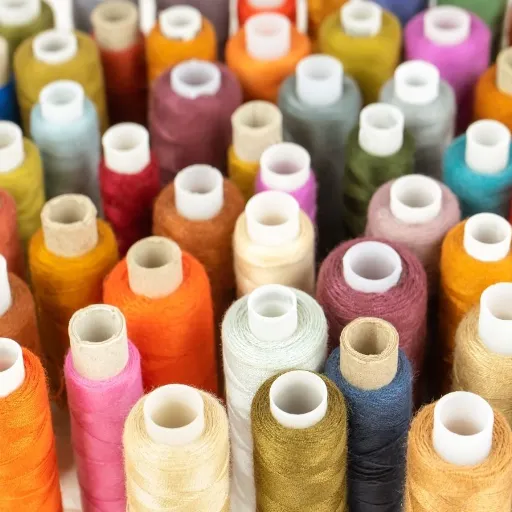
Filament yarn is where polyester gets technical. The same base polymer can be engineered into dramatically different products depending on how far it is drawn, whether it is textured, and what additives are included.
Here are the five filament polyester yarn types every buyer should know.
Partially Oriented Yarn (POY)
POY is an intermediate product. During manufacturing, the filaments are stretched, but only partially. This leaves the molecular chains somewhat aligned but not fully oriented.
The result is a yarn with high elongation (typically 80% to 120%) and moderate tenacity (2.5 to 3.5 grams per denier). POY is not ready for direct use in most fabrics. Instead, it serves as the raw material for draw textured yarn (DTY) and some industrial yarns.
Key specifications:
- Tenacity: 2.5–3.5 g/d
- Elongation: 80%–120%
- Shrinkage: Low to moderate
- Primary use: Feedstock for DTY, lightweight linings, and breathable base fabrics
When Maria, a knitwear designer in Milan, wanted to develop a new line of ultra-soft stretch leggings, her supplier recommended starting with high-grade POY. The POY was then textured into DTY with a specific crimp level that gave her fabric exactly the recovery and hand-feel she needed.
Fully Drawn Yarn (FDY)
FDY is POY that has been fully stretched and oriented during the spinning process. The molecular chains are tightly aligned, giving FDY its signature smoothness, strength, and dimensional stability.
FDY has low elongation and high tenacity. It is ready to weave or knit without further processing. The surface is smooth and lustrous, making it ideal for fabrics where sheen and drape matter.
Common applications:
- Satin, taffeta, and georgette
- Curtain and drapery fabrics
- High-quality apparel linings
- Terry towels and denim
- Upholstery and automotive textiles
Key specifications:
- Tenacity: 4.0–6.5 g/d
- Elongation: 15%–30%
- Luster: Bright, semi-dull, or full-dull
- Direct use: Yes
FDY is the go-to choice when you need a fabric that holds its shape, resists abrasion, and delivers a polished appearance.
Draw Textured Yarn (DTY)
DTY is the workhorse of the polyester yarn world. It starts as POY and undergoes a simultaneous drawing and texturing process, typically using false-twist or friction texturing. This introduces crimp, bulk, and elasticity.
DTY accounts for an estimated 39% to 68% of the polyester filament yarn market by volume, depending on the region. That dominance reflects its versatility across apparel and home textiles.
Why manufacturers love DTY:
- Elastic and stretchable (20% to 50% elongation)
- Soft, bulky hand-feel
- Excellent wrinkle resistance
- Good moisture-wicking properties
Common applications:
- Activewear and sportswear
- Leggings, yoga pants, and swimwear
- Casual knitwear
- Stretch upholstery
- Socks and lingerie
Key specifications:
- Tenacity: 3.5–5.0 g/d
- Elongation: 20%–50%
- Texture: Crimped and bulky
- Primary use: Stretch fabrics and knits
If you are sourcing yarn for any product that needs to move with the body and bounce back to shape, DTY is almost certainly on your shortlist.
Industrial Yarn (IDY)
Industrial polyester yarn is engineered for maximum strength. It uses high-purity polymer, specialized spinning conditions, and extreme drawing ratios to achieve tenacity values far above standard textile yarns.
High-tenacity industrial yarn can reach tenacity levels of 7.0 to 9.5 grams per denier. It resists stretching, tearing, and abrasion under heavy loads.
Common applications:
- Tire cords and conveyor belts
- Seat belts and safety harnesses
- Geotextiles and reinforcement meshes
- Ropes and industrial sewing threads
- Automotive airbags
Monofilament Yarn
Monofilament is exactly what it sounds like: a single, continuous filament with a uniform diameter. It is incredibly strong for its weight and has very low stretch.
Common applications:
- Fishing line and nets
- Screen printing mesh
- Filtration fabrics
- Medical sutures and mesh
- Synthetic grass backing
Monofilament diameters range from 0.05 mm to 3.0 mm, depending on the end use.
Spun and Textured Polyester Yarn Varieties
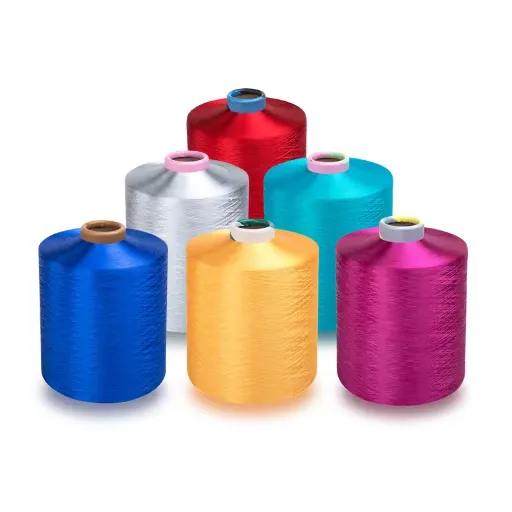
While filament yarns dominate technical and high-performance applications, spun and textured varieties are the everyday heroes of fashion and home textiles.
Polyester Spun Yarn
Polyester spun yarn is made by cutting polyester filaments into short staple fibers and then spinning them into a continuous yarn. The process introduces air pockets and surface fuzz, giving the yarn a soft, warm, cotton-like feel.
Spun polyester can be 100% polyester or blended with cotton, viscose, wool, or other fibers. Poly-cotton blends are especially popular because they combine the breathability of cotton with the durability and wrinkle resistance of polyester.
Common applications:
- T-shirts and casual wear
- Bedsheets and pillowcases
- Denim blends
- Sewing threads
- Upholstery fabrics
For buyers deciding between pure polyester and a blend, our comparison of polyester yarn vs cotton yarn covers the trade-offs in detail.
Air-Textured Yarn (ATY)
ATY is a clever hybrid. It starts as continuous filament yarn, but high-pressure air jets entangle the filaments to create a spun-like appearance. The result is a lightweight, bulky yarn with the strength of filament and the look of spun yarn.
ATY is quick-drying, wear-resistant, and has excellent cover power. It is commonly used for activewear outer layers, casual jackets, and home furnishings.
Core-Spun Yarn
Core-spun yarn has a strong inner core, often polyester or spandex, wrapped with staple fibers. This construction delivers the stretch and recovery of elastic with the comfort and appearance of natural fibers.
You will find core-spun yarn in stretch denim, performance wear, and fitted apparel where shape retention is critical.
Slub Yarn
Slub yarn is a decorative or “fancy” yarn with intentional thick and thin sections along its length. These variations create unique visual texture and tactile interest in fabrics.
Designers use slub yarn for fashion fabrics, decorative upholstery, and artisan textiles where a handcrafted look adds value.
Specialty and Functional Polyester Yarns
Standard polyester yarn types cover most applications. But when performance, sustainability, or aesthetics demand something extra, specialty yarns step in.
Recycled Polyester Yarn (rPET)
Recycled polyester yarn is manufactured from post-consumer plastic bottles or post-industrial polyester waste. The collected material is cleaned, shredded, melted, and re-extruded into new PET chips. From there, the manufacturing process is identical to virgin polyester.
When processed correctly, rPET achieves strength and durability very close to virgin polyester. It is suitable for clothing, technical textiles, and industrial applications.
Certifications to look for:
- GRS (Global Recycled Standard): Verifies recycled content and tracks it through the supply chain.
- OEKO-TEX Standard 100: Ensures the yarn is free from harmful substances.
Sustainability is not a compromise at Hebei Lida Textile. We offer recycled polyester yarn solutions that meet global certification standards without sacrificing performance.
The shift toward rPET is accelerating. Sustainable textile demand is rising rapidly across major markets, and brands are increasingly requiring certified recycled content in their supply chains.
Cationic Dyeable Polyester (CDP)
Standard polyester resists most conventional dyes and requires disperse dyes at high temperatures. Cationic dyeable polyester is chemically modified to accept cationic dyes at lower temperatures.
This opens up two major advantages:
- Brighter, deeper colors that are difficult to achieve on standard polyester.
- Heather and cross-dye effects when CDP is blended with regular polyester, because the two fibers take dye differently.
CDP is popular for fashionwear, sportswear, and decorative home décor fabrics.
High-Tenacity and Low-Shrinkage Yarns
High-tenacity polyester yarn is engineered for extreme loads and harsh conditions. Low-shrinkage yarn is specially drawn to minimize dimensional change during heat processing.
Together, these yarns are essential for:
- Industrial belts and ropes
- Geotextiles and construction meshes
- Tents, tarpaulins, and awnings
- Automotive interiors and safety systems
- Coated technical fabrics
Flame-Retardant and Antimicrobial Yarns
Functional additives can be introduced during polymerization to give polyester yarn special properties.
Flame-retardant polyester is used for protective clothing, curtains, upholstery in public spaces, and automotive textiles where fire safety standards apply.
Antimicrobial polyester is treated with silver-based or chemical agents to inhibit bacterial growth and odor. It is widely used for activewear, socks, hospital garments, and uniforms.
Dope-Dyed (Color) Yarn
Dope-dyed yarn, also called spun-dyed or solution-dyed yarn, gets its color from pigments added directly to the molten polymer before extrusion. The color becomes part of the fiber itself.
This process uses roughly 90% less water and 60% less energy compared to traditional piece dyeing. It also delivers superior colorfastness to washing, light, and UV exposure.
Dope-dyed yarn is a top choice for automotive textiles, outdoor fabrics, and any application where long-term color stability and sustainability credentials matter.
How to Choose the Right Polyester Yarn for Your Project
With so many polyester yarn types available, selection can feel overwhelming. The right choice comes down to five key factors.
Factor 1: Application and End-Use
Start with the end product. Is it a stretch legging, a curtain panel, or an industrial safety belt? Each application has different requirements for elasticity, strength, luster, and hand-feel.
Quick reference:
- Soft stretch apparel: DTY or ATY
- Smooth, shiny fabrics: FDY
- Cotton-like comfort: Polyester spun yarn or poly-cotton blends
- Heavy-duty industrial use: High-tenacity IDY or monofilament
- Outdoor/UV exposure: Dope-dyed FDY or high-tenacity yarn with UV stabilizers
Factor 2: Strength and Durability Requirements
Check the technical specifications. Tenacity (grams per denier) tells you how strong the yarn is. Elongation tells you how much it will stretch before breaking.
For high-stress applications like seat belts or tire cords, you need industrial-grade tenacity (7.0+ g/d). For casual apparel, standard DTY (3.5–5.0 g/d) is usually sufficient.
At Hebei Lida Textile, every batch undergoes rigorous tensile testing and automated defect detection. If you need a specific tenacity or elongation range, we can engineer the yarn to match.
Factor 3: Aesthetic and Hand-Feel Preferences
Luster and texture matter. Bright FDY gives a glossy, formal look. Full-dull yarn creates a matte, natural aesthetic. Textured DTY adds bulk and softness.
Always request swatches before committing to a large order. Seeing and feeling the yarn in person eliminates guesswork.
Factor 4: Sustainability and Certification Needs
If your brand or customer requires eco-friendly materials, specify rPET, GRS certification, or OEKO-TEX compliance from the start. Dope-dyed yarn is another excellent option for reducing water and energy consumption.
Sustainability is no longer optional for many global buyers. Building it into your yarn specification early prevents costly surprises later.
Factor 5: Cost and Scale Considerations
Recycled and specialty yarns often carry a modest premium over virgin standard polyester. However, the price gap is narrowing as production scales up.
For large-volume orders, economies of scale can make premium yarn types surprisingly competitive. Discuss your target volume with your supplier to find the right balance of performance and price.
2025–2026 Market Trends and Sustainability Outlook
The polyester filament yarn market is projected to grow from 62.05billionin2025to62.05billionin2025to66.05 billion in 2026, representing a compound annual growth rate of 6.5%. By 2030, the market could reach $84.61 billion, according to industry analysts at The Business Research Company.
The broader polyester fiber market, which includes both filament yarn and staple fiber, is forecasted to hit $120.76 billion in 2026 with an 8.2% CAGR through 2033.
Three trends are shaping the market right now:
1. Sustainability is becoming standard.
Recycled polyester and dope-dyed yarns are no longer niche products. Major brands are setting aggressive targets for recycled content, and suppliers who cannot certify sustainability are being left out of bids.
2. Industrial demand is accelerating.
High-tenacity polyester yarns for automotive, construction, and safety applications are seeing increased investment. As infrastructure projects expand globally, the need for reliable industrial textiles grows with them.
3. Asia-Pacific remains the dominant production hub.
The region accounts for approximately 63% to 72% of global polyester fiber consumption and production. China alone represents a significant share of the filament yarn market. For buyers, this means access to integrated supply chains, competitive pricing, and advanced manufacturing capabilities.
At Hebei Lida Textile, we are positioned at the center of this ecosystem. Our state-of-the-art facilities produce everything from standard spun polyester to high-tenacity industrial yarns and certified recycled options. Whether you need 1,000 kilograms or 100 tons, we deliver consistent quality with the documentation and certifications global buyers expect.
Putting It All Together: A Decision Framework
Still unsure which polyester yarn type fits your project? Use this simple framework.
| If you need… | Choose… |
|---|---|
| Soft, stretchy fabric for activewear | DTY |
| Smooth, lustrous fabric for fashion or upholstery | FDY |
| A cotton-like feel at a competitive price | Polyester spun yarn |
| Maximum strength for industrial use | High-tenacity IDY or monofilament |
| Sustainable, certified recycled content | rPET with GRS certification |
| Vibrant colors or heather effects | Cationic dyeable polyester (CDP) |
| Long-term UV and wash colorfastness | Dope-dyed yarn |
| A spun-like look with filament strength | ATY |
When James, a procurement manager for a UK home textile brand, needed to source yarn for a new blackout curtain line, he started with this exact framework. He narrowed his options to FDY for the smooth face fabric and dope-dyed yarn for the UV-stable backing. The result was a product that passed all colorfastness tests and landed a two-year supply contract with a major retailer.
Conclusion
Choosing the right polyester yarn types is not just a technical decision. It is a quality decision, a cost decision, and increasingly, a sustainability decision.
You now understand the three main categories: filament, spun, and textured. You know the differences between POY, FDY, and DTY. You have seen how specialty yarns like rPET, CDP, and dope-dyed polyester solve specific problems. And you have a practical framework for matching yarn type to application.
Here are the key takeaways:
- POY is an intermediate feedstock, not a finished fabric yarn for most applications.
- FDY delivers smoothness, strength, and luster for fashion and home textiles.
- DTY is the dominant choice for stretch, comfort, and activewear.
- Spun polyester gives a soft, natural feel at a competitive price point.
- Specialty yarns like rPET, high-tenacity, and dope-dyed options solve performance and sustainability challenges.
If you are ready to source polyester yarn for your next project, contact the team at Hebei Lida Textile. We manufacture a full range of standard and custom polyester yarns for fashion, home textiles, and industrial applications worldwide. From sample development to bulk production, we are here to help you find the perfect yarn for every application.