



The best yarn for home decor depends on what the object has to survive. Use cotton for cushions, table linens and bath mats. Use wool or a wool blend for rugs and warm throws. Use acrylic only where budget matters more than wear.
That’s the short answer. The longer answer starts with a problem most buying guides skip entirely.
Marta finished a set of four seat cushions in February. She chose the softest acrylic in the shop, a colour that matched her sofa exactly, and the covers looked like the sample photo for about ten weeks. By May the seats she actually sat on had gone fuzzy. By August the fronts were pilled into loose grey knots while the two back cushions still looked new.
Her tension was fine. Her gauge was fine. The yarn had simply been asked to do a job it was never built for. A seat cushion takes friction from every person who sits down, and a soft, low-twist acrylic has nothing to resist that with.
This guide is organised the way the decision actually happens. First, what home decor yarns have to survive. Then which fibre handles which room.
After that comes a project-by-project verdict, a weight table, and honest yardage ranges. By the end you’ll know what to buy for each thing you want to make, and where each choice will fail first.
Key Takeaways
- Home decor yarns fail in three ways: pilling, shrinking, and flattening. Each fibre loses on a different one, so the right choice depends on which failure you can least afford.
- Cotton wins most of the house. Cushions, table linens, bath mats and washcloths all need absorbency and washability, which is exactly where cotton is strongest.
- Acrylic is not a decor fibre for anything that gets sat on, leaned on, or wiped. It pills under friction and absorbs almost nothing.
- Wool belongs on the floor and on the bed. It resists abrasion better than any common craft fibre, but it felts in a hot machine wash.
- Weight matters as much as fibre. A tightly worked worsted cotton cushion outlasts a loosely worked bulky acrylic one every time.
What Yarn for Home Decor Has to Survive
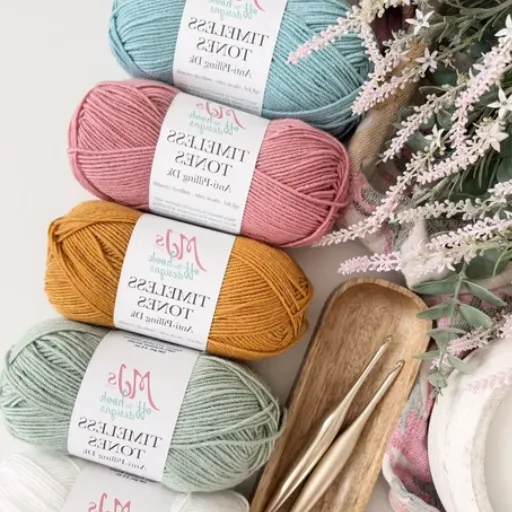
Home decor yarns face wear that garments never see. A sweater is worn and washed. A cushion is sat on, leaned against, and washed. A rug is walked on by every pair of shoes in the house, every day, for years.
That changes the brief. Three failure modes matter more than softness.
Pilling. Short fibres work loose from the yarn surface and knot together. Friction drives it, so the more an object is rubbed, the worse it gets. A tightly twisted yarn with a longer fibre resists this at any fibre content.
Shrinking. Cotton relaxes and draws up in the first hot wash unless it has been pre-shrunk. Wool felts permanently when heat, water and agitation combine. Both failures are irreversible.
Flattening. Loft collapses under load. A loosely spun yarn that feels wonderful in the skein will compress into a thin mat once a body’s weight rests on it for a season.
Notice what’s missing from that list: colour and softness. Both matter, but neither decides whether the object is still usable in two years.
If you’re choosing yarn for a decor project at any scale, we can send fibre samples and specification sheets so you can test twist, count and wash behaviour before you commit. That conversation usually saves more money than any price comparison. Explore suitable yarn options for diverse applications with us.
Cotton, Acrylic, Wool: Which Fibre for Which Room
Four fibres cover almost every home decor project. Each one has a clear job and a clear weakness.
Cotton
Cotton is absorbent, breathable and machine washable. It holds its shape better than acrylic and takes dye deeply. It’s the default for anything that touches water or food. Our pure cotton yarn covers the counts we spin for home textiles.
Its weakness is shrinkage. Unfinished cotton can draw up noticeably in the first hot wash, so pre-shrunk yarn or a cool first wash matters. Cotton also has low elasticity, which makes it less forgiving to work with than wool.
Acrylic
Acrylic is inexpensive, comes in the widest colour range, and is genuinely durable against abrasion in the fibre itself. It’s also non-absorbent and prone to pilling under friction. It softens and can melt under a hot iron.
Acrylic earns its place in decorative objects that are looked at more than touched. It’s the wrong choice for seat cushions, bath mats and dishcloths.
Wool
Wool is the most resilient common craft fibre. It resists abrasion, holds loft under load, and stays warm when damp. For rugs and heavy throws, nothing else in the craft aisle comes close. Our wool yarn is spun for exactly that kind of load.
Its weakness is felting. Heat, water and agitation shrink wool permanently. Superwash treatment solves this at the cost of some of wool’s natural resilience.
Blends
A blend is often better than either parent. Cotton and acrylic together give washability with more colour stability and less cost. Wool and nylon give rug durability that pure wool cannot match.
The rule of thumb: blend to fix a specific weakness, not to hedge.
| Fibre | Absorbency | Machine wash | Pilling risk | Holds shape | Best for |
|---|---|---|---|---|---|
| Cotton | High | Yes, cool first wash | Low in a tight twist | Good | Cushions, table linens, bath textiles |
| Acrylic | Very low | Yes | High under friction | Poor | Decorative pieces only |
| Wool | High | Superwash only | Low | Excellent | Rugs, warm throws |
| Cotton-acrylic blend | Medium | Yes | Medium | Fair | Budget cushions and throws |
| Wool-nylon blend | High | Superwash only | Low | Excellent | High-traffic rugs |
Soft Furnishings: Cushions and Throws
Cushions and Pillow Covers
Use cotton or a cotton-rich blend, tightly twisted, in worsted weight.
A cushion cover is a friction object. It gets leaned on, sat against, and washed. Cotton handles all three, and its lack of stretch keeps the cover from bagging out of shape.
Two specifications matter more than the fibre name. First, twist: a tightly twisted yarn resists pilling far better than a soft-spun one. Second, weight: worsted (weight 4) gives enough body to hold a seam without being stiff.
Acrylic cushions look excellent in photographs and degrade quickly in use. If the cushion is purely decorative and sits on a shelf, acrylic is fine. If it lives on a sofa, it isn’t.
For crocheters working cushion covers, our guide to the best yarn for crochet covers hook size and stitch density in more detail.
Throws and Blankets
Use wool or a wool blend for warmth, acrylic for budget, cotton for summer weight.
A throw carries several kilos of its own weight every day it is draped over a sofa arm. Low-twist yarns collapse under that load and the blanket grows longer while the stitches flatten.
This is covered in depth in our guide to the best yarn for blankets, including yardage by blanket size. The short version for decor purposes: match the fibre to how the throw will be washed, then match the weight to how heavy you want it to hang.
Hard-Wearing Textiles: Table Linens, Bath and Rugs
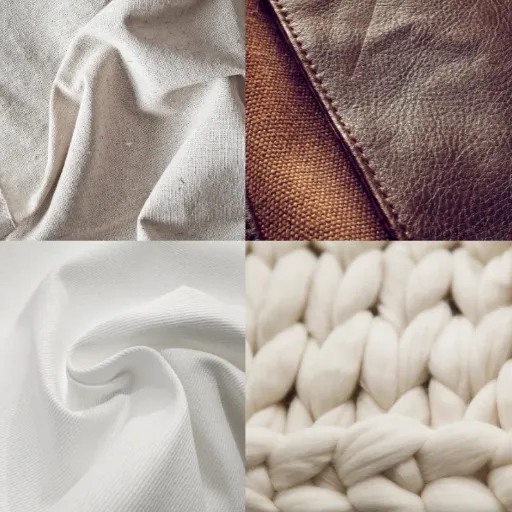
Table Linens
Use cotton, in DK or worsted weight, for runners, placemats and tablecloths.
Table linens need absorbency, a flat surface, and the ability to be pressed. Cotton gives all three. Acrylic slides, pills at the edges, and won’t take a hot iron without glazing.
Weight depends on the look you want. DK (weight 3) gives a finer, more formal runner. Worsted (weight 4) gives a denser mat that holds its shape through repeated washing.
Ines made a 120 cm cotton runner for a dining table and washed it at 60 degrees without checking the label. It came out 4 cm shorter and no longer centred. The yarn hadn’t been pre-shrunk. A cool first wash, or a pre-shrunk cotton, would have prevented it entirely.
Bath Textiles
Use cotton only. Absorbency is the entire function of the object.
A bath mat, towel or washcloth that doesn’t absorb water has failed at its one job. Acrylic absorbs almost nothing, so a bath mat made from it will bead water on the surface and stay damp underneath.
Bath mats also need density. A loosely worked mat slides, rucks up, and wears through at the points where feet land. Work tighter than you would for a throw, and choose a yarn with enough body to hold the stitch.
For kitchen textiles specifically, our article on whether polyester works for dishcloths works through the absorbency comparison in detail.
Rugs and Floor Textiles
Use wool, or a wool and nylon blend, for anything that gets walked on.
Abrasion on a floor textile is brutal and constant. Wool resists it better than any other common craft fibre because its fibres interlock and recover rather than break. Acrylic rugs flatten into a mat within a season and never recover their pile.
If you’re working a rug in a high-traffic room, a wool and nylon blend adds durability that pure wool cannot match. If the rug is decorative and rarely walked on, cotton works and washes more easily.
Yarn Weight and Yardage for Home Projects
Weight is a starting point, not a rule. The standard yarn weight system runs from 1 to 6, and gauge and stitch pattern decide the finished fabric, so always work a swatch before committing to a large project.
| Project | Typical weight | Best fibre | Why it works |
|---|---|---|---|
| Seat cushions | 4 (worsted) | Cotton or cotton blend | Holds shape, resists friction, washes |
| Decorative cushions | 4 (worsted) | Cotton, acrylic, or blend | Wear is low, colour range matters more |
| Throws | 4 to 5 (worsted to bulky) | Wool, acrylic, or cotton | Loft for warmth, weight for drape |
| Table runners | 3 to 4 (DK to worsted) | Cotton | Flat surface, absorbent, presses well |
| Placemats | 4 (worsted) | Cotton | Dense enough to hold shape when washed |
| Bath mats | 5 (bulky), worked tight | Cotton | Absorbency plus density underfoot |
| Rugs | 5 to 6, or multiple strands | Wool or wool blend | Abrasion resistance and pile recovery |
How Much Yarn Does a Project Need?
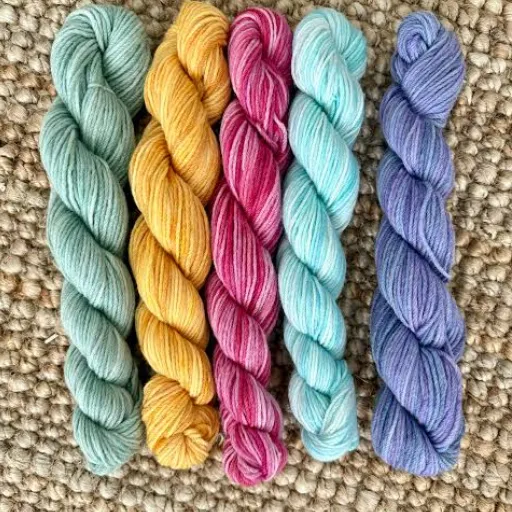
These are typical ranges for a medium gauge. Treat them as planning estimates and confirm against your pattern, because stitch choice can move the figure by a third in either direction.
- 45 cm cushion cover: roughly 400 to 600 yards in worsted weight
- 120 cm table runner: roughly 500 to 800 yards in DK or worsted
- 60 by 90 cm bath mat: roughly 800 to 1,200 yards in bulky cotton
- 130 by 170 cm throw: roughly 1,500 to 2,500 yards in worsted
- Rug: highly variable, from 2,000 yards for a small cotton mat to well over 6,000 for a large wool rug
Buy the whole quantity in one dye lot. Matching a dye lot later is difficult and the difference shows under daylight.
Sourcing for a decor range rather than a single project? Send us your specification and we’ll come back with samples matched to your target wash and abrasion performance. Request a sample set.
Frequently Asked Questions
What is the best yarn for home decor?
Cotton is the best all-round yarn for home decor because it absorbs water, washes well, and holds its shape. Wool is better for rugs and warm throws. Acrylic suits decorative pieces that see little friction.
Is acrylic yarn good for cushions?
Only for cushions that are purely decorative. Acrylic pills under the friction of sitting and leaning, and it doesn’t absorb spills. For a seat cushion, cotton or a cotton blend will last substantially longer.
What yarn should I use for a table runner?
Cotton in DK or worsted weight. It lies flat, absorbs spills, and takes a hot iron without glazing. Avoid acrylic, which slides on the table and pills at the edges.
Can I use acrylic yarn for a bath mat?
No. Acrylic absorbs almost no water, so the mat will bead water on the surface and stay damp underneath. Use cotton worked at a tight gauge.
Why did my cotton table runner shrink?
Unfinished cotton draws up in the first hot wash. Either buy pre-shrunk cotton or wash the finished piece cool the first time. The shrinkage is permanent, so it can’t be reversed.
What weight yarn should I use for a throw?
Worsted (weight 4) is the most versatile. Bulky (weight 5) works faster and drapes more heavily. The choice affects how the throw hangs more than how warm it is.
Choosing Yarn for Your Home
The pattern across every project in this guide is the same. Decide what the object has to survive before you decide how it should feel. Answer that, and most yarn for home decor decisions settle themselves.
Derek learned this the expensive way with a bathroom set. He made a mat and two washcloths in a soft acrylic because the colour range was better than anything in cotton. The set looked superb for a month. Then the mat stopped absorbing, the washcloths smeared water around the basin, and the whole set went into a cupboard.
The fibre wasn’t defective. It was simply chosen for appearance in a job that is entirely about function.
To summarise the verdicts:
- Cotton for cushions, table linens, bath textiles and anything that meets water
- Wool or wool blend for rugs and warm throws
- Acrylic for decorative pieces only, where budget and colour matter more than wear
- Weight chosen to suit the object’s load, not the yarn’s softness in the skein
If you’re sourcing yarn for a home decor range rather than a single project, the same logic scales. Twist, count and fibre blend decide how a finished textile performs, and those are specification decisions, not aesthetic ones.
Talk to our team about yarn for your home decor range, or read our guide to organic cotton in home textiles if certification and traceability are part of your brief. For the standards behind organic claims, see GOTS.