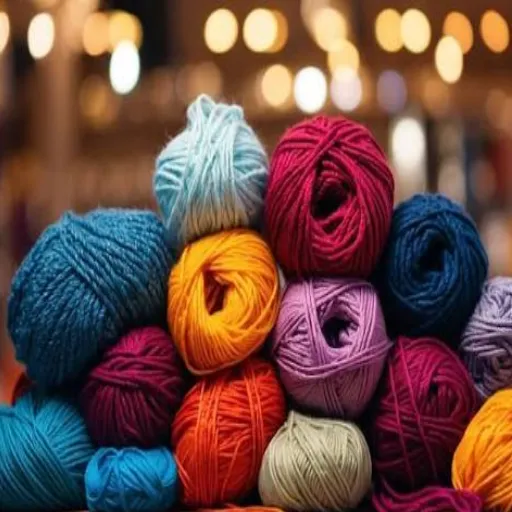

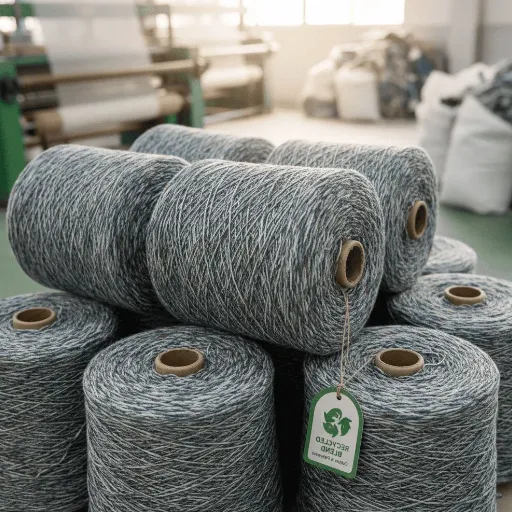


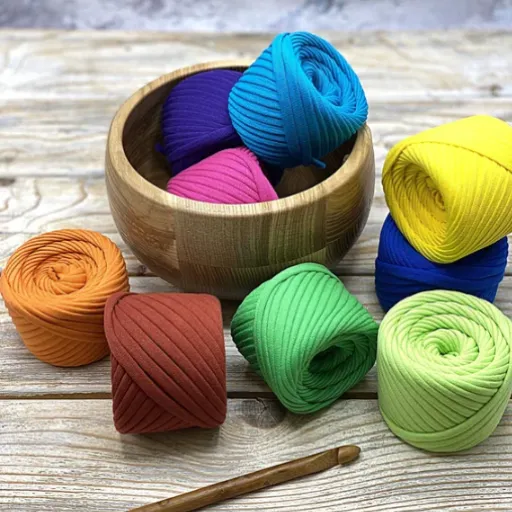


The best yarn for crochet is cotton for anything that has to hold a shape, acrylic for anything that has to survive a washing machine on a tight budget, and wool or a wool blend for anything that has to drape or keep someone warm. Weight matters almost as much: worsted (CYC #4) covers most projects, DK (#3) suits amigurumi and lighter garments, and bulky (#5) gets a blanket finished before the weather turns.
That’s the short answer. The longer answer starts with a question most guides skip.
Amara finished her first amigurumi rabbit in March. She picked the softest acrylic in the shop, the one that felt like a cloud, and worked it on the hook size printed on the band. Three weeks later the rabbit had slumped into a pear. The stuffing had shifted, the legs no longer held her upright, and the stitches had gone fuzzy wherever the children grabbed her.
The yarn wasn’t bad. It was chosen for how it felt in the hand rather than for what the finished object had to do. Crochet punishes that mistake faster than knitting does, because the fabric is denser and has less give to hide it.
This guide works through the choice in the order that decides it: what you’re making, how dense the fabric needs to be, how it’ll be washed, what weight the pattern calls for, and only then which fibre follows.
Key Takeaways
- Crochet fabric is denser and less elastic than knit at the same weight. That single fact explains amigurumi gauge, garment sag, and why crochet eats more yarn.
- Cotton holds a sculpted shape because it has no memory. The same property makes cotton garments grow heavy and lose their bounce.
- Acrylic is warm, cheap, moth-proof, and washable, but it fuzzes and it softens with heat. Never use it for potholders, hot pads, or oven mitts.
- Match the hook to the fabric, not to the label. For amigurumi, work one to two hook sizes below the recommendation so the fabric is stiff enough to hide stuffing.
- Yardage, not fibre, is the binding constraint on blankets. Budget one extra skein and buy the whole project from a single dye lot.
The Short Answer: Best Yarn for Crochet by Project
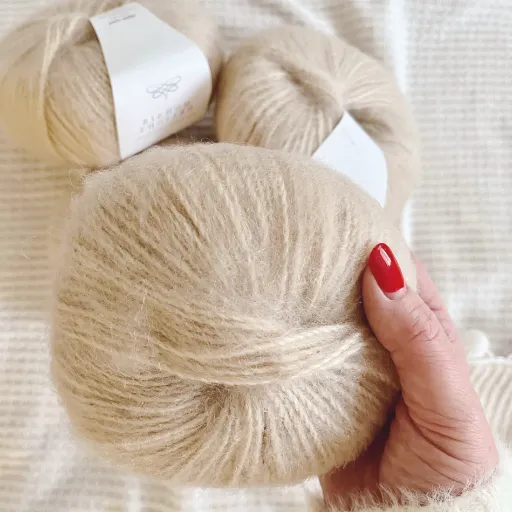
Find your project, then read the sections below for the reasoning. The last column is where most disappointing projects come from.
| Project | Best fibre | Weight | Typical hook | Watch out for |
|---|---|---|---|---|
| Amigurumi and toys | Cotton, or a smooth tight-twist acrylic | DK (#3) or worsted (#4) | 2.5 to 4 mm | Soft fluffy yarns sag and hide stitches |
| Wearables and garments | Wool, wool blend, or cotton-bamboo | DK to worsted | 4 to 6 mm | Acrylic stretches out and does not come back |
| Blankets and throws | Acrylic, or a washable blend | Worsted to bulky | 5 to 8 mm | Loose-spun yarn fuzzes after a few washes |
| Bags and baskets | Tight-gauge cotton | Worsted (#4) | 3.5 to 4.5 mm | Acrylic stretches when the bag is loaded |
| Dishcloths and face cloths | Unmercerised cotton | Worsted (#4) | 4.5 to 5.5 mm | Blends absorb less and wear faster |
| Potholders and hot pads | Cotton or wool, never acrylic | Worsted (#4) | 4.5 to 5 mm | Acrylic softens and can melt against heat |
| Baby items | Soft cotton, organic cotton, or fine merino | DK (#3) | 3.5 to 4.5 mm | Coarse wool, hand-wash-only yarns, loose fuzz |
Read down the last column before you buy anything. Every entry there is a project that failed for someone.
Buying for a range rather than a single project? Our guide to how yarn types map to end uses covers the production side, including what changes when you order by the hundred kilos instead of the skein.
What Yarn Should You Use? A Five-Step Decision
Work through these in order. Each step narrows the next, and by step five you’re choosing between two options rather than twenty.
- Must it hold a shape or drape? A toy, a basket, and a summer top are three different engineering problems.
- How dense does the fabric need to be? Dense enough to hide stuffing, open enough to drape, or tight enough to hold weight when wet.
- Will it be washed, and how often? A baby blanket gets washed weekly. A decorative basket gets dusted.
- What weight does the pattern call for? Follow the pattern unless you are prepared to recalculate the gauge.
- Which fibre follows from steps one to four? Usually one row of the table above, and often a blend rather than a pure fibre.
Why Crochet Changes the Answer
Crochet and knitting don’t behave alike, even in the same yarn at the same weight. Knitted fabric is a mesh of interlocking loops with room to stretch. Crochet stitches are built one on top of another, each a complete unit, and the columns sit close together.
The result is a thicker, firmer, less elastic fabric. That’s a feature for a toy and a problem for a garment. It also means crochet uses more yarn per square inch than knitting. A widely repeated figure puts that at roughly a third more, though stitch height moves it enormously, so treat it as a budgeting hint rather than a specification.
Amigurumi: The Shape Problem
Amigurumi is the clearest case in all of crochet, because the requirement is unusual. You aren’t making fabric. You’re making a structure that has to hold a shape while it’s being stuffed.
Cotton is the standard answer, and the reason is mechanical. Cotton has almost no elasticity and no memory, so work it tightly and the piece keeps exactly the silhouette you crocheted.
Acrylic is the opposite. Its fibres have memory, which is why an acrylic garment springs back after stretching. In a stuffed toy that same property works against you. The fabric relaxes, the stuffing settles, and the piece slowly slumps.
Amara’s rabbit wasn’t badly made. It was made in a fibre that wanted to return to flat.
A smooth, tightly spun acrylic in a firm gauge still works for toys that will be machine washed. The problem is soft, loose, brushed acrylic, the kind sold on how it feels. Save that for blankets.
Getting the Gauge Right
The hook size on the band is a suggestion for general fabric, not for amigurumi. Work one to two sizes smaller. Hold the fabric up to a window: if you can see light through it, the hook is too large for a stuffed piece.
This is also why chenille yarns divide people. They make soft, appealing toys and they shed, because chenille is a pile structure rather than a smooth spun yarn. The pile is designed to come loose.
For a fuller treatment of how cotton behaves under tension, shrinkage, and blocking, see how cotton behaves on the hook.
Wearables and Garments: The Drape Problem
Garments ask for the opposite of what amigurumi needs. You want movement. A jumper that holds a rigid shape is a costume, not clothing.
Wool and wool blends are the reliable answer because wool has both drape and recovery. It moves with the body and returns to shape afterwards.
Cotton is the answer for warm weather, with one honest caveat. It drapes beautifully at first and then grows. A cotton top worked to fit exactly will be longer and looser by the end of the season. Size it slightly small and plan to block it, or choose a blend with some wool or acrylic for recovery.
Acrylic is the budget answer and the weakest one for garments. It’s cheap, colourful, and machine washable, but it stretches out of shape with wear and doesn’t spring back.
Jonas learned this on a summer top. He crocheted a cotton tank in tight single crochet on a 3.5 mm hook, aiming for a clean, even fabric. What he got was a garment that stood away from the body like a bib.
The fix wasn’t a different yarn. He reworked it on a 5 mm hook, gained the drape, and lost the stiffness.
Hook size is the drape control. When a garment feels boardy, go up a hook size before you change fibre. For plant fibres with more movement, see our guide to bamboo yarn.
Blankets, Bags, and Dishcloths: The Practical Problems
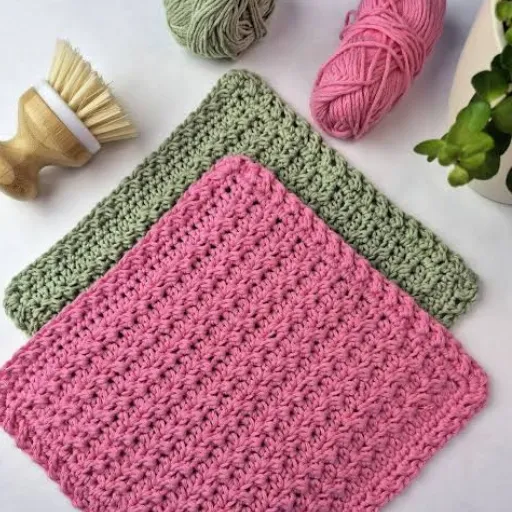
These three projects fail for reasons that have nothing to do with how the yarn feels.
Blankets: Yardage and Fuzzing
On a blanket, yardage is the binding constraint. Fibre comes second. A throw is thousands of yards, and running out two-thirds of the way through a dye lot you can’t replace is the most common blanket disaster there is.
Acrylic dominates the category because it’s cheap per yard, washable, moth-proof, and available in consistent colours across seasons. Its weakness is fuzzing. Loose-spun acrylic pills and develops a halo after a few washes, which is exactly what a blanket gets.
The fix is in the spinning, not the fibre. A tighter twist, a longer staple, and more plies all resist fuzzing, so ask for the ply count and the twist rather than the brand. The same mechanics explain why beanies pill at a much smaller scale.
Nadia sold blankets at a winter market for three years with no complaints. In the fourth year she switched suppliers to save on cost, kept the same colour name and weight, and by January had a dozen messages with photographs of fuzz. The new yarn was a looser spin. Nothing on the label said so.
Bags: Structure Under Load
A bag has to hold weight while hanging from a handle, often while wet. Cotton wins because it doesn’t stretch under load. Work it tightly, on a hook one size down, and the bag keeps its shape when you fill it. Acrylic bags look fine empty and grow on the first shopping trip, so if you want acrylic’s colours with cotton’s structure, a blend works better than either extreme.
Dishcloths: Absorbency and Heat
Unmercerised cotton is the right answer, and the reason is absorbency. Mercerising gives cotton a sheen and more strength while reducing how much water the fibre takes up. For a dishcloth you want the opposite, so choose the matte kind.
Blends absorb less and wear faster, and synthetic content is a genuine problem near heat. Which brings us to the one safety point in this guide.
Safety note: acrylic and heat. Acrylic is a thermoplastic. It softens when heated and can melt against a hot surface. Do not use acrylic, polyester, or any synthetic blend for potholders, hot pads, oven mitts, or trivets. Use cotton or wool. This is a material property, not a matter of preference.
Cotton vs Acrylic for Crochet: The Honest Trade-Off
Neither fibre is best. They fail in opposite conditions, which is why blends exist and why most experienced crocheters keep both in the stash.
| Property | Cotton | Acrylic | What it means for crochet |
|---|---|---|---|
| Structure | Holds shape firmly | Relaxes over time | Cotton for toys and bags, acrylic for drape |
| Stretch | Almost none | Moderate, with memory | Cotton garments grow; acrylic garments sag and recover |
| Absorbency | High | Very low | Cotton for dishcloths and wearables; acrylic sheds water |
| Warmth | Low when damp | High when dry, low when wet | Acrylic for dry cold, wool for wet cold |
| Fuzzing | Low | Common in loose spins | Tight twist and higher ply matter more than fibre |
| Heat resistance | Good | Poor, softens and can melt | Never use acrylic near heat |
| Washability | Good, improves with washing | Excellent | Acrylic wins for gifts and high-volume items |
| Colour retention | Good | Excellent | Acrylic holds bright colour longer |
| Cost per yard | Higher | Lower | The main reason acrylic dominates budget ranges |
Where Each Fibre Genuinely Wins
Worth stating without hedging: acrylic is moth-proof, holds colour extremely well, dries fast, costs less, and takes dye predictably. For high-volume items where the buyer won’t hand wash, those advantages are decisive. A yarn supplier who tells you otherwise is selling wool, not advice.
Cotton wins on absorbency, heat resistance, structure, and the absence of fuzz. It also softens with washing rather than degrading, which is why a well-made cotton dishcloth improves for the first year.
A cotton-acrylic blend gives you cotton’s structure with acrylic’s recovery, which suits garments, bags, and anything that has to survive a machine. The ratio matters more than most labels admit: 50/50 behaves very differently from 80/20. Ask for the ratio, not just the word “blend.” For the synthetic side, see polyester for crochet projects and our notes on cotton-acrylic blends.
Choosing the Right Yarn Weight for Crochet
Weight sets the gauge, the fabric density, the drape, and how long the project takes. In practice it changes the finished object more than the fibre does.
The Craft Yarn Council weight system runs from 0 (lace) to 7 (jumbo). Five categories cover most crochet:
| CYC weight | Name | Crochet hook (mm) | Crochet hook (US) | Typical crochet use |
|---|---|---|---|---|
| 1 | Super Fine | 2.25 to 3.5 | B-1 to E-4 | Doilies, fine lace, lightweight shawls |
| 2 | Fine | 3.5 to 4.5 | E-4 to 7 | Baby items, lightweight garments |
| 3 | Light (DK) | 4.5 to 5.5 | 7 to I-9 | Amigurumi, garments, mid-weight blankets |
| 4 | Medium (worsted) | 5.5 to 6.5 | I-9 to K-10.5 | The default for most crochet projects |
| 5 | Bulky | 6.5 to 9 | K-10.5 to M-13 | Quick blankets, thick hats, baskets |
Two notes from the Council’s own page are worth keeping. These ranges are guidelines only, and the gauge stated in your pattern always takes precedence. Also, steel hook numbering runs in reverse: the higher the number, the smaller the hook. For amigurumi, ignore the range above and work one to two sizes down.
How Much Yarn Does a Project Take?
These are planning ranges built from typical pattern requirements, not measurements. Stitch height, tension, and project size move them a lot, so check your pattern first.
| Project | Approximate yardage |
|---|---|
| Small amigurumi (10 cm) | 40 to 80 yd |
| Adult hat | 200 to 300 yd |
| Market bag | 200 to 300 yd |
| Dishcloth | 60 to 100 yd |
| Baby blanket (75 x 90 cm) | 1,200 to 1,600 yd |
| Throw (125 x 165 cm) | 2,500 to 3,500 yd |
| Adult jumper | 1,200 to 2,000 yd |
Two rules prevent most yardage problems. Buy one extra skein, and buy the entire project from a single dye lot. A blanket that runs short by half a skein in a discontinued dye lot can’t be fixed.
Specifying yarn for a crochet range? Consistent count and lot-to-lot colour are what keep a repeat order matching the first one. Talk to our team about production volumes →
Why Your Crochet Fuzzed, Sagged, or Lost Its Shape
Three failure modes account for most crochet complaints, and each has a cause you can design around.
It Went Fuzzy or Pilled
Short fibres working loose from the twist and rolling into small balls under friction. Three things resist it: longer staple fibres, a tighter twist, and more plies. A loosely spun two-ply acrylic fuzzes badly; a tightly spun three-ply of the same polymer fuzzes far less. A long-staple merino resists pilling better than a short-staple wool of identical softness, so two yarns of the same weight and fibre can behave completely differently.
It Sagged or Grew
Fibre memory, or the lack of it. Acrylic relaxes and recovers, which reads as sag in a garment. Cotton has no memory at all, so it grows and stays grown.
Wool recovers best of the three. If you need cotton for skin or absorbency reasons and shape matters, choose a blend or work at a tighter gauge and size down.
It Lost Stitch Definition
Usually the hook, not the yarn. A hook too large for the weight produces a loose, gappy fabric where the stitches blur together, and fuzzy fibres make it worse. Go down a hook size and the pattern reappears.
The opposite problem is just as common. A hook too small, or cotton worked at high tension, gives a fabric with no movement. For garments that’s fatal; for bags and baskets it’s exactly what you want.
Frequently Asked Questions
What is the best yarn for crochet for beginners?
Worsted-weight acrylic or a cotton-acrylic blend, in a light solid colour. Acrylic is forgiving on tension and cheap enough to practice with, and a solid colour lets you see your stitches. Our guide to choosing your first yarn covers this in more depth.
Is cotton or acrylic better for crochet?
It depends on the project, not on the fibre. Cotton is better for anything that must hold a shape, absorb water, or sit near heat. Acrylic is better for anything that must be cheap, washable, and brightly coloured. For garments, a blend usually beats both.
What is the best yarn for amigurumi?
Cotton in DK or worsted weight, worked one to two hook sizes below the label recommendation. Cotton has no memory, so the piece keeps its shape, and the tight gauge stops the stuffing showing through. A smooth, tightly spun acrylic is a reasonable substitute for toys that will be machine washed.
What yarn weight is best for crochet?
Worsted (CYC #4) is the default and covers most projects: hats, bags, blankets, and simple garments. DK (#3) suits amigurumi and lighter clothing. Bulky (#5) is for blankets and baskets you want finished quickly.
How much yarn do I need for a crochet blanket?
A baby blanket in worsted typically takes 1,200 to 1,600 yards. A full throw takes 2,500 to 3,500 yards. Crochet uses more yarn than knitting for the same size, so if you are converting a knit pattern, add roughly a third and round up.
Can you use acrylic yarn for potholders?
No. Acrylic is a thermoplastic, which means it softens when heated and can melt against a hot surface. Use cotton or wool for potholders, hot pads, oven mitts, and trivets. This applies to polyester and synthetic blends as well.
What is the best yarn for crochet baby items?
Soft cotton, organic cotton, or a fine machine-washable merino. Babies’ items get washed constantly, so washability matters as much as softness. Avoid coarse wool and anything with a loose fuzz a small hand can pull.
What yarn should I avoid as a beginner?
Fluffy or eyelash yarns, very dark colours, variegated colourways, and fine thread. All four make it hard to see your stitches, and seeing your stitches is the whole skill you are building.
Sourcing Crochet Yarn at Scale
If you’re producing rather than making one, the fibre decision is only half the specification. The other half is consistency: count, twist, and lot-to-lot colour matching. A crochet range that drifts half a shade between orders loses its shelf identity, and no amount of good fibre compensates.
Ask any supplier for the count, the blend ratio, the twist direction and ply, and a lab dip before bulk. Those four details predict how the yarn will behave far better than a fibre name on a sample card.
Ready to specify a crochet yarn? Contact Hebei Lida for samples, count options, and production volumes. We supply cotton, acrylic, wool, and blended yarns with documented specifications.
Conclusion
The best yarn for crochet is the one that matches what the stitch has to do. Cotton for structure, absorbency, and anything near heat. Acrylic for budget, colour, and washability. Wool and wool blends for drape and warmth.
Two details separate a project that lasts from one that disappoints. The first is gauge. Crochet fabric is dense and unforgiving, so the hook matters more than the fibre name on the band. The second is the spinning, since staple length, twist, and ply decide whether a yarn fuzzes long before the fibre type does.
Get those right and the fibre choice becomes straightforward. Get them wrong and the softest yarn in the shop will still slump, sag, or shed by the end of the season.
Explore our yarn range → or request a sample to test a specification against your own project.