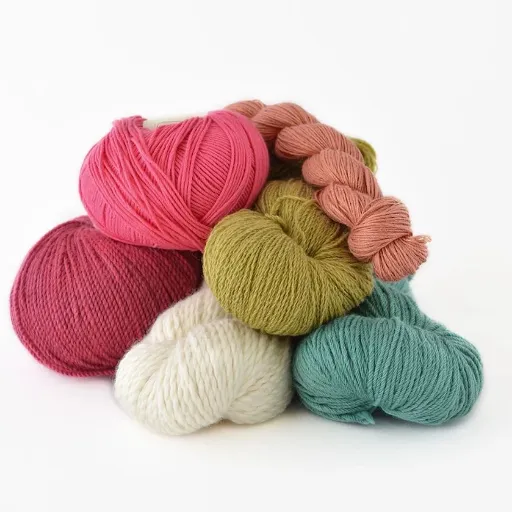
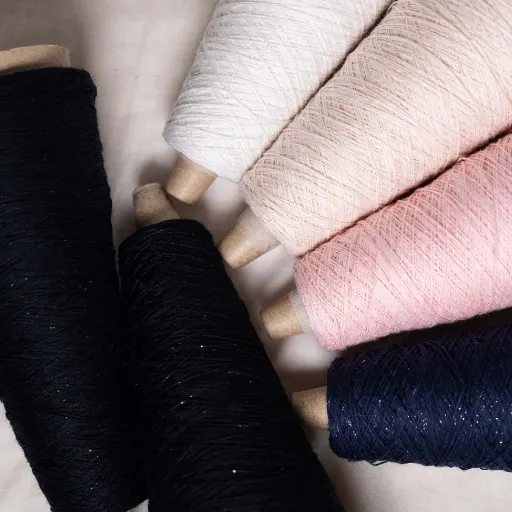


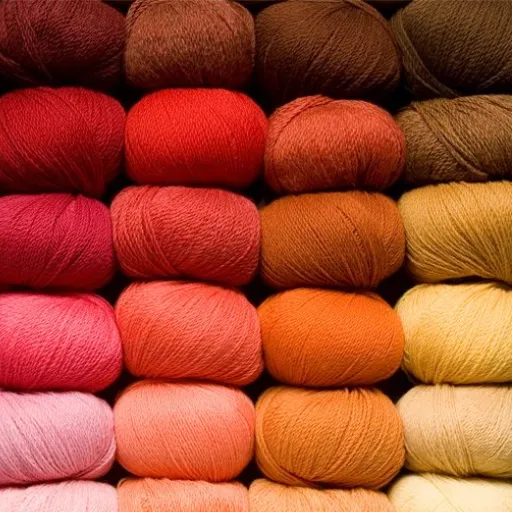


Organic cotton yarn for knitting is a smooth, inelastic plant fibre that produces cool, breathable, softly draping fabric. It has almost no memory, so a knitted garment stretches and stays stretched, yet it holds stitch definition beautifully and sits gently against sensitive skin. Reach for it on positive-ease tops, baby knits, and home textiles, and think twice wherever you need stretch or bounce.
Cotton is the fibre knitters love and distrust at once: gorgeous drape, no wool itch, and a memory so weak that a favourite top can hang an inch-and-a-half lower by the end of an afternoon. Meanwhile the word “organic” on the label tells you how the cotton was grown, not how your yarn will behave on the needles. The two get confused constantly, and the confusion costs money.
Most cotton-knitting tips tell you what to do and never explain why. This guide does both: how organic cotton behaves on the needles and the fibre-level reasons for it, what to knit with it and what to avoid, how much it shrinks, and how to tell a genuinely certified skein from a label that simply says “organic.”
Key Takeaways
- Organic certification says nothing about how a yarn knits. Feel and durability come from fibre length, combing, twist, and knit density, so a combed conventional cotton can out-knit a carded organic one.
- Cotton has almost no memory: a top knit to 10 in can reach 11.5 to 12 in after a day’s wear. Knit body lengths short and choose positive ease.
- Expect roughly 3 to 10% shrinkage, mostly in length. The only reliable rule is to wash and dry your swatch exactly as you will wash the finished piece. Mercerized cotton shrinks less than unmercerized.
- Mercerization changes your gauge, not just the shine. The treatment shrinks the yarn and raises its weight-per-length, so mercerized cotton knits denser, as if from a heavier yarn.
- The organic premium runs about 20 to 35% above conventional. That buys traceability and skin safety, not better drape. Organic cotton is roughly 2.8% of global production (ICAC, 2024).
What Is Organic Cotton Yarn?
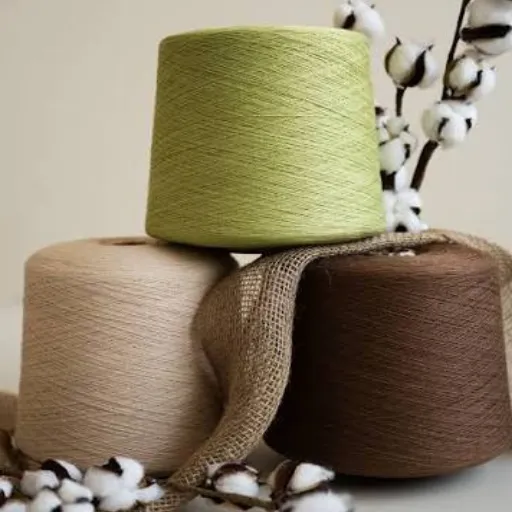
Organic cotton yarn is yarn spun from cotton grown without synthetic pesticides or fertilizers, with certification that covers the entire supply chain rather than the fibre alone. The word “organic” describes an agricultural and processing standard, not a fibre property, so it tells you how the cotton was produced but not how the finished yarn will feel in your hands.
GOTS (the Global Organic Textile Standard) covers the whole chain, from the field through the spinning mill, dye house, and finishing, verified by annual independent audits, and its licence numbers are checkable on a public database. OCS (the Organic Content Standard) verifies content only, confirming that a stated percentage of the fibre is organic without auditing the rest of the chain. And “organic” with no named standard attached is unverifiable, no matter how the label is phrased. For a fuller comparison, see what GOTS and OCS actually certify.
If you are new to buying organic yarn at all, organic versus conventional cotton yarn covers the fibre-level difference in detail.
Does Organic Certification Change How the Yarn Knits?
No. Organic certification does not change how a yarn knits. Gauge, drape, stitch definition, and durability are set by fibre length, combing, twist, and knit density, none of which the organic standard governs. What certification changes is how the cotton was grown and processed, which affects skin safety, traceability, and cost, not the fabric on your needles. Almost no craft page states this distinction plainly, and it is the one that saves you money.
What Actually Determines Feel and Durability
Feel comes from fibre length and combing. Longer cotton staple spins into a smoother, softer yarn with fewer loose fibre ends, which is why a combed conventional cotton can feel better than a carded organic one of the same weight. Durability follows fibre length, twist, and how densely you knit, more than where the cotton grew. To understand the fibre behind it, see why staple length decides softness.
What Organic Certification Does Change
Certification changes three real things. It verifies skin safety, which is why organic yarn is the sensible default for baby garments and anything worn against sensitive skin. It provides traceability, a documented chain of custody from field to skein. And it carries a price: the organic premium runs about 20 to 35% above conventional cotton yarn, partly because certified organic cotton is only about 2.8% of global production (Textile Exchange, 2024). You can read the full cost breakdown in what the organic premium actually costs.
One honest caveat: organic yarn is not lower quality than conventional yarn, and the quality standards are identical. Organic yarn is a specification with a price, not a grade above or below the conventional shelf.
How Organic Cotton Yarn Behaves on the Needles
Cotton behaves differently from wool in five specific ways, and each one has a structural cause you can plan around.
It Has No Memory, and It Grows
Cotton is a smooth, short-staple plant fibre with no elastic recovery. Wool crimps and springs back; cotton simply doesn’t. A top knit to 10 in can reach 11.5 to 12 in after a day of wear, hanging under its own weight (Brown Sheep). Marta learned this the hard way: she knit a summer tee to a 10-inch body length, and by that evening it was grazing 12 inches. Knit body lengths short, choose positive ease, and expect a cotton garment to settle into the shape gravity gives it.
Ribbing Will Not Draw In
Because cotton has no spring, ribbed hems and cuffs stay open instead of hugging the body. A 2×2 rib that draws in neatly on wool will sit flat on cotton. Reach for I-cord, double stockinette, or a gently rolled edge when you need a hem to hold.
It Is Heavier and Slippery
Cotton produces a heavier fabric than wool at the same gauge, which affects how cables and bobbles sit. It is also slicker than wool, so stitches slide off metal needles. Wood or bamboo needles grip better and save you dropped stitches, especially at the start of a project.
Bias and the Parallelogram Swatch
Residual twist in the yarn can make the fabric tilt, a defect called bias or spirality. The test is simple: knit and block a square swatch. If it dries as a parallelogram rather than a square, the yarn has bias, and stockinette will slant across the garment. Jun caught exactly this before committing a thousand yards to a cardigan, and switched to seed stitch, which balances the twist. When you find bias, a textured stitch or a blend is the fix.
Why Blocking Cannot Fix It
Blocking evens your stitches and sets the shape you pin the piece to, but it can’t install a memory the fibre never had. The fabric you knit is largely the fabric you keep. For cotton, steam blocking is often the right call, because cotton is weakest when soaking wet and heavy. Block flat, and avoid the temptation to iron out the natural drape.
New to choosing a count? How yarn count shapes gauge and drape explains how a 30/1 and a 60/1 become different fabrics.
Mercerized vs Unmercerized Organic Cotton Yarn
Mercerization is a caustic-soda treatment that changes both the yarn’s surface and its dimensions. It gives cotton a lustrous sheen and makes it stronger, but it also shrinks the yarn and raises its weight-per-length, so mercerized cotton knits up denser, as if you had reached for a heavier yarn.
| Property | Mercerized | Unmercerized |
|---|---|---|
| Finish | Lustrous sheen, smooth | Matte, natural |
| Strength | Stronger, more pill-resistant | Softer |
| Absorbency | Lower | Higher |
| Shrinkage | Less | More; “fulls” when finished |
| Density and gauge | Knits denser (yarn shrinks in treatment) | Behaves at nominal gauge |
| Best for | Polished garments, drapey tees and cardigans | Dishcloths, washcloths, absorbent items |
Most organic craft yarn is unmercerized, so know which one you have before you swatch. The dimensional effect is real and measurable: open-width mercerizing shrinks cotton roughly 2 to 4%, and tubular mercerizing up to about 8% (Cottontech / CSIR technical reports). That is why a mercerized yarn can knit to a tighter gauge than its stated weight suggests.
Here is the practical consequence. If you substitute a mercerized cotton for an unmercerized one of the same weight, don’t assume the gauge stays put. Swatch both, or expect a denser fabric.
How Much Organic Cotton Yarn Shrinks (and How to Gauge It)
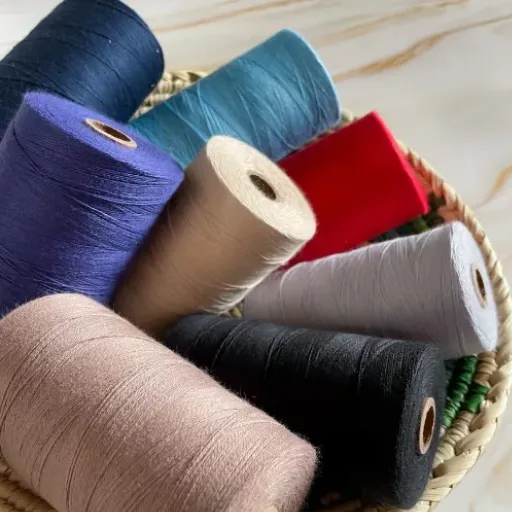
Expect organic cotton yarn to shrink roughly 3 to 10%, mostly in length, with width often holding steady or even growing slightly as the fibre blooms. The exact figure depends on whether the yarn is mercerized, how it was finished, and above all how you wash it. There is no universal number, only a range with conditions.
| Reading | Length change | Width change |
|---|---|---|
| Knit Picks Simply Cotton (organic worsted) | 5 to 10% shrink; eases after a wash or two | Minimal |
| Documented washed swatch (sport weight) | Fabric shortened (7.75 grew to 8.75 rows/in) | Fabric bloomed (6.5 dropped to 6.25 sts/in) |
| General craft guidance | About 6% | About 3% |
| Amigurumi, first wash | About 3 to 5% | About 3 to 5% |
The documented swatch is the most instructive reading. The washed fabric shortened vertically while it grew very slightly horizontally, which is the “bloom” that unmercerized cotton develops when it fully relaxes. Shrinkage also eases after a wash or two, so the first laundering is the one to plan for.
The rule that overrides every number above: wash and dry your swatch exactly as you will wash the finished piece. A swatch measured dry tells you less than half the story.
Choosing Organic Cotton Yarn for Knitting: Weights, Gauges, and Needle Sizes
Match the yarn weight to your project, then verify the gauge on your own swatch. The figures below are typical starting points, not guarantees, because twist and fibre length shift gauge from one yarn to the next.
| Yarn weight | Needle (US / mm) | Typical gauge | Knits well as |
|---|---|---|---|
| Fingering / 4-ply | US 1 to 3 / 2.25 to 3.25 mm | 7 to 8 sts/in | Lightweight tops, baby garments |
| Sport | US 3 to 5 / 3.25 to 3.75 mm | 6 to 6.5 sts/in | Light tees, baby blankets |
| DK / 8-ply | US 5 to 7 / 3.75 to 4.5 mm | 5.5 to 6 sts/in | Tees, cardigans, home textiles |
| Worsted | US 7 to 9 / 4.5 to 5.5 mm | 4 to 5 sts/in | Dishcloths, market bags, blankets |
Reading a Label That Doesn’t State a Weight
Many organic craft yarns list a fibre content and a needle size but no standard weight category. When that happens, work from the recommended gauge rather than the label copy. If the yarn recommends 4.5 stitches per inch on a US 6 to 9 needle, treat it as worsted regardless of what the brand calls it.
What to Knit with Organic Cotton Yarn
Organic cotton suits projects that want drape, breathability, and structure without stretch. Reach for it where the fibre’s strengths line up with the job.
Projects It Excels At
- Positive-ease tops and summer tees that hang with a soft drape
- Baby garments and blankets, where skin safety matters and the fabric will be washed often
- Summer accessories, shawls, market bags, and plant hangers
- Washcloths and dishcloths, where absorbency is the whole point
- Home textiles, cushion covers, placemats, and lightweight throws
- Amigurumi and toys, where cotton’s stitch definition shows every detail
For baby projects specifically, organic cotton yarn for baby knits covers the counts and safety standards to specify.
Projects to Reconsider
Some projects fight the fibre. Socks bag and lose shape because cotton won’t spring back. Tightly fitted ribbed garments gap and slip for the same reason. And fine cables where any tension variation shows can look uneven in cotton’s heavier, smoother fabric. The workaround is a blend: cotton with wool or nylon restores some memory while keeping cotton’s cool hand. If you are weighing fibres for a project, see cotton versus acrylic for knitted fabric.
Organic Cotton Yarn for Crochet
Crochet uses the same fibre but different rules. Cotton’s stitch definition and lack of stretch make it the natural choice for two very different project families.
Dishcloths and Kitchen Items
Use 100% cotton, not a blend, because the acrylic in a blend cuts heat resistance. Choose unmercerized cotton for absorbency, since the matte, untreated fibre drinks up water better than a mercerized yarn. Worsted weight is the beginner default, and if your hands tire, choosing a comfortable crochet hook makes the difference on a long project.
Amigurumi and Soft Toys
Cotton’s crisp stitch definition is exactly why it suits toys: the shape holds and the stuffing doesn’t show through. Work a hook 0.5 to 1.5 mm smaller than the label recommends so the fabric tightens and the fill stays hidden, and choose a firm-twist cotton over a drapey one. For baby-safe toys, verify GOTS, OEKO-TEX Class I, or EN71-3 rather than a generic “baby suitable” claim.
How to Wash and Care for Organic Cotton Knits
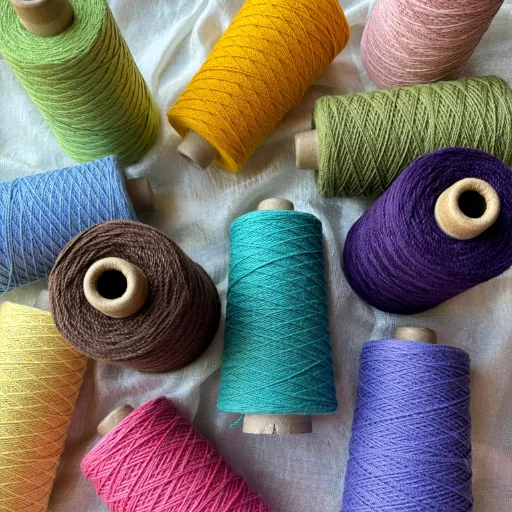
Care for cotton knitwear gently. Wash cool at roughly 30 to 40°C on a gentle cycle, skip bleach entirely, use low or no tumble drying, and dry flat whenever you can.
Never hang a soaking wet cotton knit. Water weight will stretch it permanently and it won’t spring back. Store finished pieces folded, not hung, because a shoulder on a hanger will drag the garment out of shape over time.
Blocking Organic Cotton
Block your cotton flat to even the stitches and set the shape you want. Steam blocking suits structured pieces, and a light spritz-and-pin handles lace and openwork. Resist over-blocking into a flat, lifeless fabric: cotton’s soft drape is the reason you chose it.
How to Verify a Yarn Is Actually Organic
You can check any genuine organic claim in a few minutes.
Start with the GOTS licence number on the label and look it up on the public GOTS database. When buying from a mill, ask for a Scope Certificate, which proves the mill is certified to handle organic fibre, and a Transaction Certificate for each order, which ties a specific shipment to certified material. Both are standard documents; a supplier who can’t produce them can’t support the claim.
Two things to watch for. “Organic” with no named standard is unverifiable, no matter how reassuring the label reads. And “non-certified organic” is a real category, meaning fibre grown organically but spun at a mill that is not certified, so GOTS can’t be claimed even if the cotton itself is clean. Know which one you are buying.
Frequently Asked Questions
Is organic cotton yarn good for knitting?
Yes, for the right projects. It gives cool, breathable fabric with excellent drape and stitch definition, and it is safe against sensitive skin. Its one real limitation is memory: cotton stretches and stays stretched, so choose positive-ease garments and avoid items that need stretch, such as fitted socks.
Is organic cotton yarn better than regular cotton for knitting?
Not for how it knits. Feel and durability come from fibre length, combing, twist, and knit density, not organic status, so a combed conventional cotton can feel and wear better than a carded organic one. Organic certification changes skin safety, traceability, and cost, not gauge or drape.
What can I knit with organic cotton yarn?
Positive-ease tops and tees, baby garments and blankets, summer accessories, market bags, washcloths, dishcloths, home textiles, and amigurumi. Cotton excels where you want drape, absorbency, or stitch definition rather than stretch.
Can you knit socks with cotton yarn?
You can, but pure cotton socks tend to bag and lose shape because cotton has no elastic recovery. If you want cotton socks, choose a blend with wool or nylon to restore some memory, and knit at a firm gauge.
How much does cotton yarn shrink?
Roughly 3 to 10%, mostly in length, with width often holding or growing slightly. The exact amount depends on whether the yarn is mercerized and how you wash it. Wash and dry your swatch exactly as you will wash the finished piece, and plan from that number.
Do I need special needles for cotton yarn?
Not special, but wood or bamboo needles grip cotton’s slippery surface better than metal and reduce dropped stitches. Use the needle size that gives you the fabric gauge your pattern needs.
Is mercerized or unmercerized better for knitting?
It depends on the project. Mercerized cotton is smoother, stronger, shinier, and shrinks less, and it suits polished garments with drape. Unmercerized cotton is matte, softer, and more absorbent, which makes it the better pick for dishcloths and washcloths.
How do I stop my cotton knitting from stretching?
Knit body lengths short, choose positive ease, use textured stitches or blends where you need stability, dry flat, and never hang a wet cotton knit. Cotton won’t recover the way wool does, so plan for the stretch rather than trying to undo it.
Source Organic Cotton Yarn for Knitting
Organic cotton yarn behaves the way it does for reasons you can now name: no memory from an inelastic fibre, a heavier and denser hand from mercerization, and a shrinkage range you plan for by washing your swatch. Organic certification changes safety, traceability, and price, and it leaves gauge and drape to fibre length, combing, twist, and density.
Hebei Lida Textile Co., LTD spins certified organic cotton yarn across a range of counts for craft and commercial knitters. Tell us your count, yarn weight, and certification requirement, and we will match a specification to your project with the behaviour made clear. If you would like to see the fibre up close, you can request an organic cotton yarn sample and test it on your own needles.