
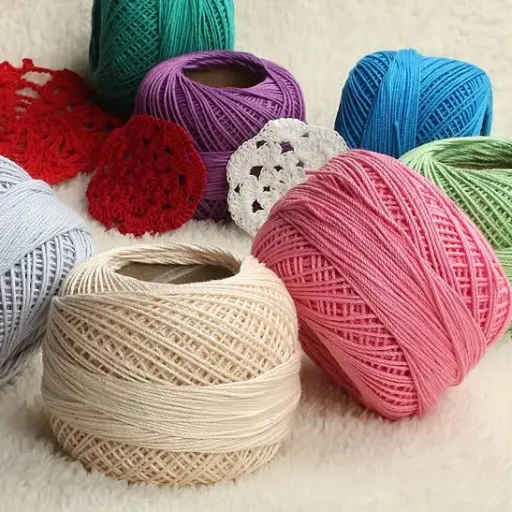


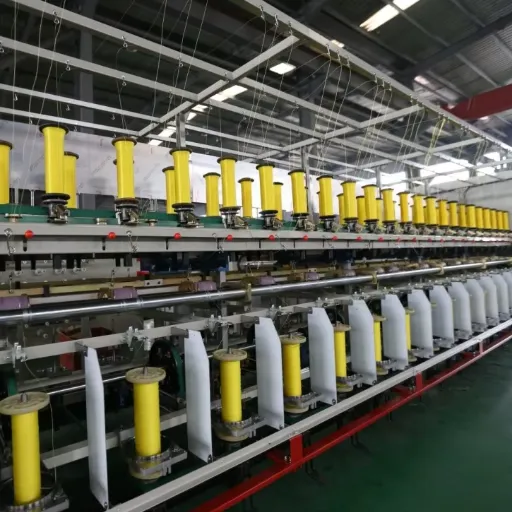
Custom yarn for industrial use is technical yarn engineered to meet specific performance requirements beyond standard textile applications, such as tensile strength, heat resistance, chemical resistance, and abrasion resistance. Industrial buyers use these custom yarns in automotive components, marine ropes, geotextiles, filtration fabrics, aerospace composites, and protective equipment where failure is not an option.
The global technical textiles market is expected to reach USD 267.4 billion in 2026, according to Fortune Business Insights. Behind every airbag, geotextile, and marine rope is a yarn built for a specific job. Yet most sourcing guides treat yarn as a commodity. They leave engineers and procurement teams without a clear framework for translating operational requirements into production-ready specifications.
If you have ever received a sample that looked perfect on paper but failed in the field, you already understand the problem. This guide shows how to specify custom yarn for industrial use and custom yarn for high-performance applications across fibers, tests, certifications, and supplier selection. You will learn a repeatable five-step framework that reduces risk, shortens development cycles, and ensures your yarn performs when it matters.
Key Takeaways
- Custom yarn for industrial use is defined by performance metrics, not just fiber type or appearance.
- The best fiber choice depends on the operating environment: polyester for UV stability, nylon for abrasion, aramid for heat, UHMWPE for strength-to-weight ratio.
- A complete specification covers performance requirements, fiber selection, yarn construction, functional finishes, and testing standards.
- Industrial buyers should request ASTM D2256 or ISO 2062 tensile reports, REACH or RoHS compliance, and batch traceability documentation.
- Supplier capability in R&D support, sampling, and quality consistency matters as much as price for custom industrial orders.
What Is Custom Yarn for Industrial Use?
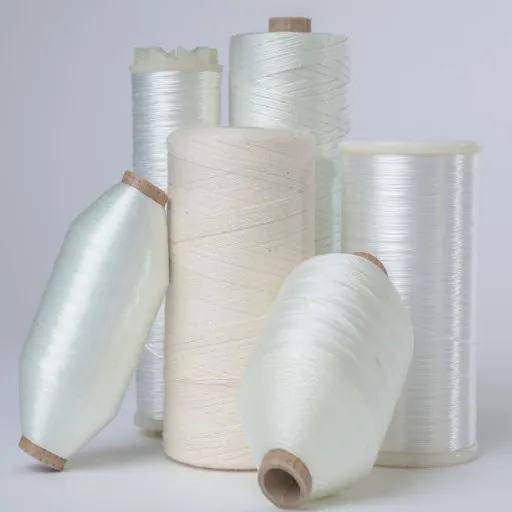
Custom yarn for industrial use is yarn engineered to meet specific performance requirements beyond standard textile applications, such as tensile strength, heat resistance, chemical resistance, and abrasion resistance. It is used in automotive, marine, aerospace, and construction applications where failure is not an option.
Standard Yarn vs. Industrial Yarn
Standard yarn is designed for appearance, hand-feel, and basic durability. It serves fashion apparel, home textiles, and general consumer goods well. Industrial yarn is held to a different standard. It must perform under load, temperature, chemicals, UV exposure, and repeated mechanical stress.
The difference shows up in the numbers. A typical fashion yarn might have a tenacity of 2-3 grams per denier. A high-tenacity industrial yarn can exceed 7 grams per denier. Industrial yarn also demands tighter tolerances on elongation, shrinkage, twist, and linear density. These properties determine whether a yarn will hold a seam, stop a vehicle, or reinforce soil under a highway.
Why Customization Matters
Off-the-shelf industrial yarns rarely match exact operating conditions. A catalog yarn might offer high tensile strength but poor UV resistance. Another might resist chemicals but stretch too much under load. Customization closes these gaps.
With custom yarn for industrial use, you can adjust fiber blends, denier, filament count, twist level, ply structure, and functional finishes. You can also specify packaging, cone size, and labeling for automated downstream processes. This level of control turns yarn from a standard input into a performance component with production-ready yarn specifications tailored to your application.
When procurement teams treat yarn as a commodity, they often optimize for price and appearance. That approach works for fashion and basic home textiles. For industrial applications, it creates hidden risks. A failed airbag yarn, a snapped mooring rope, or a degraded geotextile can cause safety incidents, production stoppages, and warranty claims.
Industrial Applications That Rely on Custom Yarn for Industrial Use
The following industrial applications demonstrate how custom yarn for industrial use solves real-world performance challenges across automotive, marine, aerospace, agriculture, filtration, and construction sectors. Each application demands a unique specification, even when the base fiber is similar.
Automotive (Mobiltech)
The automotive segment, known as Mobiltech, accounted for 21.28% of the technical textiles market in 2026. Custom yarn for automotive and Mobiltech applications goes into seat belts, airbags, tire cords, hose reinforcement, and interior fabrics.
Airbag yarn is one of the most demanding applications. It requires high-tenacity nylon 66 with controlled elongation and heat resistance. A single failed batch can halt vehicle production. Batch traceability and consistent testing are non-negotiable.
Seat belt webbing uses polyester high-tenacity yarn for low stretch and UV resistance. Tire cord yarn relies on nylon or polyester with specific adhesion properties for rubber bonding. Each application needs a different specification, even when the base fiber is similar.
Marine and Offshore
Marine ropes, lifting slings, netting, and marine composites demand custom yarn for industrial use that resists saltwater, UV radiation, and cyclic loading. Polyester high-tenacity yarn is common for mooring lines because it absorbs less water than nylon and resists UV degradation.
Ultra-high molecular weight polyethylene, or UHMWPE, has transformed heavy-lifting and deep-sea mooring. Ropes made from UHMWPE yarn for heavy-duty applications can match the strength of steel wire at roughly one-seventh the weight. This reduces handling time, fuel consumption, and crew injury risk on offshore vessels.
Aerospace
Aerospace applications use aramid, glass fiber, and carbon fiber yarns for composites, insulation, and flame-retardant barriers. These materials must meet strict fire, smoke, and toxicity standards while maintaining strength at altitude and temperature extremes.
Custom yarn for aerospace often requires certification to OEM specifications or FAR regulations. Lot traceability, material passports, and detailed test reports are standard requirements.
Agriculture
Agricultural textiles use polypropylene and high-tenacity polyester yarns for shade nets, crop support, baler twine, and greenhouse films. These products face constant UV exposure, moisture, and mechanical wear.
UV-stabilized polypropylene yarn is popular for agricultural netting because it resists sunlight degradation and remains lightweight. Custom color matching can also help with crop management, such as using specific colors to influence plant growth or insect behavior.
Filtration and Industrial Processing (Indutech)
The Indutech segment covers filter fabrics, conveyor belts, sealing materials, and processing textiles. It represents approximately 16.4% of the technical textiles market. Yarns in this segment must resist chemicals, heat, abrasion, and pressure.
PTFE-impregnated glass fiber yarns work in high-temperature filtration. Polyester and polypropylene monofilaments are used in liquid filtration where chemical resistance and precise pore size matter. Custom yarn specifications here often include finisher type, heat-set levels, and anti-static treatments.
Construction (Buildtech)
Buildtech textiles include geotextiles, reinforcement meshes, insulation, and roofing membranes. High-tenacity polyester and polypropylene yarns provide soil stabilization, drainage, and structural reinforcement.
Geotextiles used in road construction rely on custom yarn for industrial use to maintain strength for decades under soil load and moisture. Custom yarn for these applications emphasizes creep resistance, UV stability, and long-term dimensional stability.
How to Specify Custom Yarn for Industrial Use
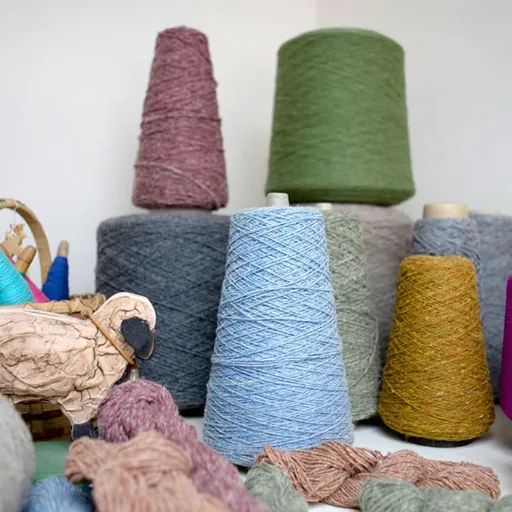
Developing clear industrial yarn specifications protects both buyer and supplier when ordering custom yarn for industrial use. It reduces sampling rounds, prevents miscommunication, and speeds up production. Follow this five-step framework to turn a performance requirement into a production-ready order:
- Define performance requirements based on load, temperature, chemical exposure, abrasion, UV, and flame resistance.
- Choose the right fiber or blend for the operating environment.
- Set precise yarn construction parameters, including denier, filament count, twist, ply, and finish.
- Specify functional finishes that extend performance in the target environment.
- Define testing and certification requirements, including ASTM D2256 or ISO 2062 tensile reports.
Step 1: Define Performance Requirements
When you specify custom yarn for industrial use, start with the operating environment, not the fiber. Ask these questions:
- What load will the yarn bear? Define minimum tensile strength and acceptable elongation.
- What temperatures will it encounter? Include both continuous operating temperature and peak exposure.
- Will it contact chemicals, oils, solvents, or saltwater? Specify chemical resistance needs.
- How much abrasion or flexing will occur? High-wear applications need abrasion-resistant fibers and finishes.
- Will it be exposed to sunlight or weather? UV stability and hydrolysis resistance become critical.
- Are there flame, smoke, or toxicity requirements? This affects fiber choice and finishing.
A good performance brief also includes the expected service life and failure mode. Does the yarn need to stretch before breaking, or remain rigid? Should it degrade predictably or maintain properties indefinitely?
Step 2: Choose the Right Fiber or Blend
Once performance requirements are clear, match them to fiber properties. The next section provides a detailed fiber selection guide. For now, remember that custom blends can deliver 80% of premium fiber performance at a lower cost.
For example, a blend of high-tenacity polyester and para-aramid can provide improved cut resistance for industrial gloves without the full cost of 100% aramid. A polyester and polypropylene blend can balance UV resistance with chemical resistance for outdoor industrial fabrics.
Step 3: Set Yarn Construction Parameters
Yarn construction affects how custom yarn for industrial use performs in the final product. Key parameters include:
- Denier or linear density: The thickness and weight of the yarn. Heavier yarns carry more load but add weight and stiffness.
- Filament count: The number of individual filaments in the yarn. Higher filament counts create softer, more flexible yarns.
- Twist level: Measured in twists per meter or turns per inch. Higher twist improves cohesion and abrasion resistance but can reduce strength and soften hand-feel.
- Ply: Two or more yarns twisted together. Ply improves strength, uniformity, and abrasion resistance.
- Finish or sizing: Surface treatments that affect processing, friction, UV resistance, flame retardancy, and anti-static behavior.
These parameters should be chosen in consultation with your manufacturer. Small changes in twist or finish can have large effects on downstream processing and final performance. You can learn more about translating design concepts into specifications in our guide on the custom yarn design process.
Step 4: Specify Functional Finishes
Functional finishes extend yarn performance beyond the base fiber. Common options include:
- UV stabilizers: Essential for outdoor and agricultural applications.
- Flame retardants: Required for aerospace, automotive interiors, and protective apparel.
- Anti-static treatments: Important for filtration, electronics, and explosive environments.
- Antimicrobial finishes: Used in medical textiles and food processing.
- Waterproof or water-repellent treatments: Common in marine and outdoor industrial fabrics.
- Heat-set finishes: Improve dimensional stability and reduce shrinkage.
When specifying finishes, always confirm compatibility with the base fiber and the end-use environment. Some finishes can reduce tensile strength or alter adhesion properties.
Step 5: Define Testing and Certification Requirements
Yarn testing verifies that your custom yarn for industrial use meets your specification. Request the following as standard:
- Tensile strength and elongation per ASTM D2256 or ISO 2062.
- Abrasion resistance testing where applicable.
- Heat aging and UV exposure tests for outdoor or high-temperature use.
- Chemical resistance testing for industrial processing environments.
- REACH or RoHS compliance for European and electronics markets.
- OEKO-TEX Standard 100 for skin-contact or consumer products.
- GRS certification if recycled content is required.
Always request a technical data sheet, or TDS, with each sample. The TDS should reference the test methods used and the actual results for the batch supplied.
Fiber Selection Guide for Custom Yarn for Industrial Use
Choosing the right fiber is the foundation of successful custom yarn for industrial use. The table below summarizes common industrial fibers and their best-fit applications.
| Fiber | Key Strengths | Best Applications |
|---|---|---|
| Polyester high-tenacity | UV resistance, low stretch, dimensional stability | Marine ropes, geotextiles, seat belts, outdoor fabrics |
| Nylon 6 / Nylon 66 | High elasticity, abrasion resistance, fatigue resistance | Airbags, tire cords, hose reinforcement, safety webbing |
| Polypropylene | Chemical resistance, lightweight, low moisture absorption | Agriculture nets, geotextiles, filtration, industrial fabrics |
| Para-aramid | Heat resistance, cut resistance, high tensile strength | Protective apparel, automotive hoses, aerospace composites |
| UHMWPE | Extreme strength-to-weight ratio, chemical resistance | Marine mooring, lifting slings, ballistic protection, cut-resistant gloves |
| PTFE | Extreme temperature range, chemical inertness | Seals, gaskets, filtration, chemical processing |
| Glass fiber | Stiffness, thermal stability, electrical insulation | Composites, insulation, construction reinforcement |
Polyester High-Tenacity Yarn
Polyester high-tenacity yarn is the workhorse of industrial textiles. It resists UV light, absorbs minimal moisture, and maintains dimensional stability under load. These properties make it ideal for marine ropes, geotextiles, seat belts, and outdoor industrial fabrics.
The polyester industrial yarn market alone was valued at approximately USD 25 billion in 2026, with a projected CAGR of 13.4% through 2033. This growth reflects increasing demand for high-tenacity industrial yarn in automotive, construction, and marine sectors.
Nylon 6 and Nylon 66
Nylon offers higher elasticity and abrasion resistance than polyester. It also handles repeated flexing and fatigue better, which is why it dominates airbag and tire cord applications. Nylon 66 generally has higher heat resistance and tenacity than nylon 6, making it preferred for safety-critical applications.
However, nylon absorbs more moisture than polyester. In wet or marine environments, this can affect dimensional stability and strength. For these applications, polyester or specially treated nylon is often a better choice.
Polypropylene
Polypropylene is lightweight, chemically resistant, and inexpensive. It floats on water and resists most acids and alkalis. These properties make it popular for agricultural nets, geotextiles, and liquid filtration.
The trade-off is lower UV resistance and a lower melting point than polyester or nylon. For outdoor applications, polypropylene yarn must include UV stabilizers to achieve acceptable service life.
Para-Aramid
Para-aramid fibers like Kevlar and Twaron offer exceptional heat resistance and tensile strength. They maintain integrity at temperatures where polyester and nylon fail. This makes them essential for protective apparel, automotive hoses, brake pads, and aerospace composites.
Para-aramid is more expensive than polyester or nylon. Custom blends can reduce cost while retaining critical properties for less extreme applications.
UHMWPE
UHMWPE, sold under brands like Dyneema and Spectra, has a strength-to-weight ratio up to 15 times higher than steel. It resists chemicals, UV light, and moisture. Marine and offshore industries have adopted UHMWPE ropes for mooring and lifting because they reduce weight and improve handling safety.
The main limitation is temperature sensitivity. UHMWPE melts at around 130 to 150 degrees Celsius, so it is not suitable for high-temperature applications without protection.
PTFE and Glass Fiber
PTFE yarn operates across an extreme temperature range and is virtually inert to chemicals. It is used in seals, gaskets, filtration, and chemical processing equipment. Glass fiber yarn adds stiffness and thermal stability to composites, insulation, and construction reinforcement.
Both fibers are more difficult to process than polyester or nylon. Custom yarn construction and finishing are critical to prevent breakage and ensure consistent performance.
Custom Blends and Hybrid Yarns
Custom fiber blends for extreme conditions combine fibers to balance cost, performance, and processability. A common example is a para-aramid and UHMWPE hybrid that delivers cut resistance and strength at a lower weight than pure aramid. Another example is a polyester and cotton blend for industrial sewing thread that combines strength with sewability.
When specifying a blend, define the exact ratio and which fiber carries the primary performance requirement. Also confirm that the fibers are compatible in dyeing, finishing, and downstream processing.
Testing Standards and Certifications for Industrial Yarn
Industrial buyers rely on standardized tests to compare samples and verify that custom yarn for industrial use meets production quality. The following tests and certifications are most commonly requested for custom yarn for industrial use.
Mechanical Testing
Tensile strength and elongation are the most fundamental properties. ASTM D2256 and ISO 2062 are the standard test methods for single-strand yarn tensile testing. ASTM D885 applies specifically to tire cords and industrial yarns with higher loads.
Abrasion resistance testing, such as Martindale or Wyzenbeek methods, measures how well a yarn withstands surface wear. This is critical for ropes, webbing, and industrial fabrics.
Environmental and Chemical Resistance
Heat aging tests expose yarn to elevated temperatures for defined periods to measure strength retention. UV exposure tests simulate sunlight degradation using accelerated weathering chambers. Chemical immersion tests verify resistance to specific oils, solvents, acids, or bases.
Always specify the test conditions, not just the test name. A yarn that passes a 24-hour UV test may fail a 500-hour test. The same applies to temperature and chemical exposure.
Safety and Compliance Certifications
REACH and RoHS compliance are required for products sold in the European Union and for many electronics applications. OEKO-TEX Standard 100 certifies that yarn is free from harmful substances. GRS verifies recycled content for sustainability claims. ISO 9001 certification indicates that the manufacturer follows a quality management system.
Application-Specific Standards
Automotive suppliers often follow OEM specifications beyond standard ASTM or ISO tests. Marine products may need IMO compliance. Aerospace components typically require FAR regulations. Construction geotextiles often reference ASTM E2098 or similar standards for alkali resistance and mesh weight.
Requesting the right standards upfront prevents costly retesting and redesign later in the project.
How to Choose a Supplier for Custom Yarn for Industrial Use
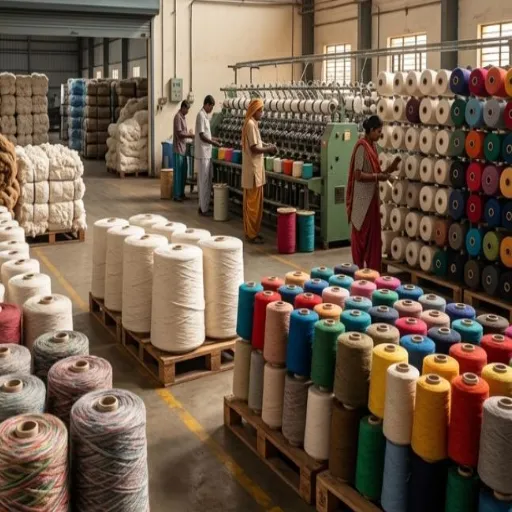
Not every yarn manufacturer is equipped to produce custom yarn for industrial use. The supplier evaluation process should go beyond price and minimum order quantity. Here are the criteria that matter most.
Technical Capability Assessment
Ask whether the supplier has experience developing custom yarn for industrial use with in-house R&D support, sample production, and testing infrastructure. Can they develop a custom fiber blend? Do they offer prototype samples before bulk production? A supplier with strong technical capability will ask detailed questions about your application, not just quote a standard product.
At Hebei Lida Textile, we support custom yarn development from concept through bulk production. Our team works with buyers to define performance requirements, select fibers, and validate samples before full-scale manufacturing.
Quality Consistency
Batch-to-batch consistency is critical for industrial orders. Ask about the supplier’s quality control processes, variation tolerances, and statistical process control. Request lot sample data from previous production runs.
Traceability is equally important. Can the supplier identify the raw material source, production date, and test results for any batch? Digital yarn passports are an emerging tool that embeds this information directly into the product record.
Scalability and Lead Times
A supplier that excels at prototypes may struggle with bulk volumes. Confirm that the supplier can scale from sample quantities to production volumes without changing equipment or processes. Also clarify lead times for sampling, bulk production, and repeat orders.
Documentation and Compliance Support
Industrial buyers need more than the yarn itself. Request technical data sheets, material safety data sheets, test reports, and certificates with each order. For regulated industries, confirm that the supplier can provide the specific documentation your auditors or customers require.
Red Flags to Avoid
Be cautious if a supplier:
- Cannot provide test data or references for custom yarn for industrial use in similar applications.
- Refuses to produce small trial batches before bulk orders.
- Offers prices far below market without explaining how.
- Has inconsistent minimum order quantities or lead times.
- Lacks clear quality control or traceability processes.
Why Asia-Pacific Manufacturing Matters for Industrial Yarn
Asia-Pacific held 37% of the global technical textiles market in 2025, worth approximately USD 92.72 billion, driven by concentrated industrial yarn manufacturing capacity. China and India are the dominant production hubs, with China projected at USD 35.11 billion and India at USD 24.25 billion by 2026.
This concentration matters for buyers of custom yarn for industrial use. Asia-Pacific suppliers offer vertical integration, from fiber production to yarn spinning and finishing. This can reduce lead times and improve cost control for custom orders.
However, not all suppliers are equal. Buyers should evaluate technical capability, quality systems, and export experience alongside price. A well-qualified Asian manufacturer can deliver industrial yarn that meets or exceeds Western standards at competitive cost.
The Business Case for Custom Industrial Yarn
Custom yarn for industrial use often carries a higher unit price than commodity yarn. The business case rests on total cost of ownership, not just purchase price.
Consider a manufacturer evaluating custom yarn for industrial use in industrial conveyor belts. A commodity yarn might cost 15% less upfront but fail twice as fast in a high-abrasion environment. The resulting downtime, replacement labor, and customer complaints can cost far more than the original savings. A custom yarn specified for abrasion resistance and fatigue life can extend service life and reduce total cost.
Similarly, automotive suppliers cannot afford batch failures that stop production lines. The cost of a custom yarn specification is small compared with the cost of a recall or production stoppage.
Conclusion
Custom yarn for industrial use is not a luxury. It is a requirement when performance, safety, and reliability are on the line. The best specifications start with the operating environment, then match fiber properties, yarn construction, functional finishes, and testing standards to that environment.
To recap, follow this five-step framework:
- Define performance requirements based on load, temperature, chemicals, abrasion, UV, and flame resistance.
- Select the right fiber or blend for the application.
- Set precise yarn construction parameters, including denier, filament count, twist, ply, and finish.
- Specify functional finishes that extend performance in the target environment.
- Require appropriate testing and certifications, including ASTM D2256 or ISO 2062 tensile reports.
The right supplier will guide you through each step, provide transparent documentation, and deliver consistent quality from sample to bulk production. At Hebei Lida Textile, we specialize in custom yarn solutions for industrial, fashion, and home textile applications.
Contact our team today to discuss your specification or request a sample for your next project.
FAQ
What is custom yarn for industrial use?
It is yarn engineered to meet specific performance requirements such as tensile strength, heat resistance, chemical resistance, UV stability, and abrasion resistance. It is used in applications where failure could cause safety issues, production stoppages, or product recalls.
What are the best fibers for industrial yarn?
The best fiber depends on the application. Polyester high-tenacity yarn works well for marine and outdoor applications. Nylon 6 and nylon 66 are ideal for airbags, tire cords, and safety webbing. Para-aramid handles heat and cut resistance. UHMWPE offers the highest strength-to-weight ratio for marine and lifting applications.
How do you test industrial yarn strength?
Industrial yarn strength is most commonly tested using ASTM D2256 or ISO 2062 for single-strand tensile strength and elongation. ASTM D885 is used for tire cords and heavier industrial yarns. Additional tests include abrasion resistance, heat aging, UV exposure, and chemical immersion.
What certifications are required for industrial yarn?
Common certifications include REACH and RoHS for chemical safety, OEKO-TEX Standard 100 for harmful substance testing, GRS for recycled content, and ISO 9001 for quality management. Application-specific standards may include automotive OEM specs, IMO for marine, FAR for aerospace, and ASTM E2098 for construction geotextiles.
How do I choose a custom industrial yarn supplier?
Evaluate technical capability, quality consistency, scalability, documentation support, and traceability. Request samples with technical data sheets, confirm testing infrastructure, and check references for similar applications. Avoid suppliers that cannot provide test data or refuse trial batches.