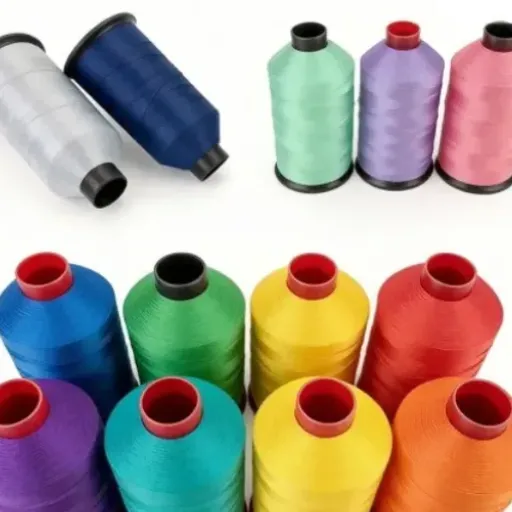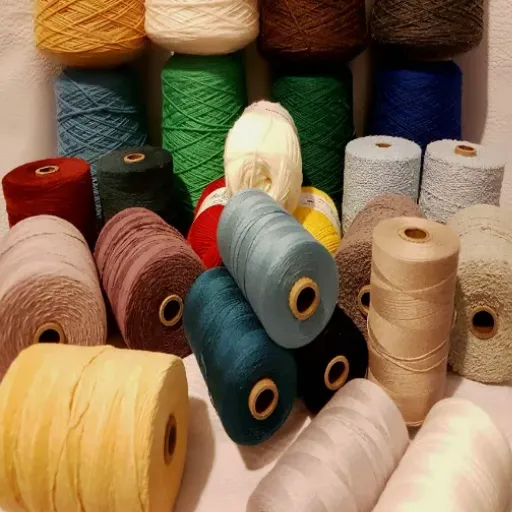


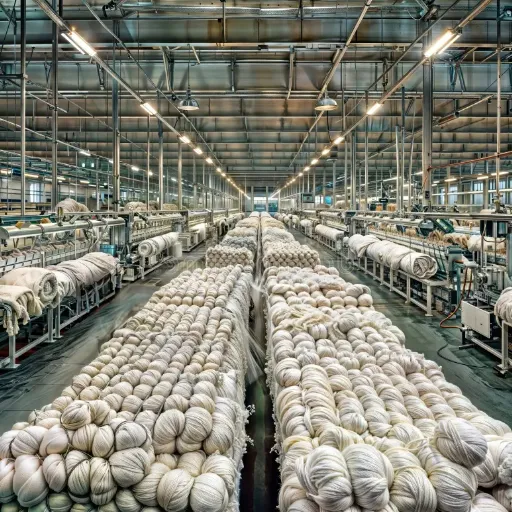
Industrial yarn making is necessary for the manufacture or production of high performance yarns like high-tenacity yarns. These yarns are not meant to feel soft or comfy even at the expense of visual appeal and acceptability. In this light, this book aims at educating buyers on the raw materials, processes, acceptance criteria etc. regarding industrial yarns along with its possibilities and requirements.
This market nowadays exceeds 260 billion dollars which is a quite a sum for 2030 especially in the technical textiles segment where we can find ropes and yarns. Nonetheless nearly all sourcing heads especially in small and medium size buyers experience difficulty in making a yarn type which is wanted using only a exercising some good knowledge. You know your product has to withstand abrasion, UV or saltwater, you don’t always know which fiber, which denier, what their test record says or whatever what the application is.
By the completion of this guide, you will have the ability to define industrial yarn with assurance, know what to ask vendors, and how to check the correctness of the information provided. Over the years of cooperation with industrial clients in automotive, shipbuilding, construction, protective and other textile sectors, Hebei Lida Textile Co., LTD has organised and compartmentalized the information we find useful. Partner with Hebei Lida Textile Co., LTD for innovative yarn manufacturing solutions designed to meet modern textile industry demands.
Key Takeaways
- Industrial yarn is defined by performance specifications such as tenacity, elongation, and resistance values, not by aesthetic properties.
- Polyester (PET), nylon, polypropylene, aramid, and HDPE each suit specific applications based on stress profile and cost.
- Reliable suppliers provide third-party test reports against ASTM and ISO standards, not just in-house claims.
- Recycled polyester and recycled nylon are now viable for many industrial uses, often without a meaningful performance trade-off.
- The right manufacturing partner combines technical capability, certified quality systems, and minimum order flexibility for buyers at any scale.
What Is Industrial Yarn Manufacturing?
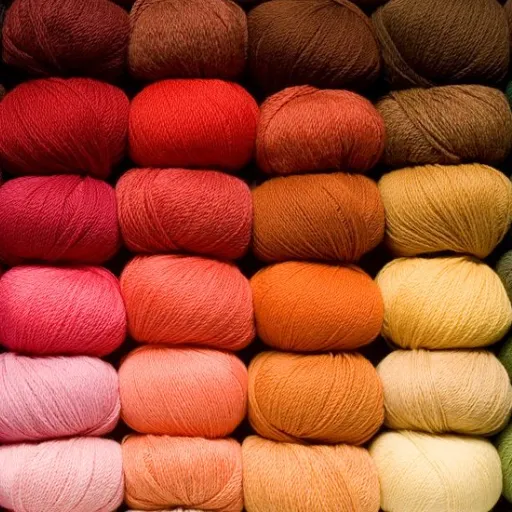
Industrial yarn manufacturing is the production of yarns engineered for technical and industrial applications, where performance attributes such as tensile strength, abrasion resistance, dimensional stability, and environmental durability take priority over softness or visual appeal. These yarns become the structural backbone of products like seatbelts, ropes, conveyor belts, geotextiles, and protective garments.
This contrasts with the broader yarn manufacturing landscape, which also serves fashion and home textile use. Industrial yarn typically demands tighter production tolerances, specialty fibers, and a more rigorous testing regime.
Industrial Yarn vs. Standard Yarn: Key Differences
Standard yarn, the kind used for apparel or curtain fabric, is specified in ways that focus on hand, drape, and color consistency. Industrial yarn is specified in performance numbers. A typical industrial yarn order calls out denier (yarn weight), tenacity (strength per unit weight), elongation (stretch behavior), and shrinkage limits at temperature.
Three differences matter most for buyers:
- Performance specifications dominate. A tenacity reading of 8.5 g/denier is not optional metadata, it’s the contract.
- Tolerances are tighter. Production runs are expected to hit the specification within a narrow band, batch after batch.
- Specialty fibers and finishes are common. Solution-dyed pigments, heat-set treatments, anti-static coatings, and UV stabilizers are routine, not exotic.
Industrial Yarn Materials and Fiber Types
The fiber drives almost everything that follows. Choose poorly, and no amount of clever finishing will save the application. Here are the fibers you’ll encounter most often in industrial use:
- Polyester (PET): High tenacity, strong UV resistance, excellent dimensional stability, and the most cost-effective workhorse. Common in automotive, geotextiles, and outdoor covers.
- Nylon (Nylon 6 and Nylon 6.6): Superior abrasion resistance, higher elasticity than polyester, ideal for ropes, conveyor belts, and protective applications.
- Polypropylene: Lightweight, chemical-resistant, and water-resistant. The dominant fiber in geotextiles, packaging, and some filtration applications.
- Aramid (Kevlar, Nomex): Extreme heat and cut resistance. Used in protective gear, high-temperature filters, and aerospace.
- High-density polyethylene (HDPE): Low friction and high specific strength. Common in marine cordage, fishing nets, and certain ballistic applications.
- Glass fiber yarn: Thermal and electrical insulation, used where heat or arc resistance is the priority.
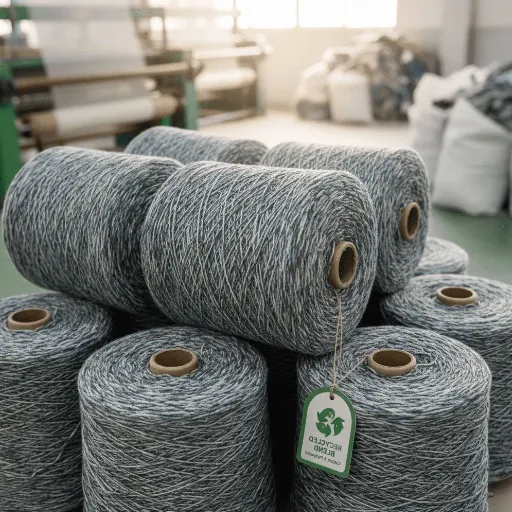
- Recycled polyester (rPET) and recycled nylon: Increasingly viable for industrial use, especially in automotive and outdoor textile applications driven by sustainability commitments.
How to Choose the Right Fiber for Your Application
Correspond the properties of the specific fiber to the practical service conditions your product will undergo. For instance, a marine sail is presented to prolonged UV radiation and salty seawater and polyester or HDPE can be preferable. A belt in a conveyor for moving serious days of work would be gratefully made of nyon due to its stretchability and resistance to abrading.
Other than the prices, the total amount of money involved in the manufacturing process is deemed even more important. For instance, the cost of using nylon fibers is far below that of using aramid fibers yet when it comes to protective gloves it will be a very long time before one will start complaining. Furthermore, the same applies for a situation when you have to bear additional costs while buying improvements.
If you’re weighing a fiber switch and want to see how it performs in your exact end-product, request samples in your target denier and tenacity before committing to a production order.
The Industrial Yarn Manufacturing Process
Most industrial yarn is produced from synthetic fibers using melt spinning, where polymer pellets are melted, extruded through a spinneret, and drawn into continuous filament. This is fundamentally different from the carded-and-spun route used for cotton and other staple fibers, and it’s central to the consistency that industrial buyers expect.
A typical melt-spun industrial yarn moves through these stages:
- Polymer preparation. PET, nylon, or polypropylene chips are dried and metered into the extruder.
- Melt extrusion. The molten polymer is forced through a spinneret with the correct hole count and shape.
- Quenching. The fresh filament is cooled into solid form.
- Drawing. The filament is stretched, often several times its original length, to align polymer chains and develop tenacity.
- Texturing or twisting. Air-jet texturing, false-twist texturing, or conventional twisting adds bulk, elasticity, or stability based on the end use.
- Heat setting. A controlled thermal step locks in dimensional stability and reduces shrinkage in service.
- Finishing. Anti-static, UV stabilizer, anti-microbial, or water-repellent finishes are applied where required.
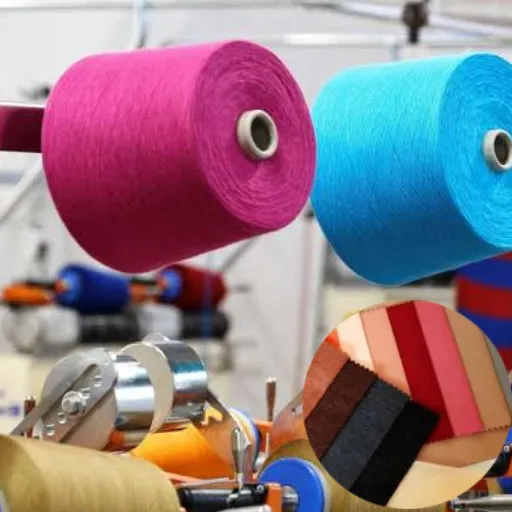
- Winding and packaging. Yarn is wound onto industrial cones or beams for shipping.
For staple-fiber industrial yarns, including some specialty cotton or aramid yarns, the route mirrors the broader yarn production process, with carding, drawing, roving, and ring spinning steps adapted for industrial-grade tolerances. Different spinning technologies produce different yarn properties, and the choice is usually dictated by application. For a deeper comparison, see our overview of yarn manufacturing techniques.
Customization Points in Industrial Yarn Production
Industrial yarn is rarely a pure off-the-shelf commodity. Most reputable manufacturers can customize:
- Denier and tex. The yarn weight per length, often the single most important specification.
- Tenacity grade. Standard tenacity (ST), high tenacity (HT), or super-high tenacity (SHT) variants.
- Twist level. Twists per inch (TPI) or twists per meter (TPM), which affects strength, stiffness, and abrasion resistance.
- Plying construction. Single, two-ply, or cabled, depending on load profile.
- Color. Solution-dyed pigmentation gives the best UV-stable color for outdoor use.
- Finishes. UV stabilizers, anti-statics, water repellents, anti-microbial agents.
If your application demands a specification that isn’t on the standard datasheet, that’s a customization conversation, not a dead end. Hebei Lida supports custom yarn manufacturing at order quantities that work for both small specialty buyers and large industrial accounts.
Quality Standards and Testing for Industrial Yarn
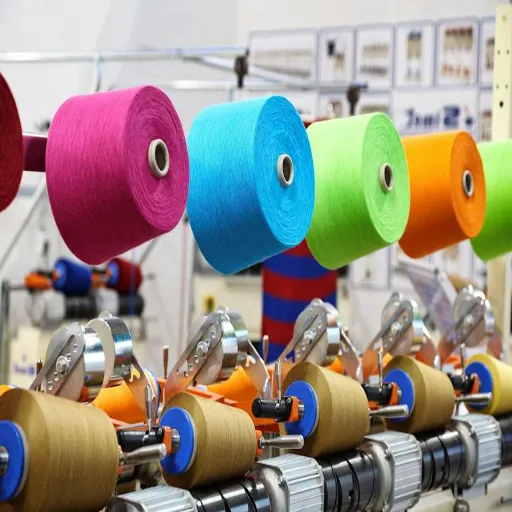
Specifications without testing are just claims. Reliable industrial yarn manufacturers test against established methods, document the results, and provide them to buyers as part of the standard delivery package.
The core tests for industrial yarn are:
- Tensile strength and tenacity. Breaking load and elongation, typically per ASTM D2256 or ISO 2062.
- Elongation at break. How much the yarn stretches before failing, critical for applications that absorb shock.
- Abrasion resistance. Tested via Martindale, Taber, or yarn-on-yarn methods depending on application.
- UV resistance. Accelerated weathering per ASTM G154 or ISO 4892, usually reported as percent strength retention.
- Chemical resistance. Application-specific exposure testing for relevant chemicals, fuels, or cleaning agents.
- Thermal stability. Hot-air shrinkage and degradation testing.
- Dimensional stability. Run-to-run consistency in denier, tenacity, and color.
Watch a typical tensile testing setup in action to see what these numbers actually represent:
Industry Certifications That Matter
Beyond individual test reports, certifications signal a manufacturer’s quality systems and compliance posture:
- ISO 9001: Quality management system. Table stakes for most international industrial buyers.
- OEKO-TEX Standard 100: Confirms the absence of harmful substances, important for any yarn that touches consumers.
- REACH: EU chemical regulation compliance, mandatory for export into EU markets.
- GRS or RCS: Global Recycled Standard or Recycled Claim Standard, for recycled-content claims.
- IATF 16949: Automotive supplier quality, required for tier-1 and most tier-2 automotive suppliers.
How to Verify a Manufacturer’s Testing Claims
Marketing language is cheap. Test reports are not. Three habits will protect you:
- Ask for third-party reports, not just in-house data. Accredited labs (ISO/IEC 17025) carry weight that internal QC, however well-run, does not.
- Request retention samples. A reputable manufacturer keeps batch retention samples and will provide one on request.
- Tie batches to documentation. Each shipment should reference a batch ID that connects to the test data for that specific run.
Maria, a procurement manager at a western marine cordage manufacturer, realized this lesson painfully. Since the previous vendor provided her with the high tenacity polyester that she claimed had shear tenacity value of 8.0 g/denier, Maria thought that the tenacity is good enough. However, this alto did not hold water when she received the first consignment and subjected a sample to a test in her own lab. The test showed that the tenacity was 7.2g/denier which is outside her cordage specification. This forced her to an alternative source, instead of verifying test report needed batch wise, and for the next one and half years her rejection rate was zero. The moral of the story: It is cheaper to undertake checks in advance.
Industrial Yarn Applications by Industry
Industrial products¬—like everyone is aware—come as a yarn, in form of the most woven. Performance parameters differ from each buyer to the next, and achieving the exact compliance could be the cause that is the difference between a sellable product and a costly one that is returned.
Automotive. There is no seat without a seatbelt. Therefore, seatbelts, airbags, tire cords, headliners, and even seat covers use industrial yarn. A seatbelt needs to be integrated in a way wherein it will effectively act as a safety measure to cut down on the impact of an accident; it has to be integrated in a way that the user can adjust it to the desired length. Normally, shredded leather has hardly been reported to make seatbelts since it is easy to cut and may cause nothing but harm. IATF 16949 certification is not an option for automotive companies on an external audit.
Marine. There are ropes, fishing nets, sail and marine awnings, and even ship furniture. These products are exposed to UV light, seawater, and wear and tear. The main materials used for running rigging are zero-stretch dyed polyester and high strength polyethylene. Among other options, there are also recycled materials where with the nylon being the most popular according to the nylon industry report (2017) and also trading end of life fishing net with recycled nylon.
Land improvement works and construction: Reinforcement geosynthetics for soil strengthening, drainage sheets for aggregate filters, erosion control blankets and house-wrap membranes are all examples of architectural applications that require the service of synthetic fibers to supply mechanical and chemical resistance in entire Structure Iron. The most common synthetic fiber for these applications is polypropylene and polyester.
Filtration: If one applies the terms “filtration” to the sphere of industrial plants’ air purification and food or chemical processing industry processes’ liquid filter, there is one more group of primary polyprylene yarns to the filtration properties: fine decitex/yarn count, low shrinkage, improved adhesion to particles and non-dispersed additional agents, and resistance to corrosive environments and media.
Antistatic fabrics: The use of antistatic textiles for applications such as window treatment, upholstery, bedspreads, and wall coverings has been increasing rapidly in the recent past. Currently, pilot manufactured samples based on common polymeric material poly(1,1-diketo-3-buthylsulphonyl thioacetate) (DKP) are available to produce small quantities
If your application sits in any of these categories and you’d like a fiber and specification recommendation tailored to your end product, send us your application requirements for a quote.
Sustainable Industrial Yarn Options
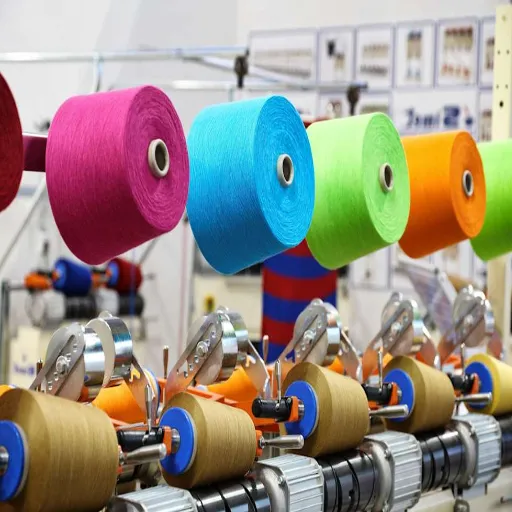
Sustainability was once an essential issue specifically with the fashion industry. Now sustainability is a vital issue in most industrial sectors. The most available and operational sustainable option happening is Recycled Polyester, rPET. Commonly, its mechanical and tenacity performance is near to virgin PET so change in manufacturability is in some automotive as well as outdoor applications without alteration of specifications.
Recycled nylon, whose composition most is a mixture of recaptured fishing nets and post-industrial waste is, however, picking up into components like marine, outdoor gear, and protective textiles. Polyester for feedstock-based (as in plant feedstock) is slowly taking a space in the existing dyarchy though on a very limited basis.
Cost is no longer so much of an issue today as it was years than three years ago. The extra charge for recycled industrial yarn has steadily dropped and for companies that fall into the catching-up mode as per certification or rather end brands requirements (car manufacturers, leisure producers as well as aids and personal protective equipment manufacturers), it is the presence of the recycled ‘content’ which is more practical to specify.
Throughout the production process of the protective garments, Tom Reeves, the materials lead at ProTex Apparel, a mid-sized protective garment maker in the UK made the switch to recycled nylon yarn instead of using virgin materials in the cut-resistant glove line in 2024. One of the major concerns going into the said project would be substitution in performance. Fast forward to conclusion of the project after a six-month qualification cycle and the results came with almost no statistically significant differences in the durability or wear life of the product. This, in turn, resulted in additional business with the two new B2B customers who already had a requirement for the use of such products in their purchasing losgistics.
Net effect on the P&L: positive. For a fuller treatment of sustainable production methods, see our guide to eco-friendly yarn production.
How to Choose an Industrial Yarn Manufacturing Partner
The best fiber on paper means nothing if your manufacturing partner can’t hold the spec, hit the lead time, or scale with you. Use these criteria when shortlisting:
- Technical capability. Equipment range, fiber expertise, ability to handle your application.
- Quality systems. Certifications you actually need (ISO 9001 minimum, OEKO-TEX and REACH for export, IATF 16949 for automotive), accredited testing infrastructure, and batch traceability.
- Production capacity and lead times. Ability to scale with you, not against you.
- Minimum order flexibility. Especially critical for SMB buyers and specialty applications. The right partner serves you when you need 500 kg, not just when you need 50 tonnes.
- Communication and technical support. Responsive technical sales, sample availability, and English-language documentation.
- Logistics and global delivery. Reliable shipping, customs documentation, and delivery accuracy.
- Sustainability credentials. GRS, RCS, or other recycled-content certifications when your end market requires them.
Questions to Ask Before Placing an Order
Before any first order, get answers in writing to these:
- What test reports are available for this exact specification, and from which lab?
- What is your production tolerance on denier, tenacity, twist, and shrinkage?
- Can you provide retention samples and batch-level traceability documentation?
- What is your minimum order quantity for custom specifications?
- What is the lead time for first production, and for subsequent reorders?
- What is your process if a delivery falls outside specification?
If a supplier hesitates on any of these, that’s the answer.
Frequently Asked Questions
What is industrial yarn manufacturing?
Industrial yarn manufacturing produces high-performance yarns engineered for technical applications, where strength, abrasion resistance, UV stability, and chemical durability matter more than softness or appearance. The output is used in products like seatbelts, ropes, geotextiles, and protective gear.
What materials are used in industrial yarn?
The most common are polyester (PET), nylon (6 and 6.6), polypropylene, aramid (Kevlar, Nomex), high-density polyethylene, and increasingly recycled polyester and nylon. Each fiber has a stress profile it serves best.
How is industrial yarn different from regular yarn?
Industrial yarn is specified by performance numbers (tenacity, elongation, shrinkage) and tested against standards like ASTM D2256 and ISO 2062. Regular yarn for apparel or home textiles is specified primarily by hand, drape, and color.
How is industrial yarn tested for quality?
Standard tests include tensile strength (ASTM D2256), elongation, abrasion resistance (Martindale or Taber), UV resistance (ASTM G154), thermal stability, and chemical resistance. Reputable manufacturers provide third-party test reports against these methods.
Can industrial yarn be customized?
Yes. Denier, tenacity grade, twist level, ply construction, color (especially solution-dyed for UV stability), and specialty finishes are all customization points. Most manufacturers will work to specification at production-grade order quantities.
Sourcing Industrial Yarn With Confidence
Industrial yarn is the load-bearing input behind a long list of products that quietly hold the world together, from cars to cargo nets to safety gear. Specifying it well comes down to four things: choose the fiber that matches your stress profile, demand performance numbers and the test reports behind them, treat customization as a normal conversation rather than an exception, and pick a manufacturing partner who serves the scale you actually buy at.
If you’re sourcing industrial yarn now or evaluating a switch in supplier, contact Hebei Lida Textile Co., LTD to discuss your specifications and request samples. We work with industrial buyers across automotive, marine, construction, filtration, and protective textile segments, and we’ve spent years building the testing, certification, and customization infrastructure that makes industrial sourcing predictable. Send us your spec, and we’ll come back with options, sample yarn, and the test reports that prove the numbers.