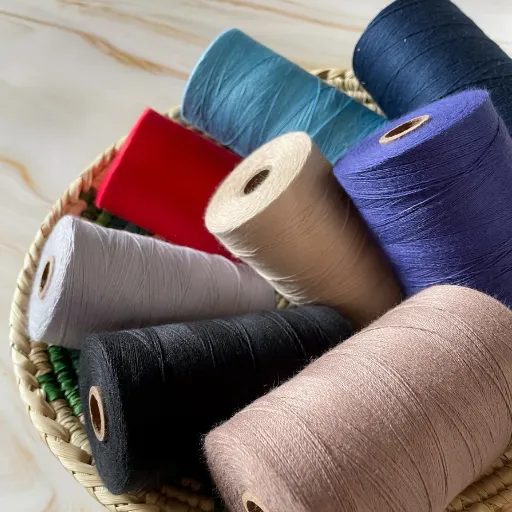

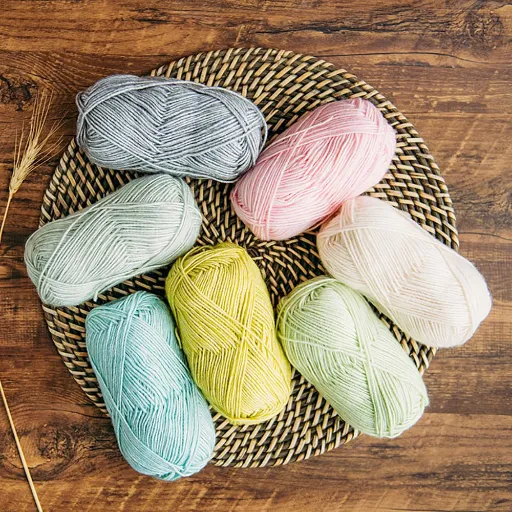
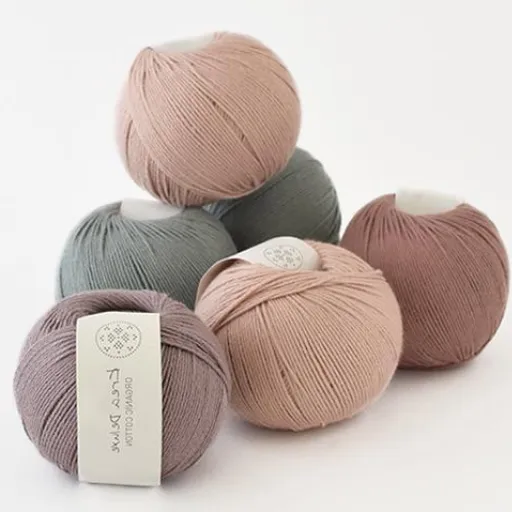



Neither fibre wins outright, and the honest answer depends on which problem you are trying to solve. Recycled cotton saves far more water and land because nothing new is grown, but it is a shorter, weaker fibre that limits how much you can spin into a yarn. Organic cotton keeps fibre quality and avoids synthetic farm chemicals, but it still needs farmland, water, and dyeing. So the comparison only makes sense once you know what each one is good at.
Here is the part that surprises most buyers: recycled cotton is not automatically the cheaper option, and it’s never the stronger one. If you reached for recycled to save money on a basic cotton programme, the maths may not work the way you expect.
If you are sourcing yarn for a brand, this article gives you what the recycled cotton vs organic cotton debate usually leaves out. You’ll see where each fibre genuinely wins, how much recycled content a yarn can carry before it fails, and how to specify either one with confidence.
Key Takeaways
- Recycled and organic cotton are not two versions of the same fibre. Organic changes how cotton is grown; recycled changes whether cotton is grown at all.
- Recycled cotton cuts water use by roughly 79% and CO2 by about 60% versus virgin cotton, and needs no new farmland.
- Organic cotton uses about 91% less blue water than conventional, but lower yields mean roughly 10 to 20% more land for the same output.
- Recycled fibre is shorter and weaker. Most yarns cap it near 10 to 30%, though coarse rotor yarns can reach 75% or more.
- Recycled cotton yarn is often not cheaper than organic, because sorting, cleaning, and certification add cost that low fibre prices do not offset.
The Short Answer: Recycled vs Organic Cotton
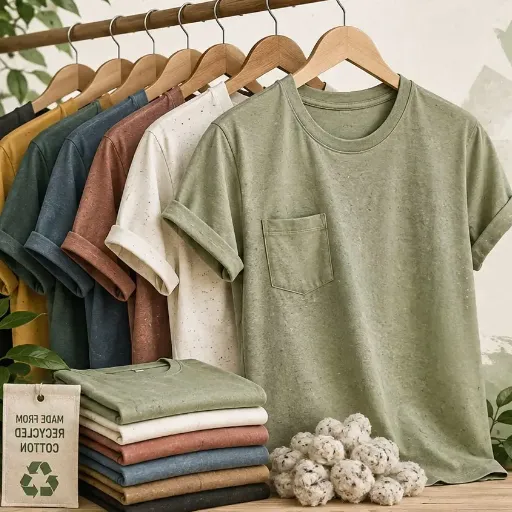
Recycled cotton wins on water, land, and waste diversion, because it reuses fibre that already exists. Organic cotton wins on fibre quality and on avoiding synthetic pesticides and fertiliser. Neither is greener across the board. The right choice depends on whether your priority is reducing textile waste or reducing farming impact, and on how much strength your product needs.
| Factor | Recycled cotton | Organic cotton |
|---|---|---|
| Source | Pre- and post-consumer cotton waste | Newly grown, non-GMO cotton |
| Farming inputs | None (no crop grown) | No synthetic pesticides or fertiliser |
| Water | No agricultural water; process water only | About 91% less blue water than conventional |
| Land | Zero new land | About 10 to 20% more land than conventional |
| CO2 | About 60% lower than virgin cotton | About 46% lower than conventional |
| Chemical risk | Carries the original garment’s dye and finish legacy | Residue limits set by certification |
| Fibre strength | Shorter, weaker, needs blending | Similar to conventional when staple length matches |
| Colour control | Variable, depends on waste source | Consistent, easy to dye |
| Certification | GRS or RCS | GOTS or OCS |
| Typical cost | Not reliably cheaper than organic | About 20 to 35% over conventional |
A single sentence sits under that table and matters more than any row: these two fibres are not competing on the same axis, so ranking them against each other tells you less than comparing each to what you actually need.
If you already know which fibre fits your next programme and just need the right specification, our team at Hebei Lida can quote both options side by side. Request a recycled and organic sample pack and compare the two yarns on your own machines.
What Each Fibre Actually Is
It helps to separate the two words that get used as if they were interchangeable. “Organic” describes a farming method. “Recycled” describes a source of fibre. One is about how cotton is produced; the other is about where it comes from.
Organic Cotton: Changing How Cotton Is Grown
Organic cotton comes from cotton plants grown without synthetic pesticides, herbicides, or fertiliser. Growers rely instead on crop rotation, composting, and natural pest control. The fibre is still virgin cotton: a plant is grown, harvested, ginned, and spun exactly as conventional cotton is.
What makes it “organic” is the supply chain, not the fibre itself. Certification confirms how the cotton was grown and processed. It doesn’t promise a softer or stronger yarn. Those qualities come from staple length and how the yarn is spun, a point we cover in our full guide to organic cotton yarn.
Recycled Cotton: Reclaiming Cotton That Already Exists
Recycled cotton is made from cotton that has already been used once. That can be pre-consumer waste, like factory offcuts and spinning waste, or post-consumer waste, like collected clothing. The material is sorted, shredded back into loose fibre, and re-spun, usually blended with virgin cotton or polyester to restore strength. We cover that process step by step in recycled cotton yarn in depth.
Mechanical recycling recovers only about 45 to 50% of the input fibre. The rest breaks down into short fibres and waste during shredding. That loss is the root of everything that follows about recycled cotton’s performance, and it’s why the fibre almost never stands alone in a yarn.
Why They Are Not on the Same Axis
Organic cotton asks a question about agriculture: can we grow this crop with less harm? Recycled cotton asks a question about materials: can we stop throwing usable fibre away? A brand can answer both at once. Many do, by blending recycled and organic fibre in the same yarn.
Understanding the fibre is only half the picture. The next section looks at the numbers people quote most often, and at what they leave out.
Environmental Impact: Reading the Numbers Honestly
Both fibres carry real environmental benefits, and both carry real costs. The trouble with most comparisons is that they quote one side’s best number and the other side’s worst. Here’s what the research shows on each measure, including the parts that are less convenient.
Water: Recycled Wins Decisively
Recycled cotton uses no agricultural water at all, because no crop is grown. Studies estimate a 79% reduction in water consumption versus virgin cotton, and vendor lifecycle assessments for recycled cotton claim reductions above 90% per kilogram. Organic cotton also performs well, using around 91% less blue water than conventional farming. On water, recycled holds the edge, simply because it starts after the farming stage entirely.
Carbon: Closer Than You Would Think
Recycled cotton’s CO2 emissions are reported at roughly 60% below virgin cotton, and several guides place them 35 to 40% below organic. Mechanical recycling still needs energy for shredding, cleaning, and re-spinning, and that energy often comes from fossil-fuel grids. Organic cotton sits around 46% below conventional on global warming potential. The gap between the two is real but narrower than the water gap.
Land: Organic’s Hidden Cost
This is the measure most comparisons skip. Organic cotton yields are roughly 28% lower per acre, which means the same output needs about 10 to 20% more land. Recycled cotton needs no new land at all, because the fibre already exists. When a company reports that organic uses less water, it’s usually true. When it implies organic uses less land, that’s often wrong.
Chemicals: Where Recycled’s Story Gets Murky
Organic cotton’s clearest win is on the farm. Conventional cotton uses roughly 16% of the world’s insecticides while occupying about 2.4% of cultivated land, so removing synthetic inputs matters. Recycled cotton avoids those inputs too, but it introduces a different question. Post-consumer fibre carries the dyes, finishes, and chemical treatments of the original garment. Mechanical shredding doesn’t remove them. So recycled cotton can inherit a chemical legacy that organic cotton never had.
The Verdict Neither Side Likes
There’s no universal winner. Organic addresses farming impact, and it does that well. Recycled addresses textile waste and resource extraction, and it does that well too.
Where the two differ is in what you measure. A brand that only weighs water will pick recycled every time. A brand that only weighs fibre quality will pick organic. The credible position is to name the trade-off rather than hide it.
Yarn Quality: Why Recycled Cotton Is Weaker
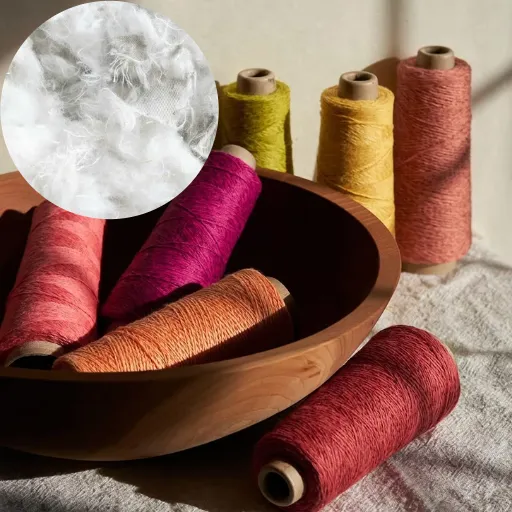
Recycled cotton’s weakness is not a marketing problem. It’s a physics problem, and it shows up the moment your yarn meets a knitting machine or a loom.
Fibre Length Is the Whole Story
Cotton fibre strength depends on staple length, the length of each individual fibre. Longer fibres overlap more, and the yarn holds together better. Mechanical recycling shreds fibre into shorter lengths every time it is processed, so recycled cotton is made of shorter staples than virgin cotton. Shorter staples mean weaker yarn, more protruding fibre ends, and less consistent behaviour under tension.
How Blending Fixes and Limits Recycled Cotton
Because recycled fibre is short, mills blend it with virgin cotton to restore strength. That’s standard practice, and it works, but only up to a point. The more recycled content you add, the closer you get to the limits of the fibre you have.
The limits are not fixed. They shift with yarn count and spinning method. A test of a Ne 20 rotor yarn made with 90% recycled content showed elongation variation of 12.2% and tenacity variation of 9.6%, far higher than a comparable virgin yarn. That level of variation causes problems downstream, from yarn breaks to uneven fabric.
How Much Recycled Content Can You Actually Use?
This is the number most buyers need and almost no comparison article provides. Practical recycled content ceilings, by yarn type:
| Yarn / application | Practical recycled content | Notes |
|---|---|---|
| Fine ring-spun, around Ne 30 | 25 to 30% | No significant performance loss for knit tops and woven apparel |
| General commercial yarn | Around 10% | Common cap for consistent durability across uses |
| Coarse rotor yarn | Up to 75% | Suitable for handloom plain and twill weaves |
| Knitted fabric, optimised | Up to 80% | Only with compact yarns and bio-polishing finishing |
| Elastic core-spun, denim | Up to 60% | Maintains strength for stretch denim |
A knitwear brand learned this the hard way. When the team moved a sweatshirt line to 50% recycled content to hit a sustainability target, the first production run failed a pilling test.
They dropped to 30%, added a bio-polishing step, and the fabric passed. The lesson wasn’t that recycled cotton fails. It’s that the blend ratio is a specification decision, not a slogan.
Colour, Consistency, and Dyeing
Recycled cotton’s colour varies with the waste it came from, so it can be harder to match across batches. Dyeing results also differ from virgin cotton, which changes how a mill plans its wet processing. Organic cotton behaves much like conventional cotton at the dyeing stage, giving more predictable colour and consistency. If exact colour matching matters, plan for extra sampling on a recycled programme.
Ready to test these limits on your own product? Talk to our textile engineers about a recycled blend trial before you commit to a production run.
Cost: Is Recycled Cheaper Than Organic? (Not Necessarily)
The most common assumption about recycled cotton is that it’s the budget option. That assumption is often wrong.
Why Recycled Cotton Is Not Automatically Cheaper
Recycled cotton starts from low-cost raw material. Waste fibre is cited at around $0.32 per kilogram in most producing countries, far below virgin cotton. But the fibre price is not the yarn price. Collection, sorting, cleaning, re-spinning, and certification all add cost, and the short fibre loss during processing means you need more input per kilogram of usable yarn.
An industry analysis puts it plainly: lower prices are often expected for recycled yarn, but that is not the case in reality. In some markets, recycled yarn sells at or above virgin cotton, and its price swings with supply and demand rather than sitting at a fixed discount.
A brand owner found this out mid-project. Priya had budgeted a recycled cotton tee programme assuming roughly a 15% saving against her usual organic supply. When the quotes came back, the certified recycled option landed within a few percent of organic, and the sampled handfeel needed a higher virgin blend to match her existing product. The saving she expected was not there, and she had to rework a costing sheet two weeks before a buying meeting.
Where Organic’s Premium Pays Back
Organic cotton typically costs 20 to 35% more than conventional. The premium covers raw material, certification and audit costs, and lower yields. That premium is easiest to recover on products where fibre quality and a clean chemical profile are the selling point: fine knits, bedding, babywear, and anything that carries organic certification as a brand promise.
Where Recycled Wins on Cost
Recycled still makes commercial sense in specific programmes. Denim, workwear, casualwear, and tote bags can absorb higher recycled content without a quality penalty. Where a customer values waste diversion and the product tolerates a shorter fibre, recycled delivers its environmental benefit at a workable price. The point isn’t that recycled is expensive. It’s that you should quote it rather than assume it.
Certifications: GRS and RCS vs GOTS and OCS
Certification is how you prove a claim, and the two fibre types use different standards. Recycled content is verified by GRS (Global Recycled Standard) or RCS (Recycled Claim Standard). Organic content is verified by GOTS (Global Organic Textile Standard) or OCS (Organic Content Standard).
| Standard | Fibre type | Minimum content | What it adds beyond traceability |
|---|---|---|---|
| GRS | Recycled | 20% for business use, 50% for a consumer label | Chemical, environmental, and social criteria |
| RCS | Recycled | 5% | Traceability only |
| GOTS | Organic | 70%, or 95% to label a product “organic” | Chemical, environmental, and social criteria |
| OCS | Organic | 5% | Traceability only |
The pattern is simple. GRS and GOTS are the stricter versions: they cover content and processing. RCS and OCS are the lighter versions: they confirm content and traceability, and little else.
One rule to keep straight: recycled and organic are separate claims. A recycled fibre is not automatically organic, and an organic fibre is not recycled. If a product carries a GOTS label, that says nothing about recycled content, and a GRS label says nothing about how the cotton was grown. If you need a full picture of yarn certification, see our guide to certified sustainable yarns.
Choosing Between Them, by Application
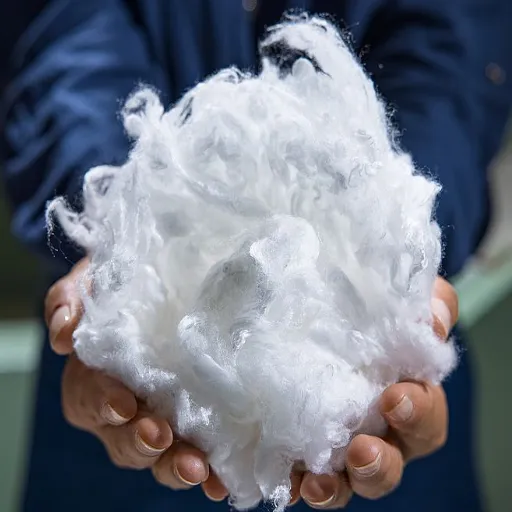
The decision usually comes down to what the product demands. This table maps the common cases.
| Application | Better default | Why |
|---|---|---|
| Fine knit tops, T-shirts | Organic | Quality and consistency matter; recycled capped near 25 to 30% |
| Denim and workwear | Recycled | Handles higher recycled content and rewards durability framing |
| Babywear and bedding | Organic | Clean chemical profile and predictable handfeel |
| Sweatshirts and hoodies | Recycled or blend | Mid recycled content works with bio-polishing |
| Home textiles, curtains | Either | Organic for colour consistency; recycled for cost and impact story |
| Tote bags and accessories | Recycled | Tolerates high recycled content with no strength penalty |
| Industrial and utility textiles | Depends on spec | Recycled for waste diversion; organic where fibre strength is critical |
The strongest option is often a blend. Organic and recycled fibre can sit in the same yarn, giving you clean cultivation and waste diversion at once, at whatever ratio your count and application allow.
Frequently Asked Questions
Is recycled cotton better than organic cotton?
Neither is better across the board. Recycled cotton is better on water, land, and waste diversion. Organic cotton is better on fibre quality and on avoiding farm chemicals. Recycled also can’t be recycled forever, because the fibre weakens each cycle.
Is recycled cotton actually sustainable?
Yes, with caveats. Recycled cotton avoids the farming stage entirely and cuts water and CO2 significantly. But post-consumer fibre carries the original garment’s dyes and finishes, and recycling infrastructure is still limited. Look for GRS or RCS certification rather than an unqualified “recycled” label.
Is recycled cotton as strong as organic cotton?
No. Mechanically recycled fibre is shorter, which makes it weaker. That is why recycled cotton is almost always blended with virgin fibre, usually between 10 and 30% for fine yarns. Coarse rotor yarns can carry far more recycled content.
Which is more expensive, recycled or organic cotton?
Organic cotton carries a 20 to 35% premium over conventional. Recycled cotton is not reliably cheaper than organic, because sorting, cleaning, processing, and certification add cost. Recycled yarn can sell at or above virgin prices.
Can you blend recycled and organic cotton?
Yes, and blended yarns are common. This combination delivers both cleaner cultivation and waste diversion. The achievable ratio depends on your yarn count and spinning method, so confirm it with your mill at the sampling stage.
How much recycled cotton can a yarn contain?
Fine ring-spun yarns around Ne 30 typically hold 25 to 30% recycled content without performance loss. Coarse rotor yarns can reach 75% or more, and optimised knitted fabrics can reach about 80% with compact yarn and bio-polishing finishing.
Specifying Recycled or Organic Cotton Yarn
The recycled cotton vs organic cotton debate is not settled by a single winner, because the two fibres are solving different problems. Recycled cotton diverts waste and saves water and land, at the cost of fibre strength and colour consistency. Organic cotton protects fibre quality and avoids synthetic farm chemicals, at the cost of more land and a price premium.
Use the numbers here as a specification guide, not a moral one:
-
- Match the fibre to the product. Fine knits lean organic; denim, workwear, and accessories lean recycled.
- Treat the recycled blend ratio as a spec. Confirm the ceiling for your count before production, not after a failed test.
- Do not assume recycled is cheaper. Quote it and check, because certification and processing change the economics.
- Verify the claim. GRS or RCS for recycled content, GOTS or OCS for organic.
- Consider a blend when you want both benefits in one yarn.
If you are weighing a recycled or organic cotton yarn for an upcoming programme, our team can help you choose the right fibre, count, and blend ratio for your application. Send us your specification and we will come back with options and samples.